Central Vietnam · Travel
Hoi An Basket Boat at Cam Thanh (Cẩm Thanh): Cost, Worth It?
Hoi An basket boat at Cam Thanh: is it worth it, what it costs as of November 2026, quiet routes vs music and spinning, tour or on your own, and when to go.
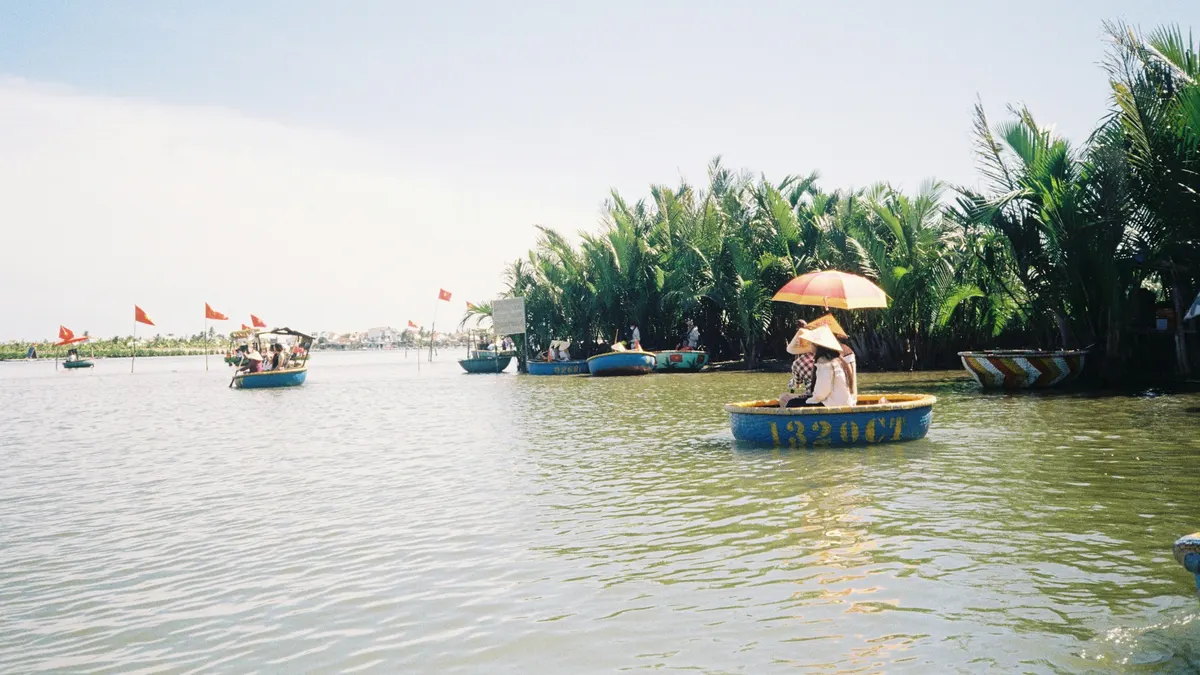
Yes, the basket boat ride at Cam Thanh (Cẩm Thanh) is worth an hour for most first-time visitors to Hoi An, as long as you go early or late in the day and ask for a quiet route. You sit in a round bamboo boat (thuyen thung (thuyền thúng)) while a local rower paddles you through the canals of the Bay Mau (Bảy Mẫu) nipa palm forest, about 3 to 5 km from the old town. As of November 2026, Da Nang’s tourism portal still lists the prices it posted in April 2026: 30,000 dong a person to enter and 150,000 dong for a two-person boat for 45 minutes (Da Nang tourism portal). At peak hours the same canals fill with boats, spinning shows and loudspeakers, so timing decides whether you enjoy it.
This page is the detailed companion to the river and day-trip section of our Hoi An travel guide. It explains what the forest is, where the basket boats come from, how a ride works step by step, what it costs according to dated official and press sources, the noise and crowding problems the Vietnamese press has reported, and whether to book a tour or go on your own. Since 1 July 2025, when Quang Nam province merged into Da Nang city, Cam Thanh has been part of Hoi An Dong (Hội An Đông) ward; locals and signs still use “Cam Thanh” and “Bay Mau”.
Hoi An basket boat at a glance
| Where | Bay Mau coconut forest, Cam Thanh, Hoi An Dong ward, Da Nang city; about 3–5 km east of Hoi An old town, where the Hoai, Thu Bon and De Vong rivers meet near the sea |
| What it is | A ride in a round bamboo basket boat with a local rower through more than 100 ha of nipa (water coconut) palm |
| How long | 40–60 minutes on the water, plus the trip from town |
| Price (April 2026, city tourism portal) | Entrance 30,000 dong a person; boat for two 150,000 dong (45 min) or 180,000 dong (60 min) |
| Hours | Roughly 7:00 to 18:30 (7:00–18:00 in the 2025 route plan; 7:30–18:30 on the city portal) |
| Best time | Early morning or late afternoon; March to September for calm, dry weather |
| Avoid | Late morning and midday at holidays and Tet; storm and flood days, when rides stop |
| Good to know | Life jackets are compulsory; the spinning show is included but optional |
Is the basket boat ride worth it, and who should skip it?
It is worth it if you want a short, easy taste of the river landscape around Hoi An and do not mind sharing it. The setting is real: a tidal palm forest that sheltered a fishing community and wartime fighters, rowed by people from the village. What visitors complain about is the crowd, not the place. In May 2026 Dan Tri’s English service described the popular sites as crowded and reported that officials were planning new routes to ease the pressure (DTiNews).
| If you… | Verdict | Why |
|---|---|---|
| Have two or three days in Hoi An and want something outside the old town | Go | An hour on the water, 3–5 km from town, at a fixed and modest price |
| Travel with children | Usually go | Everyone gets a life jacket and boats carry two or three passengers with a rower; skip the fast spinning |
| Want quiet nature and birds | Go early, ask for a quiet route, or choose a different river trip | Peak hours bring music and many boats to the central canals |
| Get seasick or dizzy, or have a heart condition | Go, but refuse the spinning | Rowers warn that the fast spins do not suit people prone to vertigo or with heart conditions |
| Dislike crowds and staged shows | Skip, or go at 7:00 | In 2023 the area received about 790,000 visitors and was overloaded at peak times |
| Are visiting in a storm or flood | Skip | Rides are suspended in bad weather |
| Have already done the Mekong Delta’s canals | Optional | Vietnamese media call Bay Mau a “mini Mekong Delta”; the round boats and the spinning show are the difference |
The short answer. Go at opening time or late in the afternoon, ask for a quiet route, tell your rower whether you want the show, and the ride is a pleasant hour. At peak times visitors have waited up to an hour just to board, Tuoi Tre News reported in 2022.
What is the Bay Mau coconut forest?
Bay Mau is a forest of nipa palm (dua nuoc (dừa nước), water coconut), a stemless palm that grows in brackish tidal water, in the delta where three rivers meet just before the sea at Cua Dai (Cửa Đại). The name means “seven mau”, an old land unit: the forest started at about that size and has grown, Da Nang’s tourism portal says. Today it covers more than 100 ha (one 2019 report gave 140 ha) along the Hoai (Hoài), Thu Bon (Thu Bồn) and De Vong (Đế Võng) rivers, according to the plan Hoi An approved in February 2025 (Dai bieu Nhan dan).
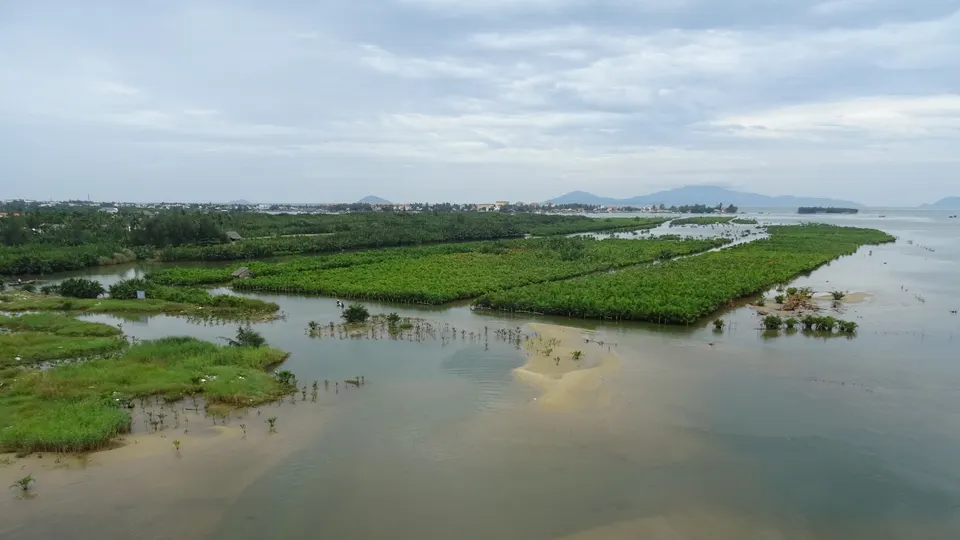
Why it matters. The forest is a listed historical and cultural relic site: during the wars against the French and the Americans it was a revolutionary base, its narrow creeks and dense palms giving cover. It is also part of the buffer zone of the Cu Lao Cham – Hoi An Biosphere Reserve, the Vietnam News Agency notes, and the commune’s chairman told Dai Doan Ket in 2024 that it shelters the village from wind and erosion in the storm season.
How old is it? Sources differ. The February 2025 plan calls the forest about 200 years old; villagers told Tuoi Tre News in 2022 that it was planted with seedlings from the Mekong Delta about a century ago. Either way, it is a working landscape, not a wilderness: villagers still cut nipa leaves to thatch houses and use the creeks for fishing and crabbing.
Treat it gently. In 2019 the commune began fining visitors and operators for breaking fronds and cutting young leaves, including to decorate boats, under the government’s forestry penalties decree, Bao Van Hoa reported. Take nothing but photos.
Where do the basket boats come from?
The basket boat, thung chai (thúng chai), is a round boat of woven split bamboo, made watertight with resin and, traditionally, cattle manure. Fishers along the coast from Quang Binh southwards use it in rivers and at sea, often alone with a short paddle, and it once ferried goods and people between the shore and larger boats (Hoi An heritage centre).
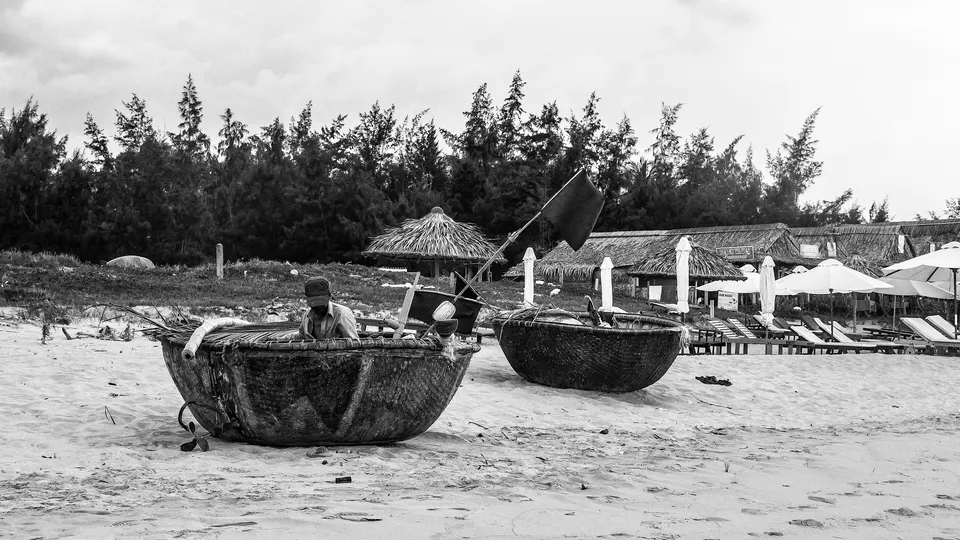
The tax story is a theory, not a fact. You will hear that fishermen invented round boats to dodge a French tax on boats measured by their hull. The Hoi An heritage centre’s researcher lists that story next to a Cham origin and an origin under the Nguyen lords, and concludes that no documentary source has established where the basket boat came from. Treat any guide’s single “true story” as one version.
From fishing gear to tourist fleet. Before tourism, the whole of Cam Thanh had only about 30 basket boats, used for fishing, according to Bao The gioi va Viet Nam. By 2018, 400 households ran 918 tourist boats, and by 2019 there were about 1,200, the heritage centre says. In 2023 fifteen businesses operated nearly 1,350 boats, Dien dan Doanh nghiep reported in March 2024; one operator’s estimate in Tien Phong the same year was far higher, at 3,000 to 4,000 boats, so treat any single number as approximate. Most Cam Thanh boats are still bamboo, while plastic boats have spread elsewhere in the province.
How does a ride work, step by step?
A ride follows the same pattern whether you come on your own or with a tour. Tien Phong described the standard trip in February 2024 as about 40 minutes for two guests in one basket boat, at a set price per boat (Tien Phong).
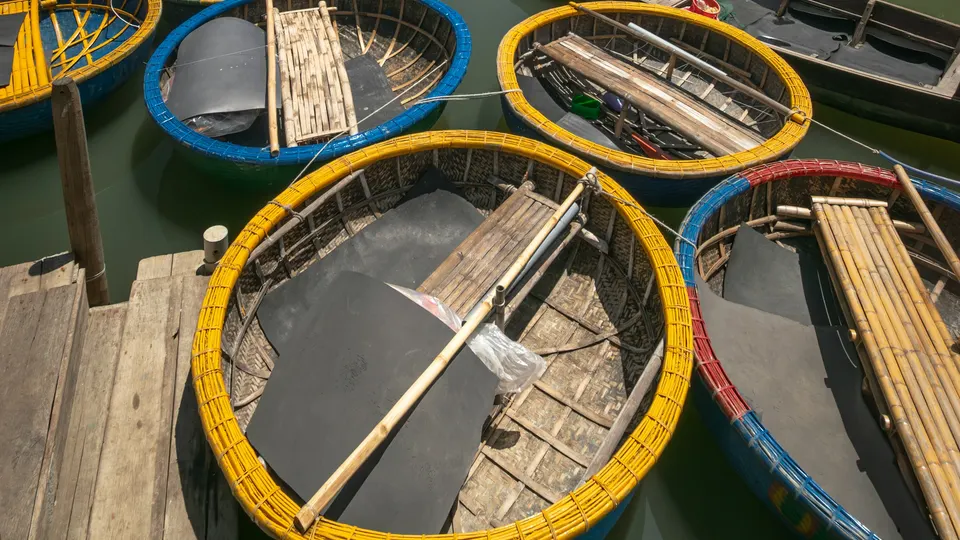
- Arrive in Cam Thanh. Tours take you to their own landing. On your own, go to the village reception; Da Nang’s tourism portal gives the address as Vong Nhi (Võng Nhi) hamlet in Hoi An Dong ward. If you come by car, agree a pick-up point: the parking has been too small at busy times and vehicles stop on the main road.
- Buy the ticket and the boat. You pay the entrance ticket per person and the boat per boat. Check the posted price and the length of the ride (45 or 60 minutes) before you pay.
- Put on a life jacket. Everyone wears one. Police and the management board checked life jackets, passenger numbers and overloading during Tet 2026.
- Step down into the boat. It sits low and moves under your weight; sit in the middle, two or three passengers with one rower, and keep phones in a zipped bag.
- Paddle into the palms. The rower steers through the creeks and, on a good trip, explains the forest, the tides and fishing. Many trips include a stop to watch a net being cast, try crab fishing, or see the rower fold a ring or a small figure from a nipa leaf.
- The show. Near the central canals, rowers spin their boats on the water, sometimes to music, and you may be invited to try. It is included in the price and you can say no.
- Back to the landing. Settle anything extra you agreed, such as a drink or a leaf souvenir, return the life jacket and head back.
What does it cost, and what about music, spinning and tips?
The posted prices are low; the extras and the noise are where trips go wrong. The table gathers the figures with their dates. In October 2025 Znews put the entrance at 30,000 dong a person and the boat at about 120,000 to 150,000 dong per boat, and reported that some boats still carried portable speakers for karaoke despite a ban (Znews).

| Item | Price reported | Source and date |
|---|---|---|
| Entrance ticket | 30,000 dong a person | City tourism portal, April 2026; Znews, October 2025; unchanged since at least 2022 (Bao The gioi va Viet Nam) |
| Boat for two, 45 minutes | 150,000 dong | City tourism portal, April 2026 (includes spinning show and river folk singing) |
| Boat for two, 60 minutes | 180,000 dong | City tourism portal, April 2026 |
| Boat, unspecified length | About 120,000–150,000 dong a boat | Znews, October 2025 |
| Boat ride sold per person | 150,000–200,000 dong a person | Dai Doan Ket, September 2024 |
Price rises. Quang Nam’s tourism department said in 2024 that businesses “regularly” raised service prices on their own initiative, and asked the provincial government to make Hoi An act on touts, noise and price violations, Dien dan Doanh nghiep reported. Agree the total, the length of the ride and what is included before you get in.
Music and karaoke. Loudspeakers have been the main complaint for years: in 2019 Dien dan Doanh nghiep counted 918 basket boats and 200 mobile speakers serving the forest, and in 2024 a visitor described the sound as “harsh and piercing”. The commune enforced a karaoke ban in November 2023, but in October 2025 the ward chairman said the lively atmosphere was part of the appeal, many visitors enjoyed songs like “Gangnam Style”, and the speakers would be moved further from visitors. Expect music in the central canals at busy times; the quiet routes and the early slot avoid most of it.
Spinning. The “basket boat dance”, in which the rower spins the boat on the spot, is the most photographed part of the trip. Rowers told Dan Tri that the fast spins do not suit people prone to vertigo or with heart conditions. If you do not want it, say so before you set off.
Tips. None of the official notices or press reports we checked sets a tip, and the city portal’s price includes the show. A small tip for a rower who looked after you is your choice; our guide to money and tipping in Vietnam explains local practice. If you booked a tour, ask whether a tip is already included.
Tour or on your own: how do you get there?
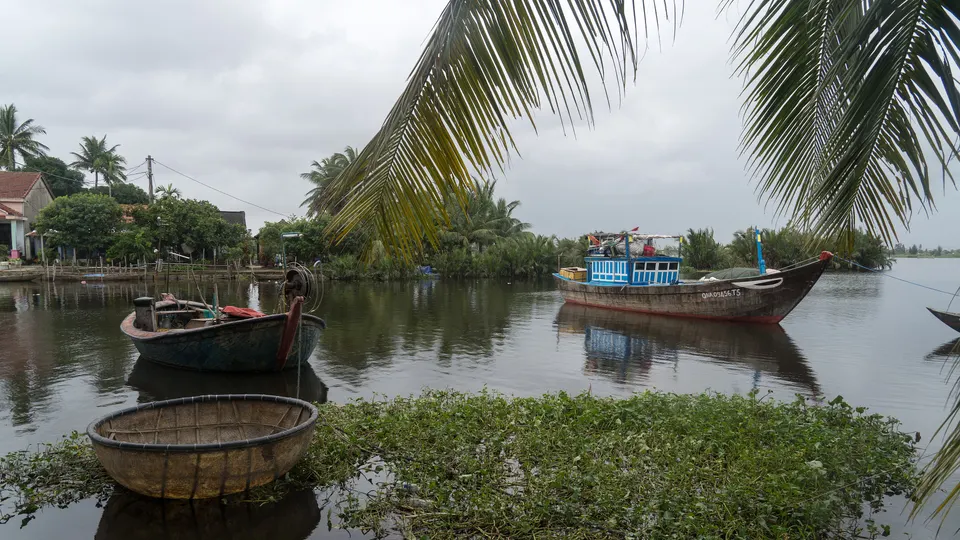
Going independently is easy and cheaper; a tour mostly buys you transport and a fixed plan. Da Nang’s tourism portal suggests a short ride from central Hoi An, cycling through the rice fields, or a boat trip down the Thu Bon from the old town, and notes that hotels and travel agencies sell packages.
| Option | What you get | Best for | Watch out |
|---|---|---|---|
| Bicycle from the old town | The ride through paddy fields is part of the trip; tickets bought at the reception | Fit travellers in the cooler months | Heat and sun from April to September; traffic on the main road near the landings |
| Taxi or Grab both ways | Fastest door to door | Families, hot days | Agree a pick-up point and time for the return; drop-offs crowd the main road at peak times |
| Boat down the river from the old town | The Thu Bon and the river mouth on the way; Vietnam Airlines’ guide mentions boats from Bach Dang (Bạch Đằng) wharf | Travellers who want more time on the water | Ask whether the basket boat ride is included and for how long |
| Hotel or agency package | Pick-up, ticket, boat, sometimes a cooking class or fishing | No planning, short stays | Costs more than the posted prices; operators decide the route and the timing |
How to decide. On a first visit with a free morning, cycle or take a Grab car, buy the ticket at the reception and ask for a quiet route. If you want a whole half-day of river, food and village life without arranging anything, a package that adds a cooking class or the river trip from town is the simpler choice. How ride-hailing works is covered in our guide to using Grab in Vietnam.
Where to stay. The forest is close to both the old town and the beaches; if you base yourself by the sea, it is a short ride from An Bang and Cua Dai beaches.
When should you go?
Time of day matters more than the month. Da Nang’s tourism portal calls early morning and late afternoon the most peaceful times, and the opening hours run from about 7:00 to 18:30.
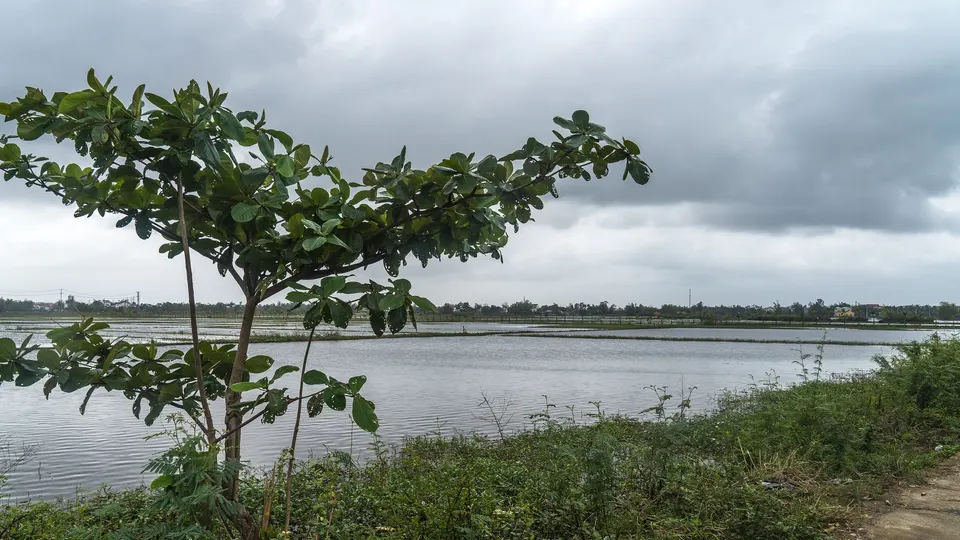
By season. The Vietnam News Agency gives March to September as the best period, with dry, pleasant weather; Bao The gioi va Viet Nam calls January to March the greenest, April to September hot and sunny, and October to December the storm and rain season (Bao The gioi va Viet Nam). Under the 2025 route plan, the local authority stops the boats when the weather is dangerous. After the floods of late October 2025, tourism in Hoi An’s old town came to a virtual halt for four to five days, VnExpress International reported, so in those months keep the ride flexible; our Vietnam weather by month guide explains the central coast’s wet season.
Holidays. Numbers jump at Tet (Tết), the Lunar New Year, and on national holidays: over the 2 September holiday in 2024 the commune estimated more than 3,000 visitors a day, and in February 2026, over Tet, police checked life jackets, passenger numbers and whether boat operators had been drinking, Bao Van Hoa reported. If your dates fall on a holiday, go at opening time.
A sample half-day. Leave the old town by bicycle at about 7:00, ride through the paddy fields, be on the water by 7:30, and be back in town before the midday heat. In the afternoon, reverse it: start the ride after about 15:30 and cycle back in the evening light.
What else is there, and what should you do?
If the basket boats sound too busy, there are quieter ways to see the same rivers. A rowing boat on the Hoai river in the old town is the classic evening trip, best on a lantern night (see our guide to Hoi An full moon nights). The paddy fields and river arms of Cam Kim (Cẩm Kim) island, across the river from the old town, make an easy bicycle trip. If you are heading south later, the Mekong Delta’s canals offer longer trips through the same nipa palms.
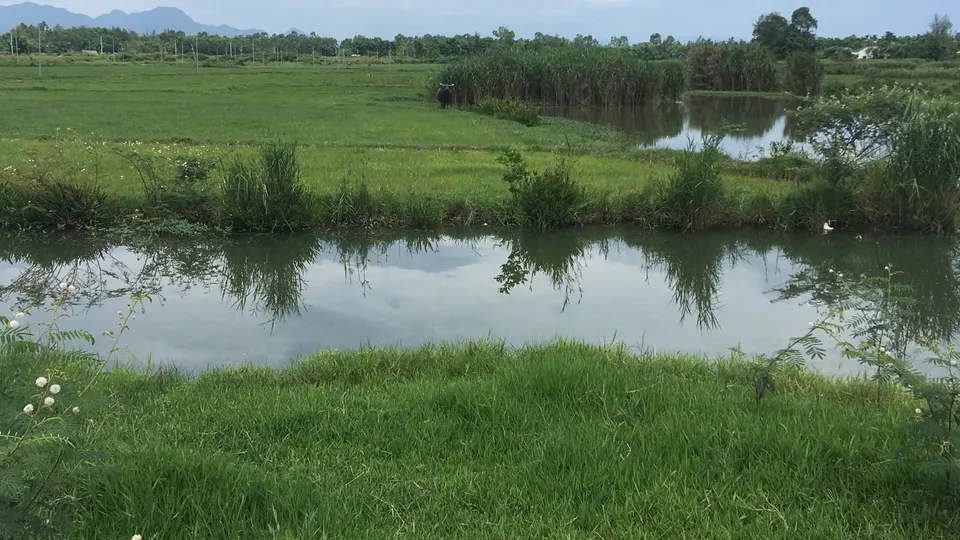
What is changing. Hoi An Dong ward’s public service centre told Tuoi Tre News about a new tour, “Visit Cam Thanh – Listen to the Coconuts Tell Stories”, adding bamboo and coconut crafts and folk performances such as bai choi (bài chòi), a sung card game, to the boat ride, expected to launch in November 2026; and the forest’s ticket revenue rose from under 20 billion dong a year before the pandemic to about 37 billion in 2025 (Tuoi Tre News). As of 1 November 2026 it was not yet a regular product: the ward’s vice-chair told Bao Van Hoa that it would run as a trial in the fourth quarter of 2026, to be reviewed before it goes into regular operation, and the same report noted that Cam Thanh was one of Vietnam’s five candidates for UN Tourism’s Best Tourism Villages 2026. Ask at the reception what is running when you visit.
What to do.
- Go at opening time or after about 15:30, and avoid Tet, national holidays and storm days.
- Buy the entrance ticket and the boat at the reception, check the posted price and the ride length, and agree any extras before you get in.
- Ask for a quiet route if you want birds and stillness, and tell the rower whether you want to be spun.
- Wear the life jacket, keep phones in a zipped bag, and bring a hat, sunscreen and insect repellent.
- Do not pick leaves or fronds, and take your rubbish back with you.
- Tip if you want to; it is not required.
The coconut forest charges its own entrance ticket; for what the old-town ticket covers, see our guide to the Hoi An ticket. For more of the region, start at our Central Vietnam guide.
Frequently asked questions
Is the new 'Listen to the Coconuts' tour at Cam Thanh running yet?
Not as a regular tour as of early November 2026. Hoi An Dong ward's vice-chair told Bao Van Hoa on 1 November 2026 that the 'Visit Cam Thanh – Listen to the Coconuts Tell Stories' tour would run as a trial in the fourth quarter of 2026, so ask at the Cam Thanh reception whether it is on during your visit.
Can I skip the spinning and the loud music on the Hoi An basket boat?
Usually, yes. Tell the rower before you set off that you do not want to be spun, and ask at the reception for one of the quieter routes in the Bay Mau coconut forest's 2025 route plan. Early morning and late afternoon are the calmest times.
Do I need a tour to visit the Cam Thanh coconut forest?
No. You can cycle or take a taxi from Hoi An old town and buy the entrance ticket and boat at the village reception in Vong Nhi hamlet. A tour mainly saves you arranging transport and often adds a cooking class or a boat trip along the Thu Bon river.
Is the Cam Thanh basket boat ride safe for children?
Everyone gets a life jacket, and police checked life jackets and overloading at Bay Mau during Tet 2026. The fast spinning is optional; rowers themselves say it does not suit people prone to vertigo or with heart conditions.
Should I tip the basket boat rower in Hoi An?
None of the official notices or press reports we checked sets a tip, and Da Nang's tourism portal says the ticket includes the spinning show and folk singing. A small tip for a rower who looked after you is a personal choice; if you booked a tour, ask whether a tip is already included.
Key sources
- Bay Mau Coconut Forest · Da Nang Fantasticity (Da Nang city tourism portal), 21 April 2026
- Hội An tổ chức 17 tuyến tham quan di tích rừng dừa Bảy Mẫu · Đại biểu Nhân dân, 24 February 2025
- Reflections on the Basket Boat in Hội An · Hoi An Center for Cultural Heritage Management and Preservation, 18 May 2026
- Trên bến dưới thuyền ken đặc du khách ở rừng dừa Bảy Mẫu Hội An · Tiền Phong, 27 February 2024
- Hạn chế nhạc remix, hát Gangnam Style tại rừng dừa Hội An · Znews, 8 October 2025
- Hoi An to launch new tour at Cam Thanh coconut forest · Tuổi Trẻ News, 3 September 2026
- Cam Thanh Village draws tourists with basket boat rides · DTiNews (Dân Trí), 1 May 2026
- Lắc thuyền thúng – 'đặc sản mới' của du lịch Quảng Nam · Báo Thế giới và Việt Nam, 1 September 2022
All 18 sources and further reading
- Trải nghiệm chèo thuyền thúng ở rừng dừa Bảy Mẫu · Đại Đoàn Kết, 2 September 2024
- Sớm chấn chỉnh hoạt động du lịch tại rừng dừa Bảy Mẫu Hội An · Diễn đàn Doanh nghiệp, 8 March 2024
- Cẩm Thanh hướng tới chuẩn du lịch cộng đồng quốc tế · Báo Văn Hóa, 1 November 2026
- Tăng cường đảm bảo an toàn giao thông đường thủy tại Hội An Đông · Báo Văn Hóa, 23 February 2026
- Quảng Nam: Xử lý nghiêm các hành vi phá hoại rừng dừa nước Bảy Mẫu · Báo Văn Hóa, 19 August 2019
- Băm nát rừng dừa Bảy Mẫu, Hội An · Diễn đàn Doanh nghiệp, 10 September 2019
- Storms, floods disrupt tourism in central Vietnam · VnExpress International, 5 November 2025
- Bay Mau coconut forest – attractive destination for eco-thrills · Vietnam News Agency (VNA Photos), 26 August 2025
- Basket boat tours a refreshing breeze in Vietnam's Hoi An · Tuổi Trẻ News, 15 April 2022
- Coconut Village Hoi An · Vietnam Airlines travel guide (undated, checked 15 November 2026)
Keep exploring
 Central Vietnam · Travel Hoi An (Hội An): How Many Days, What to See, When to Go How many days Hoi An needs, what the 80,000 or 120,000 dong ticket covers, lantern nights, where to eat, beaches, flood months and getting there from Da Nang.
 Central Vietnam · Travel Hoi An Beaches: An Bang or Cua Dai? Which to Choose in 2026 An Bang or Cua Dai? Compare Hoi An's beaches by distance, facilities and safety, with Cua Dai's rebuilt sand as of November 2026, swimming months and Tan Thanh.
 Central Vietnam · Travel Hoi An (Hội An) Ticket 2026: Price, Sites, How to Buy Hoi An old town ticket as of November 2026: 80,000 or 120,000 dong, same for everyone, valid up to 3 days. Sites it opens, who enters free, where to buy.
 Central Vietnam · Culture Hoi An (Hội An) Full Moon Nights: 2026–2027 Dates and Tips Hoi An's full moon night falls on the 14th lunar day each month. Dates for 2026–2027, what really happens, lantern boats and fares, crowds, floods and how to plan.