Central Vietnam · Travel
Quy Nhon (Quy Nhơn): Is It Worth It and How Many Days?
Is Quy Nhon worth it, and for how many days? Cham towers, Ky Co and Eo Gio, where to eat banh xeo, flights and the dry season, checked November 2026.
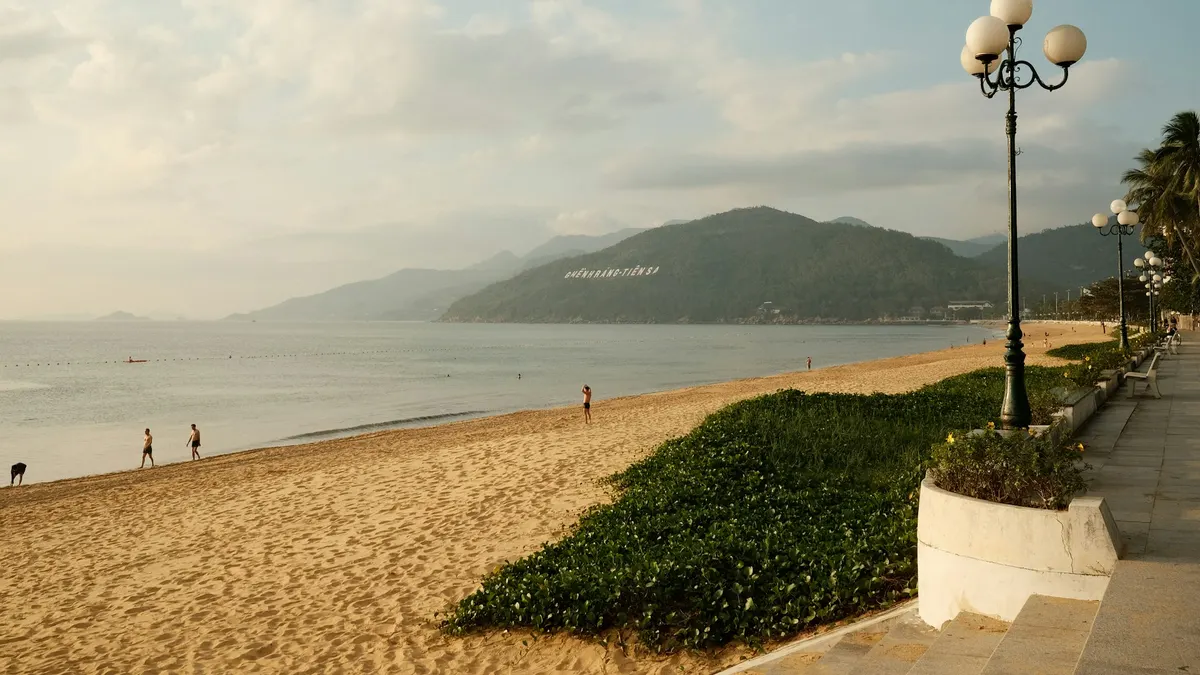
Quy Nhon (Quy Nhơn) is worth a stop if you want long beaches, seafood and Cham history with fewer crowds than its neighbours: give it two days for the town and the nearby beaches, three or four with the inland history sites, and go between January and August. As of November 2026 it is a ward and the administrative centre of Gia Lai province, which absorbed Binh Dinh (Bình Định) province on 1 July 2025, and Gia Lai is hosting Vietnam’s National Tourism Year in 2026.
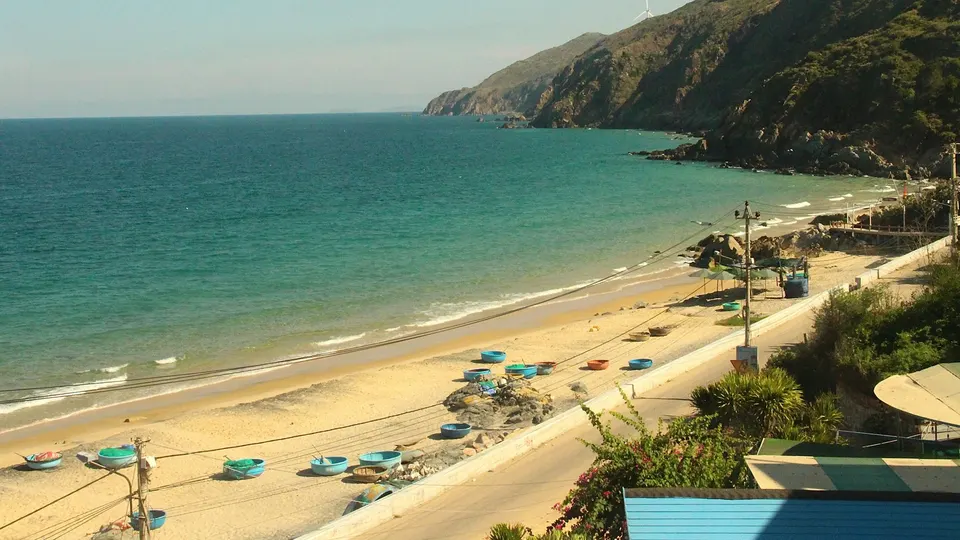
The city sits on the south-central coast of Vietnam, between Hoi An and Nha Trang. It has the long sandy bays and seafood of its better-known neighbours with fewer tour groups. VnExpress describes it as quieter and less touristy, a town where many people still make their living from the sea, heading out in boats or working the shore in round bamboo coracles (VnExpress International).
What makes Quy Nhon worth the detour is not only the beach. Brick Cham towers stand in the middle of town, the hills inland produced the Tay Son (Tây Sơn) brothers who overturned 18th-century Vietnam, and a poet who died young of leprosy lies on a hill above the sea. This guide is for travellers who find Da Nang or Nha Trang too busy and want a coastal base where the history is close at hand.
Quy Nhon at a glance
| Region | South-central coast of Central Vietnam; since 1 July 2025 the administrative centre of Gia Lai province, which absorbed the former Binh Dinh province |
| Known for | Uncrowded beaches, fishing villages and seafood; Cham towers (Thap Doi (Tháp Đôi) in town, Banh It (Bánh Ít) nearby); the Tay Son movement; poet Han Mac Tu (Hàn Mặc Tử) |
| Main sights | Thap Doi; Ghenh Rang (Ghềnh Ráng) and Queen Beach; Ky Co (Kỳ Co) and Eo Gio (Eo Gió) on the Phuong Mai (Phương Mai) peninsula; Banh It towers (about 20 km); Quang Trung Museum (about 40–50 km) |
| How long | Two days for the town and the peninsula; three or four with the inland Tay Son sights |
| Best time | Roughly January to August; rain and storms more likely September–December |
| Getting there | Phu Cat (Phù Cát) airport, about 30–35 km from the centre; North–South trains stop at Dieu Tri (Diêu Trì) station |
| Local dishes | Banh xeo tom nhay (jumping-shrimp pancakes), bun cha ca (fishcake noodles), banh hoi chao long (rice-vermicelli cakes with offal and congee) |
What changed in 2025: why Quy Nhon is now in Gia Lai province
On 1 July 2025 Vietnam cut its provinces from 63 to 34 and abolished the district level. Under Resolution 202/2025/QH15, the whole of Binh Dinh province and Gia Lai province, its neighbour in the Central Highlands, were merged into a new province named Gia Lai, covering about 21,577 km² and some 3.6 million people. The government had announced in April 2025 that the political and administrative centre of the merged province would be in Quy Nhon (baochinhphu.vn).
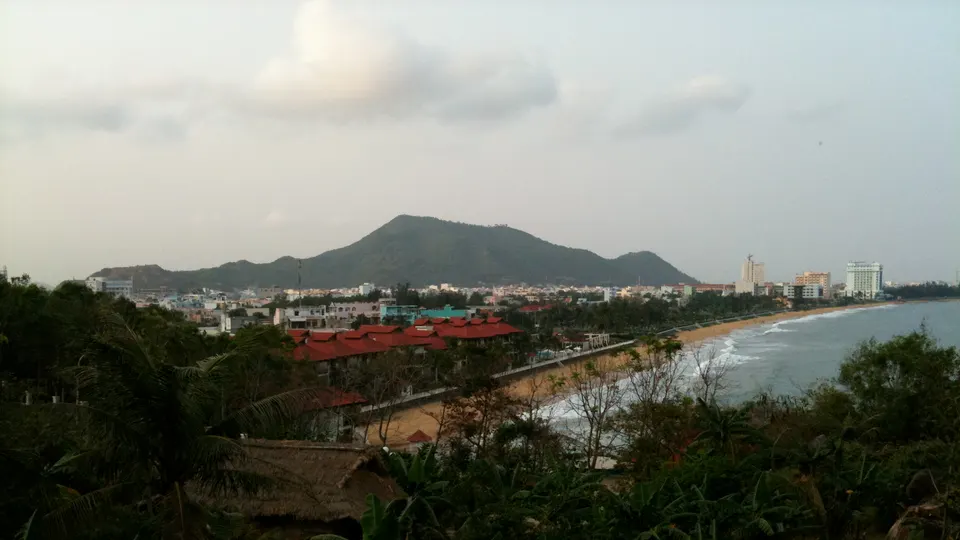
Quy Nhon itself is no longer a “city” on paper. VietnamPlus reported in June 2026 that the former city area now forms five wards and one island commune, Nhon Chau (Nhơn Châu); the central ward, Quy Nhon ward, was formed from four of the old inner-city wards.
At its first Party congress in August 2025, provincial leaders described the ward as the political, cultural and economic centre of the new Gia Lai and asked it to become the province’s tourism hub and gateway, according to Tuoi Tre (Tuổi Trẻ). For travellers this mostly shows up in addresses and signs: older maps, menus and many people still say Binh Dinh, and the merger means one province now stretches from this coast up to the coffee and forest country of the Central Highlands, the region of our Buon Ma Thuot guide. Speech keeps its own map: in its main sound features the Binh Dinh coast is closer to Southern Vietnamese than to the Hue accent, as our guide to Vietnamese accents by region explains. Gia Lai is hosting Vietnam’s National Tourism Year in 2026, and Bao Van Hoa (Báo Văn Hóa) reported in May 2026 that the province had approved new lighting and landscaping around the Thap Doi towers for it, with an instruction not to touch the towers themselves.
Where can you see Cham towers in and around Quy Nhon?
Long before Quy Nhon was Vietnamese, this coast was Champa. For roughly five centuries, from the 11th to the 15th, the area was the centre of the Cham kingdom of Vijaya, and Nhan Dan (Nhân Dân) counts eight tower clusters with 14 towers still standing in the former Binh Dinh province. Quy Nhon itself served as a Champa port in that era, VnExpress notes. They make a good pairing with the Cham sanctuary at My Son further north.
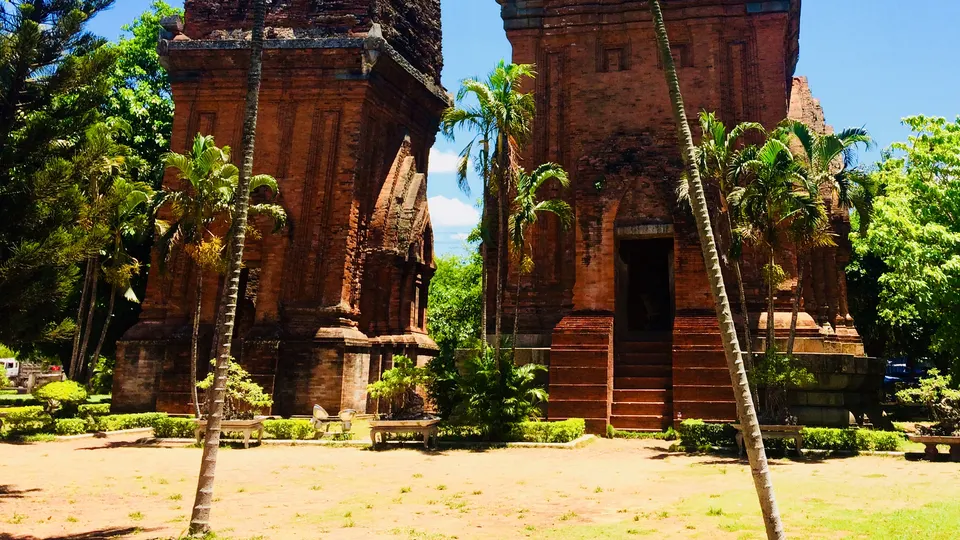
Thap Doi (Twin Towers, also called Hung Thanh) stands right in town, off Tran Hung Dao (Trần Hưng Đạo) Street. The two red-brick towers are about 20 m and 18 m tall. Dates vary by source: VietNamNet says late 12th century, while the national tourism authority gives the 11th to 13th century, so treat “around the 12th century” as the safe answer. The national tourism authority describes their tapering form and curved roofs as a blend of Cham and Khmer styles, with carvings of Garuda (the mythical bird-man) and other figures on the roofs and walls. The towers were badly damaged in the war and restored between 1991 and 1997 by Polish specialists working with Vietnamese archaeologists. They were ranked a national relic in 1980.
Banh It, about 20 km north of the centre, is the more dramatic setting: four towers on a hill between two branches of the Kon (Kôn) River, near the junction of National Highways 1A and 19. The provincial portal dates them to the late 11th or early 12th century and notes that the French called the group the Tour d’Argent (Silver Tower), hence the Vietnamese name Thap Bac (Tháp Bạc). Locals call it Banh It because from a distance it looks like banh it, a small pyramid-shaped sticky-rice cake (Binh Dinh Provincial Portal). The four buildings are the main tower (kalan), a gate tower, a “fire” tower with a saddle-shaped roof and a stele tower. It became a national relic in 1982 and now lies in Tuy Phuoc Bac (Tuy Phước Bắc) commune. Further inland, the three tall towers of Duong Long (Dương Long) in the former Tay Son district were raised to a special national relic in 2015 and can be combined with the Quang Trung Museum.
Why does the Tay Son story matter here?
Quy Nhon’s hinterland changed Vietnamese history. From 1771, three brothers born in Kien My (Kiên Mỹ) village, Nguyen Nhac (Nguyễn Nhạc), Nguyen Hue (Nguyễn Huệ) and Nguyen Lu (Nguyễn Lữ), led the Tay Son uprising, which grew from a regional peasant revolt into a national movement. In 1788 Nguyen Hue proclaimed himself Emperor Quang Trung and marched his army north to Thang Long (Hanoi), where it defeated the occupying Qing Chinese forces (Vietnam National Authority of Tourism).
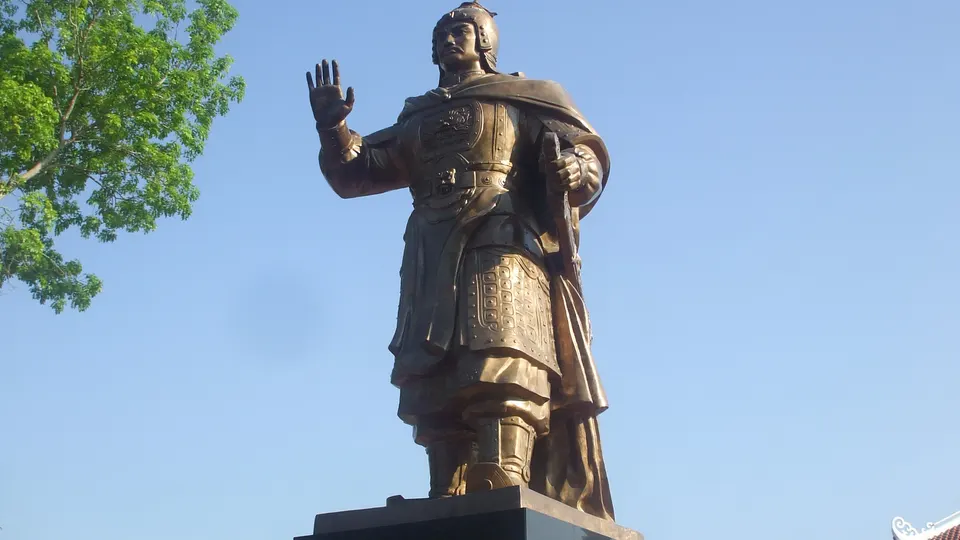
The Quang Trung Museum stands on the brothers’ home ground in Phu Phong (Phú Phong), roughly 40–50 km north-west of Quy Nhon (official sources give figures from 45 to 50 km). It opened in 1978, and its galleries trace the movement from 1771 to 1789. Next to it, the Tay Son Tam Kiet (Tây Sơn Tam Kiệt) temple was built in 1823 on the site of the brothers’ family house. Bao Van Hoa reports that the temple complex became a special national relic in 2014. Look for the old tamarind tree and the well: according to the same source, the brothers trained in martial arts in the courtyard under that tree.
That detail is not decoration. Binh Dinh is known in Vietnam as dat vo (đất võ), the “land of martial arts”, and vo co truyen Binh Dinh (võ cổ truyền Bình Định) (Binh Dinh traditional martial arts) was added to the national intangible heritage list in 2012. In March 2025 the government agreed to submit it to UNESCO for the list of humanity’s intangible heritage, and the province has hosted an international festival of traditional Vietnamese martial arts since 2006. At the museum, VOV5 and the provincial portal describe performances of Tay Son martial arts and Tay Son battle drums, which VOV5 calls the two intangible heritages of Tay Son. The sources give no fixed schedule, so ask at the museum.
Ghenh Rang and Han Mac Tu: the poet’s hill above Queen Beach
A few kilometres south-east of the centre, the end of Xuan Van (Xuân Vân) mountain drops into the sea in a jumble of rocks at Ghenh Rang. Below it lies Bai Hoang Hau (Bãi Hoàng Hậu) (Queen Beach), also called Bai Trung (Bãi Trứng), “egg beach”, for its hundreds of smooth round stones. Local tradition, which Nhan Dan reports as legend rather than record, says Queen Nam Phuong (Queen Nam Phương), wife of the last emperor Bao Dai (Bảo Đại), chose it as her private bathing beach.
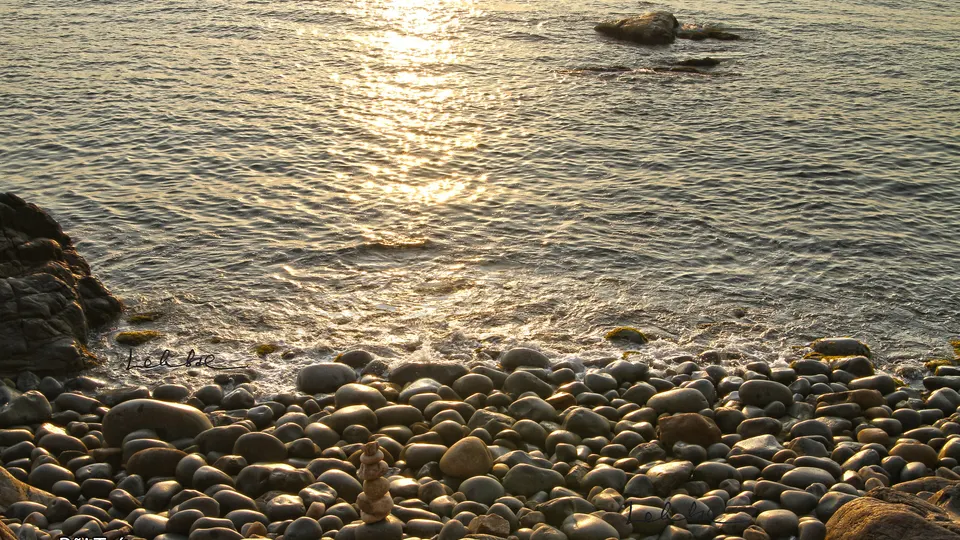
The reason many Vietnamese come here, though, is on the hill above: the grave of Han Mac Tu (1912–1940), one of the leading poets of the 1930s New Poetry movement (Tho Moi (Thơ Mới)). Born in Dong Hoi (Đồng Hới), he developed leprosy, was admitted to the Quy Hoa (Quy Hòa) leprosy hospital at the end of October 1940 and died there on 11 November 1940, aged 28. He was first buried at Quy Hoa; in 1959 his family and the poet Quach Tan (Quách Tấn) moved his remains to what is now called Doi Thi Nhan (Đồi Thi Nhân), Poets’ Hill (Nhan Dan). The Quy Hoa leprosy settlement where he died was founded in 1929 by the French priest Paul Maheu.
Go in the late afternoon, walk down to the stones afterwards, and read a few of his lines first. His poems, the heart-broken voice of a young man living with leprosy, are what make this hill a place of pilgrimage for Vietnamese readers rather than just a viewpoint.
Ky Co, Eo Gio and the fishing villages of the Phuong Mai peninsula
Across Thi Nai lagoon from the city, the Phuong Mai peninsula holds Quy Nhon’s best-known beach scenery. Most people go to the Nhon Ly (Nhơn Lý) area, about 20–25 km from town. Ky Co, the beach sometimes marketed as “the Maldives of Vietnam”, has calm, clear water and golden sand, and is usually reached by a short boat trip, often combined with snorkelling over coral (VnExpress International). Facilities were basic when VnExpress visited in 2019, so check what is open before you go.
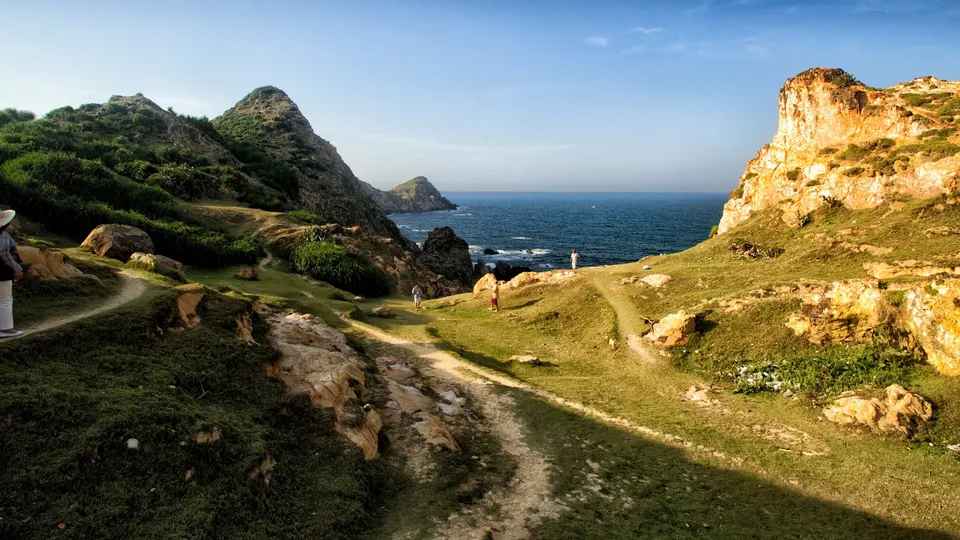
Eo Gio (“windy strait”) is the opposite: a narrow inlet between high cliffs, with a walkway along the mountainside. Come for the view, not for a swim; VnExpress warns that the waves are strong and bathing is not advisable.
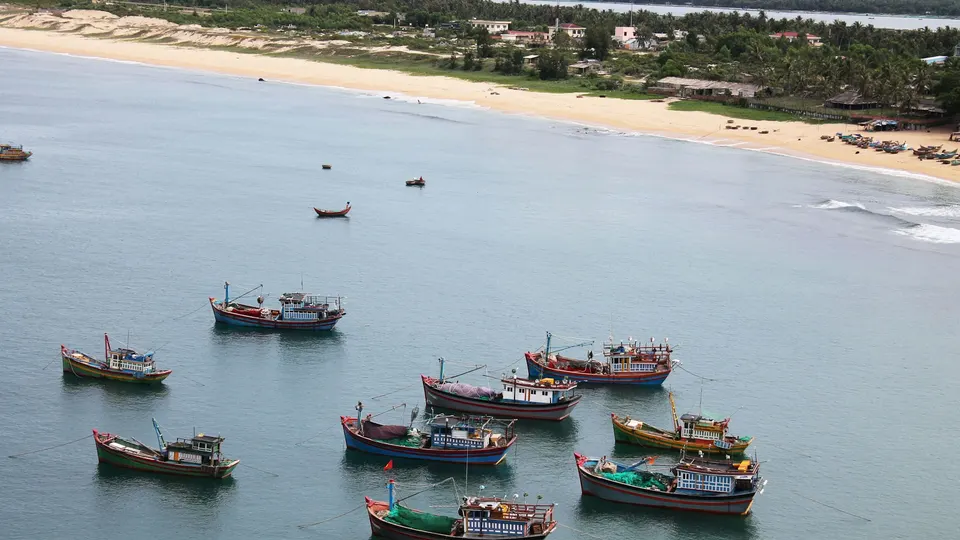
The fishing life is visible all around the lagoon. On a small hill in Thi Nai lagoon, the Thay Boi (Thầy Bói) temple is dedicated to the whale: VnExpress explains that fishermen believe giving dead whales a proper burial and worship brings luck and protection at sea. The same whale cult drives the Nghinh Ong (Nghinh Ông) festival in Vung Tau in the South. VnExpress also points to Bai Xep (Bãi Xép), a fishing village about 13 km from town known for coracles and homestays, and to Nhon Hai (Nhơn Hải), about 10 km away, from where canoes run to Hon Kho (Hòn Khô) islet. Further out, Cu Lao Xanh (Cù Lao Xanh) (Nhon Chau island) lies about 24 km east of Quy Nhon ward, with three villages, white-sand beaches and an old lighthouse, and still limited infrastructure, according to Tuoi Tre News.
Common vs exception: many visitors do Ky Co and Eo Gio as a package (VnExpress describes boat-and-snorkelling tours from Eo Gio). Getting up at dawn instead, on the lagoon or in a fishing village, is how you see the boats row out and the catch come in.
What should you eat in Quy Nhon?
Quy Nhon’s food is built on the lagoon and the sea. Three dishes are the ones Vietnamese and international food writers most often send visitors to try.
Banh xeo tom nhay (“jumping-shrimp pancake”) is a small, crisp pancake cooked in a hand-sized pan. The name comes from the shrimp: small tom dat (tôm đất) caught in the lagoons and river mouths, so fresh that they are still jumping when they go into the pan (VietnamPlus). You lay it on a sheet of rice paper with lettuce, herbs, cucumber and green mango, roll it up and dip it in a sweet-sour fish sauce. Cooks differ on the batter: VietnamPlus describes a little turmeric, while Vietnam (Việt Nam) News notes Quy Nhon batter that stays white rather than turning yellow. Our guide to banh xeo in the South and Central Vietnam shows how this small, open pancake compares with the big folded Saigon style.
It is still cheap street food. Thanh Nien (Thanh Niên) reported in October 2026 that Thien Phuoc (Thiên Phước), a family stall on Le Loi (Lê Lợi) Street open from 3 pm to about 10 pm, charged 8,000–35,000 VND a pancake for shrimp, squid or beef fillings.
Bun cha ca Quy Nhon (Bún chả cá Quy Nhơn) is rice-noodle soup with fishcake. The cha ca (chả cá) is minced fish pressed into blocks and cut up, often flecked with ground peppercorn husk, and Saigoneer describes the local bowl as spicier and more pungent than versions elsewhere. Nguyen Hue Street has long been the street VnExpress points to for it.
Banh hoi chao long is a breakfast dish: fine woven rice-vermicelli cakes (banh hoi (bánh hỏi)) eaten with pork offal such as intestines, heart, liver and kidney, plus fresh herbs and a bowl of hot rice congee on the side. Go early: the family shop Saigoneer profiled serves it only from 6 to 10 am.
In the evening, the Ngo Van So (Ngô Văn Sở) food street, between Xuan Dieu (Xuân Diệu) and Nguyen Hue near Quy Nhon Square, gathers stalls selling banh xeo (bánh xèo), grilled skewers, tre (tré) (fermented pork skin, a Binh Dinh speciality), che (chè) (sweet soups) and more. For how Quy Nhon’s dishes fit into Vietnamese food across the country, see our food hub.
How many days, and in what order?
Two days cover the town and the peninsula; a third or fourth day adds the inland history. A plan that works in the dry months:
- Day 1, the city. Thap Doi in the morning, bun cha ca or banh hoi for breakfast, Ghenh Rang and Han Mac Tu’s tomb in the late afternoon, then the Ngo Van So food street.
- Day 2, the Phuong Mai peninsula. Early start across the lagoon for Eo Gio’s cliffs and a boat to Ky Co; seafood lunch in Nhon Ly. If you can, stay the night in a fishing village such as Bai Xep or Nhon Hai.
- Day 3, inland. Banh It towers on the way out, then the Quang Trung Museum and the Duong Long towers around Tay Son; back to the coast by evening.
- Day 4, optional. A boat to Cu Lao Xanh, or simply a slow beach day.
Which trip to pick if you have less time:
| Option | Distance from the centre | Time needed | Effort | Suits |
|---|---|---|---|---|
| City: Thap Doi, Ghenh Rang, Ngo Van So food street | In town; Ghenh Rang a few km south-east | One day | Low: taxi or short rides | First-timers, food, short stays |
| Phuong Mai peninsula: Eo Gio and Ky Co | About 20–25 km across the lagoon | Full day, boat to Ky Co | Medium: early start, boat; swim only at Ky Co | Beaches, snorkelling, views |
| Inland: Banh It towers and Quang Trung Museum | About 20 km and 40–50 km | Half to full day | Medium: road trip | History, Cham and Tay Son sites |
| Cu Lao Xanh island | About 24 km east by sea | Full day or overnight | Higher: boat, limited infrastructure | Repeat visitors, quiet beaches |
Quy Nhon sits well on a coastal route through Central Vietnam: north towards Hoi An (Hội An) and Da Nang (Đà Nẵng), south towards Nha Trang, where a Nha Trang island-hopping boat trip adds a day on the water, or west into the highlands.
Getting there and when to go
By air, Quy Nhon is served by Phu Cat airport, roughly 30–35 km north-west of the centre (sources give 30 or 35 km). As of November 2026, Vietnam Airlines’ guide lists about one to three direct flights a day from Hanoi (from about 1 hour 30 minutes) and at least four from Ho Chi Minh City (about 1 hour 5 minutes), and the transfer into town takes about 30 minutes by taxi or hotel shuttle (Vietnam Airlines). Other airlines fly the route too; check current schedules.
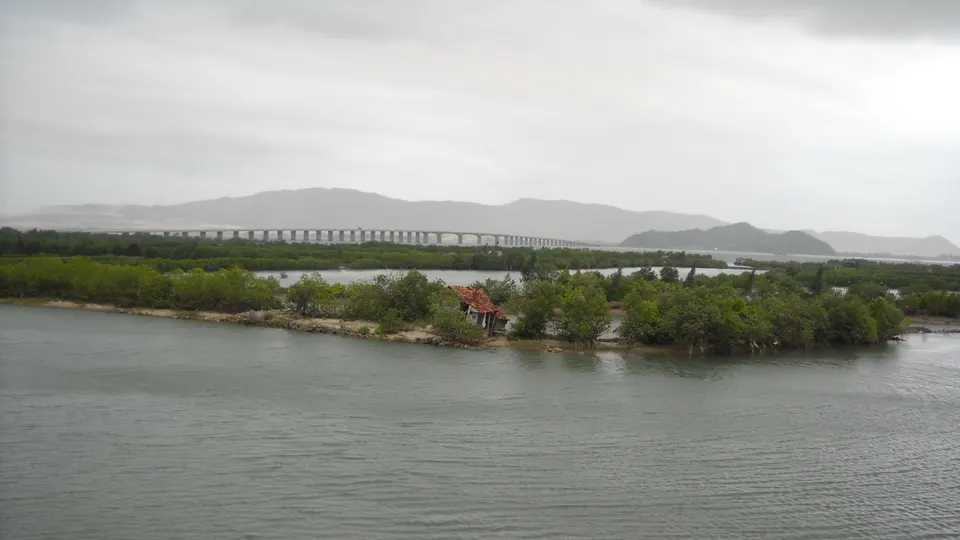
By train, North–South trains stop at Dieu Tri, a station outside the city on the main line, a short taxi ride from the centre. Quy Nhon’s own station sits at the end of a branch line about 15 km off the main route and has had far fewer services, so check the current timetable before booking to it. Ho Chi Minh City is about 650 km away, roughly 12–13 hours by train or overnight bus.
When to go. The dry, settled months are roughly January to August, with heat building from April. From about September to December rain is heavier and storms are possible; some guides start the wet season in August and put most rain in September to November. Rough seas in that period can cancel boat trips to Ky Co and the islands, so if you travel then, keep a spare day and follow local weather warnings. For a spring trip that combines Quy Nhon with the rest of the country, see our Vietnam in March guide.
Where to try it
Local favourite
Bún Cá Thùy · Quán Bún Cá Thùy
Quy Nhơn (Gia Lai province) · Central Quy Nhơn (Quy Nhơn ward)
261 Tăng Bạt Hổ Street
A fish-noodle shop recommended by both Saigoneer and Vietnam Coracle for bún chả cá Quy Nhơn, the local rice-noodle soup with fishcake.
Order: Bún chả cá; Saigoneer names the mixed bowl (thập cẩm) as the house favourite.
The street address comes from Vietnam Coracle; Saigoneer names the shop without an address. Opening hours are not given here because the only published hours date from 2023.
Recommended by: Vietnam Coracle (2024), Saigoneer (2023) · checked November 2026
Addresses and details can change; check before you go. We do not accept payment for listings.
Frequently asked questions
Can I swim at Eo Gio near Quy Nhon, or should I go to Ky Co?
Swim at Ky Co, where the water is calm and clear. VnExpress warns that the waves in the narrow Eo Gio cove are strong and bathing is not advisable, so Eo Gio is for the cliff walk and the view.
How much does banh xeo tom nhay cost in Quy Nhon?
Very little: Thanh Nien reported in October 2026 that the Thien Phuoc stall on Le Loi Street charged 8,000–35,000 VND a pancake for shrimp, squid or beef fillings. Prices vary from shop to shop, so check the board before you order.
Which airport should I fly into for Quy Nhon, and how often are flights?
Phu Cat airport, roughly 30–35 km north-west of the centre and about 30 minutes by taxi. As of November 2026 Vietnam Airlines' guide lists about one to three direct flights a day from Hanoi and at least four from Ho Chi Minh City.
Do I need a whole day for the Quang Trung Museum and the Banh It towers?
Plan a half-day to a full day. The Quang Trung Museum is about 40–50 km north-west of Quy Nhon in Phu Phong, and the Banh It towers, about 20 km out, lie on the way.
Key sources
- Names and administrative centers of 34 provinces and centrally-run cities specified · Government of Viet Nam online newspaper (baochinhphu.vn), 15 April 2025
- Five Quy Nhon experiences you can enjoy in a day · VnExpress International, 5 June 2019
- Quy Nhon, Maldives of Vietnam · VnExpress International, 22 April 2019
- Thap Banh It (Thap Bac) · Bình Định Provincial Portal
- Quang Trung Museum · Vietnam National Authority of Tourism
- Sao anh không về chơi Ghềnh Ráng? · Nhân Dân, 21 May 2023
- Bánh xèo tôm nhảy – món ăn phải thử khi đến Quy Nhơn · VietnamPlus (VNA), 7 August 2026
- Phu Cat Airport (Quy Nhon airport) travel guide · Vietnam Airlines
All 33 sources and further reading
- Resolution 202/2025/QH15 on the reorganization of provincial-level administrative divisions · LuatVietnam (text of the National Assembly resolution)
- Đưa Quy Nhơn thành cửa ngõ đón khách du lịch tới Gia Lai · Tuổi Trẻ, 10 August 2025
- Check out Cu Lao Xanh, a peaceful emerald island off Central Vietnam · Tuổi Trẻ News, 7 July 2025
- Multiple choice getaway: a travel guide to Quy Nhon · VnExpress International, 5 June 2022
- A visit to twin towers in Binh Dinh · Vietnam National Authority of Tourism, 12 August 2014
- Cham towers in Binh Dinh province · VietNamNet, 18 March 2020
- Chỉnh trang, sửa chữa cơ sở hạ tầng khu di tích quốc gia Tháp Đôi để hút khách · Báo Văn Hóa, 3 May 2026
- Bánh Ít Tower: preserving a millennium-old Chăm heritage in Gia Lai · Việt Nam News, 14 September 2025
- Phát huy các di tích tháp Chăm trên địa bàn tỉnh Bình Định · Nhân Dân, 22 November 2022
- Quang Trung Museum · Bình Định Provincial Portal
- Visiting Quang Trung Museum in Binh Dinh · VOV5 (Voice of Vietnam)
- Về Bảo tàng Quang Trung, thăm cây me, giếng cổ của nhà Tây Sơn · Báo Văn Hóa, 2 August 2023
- Trình UNESCO đưa Võ cổ truyền Bình Định vào Danh sách Di sản văn hoá phi vật thể của nhân loại · Báo Văn Hóa, 28 March 2025
- Ghenh Rang: memories of history and tragedy · VietNamNet, 18 October 2011
- Cụm tháp Chăm ngàn tuổi độc đáo ở Bình Định hút khách check-in · Báo Văn Hóa, 6 April 2021
- The pancakes of Quy Nhơn, land of great attractions · Việt Nam News, 27 January 2026
- Những món nên thử ở Quy Nhơn · VnExpress, 13 March 2020
- Phố ăn đêm ở Quy Nhơn · VnExpress, 1 June 2022
- The good, the fresh and the crispy: Quy Nhơn's wondrous cuisine in 3 dishes · Saigoneer, 21 April 2023
- Quy Nhơn Food Guide · Vietnam Coracle (first published September 2022)
- Quán bánh xèo gần 60 năm ở Quy Nhơn, con gái quyết không bỏ nghề của mẹ · Thanh Niên, 18 October 2026
- Quy Nhơn được định vị trở thành vùng động lực tăng trưởng của tỉnh Gia Lai · VietnamPlus (VNA), 24 June 2026
- How to get to Quy Nhon · Vietcetera, 13 June 2019
- The best time to travel to Quy Nhon · Vietcetera, 19 July 2019
- Khái quát về hệ thống ngữ âm của 3 vùng phương ngữ (An overview of the sound systems of the three dialect regions) · ngonngu.net (Vietnamese linguistics site, 2007, revised 2019)
Keep exploring
 Central Vietnam · Travel Is Nha Trang Worth It? What to See, Eat and When to Go Is Nha Trang worth visiting? The bay and Hon Mun reefs, Po Nagar Cham towers, mud baths, fish-cake noodles, the January-August dry season and 2026 flood risks.
 Central Vietnam · Travel Da Nang (Đà Nẵng): What to Do, Where to Stay, How Long Da Nang travel guide: the best things to do, whether to stay in Da Nang or Hoi An, a 2–4 day plan with Hue, what to eat and when the rains usually come.
 Central Vietnam · Travel My Son (Mỹ Sơn): Is It Worth It, Tickets and How to Visit Is My Son worth a half day from Hoi An? Ticket prices as of 2026, the best months and hours, and how to read the Cham towers, war damage and restoration.