All three regions · Food
Banh Xeo (Bánh Xèo): South vs Central and What to Order
Banh xeo South vs Central: a big folded Saigon pancake or small crisp seafood ones, plus Hue's banh khoai, 2026 prices, what to order and MICHELIN picks.
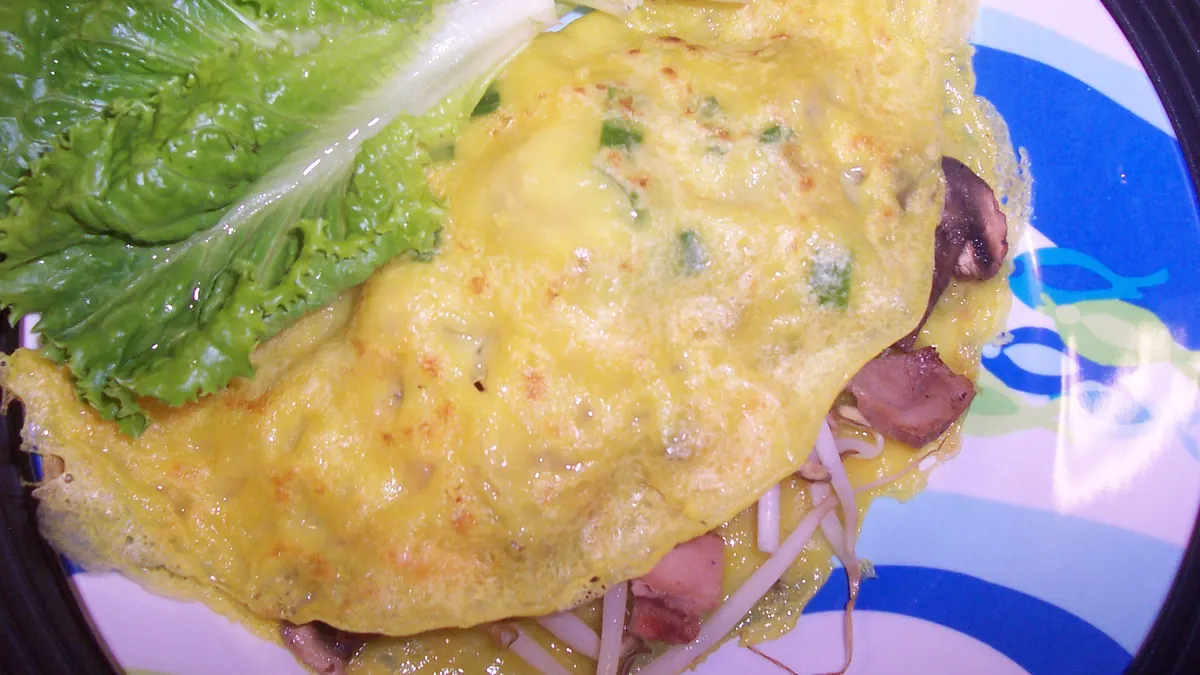
Southern and Central banh xeo (Bánh xèo), a crisp rice-flour pancake yellow with turmeric, differ mainly in size, filling and sauce. In Ho Chi Minh City and the Mekong Delta it is big and thin, cut into quarters and eaten with a basket of greens and sweet-sour fish sauce; on the Central coast it comes from small cast-iron moulds, is crisper, more often filled with seafood and frequently dipped in thick fermented mam nem (mắm nêm). The price gap follows the size: in September 2026 a Mekong-style pancake cost 55,000–60,000 dong at a Ho Chi Minh City shop (Znews), while small Central-style ones sell by the piece or by the plate.
This guide puts the two traditions side by side, adds the two Central variants you are most likely to meet, Hue’s banh khoai (bánh khoái) and Quy Nhon’s bánh xèo tôm nhảy, and ends with a table that tells you which one to order where, with 2026 prices and MICHELIN status. For the wider picture of regional cooking, see the food by region hub.
Banh xeo South vs Central at a glance
| South (Saigon, Mekong Delta) | Central coast (Da Nang (Đà Nẵng), Quy Nhon, Nha Trang) | Hue banh khoai | |
|---|---|---|---|
| Size | Large; batter spread thin across a big pan | Small; cooked in moulds about 15–20 cm across | Small, about 15 cm, thicker |
| Pan | Wide, deep pan; even bigger in parts of the Mekong Delta | Small cast-iron moulds with plenty of oil | Flat-bottomed cast-iron pan, 2–3 cm deep |
| Batter | Rice flour, turmeric, a little coconut milk, scallions; many vendors now use ready-made mix | Rice flour and turmeric; some coastal Binh Dinh (Bình Định) stalls make it white | Rice flour with eggs; recipes vary by shop |
| Fillings | Shrimp, pork belly, bean sprouts, often mung beans; duck, clams or coconut heart in the Mekong Delta | Shrimp or squid with bean sprouts and chives; simpler and seafood-led | Pork, shrimp, sometimes xa xiu (xá xíu), bean sprouts |
| Sauce | Sweet-sour fish sauce with garlic, chilli and pickled carrot or papaya | Mam nem with lime and chilli; fish sauce or peanut sauce in some shops | Nuoc leo (Nước lèo): pork liver, minced pork, sesame, peanuts |
| Greens | A large basket, sometimes dozens of kinds, incl. mustard greens and young mango leaves | Mustard greens, lettuce, fish mint, basil, plus star fruit and green banana | Greens, herbs, star fruit and unripe banana |
| How it is eaten | Cut into four, wrapped in mustard leaf or rice paper | Eaten whole or halved, rolled in rice paper | Torn and dipped in the sauce |
What is banh xeo, and why is it called “sizzling”?
The name is the sound. Banh (Bánh) means cake and xeo (xèo) imitates the hiss of rice batter hitting a hot, oiled pan (Tuoi Tre). Tuoi Tre (Tuổi Trẻ) describes the base shared across the country: rice flour mixed with coconut milk or plain water and coloured with turmeric, filled with shrimp, pork and bean sprouts, and in some areas mung beans or mushrooms. The pancake is eaten wrapped in raw greens and herbs and dipped in sweet-sour fish sauce.
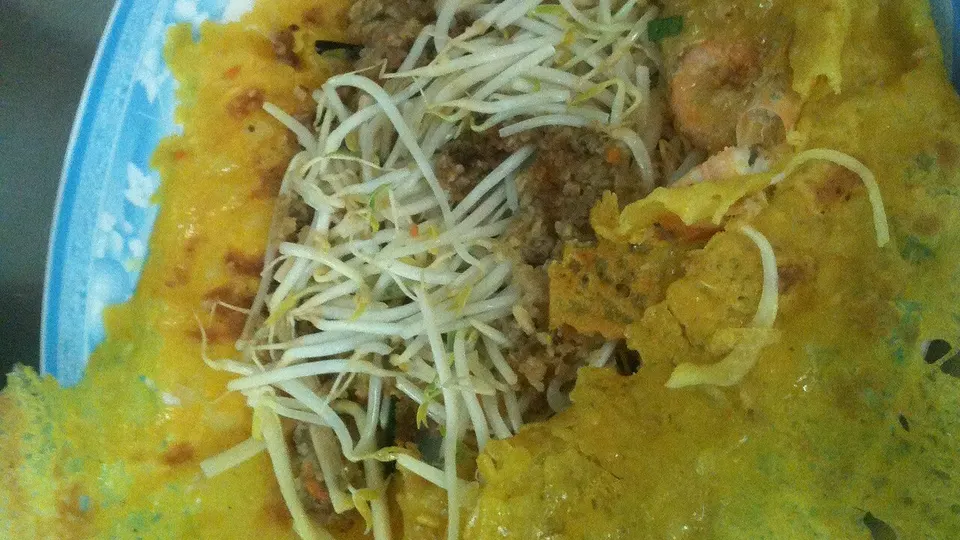
What changes from region to region is the pan, and the pan sets everything else: how thick the pancake is, how much filling it holds, whether it is folded or served flat, and how you eat it. The MICHELIN Guide also notes that banh xeo is at its best when the batter is cooked to order. English menus call it a pancake or a crepe (crêpe); both describe the same dish.
Southern banh xeo: big, thin and full of fillings
In the South, the batter is poured thinly across a wide pan so that the edges turn lacy and crunchy, and further into the Mekong Delta cooks use even larger pans (Znews). Znews describes a batter of rice flour, a little coconut milk and chopped scallions, and a filling of shrimp and meat (pork belly, sometimes beef) that is stir-fried together before it goes into the pancake. A VnExpress recipe for the Mekong version uses a deep pan and aims for a thin, crisp rim around a softer centre.
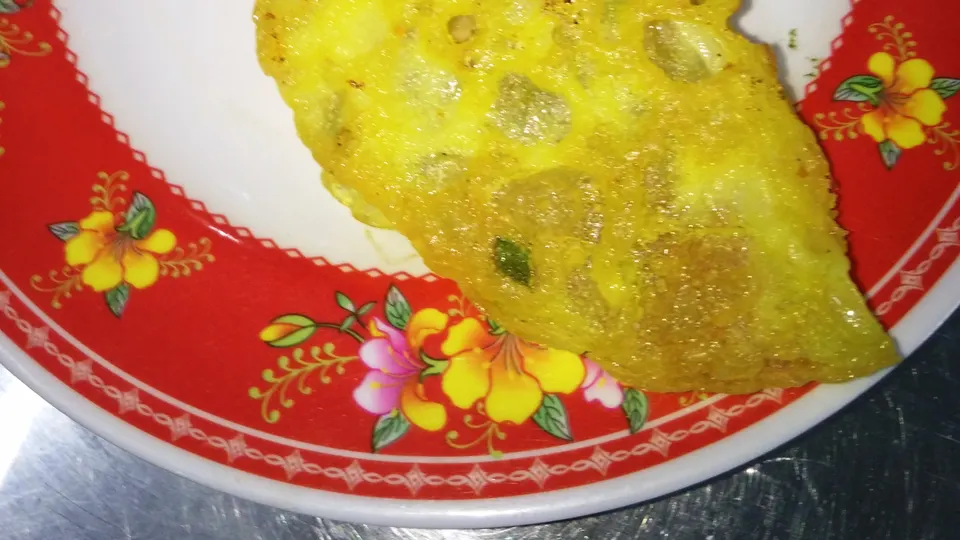
Because the pancake is large, Southern shops cut it into four. It comes with sweet-sour fish sauce, pickled carrot or papaya, and a basket of greens that, Znews says, can run to dozens of kinds; VnExpress lists mustard greens, lettuce, basil and seasonal garden leaves such as young mango leaves and la lot (lá lốt). Tuoi Tre lists Mekong Delta places such as Can Tho and Vinh Long among those known for banh xeo; see the Mekong Delta guide for the region.
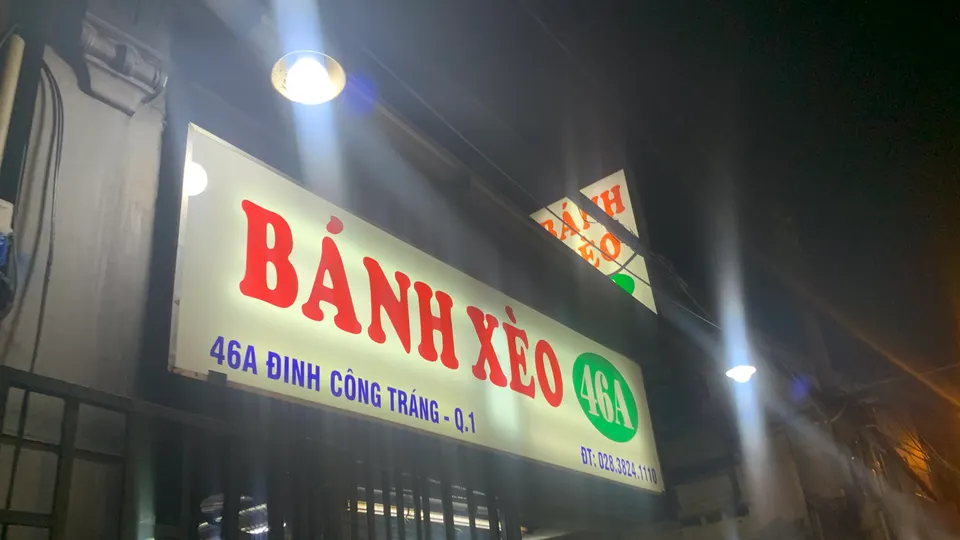
Fillings follow the delta’s gardens and rivers. Vietnam News mentions coconut palm heart and duck in the south-west, and the VnExpress recipe adds clams stir-fried with jicama. In Ho Chi Minh City, Banh Xeo 46A, a Bib Gourmand in the 2026 MICHELIN Guide, makes pancakes about 25 cm across with mung beans, bean sprouts, pork and shrimp; our Saigon food guide places it among the city’s other classic dishes. One change is recent: Znews notes that many vendors now use ready-made batter mix, which makes the shell crisper than the home-ground rice batter of the past.
Central banh xeo: small pans, seafood and mam nem
On the Central coast the pancake is cooked in small cast-iron moulds, roughly 15–20 cm across, with plenty of oil, so it cooks fast and turns crisp all the way through. Vietnam News notes that Central versions lean on seafood such as prawns, squid and mussels, reflecting the long coastline (Vietnam News). Znews describes fillings that are simpler than in the South, sometimes just one or two pieces of squid with a little bean sprout and chive, so the pancake does not feel greasy.
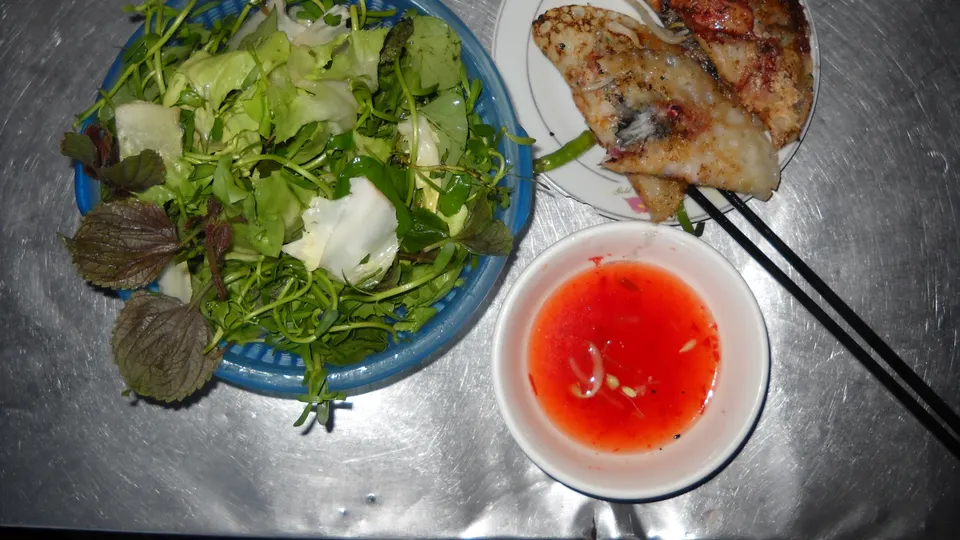
The sauce is the clearest contrast. Many Central stalls serve thick, brown fermented fish sauce, mam nem, which locals also call mam duc (mắm đục) (“cloudy fish sauce”), mixed with lime and chilli; our guide to Vietnamese dipping sauces by region shows how it compares with the South’s sweet-sour fish sauce. In Da Nang, Banh Xeo Ba Duong (Bánh Xèo Bà Dưỡng), a Selected restaurant in the 2026 MICHELIN Guide, is known instead for a minced-pork and peanut sauce. The greens are mustard greens, lettuce, fish mint (diep ca (diếp cá)) and Vietnamese basil, and Saigoneer adds that Central cooks like star fruit and green banana alongside. Because the pancakes are small, you eat them whole or halved, rolled in rice paper.
The Central coast is not uniform either. Batter is usually turmeric-yellow, but Znews notes that some stalls in coastal Binh Dinh make it white. Saigoneer describes the versions of the south-central coast, around Nha Trang, as smaller still, with seafood instead of pork, and served with fish sauce, chilli and peanut sauce; some are wrapped in greens, others eaten without. Hue, Da Nang, Binh Dinh and Quang Ngai (Quảng Ngãi) all have their own reputations, as the Central Vietnam hub shows.
Quy Nhon’s banh xeo tom nhay: the jumping-shrimp pancake
Tom nhay (Tôm nhảy) means “jumping shrimp”. In Quy Nhon the pancake is about the size of a palm, with a slightly thick shell, and is topped with small lagoon and river shrimp so fresh that they jump and crackle in the pan (VietNamNet). The shrimp are arranged in a ring on top with bean sprouts and scallions, and the pancake is rolled in rice paper with pineapple or green mango, cucumber and herbs, then dipped in fish sauce with garlic and chilli.
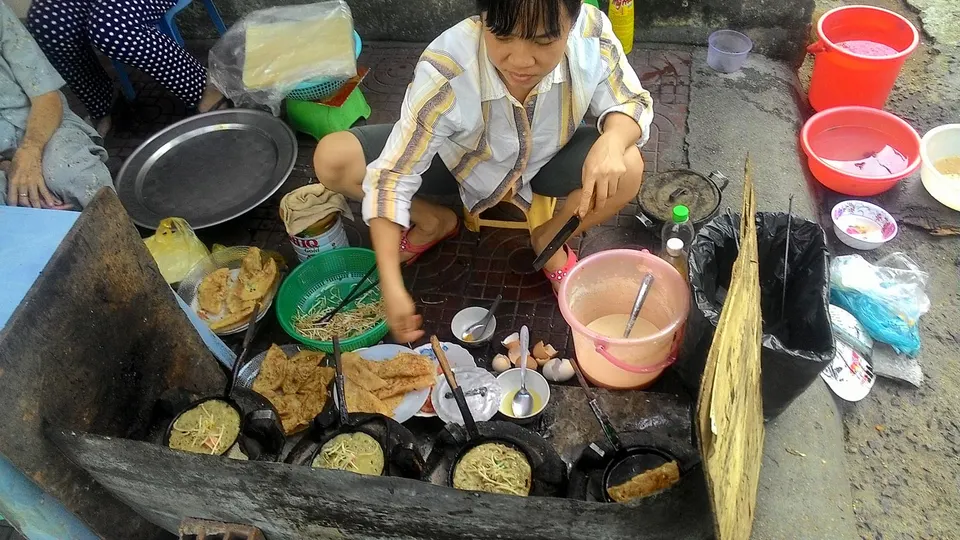
Vietnam Coracle describes the Quy Nhon pancake as open-topped rather than folded, about 5 inches (13 cm) across, with shrimp, squid or beef, and rice paper served either soft or dry. The specialist shops cluster on Dien Hong (Diên Hồng) Street, where VnExpress and Vietnam Coracle both recommend Gia Vy (Gia Vỹ), though sources give different house numbers, so look for the sign; Saigoneer credits its owner with the version many others later copied. The style has travelled: in Da Nang, the 2026 MICHELIN Guide gives a Bib Gourmand to a shop serving “Binh Dinh-style” banh xeo tom nhay. Quy Nhon has been part of Gia Lai province since 1 July 2025; the Quy Nhon guide covers the city.
Banh khoai in Hue: a close cousin, not a twin
Hue has its own pancake, banh khoai (our banh khoai guide covers it in full), which VnExpress describes as smaller, thicker and crisper than banh xeo, cooked in a cast-iron mould about 15 cm across, roughly half the size (VnExpress). The batter is fine rice flour with water, salt and eggs; the filling is pork, boiled shrimp, sometimes Chinese-style roast pork (xa xiu), and bean sprouts. The Hue city tourism portal adds that the pan is flat-bottomed and 2–3 cm deep, which keeps the pancake round instead of folding it like banh xeo.
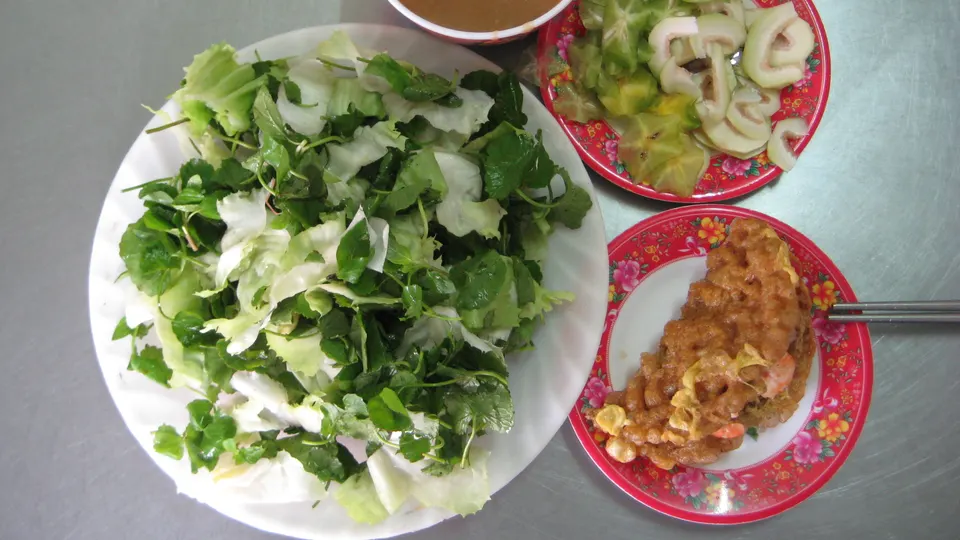
The real difference is the sauce. Where banh xeo is dipped in fish sauce, chilli fish sauce or mam nem, banh khoai comes with nuoc leo, a thick sauce of pork liver, minced lean pork, sesame, crushed peanuts and Hue fermented soybean sauce. It is eaten with greens, herbs and thin slices of astringent unripe banana and sour star fruit, often at a roadside stall in Hue’s cool, rainy season. A local legend says the name began as banh khoi (bánh khói), “smoke cake”, from the smoke of damp firewood, and shifted to khoai (khoái) in the Hue accent; treat that as a story, not a documented history. The city’s tourism portal recommends shops such as Banh Khoai Lac Thien at 6 Dinh Tien Hoang Street; our Hue food guide covers that banh khoai street.
Where did banh xeo come from?
No one can say for certain. Saigoneer notes that it is unclear when the pancake first appeared, but that most accounts agree it began in Central Vietnam. One theory makes today’s banh xeo a descendant of Hue’s banh khoai; another holds that the recipe was borrowed centuries ago from Cham cooking; a third, more speculative, points to South Indian influence in the first millennium. The MICHELIN Guide repeats the belief that banh xeo dates back to the Tay Son (Tây Sơn) era in Central Vietnam (VOV).
None of these accounts is backed by a dated recipe, so read them as tradition rather than proven history. What is documented is the present: the large, generously filled pancake of the Mekong Delta and Saigon, as Saigoneer describes it, sits alongside the small seafood pancakes of the coast, and Tuoi Tre notes that restaurants in Hanoi, Ho Chi Minh City and abroad now put banh xeo on their menus as a signature dish.
How to eat banh xeo: wrap, roll and dip
Banh xeo is finger food. Cut or tear the pancake into pieces, lay a piece on a sheet of rice paper or a mustard leaf with a few herbs and some cucumber, roll it up tightly and dip it, as Vietnam News describes. Chopsticks help with tearing; most people finish by hand.
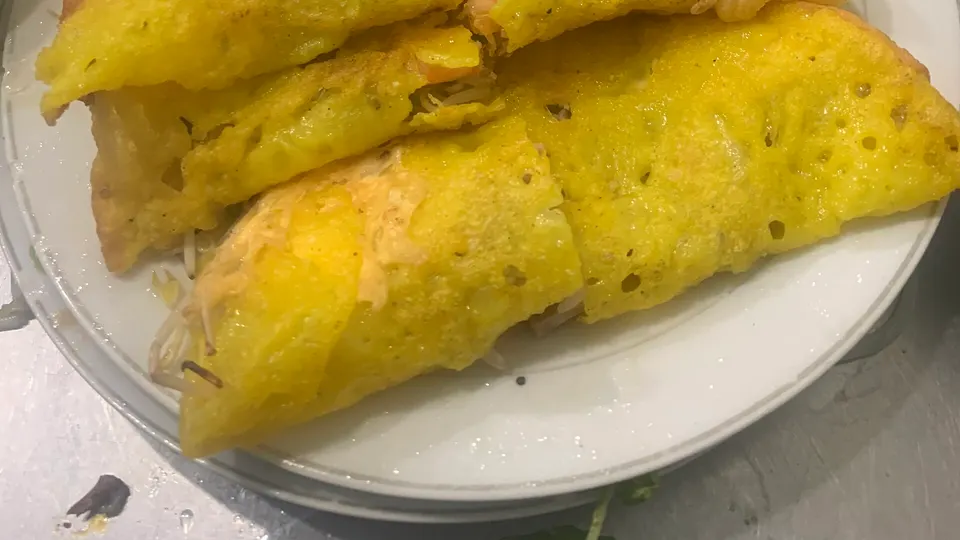
- In the South, the big pancake usually arrives cut into four, with a large basket of greens and a bowl of sweet-sour fish sauce with pickled carrot or papaya.
- On the Central coast, eat the small pancakes whole or halved, rolled in rice paper, and dip them in mam nem with lime and chilli, or in fish sauce or peanut sauce where the shop offers it.
- In Hue, banh khoai is torn and dipped straight into the bowl of nuoc leo, with star fruit and unripe banana in the roll.
- Eat it hot. The crisp shell softens within minutes, which is why shops cook to order and why Vietnam News suggests banh xeo is especially good in the cooler months.
Which banh xeo should you try?
Neither style is more “authentic”; they are answers to different pans and different pantries. If you like crunchy edges, lots of greens and a sweet-sour dip, start with the Southern pancake in Saigon or the Mekong Delta. If you prefer something small, very crisp and seafood-led, with a funkier sauce, look for the Central coast versions in Da Nang or Quy Nhon. If you are in Hue, try banh khoai for the peanut-and-liver nuoc leo, which you will not find on a Southern table. And if you are heading to Vung Tau, compare banh xeo with its bite-size cousin from the mould tray: our guide to banh xeo vs banh khot explains how the two differ and how to eat each.
Use the table to decide what to order where. Prices are single shops reported in dated 2026 articles, not city averages; where no dated price was found, the cell says so.
| If you want… | Order | Where | 2026 price seen in the press | How it comes |
|---|---|---|---|---|
| A big, crunchy pancake and lots of greens | Southern banh xeo | Saigon, Mekong Delta | 55,000–60,000 dong a pancake at a Ho Chi Minh City shop (Znews, Sep 2026) | Cut into four; greens, sweet-sour fish sauce |
| Small, very crisp, seafood-led pancakes | Central banh xeo | Da Nang, Quang Ngai-style stalls | 60,000 dong for a plate of four in Da Nang (VnExpress, Apr 2026); 8,000 dong each at a Saigon stall (VnExpress, Oct 2026) | Whole or halved, rolled in rice paper; mam nem or peanut sauce |
| Fresh whole shrimp on an open pancake | Banh xeo tom nhay | Quy Nhon (Dien Hong Street); Co Ba in Da Nang | No dated price found | Palm-sized, open-topped; fish sauce with garlic and chilli |
| A thick peanut and pork-liver dip | Banh khoai | Hue, e.g. Dinh Tien Hoang Street | No dated price found | Round, flat and thick; dipped in nuoc leo |
How to order. Some Central shops sell by the plate rather than by the piece: the Da Nang shop above offers a small plate of four or a large plate of six (VnExpress, April 2026). You can also find the Central style without travelling: a stall run by a cook from Quang Ngai in Ho Chi Minh City cooks 10 cm pancakes over firewood to order and serves them with rice paper and sweet fish sauce (VnExpress). Wherever you are, eat each pancake as soon as it lands.
The cards below list two Bib Gourmand shops and one Selected restaurant from the 2026 MICHELIN Guide Vietnam, in Saigon and Da Nang, and a local favourite in Quy Nhon; for other Southern dishes, see the South Vietnam hub.
Where to try bánh xèo in Saigon, Đà Nẵng and Quy Nhơn
MICHELIN Guide pick
Bánh Xèo 46A · Bánh xèo 46A
Ho Chi Minh City · Tân Định ward (former District 1)
46A Đinh Công Tráng Street
The Southern style at full size: a Bib Gourmand in the MICHELIN Guide Vietnam 2026 (announced 4 June 2026), which says the shop has drawn regulars for over seven decades with large pancakes filled with mung beans, bean sprouts, pork and shrimp. Báo Thế giới & Việt Nam put the pancake at about 25 cm across.
Order: Bánh xèo, wrapped in the greens served with it; the guide suggests a chicken salad or grilled meats alongside and recommends the outdoor tables by the open kitchen.
The MICHELIN listing writes the address as 46 Đinh Công Tráng; the shop sign and press use 46A.
Listed in: MICHELIN Guide Vietnam 2026, Báo Thế giới & Việt Nam (2024) · checked November 2026
MICHELIN Guide pick
Bánh Xèo Bà Dưỡng · Bánh xèo Bà Dưỡng
Đà Nẵng · Hòa Cường ward
Alley 280 Hoàng Diệu Street (No. 280/23)
A Selected restaurant (not a Bib Gourmand) in the MICHELIN Guide Vietnam 2026: a no-frills shop of more than 30 years at the end of an alley, where crisp Central-style bánh xèo are rolled in rice paper at the table with herbs, pickled papaya, cucumber and eggplant.
Order: Bánh xèo with nem lụi (grilled pork skewers); the guide singles out the minced-pork and peanut dipping sauce.
Listed in: MICHELIN Guide Vietnam 2026 · checked November 2026
MICHELIN Guide pick
Bánh Xèo Tôm Nhảy Cô Ba · Bánh xèo tôm nhảy Cô Ba
Đà Nẵng · Hòa Cường ward
248 Trưng Nữ Vương Street
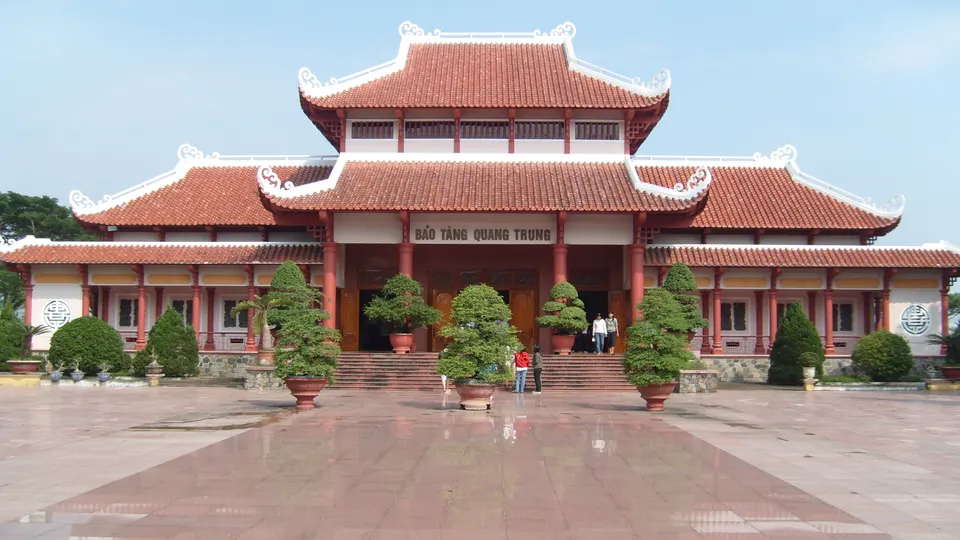
A Bib Gourmand in the MICHELIN Guide Vietnam 2026 and a way to taste the Quy Nhơn style in Đà Nẵng: the guide describes a very thin, crisp Bình Định-style bánh xèo tôm nhảy topped with fresh shrimp, from a small family shop open for over a decade.
Order: Bánh xèo tôm nhảy with fish sauce or peanut sauce; the guide also recommends the nem nướng (pork sausage).
Listed in: MICHELIN Guide Vietnam 2026 · checked November 2026
Local favourite
Bánh Xèo Tôm Nhảy Gia Vỹ · Bánh xèo tôm nhảy Gia Vỹ
Quy Nhơn (Gia Lai province) · Central Quy Nhơn
Diên Hồng Street
Recommended for Quy Nhơn's own bánh xèo tôm nhảy by VnExpress, Vietnam Coracle and Saigoneer; Saigoneer credits the owner with the version other shops later copied, with beef and squid added to the usual shrimp.
Order: Bánh xèo tôm nhảy (shrimp), or the squid and beef versions, rolled in rice paper with herbs, cucumber and green mango.
Several bánh xèo tôm nhảy shops sit on Diên Hồng Street, so look for the Gia Vỹ sign. Sources give different house numbers for the shop, so none is shown here; Saigoneer mentions a second Gia Vỹ on Nguyễn Tư Street.
Recommended by: Saigoneer (2023), Vietnam Coracle (2024), VnExpress (2020) · checked November 2026
Addresses and details can change; check before you go. We do not accept payment for listings.
Frequently asked questions
Which banh xeo should I order, Southern or Central style?
Order Southern banh xeo in Saigon or the Mekong Delta if you want a big, crunchy pancake with lots of greens and sweet-sour fish sauce. Order Central banh xeo in Da Nang or Quy Nhon if you prefer small, very crisp, seafood-filled pancakes rolled in rice paper and dipped in mam nem or peanut sauce.
How much does banh xeo cost in Vietnam in 2026?
It depends mostly on size: small Central-style banh xeo are cheap enough to order by the piece or the plate, from 8,000 dong each at one Saigon stall (VnExpress, October 2026), while one big Southern pancake can cost 55,000–60,000 dong (Znews, September 2026). Prices are single shops, not city averages, so expect some variation.
Which banh xeo shops are in the MICHELIN Guide in 2026?
In the 2026 MICHELIN Guide Vietnam, Banh Xeo 46A on Dinh Cong Trang Street in Ho Chi Minh City and Banh Xeo Tom Nhay Co Ba and Banh Xeo 76 in Da Nang are Bib Gourmand picks. Banh Xeo Ba Duong, in an alley off Hoang Dieu Street in Da Nang, is listed as a Selected restaurant.
Is banh khoai the same as banh xeo?
No. Banh khoai from Hue is a close relative: smaller, thicker and crisper, cooked round in a flat-bottomed pan about 15 cm across and dipped in nuoc leo, a peanut, sesame and pork-liver sauce, rather than in fish sauce or mam nem.
What sauce do I dip banh xeo in?
In the South it is a sweet-sour fish sauce with garlic, chilli and pickled carrot or papaya. On the Central coast many stalls serve thick fermented mam nem with lime and chilli, and some Da Nang shops serve a minced-pork and peanut sauce instead.
Key sources
- Điểm khác nhau giữa bánh xèo miền Trung và miền Nam · Znews, 28 Sep 2020
- Bánh xèo: món dân dã đậm hồn Việt · Tuổi Trẻ, 11 Oct 2025
- Việt Nam's iconic crepe 'bánh xèo' is a sizzling discovery · Việt Nam News, 7 Apr 2026
- MICHELIN Guide highlights what makes Vietnam's bánh xèo distinctive · VOV, 30 Mar 2026
- Về xứ Huế nhớ bánh khoái · VnExpress, 26 Jan 2014
- 5 đặc sản Quy Nhơn vừa ngon vừa rẻ · VietNamNet, 8 May 2023
- Chủ quán bánh xèo TP.HCM chi 100 triệu làm vườn rau cho khách tự hái · Znews, 29 Sep 2026
- Bánh xèo củi trong hẻm sâu hút khách tại TP HCM · VnExpress, 23 Oct 2026
All 24 sources and further reading
- Cách làm bánh xèo miền Tây · VnExpress, 19 Sep 2023
- The Evolution of Bánh Xèo: A Street Food History · Saigoneer, 3 Sep 2016
- Hương vị bánh Huế · VnExpress, 26 Oct 2013
- Bánh Khoái – Vietnamese Crepe in Hue · Khám phá Huế (Huế Center of Information Technology)
- Bánh xèo tôm nhảy, bún cột lạ miệng khi đến vùng đất Quy Nhơn · VietNamNet, 22 Apr 2019
- Những món nên thử ở Quy Nhơn · VnExpress, 13 Mar 2020
- Quy Nhơn food guide · Vietnam Coracle (first published Sep 2022)
- A brief guide to the cuisine of Quy Nhơn city · Saigoneer, 21 Apr 2023
- Bánh Xèo 46A · MICHELIN Guide Vietnam 2026
- Bánh Xèo Bà Dưỡng · MICHELIN Guide Vietnam 2026
- Bánh Xèo Tôm Nhảy Cô Ba · MICHELIN Guide Vietnam 2026
- Thưởng thức món bánh xèo nổi tiếng ở TP. Hồ Chí Minh được Michelin xướng tên · Báo Thế giới & Việt Nam, 27 Sep 2024
- Quán bánh xèo Đà Nẵng hơn 30 năm giữ chân thực khách · VnExpress, 21 Apr 2026
- MICHELIN Guide Vietnam: Bib Gourmand restaurants · MICHELIN Guide Vietnam 2026
- Complete guide to MICHELIN-recognised restaurants in Da Nang 2026 · Da Nang Fantasticity (Da Nang tourism portal), 5 Jun 2026
- Resolution 202/2025/QH15 on the reorganization of provincial-level administrative divisions · National Assembly of Vietnam (via LuatVietnam)
Keep exploring
 Central Vietnam · Travel Quy Nhon (Quy Nhơn): Is It Worth It and How Many Days? Is Quy Nhon worth it, and for how many days? Cham towers, Ky Co and Eo Gio, where to eat banh xeo, flights and the dry season, checked November 2026.
 South Vietnam · Travel Mekong Delta: Which Area to Visit and Where to Base Which part of the Mekong Delta to visit and where to base: Can Tho, Ben Tre or Chau Doc, Cai Rang market hours, seasons, where to eat, new province names.
 Central Vietnam · Travel Hue (Huế): How Many Days, What to See, 2026 Tickets How many days Hue needs, which Citadel sights and royal tombs to pick, 2026 ticket prices, the flood months to avoid and where to eat in the old royal capital.
 South Vietnam · Food Com Tam (Cơm Tấm) in Saigon: What to Order, What It Costs Com tam is Saigon's broken rice plate: what suon, bi and cha mean, what a plate costs in 2026 press reports, and where the MICHELIN Bib Gourmand pick is.