Central Vietnam · Food
Banh Khoai (Bánh Khoái) vs Banh Xeo: What to Order in Hue
Banh khoai vs banh xeo: why Hue's pancake is smaller, thicker and crisper, how to eat it with nuoc leo sauce, two regional variants and where to try it.
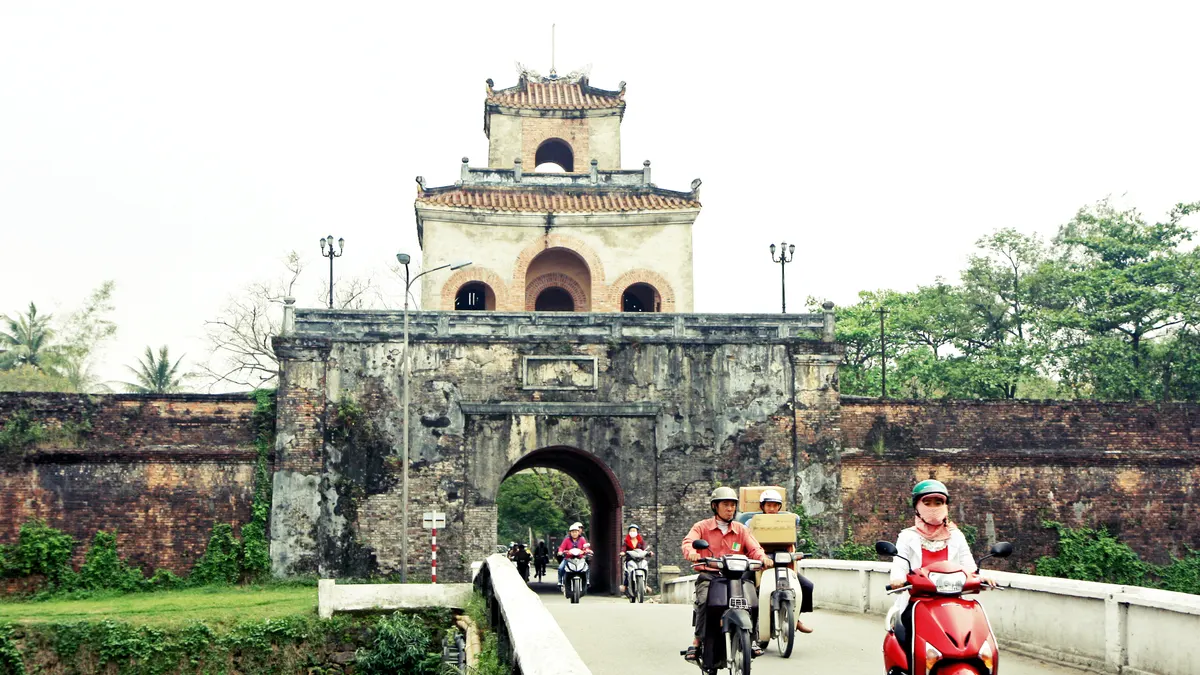
Banh khoai (bánh khoái) is not banh xeo with a different name: it is Hue’s own pancake, smaller, thicker and crisper, cooked in a cast-iron mould about 15 cm across and dipped in nuoc leo, a thick sauce of pork liver, minced pork, peanuts, sesame and fermented soybean sauce, instead of fish sauce (VnExpress). As of June 2026 VnExpress was still sending visitors to Dinh Tien Hoang street, near Thuong Tu gate of the citadel, for it. If you are in Hue, order banh khoai; if you want a big, lacy pancake wrapped in greens, that is Southern banh xeo, and Hue is not the place for it.
This guide explains what actually separates the two, how to eat banh khoai the Hue way, the two other dishes in Vietnam that share its name, and which shops to try. It sits alongside our banh xeo guide, which compares Southern and Central pancakes, and our where to eat in Hue guide for the rest of the city’s food; more Hue and coast guides are on our Central Vietnam page.
Banh khoai vs banh xeo at a glance
| Hue banh khoai | Southern banh xeo | Central banh xeo (Da Nang, Quy Nhon) | |
|---|---|---|---|
| Size and pan | Small, about 15 cm, in a cast-iron mould 2–3 cm deep | Large, poured across a wide pan | Small, in 15–20 cm moulds |
| Batter | Rice flour, often with egg; thicker and very crisp | Thin rice batter with turmeric, often coconut milk | Thin, crisp |
| Filling | River shrimp, pork belly, bean sprouts, sometimes egg yolk or mushrooms | Shrimp, pork belly, bean sprouts, sometimes mung bean | Shrimp or squid, bean sprouts |
| Shape served | Folded into a half-moon | Folded, cut into pieces | Folded or rolled in rice paper |
| Dip | Nuoc leo: liver, minced pork, peanuts, sesame, soybean sauce | Sweet-sour fish sauce | Fish sauce or mam nem |
| Greens | Mustard greens, lettuce, herbs, star fruit, green banana, sometimes young fig | A big basket of lettuce and herbs | Rice paper, herbs |
| Where to eat | Hue: Dinh Tien Hoang, Pho Duc Chinh | Saigon, Mekong Delta | Da Nang, Quy Nhon, Nha Trang |
The banh xeo columns summarise our banh xeo guide; the banh khoai column comes from the sources listed below.
What makes banh khoai different from banh xeo
The shape gives the first clue. Hue’s tourism portal describes banh khoai as cooked in a small, flat-bottomed cast-iron pan about 15 cm across and 2–3 cm high, while Southern banh xeo is poured thin across a wide pan and folded over its filling (Kham pha Hue). VnExpress puts it more simply: banh khoai is about half the size of the banh xeo most Vietnamese know, and smaller, thicker and crisper.
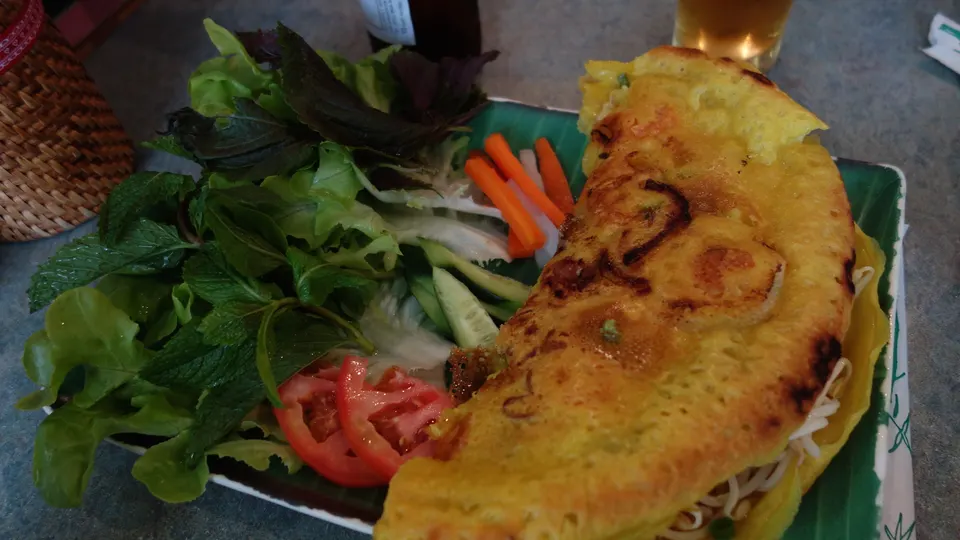
The batter is where cooks compete. VnExpress describes finely ground rice flour thinned with water, a little salt and a few eggs for colour and fragrance; VietNamNet adds tapioca flour for crispness. The filling is the familiar pancake trio of shrimp, pork belly and bean sprouts, but Hue cooks build on it: Thanh Nien lists river shrimp, raw pork paste (gio song), egg and pork belly at the Thuong Tu shops, and VnExpress mentions shiitake and wood-ear mushrooms and egg yolk. When the base is crisp, the cook folds it into a half-moon, so a plate of banh khoai looks like a row of small golden semicircles rather than one big crescent.
Why “khoai”? No one knows for certain, and the stories disagree. One version told by VnExpress says the cake was first called banh khoi, “smoke cake”, because cooks worked over wet firewood in Hue’s long rainy season and the kitchen filled with smoke, and that the word shifted to khoai in the Hue accent. The more common explanation is the plain meaning of khoai, “to enjoy”: Tuoi Tre (2011) and cooks in Thanh Hoa quoted by CafeF (2023) both say it is called that because people enjoy eating it so much. Treat both as folk explanations.
How to eat banh khoai: nuoc leo, greens and star fruit
The sauce is what makes the dish Hue’s. Nuoc leo for banh khoai is cooked, not mixed: pork liver and finely minced lean pork, roasted sesame, crushed peanuts and Hue fermented soybean sauce, simmered until thick (VietNamNet). Thanh Nien says the Thuong Tu family’s sauce uses more than ten seasonings, including fermented shrimp paste (nuoc ruoc), and VnExpress notes that each shop’s recipe is guarded and decides its reputation. Expect something closer to a savoury peanut gravy than a dipping sauce you can see through.
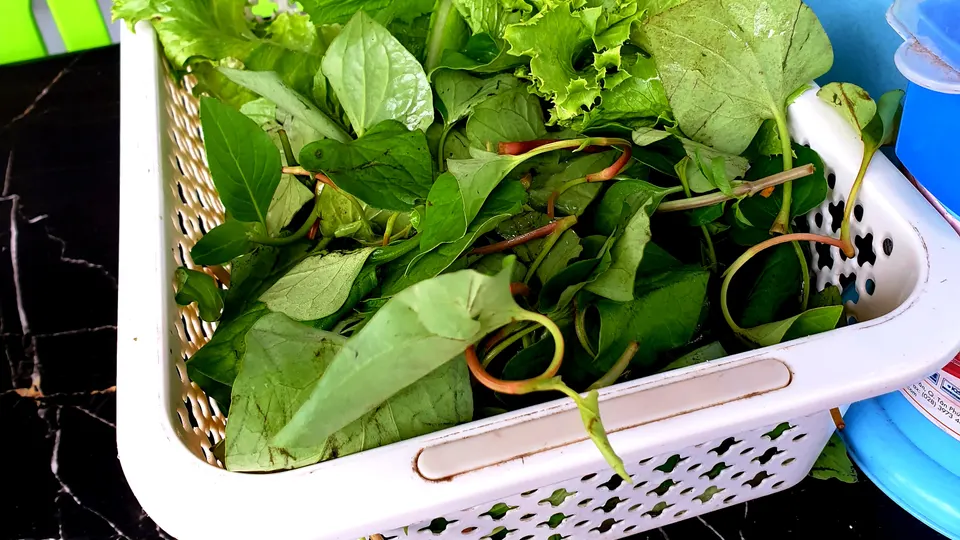
A plate of greens comes alongside: young mustard greens, lettuce and herbs, with thin slices of sour star fruit and astringent green banana; VnExpress and VietNamNet also mention slices of young fig (va), a Hue fruit. How people eat it varies, but the common way is simple:
- Tear off a piece of pancake with chopsticks or your fingers.
- Wrap it with a leaf of mustard green or lettuce, a herb sprig and a slice of star fruit or banana.
- Dip it into the bowl of nuoc leo, or spoon a little sauce over it, and eat it while the shell is still crisp.
Two exceptions are worth knowing. Hue’s tourism portal notes that some shops also offer a fish sauce or a thin lime, garlic and chilli dip like banh xeo’s, and at Chuon market outside the city the local version comes with fish sauce rather than nuoc leo (see below). And banh khoai does not wait well: it is cooked to order, so eat it at the shop rather than taking it away. For how dipping sauces differ across the country, see our guide to nuoc cham by region.
Two other banh khoai: Chuon market’s fish pancake and Thanh Hoa’s shrimp version
The name travels further than the Hue recipe. In Chuon village (An Truyen), on the Chuon lagoon about 5 km east of Hue city, Tuoi Tre described banh khoai ca kinh in 2011: the same rice batter, but filled with a whole small brackish-water fish (ca kinh) instead of shrimp and pork, dipped in pure fermented shrimp-paste fish sauce, with no greens at all (Tuoi Tre). The paper gave the fish season as the third to eighth lunar months and said the dish was then sold only at the village market, not in Hue’s restaurants. That was in 2011, so check locally before making the trip.
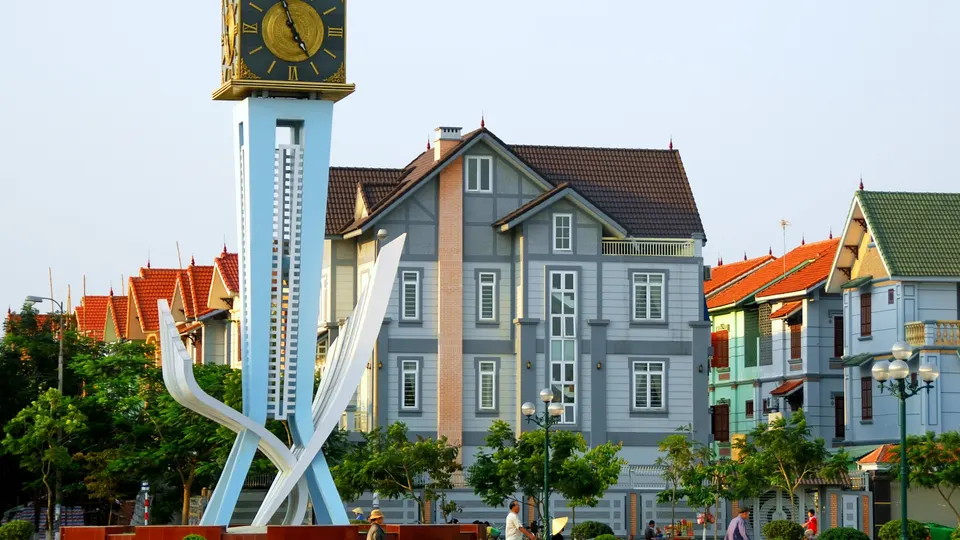
Further north, in Thanh Hoa province, banh khoai tep is a thin pancake from home kitchens and snack streets. CafeF (2023) describes a batter of soaked and ground rice poured over cabbage, water dropwort (rau can) and tiny freshwater field shrimp (tep) in a deep cast-iron pan greased with lard, then flipped, and eaten with fish sauce, lime, pepper and chilli. The Vietnam News Agency’s Vietnam Pictorial (2017) describes the same combination of rice batter, shrimp, cabbage and water dropwort as everyday food in central Thanh Hoa. Thanh Hoa’s version is thinner and has no nuoc leo, so it is a cousin by name rather than the dish Hue is known for.
| Version | Where | Filling | Dip |
|---|---|---|---|
| Banh khoai | Hue city | Shrimp, pork belly, bean sprouts, egg | Nuoc leo (liver, peanut, sesame, soybean) |
| Banh khoai ca kinh | Chuon market, east of Hue | A whole small lagoon fish | Fermented shrimp-paste fish sauce |
| Banh khoai tep | Thanh Hoa | Field shrimp, cabbage, water dropwort | Fish sauce with lime and chilli |
Where to eat banh khoai in Hue
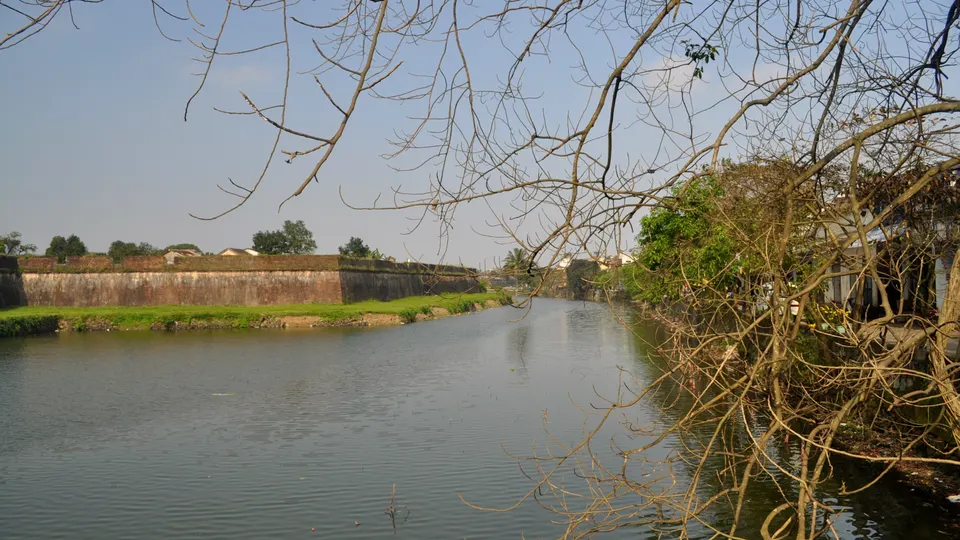
Dinh Tien Hoang is the banh khoai street. This short street runs to Thuong Tu gate in the south-east of the citadel, and in 2015 Thanh Nien described a row of banh khoai shops there run by one family, about 40 years in business, with the original, Lac Thien, at number 6 and the neighbouring shops opened by the founder’s children (Thanh Nien). Hue’s tourism portal also lists Lac Thien at 6 Dinh Tien Hoang and Banh khoai Hong Mai further along at number 110, which VnExpress recommended in June 2026. Locals call the style banh khoai Thuong Tu, after the gate.
Pho Duc Chinh, in the south-bank streets where many visitors stay, has Quan Hanh at number 11, which Hue’s tourism portal describes as a favourite with foreign visitors and which also serves banh beo and nem lui. VnExpress listed it among visitors’ favourite Hue restaurants in July 2025, with opening hours then of 10 am to 9 pm daily. Thanh Nien also names Dong Ba, Kim Long, Gia Hoi and Vy Da as neighbourhoods with banh khoai, so you will see it on menus across the city; the verified cards below are a starting point, not a ranking.
Because many shops share the street and similar names, go by the house number. Prices and opening hours change; check them at the shop.
Plan your banh khoai stop
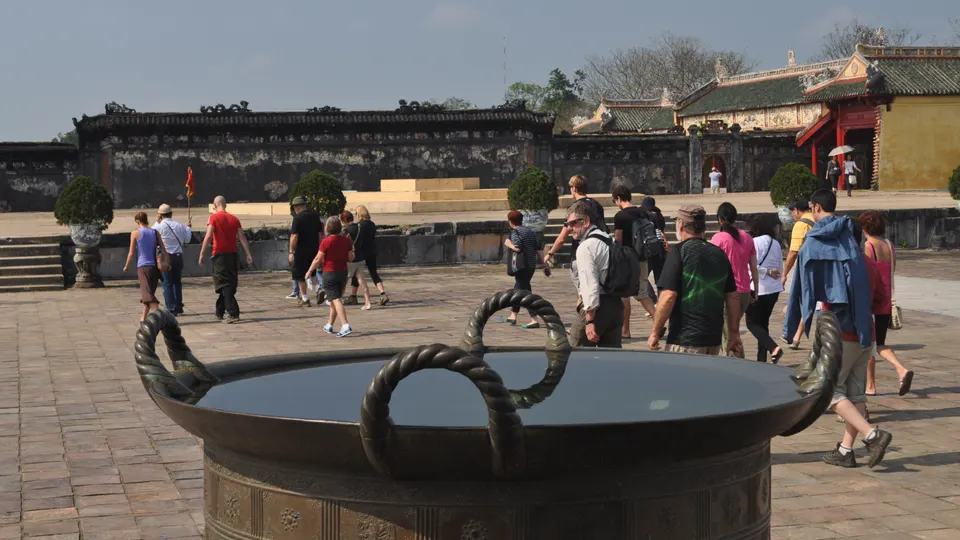
Banh khoai is an afternoon and evening snack, so the easiest plan is to eat it after a morning in the Imperial City. Leave the citadel by Thuong Tu gate on its south-east side and you are on Dinh Tien Hoang; from the south bank, Quan Hanh is a short walk from the hotel streets. VnExpress says banh khoai is at its best in the cold and drizzle of Hue’s early spring and on rainy days, which makes it a good rainy-day plan (VnExpress).
What to do:
- Order one or two per person to start. The pancakes are small and cooked to order, so add more as you go rather than ordering a stack that goes soft.
- Pair it with nem lui, Hue’s lemongrass pork skewers, which many banh khoai shops also sell; Banh khoai Hong Mai serves only those two dishes.
- Use the greens. The star fruit and green banana cut through the rich sauce; skipping them is the easiest way to find banh khoai too heavy, which VnExpress warns it can be.
- Do not expect banh xeo. If you want the big Southern pancake, save it for Saigon; in Hue, banh khoai is the dish to order.
- Combine it with the rest of Hue’s food. Bun bo for breakfast, banh khoai in the afternoon and com hen on another day make a good first round; our bun bo Hue guide, Hue travel guide and Hue itinerary show how to fit them in.
Where to try banh khoai in Hue
Local favourite
Bánh khoái Hồng Mai
Huế · North bank, near the citadel (former Phú Hậu ward)
110 Đinh Tiên Hoàng Street
A two-dish shop on Dinh Tien Hoang, Hue's banh khoai street: VnExpress (June 2026) describes its crisp shell with shrimp, pork, bean sprouts and egg and a thick nuoc leo of liver, peanuts and sesame, and Hue's official tourism portal lists it at this address.
Order: Banh khoai with nuoc leo and the plate of greens, plus a few nem lui skewers, the shop's only other dish.
Several banh khoai shops line this street, including Lac Thien at number 6, which Thanh Nien described as the original. This card means the shop at number 110.
Recommended by: VnExpress (2026), Khám phá Huế (Hue Center of Information Technology) · checked November 2026
Local favourite
Quán Hạnh
Huế · South bank, backpacker streets (former Phú Hội ward)
11 Phó Đức Chính Street
A long-running south-bank shop for banh khoai and Hue's small steamed cakes; Hue's official tourism portal calls it a favourite with foreign visitors, and VnExpress listed it among visitors' favourite Hue restaurants in July 2025.
Order: Banh khoai first, then a mixed plate of banh beo (steamed rice cakes) and nem lui.
Recommended by: VnExpress (2025), Khám phá Huế (Hue Center of Information Technology) · checked November 2026
Addresses and details can change; check before you go. We do not accept payment for listings.
Frequently asked questions
Is banh khoai the same as banh xeo?
No. Banh khoai is Hue's smaller, thicker and crisper cousin of banh xeo, cooked in a 15 cm cast-iron mould and dipped in thick nuoc leo sauce made with pork liver, peanuts and sesame, while banh xeo is dipped in fish sauce or mam nem.
Where should I eat banh khoai in Hue?
Go to Dinh Tien Hoang street near Thuong Tu gate on the north bank, where Lac Thien at number 6 and Banh khoai Hong Mai at number 110 serve it, or to Quan Hanh at 11 Pho Duc Chinh on the south bank, close to the hotel streets.
What time of day do people eat banh khoai?
Banh khoai is an afternoon and evening snack in Hue rather than breakfast, and VnExpress notes it tastes best on cold, drizzly days, especially in Hue's early spring and rainy season.
Do I need to ask for the sauce with banh khoai?
Usually not: shops bring a small bowl of nuoc leo with each order, plus a plate of greens, sliced star fruit and green banana. If a fish-sauce dip arrives instead, ask for nuoc leo by name.
Can I find banh khoai outside Hue?
Yes, but it is a different dish in Thanh Hoa, where banh khoai tep is a thin pancake of field shrimp, cabbage and water dropwort dipped in fish sauce. Hue-style banh khoai with nuoc leo is best eaten in Hue itself.
Key sources
- Về xứ Huế nhớ bánh khoái (Remembering banh khoai in Hue) · VnExpress, 26 January 2014
- Bánh Khoái – Vietnamese Crepe in Hue · Khám phá Huế (Hue Center of Information Technology)
- Về Huế nhớ ghé bánh khoái Thượng Tứ (In Hue, stop for Thuong Tu banh khoai) · Thanh Niên, 31 March 2015
- Banh khoai – Hue's rustic delicacy · VietNamNet, 14 May 2024
- Về chợ Chuồn ăn bánh khoái cá kình (Banh khoai with ca kinh fish at Chuon market) · Tuổi Trẻ, 4 September 2011
- 7 quán ăn ngon, món truyền thống được gợi ý ở Huế (7 traditional eateries recommended in Hue) · VnExpress, 21 June 2026
- 10 nhà hàng được du khách yêu thích tại Huế (10 restaurants visitors love in Hue) · VnExpress, 5 July 2025
- Five siblings of 'banh xeo' and where to find them · VnExpress International
All 12 sources and further reading
- Thưởng thức món bánh chế biến trên chảo gang: Càng ăn càng 'khoái' (Thanh Hoa's banh khoai tep) · CafeF, 4 March 2023
- Love for Delicious Banh Khoai Pancakes · Vietnam Pictorial (Vietnam News Agency), 6 March 2017
- Ba món ăn có tên kêu, dễ nhớ (Three dishes with catchy names) · VnExpress, 26 November 2017
- Cách làm món bánh khoái (How to make banh khoai) · VnExpress, 20 October 2019
Keep exploring
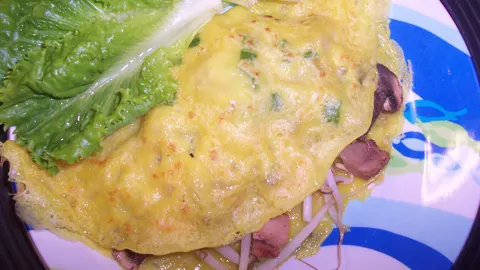 North · Central · South · Food Banh Xeo (Bánh Xèo): South vs Central and What to Order Banh xeo South vs Central: a big folded Saigon pancake or small crisp seafood ones, plus Hue's banh khoai, 2026 prices, what to order and MICHELIN picks.
 Central Vietnam · Food Where to Eat in Hue (Huế): Which Dish, Where and When Where to eat in Hue by area and time: bun bo at dawn near Dong Ba, banh khoai on Dinh Tien Hoang, com hen on Con Hen, night stalls and vegetarian picks.
 Central Vietnam · Travel Hue (Huế): How Many Days, What to See, 2026 Tickets How many days Hue needs, which Citadel sights and royal tombs to pick, 2026 ticket prices, the flood months to avoid and where to eat in the old royal capital.