North Vietnam · Food
Banh Cuon (Bánh Cuốn): Which Style to Try and Where to Eat
Banh cuon, Vietnam's steamed rice rolls: hot filled or plain Thanh Tri style, regional versions, 2026 MICHELIN shops in Hanoi and Saigon, and prices.
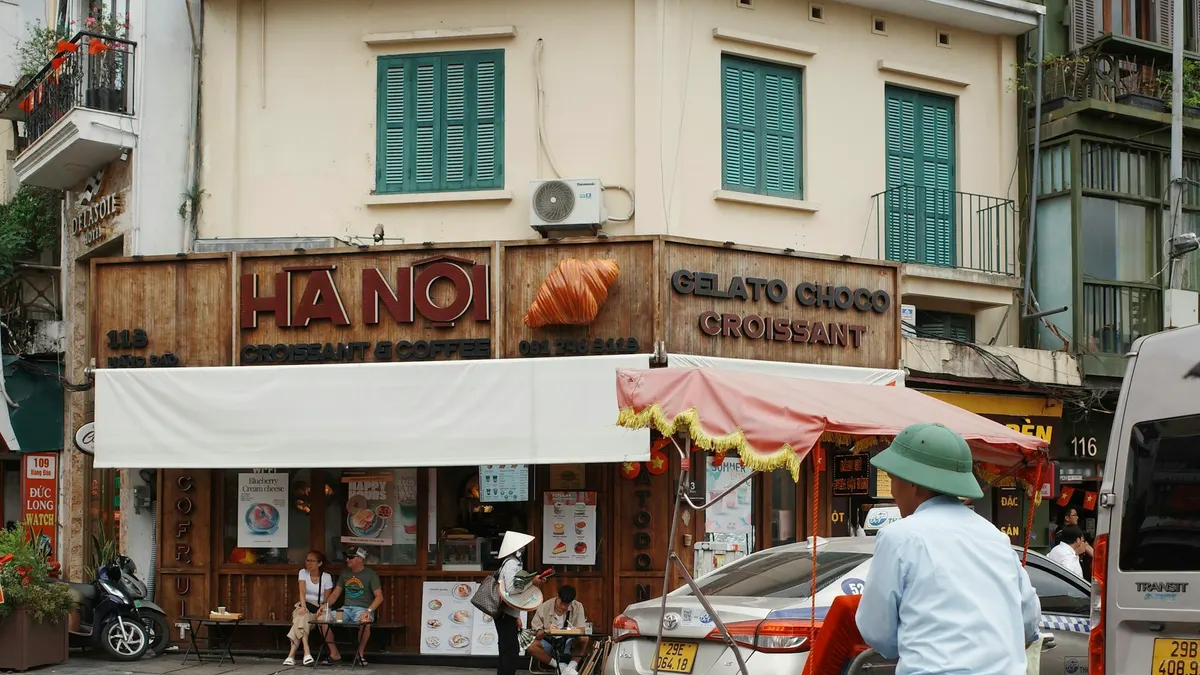
Order hot pork-filled rolls in an Old Quarter shop for the classic Hanoi breakfast, or plain, cool sheets with spring-onion oil for the older Thanh Tri style. As of November 2026, Banh Cuon Gia Truyen Thanh Van on Hang Ga is the only banh cuon shop in Hanoi with a MICHELIN Bib Gourmand, and Banh Cuon Tay Ho 127 holds the same award in Saigon. When VietNamNet checked in June 2026, a plate at Hanoi’s MICHELIN-listed shops cost about 30,000 to 65,000 dong.
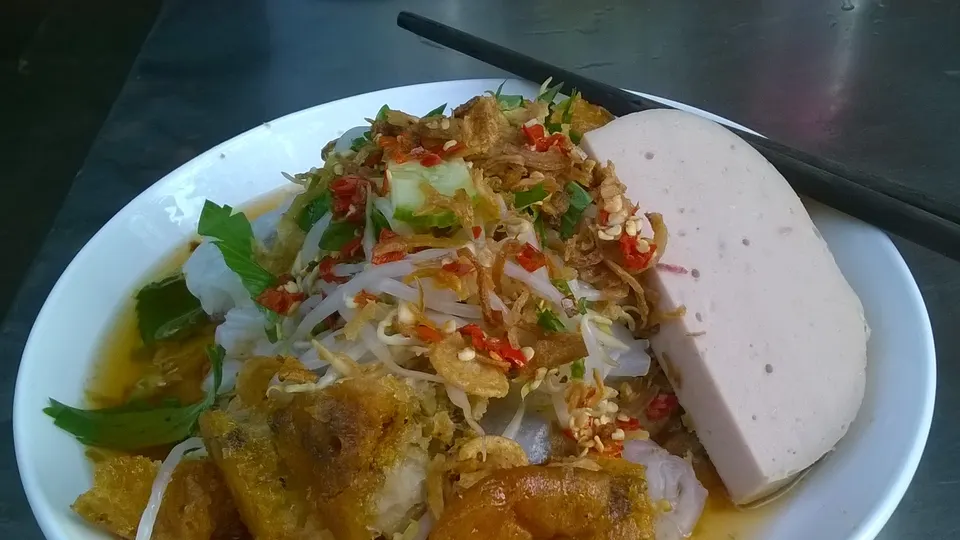
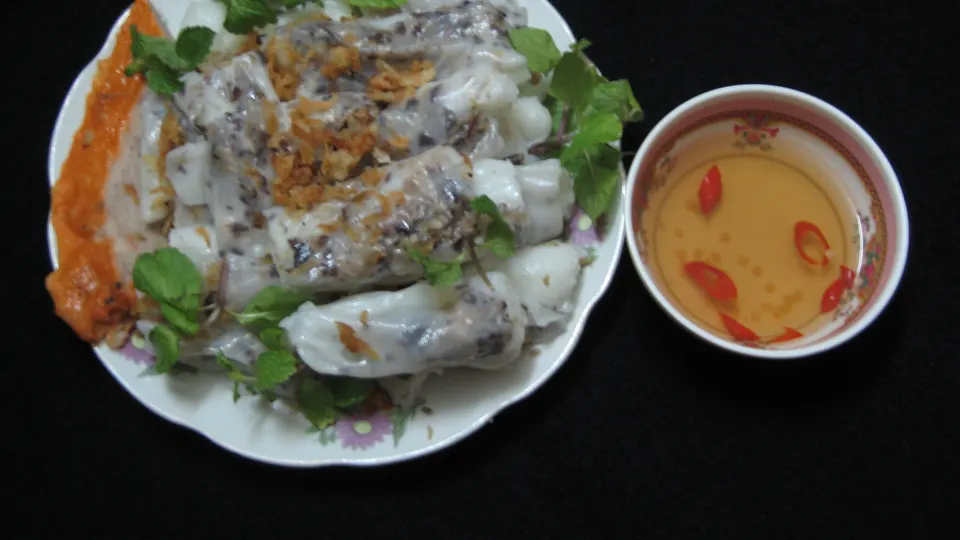
Banh cuon (Bánh cuốn) (literally “rolled cake”) are steamed rice rolls from Northern Vietnam. A thin rice-flour batter is steamed into a soft, almost translucent sheet, rolled around minced pork and wood-ear mushroom, scattered with fried shallots and eaten with slices of pork roll and a bowl of dipping sauce. In Hanoi it is first of all a breakfast food, made to order in front of you, one of the dishes that define the Vietnamese breakfast in the North.
What makes banh cuon interesting is how little the sheet changes and how much everything else does. Some villages serve it with no filling at all, some highland towns pour hot bone broth over it, and Saigon makes its own sweeter version. This guide explains those styles and then where to eat each one, from the Old Quarter shops of Hanoi to the Thanh Tri village area, with every MICHELIN listing re-checked against the 2026 selection on 17 November 2026.
How are the rice sheets made?
The method is simple to describe and hard to master. Rice is soaked and ground, traditionally on a stone mill, and the flour is mixed with water into a thin batter. The cook spreads a little batter over a cloth stretched above a pot of boiling water, and once the sheet has set it is lifted off, filled and rolled (VnExpress International).
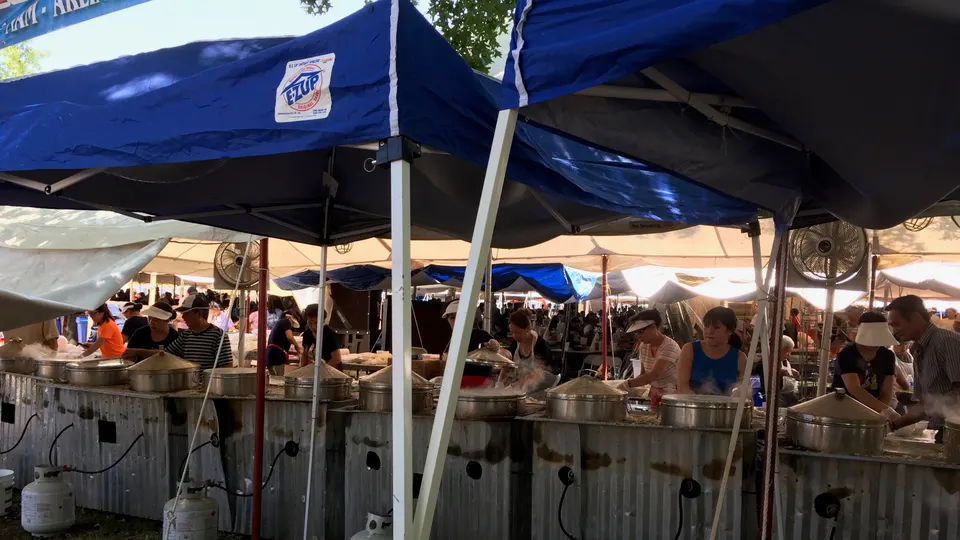
Everything depends on the batter. Thanh Tri (Thanh Trì) families treat the right consistency as a family secret, and Bao Van Hoa (Báo Văn Hóa) notes that a small mistake makes the sheet thick, torn or tough. The goal is the texture the Hanoi writer Thach Lam (Thạch Lam) praised in the 1940s: a sheet “as thin as paper and as clear as silk”. Hanoi cooks still compete to make the thinnest sheets that can hold the most filling. This is also why banh cuon is made to order: the sheets are at their best warm and freshly lifted from the cloth.
The best shops still work this way by hand. VietNamNet reported in June 2026 that at Ba Hoanh, one of Hanoi’s MICHELIN-listed banh cuon shops, the rice is soaked for about two hours, finely ground and the batter strained twice over half a day, and that the family still steams every sheet by hand and lifts it off the cloth with a flat bamboo stick, although modern equipment is available. Since modern equipment exists, a cook ladling batter onto a cloth over a steaming pot at the front of the shop is a good sign that your rolls are made to order. Vietnam Airlines’ travel guide describes the same hand-spreading on a traditional steam pot in Phu Ly (Phủ Lý), south of Hanoi.
What comes on the plate?
A typical Hanoi plate has three parts, and each has a job.
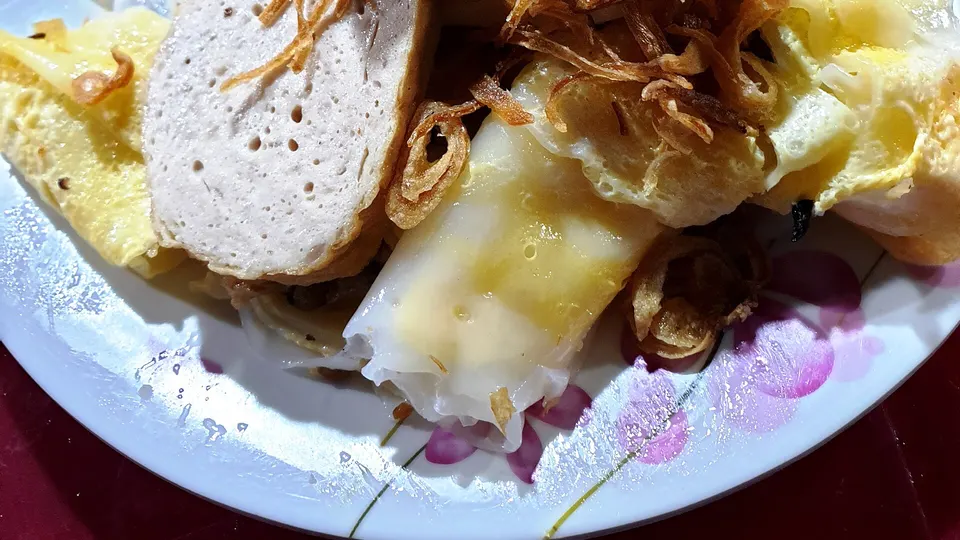
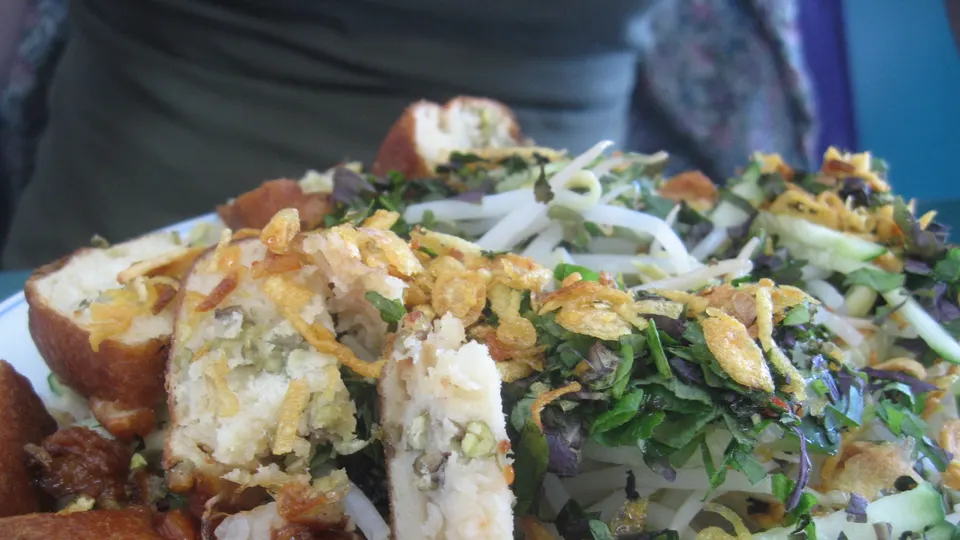
- The rolls. The usual filling is minced pork with chopped wood-ear mushroom (moc nhi (mộc nhĩ)), often with a little shallot. The fried shallots (hanh phi (hành phi)) scattered on top add crunch and aroma to a soft, mild dish.
- The pork roll. Slices of cha que (chả quế) (cinnamon-scented pork roll) or other pork rolls add a firmer, savoury contrast.
- The dipping sauce. A light, sweet-sour fish sauce (nuoc cham (nước chấm)), seasoned at the table with chilli, lime or garlic, and eaten with fresh herbs. See how this light Northern sauce differs from the dipping sauces of Central and South Vietnam.
Many shops also make an egg version, with a soft-cooked egg folded into the sheet without breaking the yolk (MICHELIN Guide). The sauce matters more than visitors expect. The rolls themselves are lightly seasoned, so the dip decides how the dish tastes, and it is where most regional differences show up.
What is Thanh Tri banh cuon, and why is it national heritage?
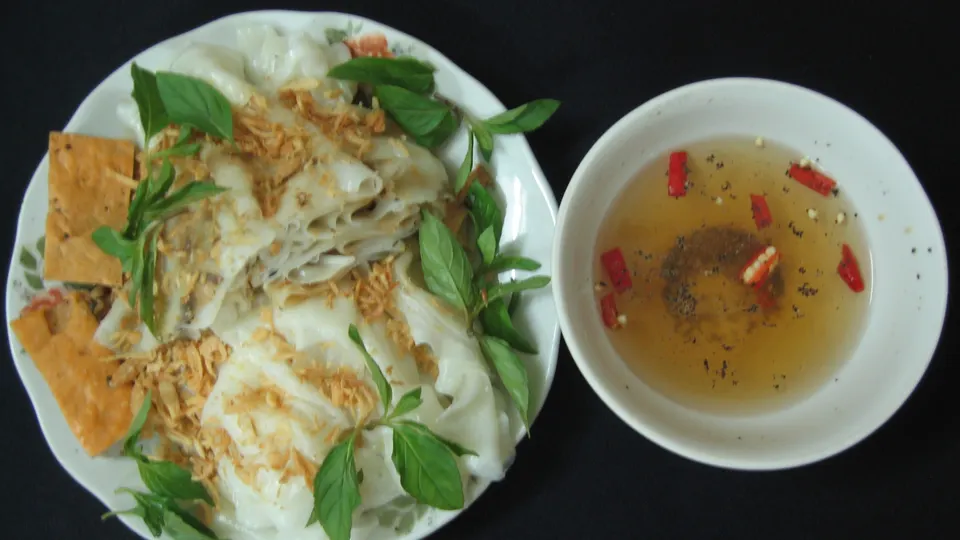
Thanh Tri is an old village on the Red River bank in southern Hanoi, long known for banh cuon. Its traditional version has no filling: thin sheets brushed with a little spring-onion oil and served with cha que, fried shallots and fish sauce. Villagers regard this plain style as the original. Meat-filled rolls were added later because customers asked for them, according to Saigon Giai Phong (Sài Gòn Giải Phóng).
The craft has received formal recognition. Hanoi’s People’s Committee recognised Thanh Tri as a traditional craft village in January 2024, and the Ministry of Culture, Sports and Tourism added the craft of making Thanh Tri banh cuon (Thanh Trì bánh cuốn) to the national list of intangible cultural heritage by Decision 2228/QD (QĐ)-BVHTTDL of 27 June 2025. The certificate was handed over on 18 March 2026 to Vinh Hung (Vĩnh Hưng) ward, which since Hanoi’s July 2025 local government reorganisation includes part of the former Thanh Tri ward (Bao Quoc te). This is national, not UNESCO, recognition. Nobody can date the craft precisely: the press reports describe it only as long-standing and handed down orally.
Where to eat banh cuon in Hanoi: Thanh Tri style or Old Quarter shop?
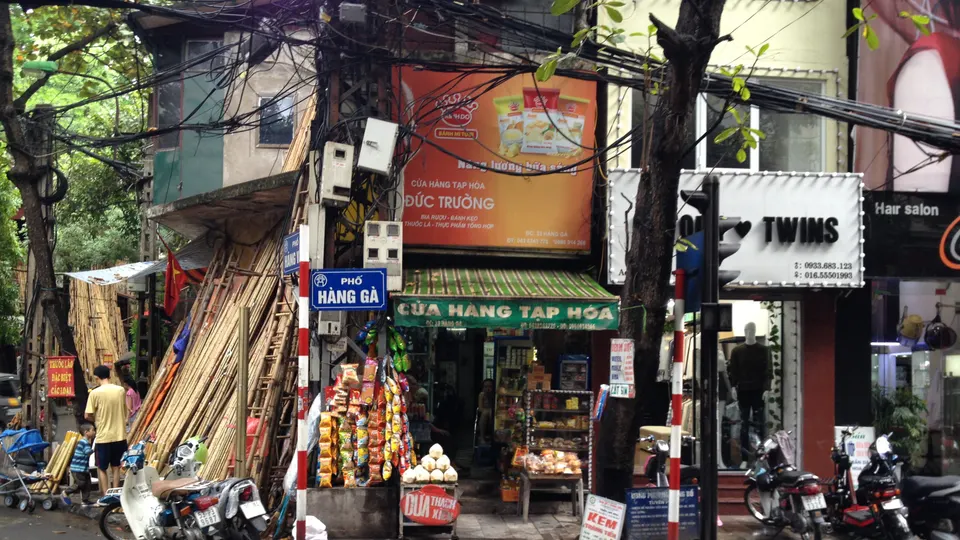
In Hanoi, first choose the style, then the shop. For hot rolls filled with pork, the classic city breakfast, the best-known address is Banh Cuon Gia Truyen Thanh Van (Bánh Cuốn Gia Truyền Thanh Vân) at 14 Hang Ga in the Old Quarter, the only banh cuon shop in Hanoi with a 2026 MICHELIN Bib Gourmand. For the plain Thanh Tri style, go to Ba Hoanh (Bà Hoành) on To Hien Thanh, which VietNamNet describes as named after the founder’s home village and still serving the original cool sheets with spring-onion oil (VietNamNet).
| Thanh Tri style | Old Quarter and city style | |
|---|---|---|
| The sheet | Very thin, plain, brushed with spring-onion oil | Thin, rolled around a filling, made to order |
| Filling | None in the original; filled rolls were added later for customers | Minced pork and wood ear; also shrimp, chicken or egg at some shops |
| Served | Often cool, with cha que (cinnamon pork roll) or grilled pork | Hot, with fried shallots and pork roll |
| Sauce | Sweet-sour fish sauce, traditionally scented with ca cuong (giant water bug) | Sweet-sour fish sauce; Thanh Van stirs in bone broth |
| Where to try it | Ba Hoanh, 66 To Hien Thanh; Ba Hanh, 26B Tho Xuong (Thọ Xương); Co Lan, 30 Thanh Dam (Thanh Đàm), in the village area | Thanh Van, 14 Hang Ga; Ba Xuan (Bà Xuân), 16 Hoe Nhai (Hòe Nhai) |
The place cards below give each shop’s sources. Two details help with timing: MICHELIN lists Thanh Van with two sittings, from 7am to 1:30pm and from 5 to 9pm, and Ba Hoanh open from 6am to 8pm. Ba Xuan, just outside the Old Quarter, is also in MICHELIN’s 2026 selection; VietNamNet says the family still grinds new rice from Cao Bang on a stone mill, and its listing gives an evening sitting from 4pm. For the other Old Quarter options, including Banh Cuon Phuong (Bánh Cuốn Phượng) on Hang Cot (Hàng Cót), see our guide to where to eat in Hanoi’s Old Quarter.
To eat in the village itself, the Thanh Tri craft area lies in southern Hanoi around Thanh Dam street, where Co Lan’s family has made banh cuon for generations; a 2020 journal article on the craft notes that the Thanh Tri banh cuon name was registered with the National Office of Intellectual Property in 2015.
Banh cuon by region at a glance
Across Vietnam the steamed sheet stays recognisable, and the filling, the sauce and the side dishes change. VTC News, in a 2023 round-up of regional versions, sets the hot pork-and-wood-ear roll as the most common style nationwide and lists the local exceptions, from the pork-bone broth of Cao Bang and Ha Giang (Hà Giang) to the warm fish sauce of Phu Ly (VTC News). Vietnam’s national tourism board lists an egg version from Dong Van (Đồng Văn), on the Ha Giang karst plateau, among the plateau’s dishes. The table pulls these styles together; each is explained below.
| Style | The roll | Served with | Where to look |
|---|---|---|---|
| Hot filled rolls (most common) | Minced pork and wood-ear mushroom | Pork roll or nem chua, bean sprouts, herbs, sweet-sour fish sauce with chilli | Hanoi city shops and most of the country |
| Thanh Tri | Very thin, plain, brushed with spring-onion oil | Cha que (cinnamon pork roll) or grilled meat; fish sauce with vinegar, chilli and fried shallots, traditionally scented with ca cuong | Southern Hanoi and Thanh Tri-style shops in the city |
| Cao Bang | Medium-thin, filled with meat or egg | A mild, lightly sweet pork-bone broth with culantro, pork roll, pickled bamboo shoots with chilli | Cao Bang, in the early morning |
| Ha Giang and Dong Van | As in Cao Bang; Dong Van is known for an egg version | Pork-bone broth | Ha Giang and Dong Van, on the Ha Giang loop |
| Lang Son | An egg cracked onto the sheet, folded into a square, topped with minced meat | Bone broth and herbs | Lang Son |
| Quang Ninh | Lean pork and shrimp | Fried squid cake; sweet-sour fish sauce with chilli and lime | Ha Long and the coast |
| Phu Ly | Thin, soft sheets, eaten at room temperature | Charcoal-grilled pork belly, a bowl of warm fish sauce, pickles and basil | Phu Ly, south of Hanoi |
| Banh muot | Soft steamed sheets, the local name in Nghe An and Ha Tinh | Eel soup in Vinh; wrapped round ram (crisp fried rolls) in Ha Tinh | Nghe An and Ha Tinh |
| Saigon and the South | Filled rolls with a sweeter sauce, or plain cut sheets | Cha lua (steamed pork roll), nem chua, bean sprouts, herbs | Ho Chi Minh City |
How does banh cuon change across the North?
In most of the North, as in Hanoi, banh cuon means filled rolls with sweet-sour fish sauce. The best-known exceptions are in the northern border provinces, where a hot broth often replaces the dip.

- Cao Bang. The best-known exception. Instead of fish sauce, the rolls come with a bowl of clear broth simmered from bones, often with a steamed, soft-yolked egg, slices of gio (giò) and cha (chả) (pork rolls), spring onion and coriander. Shops are busiest in the early morning, and diners say the hot broth is what makes it welcome on a cool highland morning. One 40-year-old shop in Cao Bang city makes its sheets from upland rice grown in Trung Khanh (Trùng Khánh), steams the egg to about 70 per cent so the yolk stays soft, and puts out mac mat (a local sweet-sour fruit condiment) and chilli on the table (VietNamNet). A newer twist, banh cuon made from a rice and corn batter served in grilled-bone broth, won a Cao Bang cooking contest in December 2023, VietNamNet reported.
- Lang Son (Lạng Sơn). Known for the egg style, with a soft-yolked egg inside the roll, dipped in bone broth or a vinegar and soy sauce, according to a regional overview on the Ministry of Industry and Trade portal.
- Ha Giang (since July 2025 part of Tuyen Quang (Tuyên Quang) province). The same overview describes whole, uncut rolls soaked in a sweet broth simmered from pork bones for three to four hours, as in neighbouring Cao Bang, and VTC News describes meat or egg fillings with pickled bamboo shoots and chilli on the side. In Dong Van, the egg version is a local name of its own. If you are heading up the Ha Giang loop, this is the breakfast you are likely to meet.
- Quang Ninh (Quảng Ninh). Close to the Hanoi style, but often served with cha muc (chả mực) (squid cake), the local seafood speciality around Ha Long Bay.
- Phu Ly, Ha Nam (Hà Nam) (since July 2025 part of Ninh Binh (Ninh Bình) province). Phu Ly, the provincial town, gives its name to this style. VTC News describes rolls eaten at room temperature with pork belly grilled over charcoal, seasoned with shallot, pepper, sugar and fish sauce, and a bowl of warm fish sauce with pickles and basil; Vietnam Airlines’ travel guide adds that some Phu Ly shops serve skewers of cha (pork patties) instead.
The pattern is clear even if every town has its own habits: the sheet travels, and the local table decides what goes with it. For the wider picture of the region’s cooking, see our North Vietnam guide.
How is banh cuon served in Central Vietnam and Saigon?
South of the Red River Delta the dish keeps its sheet but changes its name, its partners or both. A regional overview on the Ministry of Industry and Trade portal describes how in Nghe An (Nghệ An) and Ha Tinh (Hà Tĩnh) the rolls are called banh muot (bánh mướt): in Vinh they are often eaten with eel soup, and in Ha Tinh the soft sheets are wrapped around ram, the province’s crisp fried roll. In Thanh Hoa (Thanh Hóa) a plain version comes with eel porridge.
Banh cuon is sold in the South too, and there the line blurs. In Ho Chi Minh City filled rolls usually come with a sweeter sauce, and a Chinese-influenced style serves plain, unfilled sheets cut and plated with cha lua (steamed pork roll), nem chua (fermented pork) and fried shallots. The sweeter sauce mirrors what happened to pho (phở) when it moved south, described in our guide to pho by region. The same overview adds that Saigon plates often come with blanched bean sprouts, herbs, lettuce and fried spring rolls or shrimp cakes, that a grilled-pork version traces back to Hue (Huế), and that the Mekong Delta even makes a sweet banh cuon of rice flour and coconut milk filled with mung bean, coconut or taro. In Hue itself, look for banh uot rolled around grilled pork, served at the Kim Long shop in our guide to where to eat in Hue; in Saigon, the MICHELIN Bib Gourmand Banh Cuon Tay Ho 127 in the place cards below makes its rolls to order, and our guide to where to eat in Saigon puts it in context.
Banh cuon vs banh uot: what is the difference?
Visitors who have eaten in the South or Centre often ask whether banh uot (“wet cake”) is the same dish. It is a close relative. Banh uot and banh trang (bánh tráng) (rice paper) start from the same steamed rice batter: dried in the sun it becomes rice paper, eaten fresh and moist it is banh uot. Unlike banh cuon, it has no filling at all (VTC News).
| Banh cuon (North) | Banh uot (South and Centre) | |
|---|---|---|
| Sheet | Thin steamed rice sheet, made to order | Similar steamed rice sheet |
| Filling | Usually minced pork and wood-ear mushroom; none in traditional Thanh Tri style | None |
| Shape | Rolled | Folded, or cut into pieces |
| Served | Warm, with fried shallots and pork rolls | South: cooled, with cha lua (chả lụa), cha que, nem chua, bean sprouts and herbs. Khanh Hoa (Khánh Hòa): hot, with spring-onion oil and dried shrimp |
| Sauce | Sweet-sour fish sauce; bone broth in Cao Bang and nearby | Diluted sweet-sour fish sauce with garlic and chilli in the South |
Tradition vs today
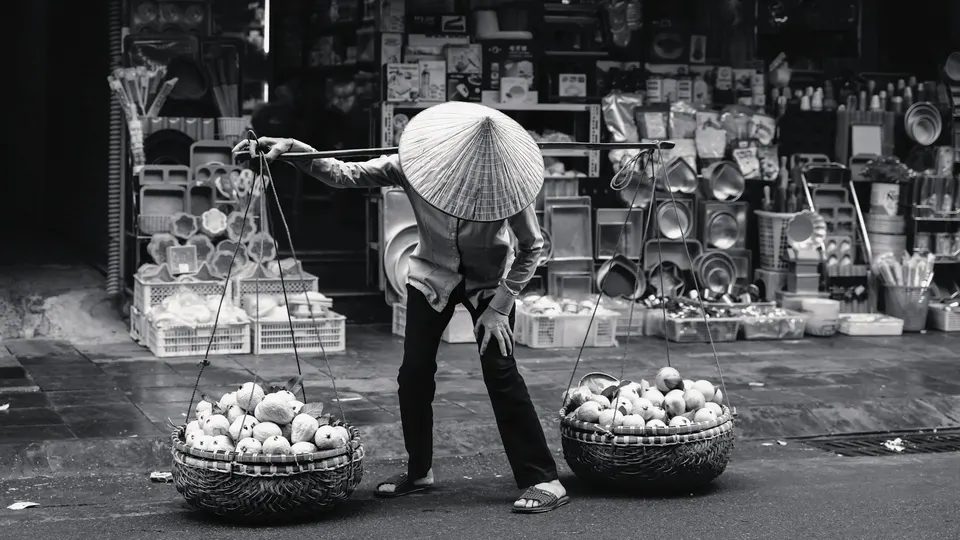
Vendors. In the 1940s, women sold banh cuon at dawn from baskets carried on their heads, the rolls stacked under a cover of leaves, with fish sauce, chilli and a handful of chopsticks in the same load. Today almost all banh cuon is made at fixed stalls and shops, where diners sit on low stools around the cook.
Plain to filled. The writer Vu Bang (Vũ Bằng), recalling 1940s Hanoi, preferred plain, cool sheets dabbed with shallot oil and dismissed the new stuffed rolls as “reformed” banh cuon. Filled rolls won anyway and are now what most people mean by the name. The plain style survives mainly as the Thanh Tri speciality.
Ca cuong (Cà cuống). The biggest change is in the sauce. Old Hanoi added a little ca cuong, the scented essence of the giant water bug, to the dipping sauce. Some writers still describe it as essential to traditional Hanoi banh cuon. The scent comes from a pheromone made by the male insect, and the bug has become rare as pesticides, pollution and building have spread over the ponds and rice fields where it lives, so most cooks now use a synthetic essence, while traditionalists pay for the real thing (Atlas Obscura). A few Hanoi shops still offer real ca cuong. Its smell is strong, and VietNamNet notes it can put off diners who are not used to it.
How to order and eat banh cuon
Banh cuon shops have short menus, so ordering means choosing a style and a few extras, then seasoning the sauce yourself. These words help.
| Say or point to | What you get |
|---|---|
| Banh cuon nhan thit (bánh cuốn nhân thịt) | Rolls filled with minced pork and wood ear |
| Banh cuon trung (bánh cuốn trứng) | A roll with a soft-cooked egg inside or on top |
| Banh cuon khong nhan (bánh cuốn không nhân) | Plain sheets, closest to the Thanh Tri style |
| Them cha (thêm chả) | Extra pork roll |
| Ca cuong (cà cuống) | Giant water bug essence or whole bug, at the few shops that offer it |
- Go in the morning. Breakfast is the traditional time, and in Cao Bang and other highland towns that is when shops are busiest.
- Pick the shop by style. Go to a Thanh Tri-style shop such as Ba Hoanh for plain sheets, and to an Old Quarter shop such as Thanh Van for hot filled rolls; the table in the where-to-eat section lists both.
- Season the sauce, not the rolls. Add chilli, lime or garlic to your bowl of nuoc cham and dip each piece. In Cao Bang, the broth replaces the dip.
- Ask about ca cuong. If a shop offers it, ask whether it is real. Try a small amount first; the aroma is strong.
- Eat it at the stall. The point of banh cuon made to order is the warm, soft sheet straight off the cloth, so it is best eaten on the spot.
Prices and status, checked 17 November 2026. VietNamNet reported in June 2026 that a plate of pork rolls cost 45,000 dong at Thanh Van and the shrimp version 65,000 dong; Ba Hoanh charged 30,000 to 60,000 dong, rising to 120,000 dong for the full set with ca cuong; and Ba Xuan’s traditional plate was 40,000 dong. MICHELIN announced its 2026 Vietnam selection on 4 June 2026, Tuoi Tre News reported, and as of 17 November 2026 its listings show Thanh Van in Hanoi and Tay Ho 127 in Saigon as Bib Gourmands, with Ba Hoanh and Ba Xuan in the selection without the award; all four are marked cash only. Thanh Tri banh cuon has been national intangible heritage since Decision 2228 of 27 June 2025, and the certificate was handed over on 18 March 2026, Bao Quoc te reported.
For more Northern dishes and the stories behind them, browse our food section.
Where to eat bánh cuốn: Old Quarter, Thanh Trì style and Saigon
MICHELIN Guide pick
Bánh Cuốn Gia Truyền Thanh Vân · Bánh cuốn gia truyền Thanh Vân
Hanoi · Old Quarter, Hoàn Kiếm ward
14 Hàng Gà Street
Bib Gourmand in the MICHELIN Guide Vietnam 2026 and the reference for the hot, filled Hanoi style. VietNamNet (June 2026) lists four fillings: pork with wood ear and shiitake, shrimp, egg, and a chicken version kept moist with chicken fat, plus house-made spring-onion oil and meat floss.
Order: Pork rolls with chả quế (cinnamon pork roll); the inspectors also recommend the shop's bún thang.
MICHELIN lists the Hàng Gà Street shop at number 14; older press lists give 12–14 Hàng Gà. Cash only.
Listed in: MICHELIN Guide Vietnam 2026, VietNamNet (2026) · checked November 2026
MICHELIN Guide pick
Bánh Cuốn Bà Hoành · Bánh cuốn Bà Hoành
Hanoi · Bùi Thị Xuân ward (former Hai Bà Trưng district)
66 Tô Hiến Thành Street
In the MICHELIN Guide Vietnam 2026, listed without a Bib Gourmand; the inspectors call it one of the busiest shops in the area, with sheets steamed to order. VietNamNet (June 2026) says its rolls are Thanh Trì-style, after the founder's home village, and that the original plain, cool sheets with spring-onion oil are still served beside hot filled rolls; Saigoneer described the same cool, unfilled style in 2022.
Order: Cool plain rolls with the house chả or grilled pork belly, or hot pork-and-wood-ear rolls; real cà cuống (giant water bug) is offered as an extra.
MICHELIN gives 6 a.m. to 8 p.m. daily, cash only (re-checked 17 November 2026). Saigoneer also mentions No. 33 Tô Hiến Thành; this card means No. 66, the address MICHELIN lists.
Listed in: MICHELIN Guide Vietnam 2026, VietNamNet (2026), Saigoneer (2022) · checked November 2026
Local favourite
Bánh Cuốn Bà Hanh · Bánh cuốn Bà Hanh
Hanoi · Thọ Xương Street (former Hoàn Kiếm district)
26B Thọ Xương Street (back entrance of 26 Ấu Triệu)
A small shop run by a cook from Thanh Trì, making rolls in the Thanh Trì style from a not-too-sticky rice with a light, mildly sour dipping sauce (VTC News, 2024). VietNamNet called them traditional Thanh Trì-style rolls of hand-ground flour in March 2025, and Ngôi Sao listed the shop again in September 2025.
Order: Classic rolls filled with pork, wood ear and shallot, or the pink dragon-fruit version VnExpress profiled in 2020, which tastes much the same.
'Thanh Trì' here describes the style; the shop is in central Hanoi, not in the village. This card means the shop at 26B Thọ Xương.
Recommended by: VTC News (2024), VietNamNet (2025), VnExpress (2020) · checked November 2026
Local favourite
Bánh Cuốn Cô Lan (Thanh Đàm) · Bánh cuốn cô Lan
Hanoi · Thanh Trì village area, southern Hanoi (former Thanh Trì ward, Hoàng Mai district)
30 Thanh Đàm Street
A family shop in the bánh cuốn village itself. VnExpress reported in 2023 that Hoàng Thị Lan, the third generation, serves both the classic Thanh Trì rolls topped only with spring-onion oil and the later pork-and-wood-ear version, with grilled cà cuống for those who want it; Ngôi Sao listed the shop in September 2025, and a 2020 arts-education journal article used the family as its case study of the craft.
Order: Plain Thanh Trì rolls with chả quế, then a plate of filled ones to compare.
Many shops sell 'bánh cuốn Thanh Trì'; this card means No. 30 Thanh Đàm. Ngôi Sao belongs to the VnExpress group, so the 2020 journal article counts as the independent second source.
Recommended by: Ngôi Sao (2025), Tạp chí Giáo dục Nghệ thuật, số 32/2020 (2020), VnExpress (2023) · checked November 2026
MICHELIN Guide pick
Bánh Cuốn Tây Hồ 127 · Bánh cuốn Tây Hồ
Ho Chi Minh City · Tân Định ward (former District 1)
127 Đinh Tiên Hoàng Street
Bib Gourmand in the MICHELIN Guide Vietnam 2026 and, with Thanh Vân in Hanoi, one of two bánh cuốn specialists in the guide's 2026 Bib Gourmand list: a former street stall, now a two-storey shop, where the rolls are made to order beside the open kitchen, including pork and jicama versions and vegetarian options.
Order: Bánh cuốn, plus the golden bean cake the inspectors recommend.
Cash only, per the MICHELIN listing (re-checked 17 November 2026).
Listed in: MICHELIN Guide Vietnam 2026 · checked November 2026
Addresses and details can change; check before you go. We do not accept payment for listings.
Frequently asked questions
How much does banh cuon cost in Hanoi?
VietNamNet reported in June 2026 that a plate cost 45,000 dong for pork rolls and 65,000 dong for shrimp at Banh Cuon Gia Truyen Thanh Van, 30,000 to 60,000 dong at Ba Hoanh (up to 120,000 dong with ca cuong), and 40,000 dong for the traditional plate at Ba Xuan. MICHELIN marks all three shops cash only.
Is Banh Cuon Gia Truyen Thanh Van still a MICHELIN Bib Gourmand?
Yes. As of November 2026, Thanh Van at 14 Hang Ga in Hanoi's Old Quarter is a Bib Gourmand in the 2026 MICHELIN Guide Vietnam, the only banh cuon shop in Hanoi with that award. Ba Hoanh and Ba Xuan are in the 2026 selection without a Bib Gourmand.
Can I eat banh cuon in the evening in Hanoi?
Yes, at some shops. MICHELIN lists Thanh Van on Hang Ga with an evening sitting from 5pm to 9pm, Ba Hoanh on To Hien Thanh open until 8pm, and Ba Xuan on Hoe Nhai with an evening sitting from 4pm.
Where can I eat banh cuon in Saigon?
Banh Cuon Tay Ho 127, at 127 Dinh Tien Hoang Street in Tan Dinh ward, is a Bib Gourmand in the 2026 MICHELIN Guide Vietnam and makes its rolls to order beside an open kitchen. Expect the sweeter sauce of the South, and bring cash.
Do I need to try ca cuong with banh cuon?
No. Ca cuong, the scented essence of the giant water bug, is an optional extra in the dipping sauce; the insect is now rare, so most shops use a synthetic essence or none. Ba Hoanh in Hanoi offers the real thing, and VietNamNet notes its strong smell can put off diners who are not used to it.
Key sources
- 3 quán bánh cuốn gia truyền Hà Nội được Michelin khen ngon có gì khác nhau? · VietNamNet, 16 June 2026
- Hanoi Bang Bang IV: Steamed Rice Rolls · VnExpress International, 2016
- Nghề làm bánh cuốn Thanh Trì trở thành Di sản văn hóa phi vật thể quốc gia · Báo Quốc tế, 2026
- Bí mật của quán bánh cuốn 40 năm tuổi bán trăm suất trong vài giờ ở Cao Bằng · VietNamNet, 2022
- Vì sao gọi là bánh ướt? · VTC News, 16 July 2026
- Nobody leaves Vietnam without trying these dishes · MICHELIN Guide, 2023
- Cà Cuống Essence · Atlas Obscura
- Điểm danh những phiên bản bánh cuốn đặc sắc, cái tên nào cũng thơm ngon · VTC News, 22 August 2023
All 29 sources and further reading
- MICHELIN Guide Vietnam: Bib Gourmand selection · MICHELIN Guide Vietnam 2026
- Những quán bánh cuốn nóng ngon ở Hà Nội lúc nào cũng đông khách · VTC News, 29 August 2024
- A food lover's guide to the best banh cuon in Hanoi · VietNamNet, 8 March 2025
- Có một món bánh của Hà Nội vừa được công nhận di sản quốc gia, đó là? · Ngôi Sao, 4 September 2025
- Quán bánh cuốn cà cuống Thanh Trì gia truyền 4 thế hệ · VnExpress, 31 August 2023
- Chữ 'Tâm' với vấn đề bảo tồn nghề truyền thống Bánh cuốn Thanh Trì · Tạp chí Giáo dục Nghệ thuật, số 32/2020
- Ngõ Nooks: A Classic Thanh Trì-Style Bánh Cuốn That Took a Century to Perfect · Saigoneer, 2022
- Bánh cuốn ngô vàng tươi bắt mắt, chan nước canh nóng hổi của Cao Bằng · VietNamNet, 6 January 2024
- 4th MICHELIN Guide Vietnam features 193 establishments, still overlooks banh mi · Tuổi Trẻ News, 5 June 2026
- Nghề bánh cuốn Thanh Trì: Từ gánh rong phố cổ đến di sản quốc gia · Báo Văn Hóa, 2026
- Nghề làm bánh cuốn Thanh Trì được ghi danh Di sản văn hóa phi vật thể quốc gia · Báo Văn Hóa, 2026
- Nghề làm bánh cuốn Thanh Trì là Di sản Văn hóa phi vật thể quốc gia · Sài Gòn Giải Phóng, 2025
- Quán bánh cuốn ăn kèm cà cuống 'đắt nhất nhì' Hà Nội, ngày bán ngàn suất · VietNamNet, 2024
- Khác lạ bánh cuốn ba miền Bắc – Trung – Nam · Ministry of Industry and Trade portal, 2021
- Bánh Cuốn Bà Xuân · MICHELIN Guide Vietnam 2026
- Bánh cuốn truyền thống Hà Nội phải có con gì trên đĩa · Znews, 2019
- What is special about Hanoi's 3 Michelin-recommended banh cuon shops · VietNamNet, 24 June 2026
- Bánh cuốn Phủ Lý có gì gây thương nhớ? Gợi ý 7 quán ăn là mê · Vietnam Airlines travel guide
- Khám phá địa phương: Nền ẩm thực có một không hai của cao nguyên đá Hà Giang · Vietnam Tourism (Vietnam National Authority of Tourism)
- Bánh Cuốn Gia Truyền Thanh Vân (Hang Ga Street) · MICHELIN Guide Vietnam 2026
- Legislature approves mergers to reduce Vietnam's cities, provinces to 34 · Tuổi Trẻ News, 2025
Keep exploring
 North Vietnam · Travel Hanoi: How Many Days, What to See and When to Go Hanoi travel guide for 2026: how many days and where to stay, Noi Bai airport, walking-street hours, the new low-emission zone, Train Street and where to eat.
 North Vietnam · Food Where to Eat in Hanoi Old Quarter: Best Restaurants 2026 Where to eat in Hanoi Old Quarter, re-checked November 2026: MICHELIN 2026 picks and local favourites by street, dish and time of day, plus a one-day plan.
 North · Central · South · Food Hanoi Breakfast Food: What to Eat and When, North to South Hanoi breakfast food: pho, banh cuon, xoi, bun rieu, chao and banh mi, an hour-by-hour guide to when stalls open and sell out, plus Hue and Saigon breakfasts.
 South Vietnam · Travel Ho Chi Minh City (Saigon): How Many Days and What to See Ho Chi Minh City (Saigon) explained: the 2025 merger and new wards, how many days to stay, Metro Line 1, Long Thanh airport, palace and museum tickets.