South Vietnam · Food
Hu Tieu (Hủ Tiếu): Which Style to Order and Where in Saigon
Which hu tieu to order in Saigon: Nam Vang, My Tho or Sa Dec, dry or in broth, how it differs from pho, what a bowl costs in 2026 and where to eat it.
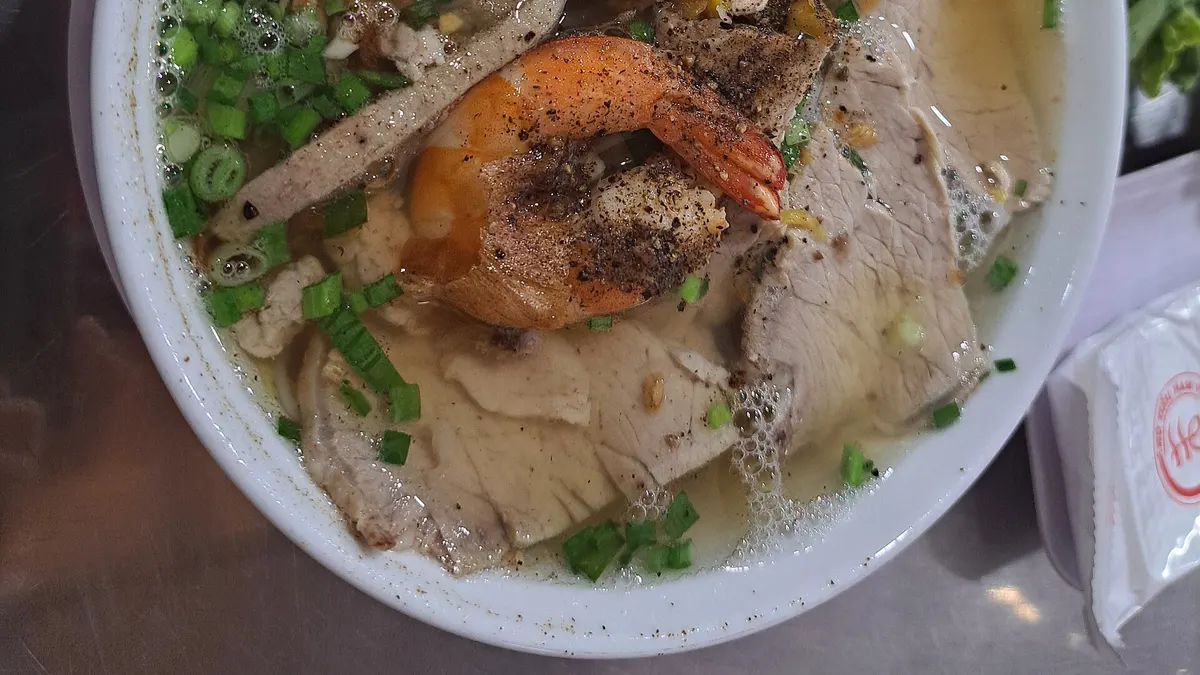
Hu tieu (Hủ tiếu) is Southern Vietnam’s pork noodle soup, and ordering it comes down to three choices: the style (Saigon’s loaded Nam Vang bowl or the Mekong Delta’s My Tho and Sa Dec styles), the noodle, and whether you want it in broth or dry with the broth on the side. As of November 2026, Hong Phat (Hồng Phát), Saigon’s best-known Nam Vang shop, is still a Bib Gourmand in the MICHELIN Guide Vietnam 2026 (MICHELIN Guide). It is also cheap: in May 2026 Tuoi Tre (Tuổi Trẻ) put roadside bowls in Saigon at about 30,000–40,000 dong, while a loaded shrimp-and-squid bowl at a well-known central shop can pass 100,000 dong.
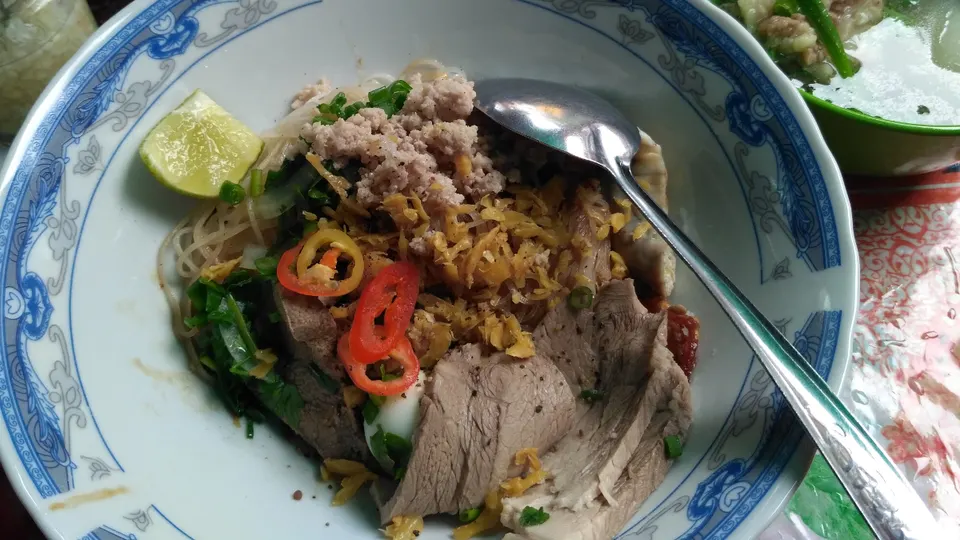
Hu tieu (also spelled hu tiu (hủ tíu)) is the noodle soup of the whole South. A typical bowl holds chewy rice noodles in a clear, lightly sweet broth made from pork bones, dried shrimp and dried squid, topped with some mix of sliced pork, minced pork, liver, shrimp and quail eggs, with bean sprouts, chives, lettuce, lime and chilli on the side. Unlike pho (phở), it is a pork dish, not a beef one, and it came to Vietnam through Chinese and Cambodian kitchens rather than Northern ones.
It is also not one dish but a family. In Ho Chi Minh City and the Mekong Delta you will meet hu tieu named after a city (Nam Vang, the old Vietnamese name for Phnom Penh), after delta towns (My Tho (Mỹ Tho), Sa Dec), after a way of selling it (hu tieu go (hủ tiếu gõ), “knocking” hu tieu) and after a way of serving it (kho (khô), dry). This guide explains what separates them, where they came from and how to order the one you want.
Nam Vang vs My Tho vs Sa Dec: hu tieu styles at a glance
The quickest way to tell the three town styles apart is to look at the bowl. A Nam Vang bowl is the most crowded, with minced pork, shrimp, liver and a quail egg; a My Tho bowl is about its fresh, springy noodles and a broth with grilled dried squid; a Sa Dec order is often not a bowl at all but a dry plate of wide white noodles under a tomato-based sauce, with the broth on the side.
| Style | Where it belongs | Noodles | Broth and toppings | How it is served | Roots |
|---|---|---|---|---|---|
| Hu tieu Nam Vang (Hủ tiếu Nam Vang) | Saigon (named after Phnom Penh) | Chewy rice noodles | Pork-bone broth; minced pork, shrimp, liver, offal, quail egg; fried garlic | Soup or dry | Cambodian kuy teav, adapted by Chinese vendors in Saigon |
| Hu tieu My Tho (Hủ tiếu Mỹ Tho) | My Tho, now in Dong Thap (Đồng Tháp) province | Rice noodles from local Go Cat (Gò Cát) rice, fragrant and chewy | Pork bones, dried shrimp, grilled dried squid; sliced pork, liver, shrimp | Soup, or dry with a sweet-sour sauce | Chinese-run shops, Vietnamese noodle makers |
| Hu tieu Sa Dec (Hủ tiếu Sa Đéc) | Sa Dec, Dong Thap province | Wide, milky-white rice noodles from Tan Phu Dong (Tân Phú Đông) rice flour | Pork bones, dried shrimp and squid, jicama; lean pork, heart, liver, kidney | Famous dry plate with tomato sauce and a bowl of bone broth | Local market cooks; made famous in Saigon in the 1970s |
| Chinese-style hu tieu | Cho Lon (Chợ Lớn) and older Saigon markets | Rice noodles, egg noodles (mi) or both | Xa xiu (Xá xíu) roast pork, wontons, fish; Teochew sa te (tế) and ho (hồ) versions | Soup or dry | Teochew and Cantonese families |
| Hu tieu go | Saigon streets and alleys | Whatever the cart carries | Simple bowls, a few slices of meat | Brought to your door from a pushcart | Street vendors, many from Central Vietnam |
These are tendencies. Every shop keeps its own broth recipe, and many serve several styles from one menu.
What is in a bowl of hu tieu?
The broth is the base of every version: pork bones simmered for hours, sweetened naturally by the bones and by dried seafood rather than by heavy seasoning. Vietnam Pictorial lists pork bones, dried shrimp and squid for hu tieu Nam Vang, finished with minced pork, sliced lean pork, liver, quail eggs and boiled shrimp (Vietnam Pictorial). My Tho cooks add grilled dried squid, and Sa Dec cooks add jicama (cu san (củ sắn)) in place of white radish.
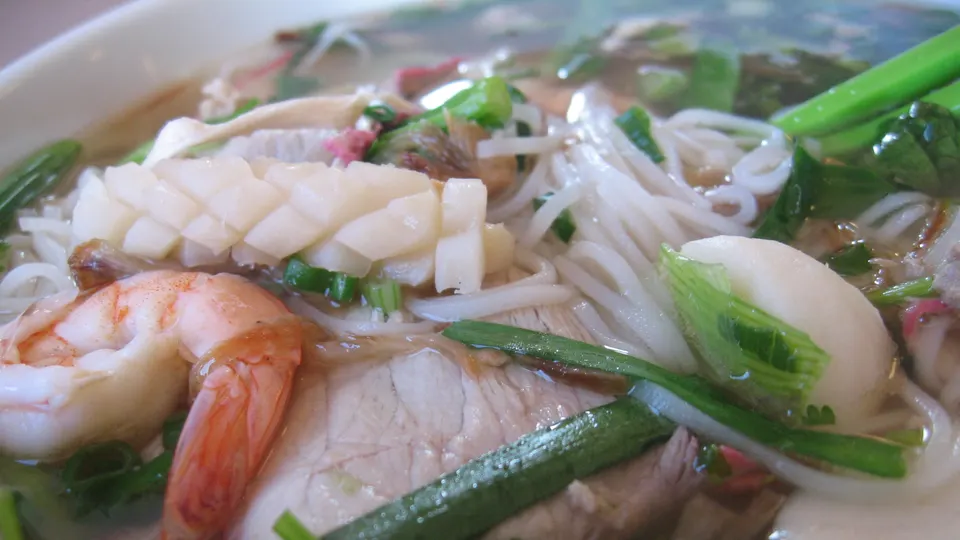
- The noodles. Hu tieu noodles are made from rice and are prized for being chewy and springy rather than soft. Each delta town claims its own rice: Go Cat rice for My Tho, the rice flour of Tan Phu Dong village for Sa Dec. In Can Tho (Cần Thơ), the national tourism board describes the breakfast bowl as tapioca noodles, so texture and starch vary by place. Many shops also offer mi, yellow egg noodles, or both together.
- The toppings. Sliced pork and minced pork are the basics. Fuller bowls add shrimp, squid, liver, heart, stomach, quail eggs or a big pork bone (xi quach (xí quách)). A bowl with everything is called hủ tiếu thập cẩm, “mixed”.
- The finish. Fried shallots or fried garlic, spring onion and Chinese celery go on top. Bean sprouts, garlic chives, lettuce, lime and chilli come on the side, as they do with most Southern noodle dishes.
The result is lighter and sweeter than most Northern soups, and it rewards the same Southern habit of seasoning at the table.
Where did hu tieu come from, and what is still debated?
Hu tieu came south with Chinese migrants. The name is usually traced to the Teochew (Trieu Chau) word for flat rice noodles, and Tuoi Tre has linked the dish’s arrival to Teochew and Fujianese settlers who reached My Tho in the second half of the 17th century, after which it spread through the delta and became an everyday Vietnamese food rather than a specifically Chinese one (Tuoi Tre).
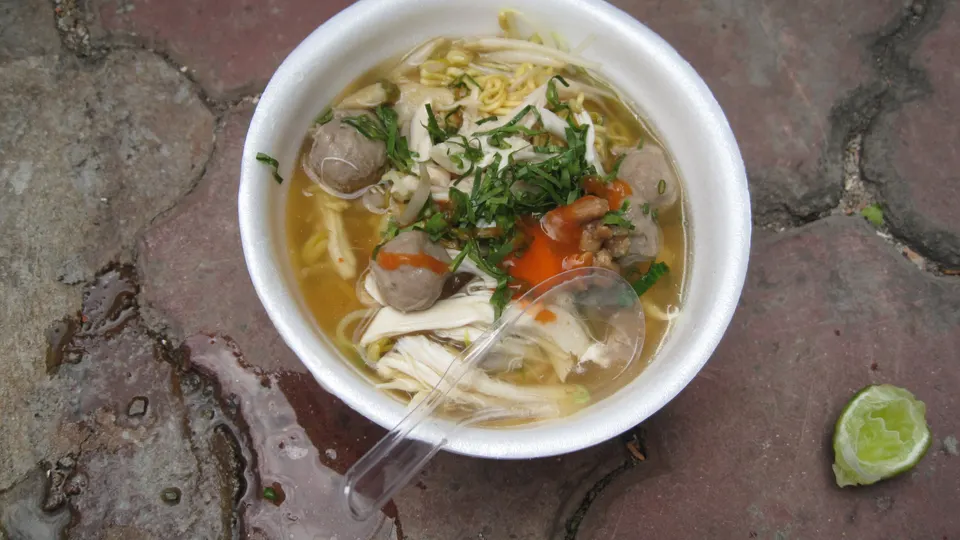
The Cambodian strand came later and is clearest in hu tieu Nam Vang. Related noodle dishes across the region, from Cambodia’s kuy teav to Thailand’s kuai tiao and Malaysia’s char kway teow, all trace back to southern China, as the MICHELIN Guide points out. The precise dates are less settled. Different Vietnamese sources date the arrival of the Phnom Penh-style bowl in Saigon to the 1960s or to the 1970s; Hong Phat, one of the city’s best-known Nam Vang shops, opened in 1975. The named town styles are younger than the noodle itself: according to elderly residents quoted by Saigon Giai Phong (Sài Gòn Giải Phóng), hu tieu My Tho as a recognised dish appeared in the early 1960s, sold from carts and roadside shops between My Tho and Go Cong (Gò Công).
So the honest summary is that hu tieu is a Chinese noodle that became Southern Vietnamese, with a strong Khmer influence in its most famous version. Nobody owns a single original recipe, which is one reason every shop’s broth tastes different. Chinese-Vietnamese noodle vendors left another mark on the city: Saigoneer credits them with making cloth-filtered coffee popular in the 1950s, the root of today’s Saigon coffee culture.
Hu tieu Nam Vang: the bowl named after Phnom Penh
Nam Vang is the Vietnamese name for Phnom Penh, and hu tieu Nam Vang is Saigon’s version of Phnom Penh’s kuy teav. In Khmer, kuy teav means both a chewy rice noodle and the noodle soup made with it. Saigoneer traces how the dish followed Cambodian migrants to southern Vietnam and was popularised in Saigon largely by ethnic Chinese vendors, adding that the name is often misheard as “Nam Giang” in the Southern accent (Saigoneer).
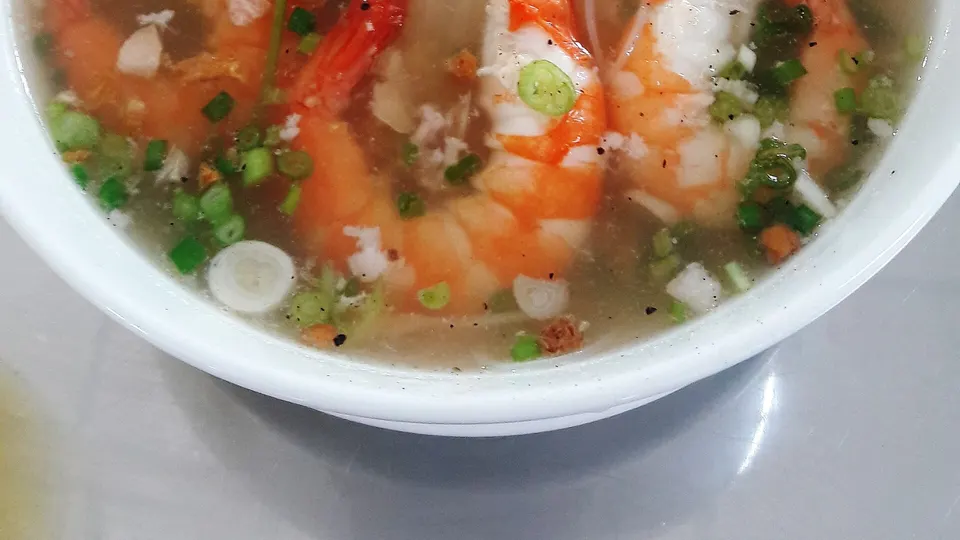
What marks a Nam Vang bowl is abundance. Expect minced pork, shrimp, liver and other offal, often a quail egg, and the smell of fried garlic, which VnExpress singles out as the dish’s signature. Better-known shops also serve braised blood curd and tiger shrimp. A Saigon bowl usually comes with bean sprouts and crown daisy (tan o (tần ô)) or lettuce on the side.
The story of one shop shows how the dish arrived. Hong Phat’s founder, Dang Thi Nguyet (Đặng Thị Nguyệt), was born in Phnom Penh in 1948 and moved to Saigon after a 1970 coup in Cambodia stirred up anti-Vietnamese feeling there. In 1975 she began selling hu tieu Nam Vang from her parents-in-law’s house in what is now Ban Co (Bàn Cờ) ward; the shop still stands on the same street and, according to Tuoi Tre News, is one of 72 Bib Gourmand picks in the fourth MICHELIN Guide Vietnam, announced on 4 June 2026.
The way people talk about the region’s accents also shows up here: the slide from “Nam Vang” to “Nam Giang” is the kind of Southern sound change our guide to Vietnam’s regional accents describes.
My Tho and Sa Dec: the Mekong Delta’s two noodle towns
Two delta towns gave their names to hu tieu styles, and both are now in the same province: since 1 July 2025 Tien Giang (Tiền Giang), with its former capital My Tho, has been part of an enlarged Dong Thap province, and My Tho is its administrative centre (Vietnam Government Portal). Sa Dec was already in Dong Thap. Our Mekong Delta guide covers both as places to visit.
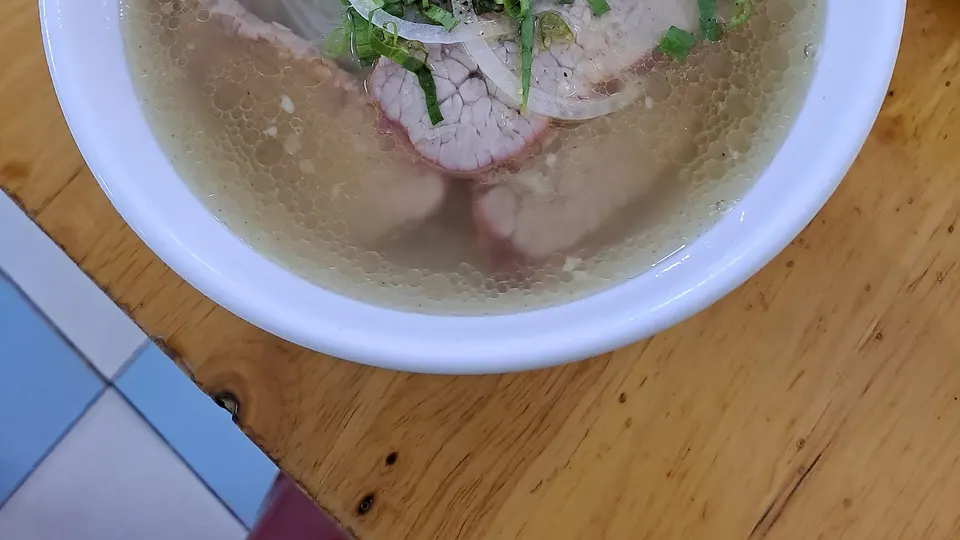
Hu tieu My Tho is defined by its noodle. Makers in My Phong (Mỹ Phong), on the edge of My Tho, soak local Go Cat rice for a day and a night, grind it, steam the batter into sheets, dry them briefly in the sun and cut them into strands that stay soft but chewy and have no sour taste. Because the fresh noodles must be sold within the day, the style has travelled less than its name, Saigon Giai Phong reported in 2023. The broth combines pork leg bones, pork ribs, dried shrimp and grilled dried squid, and the bowl is finished with fried shallots and salted greens. In 2013 the Asian Record Organization named hu tieu My Tho one of Asia’s top 100 dishes, according to Tuoi Tre News.
Hu tieu Sa Dec starts with rice flour from Tan Phu Dong, a craft village about a century old, whose noodles come out wide, milky white, chewy and slightly sweet. The broth uses pork leg bones, dried shrimp, dried squid and jicama, skimmed constantly so it stays clear. Vietnam (Việt Nam) News describes one Sa Dec family shop that has used the same suppliers for more than half a century, with a sweet broth of pork bone and dried squid topped with char siu pork, shrimp and quail eggs. The cai luong (cải lương) (reformed opera) actress Nam Sa Dec (Năm Sa Đéc) helped make the style famous in Saigon in the 1970s. Sa Dec’s most famous plate, though, is the dry one.
Dry or with broth: how hu tieu kho works
Almost any hu tieu can be ordered nuoc (nước) (in broth) or kho (dry). For the dry version, the noodles are blanched, dressed with a sauce and topped with the meat, shrimp or offal, and the broth arrives in a separate bowl so you can sip it between mouthfuls. In Sa Dec the plate is lean pork, heart, liver and kidney under a sauce of tomato fried with shallot and garlic, with a bowl of bone broth (xi quach) on the side; locals credit the flavour partly to soy sauce made at Phuoc Hue (Phước Huệ) pagoda, which is aged more than six months before it is sold (Tuoi Tre).
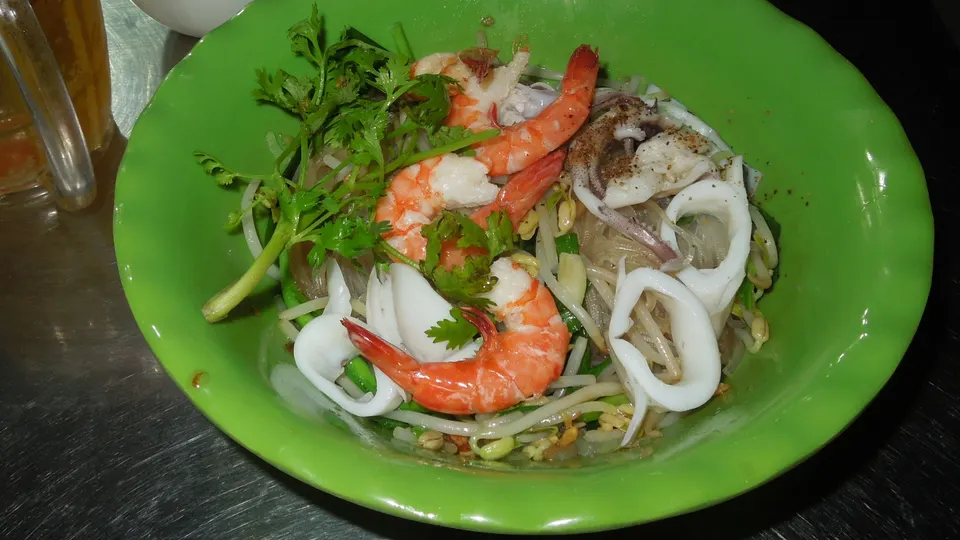
Dry sauces differ by tradition. Sa Dec and My Tho-style shops lean towards sweet-and-sour, tomato-based sauces; Chinese shops in Cho Lon make dry hu tieu their own way, and Saigon’s Thanh Xuan (Thanh Xuân) shop is known for a family tomato sauce that sets its dry bowl apart from theirs. Today you can order a dry bowl almost anywhere in the city, from Sa Dec-style restaurants to Nam Vang shops.
Hu tieu go and the Chinese noodle shops of Saigon
Saigon’s other hu tieu traditions are tied to the people who sold it. Hu tieu go is the street-cart version, named after the knock (go (gõ)) that announces it: a seller clicks two pieces of wood or a bamboo tube as they walk the alleys, and the sound stands in for a street cry. Znews traces the carts to migrants from Central Vietnam who joined Saigon’s hu tieu trade decades ago.
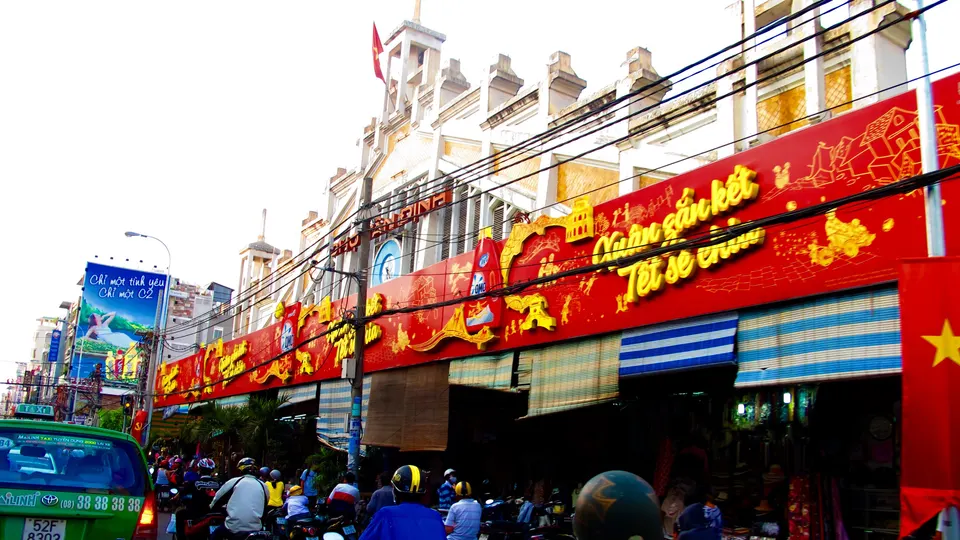
A Tuoi Tre writer remembers the late 1980s, when the knocking was heard most at night: a man cooked at the cart while a boy ran ahead with the bamboo tube, took orders, carried the bowls to customers’ doors and brought the empty bowls back. Bowls were cheap and simple, a few slices of meat on noodles. Recent pieces in the Vietnamese press write about the sound as a memory of old Saigon rather than an everyday one.
The Chinese shops of Cho Lon and the older markets kept their own styles. Teochew families serve hủ tiếu sa tế, with a spicy, sweet-sour broth of more than twenty spices, and hu tieu ho (hủ tiếu hồ), wide soft noodle sheets with pork tongue, offal and blood in a peppery broth sour with pickled mustard greens. Cantonese family stalls such as Giang Lam Ky (Giang Lâm Ký) in Tan Dinh (Tân Định) Market made their name with hủ tiếu xá xíu, topped with roast pork, alongside egg noodles and wontons. There is also hu tieu ca (hủ tiếu cá), with snakehead fish, and shops that specialise in venison or goat. On the coast you will find squid versions too: our Vung Tau guide lists hu tieu muc (hủ tiếu mực) among the town’s dishes.
Hu tieu vs pho vs bun: which noodle soup is which?
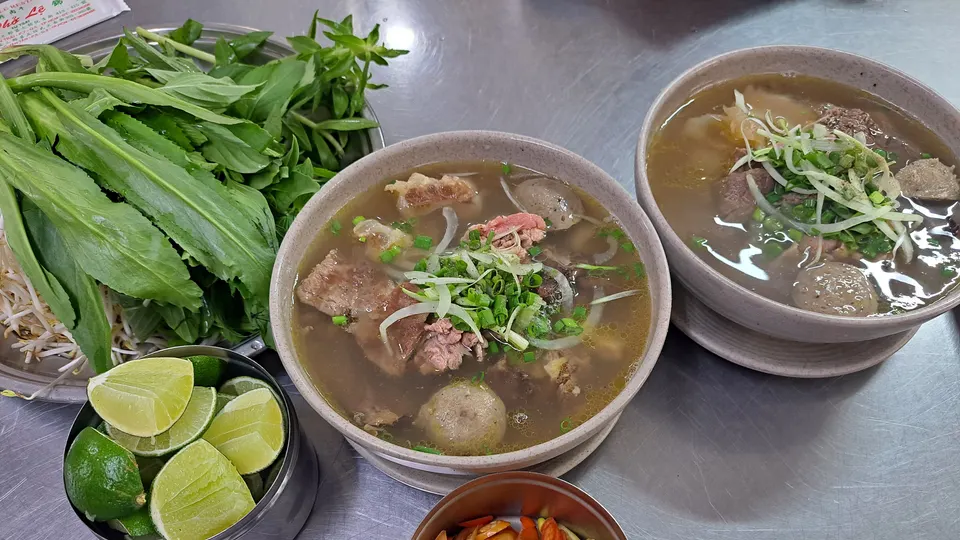
Visitors often call hu tieu “Southern pho”, and menus in English sometimes translate every noodle as “vermicelli”. In Vietnamese the noodle names are precise. The national tourism board describes pho noodles as made from rice but “flat and rectangular”, bun as steamed round rice noodles, “thin and round with a soft bite”, and mi as thin wheat noodles, often coloured yellow with egg yolk (vietnam.travel). Hu tieu noodles are rice noodles too, but VnExpress International describes them as thinner and chewier than pho, and in parts of the delta tapioca goes into the mix.
| Hu tieu | Pho | Bun (for example bun bo Hue) | |
|---|---|---|---|
| Home region | South: Saigon and the Mekong Delta | North: Nam Dinh (Nam Định) and Hanoi | Used across Vietnam; bun bo Hue is from Hue in the Centre |
| Noodle | Thin, chewy rice noodles (some with tapioca); egg noodles (mi) as an option | Flat rice noodles | Round rice noodles, soft rather than chewy |
| Broth | Pork bones, dried shrimp, dried squid; clear and lightly sweet | Beef bones with charred ginger, onion and warm spices such as star anise and cinnamon | Bun bo Hue: beef bones simmered with lemongrass, spicy, with fermented shrimp paste |
| Main meat | Pork, shrimp, offal; beef only as meatballs | Beef (also chicken) | Bun bo Hue: beef and pork |
| Ways to order | In broth (nuoc) or dry (kho) | Usually in broth | As a soup, or dry with grilled meat in dishes such as bun cha |
| What the name means | A dish (and its noodle) | A dish (and its noodle) | A noodle type, used in many different dishes |
Two practical consequences follow. First, a “pho” craving will not be met by a hu tieu shop: VnExpress International points out that beef, the meat of pho, is not the protein of choice in hu tieu, which appears at most as beef balls. Second, bun on a menu tells you the noodle, not the dish: the same round noodles go into a spicy soup like bun bo Hue, which the MICHELIN Guide describes as simmered for hours with beef bones and lemongrass, and into dry dishes like Hanoi’s bun cha, where grilled pork sits over a plate of cold noodles. A Tuoi Tre writer recalls learning to tell “beef phở from pork hủ tiếu” on childhood trips to the city, which is still a good rule of thumb.
The South’s herbs and sauces did shape the Southern bowl of pho, and our comparison of Hanoi and Saigon pho explains how. For the thicker, chewier noodle soup that Southern shops also sell, see our guide to banh canh by region.
How to order hu tieu
Hu tieu shops usually offer the same basic choices, and once you know them a menu board becomes easy to read. Choose the noodle, the topping and whether you want it in broth or dry; the MICHELIN Guide notes that even its Bib Gourmand pick serves the soup either way, with the broth on the side for the dry version.
- Noodle. Hu tieu means rice noodles, mi means yellow egg noodles, and hu tieu mi (hủ tiếu mì) gets you both in one bowl.
- Topping. Thit (Thịt) (sliced pork), xuong (xương) (pork bones), bo vien (bò viên) (beef balls), hoanh thanh (hoành thánh) (wontons), tom (tôm) (shrimp), or thap cam (thập cẩm) for a bit of everything. A Nam Vang shop will usually offer liver, quail egg and offal too.
- Nuoc or kho. Nuoc is in broth. Kho is dry, with a bowl of broth on the side.
- Season at the table. Add bean sprouts, chives and lettuce as you go, squeeze in lime and add chilli to taste. In Chinese-style shops diners may also add vinegar, soy sauce and chilli sauce. Taste the broth first: in a good shop it is the thing you came for.
- Mix a dry bowl first. Toss the noodles through the sauce before you start, and drink the broth between bites.
Which bowl to pick depends on what you want from it. Prices below are those reported by Tuoi Tre in May 2026 and by MICHELIN’s listing in November 2026; they change, so treat them as a guide.
| If you want… | Order | Where to try it | Cost (as reported) | Suits |
|---|---|---|---|---|
| The famous Saigon bowl | Hu tieu Nam Vang, in broth or dry | Hong Phat, Ban Co ward (6:30 am–10:30 pm daily per MICHELIN, Nov 2026) | MICHELIN’s lowest price band (₫) | First-timers; anyone happy with liver and offal |
| Chinese-style roast pork | Hu tieu mi xa xiu (rice and egg noodles) | Giang Lam Ky stall, Tan Dinh Market | 45,000 dong a bowl (May 2026) | Early risers; egg-noodle fans |
| A dry plate with tomato sauce | Hu tieu kho, Sa Dec or My Tho style | Thanh Xuan, Ton That Thiep Street, or a Sa Dec-style shop | From about 45,000 dong at one Sa Dec-style shop (May 2026) | Hot days; fans of sweet-sour flavours |
| A cheap everyday bowl | Hu tieu thit (sliced pork) or a cart bowl | Roadside shops and carts | About 20,000–40,000 dong (May 2026) | Budget travellers; late nights |
| Everything in one bowl | Hu tieu thap cam or shrimp and squid | Established central Saigon shops | Can pass 100,000 dong (May 2026) | Big appetites |
When people eat it: from breakfast to late at night
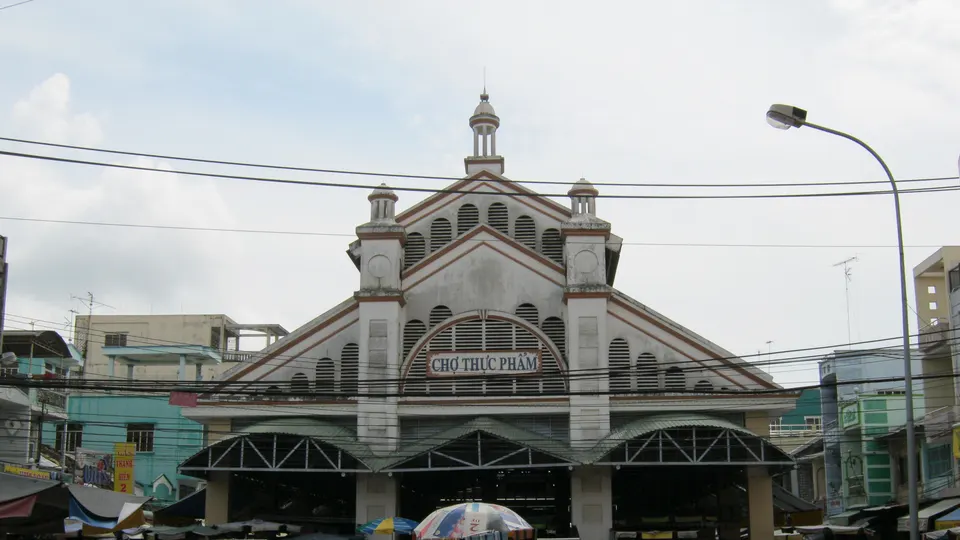
In the South, hu tieu is eaten from breakfast through to late at night, but breakfast is still its classic hour, as it is for several Southern dishes (see what Vietnamese eat for breakfast by region). The national tourism board’s advice for Can Tho is to “sidle up to a hu tieu vendor for the best breakfast in Can Tho” (vietnam.travel), and the family behind Tan Dinh Market’s Mi Chu Cau (Mì Chú Cẩu) stall starts preparing around 2 a.m. to serve the morning crowd.
The dish has also changed its place in people’s lives:
- From treat to everyday food. A Tuoi Tre writer who grew up in the countryside of the former Long An province (since July 2025 part of Tay Ninh (Tây Ninh) province) remembers hu tieu as something eaten once or twice a year; bowls sometimes held only noodles and broth, and mothers split one bowl between children. Today a thap cam bowl comes loaded with pork, bones, shrimp, squid and quail eggs.
- From market stall to restaurant. In the 1980s, Sa Dec’s hu tieu was sold mostly inside the market and only in the morning, largely to the women who traded there. Now Sa Dec noodles come in versions with duck, ribs, fish or seafood, and noodle makers produce coloured noodles tinted with gac (gấc) fruit, beetroot or pandan.
- From pavement to price range. Street bowls in Saigon and signature bowls in established restaurants now sit at very different prices, but both remain hu tieu, and the Vietnamese press still treats it as an everyday dish of the city.
For more of the South’s food and places, browse our South Vietnam hub or all our Vietnamese food guides by region.
Where to try hủ tiếu in Ho Chi Minh City
MICHELIN Guide pick
Hồng Phát (Bàn Cờ) · Hủ tiếu Hồng Phát
Ho Chi Minh City · Bàn Cờ ward (former District 3)
389–391 Võ Văn Tần Street
A Bib Gourmand pick in the MICHELIN Guide Vietnam 2026 for hủ tiếu Nam Vang, which the guide describes as the meeting of Teochew (Chaozhou) and Khmer cooking. The shop was opened in 1975 by Đặng Thị Nguyệt, who was born in Phnom Penh, and serves its noodles in glass bowls, as a soup or dry with the broth on the side.
Order: Hủ tiếu Nam Vang with minced pork, liver, tiger shrimp or braised blood curd; shrimp-and-crab spring rolls to start.
Listed in: MICHELIN Guide Vietnam 2026, MICHELIN Guide (2024) · checked November 2026
Local favourite
Hủ Tiếu Thanh Xuân · Hủ tiếu Thanh Xuân (hủ tiếu Chà)
Ho Chi Minh City · Former Bến Nghé ward, District 1 (central Saigon)
62 Tôn Thất Thiệp Street
A family shop of about 80 years, also called hủ tiếu Chà because it stands beside the Hindu temple of the Chà Và community. Its founder came up from Mỹ Tho, and Tuổi Trẻ (May 2026) describes it as keeping a Mỹ Tho taste in Saigon: chewy noodles from Sa Đéc, a clear, lightly sweet broth and a dry version with the family's own sauce.
Order: Hủ tiếu khô with the house tomato-based sauce, topped with peeled shrimp, crab meat or pork liver.
Recommended by: Tuổi Trẻ (2026), Znews (from Phụ nữ Online) (2022), Báo Văn Hóa (from Dân Trí) (2018) · checked November 2026
Local favourite
Giang Lâm Ký (Mì Chú Cẩu) · Hủ tiếu Giang Lâm Ký – Mì Chú Cẩu
Ho Chi Minh City · Tân Định ward (former District 1)
Inside Tân Định Market, on the Nguyễn Hữu Cầu Street side
A Chinese-style hủ tiếu and egg-noodle stall run by the same Guangdong-born family for three generations, known for xá xíu (Cantonese roast pork). Tuổi Trẻ visited in May 2026, found the third generation still serving from early morning and gave the price of a bowl of hủ tiếu mì xá xíu as 45,000 dong.
Order: Hủ tiếu xá xíu, or hủ tiếu mì (rice and egg noodles together) with wontons.
Many stalls in and around Tân Định Market sell hủ tiếu. This card means the Giang family's stall, signed Mì Chú Cẩu, which began as the Giang Lâm Ký cart.
Recommended by: Tuổi Trẻ (2026), VnExpress (2016) · checked November 2026
Addresses and details can change; check before you go. We do not accept payment for listings.
Frequently asked questions
Is Hong Phat still in the MICHELIN Guide in 2026?
Yes. As of November 2026, Hong Phat at 389–391 Vo Van Tan Street in Ho Chi Minh City's Ban Co ward is a Bib Gourmand in the MICHELIN Guide Vietnam 2026, in the guide's lowest price band. It serves hu tieu Nam Vang in broth or dry, and its listing gives opening hours of 6:30 am to 10:30 pm daily.
How much does a bowl of hu tieu cost in Saigon?
In May 2026 Tuoi Tre put roadside bowls of hu tieu in Ho Chi Minh City at about 30,000–40,000 dong, with cheaper ones at 20,000–25,000 dong, while a loaded shrimp-and-squid bowl at a well-known central shop can pass 100,000 dong. Prices vary by shop and topping.
Which hu tieu should I order on my first try?
Order hu tieu Nam Vang if you want Saigon's best-known, fully loaded bowl with minced pork, shrimp and liver, or hu tieu kho, the dry Sa Dec-style plate with a tomato-based sauce and the broth on the side, for the most distinctive Mekong Delta version. Say nuoc for soup and kho for dry.
Is hu tieu Nam Vang really from Cambodia?
Partly. Nam Vang is the old Vietnamese name for Phnom Penh, and the bowl descends from Phnom Penh's kuy teav, a noodle soup that itself traces back to southern China; Saigon cooks, many of them ethnic Chinese, adapted it, and Vietnamese sources date its arrival to the 1960s or the 1970s.
Key sources
- Hu Tieu Nam Vang – a bowl of cultural fusion · Vietnam Pictorial / Vietnam News Agency, 6 July 2026
- Vang danh hủ tiếu đất phương Nam · Tuổi Trẻ, 1 February 2014
- Dặm dài hủ tiếu – Kỳ 6: Hủ tiếu Sa Đéc trứ danh miền sông nước · Tuổi Trẻ, 20 May 2026
- Hồng Phát (Bàn Cờ) – Bib Gourmand, MICHELIN Guide Vietnam 2026 · MICHELIN Guide Vietnam 2026 (listing checked 20 November 2026)
- From kuy teav to hủ tiếu: a street food history · Saigoneer (2016, republished 4 October 2024)
- Towns of the Mekong Delta · Vietnam National Authority of Tourism (vietnam.travel)
- Names and administrative centres of 34 provinces and centrally run cities specified · Vietnam Government Portal, 15 April 2025
- A foodie guide to Vietnam's noodles · Vietnam National Authority of Tourism (vietnam.travel)
All 29 sources and further reading
- Coffee Styles in Saigon Then and Now · Saigoneer (Dang Bui), 26 Jun 2014
- Dặm dài hủ tiếu – Kỳ 1: Những quán hủ tiếu đời người · Tuổi Trẻ, 15 May 2026
- Dặm dài hủ tiếu – Kỳ 2: Ăn hủ tiếu nay mà nhớ hủ tiếu xưa · Tuổi Trẻ, 16 May 2026
- Dặm dài hủ tiếu – Kỳ 4: Giữ hương vị hủ tiếu miền Tây ở Sài Gòn · Tuổi Trẻ, 18 May 2026
- Vietnam's hu tieu among Asia's best dishes · Tuổi Trẻ News, 25 April 2014
- Michelin Guide đề xuất phải thử bánh cuốn, hủ tiếu, bún chả, xôi và phở khi đến Việt Nam · Tuổi Trẻ, 12 December 2023
- 4th MICHELIN Guide Vietnam features 193 establishments, still overlooks banh mi · Tuổi Trẻ News, 5 June 2026
- Get to Know Hồng Phát: A Noodle Shop Celebrating Khmer Culture in Ho Chi Minh City · MICHELIN Guide, 10 February 2024
- 2 Days in Ho Chi Minh City for Street Food Lovers · MICHELIN Guide, 12 July 2024
- Hẻm Gems: Heavenly hủ tiếu on Cô Giang · Saigoneer, 26 February 2016
- Miền Tây có hủ tiếu Mỹ Tho · Sài Gòn Giải Phóng, 26 January 2023
- Nào đâu hủ tiếu Sài Gòn · Sài Gòn Giải Phóng, 19 February 2023
- Những món hủ tiếu hấp dẫn ở Sài Gòn · VnExpress, 14 September 2014
- Hủ tíu khắp các ngõ ngách ở TP.HCM · Znews (from Phụ nữ Online), 24 June 2022
- Hủ tiếu Nam Vang có nguồn gốc từ đâu? · Znews, 14 May 2019
- Time-tested hủ tiếu recipe brings fame to Sa Đéc · Việt Nam News, 30 October 2018
- Resolution 202/2025/QH15 on the reorganisation of provincial-level administrative units · LuatVietnam (English text)
- While Hanoi has pho, Saigon has hu tieu · VnExpress International, 30 June 2016
- Behind the Bib: Bún Bò Huế 14B · MICHELIN Guide, 15 August 2024
- Bản giao hưởng của hủ tiếu · Znews, 17 December 2023
- Hủ tiếu · Wikipedia (background; cites Thanh Niên, Los Angeles Times, Saigoneer)
Keep exploring
 South Vietnam · Travel Ho Chi Minh City (Saigon): How Many Days and What to See Ho Chi Minh City (Saigon) explained: the 2025 merger and new wards, how many days to stay, Metro Line 1, Long Thanh airport, palace and museum tickets.
 South Vietnam · Travel Mekong Delta: Which Area to Visit and Where to Base Which part of the Mekong Delta to visit and where to base: Can Tho, Ben Tre or Chau Doc, Cai Rang market hours, seasons, where to eat, new province names.
 North · Central · South · Food Hanoi vs Saigon Pho (Phở): Differences and How to Order Hanoi vs Saigon pho: a clear, spare Northern broth or a sweeter Southern bowl with herbs and sauces, plus Central styles, 2026 prices and MICHELIN picks.