North Vietnam · Food
Bun Cha (Bún Chả) in Hanoi: How to Eat It, What It Costs
What bun cha is, why Hanoi eats it at lunch over charcoal smoke, how to eat it the local way, and how it differs from southern bun thit nuong.
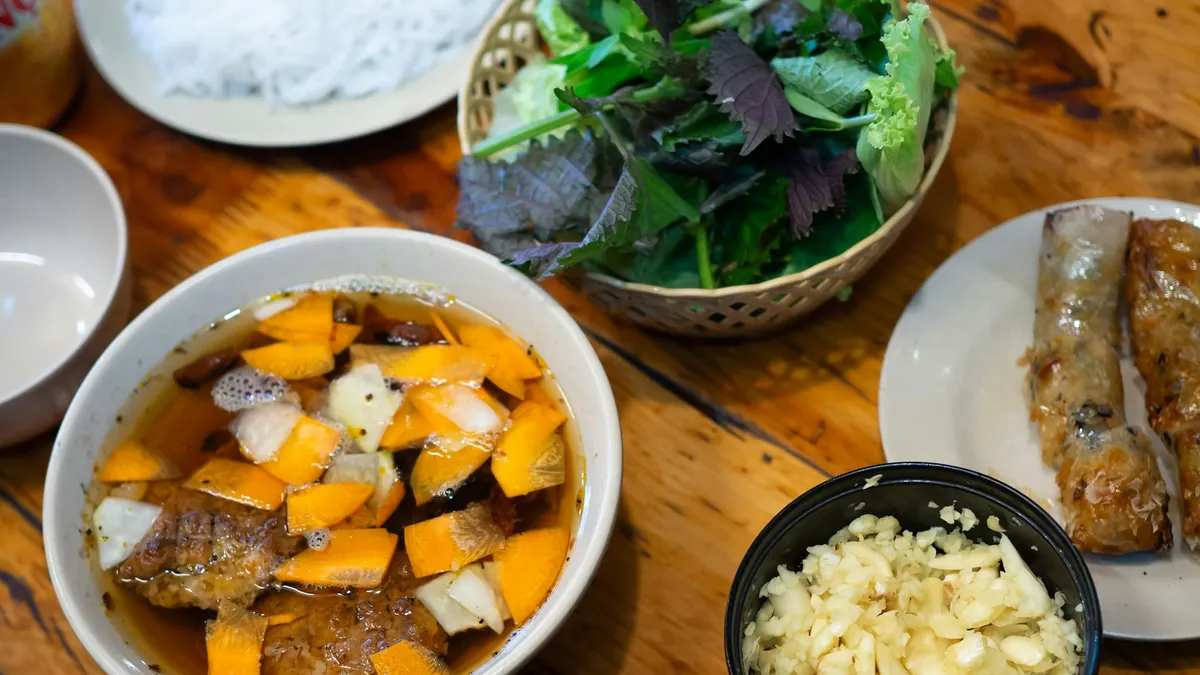
Eat bun cha at lunchtime in Hanoi, by dipping: noodles and herbs go into the warm sweet-sour broth with the grilled pork, one bite at a time. As of 2025–2026 a full portion costs about 35,000 to 40,000 dong at an ordinary family stall (VietNamNet, September 2025) and about 50,000 to 110,000 dong at famous shops, and three Hanoi bun cha shops hold a MICHELIN Bib Gourmand in the 2026 selection.
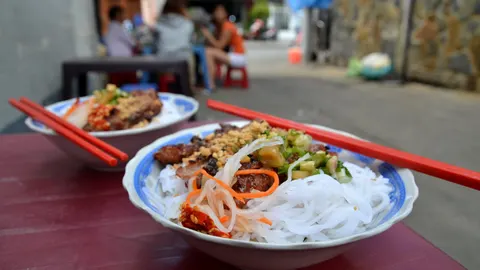
Bun cha (Bún chả) is grilled pork with rice noodles, and it is the dish many Hanoians think of first when they think of lunch. Bun (Bún) means rice vermicelli and cha (chả) here means grilled pork. A serving comes in parts: a bowl of warm, sweet-sour dipping broth holding two kinds of charcoal-grilled pork, minced patties and thin slices of belly, plus a plate of cold noodles and a basket of fresh herbs. You put it together yourself, one bite at a time.
Nobody knows exactly when or where bun cha was first made, but it was already a familiar food in old Hanoi (Hà Nội), and the writer Thach Lam (Thạch Lam) singled it out as one of the city’s most characteristic dishes (Vietnam News). Today Hanoi treats it the way it treats pho (phở): a plain, everyday meal that people still argue about.
What comes to the table, and what each part does
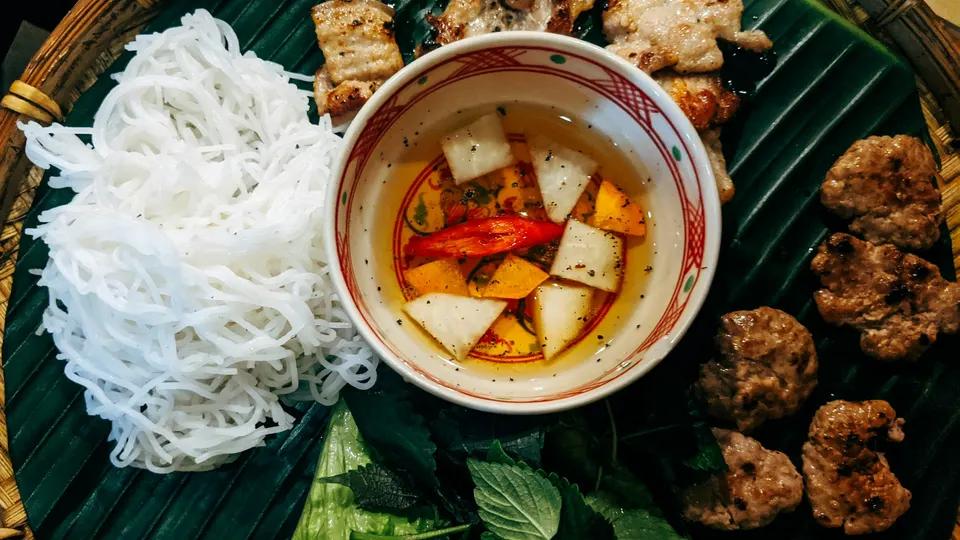
- Cha bam (minced patties). Pork shoulder with some fat is chopped by hand rather than ground, which keeps it juicy, then shaped into small rounds and pressed flat before grilling.
- Cha mieng (sliced pork). Thin, even slices of pork belly, or the cut from under the foreleg, which has lean meat, fat and firm skin and does not shrivel on the grill.
- The marinade. An old-style Hanoi recipe uses shallot, spring onion, fish sauce, black pepper, a little sugar and nuoc hang (nước hàng), a dark caramel that gives the meat its colour and gloss. It does not use garlic, lemongrass or oyster sauce; those belong to newer versions that drift towards Saigon-style grilled pork (VnExpress).
- The charcoal. The meat is grilled over than hoa (charcoal), with the embers fanned to keep them glowing rather than flaming, so the pork cooks through and chars at the edges without burning.
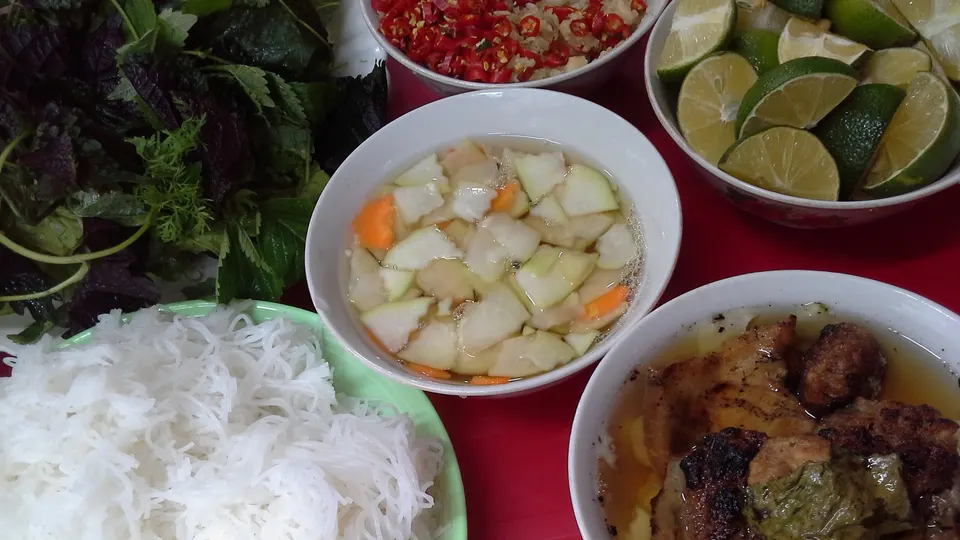
- Nuoc cham (the dipping broth). Fish sauce, sugar and vinegar diluted with water, with garlic, chilli and pepper. Slices of pickled green papaya or kohlrabi and carrot float in it. The hot pork goes straight into this bowl, so its fat and smoke flavour the broth.
- The noodles. Fresh, thin rice vermicelli, served plain on a plate or tray.
- The herbs. Lettuce, perilla (tia to (tía tô)), Vietnamese balm (kinh gioi (giới)), coriander and Lang (Láng) mint (hung Lang (húng Láng)), grown in Hanoi’s Lang villages. English menus and articles often call it “Lang basil”, but it is a mint: Vietnam’s plant database lists hung lang under Mentha aquatica, and To Hoai (Tô Hoài) compared its scent with that of other mints. The writer Vu Bang (Vũ Bằng), quoted in VnExpress’s recipe, thought Lang mint was what made Hanoi’s bun cha special, and claimed that planted anywhere else it took on the smell of ordinary mint (bac ha (bạc hà)). Our guide to Vietnamese herbs covers the whole basket.
- On the side. Many diners also order fried spring rolls (nem ran (rán)), to cut into the broth or eat on their own.
Why do Hanoians eat it at lunch?
In Hanoi bun cha is mostly a lunchtime meal. Locals usually eat it at noon, and many classic shops serve it only in a window from late morning to early afternoon. A long-time Hanoi resident writing for Vietnam’s national tourism authority called it “strictly a lunch dish” (VNAT). It fits the rhythm of the city’s eating day: pho and banh cuon are breakfast foods, and bun cha takes over at midday.
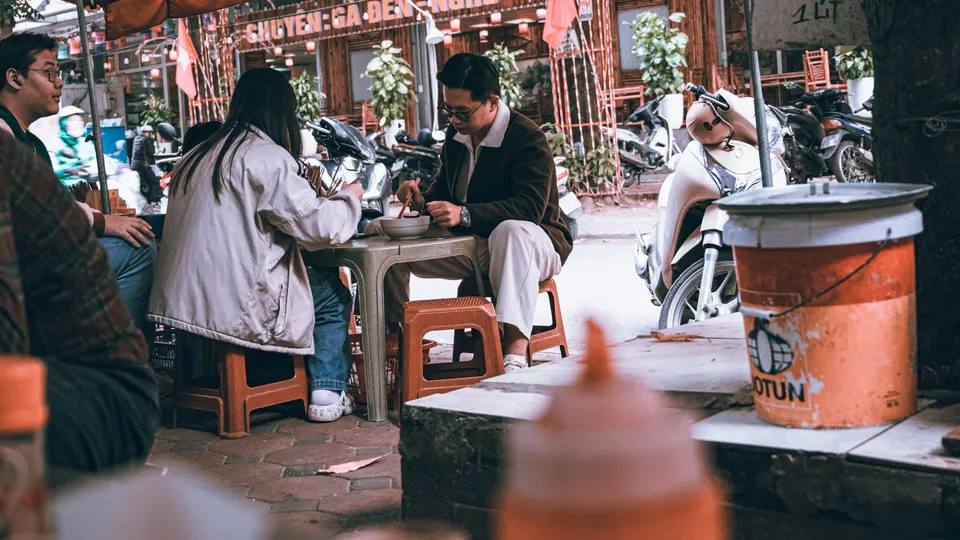
The habit has practical roots too. Herbs and a cool, tangy broth suited hot days, and Vietnam (Việt Nam) News notes that bun cha was traditionally eaten in summer for that reason. This is the common pattern, not a rule. Some shops, especially in tourist areas, now serve bun cha all day, and Vietnam News describes locals who eat it at breakfast, lunch or dinner.
Why is there charcoal smoke on the pavement?
The smoke is part of the dish’s identity. Bun cha shops typically grill on a small charcoal stove at the shop front or on the pavement, and the meal is eaten on low plastic stools nearby. Hanoi Times describes bun cha as the dish of “sidewalk grills” and “lunchtime rituals” (Hanoi Times). For a passer-by, the smell travels well beyond the stall, and it works as the shop’s sign.
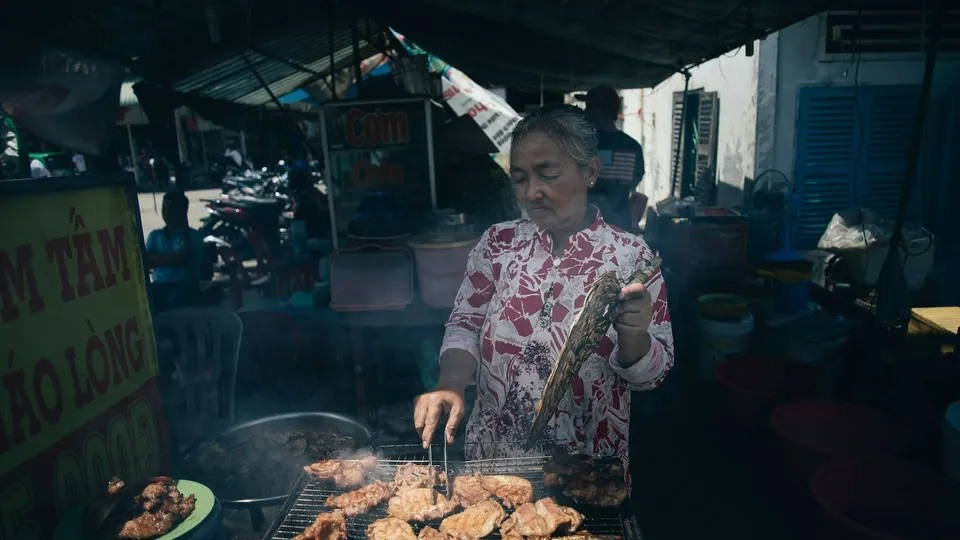
The pavement grill has a long history. Early vendors walked the streets selling bun cha from handwoven bamboo baskets, and the meat was clamped between split bamboo sticks over the coals. Fixed shops were rare. Thach Lam’s 1943 book of essays on Hanoi’s streets, Hà Nội băm sáu phố phường, quotes a visitor’s verse about the smell of grilled pork.
How to eat bun cha
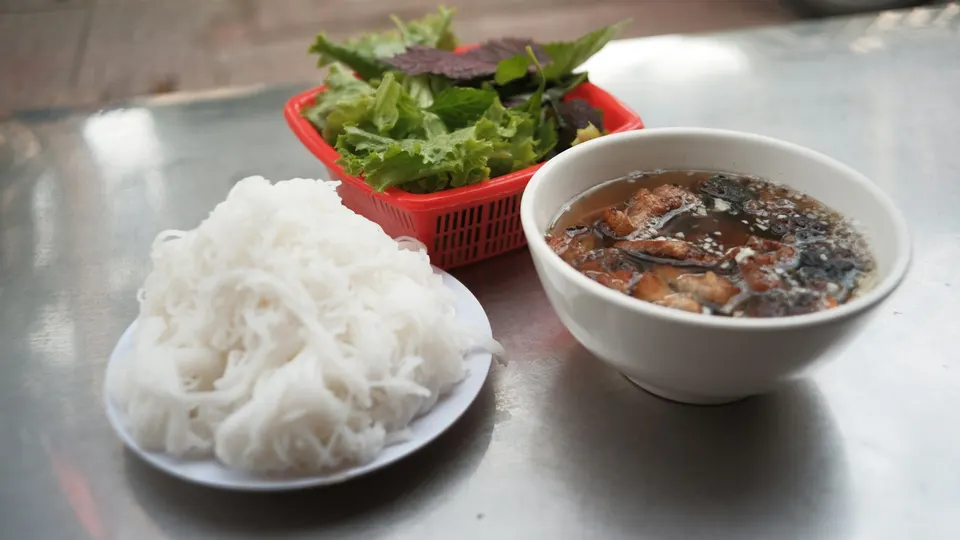
- Season the broth first. Add chopped garlic, chilli and pepper from the table, and squeeze in lime if offered. Taste before adding more.
- Dip, do not pour. Pick up a small amount of noodles with your chopsticks, dip it into the bowl with the pork, and eat it together with a piece of meat. Locals dip a bite at a time rather than tipping all the noodles into the bowl.
- Add herbs as you go. Tear a few leaves into the broth, or eat them between bites. Some diners wrap a patty in a leaf.
- Use the spring rolls. If you ordered nem ran, cut them into the broth or dip them as you would the noodles.
- Go at lunchtime. Arrive late morning or around noon, when the grill is going and the meat is freshly cooked. By mid-afternoon many traditional shops have closed.
Which other kinds of bun cha will you meet in Hanoi?
The classic is the dipping kind, sometimes called bun cha cham (bún chả chấm) to tell it apart, but Hanoi shops have their own twists. The best known is bun cha chan (bún chả chan) (“poured-over” bun cha), where nothing is dipped: noodles, grilled pork, mustard greens and spring onion come together in one bowl of hot broth simmered from pork bones. The MICHELIN Guide describes Bun Cha Chan on Mai Hac De (Mai Hắc Đế) street, a Bib Gourmand since 2024, as specialising in both the dipping style and the soup style, with the meat “submerged in a fragrant, piping-hot bone broth” (MICHELIN Guide).
The soup style came to Hanoi from outside. The owner of Bun Cha Chan, Nguyen Thi Hong (Nguyễn Thị Hồng), told VnExpress International in 2024 that she learned the dish in neighbouring Bac Ninh (Bắc Ninh) and adjusted it to Hanoi tastes. A 2013 Zing News report on an earlier bun cha chan shop on the same street found a sign reading “Đặc sản họ Dương – Bắc Ninh” (a Duong (Dương) family speciality from Bac Ninh) and pork grilled in one thick slab rather than shaped into patties, and the writer wondered whether a variation on bun cha or bun canh (bún canh) really counted as a speciality.
Other shops change the meat rather than the broth. VnExpress International reported in 2025 that Bun Cha Dac Kim (Bún Chả Đắc Kim) on Hang Manh (Hàng Mành) wraps its patties in betel leaves (la lot (lá lốt)), and the MICHELIN inspectors list minced beef in betel leaf among the extras at Bun Cha Chan. VietNamNet’s 2026 round-up of Old Quarter shops describes minced pork wrapped in xuong song (xương sông) leaves before grilling, and one shop that still holds each piece of pork between two flattened bamboo sticks tied with bamboo strips: the old method that most shops replaced with wire racks.
| Version | What is different | Where to try it (sources 2024–2026) |
|---|---|---|
| Bun cha (cham), the classic | Pork in warm, sweet-sour dipping broth; noodles and herbs dipped a bite at a time | Almost every shop, e.g. Tuyet Bun Cha (Tuyết Bún Chả) 34, Bun Cha Hang Quat (Bún Chả Hàng Quạt) |
| Bun cha chan | Noodles, pork, mustard greens and spring onion in one bowl of hot pork-bone broth | Bun Cha Chan, 114 Mai Hac De |
| Cha la lot (Chả lá lốt) | Minced meat wrapped in betel leaf and grilled | Bun Cha Dac Kim (pork), Bun Cha Chan (beef) |
| Cha la xuong song (Chả lá xương sông) | Minced pork wrapped in aromatic xuong song leaves | Some Old Quarter shops (VietNamNet, 2026) |
| Bamboo-clamped pork | Pork held between flattened bamboo sticks over charcoal | A few traditional Old Quarter shops |
When you order, cham means the dipping style and chan the soup style, at shops that offer both. If you want the leaf-wrapped patties, look for cha la lot on the menu or ask for it. The sauce itself, and how to adjust it at the table, is covered in our guide to nuoc cham by region.
How is bun cha different from bun thit nuong?
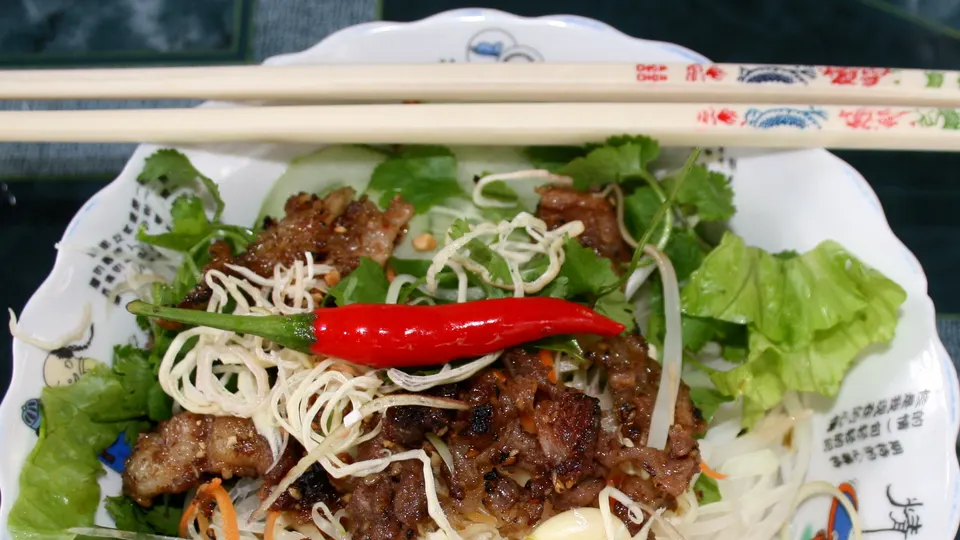
Visitors who know Vietnamese food from the South or from restaurants abroad often meet bun thit nuong (bún thịt nướng) first, and the two dishes are easily confused. Both pair grilled pork with rice noodles, but they are built differently. In Ho Chi Minh City, bun thit nuong is a single bowl of noodles, grilled pork, fresh vegetables, scallion oil and chopped peanuts, often with fried spring rolls, tied together with fish sauce (VnExpress International). In Saigon grilled pork also goes on rice: a charcoal-grilled chop on broken rice is the heart of com tam.
| Bun cha (Hanoi) | Bun thit nuong (South) | |
|---|---|---|
| Region | North, above all Hanoi | South, especially Ho Chi Minh City |
| How it is served | Pork in a bowl of warm dipping broth; noodles and herbs on separate plates | One bowl: noodles, pork, vegetables and toppings together |
| Pork | Minced patties (cha bam) and sliced belly (cha mieng) | Grilled marinated pork slices; spring rolls common |
| Marinade (traditional) | Fish sauce, caramel, shallot, pepper; no garlic or lemongrass | Spiced marinade; recipes vary by cook |
| Sauce | Thin, warm, sweet-sour broth with pickled papaya and carrot | Fish sauce added over the bowl or served on the side |
| Toppings | Herbs, garlic and chilli added to the broth | Scallion oil, chopped peanuts, pickles |
| Typical time | Lunch | Often lunch; hours vary by shop |
The difference is not only one of taste. In Hanoi, the broth is the centre of the meal and everything comes back to it; in the South, the bowl is assembled in the kitchen and you mix it yourself with chopsticks. Our side-by-side guide to bun cha vs bun thit nuong adds Hue’s peanut-sauce version, how to order each and where to try both in Hanoi and Saigon. The same North–South pattern of restraint versus abundance shows up in how pho changes by region.
The night Obama and Bourdain sat down for bun cha
Bun cha became known far beyond Vietnam on 23 May 2016. On his first night in Hanoi during an official visit, President Barack Obama ate bun cha with the chef and television host Anthony Bourdain at Bun cha Huong Lien (Bún chả Hương Liên) on Le Van Huu (Lê Văn Hưu) street, a family shop that had opened in 1993. They sat on low plastic stools and drank cold Hanoi beer, and Bourdain posted that he had picked up the bill (Tuoi Tre News). The meal was filmed for Bourdain’s series Parts Unknown.
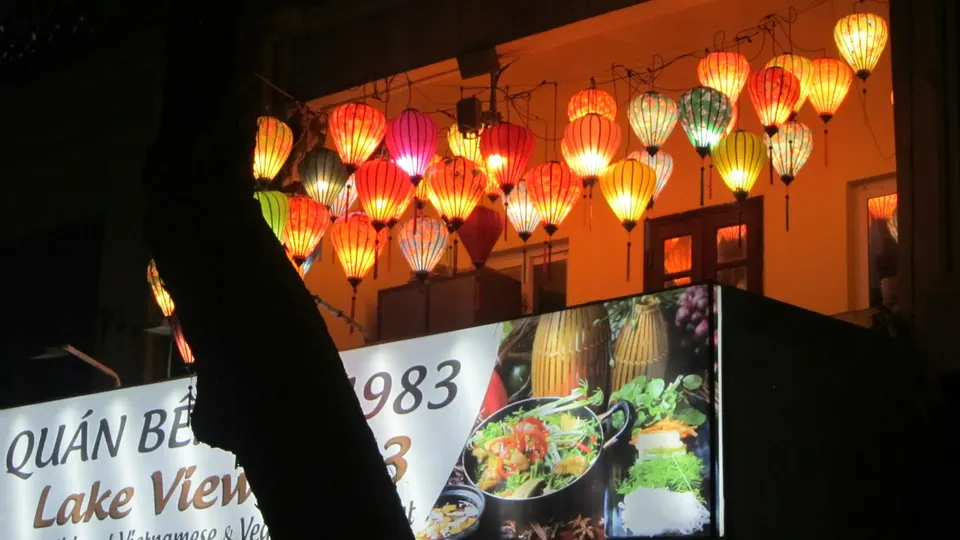
The family told Tuoi Tre (Tuổi Trẻ) they had been told only that an American film crew was coming, and learned who the guest was that night. The episode put an everyday Hanoi lunch in front of a worldwide television audience.
Bun cha then and now
Some things have changed a great deal:
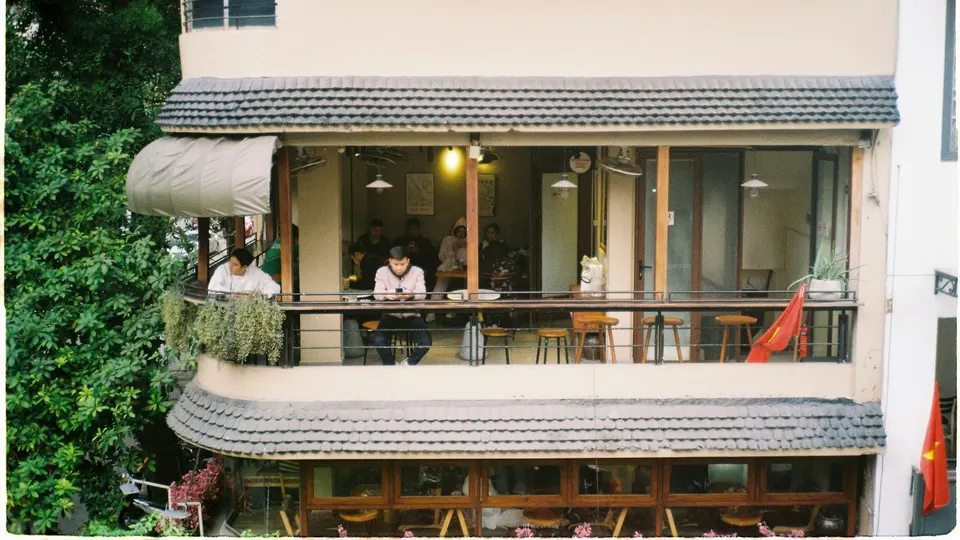
- From baskets to shops. Street vendors with baskets have largely given way to shops with a grill at the front. The bamboo clamps that once held the meat have mostly been replaced by wire racks, although some cooks still use split young bamboo for its faint aroma.
- From treat to everyday food. In the lean years of the subsidy period (thoi bao cap (thời bao cấp)), bun cha with spring rolls was a special meal that many families kept for Tet (Tết). It is now an everyday lunch.
- Vinegar or lime? Traditional Hanoi dipping broth is soured with vinegar. Many shops now use lime or kumquat because it is quicker, and a VnExpress food writer argues that vinegar’s softer acidity suits the dish better. Diners still disagree.
- New recognition. The MICHELIN Guide calls Hanoi the birthplace of pho and bun cha, and several bun cha shops appear in its Bib Gourmand selection for good-value cooking (MICHELIN Guide). In the 2026 selection, announced on 4 June 2026, three bun cha shops hold a Bib Gourmand (Bun Cha Ta, Tuyet Bun Cha 34 and Bun Cha Chan), while Huong Lien and Dac Kim are listed without one, according to MICHELIN’s Hanoi listings. In May 2026 TasteAtlas ranked bun cha fourth among Asian pork dishes, Tuoi Tre News reported.
Bun cha has also travelled. Hanoi-style shops operate in Ho Chi Minh City and Da Nang (Đà Nẵng) and in Vietnamese restaurants abroad, and other versions exist across the country, but Hanoi Times notes that the Hanoi version is still the most highly regarded.
If you are planning a trip, our North Vietnam hub covers the region around the capital, and our food section has more regional dishes. For a noodle dish from the centre built on a completely different idea, try bun bo Hue (bún bò Huế). For another Hanoi meal finished at the table, see cha ca La Vong.
Where to try bún chả in Hanoi
MICHELIN Guide pick
Bún Chả Hương Liên · Bún chả Hương Liên
Hanoi · Hai Bà Trưng ward (former Hai Bà Trưng district)
24 Lê Văn Hưu Street
The shop where Barack Obama and Anthony Bourdain ate in 2016, listed in the MICHELIN Guide Vietnam 2026. Photos of famous guests hang on the walls and the table they used is kept under glass; the bún chả itself is smoky grilled pork and patties with herbs and salad leaves.
Order: Bún chả with a fried seafood or crab spring roll (nem cua bể).
This card means the original shop at 24 Lê Văn Hưu. The name also appears on a second address in another part of the city.
Listed in: MICHELIN Guide Vietnam 2026 · checked November 2026
MICHELIN Guide pick
Bún Chả Đắc Kim · Bún chả Đắc Kim
Hanoi · Old Quarter, Hoàn Kiếm ward (former Hoàn Kiếm district)
1 Hàng Mành Street
A no-frills Old Quarter shop that has been there since 1966, listed in the MICHELIN Guide Vietnam 2026. The dipping sauce is sweet chilli fish sauce with finely sliced pickled green mango, served with smoky shredded pork and plump patties.
Order: Bún chả with both the sliced pork and the patties. Expect to queue and share a table.
Listed in: MICHELIN Guide Vietnam 2026 · checked November 2026
MICHELIN Guide pick
Tuyết Bún Chả 34 · Bún chả Tuyết 34
Hanoi · Ba Đình ward (former Ba Đình district)
34 Hàng Than Street
A Bib Gourmand pick in the MICHELIN Guide Vietnam 2026: a street stall known for bún chả chargrilled to order, eaten by dipping the noodles into the broth.
Order: Bún chả, with an extra fried spring roll for crunch.
Listed in: MICHELIN Guide Vietnam 2026 · checked November 2026
MICHELIN Guide pick
Bún Chả Chan · Bún chả Chan
Hanoi · Hai Bà Trưng ward (former Hai Bà Trưng district)
114 Mai Hắc Đế Street
A Bib Gourmand pick in the MICHELIN Guide Vietnam 2026 and the best-known place in Hanoi for bún chả chan, the one-bowl version in hot pork-bone broth; the classic dipping version is served too. The inspectors also mention grilled pork belly, minced beef in betel leaf and spring rolls fried to order.
Order: Bún chả chan, or one bowl of each style to compare, with a fried spring roll.
Sources disagree on closing time (the MICHELIN text says noon, its listed hours and VnExpress International say mid-afternoon), so go before noon.
Listed in: MICHELIN Guide Vietnam 2026, VnExpress International (2024) · checked November 2026
Local favourite
Bún Chả Hàng Quạt · Bún chả Hàng Quạt
Hanoi · Old Quarter, Hoàn Kiếm ward (former Hàng Gai ward, Hoàn Kiếm district)
Alley 74 Hàng Quạt Street
A family-run shop tucked into a narrow alley about ten minutes' walk from Hoàn Kiếm Lake, recommended by VietNamNet in 2024 and 2026. The pork is grilled over charcoal until golden and lightly charred, and the dipping sauce is made the classic way with fish sauce, vinegar, sugar and water.
Order: Bún chả with sliced pork and patties.
Recommended by: VietNamNet (2026), Vietnam Airlines travel guide · checked November 2026
Addresses and details can change; check before you go. We do not accept payment for listings.
Frequently asked questions
Is bun cha the same as bun thit nuong?
No. Both pair grilled pork with rice noodles, but Hanoi's bun cha serves the meat in a bowl of warm dipping broth with the noodles on a separate plate. Southern bun thit nuong is a single bowl of noodles, pork, herbs, peanuts and scallion oil dressed with fish sauce.
What time of day do people eat bun cha in Hanoi?
Mostly at lunch. Many traditional shops open late in the morning and close in the early afternoon, although some shops in tourist areas now serve it all day.
Where did Obama eat bun cha?
On 23 May 2016, his first night in Hanoi, President Barack Obama ate bun cha with Anthony Bourdain at Bun cha Huong Lien on Le Van Huu street, a family shop opened in 1993. The meal was filmed for Bourdain's television series.
How much does bun cha cost in Hanoi?
A full portion costs about 35,000 to 40,000 dong at an ordinary family stall, VietNamNet reported in September 2025, and roughly 50,000 to 110,000 dong at famous shops such as Huong Lien, Dac Kim and Bun Cha Ta, depending on extras, according to Ngoi Sao (June 2025).
Is the bun cha dipping sauce served hot?
It is usually served warm, because the freshly grilled pork goes straight into it. In winter many cooks heat the sauce itself so the bowl stays warm while you eat.
Key sources
- Bún chả: a tasty feast of colours and flavours · Việt Nam News, 1 Nov 2016
- Cách làm bún chả Hà Nội hương vị xưa · VnExpress, 16 Apr 2023
- How do you like your bun? · Vietnam National Authority of Tourism (from VOV), 2012
- Hanoi Soul: Bun cha · Hanoi Times, 19 Apr 2025
- Obama eats bun cha on first night in Hanoi · Tuổi Trẻ News, 24 May 2016
- In Saigon, grilled pork perfection for four decades · VnExpress International, 11 Jun 2018
- MICHELIN noodles in Hanoi on a budget · MICHELIN Guide, 6 Feb 2025
- What Is Bun Cha, Hanoi's Grilled Pork and Noodle Dish, and Where Can You Find It? · MICHELIN Guide (Lana Tran), 20 Mar 2025
All 26 sources and further reading
- Quán bún chả 21 năm ở Hà Nội, bà chủ bán hết veo 250 suất trong 3 tiếng · VietNamNet, 19 September 2025
- 5 quán bún chả nổi tiếng nhất Hà Nội · Ngôi Sao, 15 June 2025
- Bib Gourmand restaurants in Hanoi (MICHELIN Guide Vietnam 2026) · MICHELIN Guide
- Vietnamese bun cha, thit kho tau among Asia's top pork dishes in TasteAtlas rankings · Tuổi Trẻ News, 23 May 2026
- Eating like a local in Ho Chi Minh City · Vietnam National Authority of Tourism (vietnam.travel)
- Nước chấm bún chả Hà Nội pha giấm hay chanh? · VnExpress, 4 Aug 2024
- Hà Nội không chỉ có phở ngon · VnExpress, 16 Apr 2017
- Bun Cha – the characteristic dish of Hanoi cuisine · Hanoi Times, 4 May 2021
- One dish, five eateries – an exploration in Saigon · VnExpress International, 17 Jan 2019
- Why Does Vietnam Have a Mid-Day Siesta? I Blame the Bun Cha · SAVEUR, 8 Aug 2017
- Bún Chả Chan · MICHELIN Guide Vietnam 2026
- Hanoi grilled pork noodle shop now a Michelin favorite · VnExpress International (Tung Dinh), 27 Jul 2024
- Hanoi's 5 best bun cha: a Michelin-approved list · VnExpress International (Ha Nguyen), 3 May 2025
- 5 must-try bun cha restaurants in Hanoi's Old Quarter · VietNamNet, 24 Aug 2026
- Lạ miệng với bún chả chan phố Mai Hắc Đế · Zing News (from Infonet), 20 Mar 2013
- Mentha aquatica (Vietnamese names: húng láng, húng lũi) · Vietnam Plant Data Center (botanyvn.com)
- Rau thơm · VnExpress (Tô Hoài), 21 Mar 2002
- Bun cha · Wikipedia (background; see its cited sources)
Keep exploring
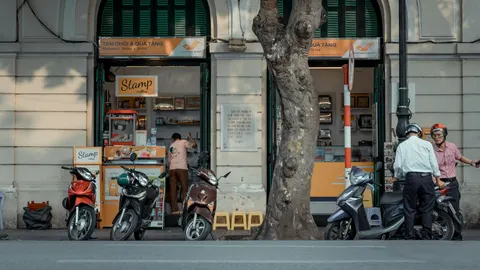 North Vietnam · Travel Hanoi: How Many Days, What to See and When to Go Hanoi travel guide for 2026: how many days and where to stay, Noi Bai airport, walking-street hours, the new low-emission zone, Train Street and where to eat.
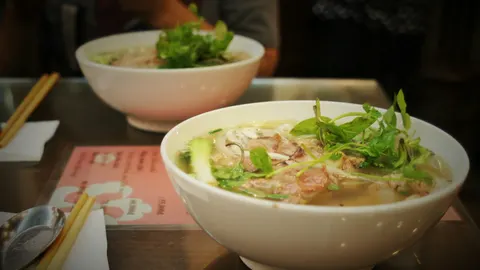 North · Central · South · Food Hanoi vs Saigon Pho (Phở): Differences and How to Order Hanoi vs Saigon pho: a clear, spare Northern broth or a sweeter Southern bowl with herbs and sauces, plus Central styles, 2026 prices and MICHELIN picks.
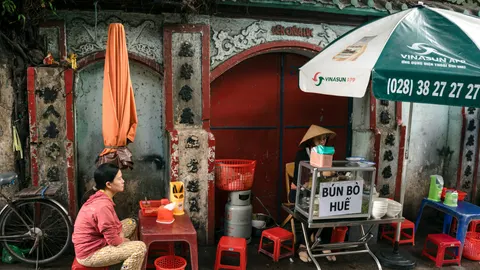 Central Vietnam · Food Bun Bo Hue (Bún Bò Huế): Dac Biet, How to Order and Cook Bun bo Hue explained: what a dac biet bowl holds, how Hue cooks make the lemongrass and shrimp paste broth, what hot dieu mau does, and Hue vs Saigon bowls.
 South Vietnam · Travel Ho Chi Minh City (Saigon): How Many Days and What to See Ho Chi Minh City (Saigon) explained: the 2025 merger and new wards, how many days to stay, Metro Line 1, Long Thanh airport, palace and museum tickets.
 North · Central · South · Food Bun Cha vs Bun Thit Nuong: Which to Order and Where Bun cha vs bun thit nuong: Hanoi dips grilled pork in warm broth, Saigon tosses it in a cold bowl. Decision table by time and taste, Hue's version, where to eat.