South Vietnam · Travel
Con Dao Turtle Watching: Season, How to Book, Rules
Con Dao turtle watching: the nesting season month by month, how to book a ranger-led night or hatchling release, official price ranges and the park's rules.
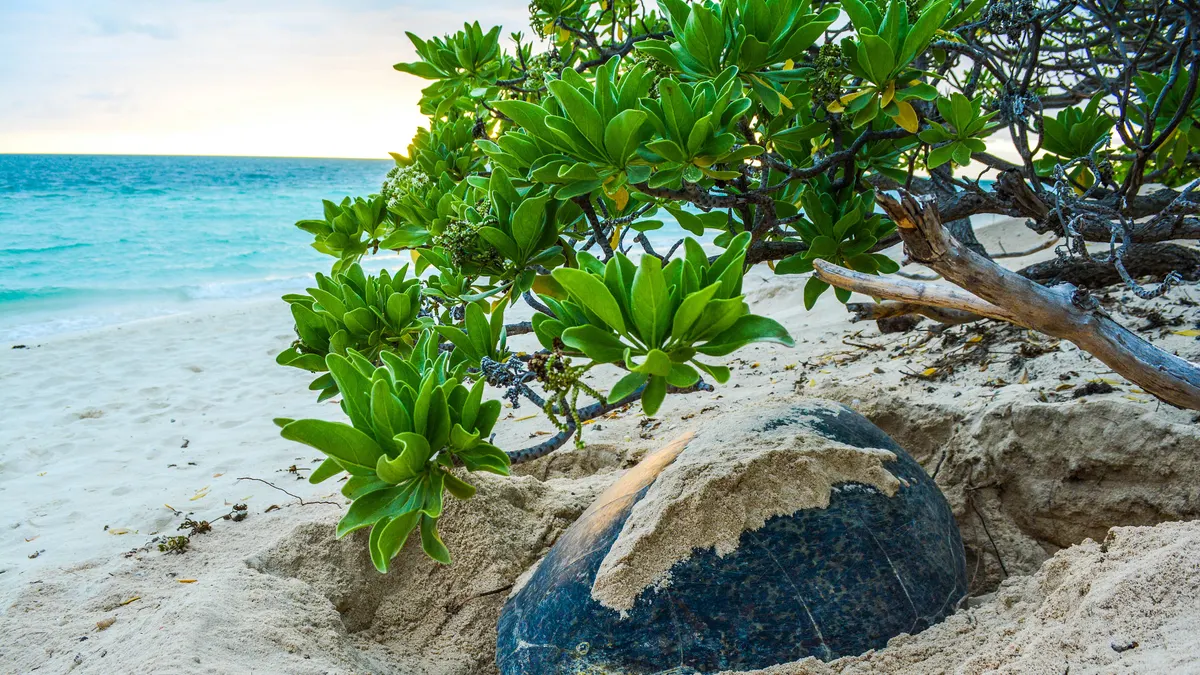
As of November 2026, you can watch green turtles nest on Con Dao (Côn Đảo) only on a ranger-led night run by Con Dao National Park, from about April to November, with the best odds from July to September. The park’s notice of 18 August 2025 allows viewing at six sites from 18:00 to 6:00, with at most 50 people per site per night (Con Dao National Park). In late November the season is ending, so a morning hatchling release is the more realistic choice; from December to March, plan your trip around something else.
This page is the practical half of our Con Dao guide: which trip to book, when, how to book it and what the rules mean on the night. For flights and ferries see getting to Con Dao. The islands have been a special zone of Ho Chi Minh City since July 2025, when the former Ba Ria–Vung Tau (Bà Rịa–Vũng Tàu) province merged into the city, so official notices now say “Con Dao Special Zone, Ho Chi Minh City”.
Con Dao turtle watching at a glance
Checked against the national park’s notices and tour listings and Vietnamese national press on 19 November 2026.
| Overnight nesting watch | Hatchling release | |
|---|---|---|
| What you see | A mother turtle digging a nest and laying eggs, at night | Rangers’ hatchlings released into the sea at dawn |
| When in the year | About April to November; peak July–September | While nests hatch, 45–65 days after laying; occasionally in winter |
| Time of day | Boat out in the afternoon, viewing 18:00–6:00, back next morning | Release slots 6:45–7:00 and 7:15–7:30 (park notice, Aug 2025) |
| Where | Hon Bay Canh, Bai Duong, Hon Cau, Hon Tai, Hon Tre Lon or Bai Dat Tham, assigned by the park | The same stations, up to 100 people at a time |
| Price listed by the park (Nov 2026) | 2,150,000–5,100,000 dong per person (tour CDP 009) | 680,000–2,200,000 dong per person (tour CDP 008) |
| Group limit | 50 people per site per night, groups of about 10 | 100 people per site per release, groups of up to 50 |
| Guaranteed? | No: some nights no turtle comes ashore | No: depends on a nest hatching that morning |
When is turtle season on Con Dao?
Turtles come ashore on Con Dao from about April to November, and the peak is July to September, when about 40 mothers a night nest across the park and Hon Bay Canh alone has had more than 20 in one night, SGGP reported on 24 July 2026 (SGGP). In July 2026 rangers and volunteers recorded 440 nests and released 10,004 hatchlings, the same report says.
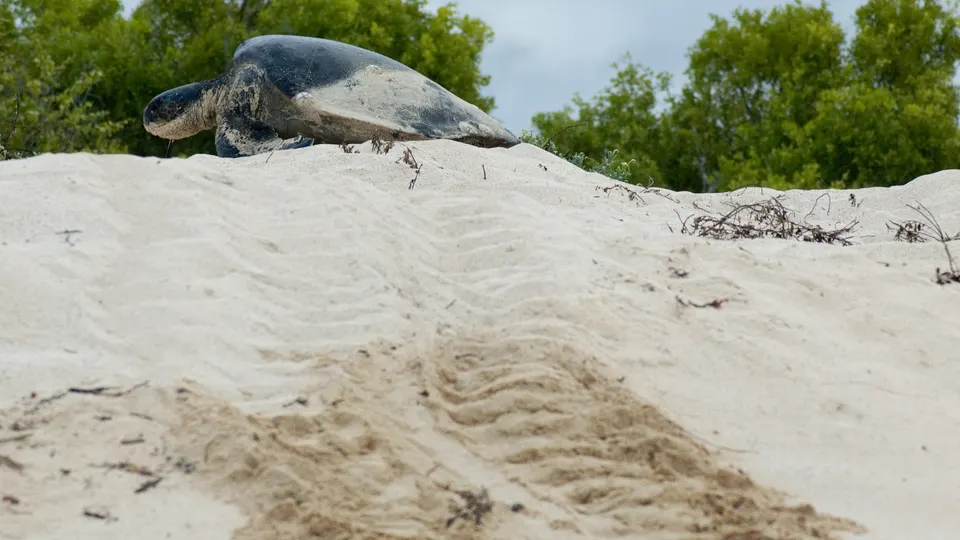
Sources do not agree on the edges of the season, and that matters if you travel in April or October. Tien Phong (Tiền Phong) gives April to October, and the park’s 2023 tour page ran nesting trips from April to the end of October, while Nhan Dan (Nhân Dân) and SGGP give April to November. A park engineer told Nhan Dan that turtles actually nest all year round, with the peak from April to November. Eggs hatch about 45 to 65 days after they are laid, SGGP says, so hatchlings keep coming for weeks after the last mothers.
| Months | Nesting turtles | Hatchling releases | What to book |
|---|---|---|---|
| December–March | Occasional nests only | Occasional | Nothing turtle-based; ask on arrival |
| April–June | Season starts, numbers rising | From about May–June | A nesting night is possible; book ahead |
| July–September | Peak: tens of mothers a night | Frequent | Best time for both; book early |
| October–November | Tailing off | Continue while late nests hatch | A release is the safer bet; ask the park about nights |
Most of the turtles are green turtles (vich (vích)), and Con Dao takes about 90% of the green turtles that nest in Vietnamese waters, Nhan Dan reports. Numbers swing from year to year with the turtles’ breeding cycle: the park recorded 387 nesting mothers in 2024, a lower year, and SGGP counts 987 in 2025.
Night watch or hatchling release: which should you book?
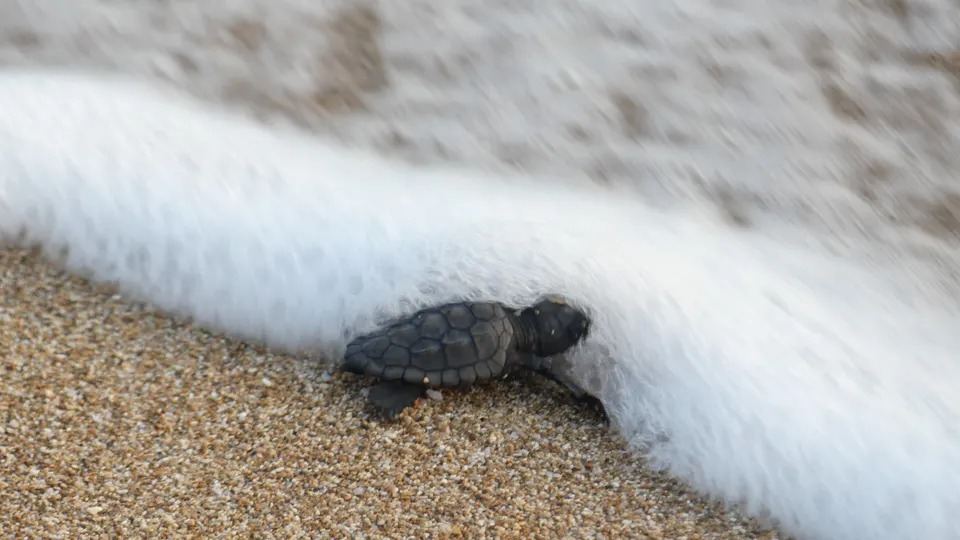
Choose the overnight watch if seeing a mother turtle is the point of your trip and you can give it a night and the next morning. Choose the hatchling release if you are travelling with young children, have only one spare morning, or are on Con Dao at the edges of the season. The overnight trip includes the boat, snorkelling, a night at a ranger station and dinner in the park’s 2023 programme, so it costs more.
| If you… | Book | Why |
|---|---|---|
| Want to see a turtle lay eggs | Overnight nesting watch, July–September | Highest odds; the only way to see nesting legally |
| Have children or need a full night’s sleep | Hatchling release | Early start, done in the morning; no night on an island |
| Visit in April, October or November | Release first; a night only if the park says turtles are still nesting | Nesting is less reliable at the edges of the season |
| Get seasick or the sea is rough | Wait for a calm day | Most sites are small islands reached by boat |
| Are on Con Dao from December to March | Nothing turtle-based | Activity is too rare to plan around |
The park’s listing shows a wide price range for both tours because the price depends on the option chosen and the size of the group; ask the ecotourism office or your operator for the exact figure for your date. Neither trip is guaranteed: turtles come ashore when they choose, and Tien Phong describes long waits in silence before a turtle appears.
How to book a turtle trip, step by step
Booking is simple once you know that everything goes through the national park, which allocates each group to a site and a night. The park’s Ecotourism and Environmental Education office takes registrations from tour operators and divides visitors into groups, its August 2025 notice says.
- Fix your dates first. Choose nights between July and September for the best odds, and book flights or the ferry before the turtle trip.
- Contact the park or an operator. The park’s notice lists its tourism line, 0983 830 669, which also takes Zalo and WhatsApp messages, and its ecotourism office takes bookings from tour operators. Tour operators on Con Dao can also book for you.
- Choose the product. The park lists the overnight watch as tour CDP 009 and the release as CDP 008 (Con Dao National Park); it also offers nesting nights combined with treks at Dam Tre bay or Dat Tham.
- Pay the park fee and keep the receipt. The notice requires visitors to pay the sightseeing fee, and boat crews and guides must show the fee receipts at the ranger station.
- Check in. Both park tours start from the national park’s fee office at 36 Ton Duc Thang street in Con Dao town, according to the listing.
- Keep a spare day. If the sea is too rough to sail, the trip moves to another night or island; the notice also moves groups when a site is full.
What happens on a turtle night?
The classic trip runs from mid-afternoon to the next morning. In the park’s 2023 programme, boats left at 15:00 every day from April to the end of October; you snorkelled over the reef, landed on Hon Bay Canh and walked about 700 metres along a stone path through the forest to the ranger station, which keeps the hatching ponds.
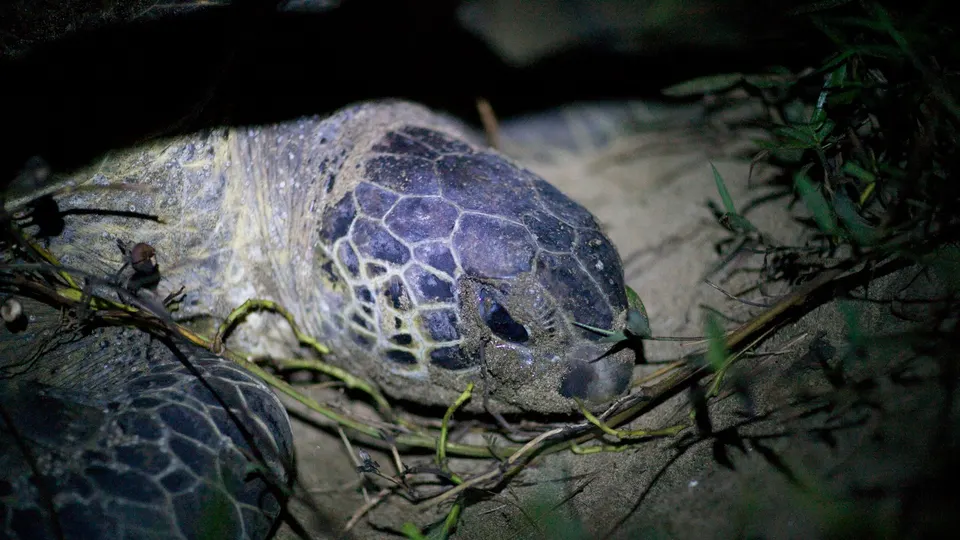
After dinner cooked by the rangers, the programme added a walk to see crabs feeding in the mangroves. Then you wait. Turtles come ashore with the tide, and when one does, rangers lead small groups to watch her dig and lay. A mother lays about 80 eggs on average and sometimes more than 200, Nhan Dan reports, and buries a nest 50 to 60 cm deep before covering her tracks.
Rangers then measure and tag her and move the eggs to a hatchery. SGGP reports six hatcheries with controlled temperature and humidity and a hatching rate of about 87%; Nhan Dan gives 76.8% for 2024, so treat the rate as varying by year. In the morning you may join a hatchling release before boarding the boat back to Con Son.
The park’s rules, and why they exist
Turtles only lay where the beach is quiet, Tien Phong notes, so the rules are about numbers, light and noise. The August 2025 notice sets them out for every operator and visitor:
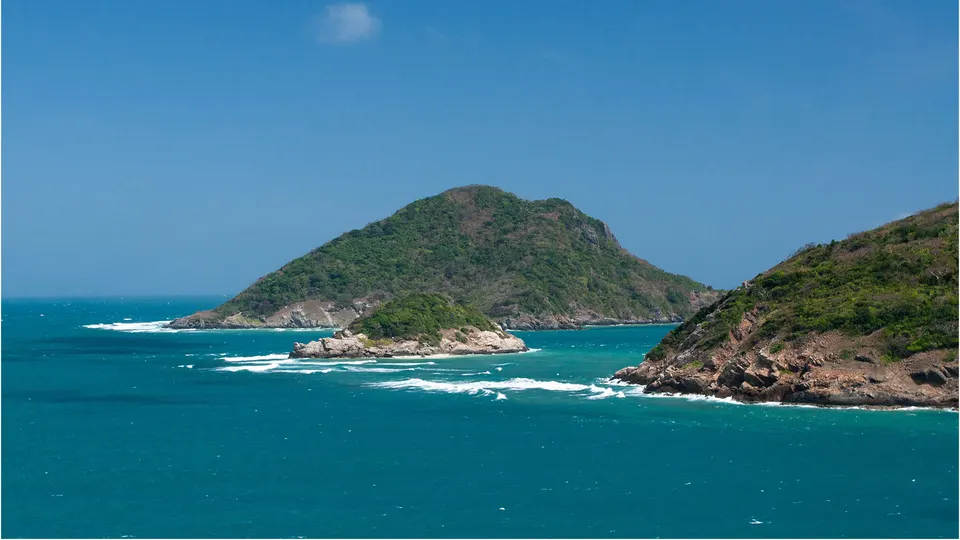
- Six sites only: Hon Bay Canh, Bai Duong, Hon Cau, Hon Tai, Hon Tre Lon and Bai Dat Tham.
- Small groups: at most 50 people a night per site, in up to five groups of about ten; at most 100 people at a release, in two groups.
- Fixed hours: nesting 18:00 to 6:00; releases between 5:30 and 7:30 on mornings when a nest hatches.
- Do as the ranger says: sit in your assigned place, keep quiet and listen to the briefing; outside guides may not run their own commentary.
- No litter, no single-use plastic: take your rubbish back to the main island and put it in the bins at the tourist pier.
- No flash, no white light: VietNamNet reports that flash photography is banned and visitors must keep a respectful distance (VietNamNet), and the park’s programme asks for no white light and releases before 8:00.
Visitor numbers explain the caps. The park welcomed more than 22,000 visitors in the first half of 2025, nearly 3,000 of them on ecotourism trips, VietNamNet says, and Con Dao as a whole had more than 410,000 visitors in the first half of 2026, according to SGGP.
Turtles outside the season: December to March
Do not plan a winter trip around turtles. Activity drops sharply after November, and the October–February months also bring rough seas that cancel boats, as our flight-and-ferry guide linked above explains. A few turtles do nest, though: between 10 December 2025 and 9 March 2026 rangers moved 64 nests with 5,687 eggs to hatcheries and released more than 5,600 hatchlings, SGGP reported on 28 April 2026 (SGGP).
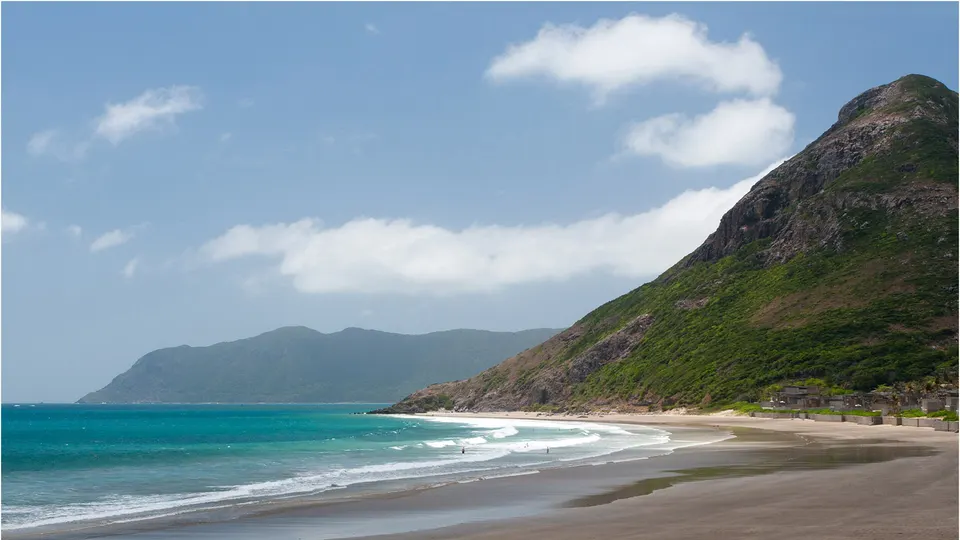
Some of that work happens on Con Son itself. SGGP describes a programme to restore the nesting beach at Dat Doc (Đất Dốc), where nests are moved to safety and hatchlings released under control, and VietNamNet reported the first hawksbill nest recorded on Dat Doc in 2025. In winter, ask the park’s office whether a release is planned during your stay; if one is, it is a bonus, not something to build a trip on. For the rest of the island in the off-season, see our Phu Quoc or Con Dao comparison and the South Vietnam hub.
Before you go: a short checklist
A turtle night rewards a little preparation, and most of it follows from the rules above.
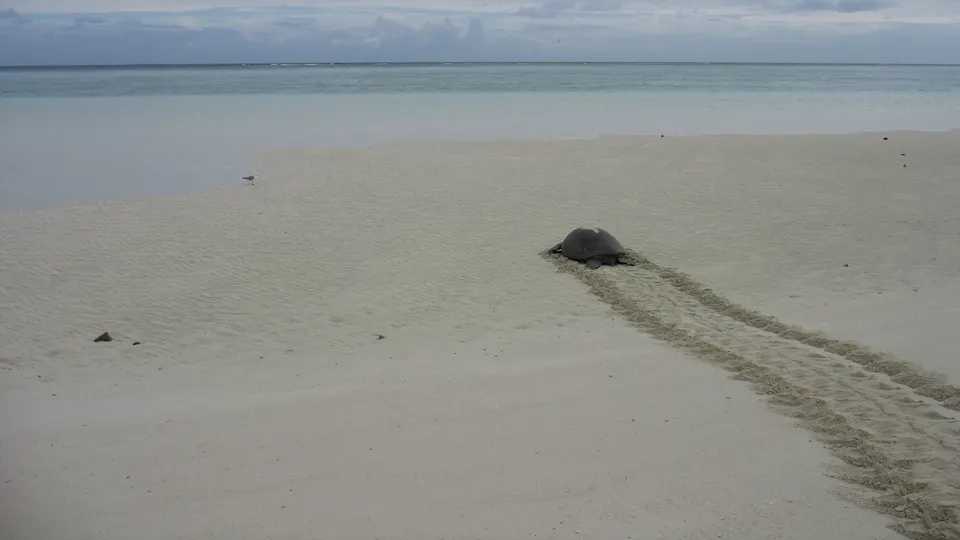
- Book before you travel from June to September, and plan the turtle night for your second or third night on the islands, so a delayed flight or ferry does not cost you the trip.
- Ask what is included: boat, park fee, night at the station, meals and the release, and whether your night is at Hon Bay Canh or another site.
- Add a reef morning: the boat days to Hon Bay Canh and Hon Cau also run snorkelling trips; see Con Dao snorkelling and diving for routes, prices and calm months.
- Leave single-use plastic behind and bring a refillable bottle; if you carry a torch, keep it off unless a ranger says otherwise, because white light is not allowed.
- Expect to wait for hours, and accept that a turtle may not come; the release the next morning is often the reward.
- Combine it with the history sites: spend the other days on the prisons and Hang Duong cemetery, and see Ho Chi Minh City for the flights out.
Frequently asked questions
Can you still see turtles on Con Dao in November?
Sometimes, but late November is the tail of the season. Nhan Dan and SGGP put nesting at April to November with the peak from July to September, so in November hatchling releases are more likely than a nesting turtle; ask the national park's ecotourism office before you book a night.
How much does a Con Dao turtle tour cost?
On 19 November 2026 Con Dao National Park listed its overnight turtle-nesting tour at 2,150,000 to 5,100,000 dong per person and its hatchling-release tour at 680,000 to 2,200,000 dong, depending on the option and group. Tour operators add their own margin and transfers.
Do I need to book Con Dao turtle watching in advance?
Yes. Every trip is registered with Con Dao National Park, and each nesting site takes at most 50 people a night, so from June to September book before you fly and keep a spare night in case the sea is rough.
Which island is best for turtle watching on Con Dao?
Hon Bay Canh is the main nesting island, with about 80% of Con Dao's nests according to Nhan Dan. The park also runs turtle viewing at Bai Duong, Hon Cau, Hon Tai, Hon Tre Lon and Bai Dat Tham, and assigns groups to a site when you book.
Can I take photos of nesting turtles on Con Dao?
Only without flash or white light, and only when the ranger says so. VietNamNet reports that flash photography is banned and visitors must keep a respectful distance, and the park's tour description asks for no white light.
Sources and further reading
- V/v quy định các hoạt động du lịch trải nghiệm xem Rùa biển tại VQG Côn Đảo · Con Dao National Park (Vườn quốc gia Côn Đảo), 18 August 2025
- Xem rùa đẻ trứng ban đêm (tour CDP 009) · Con Dao National Park, tour listing checked 19 November 2026
- Sinh thái rùa biển: tour programmes · Con Dao National Park, checked 19 November 2026
- Du lịch sinh thái muôn màu tại Vườn quốc gia Côn Đảo · Con Dao National Park, 2023
- Sản phẩm du lịch độc đáo ở Côn Đảo · SGGP (Sài Gòn Giải Phóng), 24 July 2026
- Vườn Quốc gia Côn Đảo thả hơn 5.600 rùa con về biển · SGGP, 28 April 2026
- Mùa rùa đẻ trứng ở Côn Đảo · Nhân Dân, 8 June 2025
- Thức trắng đêm chờ xem rùa biển lên bờ đẻ trứng ở Côn Đảo · Tiền Phong, 20 August 2025
- Con Dao developing sustainably by protecting its sea turtles · VietNamNet (VNA), 27 July 2025
- Names and administrative centers of 34 provinces and centrally-run cities specified · Government news portal (baochinhphu.vn), 15 April 2025
Keep exploring
 South Vietnam · Travel Con Dao (Côn Đảo): Is It Worth It? Prisons, Turtles, 3 Days Plan a respectful Con Dao trip: prison relics, night visits to Hang Duong cemetery, turtle season rules, a 2–3 day plan, where to stay and what runs when.
 South Vietnam · Travel Getting to Con Dao (Côn Đảo): Flight or Ferry? Getting to Con Dao: flights from Saigon, Hanoi and Can Tho vs fast ferries from Tran De, Vung Tau and Saigon, with 2026 schedules, fares and rough-sea pauses.
 South Vietnam · Travel Phu Quoc or Con Dao: Which Vietnam Island Suits You? Phu Quoc or Con Dao? Compare seasons, beaches, crowds, history, flights and the Tran De ferry as of November 2026, with a decision table for every trip.