South Vietnam · Travel
Con Dao (Côn Đảo): Is It Worth It? Prisons, Turtles, 3 Days
Plan a respectful Con Dao trip: prison relics, night visits to Hang Duong cemetery, turtle season rules, a 2–3 day plan, where to stay and what runs when.
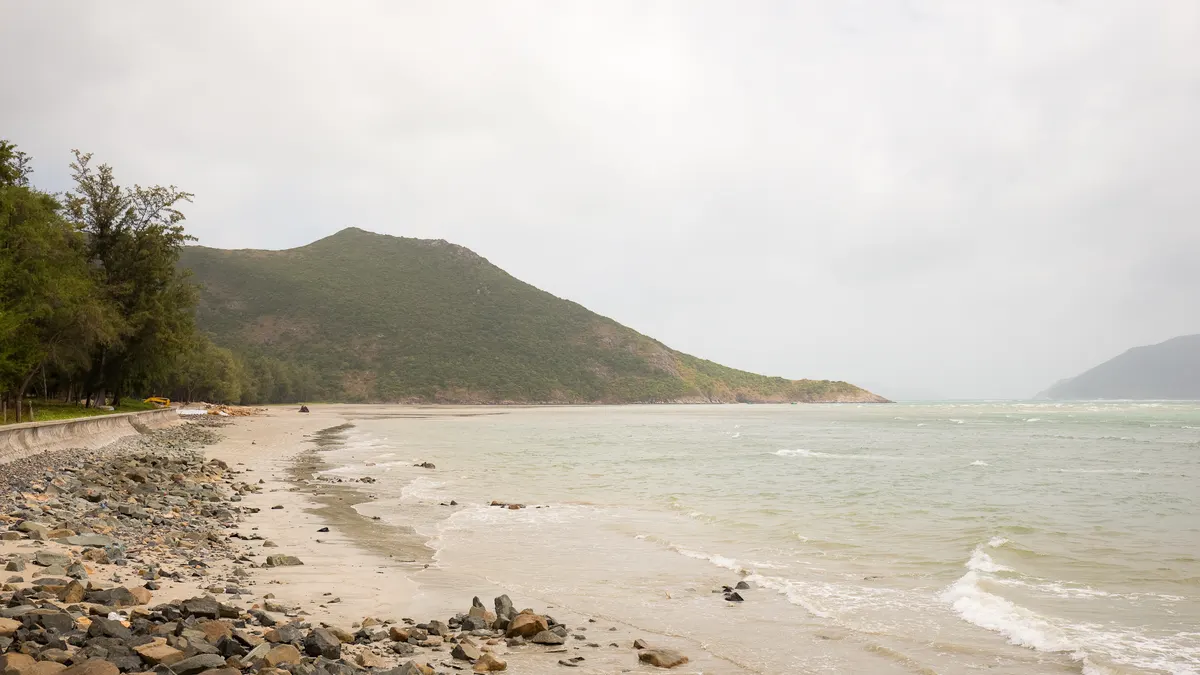
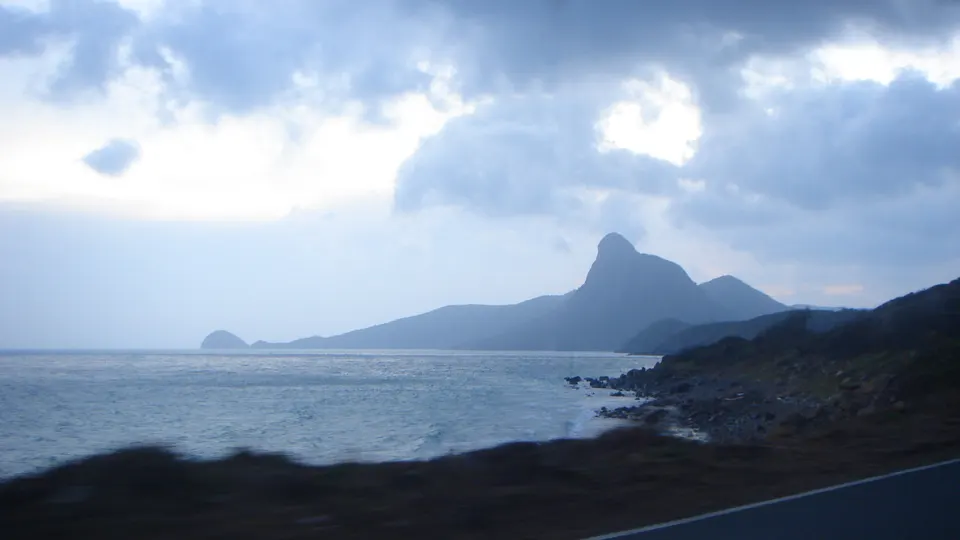
Con Dao (Côn Đảo) is worth two or three days if you want both its prison history and its national park: as of November 2026 the prison relic charges 60,000 dong per visit (since 1 October 2026), turtle watching runs only with national park rangers under rules issued in August 2025, and you arrive by air or by fast ferry from Tran De or Ho Chi Minh City, because the Vung Tau ferry has been suspended since 1 August 2026. The islands lie out in the sea off southern Vietnam, and few places in the country carry so much weight in so small a space. Under French colonial rule and later the Saigon (Sài Gòn) government they were a prison colony. Tuoi Tre (Tuổi Trẻ) counts 113 years of imprisonment, from 1862 to 1975, and SGGP estimates that about 20,000 people died there. Today much of the archipelago is a protected national park, with forest, coral reefs and the beaches where most of Vietnam’s sea turtles come ashore to nest.
This guide is for travellers who want both sides of the islands: the prisons and the cemetery that Vietnamese visitors treat as sacred ground, and the forest, reefs and turtles. It explains what you will see, why the night visits to Hang Duong (Hàng Dương) cemetery matter, how to behave at the graves and on the turtle beaches, and how to get there. It also sits well with the rest of a trip to Southern Vietnam and its other island, Phu Quoc.
Con Dao at a glance
| Region | Southern Vietnam, out at sea; since 1 July 2025 a special zone (dac khu) of Ho Chi Minh City, formerly a district of Ba Ria (Bà Rịa)–Vung Tau (Vũng Tàu) province |
| What it is | An archipelago of 16 islands, about 76 km² in all; Con Son (Côn Sơn) is the largest island and has the town, the prisons, the airport and Ben Dam (Bến Đầm) port |
| Known for | Former prisons (1862–1975), a special national relic since 2012; Hang Duong cemetery and the grave of Vo Thi Sau (Võ Thị Sáu); Con Dao National Park (est. 1993, Ramsar site since 2013); sea-turtle nesting |
| How long | Two full days for the history sites and a beach; a third for an overnight turtle trip (April–October) |
| Prison ticket | 60,000 dong per visit since 1 October 2026; children and students free, older visitors half price |
| Where to stay | Con Son town for walking to the market and restaurants; An Hai beach on the edge of town; remote resorts for quiet |
| Best time | Roughly March to September for calmer seas; turtle nesting about April to October, peaking July–September; October–February often rough |
| Getting there | Daytime flights from Ho Chi Minh City and Hanoi; fast ferries from Tran De (Trần Đề) and Ho Chi Minh City (the Vung Tau route was suspended in August 2026) |
| Local food | Seafood: oyster congee (chao hau), oc vu nang (ốc vú nàng) sea snails, moon crab (cua mat trang) |
Where is Con Dao now? The 2025 move to Ho Chi Minh City
When Vietnam cut its provinces from 63 to 34 on 1 July 2025, the former Ba Ria–Vung Tau province was merged into Ho Chi Minh City, together with Binh Duong (baochinhphu.vn). Con Dao, until then a district of Ba Ria–Vung Tau, came with it. The enlarged city has 168 commune-level units: 113 wards, 54 communes and one special zone, Con Dao, according to Vietnam (Việt Nam) News.
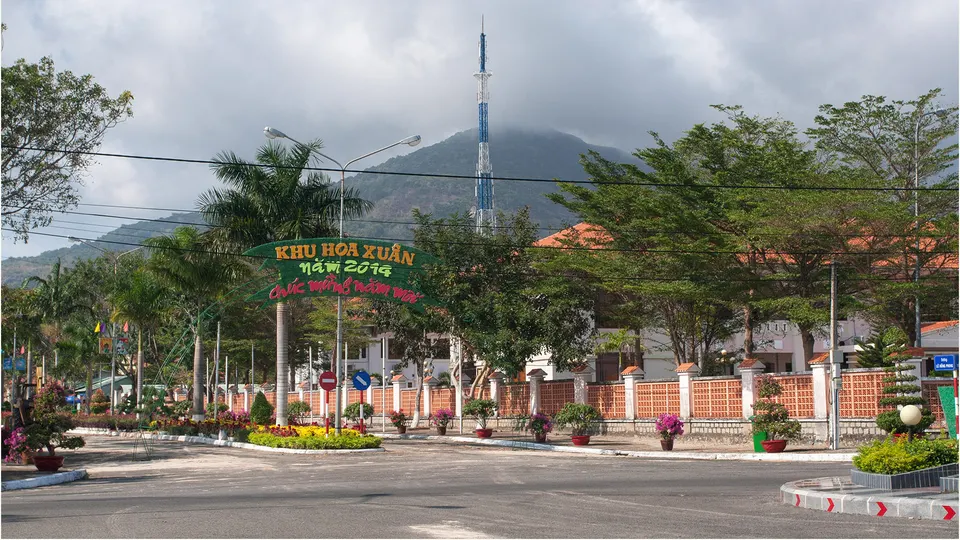
On the island this shows up in names more than in daily life. The local government is now the Con Dao Special Zone People’s Committee. In January 2026 it organised the 74th death anniversary of Vo Thi Sau, attended by Ho Chi Minh City leaders. Older signs, maps and many travel sites still say “Côn Đảo district, Bà Rịa–Vũng Tàu”. For the rest of the city, see our Ho Chi Minh City guide. For travellers it is still a separate trip: there is no road, and you need a flight or several hours on a ferry.
What happened in the Con Dao prisons?
The French began building the penal colony in the 1860s. Bao Lao Cai (Báo Lào Cai) dates Phu Hai (Phú Hải), the largest of the prison camps for political prisoners, to 1862. The prisons kept running under the Republic of Vietnam (the Saigon government) until 1975. SGGP puts the total at about 200,000 imprisonments over those 113 years. The figure counts entries rather than individual people, since one person could be held more than once. Survivors called the island “hell on earth” (địa ngục trần gian), Vietnam News reports, and it held generations of Vietnamese revolutionaries and patriots. In May 2012 the Prime Minister listed the Con Dao prison historical site among Vietnam’s special national relics (SGGP).
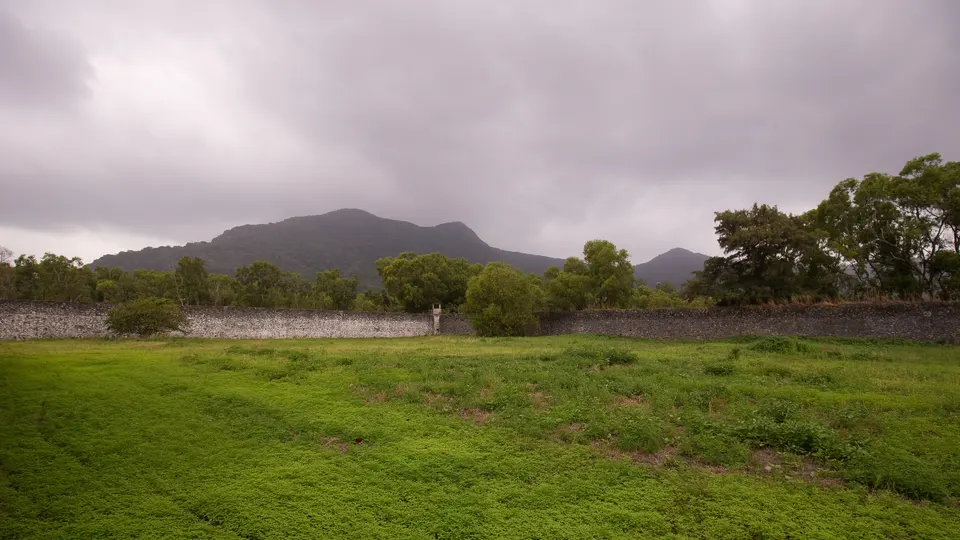
Not all of the cost was inside the cells. Tuoi Tre describes forced-labour projects whose names still carry the death toll. Pier 914 (cau tau (cầu tàu) 914) is named for the 914 prisoners who died building it. The road over Ma Thien Lanh (Ma Thiên Lãnh) pass is said to have “swallowed more than 300 lives”. On 1 May 1975 the prisoners in the Phu Binh (Phú Bình) camp rose up and took control, the first uprising to seize power on Con Dao. Bao Lao Cai records it as the end of the prison era.
For Vietnamese visitors this is first of all a story of resistance and sacrifice, and the museum displays tell it that way. Many come in organised delegations, like the group whose July 2026 visit to the prisons, the temple and the cemeteries SGGP followed. If you have seen the war sites near Saigon, such as the Cu Chi Tunnels, Con Dao is a quieter, more personal kind of memorial: you are walking through the cells themselves.
What are the “tiger cages”, and which camps can you see?
“Tiger cages” (chuong cop (chuồng cọp)) were isolation cells with iron bars for a roof, so prisoners could be watched from above, Tuoi Tre explains. There are two sets, from two eras (Bao Lao Cai):
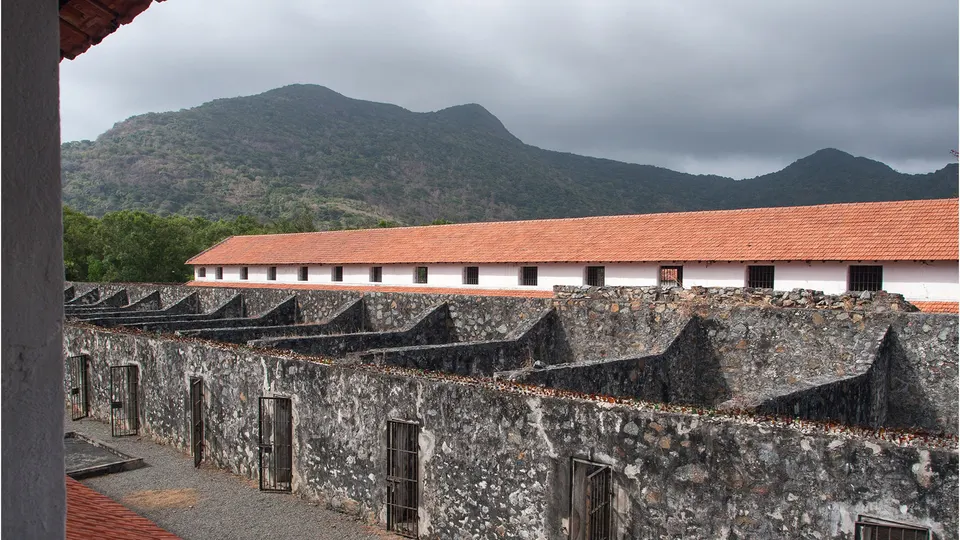
- The French tiger cages (chuong cop Phap (chuồng cọp Pháp)), in the Phu Tuong (Phú Tường) camp, were built in 1940. There are 120 cells, plus 60 “sun-bathing” rooms without roofs that were used for torture. Tuoi Tre describes prisoners packed onto damp cement floors, with cold, filth and untreated wounds causing many deaths.
- The “American-style” tiger cages (chuồng cọp kiểu Mỹ), in the Phu Binh camp, date from 1971. This is a concrete complex of 384 cells in sections labelled AB, CD, EF and GH, and the GH section held many political leaders.
Vietnam News describes the Phu Hai and Phu Son (Phú Sơn) camps and the tiger cages together as “irrefutable evidence” of the brutality of French colonial rule and of the Saigon regime towards political prisoners. Most visitors see Phu Hai, Phu Tuong with its French tiger cages, and Phu Binh, often on the same morning. Tickets: since 1 October 2026 a visit to the special national relic of the Con Dao prisons costs 60,000 dong per person under a Ho Chi Minh City People’s Council resolution, Bao Tin Tuc reported; children, school pupils and students enter free and older visitors pay half, according to HTV. Older guides quoting 40,000 or 50,000 dong are out of date. The cells are small, hot and quiet, so pace yourself, and remember that for many people walking beside you these are places of mourning. Our Con Dao prison history decodes the camp names, explains the two sets of tiger cages and suggests a visiting order.
Why do Vietnamese visit Hang Duong cemetery at night?
Hang Duong cemetery (the name means “row of casuarinas”, and casuarina trees shade the graves) is the island’s most sacred site. Vietnam News describes it as the resting place of more than 20,000 freedom fighters. Visitors light incense and lay white daisies on the graves. The national heroes buried there include Vo Thi Sau, Le Hong Phong (Lê Hồng Phong) and Nguyen An Ninh (Nguyễn An Ninh).
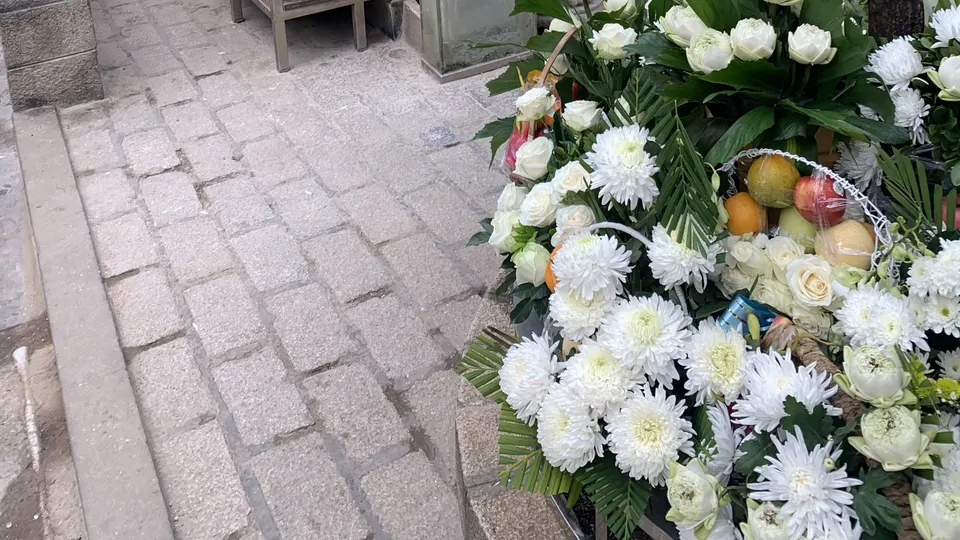
The grave most people seek out is Vo Thi Sau’s. According to SGGP she was born in 1933 in Long Dat (Long Đất), then part of Ba Ria–Vung Tau, and was shot on Con Dao at dawn on 23 January 1952. She was still in her teens. Tuoi Tre records the words attributed to her: “I am not guilty. Loving my country and fighting the colonial invaders is not a crime.” Visitors speak of her affectionately as co Sau (cô Sáu) (“Miss Sau (Sáu)”).
Many pilgrims come in the evening or late at night. Tuoi Tre described late-night visitors among graves lit by small, dim red bulbs (Tuoi Tre). The Vietnam Airlines guide says visitor numbers rise noticeably after 9 pm, and links this to a popular belief that the late hours feel more sacred and spiritually connected. This is a widespread practice, not a rule. Delegations and families also come in daylight, and July, the pilgrimage season, brings groups from all over the country, Vietnam News reports. Foreign visitors are welcome at any of these times. Going at night is a way to see how much the place means to Vietnamese people, as long as you behave as a guest at someone else’s memorial.
How do you visit the graves and relics respectfully?
The customs at Hang Duong are simple, and most visitors follow them. Many bring two trays of offerings: one for all the dead, and one for Vo Thi Sau, which the Vietnam Airlines guide says often includes white flowers, a mirror, a comb and a conical hat (non la (nón lá)). These are items chosen for a young woman. Dress neatly and modestly, queue patiently, keep your voice low and do not joke or laugh. Staff guide each visitor through a short turn of about 15 minutes at the grave. Do not litter or pick flowers (Vietnam Airlines). The same guide gives opening hours of 7:00 to midnight every day, though one version of it lists a midday break from 11:30 to 13:30; check locally before you go late.
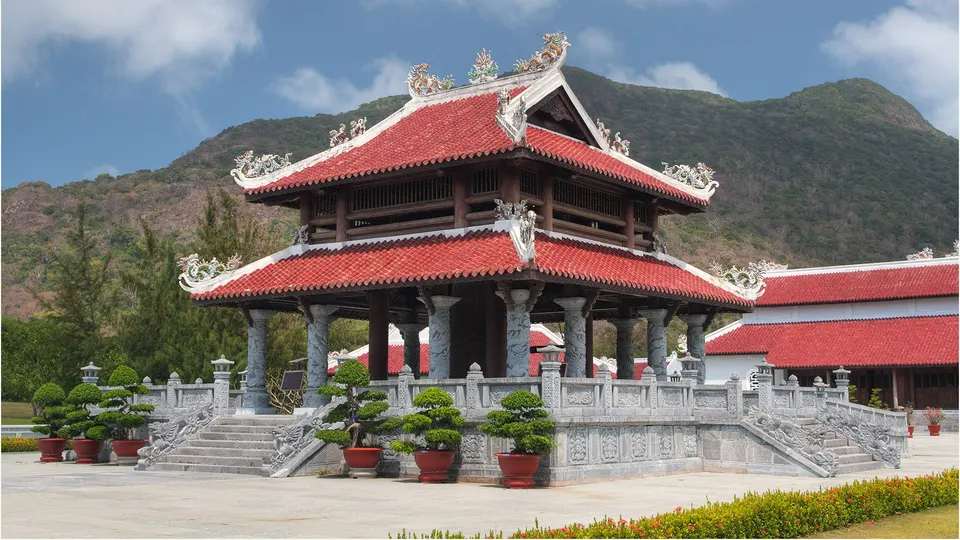
Tradition vs today: burning votive paper (vang ma (vàng mã)) is a common custom at Vietnamese shrines and graves, but Con Dao has moved away from it. After a campaign that began in July 2024, offerings at Hang Duong, at the Con Dao Temple (Den tho Con Dao) and at other sites must come in gio le xanh (giỏ lễ xanh), “green offering baskets”, every day of the year from 1 January 2025. That means no votive paper, no foam, no single-use plastic and no plastic bags, Bao Lao Cai reports. Fruit, cakes, flowers and incense in a simple basket are fine. In practice, buy your offerings from a stall that already follows the rule.
What does Con Dao National Park protect?
Much of the archipelago is national park. Con Dao National Park was set up in 1993 and covers nearly 20,000 hectares: about 6,000 ha of forest on the islands and about 14,000 ha of sea, with a further marine buffer zone, according to Vietnam’s Nature and Biodiversity Conservation Agency. Its coral reefs, among the oldest in Vietnam, cover about 1,000 ha of shallow water, and the seagrass beds support dugongs, a rare marine mammal.
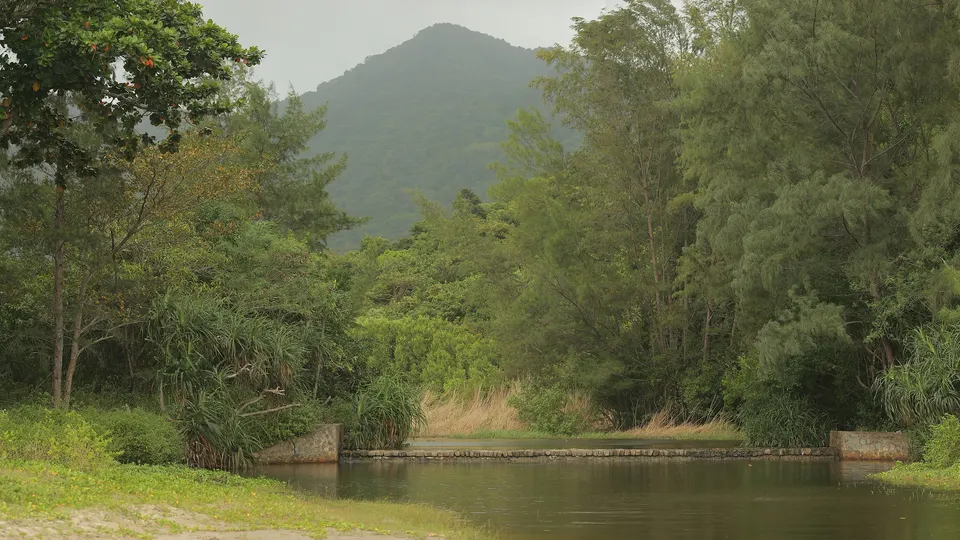
On 18 June 2013 the park became a Ramsar site, a wetland of international importance, covering 19,991 ha. It was Vietnam’s sixth. The Ramsar listing describes unusually intact wetlands: coral reefs, seagrass, mangroves, tidal flats and Melaleuca forest, with about 355 coral species recorded. The leatherback and hawksbill turtles found here are critically endangered (Ramsar). Other surveys have given lower coral counts; the national tourism authority reported more than 270 species in 2014. Either way, it is one of the richest reef areas in the country.
For visitors this means forest trails on Con Son, snorkelling and diving trips on the park’s reefs, and quiet beaches such as Dam Trau (Đầm Trầu), Dat Doc (Đất Dốc) and Ong Dung (Ông Dung), which the national tourism site picks out. Traditional fishing is still allowed under the park’s rules, so you will share the coast with working boats.
How can you see nesting sea turtles at Hon Bay Canh?
Con Dao is Vietnam’s sea-turtle stronghold. SGGP reports that the archipelago has more than 85% of the turtles nesting in Vietnamese waters, spread across 18 beaches. The number of nesting mothers has risen from about 220 in 1993 to 987 in 2025, and since 1993 rangers have released nearly 2.9 million hatchlings. Most of the turtles are green turtles (vich (vích)), Tien Phong (Tiền Phong) notes. Hawksbills nest too: in 2025 VietNamNet reported the first hawksbill nest recorded on Dat Doc beach.
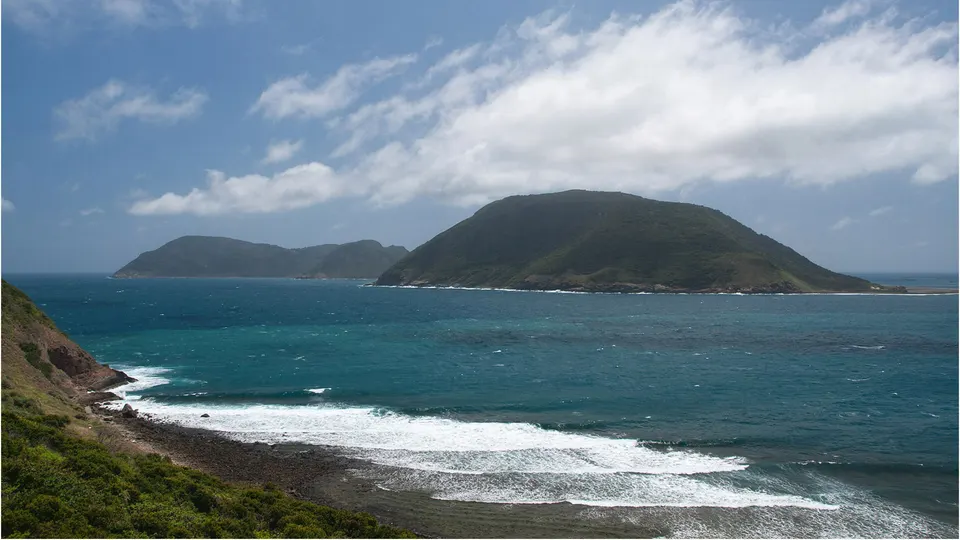
Hon Bay Canh (Hòn Bảy Cạnh), an island off Con Son, has the most nesting turtles of all, VnExpress says. SGGP reported one night there with more than 20 mothers coming ashore. Sources differ a little on the season. Tien Phong and VietNamNet give April to October, SGGP April to November, and the national tourism site May to September. The peak is July to September.
Turtle watching is a night-time activity. It only happens with national park staff at the turtle conservation stations, and you book it through a tour operator, whose registration the park’s ecotourism office allocates to a site and a group. A national park notice of August 2025 sets the rules (Con Dao National Park):
- nesting can be watched at six sites: Hon Bay Canh, Bai Duong (Bãi Dương), Hon Cau (Hòn Cau), Hon Tai (Hòn Tài), Hon Tre Lon (Hòn Tre Lớn) and Bai Dat Tham (Bãi Đất Thắm);
- each site takes at most 50 people a night, split into up to five groups of about ten; larger groups are moved to another island or another night;
- viewing runs from 18:00 to 6:00, and hatchlings are released between 5:30 and 7:30 on mornings when a nest hatches;
- you pay the park’s sightseeing fee, sit where staff tell you and keep quiet; when a turtle comes ashore everyone falls silent, Tien Phong reports;
- no litter and no single-use plastic, and any rubbish goes back with you to the main island;
- no flash photography, and keep a respectful distance (VietNamNet); the park’s own tour page also asks for no white light.
The park’s tour page (2023) describes the classic trip: boats leave in the afternoon, you snorkel off Hon Bay Canh, walk about 700 metres through the forest to the ranger station, spend the night there and help release hatchlings before 8:00 the next morning. The park ran these tours from April to the end of October. Turtles come ashore from dusk until morning, so be ready for a long wait, and for a night with no turtles at all. Our Con Dao turtle-watching guide covers booking, the park’s listed prices and the season month by month.
What should you eat on Con Dao?
Food on Con Dao is mostly seafood, and simple. VnExpress suggests trying chao hau (oyster congee), oc vu nang (a sea snail, grilled, boiled, stir-fried or in a salad), cua mat trang (“moon crab”, usually boiled or steamed) and fermented seafood sauces such as mam nhum (mắm nhum) (sea-urchin) and mam hau (mắm hàu) (oyster). For the freshest fish, it suggests going to the fishing port early in the morning or in the early afternoon, when the boats come in. In the evening, the town’s night market is one of the experiences SGGP listed in January 2026.
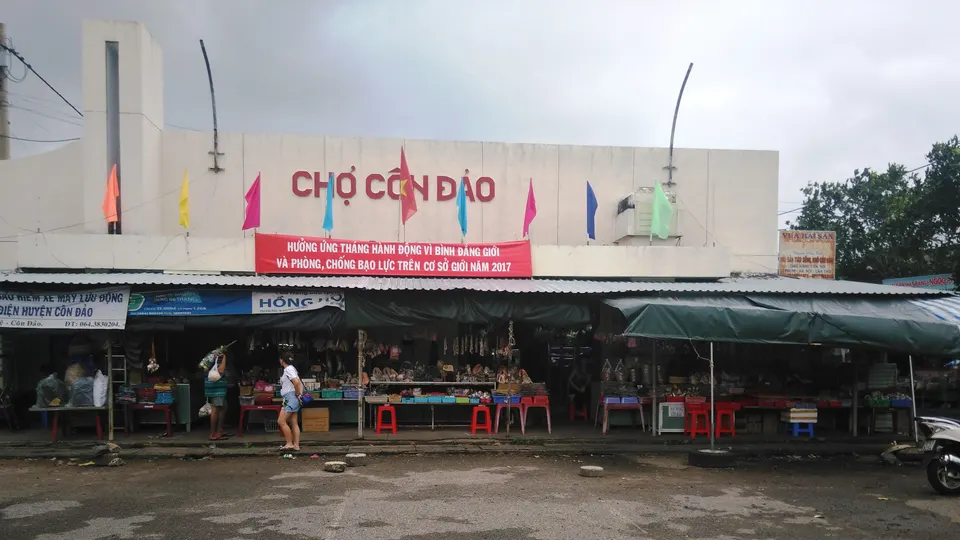
We have not added restaurant cards for Con Dao. We could not find two independent, reputable recent sources that confirm the same eateries and their addresses, and we would rather list none than weak ones. For how this island cooking fits into Vietnamese food more widely, see our food hub.
How many days? A two- or three-day plan
Two full days cover the prisons, the cemetery and a beach; a third day adds a turtle night in season or a boat trip. Count your arrival day as half a day at most: the airport has no lighting for regular night flights and works roughly from 6:00 to 18:00, Tuoi Tre reported in November 2026, and the ferries are long crossings.
| Morning | Afternoon | Evening | |
|---|---|---|---|
| Day 1: the history | Prison camps: Phu Hai, Phu Tuong with the French tiger cages, Phu Binh with the 1971 cages | Rest through the heat, then the Con Dao Temple | Hang Duong cemetery after dark, as many Vietnamese pilgrims do (open until midnight, per the Vietnam Airlines guide) |
| Day 2: the coast | A beach such as Dam Trau, or snorkelling at Ong Dung | Free time, or a forest walk in the national park | Seafood in town and the night market |
| Day 3: turtles (April–October) | Slow start; book the tour ahead | Boat to a nesting island, snorkel, walk to the ranger station | Overnight with the rangers; hatchling release the next morning before 8:00 |
- Two days: do days 1 and 2. If you only have one night, put the prisons and Hang Duong first; the beaches can wait for another trip.
- Three days: add the turtle night from April to October. Out of season, use day 3 for a boat or diving trip with an operator that works inside the park, if the sea allows.
- October to February: keep a spare day at the end. Boats are often cancelled in this season, and flights have few seats if you need to rebook.
If you are building a longer southern route, Con Dao pairs naturally with the Mekong Delta when you use the Tran De ferry. Our travel hub has more on planning across the regions.
Where should you stay on Con Dao?
Almost every bed is on Con Son, the main island, and there are not many of them: SGGP counted 1,461 places to stay with 2,923 rooms in total in January 2026, for about 612,000 visitors the year before. In summer and around holidays, book your room together with your flight. There is no Grab on the island, so most hotels arrange airport pick-ups; the drive to town takes about 15–20 minutes and up to 30 minutes to stays further south, Local Vietnam’s March 2026 guide says.
| Area | Suits | Trade-off |
|---|---|---|
| Con Son town centre | First visits, history-focused trips, budget and mid-range rooms; walk to the market, cafes and restaurants | Not on the beach |
| North edge of town, near Lo Voi (Lò Vôi) beach | A short walk to the beach and the night market | Hotels face the sea across the coast road rather than on the sand |
| An Hai (An Hải) beach, south edge of town | Beachfront rooms at moderate prices, with town a short walk or ride away | Some resorts here have dated main buildings |
| Remote bays and private beaches | A quiet stay in nature, from mid-range resorts to the five-star Six Senses | You need transport, and you will eat mostly at the resort |
The five-star rating of Six Senses Con Dao was renewed by the national tourism authority, SGGP reported. We have not added hotel cards: rooms, prices and standards change quickly on a small island, so check recent reviews before you book.
What is open in which season?
Con Dao changes more through the year than most Vietnamese destinations: the sea decides which boats run, and the turtles decide what the national park offers. Hang Duong cemetery is open every day, the Vietnam Airlines guide says. Use this table to match your dates to what you want to do.
| Months | Sea and boats | Turtles and nature | Crowds and dates |
|---|---|---|---|
| March–September | The calmer season, best for snorkelling and diving (VnExpress, vietnam.travel) | Nesting starts in April | Vietnamese summer holidays: flights and rooms sell out early |
| April–October | The rainy season, though rain usually comes as short showers | Turtle nesting, peaking July–September; national park turtle tours run April to the end of October | July is the pilgrimage season, with delegations around 27 July, War Invalids and Martyrs Day |
| October–February | Big waves, especially in Con Son bay; the west and south-west coasts stay calmer. Boat trips and ferries are often cancelled | Turtle season ends (SGGP says nesting can run into November) | Quieter island; Vo Thi Sau’s death anniversary on 23 January draws official delegations |
The ferry timetable follows the same pattern. The Vung Tau ferry stopped for the rough-sea season from September 2025 and only came back on 26 February 2026, Dau tu Tai chinh (Đầu tư Tài chính) reported. If you are deciding between islands, Phu Quoc’s best months run the other way, from about November to April: our Phu Quoc month-by-month guide has the detail, and our comparison of Phu Quoc and Con Dao puts the two side by side.
Getting there: flights and ferries in brief
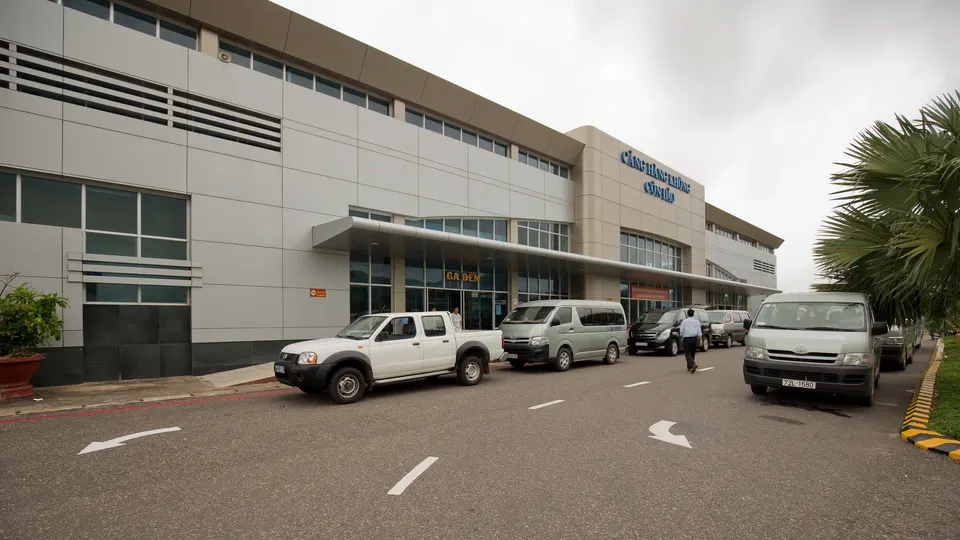
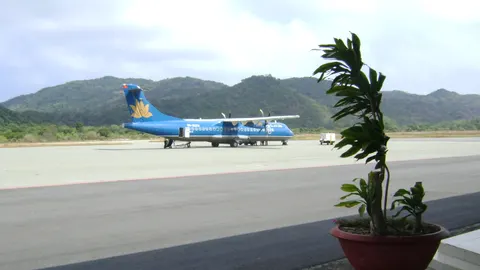
Flights are the easy way in, but seats are limited. The runway is 1,830 metres long, too short for the Airbus A320 and A321 jets that fly most domestic routes, so Vasco flies ATR 72 turboprops and Vietjet uses COMAC C909 regional jets, Tuoi Tre reported in November 2026. Vietjet brought back flights from Ho Chi Minh City and Hanoi in late 2025, with about 90 seats per plane (Doanh nhan); the national tourism site also lists flights from Can Tho. Flights only land in daylight, and the airport’s planned upgrade to an international airport has no opening date yet. Book flights before anything else in the peak months.
Ferries arrive at Ben Dam port on Con Son, and in 2026 the routes have changed more than once:
- Ho Chi Minh City. A three-hulled fast ferry from Nha Rong–Khanh Hoi (Nhà Rồng–Khánh Hội) port returned on 6 June 2026. It takes about 5 hours 15 minutes, leaving the city on Mondays, Wednesdays and Saturdays and Ben Dam on Tuesdays, Thursdays and Sundays, with extra sailings at weekends and holidays (Tuoi Tre, VietNamNet).
- Tran De. This Mekong Delta port, formerly in Soc Trang (Sóc Trăng) province and part of Can Tho city since July 2025, kept its service running when the Vung Tau route stopped.
- Vung Tau. The Thang Long (Thăng Long), with room for over 1,000 passengers, made the crossing in about 3 and a half hours. After a technical fault on 1 August 2026 the operator suspended the route “until further notice” (VietnamPlus). Check with the operator before you plan around it.
For timetables, port transfers and a flight-versus-ferry comparison, see our guide to getting to Con Dao.
Before you book:
- Book flights and a room first; in July and the summer holidays both sell out.
- Check that your ferry route is running in the week you travel, and keep a spare day from October to February.
- Ask your tour operator to register you for a turtle night if you travel between April and October.
- For Hang Duong, pack modest clothes and buy offerings in a green basket, without votive paper or plastic.
Frequently asked questions
Is Con Dao part of Ho Chi Minh City now?
Yes. When Ba Ria–Vung Tau merged into Ho Chi Minh City on 1 July 2025, Con Dao became the city's only special zone, a commune-level unit alongside its wards and communes. It is still a flight or a ferry ride from the city centre.
Can you visit Hang Duong cemetery at night?
Yes. Many Vietnamese pilgrims visit in the evening, and the Vietnam Airlines guide says crowds grow noticeably after 9 pm. It lists opening hours of 7:00 to midnight every day (one version adds a midday break from 11:30 to 13:30), so check locally and expect queues and quiet, formal behaviour at Vo Thi Sau's grave.
When is turtle season on Con Dao?
Sources give April to October, with SGGP extending it to November. The peak is July to September, when Hon Bay Canh can see more than 20 mother turtles come ashore in one night. National park tours are overnight: viewing runs from 18:00 to 6:00, with hatchling releases early the next morning.
How long is the ferry to Con Dao?
From central Ho Chi Minh City the trimaran that returned in June 2026 takes about 5 hours 15 minutes. The Vung Tau ferry took about 3 and a half hours but was suspended in August 2026; the Tran De route kept running. Sailings are cancelled in rough weather, so check with the operator first.
How much is the Con Dao prison ticket?
Since 1 October 2026 one visit to the Con Dao prison relic costs 60,000 dong per person under a Ho Chi Minh City resolution. Children, school pupils and students go free, and older visitors pay half.
Key sources
- Thông báo về việc quy định các hoạt động du lịch trải nghiệm xem rùa biển tại Vườn quốc gia Côn Đảo · Con Dao National Park (Vườn quốc gia Côn Đảo), 18 August 2025
- Tạm dừng hoạt động tàu cao tốc tuyến Vũng Tàu đi Côn Đảo và ngược lại · VietnamPlus (VNA), 1 August 2026
- Names and administrative centers of 34 provinces and centrally-run cities specified · Government of Viet Nam online newspaper (baochinhphu.vn), 15 April 2025
- 13 di tích được xếp hạng di tích quốc gia đặc biệt · Sài Gòn Giải Phóng (SGGP), 11 May 2012
- Huyền thoại Côn Đảo · Tuổi Trẻ, 24 July 2013
- Những hình ảnh xúc động tại các nhà tù ở Côn Đảo · Báo Lào Cai, 22 July 2017
- Viếng mộ cô Võ Thị Sáu ở Côn Đảo · Vietnam Airlines travel guide
- Con Dao National Park (Ramsar site no. 2203) · Ramsar Sites Information Service
All 34 sources and further reading
- TP Hồ Chí Minh thông qua mức phí tham quan mới tại nhiều bảo tàng, di tích · Báo Tin Tức (VNA), 27 August 2026
- Từ 1/10/2026, TP. Hồ Chí Minh áp dụng mức phí tham quan mới, thống nhất tại các bảo tàng và di tích · HTV, 21 September 2026
- Du lịch sinh thái muôn màu tại Vườn quốc gia Côn Đảo · Con Dao National Park (Vườn quốc gia Côn Đảo), 19 April 2023
- Sân bay Côn Đảo muốn đón máy bay lớn nhưng vướng bài toán đường băng và đèn hàng không · Tuổi Trẻ, 13 November 2026
- Tuyến tàu cao tốc TPHCM – Côn Đảo hoạt động trở lại từ ngày 6-6 · Tuổi Trẻ (The Saigon Times), 1 June 2026
- Tàu cao tốc 3 thân tuyến TPHCM – Côn Đảo chạy lại, vé cao nhất 1,3 triệu đồng · VietNamNet, 1 June 2026
- Hoạt động tàu cao tốc Vũng Tàu–Côn Đảo sau 5 tháng tạm ngừng · Đầu tư Tài chính (SGGP), 26 February 2026
- Mở lại tuyến đường thủy cao tốc Vũng Tàu – Côn Đảo · Tiền Phong, 11 February 2026
- Where to stay in Con Dao: best locations, resorts, hotels and homestays · Local Vietnam, updated 28 March 2026
- Vietjet chính thức nối lại đường bay Côn Đảo từ 25/11 · Doanh nhân (Báo Pháp luật Việt Nam), 25 November 2025
- Con Dao airport serves 100,000 summer travellers · VietnamPlus, 4 July 2025
- Côn Đảo: Phong phú sản phẩm du lịch, chất lượng ngày càng cao · SGGP, 21 January 2026
- Côn Đảo: Island of remembrance, renewal · Việt Nam News, 28 July 2025
- HCM City prepares to operate new wards, communes · Việt Nam News, 6 June 2025
- Hành trình trở về 'địa chỉ đỏ' Côn Đảo · Sài Gòn Giải Phóng (SGGP), 31 July 2026
- Lãnh đạo TPHCM dự lễ giỗ lần thứ 74 nữ Anh hùng Võ Thị Sáu · Sài Gòn Giải Phóng (SGGP), 23 January 2026
- Sản phẩm du lịch độc đáo ở Côn Đảo · Sài Gòn Giải Phóng (SGGP), 24 July 2026
- Du khách đến Côn Đảo hưởng ứng tích cực hoạt động 'Nói không với hoạt động cúng đốt hàng mã' · Báo Lào Cai, 7 July 2024
- Con Dao park gets World Ramsar site status · Vietnam National Authority of Tourism, 21 April 2014
- Con Dao National Park, Ba Ria – Vung Tau · Nature and Biodiversity Conservation Agency (Vietnam)
- Con Dao developing sustainably by protecting its sea turtles · VietNamNet, 27 July 2025
- Thức trắng đêm chờ xem rùa biển lên bờ đẻ trứng ở Côn Đảo · Tiền Phong, 20 August 2025
- Kinh nghiệm du lịch Côn Đảo · VnExpress, 2 December 2019
- Con Dao · Vietnam National Authority of Tourism (vietnam.travel)
- Vietjet tiếp tục khai thác các đường bay đến Côn Đảo từ 3/12/2025 · Thị trường Tài chính Tiền tệ, 27 November 2025
- Lượng khách tăng gần 10%, Cảng hàng không Côn Đảo tăng cường năng lực phục vụ dịp cao điểm hè · VnEconomy, 2 July 2025
Keep exploring
 South Vietnam · Travel Getting to Con Dao (Côn Đảo): Flight or Ferry? Getting to Con Dao: flights from Saigon, Hanoi and Can Tho vs fast ferries from Tran De, Vung Tau and Saigon, with 2026 schedules, fares and rough-sea pauses.
 South Vietnam · Travel Ho Chi Minh City (Saigon): How Many Days and What to See Ho Chi Minh City (Saigon) explained: the 2025 merger and new wards, how many days to stay, Metro Line 1, Long Thanh airport, palace and museum tickets.
 South Vietnam · Travel Mekong Delta: Which Area to Visit and Where to Base Which part of the Mekong Delta to visit and where to base: Can Tho, Ben Tre or Chau Doc, Cai Rang market hours, seasons, where to eat, new province names.
 South Vietnam · Travel Phu Quoc or Con Dao: Which Vietnam Island Suits You? Phu Quoc or Con Dao? Compare seasons, beaches, crowds, history, flights and the Tran De ferry as of November 2026, with a decision table for every trip.