South Vietnam · Travel
Best Time to Visit Phu Quoc: Which Month to Book
Which month to book for Phu Quoc: dry-season beach weather, Tet 2027 crowds, rainy-season storms, ferry cancellations and the cleaner coast in each season.
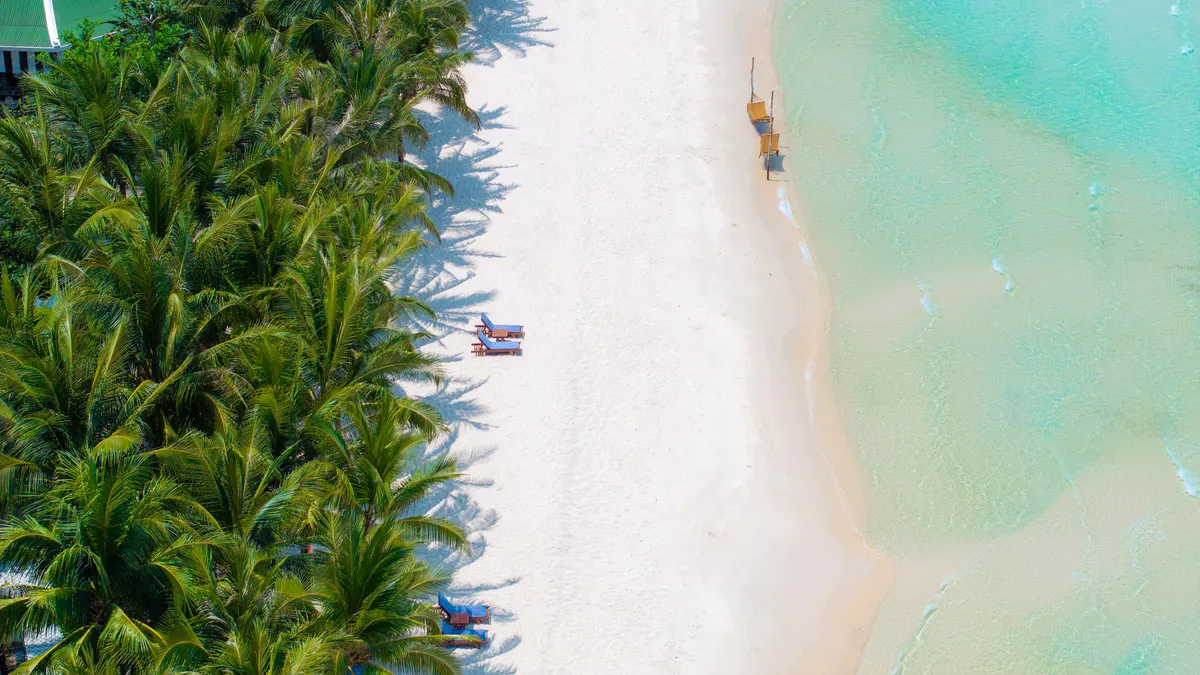
The best time to visit Phu Quoc (Phú Quốc) is the dry season, roughly November or December to March or April, when the sea is calm and the days are sunny; December and January are the safest bets. As of November 2026 the dry season has begun and the island is busier than a year ago: it had 9.25 million visitors in the first ten months of 2026, up 30.4% on a year earlier, 2.15 million of them international (Bao Van Hoa). The rainy season, from about May or June to October, is lighter on crowds but not on risk: storms in July to September stop boat tours and sometimes the ferries.
This page goes month by month, for travellers choosing dates. For where to stay on the island, what to eat and how to get around, see our Phu Quoc destination guide. Since 1 July 2025 Phu Quoc has been a special zone (dac khu) of An Giang province, after Kien Giang (Kiên Giang) was merged into An Giang, SGGP reported; you will still see “Kien Giang” on older maps and tickets.
Phu Quoc month by month at a glance
The table puts together what Vietnam’s national tourism authority (VNAT), Vietnam Airlines’ travel guide, the national forecasting centre and dated Vietnamese press say about each month. Sources draw the season boundaries a little differently, so treat April–May and October–November as shoulder months that can go either way. There is no official month-by-month climate series for Phu Quoc in the sources we could open, so the table describes conditions rather than averages.
| Month | Weather and rain | Sea, ferries and boat trips | Crowds and holidays | Suits |
|---|---|---|---|---|
| January | Dry and sunny; one of the best months | West coast calm; strong wind stopped ferries for two days in January 2023 | High season; busy around 1 January | Beach holidays, island-hopping |
| February | Dry | Mostly calm; check east-coast beaches for drift rubbish | Tet peak: 4–10 February 2027 | Beach holidays booked early |
| March | Dry, getting hotter | Mostly calm | International high season continues | Beach holidays, boat trips |
| April | Hot; the rains start to take hold in April–May | Mostly calm | International season expected to run to mid-April in 2026 | Last reliable beach month |
| May | Hot; the rains begin | Sea starting to get rougher | Quieter | Flexible travellers |
| June | Rainy season, southwest monsoon | Choppy, often too rough to swim on bad days | Quieter | Flexible travellers with spare days |
| July | Stormy | Boat tours stopped for storm Wipha in 2025; speedboat capsize in 2026 | Outside the international season | Resort stays with no fixed boat plans |
| August | Stormy; record downpours in August 2019 | Ferries cut by storms in 2023 | Outside the international season | Resort stays with no fixed boat plans |
| September | Stormy | Ferries halted for wind and 2 m waves on 2 September 2023 | National Day holiday 2–5 September 2027 | Flexible travellers |
| October | End of the rainy season | Improving; northeast monsoon from late October | International season started about 20 October in 2025 | Shoulder-season travellers |
| November | Dry season begins | West coast settling; east wind stopped ferries on 20 November 2025 | Rising | Early-season beach trips |
| December | Dry and sunny | West coast calm; drift rubbish on the east coast | Christmas–New Year peak | Beach holidays booked early |
For how Phu Quoc compares with the rest of Vietnam in the same month, see our Vietnam weather by month guide.
November to April: why the dry season is the best time
The dry months are Phu Quoc’s beach season. VNAT says the island is coolest in the dry season, between October and March, and hottest in April and May, when the rain begins (VNAT); its national weather guide calls Phu Quoc “a sublime tropical escape in December and January”. Vietnam Airlines’ travel guide recommends the island in December, January and April.

Why it is dry. Phu Quoc sits in the Gulf of Thailand off the south-western tip of Vietnam. From about May the southwest monsoon blows in off the sea and brings the rain; once it fades in October, the winds turn round to the northeast, and the island gets its long dry spell. Vietnam Coracle, an independent guide, sums it up simply: in the dry season the sea is “generally calm and clear”, in the wet season it “gets choppy – often too rough to swim”.
Common vs exception. Most dry-season days are sunny and calm, but not all. Strong northeast winds still stop the ferries now and then (see below), and the same wind brings rubbish to the east coast. The season’s edges also shift: in 2025–26 the international season started early, around 20 October, and was expected to run to mid-April instead of mid-March, Tien Phong (Tiền Phong) reported.
What it means for you. If the beach is the point of your trip and your dates are free, aim for December to March, and book early for the holiday weeks. Phu Quoc in the dry season is also the natural partner for a winter trip to the cooler North; our Vietnam in December guide and Vietnam in January guide show how it fits.
Christmas, New Year and Tet: the busiest weeks
The best weather and the biggest holidays fall in the same months, which makes the end of December, early January and the Lunar New Year (Tet) the hardest weeks to book. Before Christmas 2025 four- and five-star hotels across the special zone reported near-full bookings, and one speedboat company’s island-hopping tours were fully booked for both Christmas and New Year, Tuoi Tre News reported.
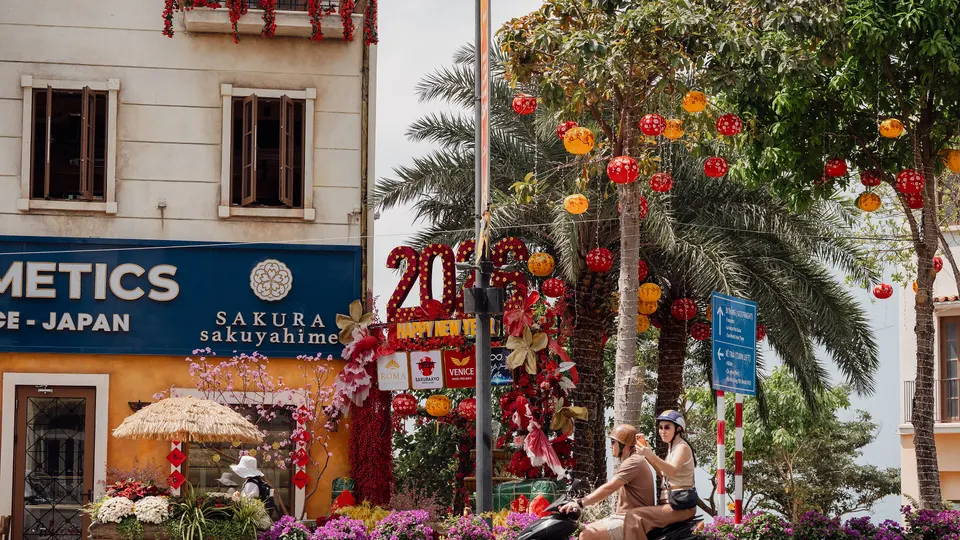
Tet 2026 in numbers. Over the Tet 2026 holiday the airport’s flights rose by about 50% on the previous Tet, to an average of 75 a day, and a three-star resort in Duong Dong (Dương Đông) told reporters all 93 of its rooms were taken; other hotels were also full (Tien Phong). In the nine days of Tet the airport handled 767 flights and more than 260,000 passengers, with the peak on 22 February, the sixth day of the new year, Bao Phap Luat (Báo Pháp Luật) reported. The same paper said security screening ran without long queues.
Tet 2027. The official holiday runs from Thursday 4 February to Wednesday 10 February 2027, according to the Interior Ministry notice published by the Ha Tinh provincial portal on 9 October 2026. Our Tet 2027 travel guide covers closures and transport across the country.
What it means for you. For Christmas, New Year or Tet, book flights and rooms as soon as your dates are fixed, and book island-hopping boats ahead. Even outside the holiday weeks the high season is busy: in February 2026 hotels expected to stay sold out into March, so book early whenever you go between December and March. Demand rises again from December 2026 for Christmas, New Year and Tet, and air fares and room rates can change from one period to the next, Bao Van Hoa reported on 10 November 2026; Sun PhuQuoc Airways also planned a direct Phu Quoc–Moscow route from 13 November 2026.
May to October: what the rainy season is really like
The rainy season is not a solid wall of rain. Promotional coverage of the island in VietnamPlus notes that tropical showers “usually arrive quickly and pass just as fast”, and VNAT describes July to September as “stormy, hot, humid” rather than wet all day. The risk is the sea, not the showers: during these months “some storms roll through, making ferrying dangerous and the beaches less than ideal”, VNAT’s weather guide says.

August rain can be extreme. In a normal year Phu Quoc gets about 144 mm of rain in the first ten days of August alone, according to the Southern Regional Hydro-Meteorological Centre. In August 2019 a strong southwest monsoon dropped more than 1,120 mm in nine days, about eight times the average, and cut off parts of Duong Dong, Tuoi Tre (Tuổi Trẻ) reported.
What the authorities expect this year. On 29 July 2026 the special zone told tour operators to prepare for the 2026–27 rainy season. Citing the national forecasting centre, it said that August to October could still bring short bursts of heavy rain with thunderstorms and strong gusts, and that the southwest monsoon, storms and tropical depressions could whip up strong winds and big waves; tour operators must not take visitors to dangerous places at sea in those conditions (Phu Quoc special zone). The same forecast expected less rain than usual from October to December 2026.
Swimming. On 31 August 2025 five tourists swimming in rough weather were swept out by big waves and rescued; afterwards the provincial tourism department and the special zone asked operators to stop tourists swimming in bad weather, DTiNews reported.
What it means for you. A rainy-season trip works if you base yourself at a resort, treat boat trips as a bonus and keep a day or two spare. It does not suit a short trip built around island-hopping or a fixed ferry crossing.
When ferries and boat trips stop
Most visitors fly in, but you can also cross from the mainland. Fast boats from Rach Gia (Rạch Giá) take about two and a half hours and from Ha Tien (Hà Tiên) one to two hours, and car ferries about three hours, Bao Van Hoa (Báo Văn Hóa) reported in 2024. All of them stop when the port authority judges the sea unsafe, and refunds or next-day tickets are the rule.
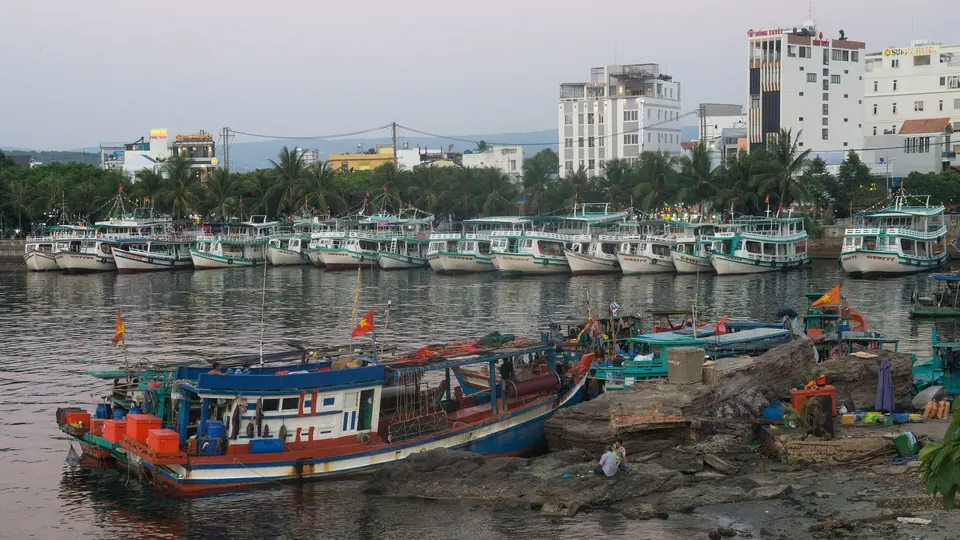
It happens in both seasons. Dated reports show cancellations all year round:
| Date | What stopped | Why |
|---|---|---|
| 6–7 January 2023 | All fast boats and ferries from Rach Gia and Ha Tien, two days running | Wind force 4–5, gusting 6–7, rough sea |
| Late July 2023 | Ferries and fast boats to Phu Quoc | Heavy rain, strong wind, rough sea, a week after storm Talim |
| 2 September 2023 | All ferries and fast boats from the mainland | Storm plus strong southwest monsoon, waves about 2 m |
| 21 July 2025 | Inter-island boat tours | Storm Wipha |
| 20 November 2025 | Fast boats from Rach Gia and Ha Tien to Phu Quoc, until further notice | East and northeast wind force 4–5, waves 1.5–2.5 m (Bao Van Hoa) |
Sources: Tuoi Tre (January and September 2023), Viet Nam News (July 2023 and July 2025), Bao Van Hoa (November 2025).
Boat tours to the An Thoi islands. The worst accident came on 11 July 2026, when a tourist speedboat heading back to An Thoi (An Thới) capsized in strong winds about 400 m after leaving Hon May Rut Ngoai, and 15 of the 32 Indian tourists on board died. Three days later the special zone ordered that boats be registered and inspected, carry enough life jackets, not be overloaded, have certified crews and stay in port in bad weather, Tuoi Tre News reported.
What it means for you. If you are coming by boat, plan the crossing for the start of your trip rather than the day before an international flight, and check with the operator on the morning you sail. On a boat tour, wear the life jacket rather than sitting on it, and accept a cancellation without argument. Our guide to getting around Vietnam compares flights and ferries to the islands.
Which coast suits which season
Phu Quoc is long and narrow, and the wind decides which side is better. In the dry season the northeast monsoon blows from the east: from late October it pushes floating debris onto the east coast, especially Kem beach and the stretches nearby, and Sun Group staff, residents, tourism businesses and visitors clean it up through the season, according to a report on 30 October 2026 (VietnamPlus).
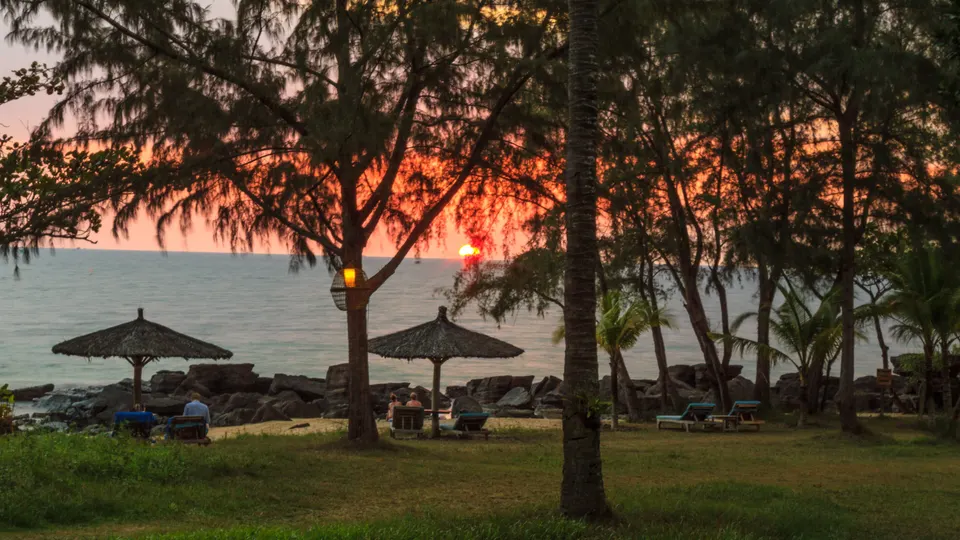
Dry season (about November to April). The west coast, from Long Beach and Duong Dong up to the north-west, is on the sheltered side of the island from the northeast wind and is usually the cleaner, calmer side for swimming, with sunsets over the sea. In early January 2026 drifting water hyacinth and household waste covered Khem and Sao beaches; local officials called it a recurring seasonal problem, carried from mainland rivers and canals after the rainy and flood season, VnExpress International reported. East-coast beaches are not ruined for the whole season, but they can be on a given week, so check recent photos before you book a hotel there.
Rainy season (about May to October). The southwest monsoon blows from the west and south-west, as the September 2023 ferry suspension shows, so the west coast then faces the wind and waves. Some travel writers suggest moving to the east coast in these months, but we found no official or press source that confirms which beaches stay calm, so ask your hotel about sea conditions before you choose. On any coast, swim only where others swim and stay out when staff or flags say so.
What it means for you. For a dry-season trip, base yourself on the west coast and treat the east-coast beaches as day trips. For a rainy-season trip, choose a hotel with a pool, because some days the sea will be too rough for swimming whichever side you are on.
Which month suits you: a quick decision guide
Most choices come down to three questions: how fixed your dates are, how much you care about boat trips, and whether you are combining Phu Quoc with other places.
- You want guaranteed beach weather: December to March, on the west coast.
- You want island-hopping and snorkelling boats: December to April, with a spare day in case a trip is cancelled. If you would rather not take a speedboat, the Hon Thom cable car reaches an island without one.
- Your only window is Christmas, New Year or Tet: go, but book flights, rooms and boats weeks ahead.
- You want quiet and lower crowds and can be flexible: May, June or October, accepting showers and some rough-sea days.
- Your only window is July to September: choose a resort with a pool, fly rather than take the ferry, and keep boat trips optional.
- You are choosing between islands: Con Dao’s calm months are almost the opposite of Phu Quoc’s; our Phu Quoc or Con Dao comparison and Con Dao guide explain when each works.
- You are planning a longer route: our best time to visit Vietnam guide fits Phu Quoc into a north-to-south trip, and the Mekong Delta is the natural mainland pairing in the dry season.
Common mistakes when picking dates
Most problems on Phu Quoc come from timing, not from the island itself.
- Assuming the dry season means no cancellations. Ferries stopped for strong winds in January 2023 and for northeast winds in November 2025. Keep a spare day whenever you cross by sea.
- Booking a tight rainy-season boat trip. From July to September storms stop boat tours, and since July 2026 operators must stay in port in bad weather (Tuoi Tre News). Do not push an operator to go.
- Taking the ferry the day before an international flight. If the boats stop, you are stuck on the wrong side of the water. Fly, or cross early in the trip.
- Picking an east-coast hotel in the northeast monsoon without checking. Drift rubbish at Kem and Sao is a recurring problem from late October; the west coast is usually cleaner then.
- Leaving Christmas, New Year or Tet to the last minute. In 2025–26 hotels and boat tours sold out for all three.
- Swimming in rough weather because the sky looks fine. Big waves swept five tourists out in August 2025; follow lifeguards and flags.
Pick your month from the table, book holiday weeks early, keep one spare day if you are using boats, and choose your coast by the season. For the rest of the region, start at our South Vietnam hub.
Frequently asked questions
Which month should I book for a beach holiday on Phu Quoc?
December or January for most people: the dry season has settled, the sea is calm, and Vietnam's national tourism authority and Vietnam Airlines both recommend those months for Phu Quoc. February and March are just as dry, but book early if your dates touch the Tet holiday.
Is Phu Quoc still worth visiting in the rainy season?
It can be, if your plans are flexible. Showers on Phu Quoc often pass quickly and the island is quieter, but from July to September storms can stop boat tours and ferries, swimming may be banned on rough days, and August has brought record downpours.
Do ferries to Phu Quoc still run in bad weather?
No. The port authority suspends speedboats and car ferries from Rach Gia and Ha Tien to Phu Quoc when winds and waves are too strong, in the rainy season and sometimes in the dry season too. Passengers get a refund or a ticket for the next day the boats run.
Do I need a visa to fly straight to Phu Quoc?
Usually not for a short stay: as of May 2026 Phu Quoc was the only place in Vietnam with a 30-day visa-free policy for direct international arrivals, Viet Nam News reported. It covers flights landing directly on the island, so check Vietnam's normal visa rules if you enter through Hanoi, Saigon or another mainland airport first.
Which side of Phu Quoc should I stay on in December?
Usually the west coast, around Long Beach and Duong Dong. From late October the northeast monsoon brings floating debris to Phu Quoc's east coast, including Kem and Sao beaches, and it is cleaned up through the season.
Key sources
- Phu Quoc · Vietnam National Authority of Tourism (vietnam.travel)
- Công văn số 3366/UBND-PNNMT: chủ động thực hiện các giải pháp phòng chống thiên tai trong bối cảnh thời tiết bắt đầu vào mùa mưa năm 2026-2027 · Phu Quoc Special Zone People's Committee, 29 July 2026
- Tàu cao tốc đi Phú Quốc tạm ngưng hoạt động do thời tiết xấu · Báo Văn Hóa, 20 November 2025
- Vietnam's Phu Quoc strengthens waterway regulations after tourist boat accident · Tuổi Trẻ News, 14 July 2026
- Phu Quoc joins forces to keep beaches clean during monsoon season ahead of APEC 2027 · VietnamPlus, 30 October 2026
- 'Cháy' phòng khách sạn Phú Quốc, tăng 50% chuyến bay Tết · Tiền Phong, 13 February 2026
- Tết Nguyên đán 2027: công chức, viên chức được nghỉ 7 ngày liên tục · Hà Tĩnh provincial portal, 9 October 2026
- Phú Quốc vào mùa đẹp, đảo Ngọc hút khách cuối năm · Báo Văn Hóa, 10 November 2026
All 25 sources and further reading
- Phú Quốc chính thức trở thành đặc khu: Mở cánh cửa vận hội mới · Sài Gòn Giải Phóng, 1 July 2025
- Weather and climate in Vietnam · Vietnam National Authority of Tourism (vietnam.travel)
- Mưa tại Phú Quốc vượt trung bình 8 lần, sắp vượt mốc lịch sử 1997 · Tuổi Trẻ, 9 August 2019
- Phú Quốc đã hứng chịu đợt mưa 'hiếm gặp' tới gần 1.000mm · Tuổi Trẻ, 9 August 2019
- Phà, tàu cao tốc đi Phú Quốc ngưng chạy ngày 2-9 · Tuổi Trẻ, 2 September 2023
- Tàu ra Phú Quốc ngưng chạy 2 ngày liền vì thời tiết xấu · Tuổi Trẻ, 7 January 2023
- Ferries, high-speed boat services to Phú Quốc, Côn Đảo suspended due to bad weather · Việt Nam News, 27 July 2023
- Boat tours of Phú Quốc archipelago stopped amid Typhoon Wipha threat · Việt Nam News, 21 July 2025
- Five Phu Quoc tourists rescued after being swept to sea · Dân Trí International (DTiNews), 1 September 2025
- Tourists shocked as trash swamps Phu Quoc's most famous beaches · VnExpress International, 3 January 2026
- Int'l visitors crowd tourist attractions in Vietnam's Phu Quoc · Tuổi Trẻ News, 24 December 2025
- Cảng hàng không quốc tế Phú Quốc: 767 chuyến bay trong 9 ngày Tết, phục vụ hơn 260.000 khách · Báo Pháp Luật Việt Nam, 23 February 2026
- Phú Quốc and the 'exclusive privileges' unmatched by other island destinations · Việt Nam News, 7 May 2026
- Seasons in Vietnam · Vietnam Airlines travel guide
- Reasons why Phu Quoc shines even during rainy season · VietnamPlus, 4 August 2026
- Vé máy bay khan hiếm, du khách có thể chọn cách này tới Phú Quốc · Báo Văn Hóa, 23 March 2024
- Vietnam's Southern Islands: Con Dao or Phu Quoc? · Vietnam Coracle, updated November 2024
Keep exploring
 South Vietnam · Travel Phu Quoc (Phú Quốc) Travel Guide: Which Area to Stay In Phu Quoc travel guide: which area to stay in (Duong Dong, Ong Lang, Long Beach, Bai Sao), flights and ferries, getting around, visa rules and local food.
 South Vietnam · Travel Phu Quoc or Con Dao: Which Vietnam Island Suits You? Phu Quoc or Con Dao? Compare seasons, beaches, crowds, history, flights and the Tran De ferry as of November 2026, with a decision table for every trip.
 North · Central · South · Travel Vietnam Weather by Month: What to Expect in Each Region Vietnam weather month by month for Hanoi, Hoi An, Nha Trang, Da Lat, Saigon and Phu Quoc: official averages, typhoon season, 2027 holidays and El Nino outlook.
 North · Central · South · Travel Vietnam in December 2026: Where to Go, What to Book Vietnam in December 2026: dry Saigon and Phu Quoc, cool Hanoi, a wet Hue–Hoi An coast, Da Lat's festival from 12 Dec, the new Long Thanh airport, what to book.