All three regions · Travel
Getting Around Vietnam in 2026: Plane, Train, Bus or Grab
How to get around Vietnam in 2026: plane vs train vs sleeper bus by route, Grab vs Green SM (Xanh SM), Long Thanh airport and motorbike licence rules.

Vietnam is long and thin, about 1,700 km by rail from Hanoi to Ho Chi Minh City, so the way you travel between cities shapes a trip more than almost any other decision. The short answer: fly the long legs, use the train or a car for the shorter scenic ones, keep sleeper buses for tight budgets, and use ride-hailing apps inside cities. The detail is in which leg suits which mode, and in what has changed recently: one airline has all but stopped flying, a new airport near Saigon is due to open on 24 December 2026, most of the North–South expressway’s last central gaps closed in 2026, the biggest ride-hailing app changed its name, and both big cities now have metro lines.
This page is the general mode guide for planning any route. It compares flights, the Reunification Express train, sleeper and limousine buses, cars with drivers and island boats, then covers city transport, motorbike licence rules, common mistakes and a checklist. Times and dates come from airlines, the railway, official portals and the national press, with their dates; they change, so check again when you book. For more planning pages, see our Vietnam travel planning hub.
Getting around Vietnam at a glance
Times are one way, as stated by the source and date shown. Where sources differ we give the range.
| Trip | Best choice | Time (source, date) | Choose it if… / watch out |
|---|---|---|---|
| Hanoi ↔ Ho Chi Minh City | Fly | About 2 h 10 min non-stop (Vietnam Airlines route page, checked Nov 2026); train more than 30 h (VOV, Jul 2026) | Fly unless the rail journey is the point; break it at Hue or Da Nang if it is |
| Hanoi ↔ Hue or Da Nang | Fly, or night train | Flight about 1 h to Hue; train 12–14 h to Hue (Vietnam Airlines guide); night trains SE3 and SE1 leave Hanoi at 19:20 and 21:45 (Aug–Dec 2026 timetable, Bao Van Hoa, Jul 2026) | Train when it saves a hotel night or you want the ride; fly when time or sleep matters |
| Overnight on a tight budget | Sleeper bus | Hanoi–Hue about 12–14 h (Vietnam Airlines guide) | Cheapest; berths are short for tall travellers; choose an established operator |
| Two to four hours by road (e.g. Hanoi–Ha Long) | Limousine van or private car | Hanoi–Ha Long 2.5–3 h by car, 3–3.5 h by limousine bus (Vietnam Airlines guide) | Hotel pick-up, fewer stops; a car with driver for flexible sightseeing |
| Families, groups, several stops | Private car with driver | Depends on route | Taxis and hired cars working commercially are exempt from the child-seat rule, so ask for one if you need it |
| Islands | Plane or boat | Saigon–Con Dao speedboat about 5 h 15 min (Saigon Times, Jun 2026); Cat Hai–Phu Long cable car to Cat Ba about 15 min (Dai bieu Nhan dan, Mar 2025) | Boats stop in rough weather; keep a spare day |
| Inside Hanoi and Saigon | Ride-hailing app, metro where it fits | – | Grab, Green SM (Xanh SM) or Be; Saigon Metro Line 1 for the Ben Thanh–Thu Duc corridor |
How to decide. Start with the ground time. If the train would take more than one night, fly. If it is a single night, as from Hanoi to Hue or Da Nang, the night train is the classic alternative to a flight and the sleeper bus the cheap one. Under about four hours, go by road in a limousine van or a car with driver; on a few routes, such as Hanoi to Ninh Binh (Ninh Bình), the train also works. Our two-week Hanoi-to-Saigon itinerary applies this leg by leg to one classic route.
Each mode compared. The same choice seen from the other side: what each way of travelling is good for, and what it costs you besides the fare.
| Mode | Best for | Trade-offs |
|---|---|---|
| Domestic flight | Hanoi–Saigon, Hanoi–Hue or Da Nang, Phu Quoc | Fastest on long legs, but add the airport run (Noi Bai about an hour from central Hanoi, VNAT); check the terminal, and for Saigon from 24 December 2026 the airport |
| Night train (Reunification Express, Hanoi–Lao Cai) | One-night sections: Hanoi–Hue or Da Nang, Hanoi–Lao Cai for Sa Pa | Saves a hotel night; slow end to end (more than 30 h Hanoi–Saigon, VOV, Jul 2026); book early for Tet |
| Sleeper bus | The cheapest overnight trips | Short berths, arrivals in the small hours, safety scrutiny on mountain roads |
| Limousine van | Two to four hours by road, e.g. Hanoi–Ha Long or Ninh Binh | Hotel pick-up and fewer stops; less space than a private car |
| Private car with driver | Families, groups, scenic roads such as the Hai Van Pass | Most flexible and most expensive; hired cars are exempt from the child-seat rule, so ask for one |
| Ride-hailing (Grab, Green SM, Be) | City trips and airport runs | Price shown before you ride; motorbike taxis are quicker but exposed to rain and traffic |
| Rented motorbike | Experienced riders with the right licence | Legal only with a 1968-Convention permit covering motorbikes plus your home licence; police check |
| Ferry or speedboat | Cat Ba, Con Dao, Phu Quoc | Cancelled in rough weather; keep a spare day |
Domestic flights: which airlines fly, and from which airports?
For the long legs, flying is the default, and Vietnam’s domestic network is busy: domestic passenger numbers rose more than 4% in the first seven months of 2026, to over 46 million, DTiNews (Dan Tri) reported. Two carriers dominate, and the smaller ones have changed a lot since 2025.
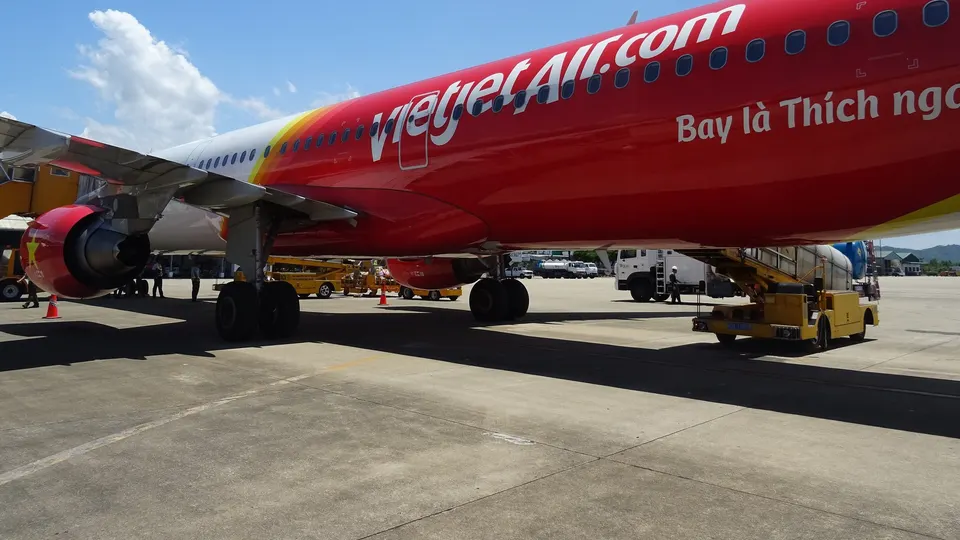
Which airlines fly domestically in late 2026?
- Vietnam Airlines, the national carrier, and Vietjet, the largest low-cost airline. In the first eight months of 2025 each carried about 44% of domestic passengers, according to figures cited by The Leader, and in September 2026 they operated 201 of the 258 aircraft registered in Vietnam, VietnamNet reported. Vietnam Airlines’ subsidiaries Pacific Airlines and VASCO have small shares.
- Sun PhuQuoc Airways, the newest, began commercial flights on 1 November 2025 and had 21 aircraft by September 2026. Its domestic network links Phu Quoc (Phú Quốc), Hanoi, Ho Chi Minh City, Da Nang (Đà Nẵng), Nha Trang and Van Don, and since 25 July 2026 also Hai Phong, according to the Hai Phong city portal.
- Vietravel Airlines is small but flying: in summer 2026 it ran up to five daily Hanoi–Ho Chi Minh City flights plus Hanoi and Saigon to Da Nang, Hanoi–Cam Ranh (for Nha Trang) and Hanoi–Buon Ma Thuot, VnEconomy reported.
- Bamboo Airways is the one to avoid booking. In August 2026 it stopped showing scheduled flights for individual passengers and kept only limited charter flights (Tuoi Tre News); by the end of that month it had a single aircraft in service. Older guides still list it as a normal option.
How long are the flights? Vietnam Airlines gives about 2 hours 10 minutes for a non-stop Hanoi–Ho Chi Minh City flight and about an hour for Hanoi–Hue (Huế). Add the time to get to the airport: VNAT, the national tourism authority, puts Noi Bai (Nội Bài) about 27 km from central Hanoi, usually about an hour’s drive, Tan Son Nhat (Tân Sơn Nhất) 8 km from central Saigon but 50 minutes or more in traffic, and Da Nang airport about 5 km from its city centre.
Which terminal in Saigon? Since August 2025 Vietnam Airlines, Pacific Airlines, VASCO, Vietravel Airlines and Bamboo have used Tan Son Nhat’s new domestic Terminal 3, while Vietjet stayed at Terminal 1, VnExpress International reported. Check your booking for the terminal.
What about Long Thanh airport? Long Thanh (Long Thành), the new airport in neighbouring Dong Nai, is not open yet. On 30 October 2026 VietnamPlus reported that the airports corporation expected commercial operations to start at 00:00 on 24 December 2026, and on 21 November 2026 VnExpress International reported that ACV had cut the first-phase plan to up to 226 flights a week until 27 March 2027, 182 of them domestic, down from the 366 projected in October; Vietnam Airlines is to fly Long Thanh–Hanoi from the first day and Vietjet a handful of domestic routes. That is later than the 1 December target the corporation gave in August, Tuoi Tre News reported then, and Vietjet planned only three aircraft there from December 2026 to March 2027, Dai bieu Nhan dan reported in October, so most domestic flights will stay at Tan Son Nhat at first. Until it opens, Saigon means Tan Son Nhat. If you book a flight for late December 2026 or later, check which airport it uses.
The Reunification Express: when is the train worth it?
The North–South railway, about 1,725 km long, is the backbone of rail travel in Vietnam, and its through trains are known to foreigners as the Reunification Express (tau Thong Nhat (tàu Thống Nhất)). VOV reported in July 2026 that the full Hanoi–Saigon journey takes more than 30 hours, with six services a day in each direction (VOV). That is why few visitors ride end to end: the train makes sense in sections.
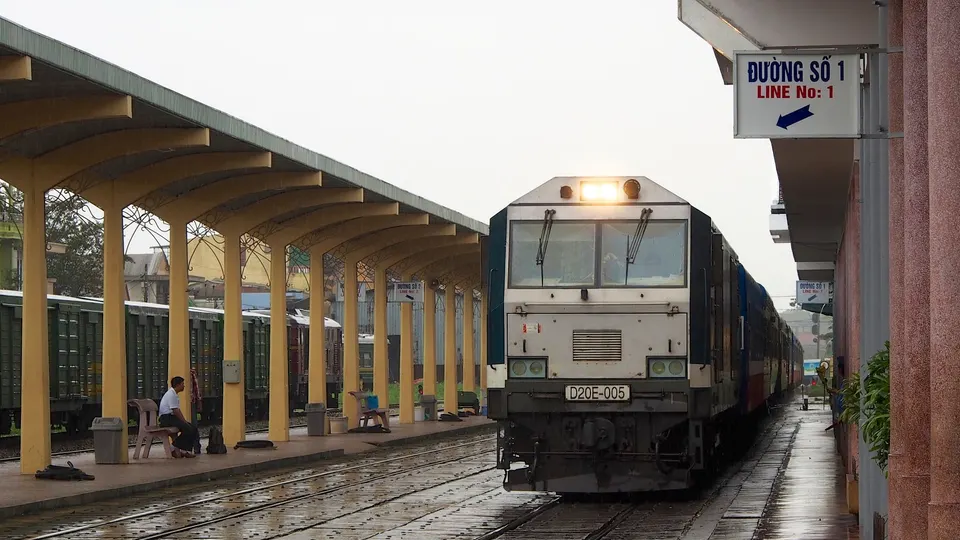
Journey times and the current timetable. Vietnam Airlines’ travel guide gives about 12 to 14 hours from Hanoi to Hue, most of it overnight. For departures from 17 August to 30 December 2026 the railway runs five pairs of Hanoi–Saigon through trains, SE1/2 to SE9/10, Bao Van Hoa reported in July 2026. From Hanoi they leave at 06:00 (SE7), 08:00 (SE5), 13:00 (SE9), 19:20 (SE3) and 21:45 (SE1); from Saigon at 06:00 (SE8), 08:45 (SE6), 13:15 (SE10), 19:20 (SE4) and 20:35 (SE2). That count differs from VOV’s six a day, a reminder that services change by season, so check the current timetable before you plan around a departure. For Sa Pa, a third nightly Hanoi–Lao Cai train, SP15/SP16, was added in October 2026, leaving Hanoi at 21:45 and reaching Lao Cai at 05:20, VietnamPlus reported; our guide to getting from Hanoi to Sa Pa compares it with the bus and limousine.
Sleeper or seat? For a night journey, book a berth. VOV describes air-conditioned four-berth cabins with mattresses, pillows and lockable doors, and cheaper six-berth hard-sleeper cabins that are “more cramped”. Seats are fine for short daytime hops but tiring overnight. Vietnam Airlines’ guide notes that bedding is usually provided in sleeper class and some carriages have power sockets.
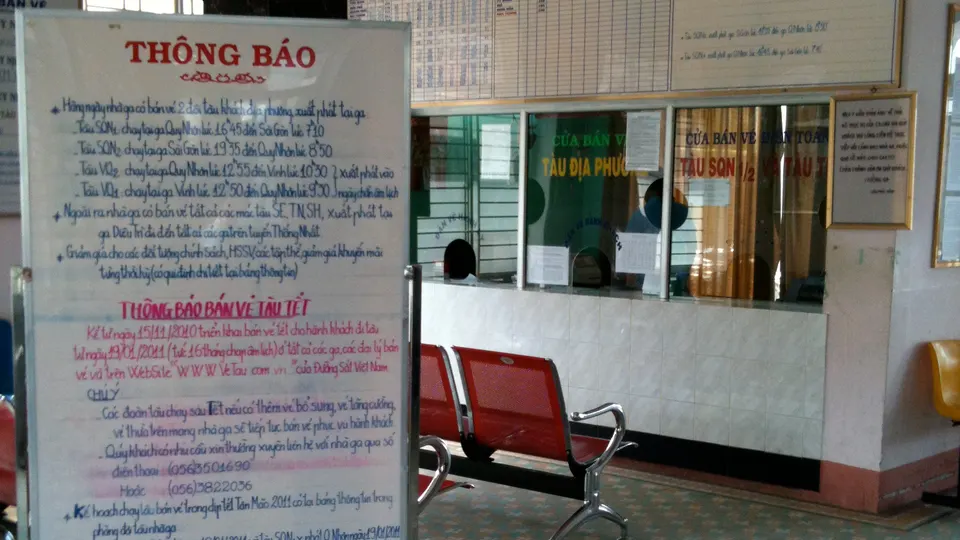
How to book. The official site, dsvn.vn, has an English version and a mobile app; you can search trains, see times and fares, buy and pay online, and return tickets online if you bought them there. Stations, agents and e-payment apps also sell tickets. For travel from August to December 2026 the railway offered 5–15% off a limited number of tickets bought 10 or more days ahead, 10% off the return leg of a round trip, and added 3–5% for tickets bought within two days of departure, Bao Van Hoa reported. Tickets for Tet 2027, for travel from 23 January to 25 February 2027, went on sale on 5 September 2026, about 300,000 of them, the same paper reported, so buy early for Tet and summer holidays.
When to choose the train. Take it when a night on board replaces a hotel night, when you want to see the coast by day on a short section, or when you are already near a station, as at Ninh Binh. Fly instead if you sleep badly on the move or your trip is tight.
Sleeper buses, limousine vans and private cars
Long-distance buses are the cheapest way to cover ground in Vietnam, and they come in three types that suit different trips. Sleeper buses have two decks of reclining berths for overnight runs. Limousine buses or vans are smaller, more comfortable vehicles for routes of a few hours, and private cars with a driver are the flexible option for families and groups.
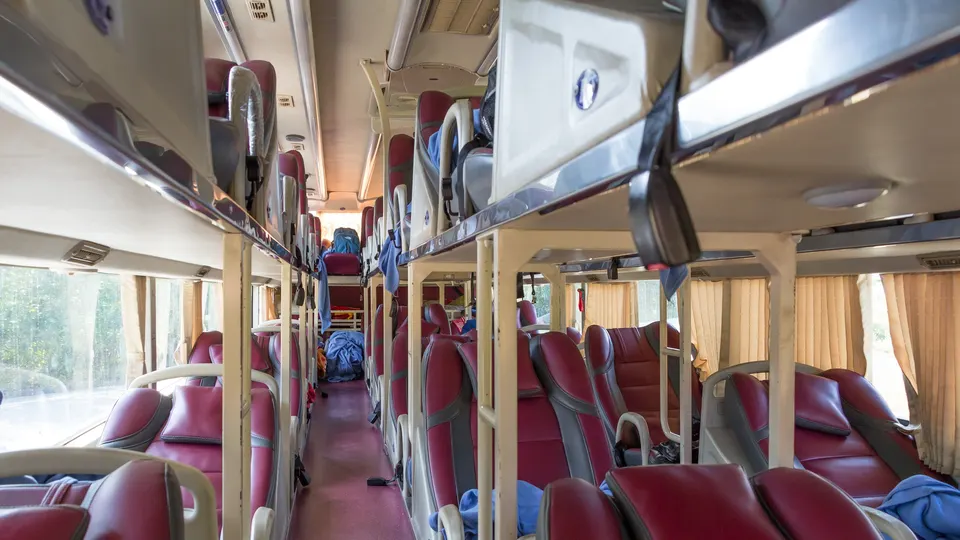
Sleeper buses. Vietnam Airlines’ guide puts Hanoi–Hue at about 12 to 14 hours by sleeper bus, much the same as the train, with berths that include a reclining seat, pillow and blanket. It warns that the berths are designed for Vietnamese travellers, so legroom may be tight for taller visitors. Book online or at the operator’s office, and check the operator’s rules, for example on pets and strong-smelling food. Our sleeper bus guide explains standard berths versus cabins, what the night is like, the seat-belt and city-centre rules, and how to book.
Safety and regulation. Sleeper buses are under official scrutiny. In January 2026 ministries agreed on a draft ban on double-decker sleeper buses on Class III and IV mountain roads, to be phased in after a transition period, and the deputy prime minister ordered technical standards for buses on mountain routes (Znews). In March 2026 police and the construction ministry began test runs on north-western mountain highways, Viet Nam News reported; no date for a ban had been reported when we checked. Police also fine overloaded coaches: in August 2026 a 29-seat coach heading to Hanoi was stopped carrying 51 passengers, and the driver and owner were fined, Tuoi Tre News reported. If a bus is visibly overloaded, wait for the next one.
Faster roads in the centre. The last central gaps in the eastern North–South expressway, between Quang Ngai and the Cu Mong tunnel and on to Khanh Hoa, opened in stages in spring 2026: Quang Ngai–Hoai Nhon and Hoai Nhon–Quy Nhon on 29 April, VnEconomy reported, and Quy Nhon–Chi Thanh and Chi Thanh–Van Phong in full on 18 May, apart from about 7 km near the Cu Mong tunnel still waiting for its service road, PLO reported. Road times in guides written before mid-2026 may now be too long; ask the operator for the current one.
Limousine vans. On routes of two to four hours they are usually the better choice. For Hanoi to Ha Long (Hạ Long), Vietnam Airlines’ guide gives about 3–3.5 hours by limousine bus, against 2.5–3 hours by private car and 4–5 hours by local bus, and notes that many services collect you from your hotel. Our guide to day trips from Hanoi compares road times to Ninh Binh and closer villages, and for Ha Long we weigh a day trip against an overnight cruise.
Private car with driver. Hiring a car with a driver costs more but lets you stop where you like, which suits families, groups and scenic routes such as the Hai Van Pass between Hue and Da Nang. If you stop at Hai Van Quan, the restored gate on the summit, it has charged 70,000 dong per person since 2 June 2026, Tuoi Tre reported; our Hai Van Pass guide compares the pass road, tunnel and train, and our Hue to Hoi An guide covers the whole transfer. Families should know that from 15 August 2026 private drivers must use child restraints for children under 10 and shorter than 1.35 m, but commercial passenger vehicles are exempt, Tuoi Tre News reported, so a hired car may have no child seat unless you ask for one.
Getting around Hanoi and Saigon: metro, buses and taxis
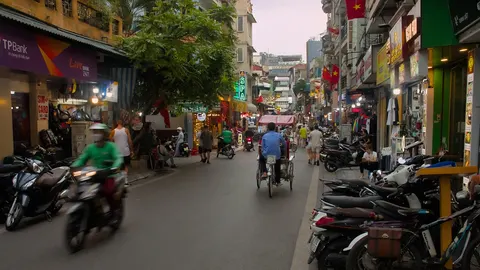
Inside the two big cities, most visitors combine walking, ride-hailing and, increasingly, the metro. Both cities now have urban rail, though neither network yet reaches every sight.
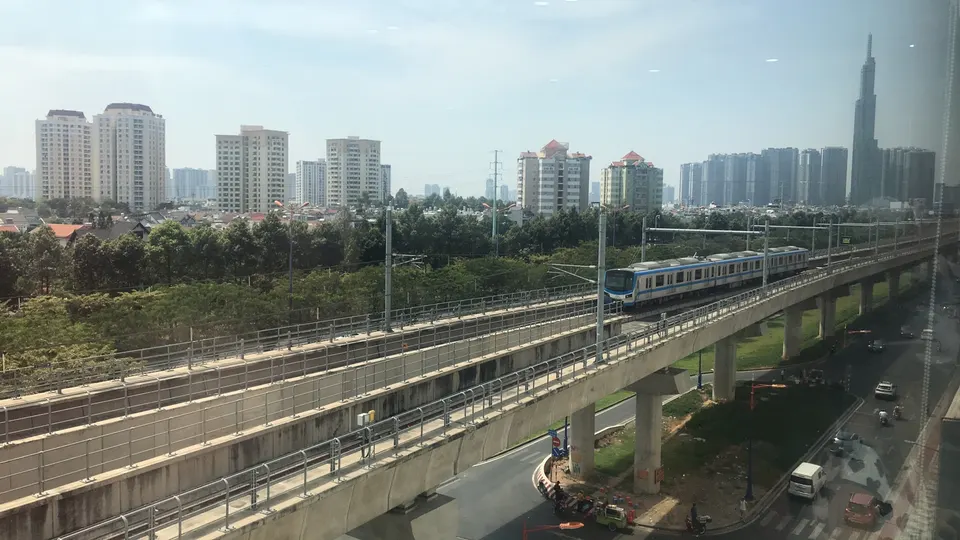
Saigon’s Metro Line 1. Ho Chi Minh City’s first metro line opened on 22 December 2024 after 17 years of planning and building. It runs 19.7 km from Ben Thanh (Bến Thành) in the centre to Suoi Tien (Suối Tiên) in Thu Duc, with 14 stations, 11 elevated and 3 underground, and at opening ran from 5 am to 10 pm (VnEconomy). It carried more than 20.5 million passengers in its first year, Nhan Dan reported. For visitors it is most useful between the centre and the eastern districts, such as Thao Dien.
Hanoi’s two lines. Line 2A runs from Cat Linh to Ha Dong and carried 13.7 million passengers in 2025. Line 3’s elevated section from Nhon to Cau Giay has run since 8 August 2024; its 4 km underground section with four stations, which will take it to Hanoi railway station, was about 79% built in May 2026 and is due to open in December 2027, Tien Phong reported. A new electronic ticketing system was piloted on Line 3 from January 2026, and the two lines were due to run as one integrated system from February, VietnamPlus reported. For most Old Quarter visitors, the metro is useful mainly for trips to the western districts.
City buses and taxis. Both cities run large public bus networks, cheap but slow in traffic and harder to use without Vietnamese. Traditional taxi firms still operate, such as Vinasun in Saigon, but they have lost ground to app-based services: Vinasun’s staff fell from more than 17,000 in 2016 to just over 1,400 by the end of 2025, The Investor reported.
Ride-hailing apps: Grab, Green SM (Xanh SM) or Be?
For most visitors, the easiest way to get around a Vietnamese city is a ride-hailing app: you see the route and the price before you get in, and you avoid haggling. Three apps matter in 2026, and in the four-wheel market the order has changed.
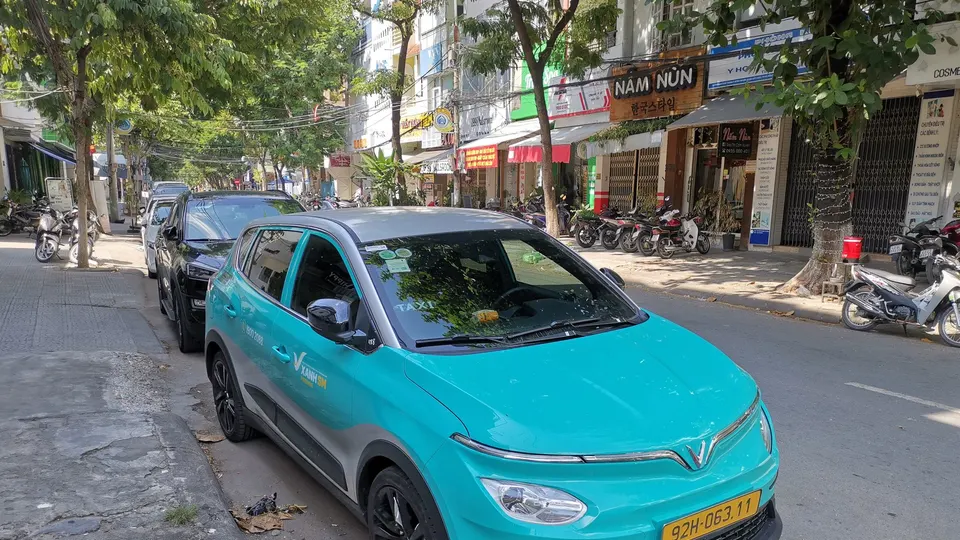
Xanh SM or Green SM? They are the same company. The all-electric service launched in Vietnam as Xanh SM (xanh means green), and on 13 April 2026 it was renamed Green SM to unify the brand across its markets, with a new version of the app and, in Vietnam, a new four-digit hotline, 1555, Index.vn reported. Its Vietnamese website now lists the services as Green SM Car and Green SM Bike. Older guides still say Xanh SM. Our Green SM guide for tourists explains how to set up the app on a foreign phone, pay, and book its English-speaking Green Travel drivers.
Which app? Tuoi Tre (Tuổi Trẻ) reported in May 2026 that Green SM held more than 54% of the ride-hailing market in the first quarter of 2026, ahead of Grab, while Be was building up its beBike motorbike service and TADA was cutting driver fees (Tuoi Tre). For car rides in that quarter, Mordor Intelligence figures reported by Index.vn gave Green SM 54.5%, Grab 40.9% and Be 4.6%. Gojek left Vietnam in September 2024, Tuoi Tre News reported, so older advice to use it is out of date.
- Grab is the app most visitors already have, with cars and motorbike taxis (GrabBike).
- Green SM (Xanh SM) runs VinFast electric cars and, since August 2023, electric motorbike taxis (now Green SM Bike), booked in the same app, VietnamNet reported.
- Be is a Vietnamese app with cars and motorbikes (beBike).
Car or motorbike taxi? A motorbike taxi is faster in traffic and cheaper; a car is better with luggage, in rain, at night or with children. On a motorbike taxi, wear the helmet the driver gives you: helmets are compulsory for passengers too.
Can foreigners ride a motorbike in Vietnam?
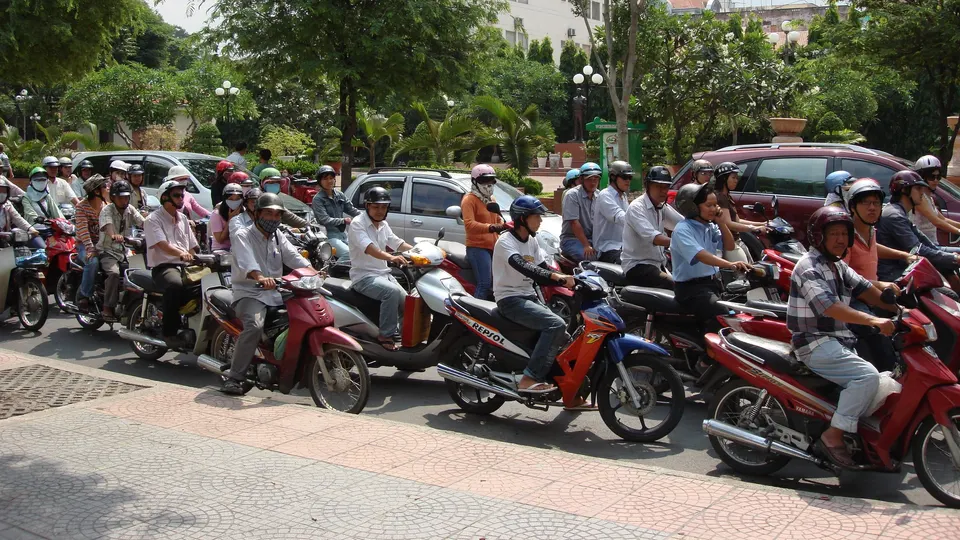
Vietnam has a lot of motorbikes, 77 million registered, VietnamNet reported in February 2025, and renting one is tempting. Whether you can do so legally depends on which licence you hold, and many visitors get this wrong.
The international driving permit rule. Vietnam is a party to the 1968 Vienna Convention on road traffic, not the 1949 Geneva Convention. Citizens of countries that signed only the 1949 Convention, including the US, Canada, Australia, New Zealand, South Africa and Israel, “cannot issue an IDP that is valid for driving in Vietnam (Việt Nam)”, Viet Nam News explained in May 2026 (Viet Nam News). Under Vietnamese rules summarised by Dai bieu Nhan dan, a holder of an IDP from a Vienna Convention country must carry it together with the national licence for the matching vehicle class. The permit has to cover motorbikes: a car-only licence does not let you ride one.
Other routes to a legal licence. Licence holders from ASEAN countries can drive under an ASEAN agreement, again only for the vehicle types their licence lists. Foreign residents with a temporary residence card can convert a home licence or take the Vietnamese test; visitors on tourist or business visas cannot get a Vietnamese licence, Viet Nam News notes.
Police do check. In May 2026 police in Khanh Hoa stopped foreign riders who could not show an international driving permit; one was fined and his motorbike impounded, and the owner who lent it was fined too, Tuoi Tre News reported. Viet Nam News also points out that riding legally is what keeps travel and medical insurance valid. If the motorbike trip you have in mind is the Ha Giang Loop, compare riding yourself with an easy rider or a car tour before you rent.
Helmets. Vietnam’s helmet law has applied on all roads since 15 December 2007, according to the road-safety charity AIP Foundation. Since 1 January 2025, riders or passengers without a properly fastened helmet face fines of VND400,000–600,000, VnExpress International reported.
Ferries and speedboats to the islands
Three islands that visitors often add to a trip are reached by boat as well as, in two cases, by plane. Boats are the part of Vietnamese transport most exposed to weather, so plan with a spare day.

Phu Quoc. Most visitors fly: Sun PhuQuoc Airways alone links the island with Hanoi, Saigon, Da Nang, Nha Trang, Van Don and Hai Phong. Speedboats and car ferries run from Rach Gia (Rạch Giá) and Ha Tien (Hà Tiên), now both in An Giang province, which absorbed Kien Giang in July 2025. In rough weather the maritime authority halts them: in November 2025 boats from both ports to Phu Quoc and Nam Du were suspended for strong north-easterly winds and waves of 1.5–2.5 m (Bao Van Hoa).
Con Dao. Since July 2025 Con Dao (Côn Đảo) belongs to Ho Chi Minh City, along with the rest of the former Ba Ria–Vung Tau province. A speedboat from Saigon’s Nha Rong–Khanh Hoi port resumed on 6 June 2026 on a faster vessel, taking about 5 hours 15 minutes, The Saigon Times reported. By air, Vietjet resumed Hanoi–Con Dao and Saigon–Con Dao flights in December 2025. Torn between the two islands? Our Phu Quoc vs Con Dao comparison sets out how they differ.
Cat Ba. Cat Ba (Cát Bà), in Hai Phong, is reached by car ferry from Dong Bai to Cai Vieng, expanded in 2024 to reduce queues, by speedboat from Hai Phong, by the year-round Cat Hai–Phu Long cable car (about 15 minutes), or by ferry from Tuan Chau near Ha Long, Dai bieu Nhan dan reported. Our Cat Ba Island guide explains how it fits with Lan Ha and Ha Long Bay.
Common mistakes, and a checklist before you book
Most transport problems in Vietnam come from a few predictable mistakes. Avoid these, and run through the checklist before you pay for anything. Before any of it, check your entry papers: who needs a visa, how to apply on the official portal and the most common application mistakes are covered in our Vietnam e-visa guide in the travel hub.
Common mistakes
- Taking the train end to end on a short trip. More than 30 hours on board uses two days of a two-week holiday. Ride one section instead.
- Booking Bamboo Airways from an old guide. It stopped selling scheduled tickets in August 2026.
- Assuming any international driving permit works. Only 1968-Convention permits that cover motorbikes are valid, with your home licence.
- Ignoring the airport terminal or airport. In Saigon, Vietjet uses Terminal 1 and most other domestic carriers Terminal 3, and some flights may move to Long Thanh after it opens.
- Planning island boats with no slack. Speedboats to Phu Quoc and other islands stop in rough weather, sometimes for days.
- Treating the sleeper bus as a comfort choice. It is the budget option; if you are tall or sleep badly, take the train or fly.
Pre-trip checklist
- Sort your long legs first: flight or night train for Hanoi–Hue/Da Nang and Da Nang–Saigon; flight for Hanoi–Saigon.
- Book trains on dsvn.vn or through a station or agent, early for Tet and summer, and pick a berth for night trains.
- Check the airline and the terminal on every domestic booking, and from late December 2026 check whether a Saigon flight uses Tan Son Nhat or Long Thanh.
- Install a ride-hailing app (Grab, Green SM or Be) before you land and link a payment method.
- Check your licence before renting a motorbike: a 1968-Convention IDP with a motorbike class, carried with your home licence, or don’t ride.
- Keep a buffer day around island boat trips and long transfers in the rainy and storm seasons; our one-week North Vietnam itinerary shows how to build slack into a short trip.
- Recheck times near the date. Every timetable on this page is as reported by the source on the date shown.
Frequently asked questions
Is it better to fly or take the train from Hanoi to Saigon?
Fly, unless the journey itself is the point. A non-stop flight takes about 2 hours 10 minutes, while the Reunification Express needs more than 30 hours for the full 1,700 km or so. Break the train journey at Hue or Da Nang if you want to ride part of it.
Is Long Thanh airport open yet?
Not yet. The airports corporation expects commercial flights to start at Long Thanh, east of Ho Chi Minh City, on 24 December 2026, later than the 1 December target it gave in August. Until then all Saigon flights use Tan Son Nhat; for later dates, check which airport your booking names.
Can I ride a motorbike in Vietnam with an international driving permit?
Only if your permit was issued by a country that signed the 1968 Vienna Convention and it covers motorbikes, and you carry it with your home licence. Permits from 1949-Convention-only countries such as the US, Canada and Australia are not valid in Vietnam, and police check riders.
Which ride-hailing app should I use in Vietnam?
Grab, Green SM and Be all work in the main cities. Green SM, the all-electric service known as Xanh SM until April 2026, had about 55% of car ride-hailing in the first quarter of 2026 against about 41% for Grab; Grab is the most familiar to visitors; Be is a smaller Vietnamese alternative.
Are sleeper buses in Vietnam safe?
They are the cheapest way to travel overnight, but they carry more risk than trains or flights. The government has been reviewing double-decker sleepers on steep mountain roads since early 2026, and police fine overloaded coaches, so choose an established operator and wear the seat belt.
Key sources
- Vietnam's Bamboo Airways shrinks operations, continues limited charter flights · Tuổi Trẻ News, 1 August 2026
- Sun Phu Quoc Airways to launch two new routes from Hai Phong starting July 25, 2026 · Hai Phong City Portal, 24 July 2026
- Vietnam's North-South railway named one of the world's most scenic routes · VOV, 7 July 2026
- Siết quản lý xe khách giường nằm 2 tầng, tiến tới cấm trên đường miền núi · Znews, 27 January 2026
- Vietnam's first metro line put into commercial operation · VnEconomy, 22 December 2024
- Chiêu cạnh tranh mới của app gọi xe công nghệ · Tuổi Trẻ, 4 May 2026
- Using the roads in Việt Nam as a foreigner · Việt Nam News, 21 May 2026
- Tàu cao tốc đi Phú Quốc tạm ngưng hoạt động do thời tiết xấu · Báo Văn hóa, 20 November 2025
All 50 sources and further reading
- Vietnam's largest airport Long Thanh to open with flights to Hanoi · VnExpress International, 21 November 2026
- Bamboo Airways down to one aircraft as Vietnam's airline market diverges · DTiNews (Dân Trí), 2 September 2026
- Thị trường hàng không nóng trở lại: Sun PhuQuoc, Bamboo, Vietravel vào cuộc đua chia lại thị phần · The Leader (theleader.vn), 7 November 2025
- Vietravel Airlines mở rộng mạng đường bay nội địa và quốc tế trong dịp hè 2026 · VnEconomy, 15 June 2026
- Vietnam's aircraft fleet hits record 258 as airlines expand · VietnamNet, 25 September 2026
- Sân bay Long Thành dự kiến đưa vào khai thác thương mại từ ngày 24/12 · VietnamPlus (VNA), 30 October 2026
- Intl airlines inspect Vietnam's Long Thanh airport ahead of December opening · Tuổi Trẻ News, 5 August 2026
- Các hãng hàng không gấp rút chuẩn bị khai thác sân bay Long Thành · Báo Đại biểu Nhân dân, 16 October 2026
- 5 carriers move domestic flights to Ho Chi Minh City airport's new terminal · VnExpress International, 18 August 2025
- A traveller's guide to Vietnam's airports · Vietnam National Authority of Tourism (vietnam.travel)
- Flights from Hanoi to Ho Chi Minh City · Vietnam Airlines
- Hanoi to Hue: pros and cons of traveling by flight, train, sleeper bus · Vietnam Airlines travel guide
- Mở bán vé tàu giai đoạn sau Hè với nhiều ưu đãi hấp dẫn · Báo Văn hóa, 4 July 2026
- Mở bán 300.000 vé tàu Tết Đinh Mùi 2027, giảm giá đến 20% · Báo Văn hóa, 6 September 2026
- Đường sắt Hà Nội-Lào Cai tăng chạy tàu, giảm bớt số ga dừng đón trả khách · VietnamPlus (VNA), 12 October 2026
- Vé tàu trực tuyến (official ticket sales) · Vietnam Railways (dsvn.vn)
- Hanoi to Halong Bay · Vietnam Airlines travel guide
- Surveys assessing double-decker coaches on mountainous road begins · Việt Nam News, 11 March 2026
- In Vietnam, bus owner, driver fined after 29-seat coach caught carrying 51 passengers · Tuổi Trẻ News, 3 August 2026
- Nearly 200km of expressway from Quang Ngai to Cu Mong tunnel to open on April 29 · VnEconomy, 29 April 2026
- Dự án cao tốc Bắc-Nam qua Đắk Lắk thông xe toàn tuyến · Pháp Luật TP.HCM (PLO), 19 May 2026
- Bắt đầu thu phí tham quan Hải Vân Quan từ ngày 2-6 · Tuổi Trẻ, 30 May 2026
- Bí thư Hà Nội yêu cầu tuyến metro ngầm đầu tiên của Thủ đô hoàn thành cuối năm 2027 · Tiền Phong, 9 May 2026
- Hanoi Metro carries nearly 21 million passengers last year, as revenue beats targets · VietnamPlus (VNA), 16 January 2026
- Green SM rebrands Xanh SM to Green SM to unify brand identity across markets · Index.vn, 14 April 2026
- Green SM Car – Đi xe Xanh vì tương lai Xanh · Green SM (official site, Vietnam)
- Pham Nhat Vuong's Green SM maintains 54.51% market share in Vietnam taxi market in Q1 2026 · Index.vn (from CafeF), 25 April 2026
- First metro line starts operation in Ho Chi Minh City · Government of Viet Nam online newspaper (baochinhphu.vn), 23 December 2024
- Tuyến Metro Bến Thành – Suối Tiên thu hút hơn 20,5 triệu lượt hành khách đi lại · Nhân Dân, 2 January 2026
- Vietnamese ride-hailing app Xanh SM turns the tables, overtakes Grab to dominate market · Tuổi Trẻ News, 13 August 2025
- Vietnam's heavy motorbike usage raises global road safety concerns · VietnamNet, 25 February 2025
- Vietnam's taxi operator Vinasun forecasts 16% profit fall amid tough competition · The Investor, 12 April 2026
- Electric motorbike taxi service launched in Hanoi · VietnamNet, 15 August 2023
- Người nước ngoài lái xe ở Việt Nam có phải chuyển đổi giấy phép lái xe không? · Báo Đại biểu Nhân dân, 17 February 2024 (updated 25 April 2025)
- Foreigners caught riding motorbikes without international driving permits in Vietnam's Khanh Hoa · Tuổi Trẻ News, 14 May 2026
- Fines increased 10-fold for motorcyclists riding on sidewalks · VnExpress International, 5 January 2025
- Hats off to Vietnam's helmet law · AIP Foundation
- In Vietnam, drivers to be warned for failing to use safety seats for kids from mid-August · Tuổi Trẻ News, 30 June 2026
- Tuyến tàu cao tốc TP.HCM – Côn Đảo hoạt động trở lại từ ngày 6-6 · The Saigon Times (Tuổi Trẻ), 1 June 2026
- Vietjet tiếp tục khai thác các đường bay đến Côn Đảo từ 3/12/2025 · Thị trường Tài chính Tiền tệ, 27 November 2025
- Đảo Cát Bà thăng hạng du lịch, đầu tư nhờ mạng lưới giao thông hiện đại · Báo Đại biểu Nhân dân, 25 March 2025
- Resolution 202/2025/QH15 on the reorganization of provincial-level administrative divisions · National Assembly of Vietnam, 12 June 2025 (LuatVietnam English)
Keep exploring
 North · Central · South · Travel 2-Week Vietnam Itinerary: Route, Flights or Night Train 14 days in Vietnam from Hanoi to the Mekong: day-by-day route, which legs to fly or take by train, train times and fares as of November 2026, and what to drop.
 North Vietnam · Travel Ha Long Bay (Hạ Long) or Lan Ha Bay: Which to Choose How Ha Long Bay and Lan Ha Bay differ: what the drowned limestone karst is, UNESCO status since 1994 and 2023, floating villages then and now, and when to go.
 North · Central · South · Travel Vietnam Weather by Month: What to Expect in Each Region Vietnam weather month by month for Hanoi, Hoi An, Nha Trang, Da Lat, Saigon and Phu Quoc: official averages, typhoon season, 2027 holidays and El Nino outlook.
 North · Central · South · Travel Best Time to Visit Vietnam: Which Month for Which Region Which month to visit Vietnam: March–May for a whole-country trip, dry seasons by region, the November 2026 flood outlook for Hue and Hoi An, and Tet 2027 dates.
 North · Central · South · Travel Reunification Express: Which Sections, Class, How to Book Reunification Express train: which Hanoi–Saigon sections to ride or fly, soft vs hard sleeper, booking on dsvn.vn or VNeID, and Tet 2027 trains and fares.
 North · Central · South · Travel Grab vs Green SM in Vietnam: Which App to Use, Fares Grab or Green SM (Xanh SM) in Vietnam? Which app wins for bikes and cars in 2026, dated fares, foreign phones, card or cash, airport pick-ups, Be and taxis.