All three regions · Travel
Reunification Express: Which Sections, Class, How to Book
Reunification Express train: which Hanoi–Saigon sections to ride or fly, soft vs hard sleeper, booking on dsvn.vn or VNeID, and Tet 2027 trains and fares.
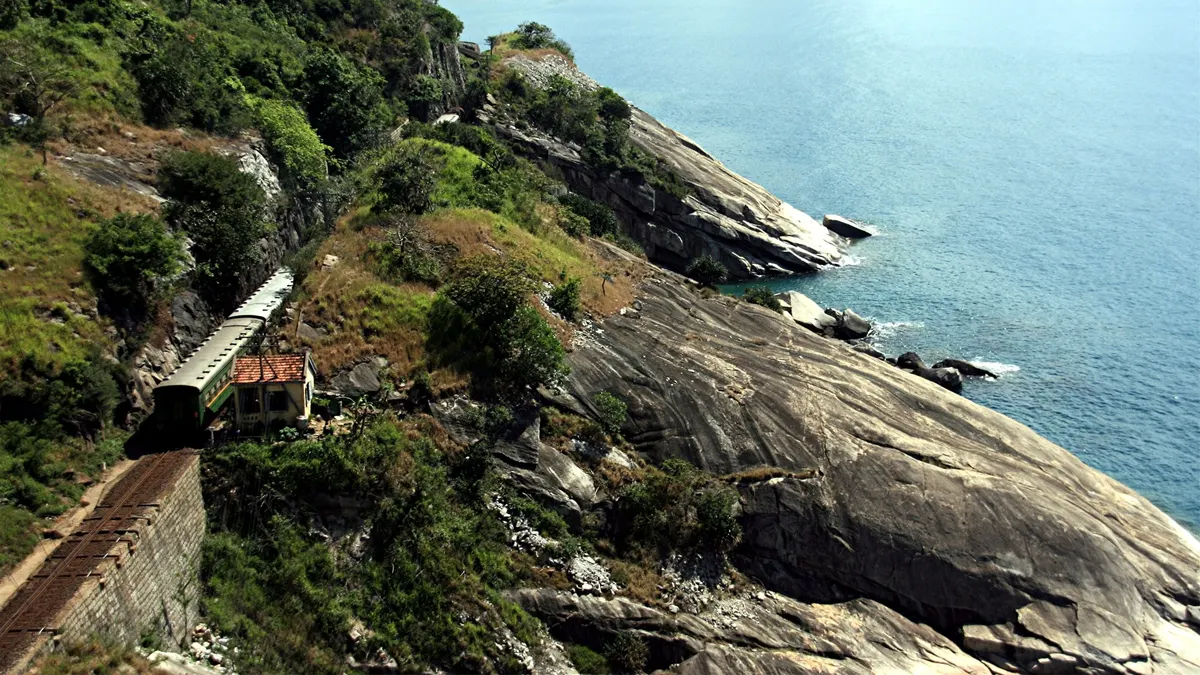
Ride the Reunification Express (tau Thong Nhat (tàu Thống Nhất)) in sections and fly the rest. As of November 2026 the railway runs five pairs of Hanoi–Saigon through trains a day on its timetable for 17 August to 30 December 2026 (Dan Viet), and the full 1,725 km journey takes more than 30 hours, so few visitors ride it end to end. The sections that earn their time are the night trains from Hanoi to Hue (Huế) or Da Nang (Đà Nẵng), the daytime hop from Hue to Da Nang over the Hai Van (Hải Vân) Pass, and the night train between Nha Trang and Saigon. Our guide to getting around Vietnam compares the train with flights, buses and cars for every kind of trip; this page is the detail for the railway itself.
It covers which sections to ride and which to fly, how long each one takes, which class to book, how to buy and change tickets on the official site, which night trains arrive at a sensible hour, how to see the Hai Van Pass from the window, and the mistakes travellers make most often. Times, fares and rules come from the railway, the national press and dated timetables, with their dates; the railway changes its timetable several times a year, so check again when you book. For more planning guides, see our Vietnam travel planning hub.
Which sections of the Reunification Express are worth doing by train?
Three, for most travellers: an overnight section that replaces a hotel night, the scenic coastal hop between Hue and Da Nang, and short daytime trips where the station is close to where you are going. VOV, quoting Travel + Leisure in July 2026, called the Hue–Da Nang leg the most scenic, about two and a half hours over the Hai Van Pass, and noted that tickets are sold per leg, so you can break the journey wherever you like (VOV).

| Section | Train or plane? | Train time (approx.) | Best way by rail | The catch |
|---|---|---|---|---|
| Hanoi → Ninh Binh | Train, or road | About 2¼ hours | Any morning SE train south | Day trip by road is just as easy |
| Hanoi → Dong Hoi (for Phong Nha) | Train | About 10–11 hours | Overnight: QB1 (summer 2026) or SE3/SE1 | Early-morning arrival |
| Hanoi → Hue | Night train or fly | About 12½–14 hours; flight about 1 hour | SE3 or SE1 in the evening | Long if you sleep badly |
| Hanoi → Da Nang | Night train or fly | About 15–16 hours | SE19 (soft sleepers only) or SE3/SE1 | Most of a day gone if you miss the night trains |
| Hue → Da Nang | Train | About 2½–3 hours | Any daytime SE train, or the heritage train | Short; book a seat, not a berth |
| Da Nang → Nha Trang | Fly, or a long day train | About 9½–10½ hours | SE21 from Da Nang in the morning | Hardly saves anything over flying |
| Nha Trang ↔ Saigon | Night train | About 8–9 hours | SNT2 / SNT1 | Northbound through trains reach Nha Trang at 3–4 am |
| Hanoi → Saigon end to end | Fly | About 33–36 hours; flight about 2 h 10 min | Only if the journey is the point | Two nights or a night and two days on board |
Train times are rounded from the 2026 timetables published by Seat61 and the railway press; flight times are Vietnam Airlines’ own figures for Hanoi–Hue and Hanoi–Ho Chi Minh City.
How to decide. If a section fits into one night, the train is a real alternative to a flight: you board after dinner, sleep and arrive in the morning without paying for a hotel. If it would take a whole day in daylight, as between Da Nang and Nha Trang, fly unless you want a day of watching the coast. Under three hours, as from Hanoi to Ninh Binh (Ninh Bình) or Hue to Da Nang, the train is simply a pleasant way to travel. Our two-week Vietnam itinerary shows how this works on one classic Hanoi-to-Saigon route, and our Ninh Binh guide covers what to do once you get off there.
How long does each section take, and which trains run?
In the timetable for departures from 17 August to 30 December 2026, the railway runs five pairs of Hanoi–Saigon through trains, SE1/2 to SE9/10, plus regional trains that cover parts of the line (Bao Van Hoa). Odd numbers run south, even numbers north. The same five pairs, SE1/SE2 to SE9/SE10, are confirmed in the railway’s announcement of the late-2026 timetable reported by Dan Viet on 5 July 2026. By 19 November 2026 we had not found a published timetable for the weeks between 31 December 2026 and the Tet timetable that starts on 23 January 2027, so check dsvn.vn for those dates.

| Train | Leaves Hanoi | Train | Leaves Saigon |
|---|---|---|---|
| SE7 | 06:00 | SE8 | 06:00 |
| SE5 | 08:00 | SE6 | 08:45 |
| SE9 | 13:00 | SE10 | 13:15 |
| SE3 | 19:20 | SE4 | 19:20 |
| SE1 | 21:45 | SE2 | 20:35 |
Regional trains on the same line (same source, unless stated):
- SE19 / SE20, Hanoi–Da Nang: SE19 leaves Hanoi at 19:45 and reaches Da Nang at 11:35; SE20 leaves Da Nang at 18:00 and reaches Hanoi at 11:10.
- SE21 / SE22, Da Nang–Saigon: SE21 leaves Da Nang at 07:55 and reaches Saigon at 04:35 the next morning; SE22 leaves Saigon at 10:15 and reaches Da Nang at 05:40.
- SNT1 / SNT2, Saigon–Nha Trang: SNT2 leaves Saigon at 21:45 and arrives at 05:40; SNT1 leaves Nha Trang at 20:20 and arrives at 05:00.
- SPT1 / SPT2, Saigon–Phan Thiet (Phan Thiết), for Mui Ne: about four hours each way; from 11 September to 30 December 2026 tickets were sold only for Fridays, Saturdays and Sundays.
- QB1 / QB2, Hanoi–Dong Hoi (Đồng Hới): in the summer 2026 timetable QB1 left Hanoi at 20:00 and arrived at 06:30, VnEconomy reported; it is not in the August–December list, so check whether it runs on your date. Dong Hoi is the station for the caves in our Phong Nha guide; if you only have a day there, see Paradise Cave vs Phong Nha Cave.
- HD1–HD4, Hue–Da Nang heritage trains: two pairs a day, covered below.
Section times. Arrival times at intermediate stations are not in the press reports, so the section times in the table above are rounded from the full 2026 timetable Seat61 published in June 2026. In it, SE3 reached Hue about 12 hours 40 minutes after leaving Hanoi and Da Nang about two and a half hours later; the fastest through train needed just under 33 hours to Saigon and the slowest about 35½. Vietnam Airlines’ travel guide gives 12 to 14 hours from Hanoi to Hue. VOV reported six trains a day in each direction in July 2026, the August list has five, a reminder that the count changes by season.
Soft sleeper, hard sleeper or seat: which class should you book?
For a night on the train, book a berth in a soft sleeper. VOV describes the four-berth air-conditioned compartments as having mattresses, pillows and lockable doors, and the six-berth hard-sleeper compartments as cheaper but “more cramped”. Seats are for daytime hops of a few hours.

| Class | Layout | Best for | Example fares, June 2026 (Seat61) |
|---|---|---|---|
| Soft sleeper | Four berths per compartment, two up and two down, lockable door | Any overnight section | Hanoi–Hue 1,139,000–1,218,000 dong; Hanoi–Saigon 1,667,000–1,758,000; Nha Trang–Saigon 813,000–869,000 |
| Hard sleeper | Six berths per compartment, three levels | Overnight on a budget; groups | Hanoi–Hue 832,000–1,070,000 dong (top berth cheapest) |
| Soft seat | Air-conditioned reclining seats | Daytime trips of a few hours | Hue–Da Nang 106,000 dong; Hanoi–Hue 569,000 |
What the fares mean. These are typical fares for SE1 to SE4 that Seat61 compiled from the railway’s booking site in June 2026 (Seat61); lower berths cost a little more than upper ones. Fares now move with demand: since 1 May 2026 the railway’s ticketing system has automatically cut fares by 15–35% on shorter sections that still have unsold seats, and summer 2026 fares were 5–10% above 2025, Viet Nam News reported. Treat the table as a guide to the gap between classes, not a price list.
Which berth. Lower berths are easier to get into and give you somewhere to sit by day; the top berth of a hard sleeper is the cheapest place on the train and the most cramped. Children under six travel free if they share an adult’s seat or berth, VnEconomy reported in 2026.
Private “luxury” carriages. Some trains carry extra sleeper carriages sold by private companies under their own brands, such as Lotus Train on SE19/SE20. Seat61 says these often use the same type of cars with different bedding and free snacks, at roughly double the price, and are “not really” worth the premium unless the railway’s own sleepers are sold out.
Food on board. A trolley sells snacks and drinks, and on long journeys staff sell simple set meals delivered to your compartment, according to Seat61. Each sleeper carriage has a hot-water dispenser, so bring instant noodles, fruit and water if you want a choice.
How do you book Reunification Express tickets on dsvn.vn, step by step?
Book on the railway’s official site, dsvn.vn, which has an English version and a mobile app. Tickets are also sold at stations, by authorised agents, through e-payment apps and by the railway’s phone lines, VnEconomy reported in April 2026.
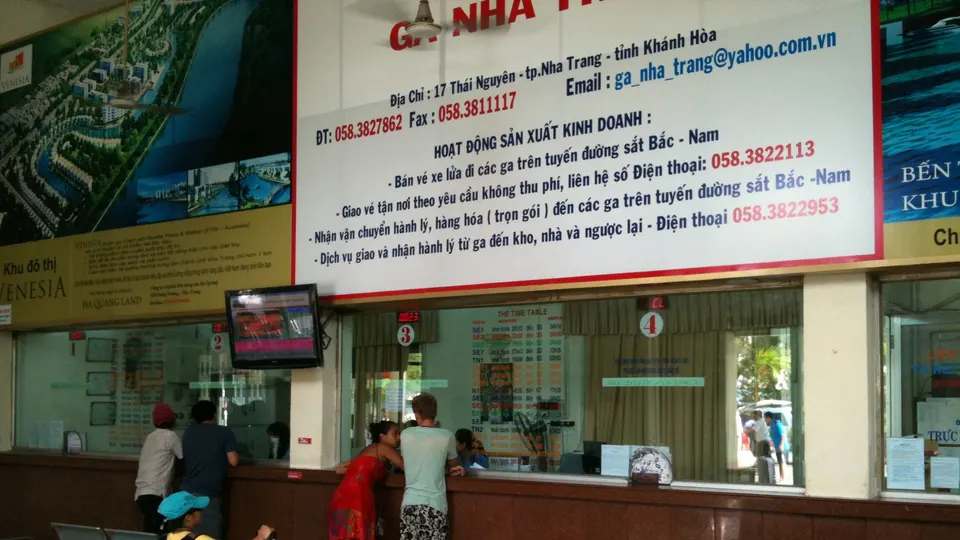
- Open dsvn.vn and switch to English with the flag at the top. Check the address: the official sales sites named by Bao Van Hoa are dsvn.vn, vetau.com.vn and giarevetau.com.vn.
- Search by station and date. Choose your departure and arrival stations (Hanoi, Hue, Da Nang, Nha Trang, Saigon and so on) and the date. One booking covers one train: for a stopover, search each section separately.
- Pick a train, then a carriage. The results list trains by number with times; each carriage is labelled by class (soft sleeper, hard sleeper, soft seat).
- Choose your exact berth or seat on the carriage plan and add it to your basket. On many dates a few discounted berths go first (see below).
- Enter passenger details. Each traveller needs a name and an ID number; for foreign visitors that is the passport number. Use the same passport when you travel.
- Pay and save the e-ticket. Pay online and keep the confirmation and e-ticket on your phone. Since 10 July 2026 the boarding pass no longer shows the fare, VnEconomy reported; the price is on your booking confirmation and e-invoice. Seat61 says the site should now accept overseas bank cards; if yours is refused, buy at a station (ticket offices take cash in dong) or through an authorised agent.
The VNeID app (new in November 2026). Since 9 November 2026 Vietnam Railways has also sold tickets inside VNeID, Vietnam’s national electronic ID app: you search, pick a carriage and seat, and pay by bank QR code, domestic ATM card or international card, with up to 10 tickets per transaction, VnBusiness reported on 10 November. It requires a VNeID account verified to level 2, so if you do not have one, dsvn.vn remains the simpler route.
Changing a ticket. Since 15 May 2026 individual tickets bought and paid for online can be exchanged on dsvn.vn under “Doi (Đổi), tra ve (trả vé)” (exchange or return tickets): you can change the date or departure time, but not the route or the passenger, at least 24 hours before departure, once per ticket, for 20,000 dong (Nhan Dan). Tickets bought at a counter are exchanged at a station, with ID that matches the ticket.
Returning a ticket. Outside holiday peaks, dsvn.vn lists a fee of 10% of the fare for an individual ticket returned 24 hours or more before departure and 20% between 4 and 24 hours before. Tickets paid online can be returned online or at a station. At Tet the fee can reach 30%, Bao Van Hoa reported for the 2027 holiday.
Discounts and surcharges. For departures from 17 August to 30 December 2026, individual buyers booking 10 or more days ahead got 5–15% off on the main long-distance trains, but only 20 discounted tickets per seat type on each train; the return leg of a round trip got 10% off; and tickets bought within two days of departure cost 3–5% more, Bao Van Hoa reported.
When sales open. Seat61 says long journeys usually open about 60 days ahead and short hops later. Tet is the exception: tickets for the 2027 holiday, for travel from 23 January to 25 February 2027, went on sale on 5 September 2026, with a limit of 10 tickets each way per customer, Bao Van Hoa reported. The railway is running 57 trains with more than 800 carriages over that period, with fares 4–8% above the previous Tet; Ho Chi Minh City–Hanoi berths cost roughly 2.5 to 4 million dong, VnBusiness reported on 10 November 2026. A week after sales opened, more than 25,000 Tet tickets had been sold, about 70% of them online, and the railway said many were still available (HTV, 13 September 2026). Our Tet 2027 travel guide explains what else closes and fills up around the holiday.
Which night trains work best, and when do they arrive?
The best night trains are the evening departures from Hanoi heading south and the dedicated Saigon–Nha Trang train. They leave after dinner and arrive between dawn and late morning, which is what makes a night on board worth it.
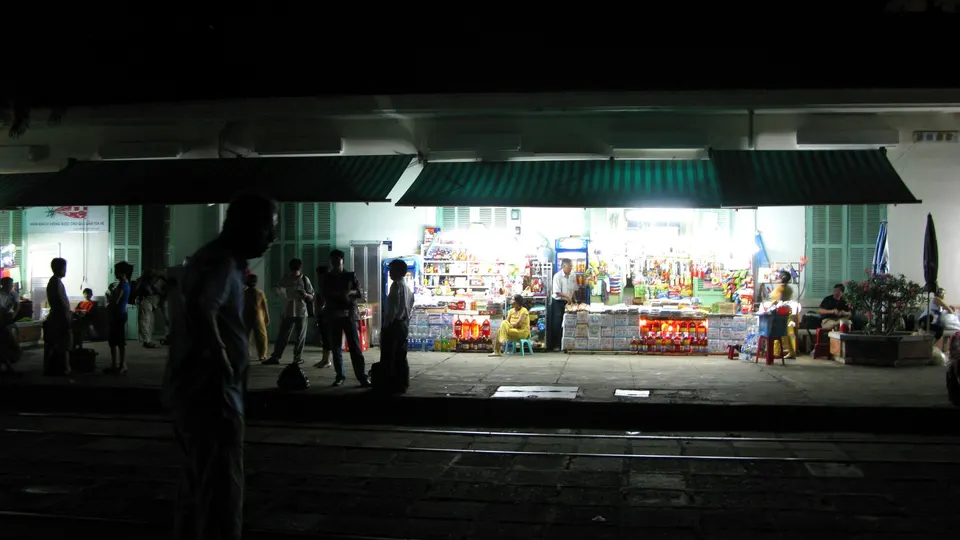
Hanoi to Hue or Da Nang. SE3 (19:20) and SE1 (21:45) are the classic choices. In Seat61’s 2026 timetable SE3 reached Hue at about 8 am and Da Nang at about 10:30 am, so you arrive with a full day ahead and cross the Hai Van Pass in daylight. SE19, which leaves Hanoi at 19:45, carries only soft sleepers and ends in Da Nang at 11:35 (VnEconomy). For Hue’s sights once you arrive, see our Hue guide.
Saigon to Nha Trang, and back. SNT2 leaves Saigon at 21:45 and reaches Nha Trang at 05:40; SNT1 leaves Nha Trang at 20:20 and arrives in Saigon at 05:00. Viet Nam News reported that the pair was relaunched with refurbished four- and six-berth sleepers, a dining carriage, free Wi-Fi and staff trained in basic English. Our Nha Trang guide covers the beach town at the other end.
The trap: northbound evening trains. The evening through trains from Saigon, SE4 and SE2, are fine to Da Nang and Hue, which they reached around midday and mid-afternoon in Seat61’s 2026 timetable, but they passed Nha Trang at about 3 to 4 am. If you are only going to Nha Trang, take SNT2 instead.
Hanoi to Lao Cai for Sa Pa is a different line with its own night trains; our guide to getting from Hanoi to Sa Pa compares them with the bus and limousine van.
How do you see the Hai Van Pass from the train?
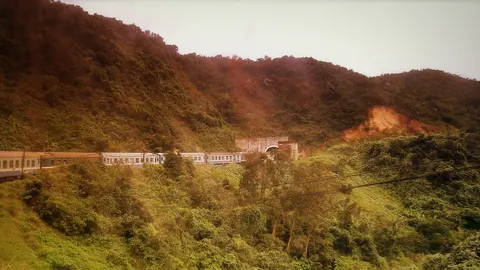
Ride the section between Hue and Da Nang in daylight and sit on the sea side. The railway hugs the cliffs on the seaward side of the pass, while road traffic goes over the top or through the tunnel; our Hai Van Pass guide compares the three.
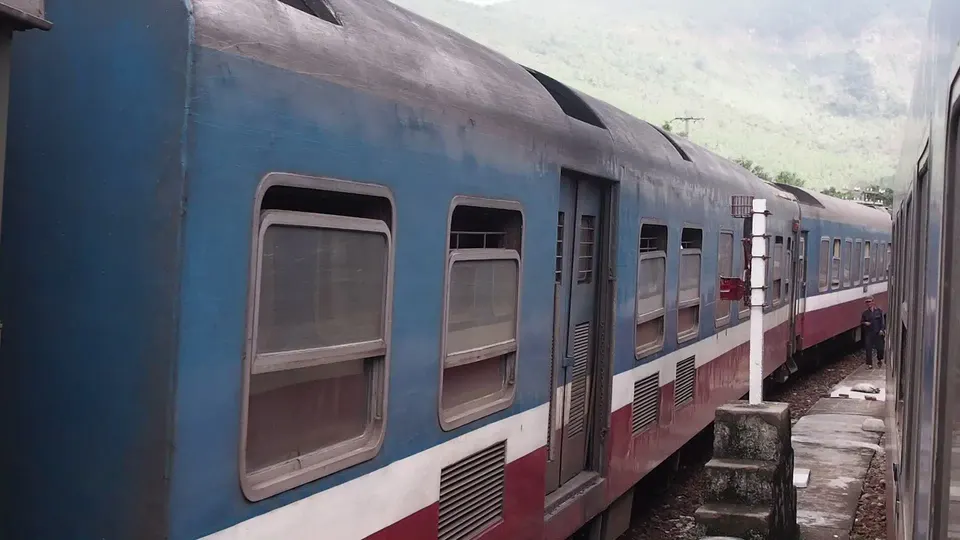
On a through train. Southbound, SE3 and SE1 cross the pass in the late morning after a night from Hanoi, so you get the scenery without a separate trip. Northbound, SE4 and SE2 crossed in the early afternoon in Seat61’s 2026 timetable. Heading south from Hue the sea is on the left of the train; heading north from Da Nang it is on the right.
On the heritage train. Vietnam Railways also runs two daily pairs of Hue–Da Nang tourist trains, HD1/2 and HD3/4, which stop for about 10 minutes at Lang Co (Lăng Cô) station so passengers can look at the bay, according to the national tourism authority (VNAT). Our guide to getting from Hue to Hoi An gives the November 2026 times and fares, explains how to split the trip at Lang Co, and lists the storm closures on this stretch.
Weather. Autumn storms can close the line on the central coast: in late October 2025 floods cut the line through Hue for three days, Viet Nam News reported. If you travel in those months, keep the day after a train journey flexible.
What are the most common mistakes?
Most train problems in Vietnam come from planning the railway like a hop-on, hop-off pass or booking through the wrong website. These are the ones to avoid.

- Riding end to end on a short trip. More than 30 hours on board takes two days out of a two-week holiday. Ride one or two sections and fly the rest.
- Expecting to hop on and off. Every section is a separate ticket for a named train and berth; there is no rail pass.
- Buying from a look-alike site or a stranger. Scammers change a few characters in a site or Facebook name to look official, and Bao Van Hoa advises against deals arranged by phone, Zalo or Facebook with people you do not know; buy only from the official sites, stations or authorised agents (Bao Van Hoa). Seat61 notes that several English-language sites with “Vietnam railway” in their name are travel agencies, not the railway.
- Booking a seat for a night journey. A soft seat is fine to Ninh Binh or between Hue and Da Nang; overnight, pay for a berth.
- Taking a northbound through train to Nha Trang. It arrives at about 3 to 4 am; SNT2 arrives at 05:40.
- Leaving Tet bookings late. Tet tickets go on sale months ahead and sell fast; the 2027 sale opened on 5 September 2026.
- Mismatched ID. Book with the passport you will carry: counter-bought tickets can only be changed or returned with ID that matches the name on the ticket.
- No slack in the storm season. A flooded line can stop trains for days, as it did through Hue in October 2025.
A sample rail plan, and a checklist before you book
Here are three ways to build the train into a north-to-south trip. Each uses the train where it beats a flight and leaves the long sections to the plane.
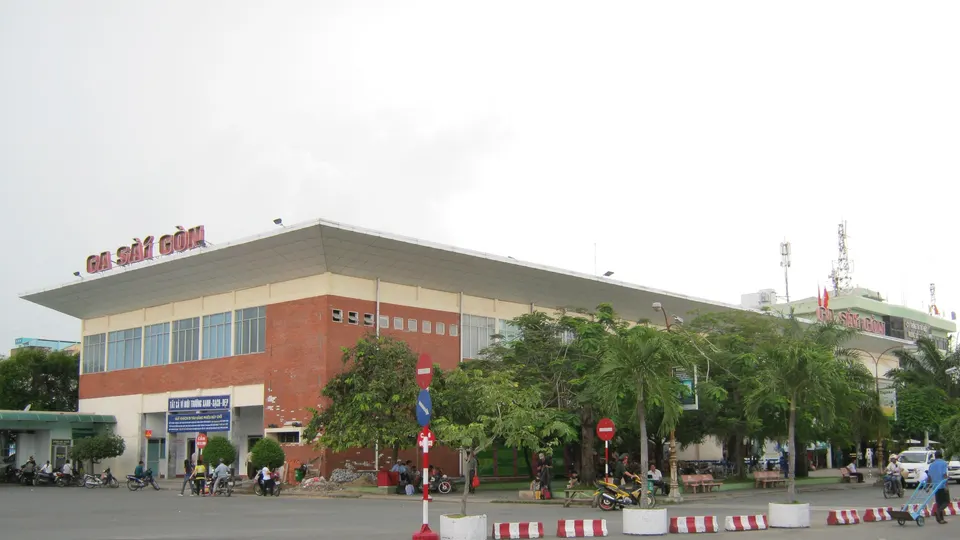
One night on board (the most popular). Fly or arrive in Hanoi; take SE3 or SE1 to Hue in the evening; spend two days in Hue; take a morning train or the heritage train to Da Nang over the Hai Van Pass; continue to Hoi An by road; fly from Da Nang to Saigon.
Two nights on board. As above, then fly from Da Nang to Nha Trang or go by day on SE21 if you want the coast; after the beach, take SNT1 overnight from Nha Trang to Saigon.
The full line, for rail fans. Break it at least twice, for example Hanoi–Hue overnight, Hue–Da Nang by day, and Da Nang–Saigon on a through train or SE21, so that you see the coast by daylight instead of sleeping past it.
Before you book
- Decide which sections to ride using the table at the top of this page, and fly the rest.
- Check the timetable for your date on dsvn.vn: departure times change by season, and the arrival times quoted here come from 2026 timetables.
- Book a soft sleeper for any night, a soft seat for short day trips, and a lower berth if you want to sit up in the morning.
- Buy on dsvn.vn, at a station or from an authorised agent, at least 10 days ahead for the discount and much earlier for Tet.
- Use your passport details for every passenger and keep the e-ticket on your phone.
- Plan the arrival: early-morning trains reach Hue, Da Nang and Nha Trang around dawn or later; book a hotel that lets you drop bags or check in early.
- Keep a flexible day on the central coast in the autumn storm season.
Frequently asked questions
How long does the Reunification Express take from Hanoi to Saigon?
More than 30 hours: about 33 to 36 hours depending on the train in the 2026 timetables, against about 2 hours 10 minutes for a non-stop flight. That is why most travellers ride one or two sections and fly the rest.
Are Tet 2027 train tickets still available?
Probably, outside the busiest days. Vietnam Railways put about 300,000 Tet tickets on 57 trains on sale from 5 September 2026, and a week later more than 25,000 had been sold with plenty left, HTV reported; check dsvn.vn for your exact train and date.
Can you hop on and off the Reunification Express with one ticket?
No. Tickets are sold per leg, for one train, one date and one seat or berth, so a stopover in Hue or Da Nang means buying a separate ticket for each section.
Can foreigners book train tickets on dsvn.vn?
Yes. The official site has an English version and a mobile app, and you enter your passport details as the passenger's ID. If your card is refused, buy at a station ticket office or through an authorised agent instead.
Which side of the train has the sea view over the Hai Van Pass?
Heading south from Hue towards Da Nang the sea is on the left of the train; heading north from Da Nang it is on the right. The scenic stretch lasts only part of the roughly two-and-a-half-hour Hue–Da Nang ride.
Key sources
- Vietnam's North-South railway named one of the world's most scenic routes · VOV, 7 July 2026
- Mở bán vé tàu giai đoạn sau Hè với nhiều ưu đãi hấp dẫn (timetable and discounts, 17 Aug–30 Dec 2026) · Báo Văn hóa, 4 July 2026
- Ngành đường sắt mở bán vé tàu khách, tăng chuyến chuẩn bị cho cao điểm hè 2026 · VnEconomy, 11 April 2026
- Ngành đường sắt triển khai đổi vé trực tuyến, không cần ra ga · Nhân Dân, 14 May 2026
- Vietnam Railway, an incredible train journey around the world · Vietnam National Authority of Tourism (vietnam.travel)
- Vé tàu Tết 2026 – Mua sớm có lợi, mua nhầm có thể mất tiền · Báo Văn hóa, 24 December 2025
- Train travel in Vietnam (timetables, fares, how to buy tickets) · The Man in Seat 61 (seat61.com), updated 10 June 2026
- Đường sắt mở bán vé tàu giai đoạn cuối năm, hành khách cần lưu ý quy định giá vé mới · Dân Việt (Thế giới Tiếp thị), 5 July 2026
All 19 sources and further reading
- Vé tàu trực tuyến (official ticket sales, exchange and return rules) · Vietnam Railways (dsvn.vn), checked 9 November 2026
- Rail fares rise 5-10% for summer peak as sector adopts AI pricing · Việt Nam News, 11 May 2026
- Từ 10/7/2026, "Thẻ lên tàu hỏa" sẽ không còn hiển thị giá vé · VnEconomy, 2026
- Mở bán 300.000 vé tàu Tết Đinh Mùi 2027, giảm giá đến 20% · Báo Văn hóa, 6 September 2026
- High-quality train service launched to boost Sài Gòn-Nha Trang rail tourism · Việt Nam News
- North-South Railway reopens through Huế after days of flood disruption · Việt Nam News, 31 October 2025
- Flights from Hanoi to Ho Chi Minh City · Vietnam Airlines
- Hanoi to Hue: pros and cons of traveling by flight, train, sleeper bus · Vietnam Airlines travel guide
- Vietnam's railway crowned world's best train journey for 2025 · Hanoi Times
- Hành khách có thể mua vé tàu trên VNeID · VnBusiness, 10 November 2026
- Vé tàu Tết Đinh Mùi 2027 được hành khách chủ động đặt sớm · HTV, 13 September 2026
Keep exploring
 North · Central · South · Travel Getting Around Vietnam in 2026: Plane, Train, Bus or Grab How to get around Vietnam in 2026: plane vs train vs sleeper bus by route, Grab vs Green SM (Xanh SM), Long Thanh airport and motorbike licence rules.
 Central Vietnam · Travel Hue to Hoi An: Hai Van Pass Tour, Private Car or Train Hue to Hoi An in November 2026: heritage train times and fares, private car over the Hai Van Pass or through the tunnel, buses, motorbikes and storm closures.
 Central Vietnam · Travel Hai Van Pass (Hải Vân): Road, Tunnel or Train, Hue–Da Nang How to cross the Hai Van Pass between Hue and Da Nang by motorbike, car, tunnel or train, why the ridge divides Vietnam, and what to know about Hai Van Quan.
 North · Central · South · Travel 2-Week Vietnam Itinerary: Route, Flights or Night Train 14 days in Vietnam from Hanoi to the Mekong: day-by-day route, which legs to fly or take by train, train times and fares as of November 2026, and what to drop.