Central Vietnam · Travel
Hue to Hoi An: Hai Van Pass Tour, Private Car or Train
Hue to Hoi An in November 2026: heritage train times and fares, private car over the Hai Van Pass or through the tunnel, buses, motorbikes and storm closures.

Getting from Hue to Hoi An takes about three hours by car, and there is no through train: rail travellers ride the coastal line to Da Nang and finish by road. The Hue–Da Nang heritage train left Hue at 7:45 am and 2:25 pm with fares from 150,000 VND, Tuoi Tre News reported in September 2026, while a driver who takes the Hai Van Pass can stop at the summit gate, which has charged 70,000 VND a person since 2 June 2026, Tuoi Tre reported.
The best way from Hue (Huế) to Hoi An (Hội An) for most travellers is a private car over the Hai Van (Hải Vân) Pass, stopping by the bay at the foot of the pass, at the gate on the summit and at the Marble Mountains, which turns a transfer into a sightseeing day and ends at your hotel door. If you would rather not spend the day on the road, take the heritage train from Hue to Da Nang (Đà Nẵng), about three hours along the coast, and a car for the last stretch; Hoi An has no railway station. For the pass itself, its history and the restored gate, see our pillar guide to crossing the Hai Van Pass; this page is about planning the whole journey door to door.
The two ends are in different cities now. Hue has been a centrally governed city since 1 January 2025, and on 1 July 2025 the former Quang Nam (Quảng Nam) province merged into Da Nang city, so Hoi An is part of Da Nang (Tap chi Cong Thuong). On the road nothing changed: you still leave Hue, cross the ridge into Da Nang and drive south to the old town. If the transfer is part of a short trip, our five-day plan for Hue, Hoi An and Da Nang shows which day to put it on.
Hue to Hoi An options at a glance
Times and prices below come only from dated sources; operators change them, so treat them as a guide and confirm when you book. Prices quoted by a blog or booking platform are marked as such.
| Option | What it involves | Time (dated source) | Price (dated source) | See the pass? | Best for |
|---|---|---|---|---|---|
| Heritage train to Da Nang, then car | Tourist train Hue–Lang Co (Lăng Cô)–Da Nang; road transfer to Hoi An | About 3 h on the train; Hue 7:45 am → Da Nang 10:35 am, or 2:25 pm → 5:40 pm (VNR booking page, 8 Nov 2026) | From 150,000 VND (Tuoi Tre News, Sep 2026); about 220,000 VND a seat (Bao Xay Dung, May 2026); plus the car | From the window, on the coastal railway | Non-drivers who want the coast |
| Regular North–South train, then car | Any SE train stopping at Hue and Da Nang | Check the timetable for your date on dsvn.vn | Varies by class | From the window | Flexible times, travellers already on the main line |
| Private car over the pass, with stops | Driver takes the old pass road; stops where you ask | 3 h 30 via the pass; 6 h 30 with Marble Mountains and other stops (Good Morning Hoi An, a blog, Apr 2026) | 1,550,000 VND (4 seats) via the pass; 1,750,000 VND with extra stops (same source) | Yes, with stops at the summit and Lang Co | Most travellers, families, photographers |
| Private car through the tunnel or on the expressway | Fastest road routes; no stops on the pass | About 3 h direct (Good Morning Hoi An, Apr 2026) | 1,450,000 VND (4 seats) direct (same source) | No | Rain, fog, late departures |
| Tourist bus or limousine van | Shared vehicle on a fixed schedule; normally via the tunnel | Buses 2 h 30–5 h, minivans 3–4 h (Gecko Routes, a booking site, May 2026) | Buses from 174,000 VND, minivans from 280,000 VND (Gecko Routes, May 2026) | No | Tight budgets |
| Motorbike, self-ride or Easy Rider tour | You ride, or sit behind a local rider; must take the pass road | A full day with stops | Easy Rider about €60 (Good Morning Hoi An, Apr 2026) | Yes | Confident riders, dry season |
How to choose. If the pass is the point, book a car or an Easy Rider tour that names the pass road and its stops in writing. If you mainly want to arrive rested, take the morning heritage train and a car from Da Nang. If the forecast is bad, any option through the tunnel is the safer choice. Flying makes no sense on a route this short.
How does the train via Da Nang work?
The railway is the only way to see the cliffs above the sea without driving. The French-built North–South line hugs the seaward side of the Hai Van Pass, and since March 2024 Vietnam Railways (VNR) has run a dedicated tourist train between Hue and Da Nang, “Kết nối di sản miền Trung” (“Connecting the heritage of Central Vietnam”), with two trains a day each way.

Times. Tuoi Tre News reported in September 2026 that trains HD1 and HD3 leave Hue at 7:45 am and 2:25 pm, and HD2 and HD4 leave Da Nang at 7:50 am and 3:00 pm, taking about three hours. On 8 November 2026 the booking panel on VNR’s train site showed the same departures, with arrivals in Da Nang at 10:35 am and 5:40 pm and a stop at Lang Co on the way (Vietnam Railways). The same page also carries an older table with different times (7:05 am and 2:30 pm from Hue), so trust the times shown when you select your date, not a screenshot or a blog.
VnEconomy reported the same timetable in March 2026: HD1 from Hue at 7:45 am, arriving in Da Nang at 10:35 am, and HD3 at 2:25 pm, arriving at 5:40 pm; in the other direction HD2 reaches Hue at 11:05 am and HD4 at 5:45 pm. When we re-opened VNR’s train site on 17 November 2026, its fixed timetable still showed the older times, so check the booking panel for your date.
Fares. Tuoi Tre News gave fares from 150,000 VND in September 2026. Bao Xay Dung (Báo Xây dựng) put a seat at about 220,000 VND one way in May 2026, when VNR offered summer group discounts; it also reported that the train stops at Lang Co so passengers can take photos. You can book Hue–Lang Co and Lang Co–Da Nang as separate legs on VNR’s site.
For the full Hue–Da Nang run, VnEconomy put the fare at 207,000 VND on weekday trains and 231,000 VND at weekends in March 2026, when VNR marked the train’s second anniversary with short-lived discounts. Fares move with promotions, so the price at booking is the one that counts.
Regular trains. The North–South SE trains also stop at Hue and Da Nang and run the same coastal line. Look them up on Vietnam Railways’ main ticket site, dsvn.vn, for your date; our Reunification Express train guide explains the classes and how to book.
The last leg. There is no station in Hoi An, so add a road transfer from Da Nang by taxi, ride-hailing app or pre-booked car. For scale, the national tourism authority puts Hoi An’s old town 29 km from Da Nang airport, which is about 5 km from the city centre.
Which side to sit. Heading south from Hue, the sea is to the east, on the left-hand side of the train; heading north from Da Nang, it is on the right.
A discount in Hue. Since early November 2026 a heritage-train ticket, Hue–Da Nang or Hue–Phong Nha, gives 50% off entry to one of five Hue monument sites, including the Imperial City (Dai Noi) and the Museum of Royal Antiquities, for seven days from the travel date on the ticket, VietnamPlus reported on 4 November 2026. One ticket covers one visit, foreign visitors qualify, and it does not combine with other reductions; it is most useful if you ride the train into Hue, for example from Da Nang, and see the monuments afterwards.
Will there be a steam train? Perhaps, but not yet. In September 2026 Hue city and VNR agreed to study a steam-hauled tourist train on the Hue–Da Nang line, with a possible stop on the pass for sightseeing and photos, Bao Da Nang (Báo Đà Nẵng) reported. Two restored French-designed Mikado steam locomotives made a technical test run over the pass on 4 October 2026, and VNR said commercial service depends on an expert council’s conclusion, Tuoi Tre reported. We found no ticket sales or timetable when we checked again on 17 November 2026.
Private car: over the pass, through the tunnel or on the expressway?
A car with a driver is the most flexible option, and the one where the route matters most. Between Hue and Da Nang a driver can take three roads, and unless you ask, many will take the quickest.
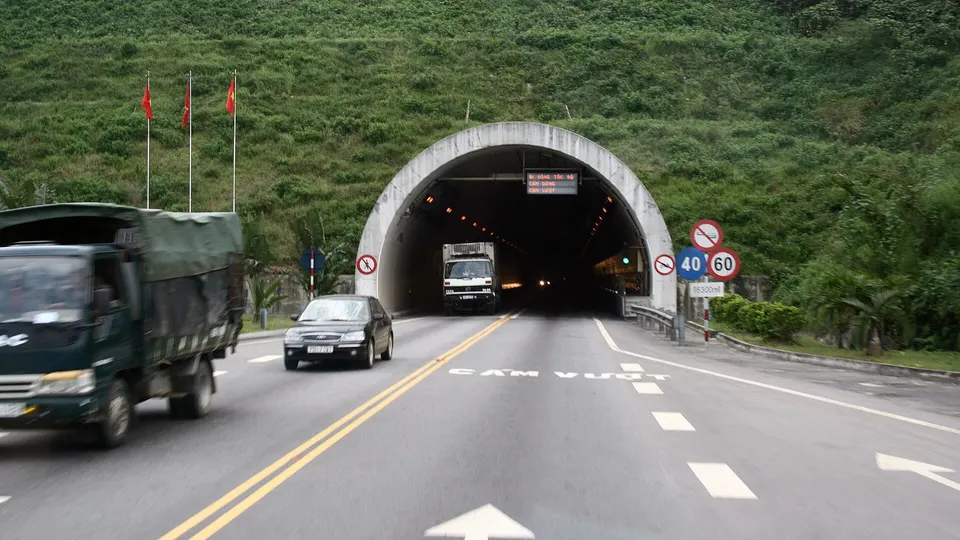
- The pass road. The old Highway 1 over the summit is free, Tuoi Tre noted when the expressway opened in 2022, and it is the only road with views and stops. Da Nang’s tourism portal puts the summit about 30 minutes’ drive from Da Nang. This is the route to ask for on a dry day.
- The Hai Van road tunnel. It runs under the pass on Highway 1, carries a toll and saves the climb, but you see nothing. It is the sensible choice in rain or fog.
- The La Son–Hoa Lien expressway. This inland road, opened in 2022 and now called the La Son (La Sơn)–Hoa Lien (Hòa Liên) expressway, runs about 65 km through forested hills towards Da Nang. In early November 2026 its widening from two to four lanes was nearly finished, but the speed limit stayed at 60 km/h and buses with more than nine seats were banned while works continue to the end of 2026 (CafeF).
What it costs. Good Morning Hoi An, a travel blog, listed in April 2026 a four-seat car at 1,450,000 VND direct, 1,550,000 VND via the pass and 1,750,000 VND with stops including the Marble Mountains, with seven-seat cars about 100,000 VND more; it says prices vary by stops and provider. We found no official or press price list for this transfer.
How to book it well. Ask for the pass road by name, list the stops you want and roughly how long at each, and agree whether tolls, waiting time and any entry tickets are included. Leave Hue after breakfast so the climb happens in daylight. If you have a morning left in Hue first, our Hue guide helps you choose what to see before you go.
Tourist bus or limousine van: the cheapest way
Shared buses and limousine vans are the budget option, and they get you there without fuss, but they are a transfer, not a tour. They follow a fixed schedule, normally go through the tunnel and do not stop on the pass.
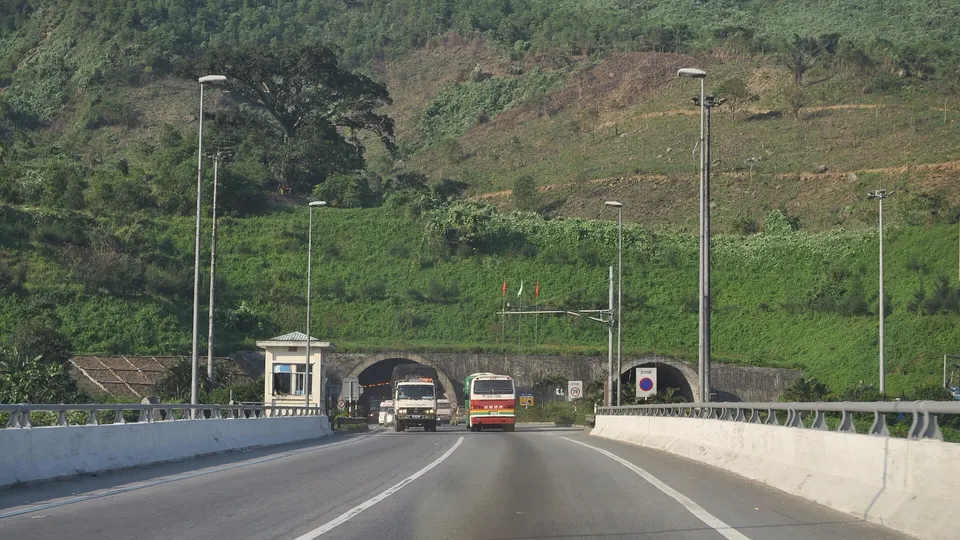
What the listings say. In May 2026 the booking platform Gecko Routes listed buses from 174,000 VND with journey times of 2 h 30 to 5 h, and minivans from 280,000 VND taking 3–4 hours, some with hotel pick-up; it notes that both use the Hai Van tunnel. Good Morning Hoi An listed a tourist bus at 199,000 VND and a limousine van from 320,000 VND, about 3 h 15, in April 2026. The wide time range reflects stops, pick-ups and traffic.
Before you book. Check where the bus drops you (some stop outside Hoi An’s centre), whether hotel pick-up is included, and how much luggage is allowed. Our guide to getting around Vietnam explains the difference between sleeper buses and limousine vans, and why the smaller vans suit routes of a few hours like this one.
Riding it yourself or on an Easy Rider tour
The pass road is one of Vietnam’s best-known rides, and on a motorbike you have no choice about the route: motorbikes are not allowed in the Hai Van tunnel. Da Nang’s tourism portal says riders use the pass road, or a transport service that carries bikes through the tunnel when needed (Danang Fantasticity). VnExpress gives the same rule: the tunnel is for cars only, so riders take the pass or put the bike on the transport vehicle.
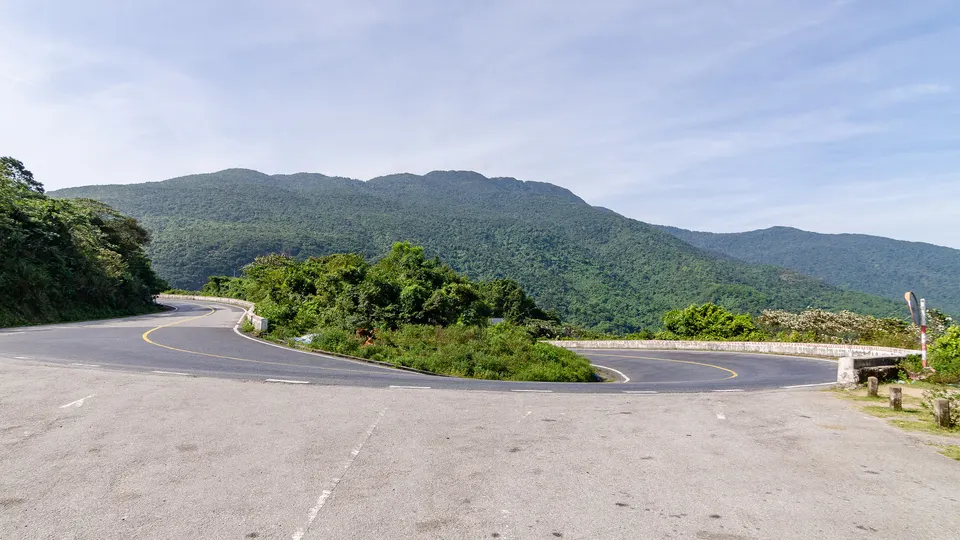
Easy Rider or self-ride. On an Easy Rider-style tour a local rider drives and you sit behind; Good Morning Hoi An put the Hue–Hoi An route at about €60 in April 2026. Self-ride only if you hold a licence valid for the bike in Vietnam and are confident on steep, wet bends; the licence rules are in our getting-around guide. Either way, agree in advance how your luggage travels, because a backpack on a long ride is tiring and a suitcase will not fit. The trade-offs are the same as on the northern loops, set out in our comparison of Easy Rider, self-ride and car tours in Ha Giang.
On the road. Da Nang’s tourism portal advises against riding at night or in dense fog and puts the climb from the Da Nang side at about 45–60 minutes by motorbike, depending on speed and stops. Wear a helmet, and do not stop on blind bends for photos.
A pass day step by step: Hue to Hoi An with stops
This is the classic private-car or Easy Rider day, built from distances and prices in dated sources. Hue to Lang Co is a little over 60 km and Lang Co to Da Nang about 25 km, VnExpress noted in its Lang Co guide.

- Leave Hue after breakfast. Head south along the coast. Check the forecast for both Hue and Da Nang first: the ridge is a weather divide, and the summit can be in cloud when both cities are clear.
- Lang Co. Stop at the bay and the Lap An (Lập An) lagoon at the foot of the pass. Lang Co is in Hue city; the pillar guide covers its seafood.
- Climb to the summit and Hai Van Quan (Hải Vân Quan). The restored gate has charged an entry fee since 2 June 2026: 70,000 VND per person per visit, the same for Vietnamese and foreign visitors, set until the end of 2028 (Tuoi Tre). Children under 13 enter free, Bao Van Hoa (Báo Văn Hóa) reported. Park only where it is allowed.
- Descend into Da Nang. From the summit it is roughly half an hour by car into the city.
- The Marble Mountains (Ngu Hanh Son (Ngũ Hành Sơn)). About 8 km south-east of Da Nang’s centre and about 30 minutes by car from Hoi An, they make a natural last stop. In August 2025 Da Nang’s tourism portal listed 40,000 VND for adults on the main peak, Thuy Son (Thủy Sơn), free under 6, and a lift at 15,000 VND one way; our Marble Mountains guide gives the order of stops and how long to allow, and our Da Nang guide covers the rest of the city.
- Arrive in Hoi An. Check in, rest, and walk the old town at dusk; our Hoi An guide explains how to read it.
The train version of a pass day. The heritage train lets you split the journey at Lang Co: take the morning train from Hue to Lang Co (7:45–9:02 am on VNR’s booking page in November 2026), spend the day by the bay, and catch the afternoon train on to Da Nang (4:22–5:40 pm). You see the pass from the window rather than the summit, and still need a car from Da Nang to Hoi An.
When storms close the pass, the tunnel or the railway
The weather is the one thing that can upset any plan here. Da Nang’s tourism portal gives roughly March to August as the clearest months for the pass and warns that September to December brings slippery roads and dense fog; VnExpress names October and November as the wettest months around Lang Co.

Each route has been closed in recent years, and each closure shows what to switch to:
| When | What happened | What travellers did | Reported by |
|---|---|---|---|
| 13 October 2023 | Slopes collapsed about 1 km from the summit; the pass road was closed from both sides | Cars went through the Hai Van tunnels or on the La Son expressway; motorbikes used the tunnel transfer station | VnExpress |
| 27 October 2024 | During storm Trami a truck overturned in strong wind; the Hai Van tunnel was closed for about three hours | Traffic waited; both directions reopened by 10:15 am | Sai Gon Giai Phong |
| 27–29 October 2025 | Floods covered tracks in Hue and Da Nang; SE trains stopped on 27 October and all heritage trains were cancelled on 28–29 October | Tickets could be returned at stations without a fee, within 30 days | Bao Lao Cai |
| 14 March 2026 | Rain brought rocks down near the top of the pass, breaking a rail; a freight train derailed and the North–South line stopped | Railway passengers were taken by road between Da Nang and Lang Co stations | Tuoi Tre |
The March 2026 rockfall came outside the usual storm season, on the Da Nang side of the pass, and the railway bused passengers between Da Nang and Lang Co while it repaired the track (Tuoi Tre). In practice, from September to December, book transfers you can change, keep a spare half-day, and decide on the morning itself between the pass, the tunnel and the train. Our Vietnam weather by month guide shows how the Centre’s rainy season differs from the North and South.
Common mistakes, and what to check before you go
Most disappointments on this route come from booking the wrong product rather than from the road itself. These are the mistakes the sources above point to, and what to check instead.

- Booking a “Hai Van Pass transfer” that uses the tunnel. Buses and many direct cars go underneath. Get the pass road and the stops written into the booking.
- Expecting a train to Hoi An. The railway ends your journey in Da Nang; arrange the last leg before you arrive, especially on the afternoon train, which reaches Da Nang at 5:40 pm.
- Trusting one timetable. VNR’s own site showed two different sets of times in November 2026. Use the times shown for your chosen date at booking.
- Riding into the tunnel. Motorbikes are not allowed; plan the pass road or the bike transport service.
- Going over the top in fog or heavy rain. Take the tunnel and save the pass for a clear day.
- Forgetting the gate fee. Hai Van Quan has charged 70,000 VND per adult since June 2026, so ask whether your tour includes it.
Your checklist. Choose the option in the table above that fits your day; book the heritage train on VNR’s site or a car that names its route; check both cities’ forecasts the evening before; carry some cash for entry tickets; and arrive in Hoi An with time to eat, using our guide to where to eat in Hoi An. For the rest of the region, start at our Central Vietnam hub.
Frequently asked questions
How long does it take to get from Hue to Hoi An?
About three hours on the heritage train to Da Nang plus a road transfer to Hoi An; a direct car through the tunnel is the quickest door-to-door option. With stops on the Hai Van Pass, Lang Co and the Marble Mountains, plan most of a day.
How much is the heritage train from Hue to Da Nang?
Tuoi Tre News gave fares from 150,000 VND in September 2026, and VnEconomy reported 207,000 VND on weekdays and 231,000 VND at weekends for the full Hue–Da Nang run in March 2026. Book on Vietnam Railways' heritage-train site and add a car or taxi from Da Nang to Hoi An.
How much does it cost to visit Hai Van Quan on the Hai Van Pass?
Hai Van Quan, the restored gate on the summit of the Hai Van Pass, has charged 70,000 VND per person per visit since 2 June 2026, the same for Vietnamese and foreign visitors, with the rate set until the end of 2028. Ask whether a private car or Easy Rider tour from Hue to Hoi An includes it.
Is the steam train between Hue and Da Nang running yet?
No. Two restored Mikado steam locomotives made a technical test run over the Hai Van Pass on 4 October 2026, and Vietnam Railways said commercial service depends on an expert council's conclusion; we found no tickets or timetable by 17 November 2026.
Do heritage train tickets get a discount at the Hue monuments?
Yes. Since November 2026 a Hue–Da Nang or Hue–Phong Nha heritage-train ticket gives 50% off one visit to one of five Hue sites, including the Imperial City, within seven days of the travel date, VietnamPlus reported.
Key sources
- Huế giảm 50% vé tham quan di tích cho khách đi tàu hỏa di sản · VietnamPlus, 4 November 2026
- Tàu du lịch Huế - Đà Nẵng 'Kết nối di sản miền Trung' (timetable and booking) · Vietnam Railways (VNR), checked 8 November 2026
- Steam train linking Hue, Da Nang expected to launch in October · Tuổi Trẻ News, 17 September 2026
- Bắt đầu thu phí tham quan Hải Vân Quan từ ngày 2-6 · Tuổi Trẻ, 30 May 2026
- Cận cảnh cao tốc 4 làn xe uốn lượn giữa núi rừng TP Huế · CafeF, 3 November 2026
- Đèo Hải Vân – thiên hạ đệ nhất hùng quan · Danang Fantasticity (Đà Nẵng Department of Tourism), August 2025
- Tàu hàng trật bánh trên đèo Hải Vân, đường sắt Bắc - Nam tê liệt · Tuổi Trẻ, 14 March 2026
- Công bố thành lập thành phố Đà Nẵng mới · Tạp chí Công Thương, 30 June 2025
All 24 sources and further reading
- Tuyến tàu du lịch Huế – Đà Nẵng giảm giá vé, tăng ưu đãi dịp lễ 30/4 · VnEconomy, 12 March 2026
- Huế giảm 50% vé tham quan di tích cho khách đi tàu hỏa di sản · Thị trường Tài chính Tiền tệ, 3 November 2026
- Giảm sâu giá vé tàu 'Hành trình kết nối di sản miền Trung' dịp hè 2026 · Báo Xây dựng, 12 May 2026
- Tàu lửa hơi nước lại nhả khói trên đèo Hải Vân, chạy thử tuyến Huế - Đà Nẵng · Tuổi Trẻ, 4 October 2026
- Nghiên cứu khai thác tàu hơi nước tuyến Huế - Đà Nẵng · Báo Đà Nẵng, 18 September 2026
- Thu phí tham quan di tích quốc gia Hải Vân Quan với mức 70.000 đồng · Báo Văn Hóa, 22 May 2026
- Từ 16-4, đi lại giữa Huế - Đà Nẵng có thể chọn tuyến đường La Sơn - Túy Loan · Tuổi Trẻ, 16 April 2022
- Danh thắng Ngũ Hành Sơn · Danang Fantasticity (Đà Nẵng Department of Tourism), August 2025
- Cẩm nang du lịch Lăng Cô · VnExpress, 21 July 2023
- Sạt lở đèo Hải Vân · VnExpress, 13 October 2023
- Tạm đóng cửa hầm Hải Vân 3 tiếng do gió lớn, một xe tải lật trên đường · Sài Gòn Giải Phóng, 27 October 2024
- Ngừng chạy tàu di sản miền Trung trong ngày 28 - 29/10 · Báo Lào Cai, 27 October 2025
- A traveller's guide to Vietnam's airports · Vietnam National Authority of Tourism (vietnam.travel)
- Huế trở thành Thành phố trực thuộc Trung ương · Báo Văn Hóa, 30 November 2024
- Hue to Hoi An (bus, minivan, train and private transfer listings) · Gecko Routes (booking platform), updated 12 May 2026
- From Hue to Hoi An: How I Would Choose Based on Your Budget · Good Morning Hoi An (travel blog), 20 April 2026
Keep exploring
 Central Vietnam · Travel Hai Van Pass (Hải Vân): Road, Tunnel or Train, Hue–Da Nang How to cross the Hai Van Pass between Hue and Da Nang by motorbike, car, tunnel or train, why the ridge divides Vietnam, and what to know about Hai Van Quan.
 Central Vietnam · Travel Hue, Hoi An and Da Nang in 5 Days: Route, Train, Tickets Five days in Hue, Hoi An and Da Nang: which way round, where to sleep, heritage train times, Hue's 600,000 VND 5-day ticket and the November flood risk.
 Central Vietnam · Travel Hoi An (Hội An): How Many Days, What to See, When to Go How many days Hoi An needs, what the 80,000 or 120,000 dong ticket covers, lantern nights, where to eat, beaches, flood months and getting there from Da Nang.
 Central Vietnam · Travel Hue (Huế): How Many Days, What to See, 2026 Tickets How many days Hue needs, which Citadel sights and royal tombs to pick, 2026 ticket prices, the flood months to avoid and where to eat in the old royal capital.