Central Vietnam · Travel
Hue, Hoi An and Da Nang in 5 Days: Route, Train, Tickets
Five days in Hue, Hoi An and Da Nang: which way round, where to sleep, heritage train times, Hue's 600,000 VND 5-day ticket and the November flood risk.

Five days is enough for Hue (Huế), Hoi An (Hội An) and Da Nang (Đà Nẵng) if you sleep in two places, not three: two nights in Hue, then two in Hoi An or Da Nang, flying in and out of Da Nang. As of November 2026, Hue’s all-sites heritage ticket costs 600,000 VND per adult and stays valid for five days under the 2026 fee schedule, so one ticket covers both Hue days on this plan. The three sit within about 100 km of each other on Vietnam’s central coast: Da Nang airport is about 5 km from the city centre, 29 km from Hoi An’s old town and 98 km from Hue (Vietnam Tourism).
The map changed in 2025. Hue has been a centrally governed city since 1 January 2025, and since 1 July 2025 Hoi An has been part of Da Nang city, which absorbed the former Quang Nam province under Resolution 202/2025/QH15. On the ground nothing moved: Hoi An is still a small town of its own, south of Da Nang’s city centre.
Five days at a glance
| Plan A: Hue first (most trips) | Plan B: beach version | |
|---|---|---|
| Arrive | Da Nang airport, or Hue from the north | Da Nang airport |
| Nights | Hue ×2, Hoi An ×2 | Hue ×1, Hoi An ×1, Da Nang ×2 |
| Day 1 | Transfer to Hue; evening by the Perfume River | Transfer to Hue; Imperial City in the afternoon |
| Day 2 | Imperial City and Thien Mu Pagoda | Two tombs; afternoon train to Da Nang, on to Hoi An |
| Day 3 | Tombs in the morning; afternoon train or pass to Hoi An | Hoi An old town, early and at night |
| Day 4 | Hoi An old town, early and at night | My Son or the river; move to Da Nang |
| Day 5 | My Son early; fly out of Da Nang | Beach and Marble Mountains; fly out |
| Tickets | Hue combined ticket (5 days); Hoi An ticket (up to 3 days) | Same |
| Suits | History and old towns first | More sea, less Hue |
Both plans assume four nights. With a sixth day, add a night in Da Nang at the end or a second full day in Hue; our one-week Vietnam itinerary shows the seven-day version of the Centre.
Which way round: Hue first or Hoi An first?
Hue first, in most cases. Da Nang has the region’s main airport, so the natural loop is to land there, go north to Hue the same day, and then work back south, ending close to the airport. Hue’s own airport, Phu Bai, is about 15 km from the city, and the Reunification Express and the Hai Van Pass road link it to Da Nang, the national tourism authority notes. If you arrive in Hue by train or plane from the north, Plan A works without any changes.

The order also suits the pace of the trip. Hue is about reading a landscape of walls, tombs and river, and it rewards a fresh mind; Hoi An and the beach are easier at the end, when you are tired. Reverse the plan only if your flight out leaves from Hue, or if the weather forecast is clearly better at one end of your dates.
Getting between them. You have two good options, and they suit different days:
- By road over the Hai Van Pass. A car with driver, or a motorbike tour if you ride, takes the old pass road with its views and stops at the top; the faster tunnel road skips the views. It is the better choice on the Hue to Hoi An day, because the car drops you at your Hoi An hotel. Our Hai Van Pass guide compares the pass, the tunnel and the train.
- By the heritage train. The Central Heritage Connection tourist train has run between Hue and Da Nang since 26 March 2024, taking about three hours along the coast through the pass area. In September 2026 it left Hue at 7:45 am and 2:25 pm and Da Nang at 7:50 am and 3:00 pm, with fares from 150,000 VND (Tuoi Tre News). There is no station in Hoi An, so add the road transfer from Da Nang. Timetables change; check before you book.
Days 1 and 2: Hue, the Imperial City and the river
Spend day 1 getting to Hue and seeing the city at an easy pace: the riverbank in the evening, and a first bowl of bun bo Hue (bún bò Huế), the city’s spicy beef noodle soup, explained in our bun bo Hue guide. Day 2 is for the Imperial City inside the Citadel, entered through the Meridian Gate, and Thien Mu (Thiên Mụ) Pagoda upriver.

The ticket decides the order. As of November 2026 the 2026 fee schedule applies: from early 2026 Hue’s heritage authority kept per-site prices unchanged but offered two combined tickets: four sites (the Imperial City and the tombs of Minh Mang, Tu Duc and Khai Dinh) for 530,000 VND per adult, and all sites for 600,000 VND per adult, valid for five days from purchase; children aged 7 to 12 pay 100,000 and 120,000 VND (Bao Van Hoa). On this plan you visit the Imperial City and two or three tombs over two days, which is exactly what the five-day validity of the all-sites ticket was made for; the article does not say how long the four-site ticket is valid, so ask at the counter if you buy that one. A single Imperial City ticket stays at 200,000 VND per adult, the price Tuoi Tre reported in August 2025.
Arriving on the heritage train? Under a plan Hue announced in early November 2026, a ticket for the Hue–Da Nang heritage train (or the Hue–Phong Nha tourist train) gets 50% off the single-site fee at five Hue sites, including the Imperial City, for seven days counted from the train journey; foreign visitors qualify, the big three tombs are not included, and it cannot be combined with other reductions, VietnamPlus reported on 4 November 2026. It helps only if you reach Hue by train, for example on the 7:50 am departure from Da Nang on day 1, and buy single tickets rather than a combined one.
| Ticket (as of November 2026) | Adult price | What it covers | Validity stated | Who it suits |
|---|---|---|---|---|
| Imperial City single ticket | 200,000 VND | Imperial City only | Not stated | A short stop with no tombs |
| Single ticket with a heritage train ticket | 50% off (100,000 VND for the Imperial City) | Imperial City, Royal Antiquities Museum and three smaller tombs, not Minh Mang, Tu Duc or Khai Dinh | 7 days from the train journey | Arriving in Hue by train, mainly for the Imperial City |
| Four-site combined ticket | 530,000 VND | Imperial City and the tombs of Minh Mang, Tu Duc and Khai Dinh | Not stated | Imperial City and the three big tombs |
| All-sites combined ticket | 600,000 VND | All Hue heritage sites | 5 days from purchase | Plan A: two days in Hue, two or three tombs |
| Hoi An old-town ticket | 80,000 or 120,000 VND | Old town plus three or five sites | Your stay, up to 3 days | Everyone staying in Hoi An |
For one- to three-day versions, see Hue in 1, 2 or 3 days. Our Hue guide explains what you are looking at: why the Imperial City looks half-empty, what the tombs say about each emperor, and where the court tradition survives.
Day 3: the tombs, then over the pass to Hoi An
Use the morning for two of the imperial tombs south of the city, such as Khai Dinh and Minh Mang or Tu Duc; our Hue guide explains how each one reflects its emperor. Two is a realistic number before a transfer; three makes the afternoon rushed.

Leave Hue by early afternoon. By car, the Hai Van Pass road gets you to Hoi An by late afternoon with stops at Lang Co (Lăng Cô) lagoon and the summit. By train, take the 2:25 pm departure to Da Nang (September 2026 timetable) and a car on to Hoi An, arriving in the evening. The ridge is a weather divide, and the top can be in cloud or fog when the cities on either side are clear, so the views are never guaranteed.

In heavy rain, take the train or the tunnel road instead of the pass. On 19 November 2026, for example, Vietnam’s national forecasting centre expected 90–180 mm of rain, locally over 250 mm, on the stretch of coast that includes Hue and Da Nang until 21 November, with Hue’s rivers rising to flood alarm levels 1 to 2 (Bnews).
Days 4 and 5: Hoi An, My Son and Da Nang
Day 4 is the old town at its two best times. Walk the streets early in the morning, before tour groups arrive, then rest through the hot hours and come back at dusk, when the lanterns are lit and the river fills with small boats. The core streets are closed to motor traffic from 9:00 am to 9:30 pm in summer and to 9:00 pm in winter, and the old-town ticket, 80,000 or 120,000 VND depending on how many sites it includes, is bought once and covers your stay up to three days (Hoi An heritage centre). For where to eat, see where to eat in Hoi An. Our Hoi An guide explains how to read the old town and when the full-moon lantern nights fall. If your dates are flexible, aim for a full moon night in Hoi An, held on the 14th day of each lunar month. If you want clothes made, order on your first morning in Hoi An so there is time for a fitting before you leave; our guide to Hoi An tailors explains how long each garment takes.

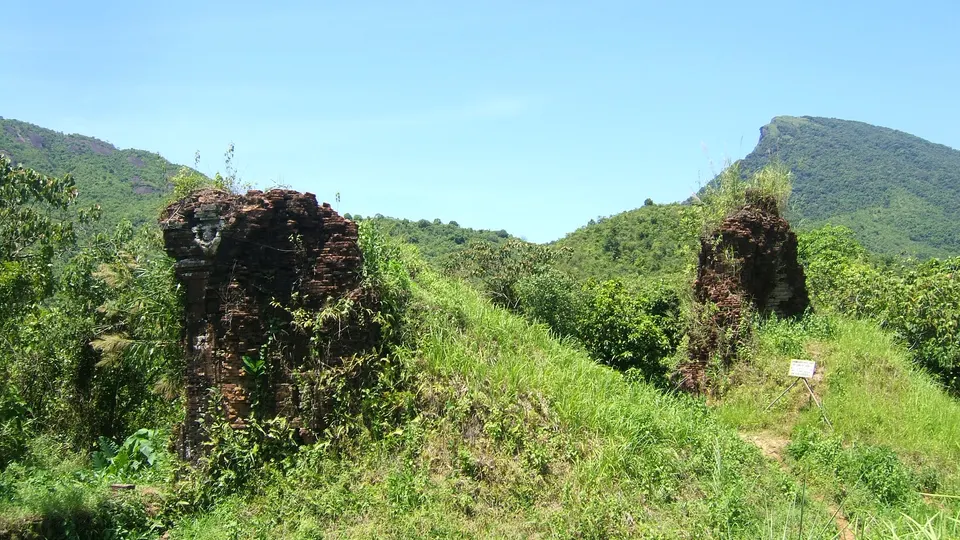
Day 5 starts early at My Son (Mỹ Sơn), the valley of Cham brick temple towers inland from Hoi An, built from the 4th to the 13th centuries, according to UNESCO. Go at opening time for the cooler hours and fewer groups; our My Son guide explains how to read the lettered tower groups. Then head for Da Nang and your flight, with the Marble Mountains or the beach on the way if time allows; our Da Nang guide covers the city.
Plan B, the beach version. Give Hue one night (Imperial City on day 1, two tombs and the afternoon train on day 2), Hoi An one night, and finish with two nights in Da Nang by the sea. You lose the slow evening in Hue and the second Hoi An evening; you gain a real beach day, and a morning for the Son Tra peninsula, Da Nang’s forested headland with the Lady Buddha at Linh Ung Pagoda and a chance of seeing douc langurs; go early, as its forest roads keep fixed hours and close in heavy rain. On 10 November 2026 Da Nang suspended sightseeing on the peninsula after heavy rain damaged a road, with no reopening date set, VietnamPlus reported, so check its status before you plan that morning. If you stay in Da Nang, Hoi An still works as an evening trip.
When to go, and what to do in the rainy months
The national tourism authority gives February to April as the best time for Hue, when the weather is mild and dry, and warns of heavy rain and typhoons from September to November; for Da Nang it suggests March to May and September to October, with a rainy season from November to February. Summers are hot along the whole coast, so plan sightseeing for the early morning and late afternoon.

The autumn floods are the risk to plan around. Between 22 and 29 October 2025 heavy rain hit the coast from Ha Tinh to Quang Ngai; on 27 October the Bo river in Hue crested above its 2020 record, floodwater surrounded part of the Imperial City, and three days later the Thu Bon in Hoi An rose above its historic 1964 level (VnExpress International). Not every year is like that, but from September to December:
- Book hotels and transfers you can cancel, and keep the Hue–Hoi An day flexible.
- In Hoi An, ask your hotel how it copes with floods; the riverside old town was under water in late October 2025 until the water went down on 31 October.
- Watch the forecast for the Hai Van Pass; take the train or the tunnel road when the pass is in heavy rain.
- Keep a spare half-day at the end, near the airport, in case flights are delayed.
Before you go. Buy the Hue combined ticket at the first site you visit and keep it for the tombs; carry your Hoi An ticket through your stay; check the heritage train timetable a few days ahead; and dress modestly for the pagodas and royal temples. For the wider region, from Phong Nha’s caves to the coast south of Hoi An, start at our Central Vietnam hub.
Frequently asked questions
Is 5 days enough for Hue, Hoi An and Da Nang?
Yes, if you use two bases and accept that Da Nang gets a half day rather than its own stay. Two nights in Hue cover the Imperial City and two tombs; two nights in Hoi An cover the old town at both ends of the day and a morning at My Son.
Should I stay in Hoi An or Da Nang on a 5-day trip?
On a five-day trip, Hoi An, because the old town is best early in the morning and in the evening, when day-trippers have gone. Choose Da Nang instead if a beach hotel matters more than the old town, and visit Hoi An as an evening trip.
Is there a train from Hue to Hoi An?
No, Hoi An has no railway station. The Central Heritage Connection tourist train runs from Hue to Da Nang in about three hours, and from Da Nang you continue to Hoi An by road; Hoi An's old town is 29 km from Da Nang airport. The alternative is a car with driver over the Hai Van Pass, which drops you at your Hoi An hotel.
Do I get a discount on Hue tickets if I take the heritage train?
Yes, as of November 2026: a Hue–Da Nang heritage train ticket gives 50% off the single-site fee at five Hue sites, including the Imperial City, for seven days from the train journey, VietnamPlus reported on 4 November 2026. It does not cover the Minh Mang, Tu Duc or Khai Dinh tombs and cannot be combined with other reductions.
Will rain or floods disrupt a Hue and Hoi An trip in November?
They can. On 19 November 2026 Vietnam's national forecasting centre expected 90–180 mm of rain on the coast from Quang Tri to Da Nang through 21 November, with Hue's rivers rising to flood alarm levels 1 to 2, Bnews reported. From September to December, book hotels and transfers you can cancel, and take the train or the tunnel road when the Hai Van Pass is in heavy rain.
Key sources
- A traveller's guide to Vietnam's airports · Vietnam National Authority of Tourism (vietnam.travel)
- Steam train linking Hue, Da Nang expected to launch in October · Tuổi Trẻ News, 17 September 2026
- Mở rộng đối tượng miễn, giảm phí tham quan di tích Huế từ năm 2026 · Báo Văn Hóa, 27 December 2025
- Announcement of the visiting in Hoi An Ancient Town · Hoi An World Cultural Heritage Conservation Center, 28 January 2026
- A year under water: Record floods sweep Vietnam from megacities to tourist hubs in 2025 · VnExpress International, 25 December 2025
- Huế giảm 50% vé tham quan di tích cho khách đi tàu hỏa di sản · VietnamPlus (VNA), 4 November 2026
- Cảnh báo lũ trên các sông từ Quảng Trị đến Quảng Ngãi · Bnews (VNA), 19 November 2026
- My Son Sanctuary · UNESCO World Heritage Centre
All 13 sources and further reading
- Hue · Vietnam National Authority of Tourism (vietnam.travel)
- Da Nang · Vietnam National Authority of Tourism (vietnam.travel)
- Sạt lở đường trên bán đảo Sơn Trà, Đà Nẵng ra khuyến cáo đảm bảo an toàn · VietnamPlus (VNA), 10 November 2026
- Vé tham quan di sản Huế: Đắt hay xứng đáng từng đồng? · Tuổi Trẻ, 15 August 2025
- Resolution 202/2025/QH15 on the reorganization of provincial-level administrative divisions · National Assembly of Vietnam, 12 June 2025 (LuatVietnam English)
Keep exploring
 Central Vietnam · Travel Hue (Huế): How Many Days, What to See, 2026 Tickets How many days Hue needs, which Citadel sights and royal tombs to pick, 2026 ticket prices, the flood months to avoid and where to eat in the old royal capital.
 Central Vietnam · Travel Hoi An (Hội An): How Many Days, What to See, When to Go How many days Hoi An needs, what the 80,000 or 120,000 dong ticket covers, lantern nights, where to eat, beaches, flood months and getting there from Da Nang.
 Central Vietnam · Travel Da Nang (Đà Nẵng): What to Do, Where to Stay, How Long Da Nang travel guide: the best things to do, whether to stay in Da Nang or Hoi An, a 2–4 day plan with Hue, what to eat and when the rains usually come.
 Central Vietnam · Travel Hue Royal Tombs (Lăng tẩm Huế): Which to Visit, Which Ticket Which Hue royal tombs to visit in November 2026: Minh Mang, Tu Duc or Khai Dinh, the right ticket or combo, opening times and half-day routes in the best order.