Central Vietnam · Travel
Marble Mountains (Ngu Hanh Son): What to See, How Long
Marble Mountains (Ngu Hanh Son), Da Nang: what to see on Thuy Son in order, dated ticket, lift and Am Phu prices, how long to allow and the route to Hoi An.
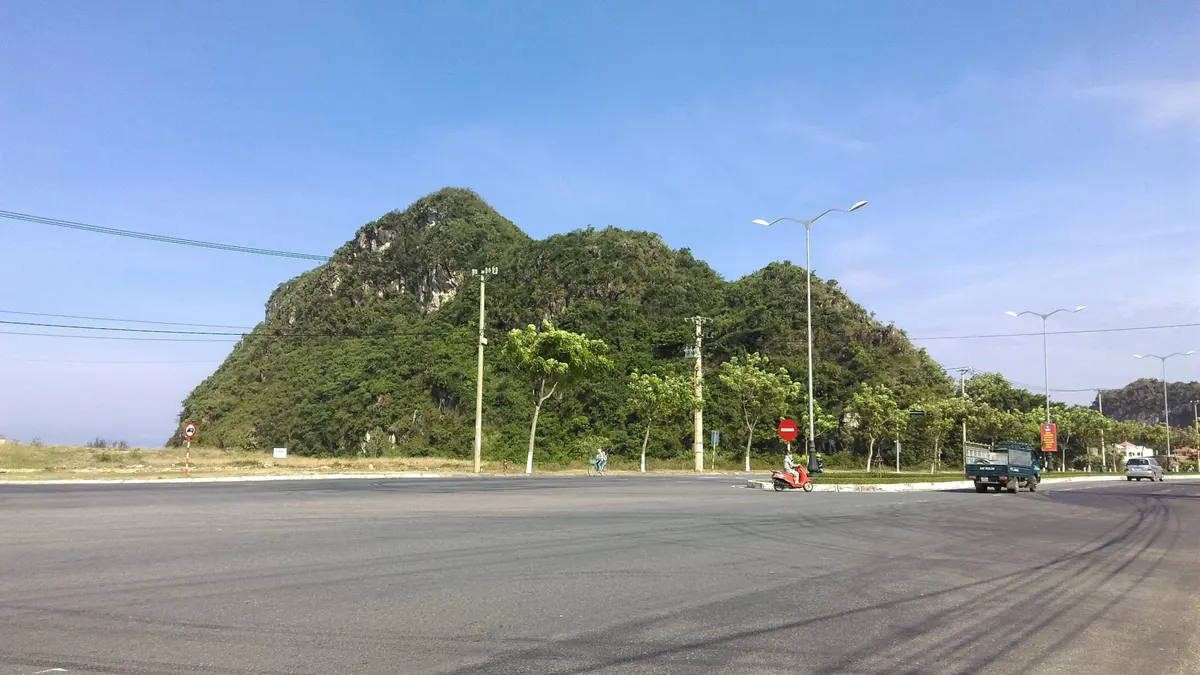
Most visitors spend 1.5 to 3 hours at the Marble Mountains and pay 40,000 dong to enter Thuy Son, plus 15,000 dong each way if they take the lift; Da Nang’s tourism portal still showed these August 2025 prices when we rechecked it on 17 November 2026. Expect company on the stairs: the site received more than 1 million visitors in the first five months of 2026, over 680,000 of them international, Thanh Nien reported in June 2026.
The Marble Mountains, Ngu Hanh Son (Ngũ Hành Sơn), are worth one to three hours on a trip to Da Nang, and nearly all of that time is spent on a single peak, Thuy Son (Thủy Sơn). The classic visit is a short climb (or a lift ride) to Linh Ung Pagoda, then Tam Thai Pagoda, the cathedral-like Huyen Khong cave with sunlight falling through its roof, a lookout at the top, and, if you want it, the separately ticketed Am Phu cave at the foot.
This page covers only that visit: what to see in which order, the official prices with their date, how long each kind of visit takes, the best time of day, the festival and the stone-carving village, and how to fit the stop between Da Nang and Hoi An. For the rest of the city, from the beach to the Cham museum, start with our Da Nang guide; for the wider region, see the Central Vietnam hub.
Marble Mountains at a glance
| Where | About 7–8 km south-east of central Da Nang, about 15 minutes by car; about 30 minutes from Hoi An by the coastal road |
| What it is | A cluster of limestone and marble outcrops named after the five elements, with caves, pagodas and about 78 carved inscriptions |
| The peak you visit | Thuy Son (Water Mountain), with Linh Ung and Tam Thai pagodas, Huyen Khong cave and two lookouts |
| Status | Special national relic (Decision 1820/QD-TTg, 24 December 2018); inscriptions on UNESCO’s Asia-Pacific Memory of the World register (2022) |
| Opening hours | Daily, about 7:00 to 17:30 (national tourism authority, undated) |
| Tickets (Aug 2025) | Thuy Son 40,000 dong; lift 15,000 dong one way, 30,000 return; Am Phu cave 20,000 dong extra |
| How long | 1.5 hours (lift, three main stops) to 3 hours (full circuit and Am Phu); half a day with Non Nuoc village |
| Best time | Early morning or after 4 pm for heat; late morning for light in Huyen Khong; February to May for weather |
| Festival | Quan The Am festival, 17th–19th day of the second lunar month (March or April) |
What are the Marble Mountains, and which one do you climb?
The Marble Mountains are a small group of limestone and marble hills rising out of the flat coastal sand south of Da Nang, covering about 2.2 km². Emperor Minh Mang (Minh Mạng) of the Nguyen dynasty named them Ngu Hanh Son, “Five Elements Mountains”, in 1837, and each hill carries an element’s name: Thuy Son (water), Kim Son (metal), Moc Son (wood), Tho Son (earth) and Hoa Son (fire). Da Nang’s tourism portal points out that there are really six peaks, because Hoa Son has two, Duong Hoa Son and Am Hoa Son.
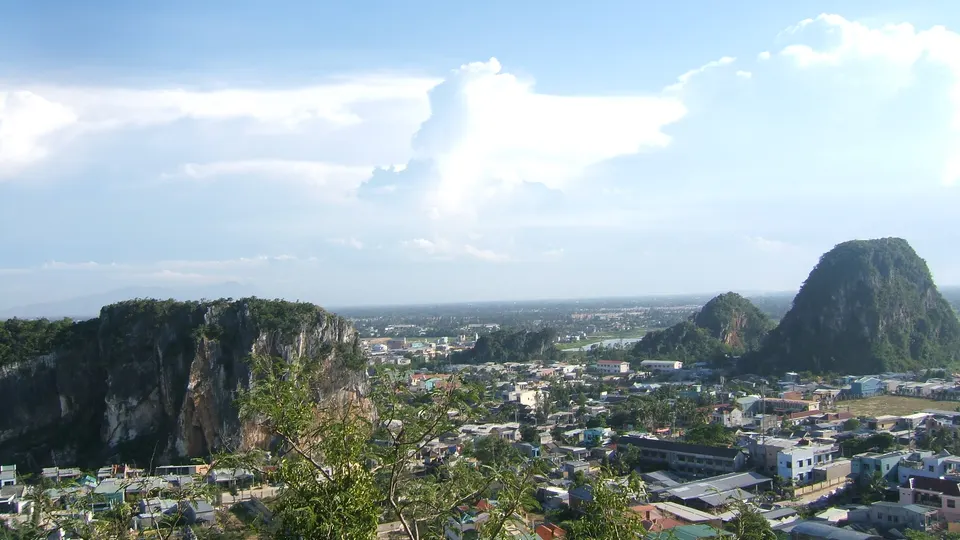
The hills were sacred long before the Nguyen kings: Vietnam’s national tourism authority notes that the Cham worshipped them, a reminder that this coast belonged to the kingdom described in our Champa heritage guide. Buddhist pagodas followed, Tam Thai among them from 1630, and emperors, mandarins and monks carved poems into the rock. Vietnam first listed the site as a national relic in 1990 and raised it to a special national relic, the highest tier, at a ceremony in January 2019 (Tuoi Tre News).
For a visitor, the practical point is simple: Thuy Son is the mountain you climb. It is the largest and holds most of what people come for: according to the city’s portal, nine caves, several pagodas and towers, and two lookout terraces. The other hills have pagodas and caves of their own, such as Quan The Am Pagoda on Kim Son, but most first-time visitors see them, if at all, from the road or during the spring festival.
What to see on Thuy Son, in order
Da Nang’s tourism portal suggests a loop that starts at Linh Ung Pagoda and ends on the summit terrace. Tickets are sold at gate 1 and gate 2. The way up is a stone stairway of more than 150 steps, or the lift.
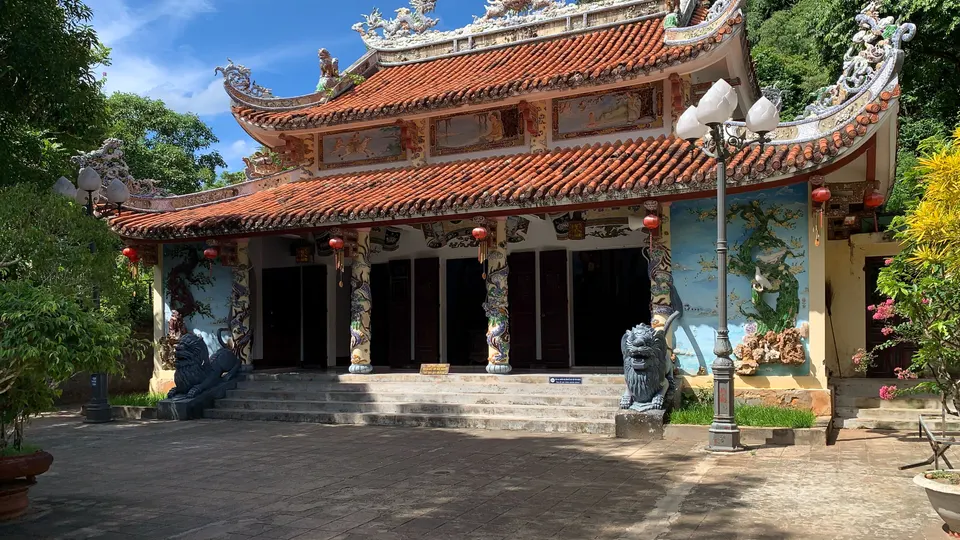
- Linh Ung Pagoda. It sits high on Thuy Son with its back to the rock, facing east to the sea. Do not confuse it with the Linh Ung Pagoda on the Son Tra (Sơn Trà) peninsula, the one with the tall white statue described in our Son Tra peninsula guide. They are different pagodas several kilometres apart.
- Vong Hai Dai. A few stepping stones to the right of Linh Ung lead to this “sea-watching terrace”, which looks down over the beach and the open sea; on a clear day you can see the Cham Islands (Cu Lao Cham) to the south-east.
- Tam Thai Pagoda. Built in 1630 according to the portal; in 1826 Emperor Minh Mang ordered nine statues and three large bells for it. It is quietest early in the morning.
- Huyen Khong cave. The highlight of the visit: see the next section.
- Tang Chon and the smaller caves. If you have time, Tang Chon, Van Thong and Hoa Nghiem caves continue the theme on a smaller scale; Hoa Nghiem and Tang Chon also hold carved inscriptions.
- Vong Giang Dai. Finish at the “river-watching terrace” near the summit, with a view over the mountains, the plain and the city.
- Am Phu cave (optional). Walk down and round to the southern foot of Thuy Son for Am Phu, which needs its own ticket.
What to wear. These are working pagodas, not just viewpoints. The national tourism authority asks visitors to wear modest clothing and to take off shoes and hats before entering a pagoda (Vietnam Tourism). In practice that means shoulders and knees covered, and shoes you can slip off but that still grip on worn stone.
Huyen Khong cave and the poems carved in the rock
Huyen Khong is the largest cave on the mountain and the reason most people come. Openings in its roof let sunlight fall into a dark, high chamber where a large seated Buddha and shrines sit among incense smoke; Da Nang’s portal notes a statue of the goddess Thien Y A Na (Thiên Y A Na) on one altar. On a clear day the light is at its best around the middle of the day: Vietnam Airlines’ guide suggests visiting the caves between 10:00 and 15:00.
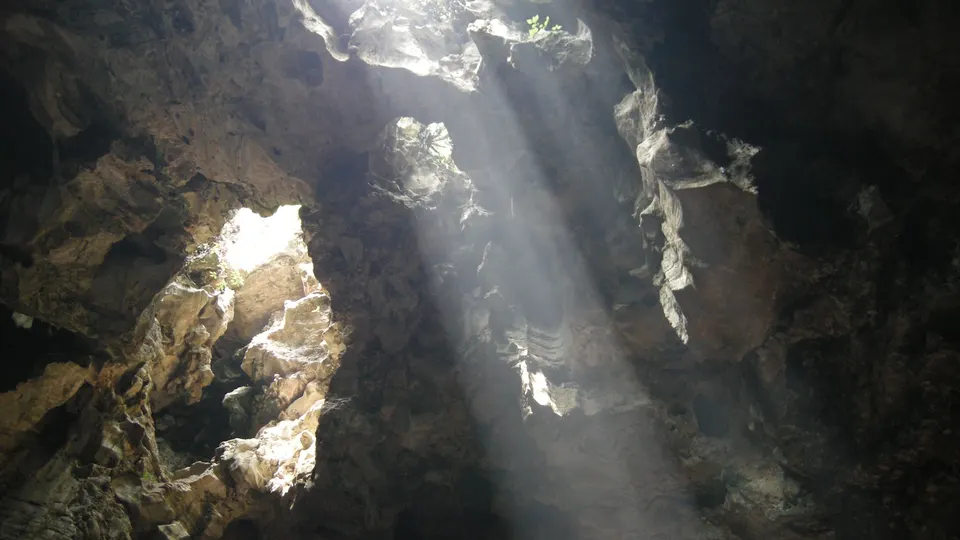
Look at the walls as well as the light. The Marble Mountains hold 78 ma nhai, inscriptions carved into the cliffs and cave walls, 76 in classical Chinese characters and two in Nom, the old Vietnamese script, dating from the first half of the 17th century to the 1960s and written by Nguyen rulers, officials, monks and scholars. UNESCO’s Asia-Pacific Memory of the World committee added them to its register at its 2022 meeting in Andong, South Korea, and Da Nang received the certificate on 1 March 2023 (Viet Nam Government Portal). About 30 of them are in Huyen Khong, the city portal says, including a poem by Truong Quang Dan cut in flowing cursive into the rock wall, with others in Hoa Nghiem and Tang Chon caves. You do not need to read them to see the point: for more than three centuries, visiting this cave has been a literary act as much as a religious one.
Is Am Phu cave worth the extra ticket?
Am Phu means “the underworld”: the cave at the southern foot of Thuy Son gets darker the deeper you go, which is how it got its name, according to Da Nang’s portal, and shrines inside are lit in colour against the dark. It is the most theatrical part of the site and also the easiest to skip, because it sits apart from the main stairway and needs its own ticket: 20,000 dong for adults, 7,000 dong for students and free under 6, on Da Nang’s tourism portal in August 2025.
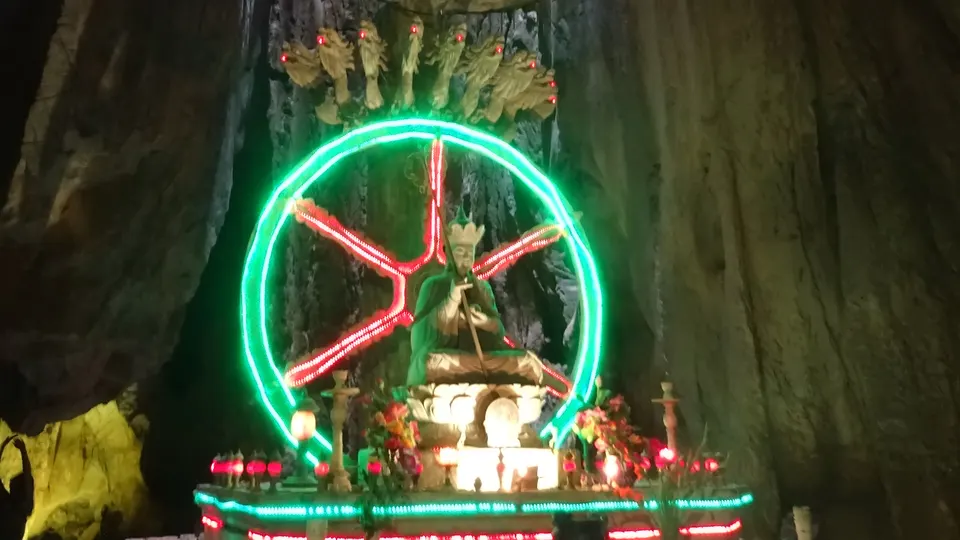
Go if you enjoy caves and do not mind dim light and damp, uneven steps; allow about half an hour extra. Skip it with small children who dislike the dark or if you are short of time, since Huyen Khong is the better cave for light and atmosphere. The portal suggests visiting Am Phu either before or after the climb; doing it last means you finish at ground level, near the road and the carving workshops.
Tickets, the lift and how long to allow
The prices most often quoted come from Da Nang’s own tourism portal, which listed them in August 2025 (Da Nang tourism portal). When we rechecked on 17 November 2026 the portal still showed these prices and we found no newer official list, and Vietnam Airlines’ travel guide and the national tourism authority give the same main figures, so treat them as current but check at the gate.
| Item | Price listed in August 2025 | Notes |
|---|---|---|
| Thuy Son entry | 40,000 dong per adult per visit | Free under 6 |
| Lift | 15,000 dong one way, 30,000 dong return | Saves the main stone stairway |
| Am Phu cave | 20,000 dong adults, 7,000 dong students | Separate ticket; free under 6 |
| Site guide | 50,000 dong per group | Optional |
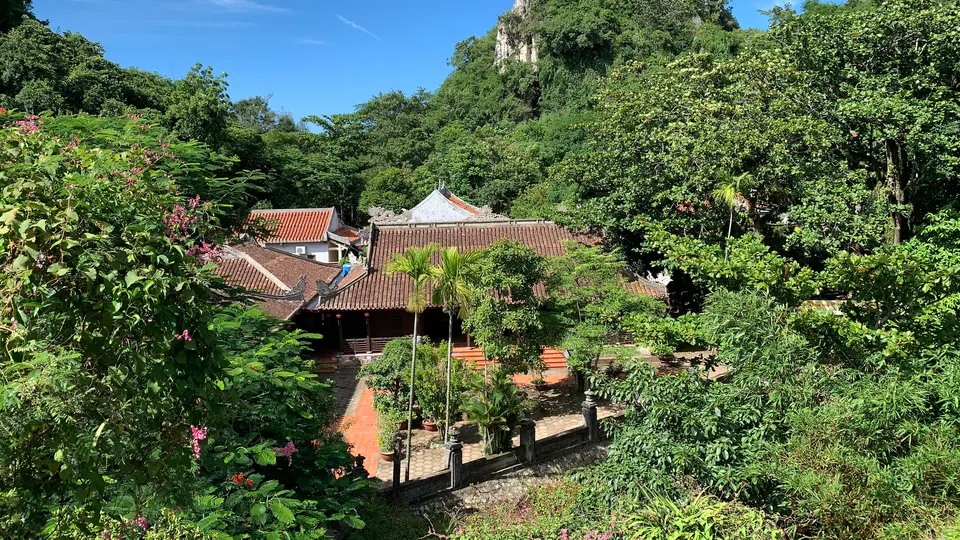
The lift is worth it if you have older travellers with you, it is hot, or you plan to walk the whole circuit anyway; one sensible option is to ride up and walk down the stairway. Opening hours are about 7:00 to 17:30 daily, according to the national tourism authority; Vietnam Airlines’ guide lists Huyen Khong closing at 17:00, so start the cave part before late afternoon.
| Your plan | What it covers | Time to allow |
|---|---|---|
| Short stop | Lift up, Linh Ung Pagoda and Vong Hai Dai, Tam Thai Pagoda, Huyen Khong cave | About 1.5 hours |
| Full Thuy Son | The above plus the smaller caves, Vong Giang Dai and Am Phu cave | 2–3 hours |
| Half day | Full Thuy Son plus the Non Nuoc stone-carving workshops at the foot | About 4 hours |
Vietnam’s national tourism authority recommends at least two hours; guides that time the visit generally give one hour for a rush and two to three for the full site. The difference is mostly the caves, where steps are uneven and passages narrow and dim.
Best time of day, and the Quan The Am festival
Heat is the main enemy: the stone holds it, and much of the circuit is stairs. Vietnam Airlines’ guide suggests arriving before 9:00 or after 16:00 for cooler air, and names February to May as the most pleasant season, with dry weather; late October and November are the rainiest weeks, when steps are slick. The trade-off is Huyen Khong, whose sunbeams need the sun high, so a good compromise is to arrive at opening time, spend the cool hours on the pagodas and lookouts, and reach the cave in the late morning.
Crowds are the other reason to start early. The site’s management board counted more than 2.1 million visitors in 2025, with international visitors making up about two-thirds of the total, Nguoi Lao Dong reported on 1 January 2026; Da Nang’s city portal put the 2025 figure at nearly 2.2 million, including more than 1.5 million foreign visitors. The national tourism authority, which gives opening hours of 7:00 to 17:30 daily, suggests starting at 7:00, when the air is still cool for the climb.
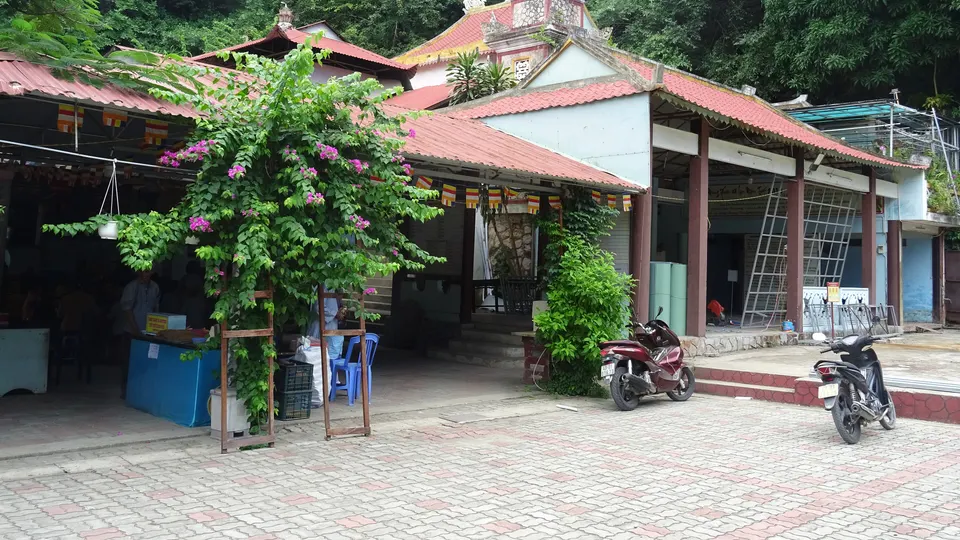
The biggest date in the mountains’ calendar is the Quan The Am festival, held over the 17th, 18th and 19th days of the second lunar month at the scenic area and at Quan The Am Pagoda on Kim Son. It honours Quan The Am (Quán Thế Âm), the bodhisattva of compassion, and Vietnam’s culture ministry listed it as national intangible cultural heritage by a decision signed on 3 February 2021 (Nhan Dan). According to Da Nang’s portal, it grew from a 1962 celebration, was revived as an annual festival in 1991 and was named one of the country’s 15 national folk festivals in 1999. Tuoi Tre reported that the 2026 edition ran from 4 to 7 April with more than 40 events, including a boat race on the Co Co (Cổ Cò) river re-enacting the procession of the Tran princess Huyen Tran.
The tradition and the tourist day are different experiences. During the festival the mountains are crowded with pilgrims and families making offerings, and the ceremonies are religious first. Visit then for the atmosphere, not for quiet, and expect crowds on the main days. In the Gregorian calendar the dates move each year, usually into March or April.
Non Nuoc stone-carving village
Below the mountains lies Non Nuoc (Non Nước), a stone-carving village about 400 years old whose craft Vietnam listed as national intangible cultural heritage in 2014, Tuoi Tre News reported. Its exact origin is unknown. Da Nang’s portal says a stele dated 1678 at Pho Khanh Pagoda already names local carvers, and local tradition credits a craftsman called Huynh Ba Quat with bringing the skill from Thanh Hoa (Thanh Hóa) in the north; a shrine to the craft’s founders holds its rite on the sixth day of the first lunar month.
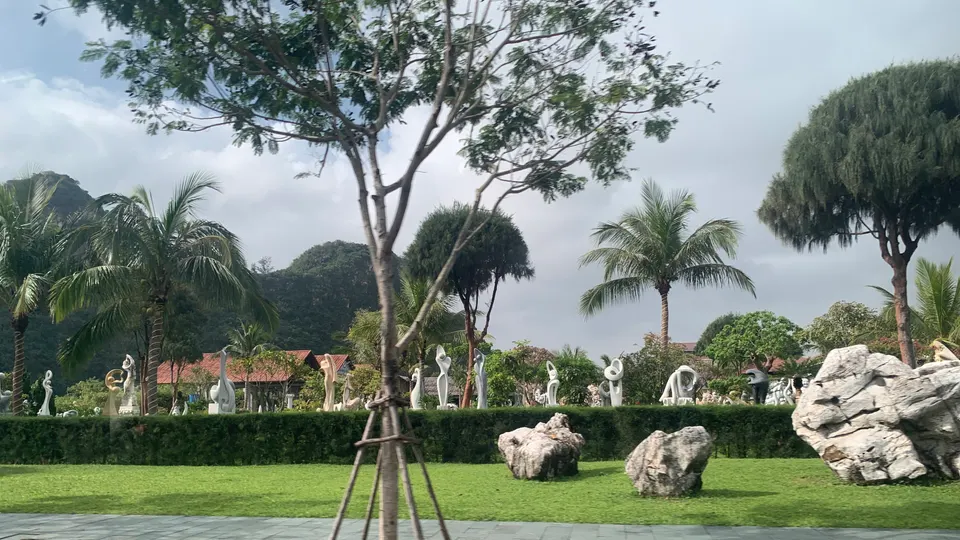
Today the craft is most visible in the workshops and showrooms along the road below the mountains, with stone statues of every size set out in front. Browsing costs nothing, so the workshops make a short add-on after Am Phu cave; if you are tempted by a large piece, compare a few places before buying and agree delivery in writing.
How to combine the Marble Mountains with Hoi An
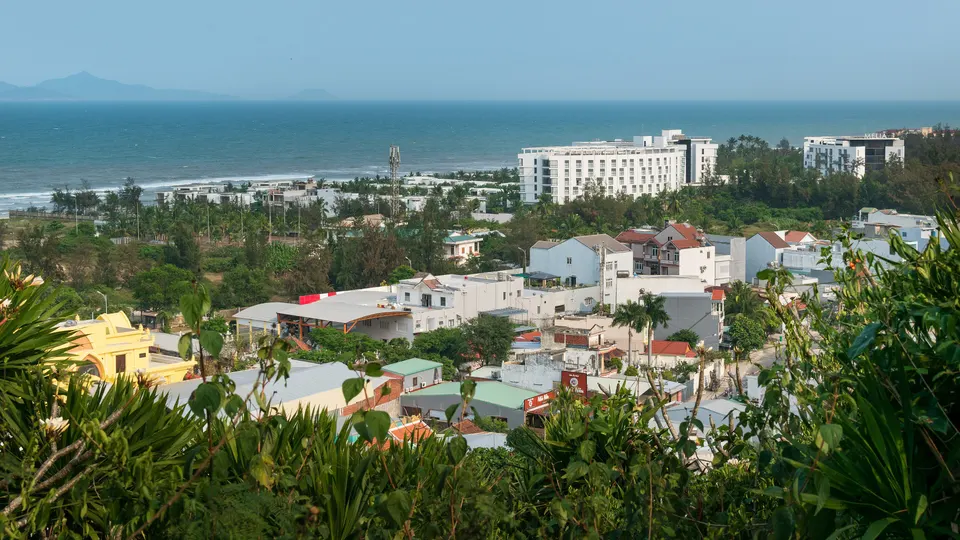
The Marble Mountains sit on the coastal road between Da Nang and Hoi An, which is why so many transfers stop there. Da Nang’s portal gives about 15 minutes from the city centre and about 30 minutes from Non Nuoc to Hoi An along the coastal road. That makes the site an easy half-day from either base, or a stop on the way. If you are going to Hoi An straight from the airport, a taxi, app car or hired car lets you stop here; our guide to Da Nang airport to Hoi An compares those options with the airport bus.
| Route | Leg | Approximate time | Tip |
|---|---|---|---|
| Da Nang → Marble Mountains | 7–8 km south-east of the centre | About 15 minutes | Leave at opening time for the cool hours |
| Marble Mountains visit | Thuy Son, Am Phu, Non Nuoc | 1.5 hours to half a day | Lift up, walk down |
| Marble Mountains → Hoi An | Coastal road | About 30 minutes | Arrive in Hoi An for lunch or the late afternoon |
| Hue → Hoi An with stops | Hai Van Pass, Da Nang, Marble Mountains | Most of a day | See our Hue to Hoi An transfer guide |
On a short trip, the cleanest pattern is the one in our five-day Hue, Hoi An and Da Nang plan: use the Marble Mountains to break a transfer rather than giving them a day of their own. A morning here pairs well with an afternoon on My Khe beach or at the Cham sanctuary of My Son on another day; it pairs badly with Ba Na Hills, which needs a full day in the opposite direction. If you travel between September and December, check the forecast first: our Vietnam weather by month guide explains the Centre’s wet season.
Before you go: carry small notes for the separate tickets and the lift; wear grippy shoes and clothes that cover shoulders and knees; bring water and a hat for the stairs; and decide in advance whether Am Phu and the carving village are in or out, because that is what turns a 90-minute stop into half a day.
Frequently asked questions
Is the lift at the Marble Mountains worth it?
For most people, yes. The lift on Thuy Son replaces the main stone stairway of more than 150 steps, which helps on hot days or with older travellers; a good plan is to ride up and walk back down the stairway.
Is Am Phu cave worth visiting at the Marble Mountains?
Go if you like dark, theatrical caves: Am Phu, at the southern foot of Thuy Son, has coloured shrines lit against the dark and takes about half an hour extra. Skip it if you are short of time or travel with children who dislike the dark, because Huyen Khong cave is the better cave for light and atmosphere.
Can older people or children visit the Marble Mountains?
Yes, with care. The lift avoids the main stone stairway of more than 150 steps, but cave floors are uneven and some passages are steep and dim, so wear shoes with grip and skip the narrower caves if balance is a concern.
Do I need a guide at the Marble Mountains?
No, the Thuy Son loop from Linh Ung Pagoda to the Vong Giang Dai lookout is easy to follow on your own. Da Nang's tourism portal lists an optional site guide at 50,000 dong per group (August 2025), useful if you want the history and the cave inscriptions explained.
When is the Quan The Am festival at the Marble Mountains?
It is held on the 17th to 19th days of the second lunar month, usually in March or April, at the Marble Mountains and Quan The Am Pagoda on Kim Son. In 2026 it ran from 4 to 7 April with more than 40 events, Tuoi Tre reported.
Key sources
- Hàng nghìn du khách đến danh thắng Ngũ Hành Sơn, khám phá "đặc sản" Ma Nhai · Người Lao Động, 1 January 2026
- Rộn ràng đón đoàn khách quốc tế đầu tiên tham quan Danh thắng Ngũ Hành Sơn năm 2026 · Cổng thông tin điện tử thành phố Đà Nẵng (Da Nang city portal), 1 January 2026
- Ngũ Hành Sơn tăng tốc phát triển sau sáp nhập · Thanh Niên, 17 June 2026
- Danh thắng Ngũ Hành Sơn (Ngu Hanh Son scenic site: tickets, sights, festival, Non Nuoc) · Đà Nẵng Fantasticity (Da Nang Department of Tourism portal), 1 August 2025
- Ngu Hanh Son mountains recognized as Vietnam's special national relic · Tuổi Trẻ News, 22 January 2019
- A walk around Marble Mountains · Vietnam National Authority of Tourism (vietnam.travel), checked 13 November 2026
- One more documentary heritage in Viet Nam recognized · Viet Nam Government Portal, 2 March 2023
- Trao Bằng Di sản văn hóa phi vật thể quốc gia cho Lễ hội Quán Thế Âm Ngũ Hành Sơn · Nhân Dân, 25 March 2021
All 12 sources and further reading
- Làm bản đồ số hơn 40 hoạt động của lễ hội Quán Thế Âm Ngũ Hành Sơn · Tuổi Trẻ, 1 April 2026
- Ma Nhai stone epitaphs at the Marble Mountains · Đà Nẵng Fantasticity (Da Nang Department of Tourism portal)
- Ngũ Hành Sơn Đà Nẵng (travel guide: tickets, hours, best time) · Vietnam Airlines, checked 13 November 2026
- Marble Mountains in Da Nang – Complete Guide for Visitors · Local Vietnam (travel blog), May 2025
Keep exploring
 Central Vietnam · Travel Da Nang (Đà Nẵng): What to Do, Where to Stay, How Long Da Nang travel guide: the best things to do, whether to stay in Da Nang or Hoi An, a 2–4 day plan with Hue, what to eat and when the rains usually come.
 Central Vietnam · Travel Hoi An (Hội An): How Many Days, What to See, When to Go How many days Hoi An needs, what the 80,000 or 120,000 dong ticket covers, lantern nights, where to eat, beaches, flood months and getting there from Da Nang.
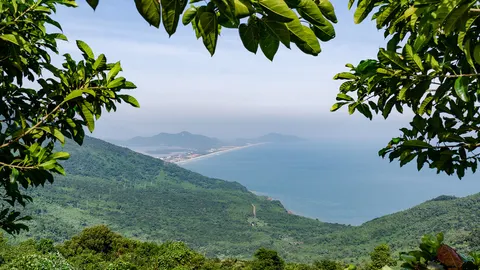 Central Vietnam · Travel Hue to Hoi An: Hai Van Pass Tour, Private Car or Train Hue to Hoi An in November 2026: heritage train times and fares, private car over the Hai Van Pass or through the tunnel, buses, motorbikes and storm closures.
 Central Vietnam · Travel Hue, Hoi An and Da Nang in 5 Days: Route, Train, Tickets Five days in Hue, Hoi An and Da Nang: which way round, where to sleep, heritage train times, Hue's 600,000 VND 5-day ticket and the November flood risk.