South Vietnam · Travel
Phu Quoc (Phú Quốc) Travel Guide: Which Area to Stay In
Phu Quoc travel guide: which area to stay in (Duong Dong, Ong Lang, Long Beach, Bai Sao), flights and ferries, getting around, visa rules and local food.

For a first trip to Phu Quoc (Phú Quốc) without a car, base yourself in Duong Dong town or on Long Beach, about 10–15 minutes from the airport and close to most local restaurants; the quieter west coast north of town, the resort-heavy south and the family resorts of the north-west are the alternatives, compared in the table below. Book early: the island drew more than 5.7 million visitors in the first six months of 2026, over 1.3 million of them from abroad, Viet Nam News reported in July 2026, and as of November 2026 the airport is mid-expansion, with a second runway in use since 29 October and a new terminal not due before 2027. Foreigners who fly straight in from abroad can still stay up to 30 days without a visa.
Phu Quoc lies in the Gulf of Thailand, off the far south-western coast of Vietnam, and it has grown very fast. In the first half of 2025 alone it received nearly 4.5 million visitors, almost 900,000 of them from abroad, according to Nhan Dan (Nhân Dân), and it has been chosen to host APEC 2027, Vietnam’s third APEC year after 2006 and 2017 (VTV).
That makes it a good choice if you want an easy beach holiday: big resorts, theme parks, a cable car over the sea, direct flights and a visa-free stay for many foreign visitors. It is a less obvious choice if you want a slow fishing-town coast. That older island still exists, in fish-sauce barrel houses, pepper gardens, the fishing village of Ham Ninh (Hàm Ninh) and a protected forest in the north. This guide helps you pick the side of the island that matches the trip you want, and tells the genuinely local apart from the newly built. For other islands and beaches in southern Vietnam, see our guides to Con Dao and Vung Tau.
Phu Quoc at a glance
| Region | Southern Vietnam, in the Gulf of Thailand; since 1 July 2025 a special zone (dac khu) of An Giang province, formerly Kien Giang (Kiên Giang) |
| Size | Just over 589 km² for the special zone, which takes in the former Phu Quoc city |
| Three sides | South: An Thoi (An Thới), Bai Sao (Bãi Sao), Hon Thom (Hòn Thơm) cable car, Sunset Town. West: Duong Dong (Dương Đông) town, Long Beach. North and east: national park, Ganh Dau (Gành Dầu), Bai Thom (Bãi Thơm), Rach Vem (Rạch Vẹm), Ham Ninh |
| Genuinely local | Nuoc mam Phu Quoc (fish sauce with a protected name), pepper, cultured pearls, fishing villages |
| How long | Three to five days for one base plus day trips |
| Where to stay | Duong Dong or Long Beach for a first visit; Ong Lang for quiet; the south for resorts and boats; the north-west for family resorts |
| Best time | Roughly November to April (dry, calmer seas); rainy season about May or June to October |
| Getting there | Phu Quoc International Airport, 10–15 minutes from Duong Dong (second runway open since October 2026, new terminal due in 2027); fast boats and car ferries from Ha Tien (Hà Tiên) and Rach Gia (Rạch Giá) on the mainland |
| Getting around | Taxi, Grab, hotel shuttles; no rail line yet |
| Visa | Up to 30 days visa-free when you fly straight in (or transit internationally); visa or e-visa needed to continue to mainland Vietnam |
| Local dishes | Bun quay (“stirred” noodles), bun ken (coconut-milk fish noodles), goi ca trich (raw herring salad), Ham Ninh crab |
What changed in 2025: why is Phu Quoc now a “special zone” of An Giang?
On 1 July 2025, when Vietnam merged its provinces, Kien Giang was folded into An Giang province, and Phu Quoc stopped being a city. It became a special zone (dac khu), one of three in the new An Giang alongside the Tho Chau (Thổ Châu) and Kien Hai (Kiên Hải) islands. Under a National Assembly Standing Committee resolution of 16 June 2025, the zone takes in the whole of the former Phu Quoc city: the wards of Duong Dong and An Thoi and the communes of Duong To (Dương Tơ), Ham Ninh, Cua Duong (Cửa Dương), Bai Thom, Ganh Dau and Cua Can (Cửa Cạn), just over 589 km² in all (Saigon Giai Phong).
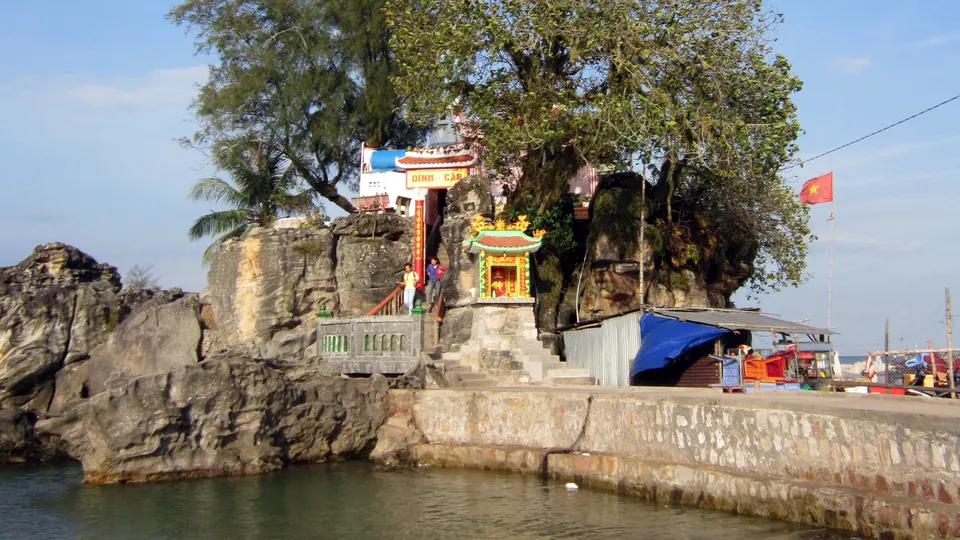
For visitors the change mostly shows up in addresses. Duong Dong and An Thoi are still the names everyone uses, but officially they are now parts of a single special zone rather than wards, and many signs, menus and maps still say Kien Giang. The merged An Giang now runs from the Mekong floodplain on the Cambodian border to these islands; our Mekong Delta guide covers the mainland part. The status may change again: on 30 October 2026 An Giang’s provincial council approved a proposal asking the central government to recognise Phu Quoc as a special economic zone with its own policies, VietnamPlus reported. That decision is still pending.
How busy is it now? Phu Quoc received about 8.1 million visitors in 2025, about 1.8 million of them from abroad, and 17 airlines were flying to the island, with more than 200 international and nearly 500 domestic flights a week, Bao Van Hoa reported in December 2025. Growth continued in 2026: more than 5.7 million visitors in the first half alone, over 1.3 million of them international, against a full-year target of more than 9 million, Viet Nam News reported in July 2026. Even the 2025 figure is roughly thirteen times as many visitors as Con Dao, the other big southern island; if you are choosing between the two, our comparison of Phu Quoc and Con Dao sets out which suits which trip and season.
Where to stay on Phu Quoc: which area suits you?
Phu Quoc is long and narrow, with a mountain range running down its length, and the three sides suit different trips. Distances are not huge (An Thoi, at the southern tip, is about 30 km from Duong Dong), but you will spend real time in taxis if you base yourself at one end and want to see the other.
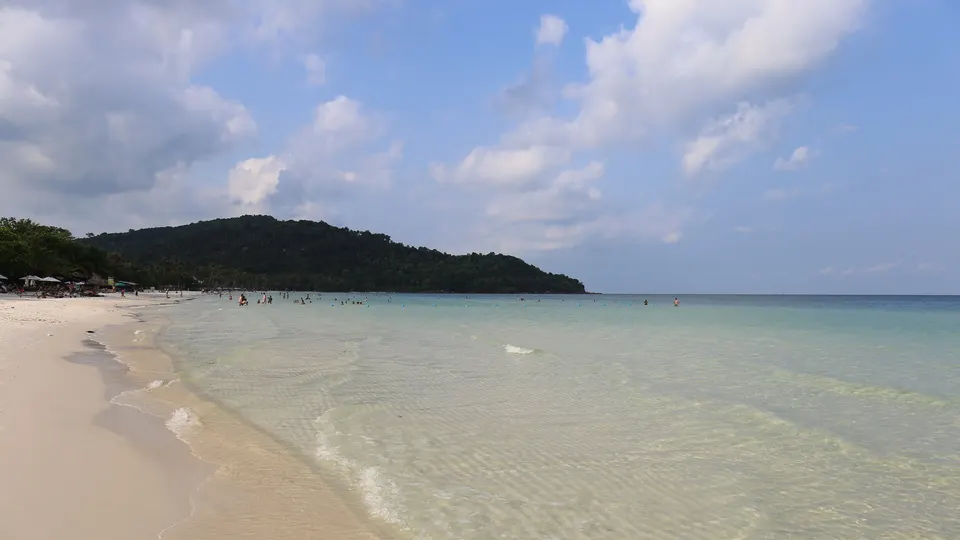
The quick answer: for a first visit without your own transport, stay in Duong Dong or on Long Beach, close to the airport and most of the island’s local restaurants. Choose Ong Lang (Ông Lang) for a quieter beach with sunsets, the south for big resorts and island-hopping boats, and the north-west for self-contained family resorts, accepting longer drives. The table sets out the trade-offs; distances come from Vietnam’s national tourism authority, VnExpress and Vietnam Airlines’ travel guide.
| Area | Where it is | Best for | Trade-off | How far |
|---|---|---|---|---|
| Duong Dong town | West coast, at the mouth of the Duong Dong river | Short stays, eating out in local noodle and seafood shops, travelling without a car | A busy town, not a resort beach | Airport about 10–15 minutes by taxi |
| Long Beach (Bai Truong) | About 20 km of west-coast sand running south from Dinh Cau | First visits, sunsets, a beach with restaurants nearby | A lot of new building along the beach | Next to Duong Dong |
| Ong Lang | West coast, north of Duong Dong | Couples and quiet beach stays; west-facing sunsets and gentle water | Fewer places to eat at night; taxis for everything else | About 7 km from Duong Dong |
| North-west (Ganh Dau, Vung Bau) | The far north-west, beside the national park | Families in big self-contained resorts, the safari park, nature | Far from town and the south | Vung Bau about 45 minutes by road from Duong Dong |
| South (Bai Sao, Khem, An Thoi) | South and south-east coast, with Sunset Town and the Hon Thom cable car | Resort stays, families, island-hopping boats from An Thoi | Can feel like a resort complex rather than Vietnam | An Thoi about 30 km from Duong Dong |
| East (Ham Ninh, Bai Thom) | East coast fishing villages | Seafood by the water, a quiet base | Few hotels; drift rubbish on east-coast beaches in the northeast monsoon | Ham Ninh about 14–15 km from Duong Dong |
How to choose. Decide what you will do most evenings. If you want to walk to restaurants, a hotel in Duong Dong or on Long Beach saves a taxi every night; do not choose it for the Duong Dong night market alone, which is due to close at the end of 2026 (see below). If you mostly want the pool and the beach, a resort in the south or north-west works, but plan transfers before you book, because the island is long and everything else is a drive away. In the dry season the west coast (Duong Dong, Long Beach, Ong Lang, the north-west) is usually the cleaner side for swimming.
Common vs exception: most visitors stay on the west and south coasts, where the airport, Long Beach and the big resorts are. The east coast around Ham Ninh and the park-side north are where the island’s older rhythm is easiest to find, and few visitors base themselves there.
The south: cable car, Sunset Town and the prison
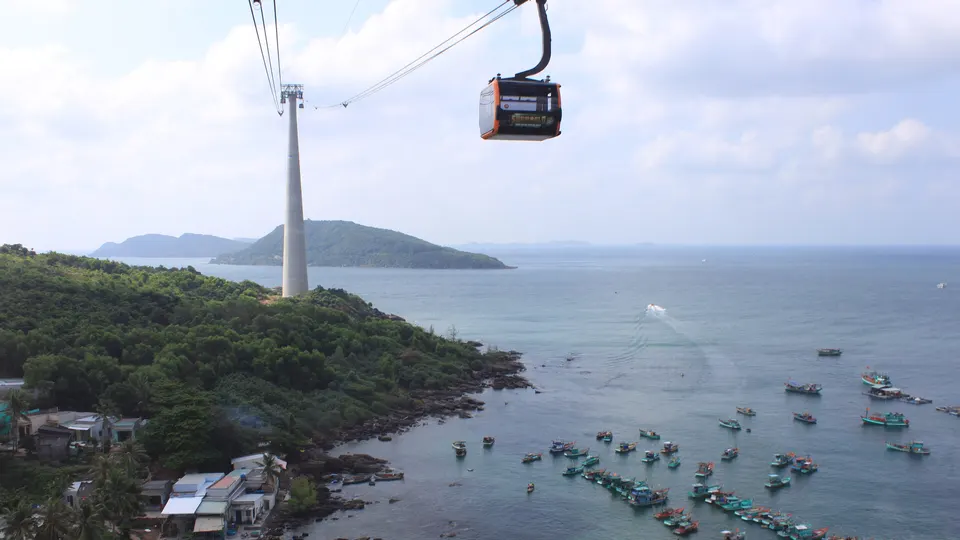
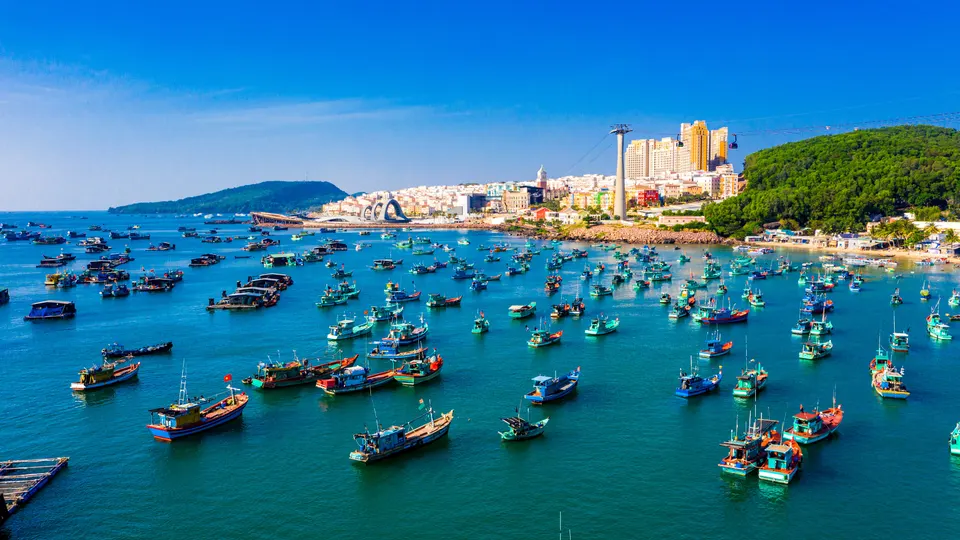
The south is where Phu Quoc’s resort economy is most visible. Sun Group’s Hon Thom cable car runs 7,899.9 m from An Thoi, across the islets of Hon Roi (Hòn Rỏi) and Hon Dua (Hòn Dừa), to Hon Thom island and its theme park; Guinness World Records certified it as the world’s longest cable car when it opened in February 2018, VnEconomy reported. Near the southern resorts, Sunset Town (Thi tran Hoang Hon) is a newly built “town” of photo spots such as the Kiss Bridge, with an evening show and fireworks on some nights of the week, according to VnExpress. Whether the cable car is worth the time and money, and how to fit it around a south-coast day, is the subject of our guide to the Hon Thom cable car.
On the south-east coast, Bai Sao stretches for more than 7 km of white sand and clear water, VnExpress International notes, and it is still the beach most people mean when they picture Phu Quoc. From An Thoi, boat tours visit the small islands of the An Thoi archipelago, such as Hon May Rut Trong (Hòn Mây Rút Trong), Hon May Rut Ngoai (Hòn Mây Rút Ngoài), Gam Ghi (Gầm Ghì) and Mong Tay (Móng Tay), for snorkelling; see the safety section below before you book one.
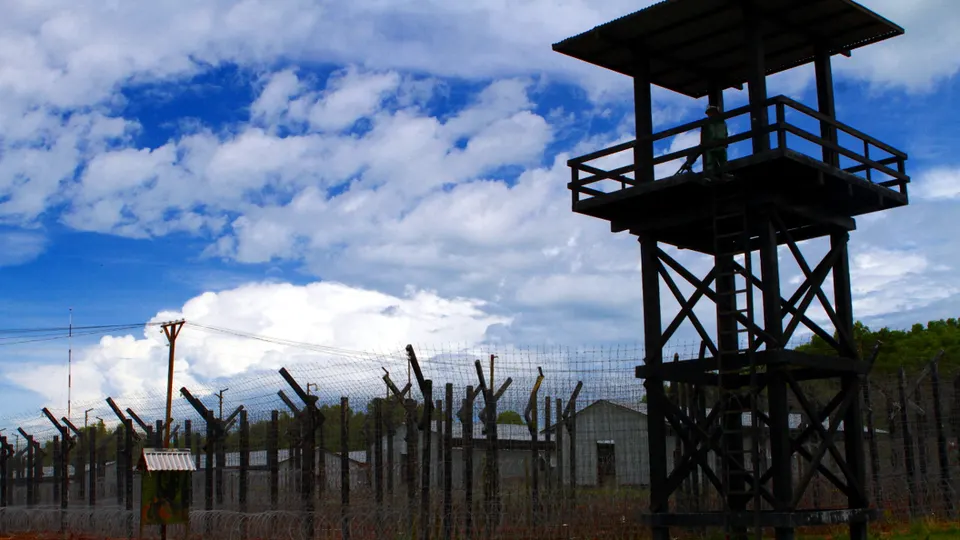
The south also holds the island’s most sobering site. Phu Quoc Prison, known as the Coconut Tree Prison (nhà tù Cây Dừa), was built by the French in 1950 and reused from 1955 by the Republic of Vietnam government, which expanded it to around 400 ha. The national tourism authority says more than 40,000 prisoners were held there between 1967 and 1973 (VnExpress gives about 32,000, so treat the figure as “tens of thousands”). It was made a special national relic in 2015 (Vietnam National Authority of Tourism).
The north and east: forest, quieter beaches and Ham Ninh
More than half of the northern part of the island is Phu Quoc National Park, the land core of the Kien Giang Biosphere Reserve that UNESCO recognised in 2006. The surrounding sea has coral reefs and seagrass beds that shelter green and hawksbill turtles and the dugong, a sea mammal found in only one other place in Vietnam (vietnam.travel). The national tourism authority puts the park at 31,422 ha across the former Ganh Dau, Bai Thom, Cua Can and Ham Ninh communes, with more than 1,000 plant species, streams and waterfalls such as Da Ban (Đá Bàn).
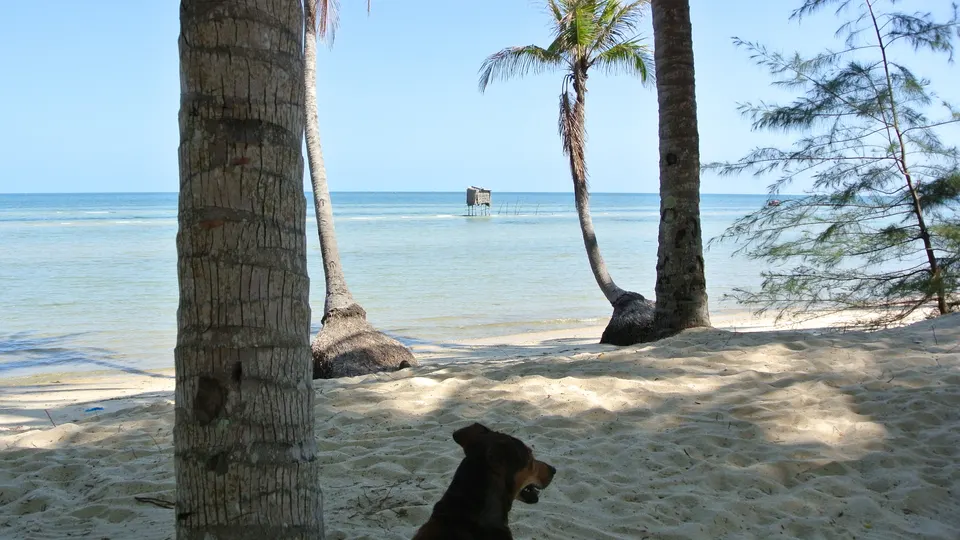
The north is not untouched. Big resorts and a safari park sit on its north-western coast, VnExpress notes. But the beaches beyond them, such as Ganh Dau and Bai Thom, are quieter and tree-lined, as the national tourism site describes them. Rach Vem, on the north coast, is known for the starfish in its shallow water and for simple seafood restaurants.
On the east coast, Ham Ninh, about 14–15 km from Duong Dong at the foot of the Ham Ninh hills, is described by Vietnam Airlines’ travel guide as one of the island’s oldest fishing villages. It is the place for ghe (ghẹ) (blue swimmer crab), often eaten in restaurants built over the water, and for dried squid and fish to take home. Its well-known old wooden pier no longer operates because it is damaged.
Fish sauce, pepper and pearls: what is genuinely from Phu Quoc?
The island’s most famous product is in a bottle. Nuoc mam Phu Quoc is made from anchovies (ca com (cá cơm)) caught in the island’s waters and salted on the boat straight after the catch. It ferments for 12–15 months in tall barrels of boi loi (bời lời) wood, a local forest timber, in workshops whose owners are known as nha thung (nhà thùng), “barrel houses”. The producers’ association has about 50 members, all barrel owners, mostly in Duong Dong and An Thoi (Nhan Dan).
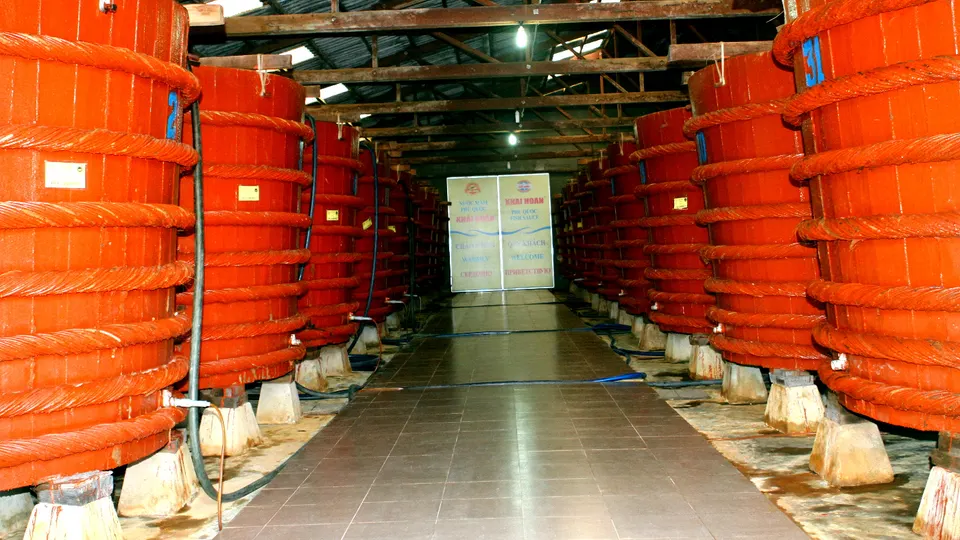
Its name is protected. Phu Quoc fish sauce became Vietnam’s first protected geographical indication in 2001 and, in October 2012, the first Vietnamese name protected in the European Union, where only fish sauce made from the island’s own anchovies may carry it, according to Tap chi Cong Thuong (Tạp chí Công Thương) and Vietnam (Việt Nam) News. The craft was organised as a guild in 1939 and was added to Vietnam’s national intangible heritage list in 2021, Bao Van Hoa (Báo Văn Hóa) reports. Tradition vs today: the barrels and the long fermentation are old, but the labels are new. Because the name is so widely copied, producers have piloted traceability stamps to push back against fakes. Buy at a barrel house or check the label for the protected Phu Quoc name; our guide to fish sauce by region compares the island’s sauce with Phan Thiet’s and Cat Hai’s and explains the protein number on the label.
Pepper is the second real island crop. Tap chi Cong Thuong counts more than 400 ha, concentrated in the north around Cua Duong and Cua Can, with a collective trademark since 2011 and a harvest around the lunar December and January. About 80% of it is sold to visitors, through farm visits, night markets and tourist areas, so a pepper garden in the north is one of the few places where tourism and local farming meet directly.
Pearls are the most mixed story. Pearl farms on the island culture them, but VOV reported in 2014 that most of the oysters used are brought in from elsewhere, and warned that cheap strands at the night market may be imitations made of ground shell. The same report described the other side of the boom: of 94 tourism and residential projects then planned, only 13 were operating, with deforestation and sand and stone extraction as pressing problems. Much has been built since, so treat those figures as history rather than today’s picture.
What should you eat in Phu Quoc?
Phu Quoc’s food is seafood and noodles. Two noodle dishes are particular to the island, and both are easiest to find in Duong Dong in the morning. Bun quay (“stirred noodles”) came to the island from Central Vietnam in 1955 as a shrimp noodle dish; from 1996 the Kien Xay (Kiến Xây) family reworked it with local seafood, according to Vietnam’s national tourism site. You mix your own dipping sauce from chilli, sugar, salt and calamansi at the counter, then stir it into a bowl of fresh noodles with shrimp and fish cake.
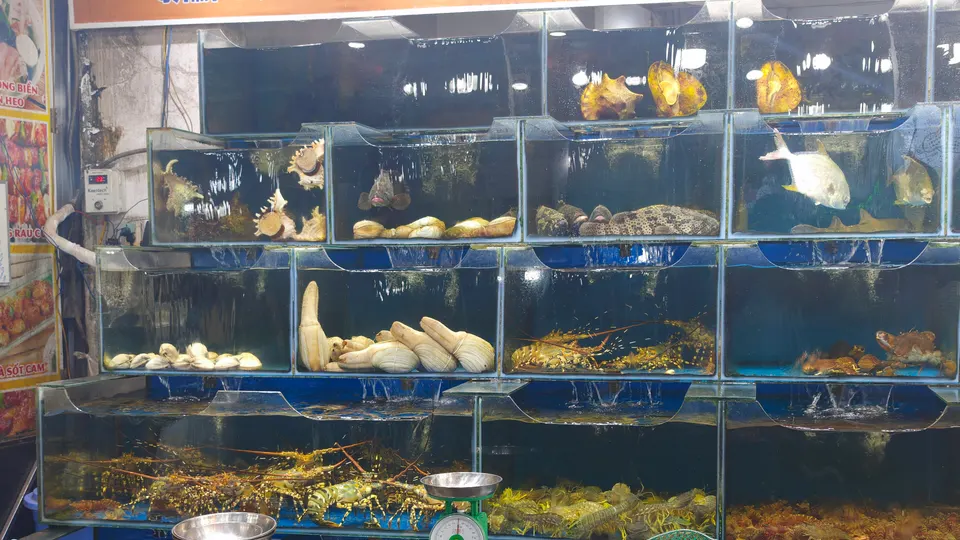
Bun ken is a fish broth enriched with coconut milk and seasoned with turmeric and lemongrass, poured over cold rice noodles with shredded green papaya, cucumber and herbs. Znews suggests the name may come from Khmer, where “ken (kèn)” refers to a dish made with coconut milk; treat that as a likely explanation rather than settled history. Goi ca trich, raw herring salad wrapped in rice paper with herbs, grated coconut and peanuts, is the seafood dish most guides send you to try. For crab, go to Ham Ninh.
The Duong Dong night market is on its way out. For a decade the Bach Dang night market beside Dinh Cau sold grilled seafood, pepper and souvenirs, and most visitors went at least once. Its lease ended on 31 December 2025, the special zone first set a closing date after Tet 2026 (VnExpress International), then promised in April 2026 not to abolish the market but to look for a new site (Tuoi Tre News). In October 2026 traders said the Bach Dang market is due to stop trading at the end of 2026, that no night market will remain in the town centre and that no replacement site has been announced; the night markets and walking streets of the big resort areas in the north and south carry on (Phu Nu Viet Nam). If you travel in December 2026 it may still be there; after that, check locally. Not everyone will miss it: Vietnam Coracle found it touristy and overpriced and sends seafood lovers to the shacks on the east coast north of Ham Ninh, at Rach Vem or at Dat Do (Đất Đỏ) instead.
There are no MICHELIN picks on the island yet: the guide announced Phu Quoc on 1 October 2026 and will publish its first selection in mid-2027, VOV reported. The cards below are local favourites near the river mouth in Duong Dong, each named by at least two independent sources and re-checked in November 2026; for the bigger picture of southern cooking, see our food hub.
How many days, and in what order?
Three to five days is enough for one base and the other sides as day trips. A plan that works in the dry season:
- Day 1, Duong Dong. Bun ken or bun quay for breakfast, a fish sauce barrel house, Dinh Cau shrine (built 1937, VnExpress International notes) and sunset on Long Beach, then seafood for dinner (the Bach Dang night market only if you are there before it closes at the end of 2026).
- Day 2, the south. Phu Quoc Prison in the morning, Bai Sao for the afternoon, or the Hon Thom cable car if you want the theme park and the islands from the air.
- Day 3, north and east. A pepper garden, the national park’s forest and streams, Rach Vem, and a crab lunch or dinner at Ham Ninh.
- Days 4–5, optional. An island-hopping boat from An Thoi in calm weather, or simply a beach day where you are staying.
If you are combining Phu Quoc with the mainland, the An Giang coast and the Mekong Delta are the natural pairing, by fast boat from Rach Gia or Ha Tien (see below).
When to go, and how safe is the sea?
Short answer: go in the dry season, roughly November to April. December and January are the most reliable months and April and May the hottest; the rainy southwest monsoon runs from about May or June to October, with July to September the stormiest stretch. Christmas, New Year and Tet are the busiest weeks, and the 2027 Tet holiday runs from 4 to 10 February, so book early for those dates. Our guide to the best time to visit Phu Quoc goes month by month, with dated ferry cancellations and which coast is cleaner in which season.
Take the sea seriously. On 31 August 2025 five tourists were swept out by big waves while swimming in rough weather, and the authorities asked operators to stop tourists swimming in bad weather, DTiNews reported. In July 2025, inter-island boat tours were stopped while storm Wipha passed, Vietnam News reported. The worst accident came on 11 July 2026, when a tourist speedboat capsized about 400 m after leaving Hon May Rut Ngoai for An Thoi in strong winds; 15 of the 32 Indian tourists on board died. Three days later the special zone ordered registered and inspected boats, no overloading, enough life jackets, certified crews and no departures in bad weather (Tuoi Tre News).
Rubbish on the east coast in the northeast monsoon. From late October the northeast monsoon pushes floating debris onto east-coast beaches such as Kem, and the special zone organises clean-ups through the season, VietnamPlus reported on 30 October 2026; VnExpress International called the rubbish at Sao and Khem beaches a recurring seasonal problem in January 2026. Check recent reports before you book an east-coast hotel for November to February.
What that means for you: book boats with operators who brief you and hand out life jackets, wear the jacket rather than holding it, and accept a cancellation when the sea is up. On the beach, swim where others swim, stay out of the water when flags or staff say so, and keep children close.
How do you get to Phu Quoc: flights, ferries and the visa rule
Most people fly. Phu Quoc International Airport is a short taxi ride from Duong Dong (VnExpress puts it at roughly 10–15 minutes), and in December 2025 Bao Van Hoa counted 17 airlines serving it. The newest, Sun PhuQuoc Airways, flew its first commercial services into the island on 1 November 2025, from Hanoi, Ho Chi Minh City and Da Nang, VTC News reported; by July 2026 its domestic network also took in Nha Trang, Van Don and Hai Phong, according to the Hai Phong city portal, and its first international route, to Taipei, started on 29 March 2026, VietNamNet reported. Traffic is heavy at peak times: over the nine days of Tet 2026 the airport handled 767 flights, more than half of them international, and about 260,000 passengers, Bao Phap Luat (Báo Pháp luật) reported. Our guide to getting around Vietnam compares the domestic airlines.
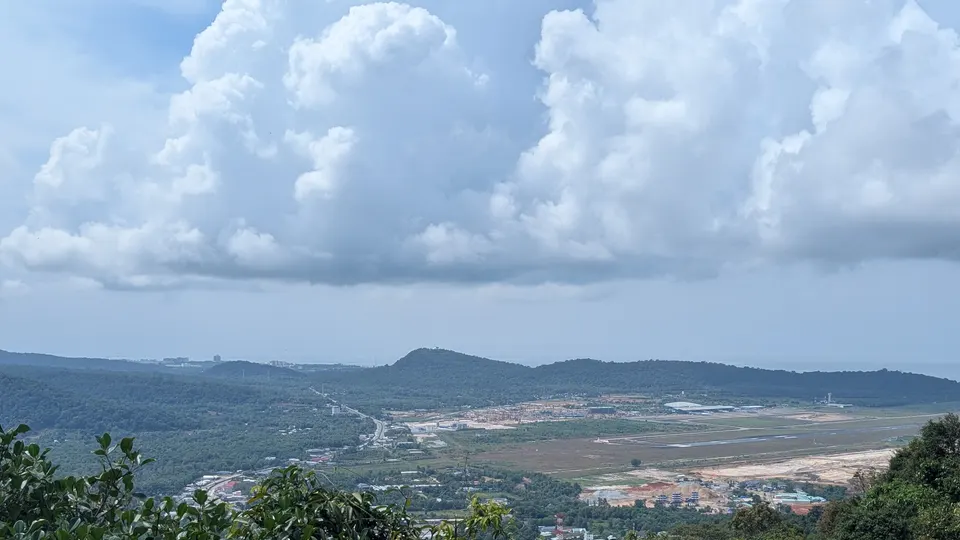
The airport is a building site until 2027. Sun Group is expanding it for APEC 2027. A second runway, 3,300 m long and able to take wide-body jets, was finished in July 2026 (Tuoi Tre News) and took its first commercial flight on 29 October 2026. The new T2 terminal, designed for 20–24 million passengers a year in its first phase, was about 95% complete in its main concrete structure at the end of October, CafeF reported. Opening targets have moved: VietnamPlus gave April 2027 in August, CafeF gave May 2027 for both runways and T2 together. Until then you still use the old terminal, so allow extra time at check-in in peak weeks.
You can also cross from the mainland. Rach Gia and Ha Tien, the two ferry ports, have been part of An Giang province since July 2025.
| Option | From | Crossing time | Good to know |
|---|---|---|---|
| Flight | Hanoi, Ho Chi Minh City, other Vietnamese airports and international routes | Shortest door to door | Book early for Christmas, New Year and Tet |
| Fast boat | Rach Gia | About 2.5 hours | Four operators in March 2024: Superdong, Ngoc Thanh, Hoa Binh Ship and Phu Quoc Express; departures in the morning and around midday |
| Fast boat | Ha Tien | About 1–2 hours | Superdong and Phu Quoc Express (March 2024) |
| Car ferry | Ha Tien or Rach Gia | About 3 hours | For travellers with a car or motorbike; far more crossings from Ha Tien than from Rach Gia |
Crossing times and operators are as Bao Van Hoa reported them in March 2024; timetables and fares change, so check with the operator. All boats stop when the port authority judges the sea unsafe, in the dry season too: on 20 November 2025 fast boats from both ports were suspended for strong northeast winds and waves of 1.5–2.5 m, Bao Van Hoa reported. Cross early in your trip, never the day before an international flight.
The 30-day visa exemption. Phu Quoc has its own visa rule. Foreign visitors can stay on the island for up to 30 days without a visa if they fly directly into Phu Quoc International Airport from abroad, or reach it through an international transit area at another Vietnamese international airport. Anyone who then wants to travel on to the rest of Vietnam needs a valid visa or e-visa (vietnam.travel). The rule applies to the island, not to the whole of An Giang, and the details change from time to time, so check the official page before you book. Arriving by boat from Rach Gia or Ha Tien means you have already entered mainland Vietnam, so you need a visa or e-visa for that route, unless your nationality is one of the 25 that the same official page lists for a 45-day visa-free stay anywhere in Vietnam (valid into 2028). The e-visa is valid for up to 90 days.
How do you get around the island?
Phu Quoc has no rail line yet, so everything goes by road: taxi, ride-hailing app, hotel shuttle or rented motorbike. Distances matter more than traffic. An Thoi is about 30 km from Duong Dong, Ham Ninh 14–15 km and Ong Lang about 7 km, while Vung Bau in the north-west is about 45 minutes away by road, according to the national tourism authority and Vietnam Airlines’ travel guide.
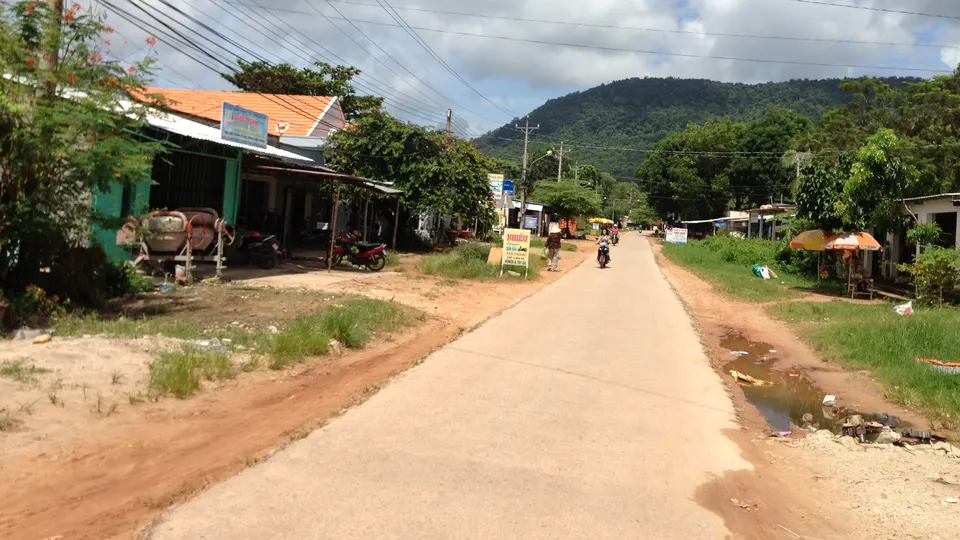
- Grab and taxis. Grab runs cars and motorbikes on the island: its fare table lists GrabCar and GrabBike for An Giang and adds a 10,000-dong fee to car pick-ups at Phu Quoc airport. Our guide to using Grab in Vietnam explains booking and paying.
- Buses. In June 2023 the island’s first electric bus routes were approved, from Duong Dong to Bai Truong (about 12.5 km) and from Ganh Dau through Duong Dong to the airport (about 44 km), Nhan Dan reported. Routes and fares may have changed since, so ask your hotel.
- Light rail, not yet. A line of nearly 18 km from the airport to the APEC conference centre in the south broke ground in December 2025, with completion aimed for before APEC 2027, the Tap chi Toa an (Tạp chí Tòa án) magazine reported. It is not running yet.
- Motorbikes. Rent one only if you are an experienced rider with a valid licence and insurance that covers it; the roads in the north and east are long, and some side roads are unsealed.
What it means for you. Your choice of area decides how much of the trip you spend in taxis. From the north-west resorts, a night out in Duong Dong or the south is a long round trip, so plan transfers before you book. For day trips to the far side of the island, a car with a driver for the day is usually simpler than a string of single rides.
Where to eat local noodle dishes in Dương Đông
Local favourite
Bún Quậy Kiến Xây
Phú Quốc · Dương Đông (former ward), Phú Quốc special zone
28 Bạch Đằng Street, Dương Đông
The family shop that turned the island's shrimp noodles into bún quậy from 1996, according to Vietnam's national tourism site. You mix your own dipping sauce at the counter, then stir it into the bowl.
Order: A bowl of bún quậy with shrimp and fish cake; mix the sauce (chilli, sugar, calamansi, salt) to taste before stirring it in.
Kiến Xây has several branches on the island (Vietnam Airlines' guide also lists 343 Đường 30 Tháng 4) and on the mainland; this card means the original shop at 28 Bạch Đằng, the address vietnam.travel, VnExpress and Vietnam Airlines give.
Recommended by: VnExpress (2023), Vietnam National Authority of Tourism (vietnam.travel), Vietnam Airlines travel guide, VnExpress (2020), Znews (2023) · checked November 2026
Local favourite
Bún Quậy Thanh Hùng
Phú Quốc · Dương Đông (former ward), Phú Quốc special zone
77 Đường 30 Tháng 4, Dương Đông
The other bún quậy shop that Vietnam's national tourism site, VnExpress and Znews name, described by vietnam.travel as popular with locals as well as visitors. A useful comparison if you have tried Kiến Xây.
Order: Bún quậy with seafood; make your own sauce first.
Recommended by: VnExpress (2023), Vietnam National Authority of Tourism (vietnam.travel), Znews (2023) · checked November 2026
Local favourite
Bún Kèn Út Lượm
Phú Quốc · Dương Đông (former ward), Phú Quốc special zone
Đường 30 Tháng 4, Dương Đông
The island's best-known bún kèn shop, run by Nguyễn Thị Lượm, who learned the dish from her mother. Bún kèn, a coconut-milk fish broth poured over cold noodles and green papaya, is particular to the island.
Order: A bowl of bún kèn; it is a breakfast and lunch dish, so go in the morning.
Sources give different house numbers on 30 Tháng 4 Street (42 in Vietnam Coracle, 2021; 87 in Vietnam Airlines' guide), and Vietnam Coracle reports that the shop once moved across the street, leaving a different bún kèn stall at the old site. Look for the Út Lượm name on the sign.
Recommended by: Znews (2023), Vietnam Airlines travel guide, Vietnam Coracle (updated July 2021) (2021), Việt Nam News (2019) · checked November 2026
Addresses and details can change; check before you go. We do not accept payment for listings.
Frequently asked questions
Is the Phu Quoc night market in Duong Dong still open?
For now, but not for long. The lease on the Bach Dang night market near Dinh Cau ended on 31 December 2025, and in October 2026 traders told Phu Nu Viet Nam it is due to stop trading at the end of 2026, with no new site in the town centre announced. The night markets and walking streets in the big north and south resort areas of Phu Quoc carry on.
Do I need a visa if I take the boat to Phu Quoc from Rach Gia or Ha Tien?
Yes, in most cases. Phu Quoc's 30-day visa exemption covers only foreigners who fly directly into Phu Quoc International Airport from abroad or through an international transit area, so arriving by boat from Rach Gia or Ha Tien means you need a Vietnamese visa or e-visa. The exception is the 25 nationalities that vietnam.travel lists for a 45-day visa-free stay anywhere in Vietnam, valid into 2028.
Is it safe to take an island-hopping boat tour from An Thoi?
It can be, in calm weather with a licensed operator, but take it seriously: on 11 July 2026 a tourist speedboat capsized on its way back to An Thoi and 15 people died. On 14 July 2026 the Phu Quoc special zone ordered registered and inspected boats, enough life jackets, no overloading, certified crews and no departures in bad weather, so wear your life jacket and accept a cancellation when the sea is rough.
Are there MICHELIN restaurants in Phu Quoc?
Not yet. The MICHELIN Guide announced Phu Quoc as its fourth Vietnamese destination on 1 October 2026, and its first Phu Quoc picks will appear in the MICHELIN Guide Vietnam 2027 selection in mid-2027, VOV reported. Until then, the island's best-known local shops are the bun quay (stirred seafood noodle) and bun ken (coconut-milk fish noodle) shops in Duong Dong.
How do I get around Phu Quoc without a car?
By Grab (cars and motorbikes), metered taxis and hotel shuttles; Phu Quoc has no rail line yet, and the light rail from the airport to the APEC conference centre in the south is still under construction for APEC 2027. If you stay in the north-west resorts, a car with a driver for the day is usually simpler than a string of single rides to Duong Dong or An Thoi.
Key sources
- Quản lý và phát triển chợ đêm ở Phú Quốc: Tiểu thương mong gì? · Phụ nữ Việt Nam, 23 October 2026
- Phú Quốc chính thức trở thành đặc khu: Mở cánh cửa vận hội mới · Sài Gòn Giải Phóng, 1 July 2025
- PM calls for efforts to organise APEC 2027 better than two previous hostings · VTV, 28 July 2025
- Visa requirements · Vietnam National Authority of Tourism (vietnam.travel), updated 2026
- The UNESCO Kien Giang biosphere reserve · Vietnam National Authority of Tourism (vietnam.travel)
- Phu Quoc Prison Relic · Vietnam National Authority of Tourism (vietnamtourism.vn)
- Giữ gìn nghề nước mắm truyền thống Phú Quốc · Nhân Dân, 9 July 2025
- Vietnam's Phu Quoc strengthens waterway regulations after tourist boat accident · Tuổi Trẻ News, 14 July 2026
All 56 sources and further reading
- Phu Quoc night market to suspend operation after Tet holiday · VnExpress International, 9 January 2026
- Vietnam's Phu Quoc pledges to keep night market as key to island economy · Tuổi Trẻ News, 1 April 2026
- Cận cảnh 8.000 người hối hả hoàn thiện sân bay Phú Quốc đón APEC 2027 · CafeF, 31 October 2026
- Dự án Sân bay Phú Quốc tăng tốc thi công, sẽ cán mốc vận hành từ tháng 4/2027 · VietnamPlus (VNA), 8 August 2026
- 3,300m-long second runway at Phu Quoc airport completed · Tuổi Trẻ News, 27 July 2026
- Cảng hàng không quốc tế Phú Quốc: 767 chuyến bay trong 9 ngày Tết, phục vụ hơn 260.000 khách · Báo Pháp luật Việt Nam, 23 February 2026
- Sun PhuQuoc Airways launches first international route to Taipei · VietNamNet, 30 March 2026
- Phu Quoc strengthens global tourism appeal ahead of APEC 2027 · Việt Nam News, 8 July 2026
- Các đặc sản Phú Quốc · Vietnam Airlines travel guide
- Phú Quốc – Hòn đảo mà thế giới đang đổ về · Báo Văn hóa, 14 December 2025
- Phu Quoc joins forces to keep beaches clean during monsoon season ahead of APEC 2027 · VietnamPlus, 30 October 2026
- Tourists shocked as trash swamps Phu Quoc's most famous beaches · VnExpress International, 3 January 2026
- Đặc khu Phú Quốc: Kỳ vọng là đầu tàu phát triển du lịch biển Đồng bằng sông Cửu Long · Nhân Dân, 11 July 2025
- Đề nghị công nhận đặc khu Phú Quốc là Khu kinh tế đặc biệt · VietnamPlus (VNA), 30 October 2026
- Những chuyến bay đầu tiên của Sun PhuQuoc Airways bắt đầu cất cánh · VTC News, 1 November 2025
- Sun Phu Quoc Airways to launch two new routes from Hai Phong starting July 25, 2026 · Hai Phong City Portal, 24 July 2026
- Vé máy bay khan hiếm, du khách có thể chọn cách này tới Phú Quốc · Báo Văn Hóa, 23 March 2024
- Tàu cao tốc đi Phú Quốc tạm ngưng hoạt động do thời tiết xấu · Báo Văn Hóa, 20 November 2025
- Bảng thông tin các dịch vụ trên ứng dụng Grab · Grab Vietnam
- Bãi Ông Lang · Vietnam Airlines travel guide
- Bãi Vũng Bầu · Vietnam Airlines travel guide
- Vận hành tuyến xe buýt điện thông minh đầu tiên tại Phú Quốc (theo Báo Nhân Dân) · Báo Lào Cai, 29 June 2023
- “Vượt” Đà Nẵng và TP HCM, Phú Quốc trở thành đô thị đầu tiên sở hữu tàu điện LRT · Tạp chí Tòa án nhân dân, 24 December 2025
- Tết Nguyên đán 2027: công chức, viên chức được nghỉ 7 ngày liên tục · Hà Tĩnh provincial portal, 9 October 2026
- Phu Quoc · Vietnam National Authority of Tourism (vietnam.travel)
- Phu Quoc National Park · Vietnam National Authority of Tourism (vietnamtourism.vn)
- Kien Giang Biosphere Reserve · Nature and Biodiversity Conservation Agency, Ministry of Agriculture and Environment
- Tuyến cáp treo dài nhất thế giới tại Phú Quốc chính thức vận hành · VnEconomy, 6 February 2018
- Phu Quoc visa-free welcome amplifies idyllic island's attractions · VnExpress International, 12 November 2022
- 48 giờ ở Phú Quốc · VnExpress, 8 December 2023
- Bún 'quậy' Phú Quốc · VnExpress, 15 March 2020
- Bún quậy – Phu Quoc's stirring noodle · Vietnam National Authority of Tourism (vietnam.travel)
- Nghề làm nước mắm ở Phú Quốc trở thành di sản văn hóa phi vật thể quốc gia · Báo Văn Hóa, 27 May 2021
- Phu Quoc fish sauce granted PDO in EU · Việt Nam News (Bizhub), 17 July 2013
- Thí điểm thành công dán tem truy xuất nguồn gốc nước mắm Phú Quốc · Tạp chí Công Thương (Ministry of Industry and Trade), 14 August 2022
- Hồ tiêu – Sản vật trên Đảo ngọc Phú Quốc · Tạp chí Công Thương, 30 September 2024
- Phú Quốc: Đảo ngọc – đừng để ngọc rơi… · VOV, 8 February 2014
- Làng chài Hàm Ninh · Vietnam Airlines travel guide
- Where to Eat Seafood on Phu Quoc Island · Vietnam Coracle, April 2022
- Bún Kèn noodle soup, Phu Quoc Island · Vietnam Coracle (updated July 2021)
- Bún Quậy Kiến Xây, Duong Dong Town, Phu Quoc Island · Vietnam Coracle, 2021
- Bún kèn, a speciality of Phú Quốc Island · Việt Nam News, 22 October 2019
- Ăn bún kèn ở Phú Quốc · Znews, 12 June 2022
- Ăn gì ngon ở Phú Quốc khi đi xem Maroon 5 · Znews, 16 December 2023
- Phu Quoc joins MICHELIN Guide as Vietnam's fourth destination · VOV, 2 October 2026
- Vụ lật ca nô ở Phú Quốc: Cứu sống 21 người, 15 người thiệt mạng · VOV, 11 July 2026
- Five Phu Quoc tourists rescued after being swept to sea · Dân Trí International (DTiNews), 1 September 2025
- Boat tours of Phú Quốc archipelago stopped amid Typhoon Wipha threat · Việt Nam News, 21 July 2025
Keep exploring
 South Vietnam · Travel Best Time to Visit Phu Quoc: Which Month to Book Which month to book for Phu Quoc: dry-season beach weather, Tet 2027 crowds, rainy-season storms, ferry cancellations and the cleaner coast in each season.
 South Vietnam · Travel Phu Quoc or Con Dao: Which Vietnam Island Suits You? Phu Quoc or Con Dao? Compare seasons, beaches, crowds, history, flights and the Tran De ferry as of November 2026, with a decision table for every trip.
 South Vietnam · Travel Mekong Delta: Which Area to Visit and Where to Base Which part of the Mekong Delta to visit and where to base: Can Tho, Ben Tre or Chau Doc, Cai Rang market hours, seasons, where to eat, new province names.
 South Vietnam · Travel Ho Chi Minh City (Saigon): How Many Days and What to See Ho Chi Minh City (Saigon) explained: the 2025 merger and new wards, how many days to stay, Metro Line 1, Long Thanh airport, palace and museum tickets.