All three regions · Travel
Vietnam in January 2027: Where to Go and What to Book
Where to go in Vietnam in January 2027: cold Hanoi and Sa Pa, drying Hoi An, dry Saigon and Phu Quoc, and the Tet rush from 22 January with what to book now.

January is a good month for most of Vietnam: the South, the Central Highlands and the island of Phu Quoc (Phú Quốc) are dry, the central coast is drying out, and only the North is cold and grey. As of November 2026, Vietnam’s national forecasting centre expects January 2027 to run 0.5–1.5 °C warmer than average, and the Tet (Tết) travel rush starts inside the month, with Vietnam Airlines’ peak period from 22 January.
January is the coldest month in the North and one of the driest almost everywhere else. Saigon, the Mekong Delta, the Central Highlands and the islands of Phu Quoc and Con Dao (Côn Đảo) are in the heart of their dry season; Hanoi and the mountains are cool to cold, grey and damp; and the central coast around Hue (Huế) and Hoi An (Hội An) is coming out of its rainy season. Our Vietnam weather by month guide sets January beside the other eleven months; this page is the detailed January plan.
What follows is region by region, on the station averages of Vietnam’s own weather service, with the national forecasting centre’s outlook for January 2027, the dates that matter this January (New Year, the kitchen gods’ day and the start of the Tet rush), what to book now, a two-week route and the mistakes January travellers make. If you are still choosing a month, read the best time to visit Vietnam first; if your trip starts before New Year, our Vietnam in December guide covers the Christmas peak.
Vietnam in January at a glance
The figures are January averages for 1991–2020 from the Viet Nam Meteorological and Hydrological Administration, published through the World Meteorological Organization (WMO). Sa Pa, Hoi An, Da Lat (Đà Lạt) and the islands have no station in that service, so the nearest station is shown; the verdict is our summary of each section below.
| Region | January average (day/night) | Rain in January | What to expect | Verdict |
|---|---|---|---|---|
| North: Hanoi, Ha Long (Hạ Long) Bay | Hanoi 20/15 °C | 28 mm, 11 rainy days | The coolest month; grey skies, rain on about 11 days | Good, with a warm jacket |
| Northern mountains: Sa Pa, Ha Giang (Hà Giang) | Lao Cai (Lào Cai) city 20/15 °C; the peaks are far colder | Lao Cai 40 mm, 9 rainy days | Cold and misty; frost in cold spells, snow rare | Go, but pack for near-freezing nights |
| Central coast: Hue, Da Nang (Đà Nẵng), Hoi An | Da Nang 25/20 °C | 83 mm, 14 rainy days | Rains easing; the coolest weeks of the year, some drizzle | Good for sights, not for beaches |
| South-central coast: Nha Trang | Nha Trang 27/22 °C | 54 mm, 9 rainy days | Rainy season over; mostly sunny | Good; beach likely |
| Central Highlands: Da Lat, Buon Ma Thuot (Buôn Ma Thuột) | Buon Ma Thuot 27/18 °C | 7 mm, 3 rainy days | Dry and clear; cool nights in Da Lat | Good |
| South: Saigon, Mekong Delta | Ho Chi Minh City 32/23 °C; Ca Mau (Cà Mau) 31/24 °C | 12 mm, 2 rainy days; 31 mm, 5 rainy days | Dry and hot | Most reliable |
| Islands: Phu Quoc, Con Dao | No station in the service | — | Phu Quoc dry and calm; Con Dao dry, but big waves in its main bay | Phu Quoc is the best beach choice |
Reading the table. January rewards a trip that moves from cold to warm: the North for atmosphere and mountains, the centre once its rains have eased, and the South or an island to finish. The real constraint this year is not the weather but the calendar: from about 22 January, transport runs on the Tet timetable.
How cold are Hanoi, Ha Long Bay and Sa Pa in January?
Cold enough to need a proper jacket. January is Hanoi’s coolest month on the 1991–2020 averages, at about 20 °C by day and 15 °C at night, and its 28 mm of rain is spread over about 11 days, so expect damp, grey weather more than downpours. The national tourism authority (VNAT) says lows of around 10 °C are possible in Hanoi from late December to March, and warns that temperatures on Ha Long Bay in January “can be frigid”.
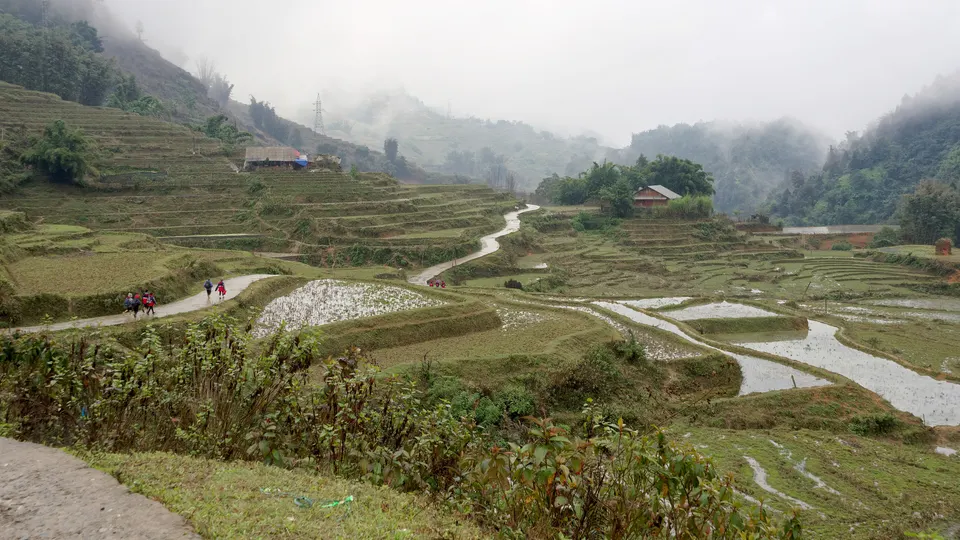
Sa Pa and the peaks. Sa Pa has no long-term station in the WMO service. Lao Cai, the valley city at the end of the railway, averages about 20 °C by day and 15 °C at night, but Sa Pa sits much higher and is much colder. On 7 January 2026, the summit of Fansipan, the peak above Sa Pa, fell to −3 °C at 6 am, and a white layer of frost covered the tourist paths and stone steps (VOV). VNAT notes that hotels in the area have heated blankets; our Sa Pa guide covers the town, the villages and the cable car.
Snow is the exception now. VNAT still mentions occasional snowfall in Sa Pa in January, and on 24 January 2016 snow fell heavily enough to coat roofs and vehicles in the town, Tuoi Tre News reported. Since then, falls have thinned out. The last notable one, on 26 January 2025, was thin, patchy and mostly on high ground such as Fansipan and the O Quy Ho (Ô Quy Hồ) pass, and melted quickly, Znews reported in February 2026. A researcher quoted there explains why: the lowest temperature of the year has been rising by about 0.2 °C a decade, and cold air now tends to arrive fast and leave even faster, without the long, stable cold that snow needs.
The 2027 outlook. The National Center for Hydro-Meteorological Forecasting expects January 2027 temperatures to run 0.5–1.5 °C above the long-term average, with cold air weaker than usual and the coldest spells possibly arriving later than normal, VietnamPlus reported in October 2026. It also expects short, sharp cold snaps to remain possible, so an above-average January in the North is still a cold one.
Has the rain stopped in Hue, Hoi An and Da Nang?
Mostly, but not completely. Da Nang, next to Hoi An, averages about 83 mm of rain over 14 rainy days in January: less than a third of December’s 272 mm, but far more than February’s 22 mm. VNAT says that in Hoi An temperatures reach their coldest point in January and warm up just before Tet, and that in Hue January often brings a bit of mist, with temperatures going down to 15 °C early in the year (VNAT).
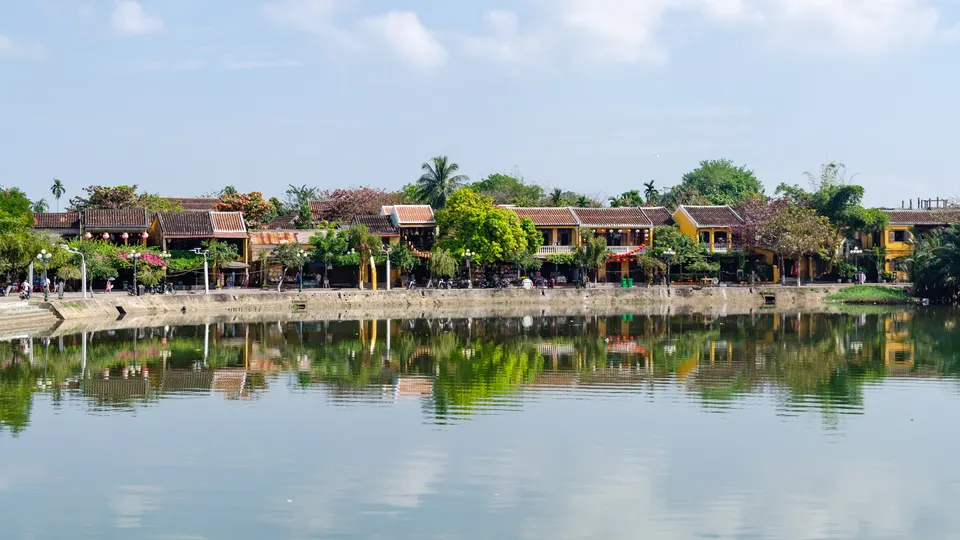
Drizzle, not floods. Vietnam Airlines’ travel guide flags central Vietnam in January for a “chance of drizzle”, not for storms. The rain is heavier the further north you go along the coast: Ha Tinh (Hà Tĩnh), north of Hue, averages about 97 mm over 15 rainy days. For January 2027 the national forecasting centre expects widespread heavy rain to become less frequent, with rainfall close to average from Thanh Hoa (Thanh Hóa) to Ha Tinh and 10–30 mm below average further south.
What it means for your plan. January is a good month for the old town of Hoi An, part of Da Nang city since the July 2025 merger, and for the citadel and tombs of Hue: walking weather, with the heaviest rain of the year behind it. It is not a beach month here. Bring a light rain jacket and a warm layer for the evenings, and keep the sea for the South.
Are Nha Trang and Da Lat good in January?
Yes. Both are past their rains. Nha Trang averages about 54 mm over nine rainy days in January, and its driest month, February, follows with only about 13 mm. VNAT describes January to August in Nha Trang as “hot, sunny, clear skies”, so it is the beach choice on the mainland this month. Nha Trang has been part of an enlarged Khanh Hoa (Khánh Hòa) province, merged with Ninh Thuan (Ninh Thuận), since July 2025.
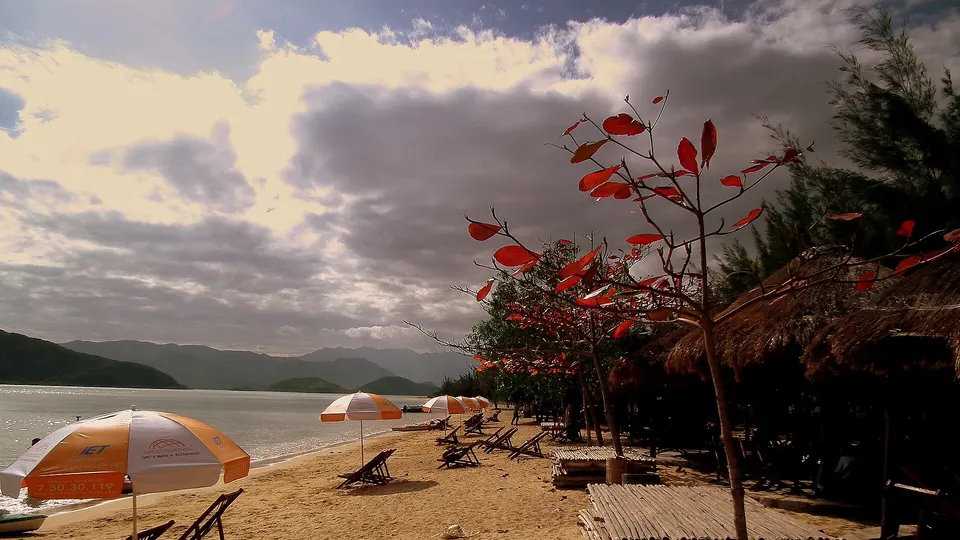
Da Lat. Da Lat has no station in the WMO service; Buon Ma Thuot, the nearest Central Highlands station, averages only about 7 mm of rain in January. VNAT calls November to May in Da Lat “cool to cold, dry, clear skies”, and Vietnam Airlines lists Da Lat among its January destinations. Da Lat is part of Lam Dong (Lâm Đồng) province, which absorbed two neighbouring provinces in July 2025.
The mai anh dao season. Da Lat’s pink cherry blossom, mai anh dao (mai anh đào), is a sign of spring in the hills, and the city times a festival to the weeks before Tet. In 2026 the festival ran from 15 January to 15 February, VNAT listed, with street-art and planting events from 20 January and a closing show at Da Lat railway station on 15 February (Viet Nam News). No dates for 2027 had been announced as of 20 November 2026, so check before you plan around it.
Why are Saigon, the Mekong Delta and the islands the safest bet?
Because January is the middle of their dry season. Ho Chi Minh City averages about 32 °C by day with only 12 mm of rain over two rainy days, and Ca Mau, at the southern tip of the Mekong Delta, about 31 mm over five. VNAT describes December to April in the city and the delta as “clear skies, hot, sunny”, with some pleasant fresh days early in the year.

Phu Quoc and Con Dao. VNAT puts Phu Quoc’s best time at November to April, when “the dry season brings calm seas, clear skies and the best beach weather” (VNAT), and Vietnam Airlines names both Phu Quoc and Con Dao among its January picks. Con Dao comes with a caveat: VnExpress’s island guide calls October to March its windy season, when the sea in Con Son bay, the main bay, has big waves, although the west and south-west coasts of the main island stay calm, and it puts the best time at March to September. Phu Quoc has been part of An Giang province since July 2025, and Con Dao part of Ho Chi Minh City. Our guide to the best time to visit Phu Quoc goes month by month, and Phu Quoc vs Con Dao helps you choose between the two islands.
The 2027 outlook. For the South and the Central Highlands, the forecasting centre expects January 2027 to be 1–2 °C warmer than average and generally dry, and rainfall on the lower Mekong 30–60% below average. Plan outdoor time for the mornings and late afternoons; for more on the region, start from our South Vietnam hub.
How does Tet 2027 shape a January trip?
Tet itself is in February, but January is its run-up. Lunar New Year’s Day falls on Saturday 6 February 2027 in the Hong Kong Observatory’s lunar calendar, and the Ministry of Home Affairs has set the public-sector holiday from Thursday 4 to Wednesday 10 February under Notice 11483/TB-BNV (Ha Tinh provincial portal). The last lunar month of the old year begins on 8 January, and from the second half of January the country is visibly getting ready.

| Date (2027) | What happens | Source |
|---|---|---|
| Friday 1 – Sunday 3 January | New Year’s Day: a three-day weekend for public-sector workers | VnEconomy, 10 October 2026 |
| Friday 22 January | Vietnam Airlines Group’s Tet peak period begins (to 20 February) | VOV, 20 August 2026 |
| Saturday 23 January | The railway’s Tet timetable begins (to 25 February) | VietnamPlus, 5 September 2026 |
| Friday 29 January | The railway’s peak period begins (to 17 February) | VOV, 4 September 2026 |
| Saturday 30 January | 23rd day of the last lunar month: families see off the kitchen gods (Ong Cong Ong Tao (Ông Công Ông Táo)) | Hong Kong Observatory; Bao Van Hoa |
| Thursday 4 – Wednesday 10 February | Official Tet holiday | Ministry of Home Affairs notice, via Ha Tinh portal |
| Saturday 6 February | Lunar New Year’s Day | Hong Kong Observatory |
The kitchen gods’ day. On the 23rd day of the last lunar month, families make offerings to see off the kitchen gods, who in the legend ride a carp to heaven to report on the household’s year; many families then release live carp into lakes and rivers, Bao Van Hoa explains. In 2027 that day is Saturday 30 January, and it is a reliable sign that Tet is near.
What it means for you. The first three weeks of January are ordinary travel time. From about 22 January, long-distance flights and trains run on the Tet calendar, and the closer you get to 4 February, the fuller they are. VNAT’s own advice for Tet is to avoid travelling around the country if you can and, if you must, to book transport and rooms far in advance. For the holiday itself, see our Tet 2027 travel guide; for what families do and how it differs from North to South, read Tet across the three regions.
What should you book early for January?
Anything that moves you between regions after about 22 January, and rooms in the places that fill first. The table sorts it by urgency, using the 2027 sales announcements.

| Book | Why | When |
|---|---|---|
| Any flight from 22 January onwards | Vietnam Airlines Group’s Tet peak runs from 22 January to 20 February; sales opened on 25 August 2026 (VOV) | Now |
| Any long-distance train from 23 January onwards | Tet timetable from 23 January to 25 February, on sale since 5 September 2026 (VietnamPlus); on some trains in the 29 January–17 February peak, changes and refunds cost 30% (VOV) | Now, and only once your dates are firm |
| The night train from Hanoi to Lao Cai for Sa Pa | A train ticket carries your name and must match your passport to be changed or refunded (VOV) | Early, especially for late January |
| A Ha Long Bay cruise | Cold, misty weather (VNAT); a boat with a clear policy on weather cancellations matters more than the date | Any time |
| Da Lat rooms in the flower season | The 2026 mai anh dao festival ran from 15 January to 15 February (VNAT); 2027 dates not yet announced | Once dates are announced |
| Phu Quoc flights and rooms | Dry season in January; flights after 22 January fall in the Tet peak | Before your Tet-period legs |
Tickets on the trains. Train tickets carry the passenger’s name: anyone over 14 needs valid photo ID, such as a passport, and a ticket can be changed or refunded only when its details match the ID. In the peak period, individual tickets must be changed or returned at least 24 hours before departure (VOV). Our Hanoi to Sa Pa guide compares the night train, the bus and the road.
A two-week January route from the cold North to the dry South
This route starts in the cold North, crosses the centre once its rains have eased, and ends in the dry South, finishing before the Tet rush if you start in the first week of January. The plan is ours, drawn from the weather patterns in the sections above; treat it as a sequence rather than a timetable, since we only give journey times a dated source confirms.

| Days | Where | Why it works in January |
|---|---|---|
| 1–2 | Hanoi | Cool walking weather; museums and cafes for grey days |
| 3–4 | Ha Long Bay, one night on a boat | Misty winter bay; pack warm layers for the deck |
| 5 | Back to Hanoi; night train to Lao Cai | Then the road up to Sa Pa |
| 6–7 | Sa Pa | Cold, misty mountains; frost possible on the peaks |
| 8 | Back to Hanoi; fly to Da Nang | Leave the cold for the drying centre |
| 9–11 | Hoi An, with a day in Hue | Rains easing; old towns, citadel and tombs |
| 12 | Fly to Ho Chi Minh City | Dry season |
| 13–14 and beyond | Saigon, then Phu Quoc or the Mekong Delta | Dry, hot and sunny; fly home from Ho Chi Minh City or Phu Quoc |
If your dates run past 22 January. Book the flights from day 8 onward before anything else, because they fall in Vietnam Airlines’ Tet peak. If you are still travelling around 4 February, plan to stay put in one city over the holiday, as our Tet guide explains. Our Vietnam in February guide picks up from there, with a route that starts when the holiday ends.
Swaps. Short on time or not keen on the cold? Drop Sa Pa and spend two nights in Da Lat instead, which is dry in January. For more beach time, replace the Mekong Delta with Nha Trang or spend longer on Phu Quoc. For a year-round version of this trip, see our two-week Vietnam itinerary.
What to pack for January, and the mistakes to avoid
Pack for three climates. For the northern winter, Vietnam Airlines’ travel guide advises warm jackets, insulated layers and waterproof boots, especially for Sa Pa and Ha Giang. Add a light rain jacket for Hue and Hoi An, and summer clothes, sunscreen and a hat for Saigon and the islands.
Common mistakes:
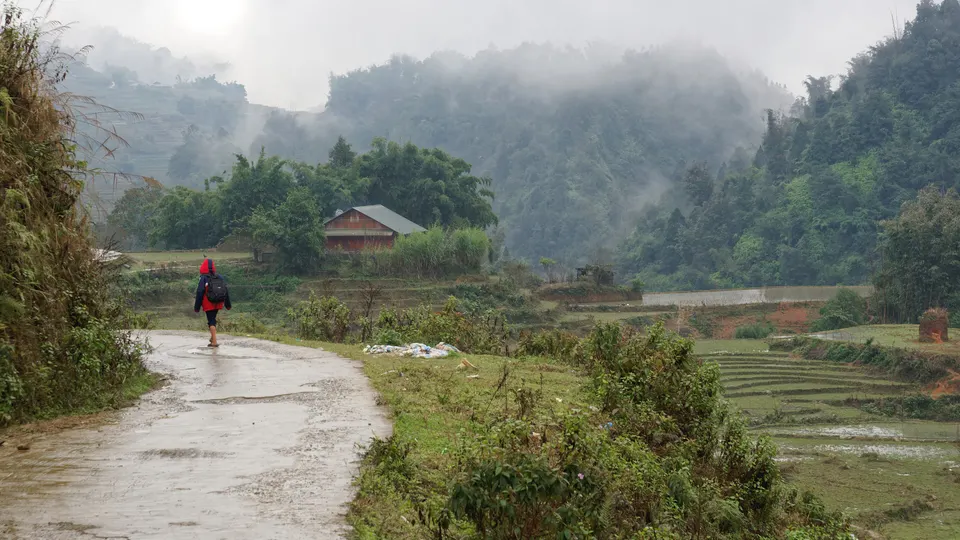
- Planning a trip around snow in Sa Pa. Frost is likely in a cold spell; snow is now rare and short-lived.
- Expecting beach weather in Da Nang or Hoi An. January is the coolest point of the year on that coast. Go for the old towns and the food, and put your beach days in Phu Quoc or Nha Trang.
- Assuming Tet is in January. In 2027 it is on 6 February, but the travel rush starts inside January: Vietnam Airlines’ peak from 22 January, the railway’s from 29 January.
- Ignoring Hanoi’s air on still winter days. When cold air settles, a temperature inversion can trap pollution: on 9 January 2026, one Hanoi station recorded an AQI of 228, “very unhealthy”, and IQAir ranked Hanoi fourth among the world’s most polluted cities that morning (VnExpress International). Check an air-quality app and plan indoor time on bad days.
- Treating the seasonal outlook as a forecast. A warmer-than-average January still brings cold snaps. Check the national forecast in the week you travel, especially before a mountain road or a boat trip.
Before you go, check three things: whether any long journey falls on or after 22 January (book it now), the national forecast for the North a few days before you head for Sa Pa or Ha Long, and whether Da Lat has announced its 2027 flower-festival dates if you plan to be there.
Frequently asked questions
Is January a good time to visit Vietnam?
Yes, for most of the country. Ho Chi Minh City, the Central Highlands, Nha Trang and Phu Quoc are dry, the central coast is drying out, and only the North is cold and grey, so a trip that ends in the South works well. Avoid long journeys from late January, when the Tet rush begins.
Does it still snow in Sa Pa in January?
Rarely. Frost on Fansipan and the high passes is common in cold spells, but snow needs a long, stable cold spell. The last notable fall, on 26 January 2025, was thin, patchy and mostly on high ground, and melted quickly.
Which beach should I pick in Vietnam in January: Da Nang, Nha Trang or Phu Quoc?
Phu Quoc, which the national tourism authority puts in its best season from November to April, with Nha Trang as the mainland choice. Da Nang and Hoi An are at the coolest point of their year in January and drizzle is still possible, so they suit sightseeing rather than the beach.
Do I need to book trains early for late January 2027?
Yes. Vietnam Railways runs its Tet timetable from 23 January to 25 February 2027, with tickets on sale since 5 September 2026, and on some trains in the 29 January to 17 February peak a change or refund costs 30%. Each ticket carries your name and must match your passport to be changed or refunded.
What should I pack for Vietnam in January?
Clothes for three climates: a warm jacket, insulated layers and waterproof boots for Hanoi, Sa Pa and Ha Giang, as Vietnam Airlines' travel guide advises, a light rain jacket for Hue and Hoi An, and summer clothes and sunscreen for Ho Chi Minh City and Phu Quoc.
Key sources
- Climatological information: Hanoi (1991–2020) · WMO World Weather Information Service, data from the Viet Nam Meteorological and Hydrological Administration
- Weather and climate in Vietnam · Vietnam National Authority of Tourism (vietnam.travel)
- Phu Quoc · Vietnam National Authority of Tourism (vietnam.travel)
- Fansipan temperature drops to -3°C as frost blankets peak · VOV, 7 January 2026
- Hanoi air quality returns to very unhealthy levels · VnExpress International, 9 January 2026
- Đà Lạt cherry blossom fest attracts visitors · Việt Nam News, 21 January 2026
- Tết Nguyên đán 2027, công chức, viên chức được nghỉ 7 ngày liên tục · Hà Tĩnh Provincial Portal (hatinh.gov.vn), 9 October 2026
- 8h ngày 5/9 ngành đường sắt mở bán vé tàu Tết Đinh Mùi 2027 · VOV, 4 September 2026
All 29 sources and further reading
- Climatological information: Lao Cai (1991–2020) · WMO World Weather Information Service, data from the Viet Nam Meteorological and Hydrological Administration
- Climatological information: Ha Tinh (1991–2020) · WMO World Weather Information Service, data from the Viet Nam Meteorological and Hydrological Administration
- Climatological information: Da Nang (1991–2020) · WMO World Weather Information Service, data from the Viet Nam Meteorological and Hydrological Administration
- Climatological information: Nha Trang (1991–2020) · WMO World Weather Information Service, data from the Viet Nam Meteorological and Hydrological Administration
- Climatological information: Buon Me Thuot (1991–2020) · WMO World Weather Information Service, data from the Viet Nam Meteorological and Hydrological Administration
- Climatological information: Ho Chi Minh City (1991–2020) · WMO World Weather Information Service, data from the Viet Nam Meteorological and Hydrological Administration
- Climatological information: Ca Mau (1991–2020) · WMO World Weather Information Service, data from the Viet Nam Meteorological and Hydrological Administration
- Từ tháng 11/2026-1/2027: El Nino tiếp tục duy trì cường độ rất mạnh · VietnamPlus (TTXVN), 15 October 2026
- Mùa đông năm nay rất ấm, El Nino duy trì cường độ rất mạnh đến tháng 1/2027 · Thanh Tra, 16 October 2026
- Da Lat Mai Anh Dao Flower Festival 2026 · Vietnam National Authority of Tourism (vietnam.travel)
- Seasons in Vietnam · Vietnam Airlines travel guide
- Chuyên gia chỉ nguyên nhân cốt lõi khiến Sa Pa hầu như hết tuyết · Znews, 7 February 2026
- Snow falls heavily in Sa Pa as cold front hits northern Vietnam · Tuổi Trẻ News, 24 January 2016
- Gregorian-Lunar Calendar Conversion Table of 2027 · Hong Kong Observatory
- Dự kiến các ngày nghỉ lễ, Tết trong năm 2027 · VnEconomy, 10 October 2026
- Ngành Đường sắt bắt đầu mở bán 300.000 vé tàu Tết Nguyên Đán Đinh Mùi · VietnamPlus (TTXVN), 5 September 2026
- Vietnam Airlines to open ticket sales for Lunar New Year holiday · VOV, 20 August 2026
- Cẩm nang du lịch Côn Đảo · VnExpress, updated 4 February 2026
- A traveller's guide to Tet holiday · Vietnam National Authority of Tourism (vietnam.travel)
- Phong tục của người Việt trong lễ cúng ông Công ông Táo · Báo Văn Hóa, 16 January 2020
- Names and administrative centers of 34 provinces and centrally-run cities specified · Government of Viet Nam online newspaper (baochinhphu.vn), 15 April 2025
Keep exploring
 North · Central · South · Travel Vietnam Weather by Month: What to Expect in Each Region Vietnam weather month by month for Hanoi, Hoi An, Nha Trang, Da Lat, Saigon and Phu Quoc: official averages, typhoon season, 2027 holidays and El Nino outlook.
 North · Central · South · Travel Vietnam in December 2026: Where to Go, What to Book Vietnam in December 2026: dry Saigon and Phu Quoc, cool Hanoi, a wet Hue–Hoi An coast, Da Lat's festival from 12 Dec, the new Long Thanh airport, what to book.
 North · Central · South · Travel Tet 2027 in Vietnam: When to Travel and What's Open Travelling at Tet 2027 (4–10 Feb): when to book trains and flights, fares as of November 2026, Long Thanh airport, and what stays open in Hanoi, Hue and Saigon.
 South Vietnam · Travel Best Time to Visit Phu Quoc: Which Month to Book Which month to book for Phu Quoc: dry-season beach weather, Tet 2027 crowds, rainy-season storms, ferry cancellations and the cleaner coast in each season.