North Vietnam · Travel
Sa Pa (Sapa): When to Go, How Many Days and What to See
Sa Pa (Sapa) trip planner: when to see golden or flooded rice terraces, how many days to stay, which Hmong and Dao villages to visit, and Fansipan in brief.
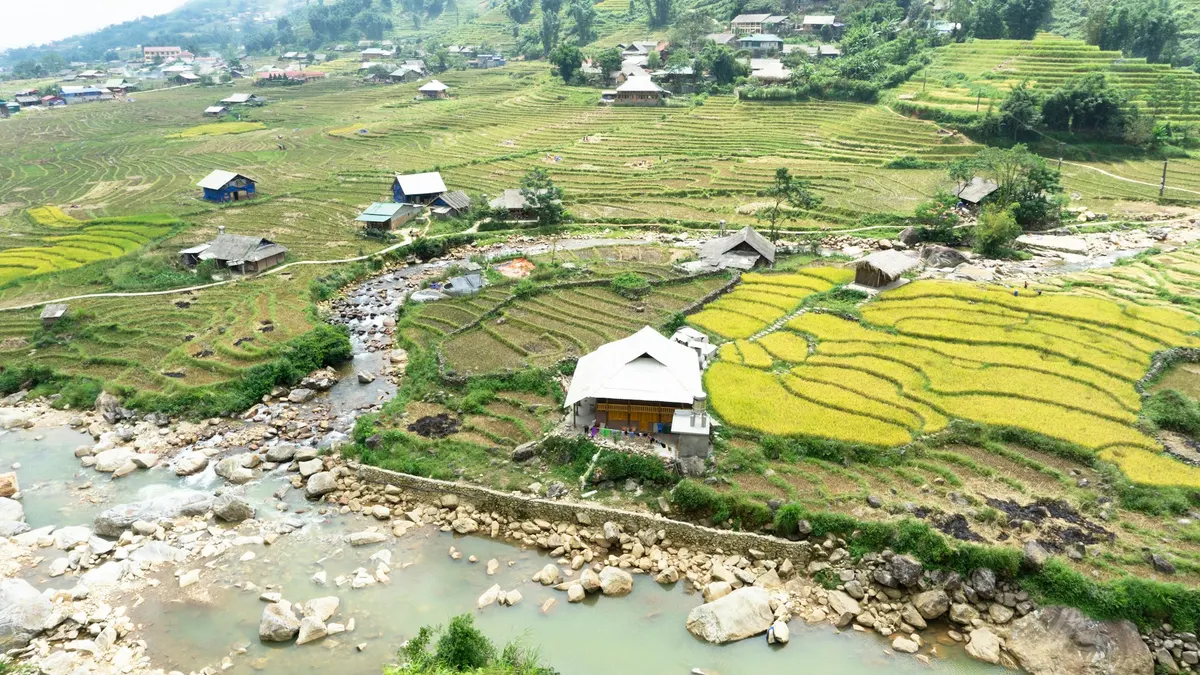
Sa Pa (Sapa) is worth two or, better, three nights: a day for the town and Cat Cat village, a day for the rice terraces and villages of the Muong Hoa valley, and a clear morning for Fansipan. Go from September to November for golden rice, or from late April to May for flooded terraces. As of November 2026 the Fansipan cable car costs 850,000 dong return for adults from outside Lao Cai province, according to the operator’s August 2026 guide, and Sa Pa ward is holding a cultural week of ethnic performances and crafts on 21–24 November 2026 (Viet Nam News, 4 November 2026).
Sa Pa is a small mountain town in the far north-west of Vietnam, set at about 1,600 m in the Hoang Lien Son (Hoàng Liên Sơn) range. Most people come for two things: the rice terraces that step down the valleys below town, and the villages of the communities who built them. Fansipan, the highest peak in Vietnam (3,143 m on its summit marker) and often called the “Roof of Indochina”, rises about 9 km to the south-west (Vietnam National Authority of Tourism).
The terraces are not scenery that happens to have people in it. They are working farmland, shaped by generations of Hmong, Dao and Tay (Tày) farmers, and they look completely different from one month to the next because they follow the farming year. Understanding that year, and the people who live by it, is what turns a trek through Sa Pa from a photo walk into a visit you can read.
Sa Pa at a glance
| Province | Lao Cai; since the 2025 reorganisation Sa Pa town is Sa Pa ward |
| Setting | Hoang Lien Son range, about 1,600 m; Fansipan (3,143 m on the marker, 3,147.3 m in a 2019 survey) about 9 km away |
| Communities | Hmong (about half of residents), Red Dao, Tay, Giay (Giáy), Xa Pho (Xa Phó); Kinh arrivals since the 1980s |
| Terrace year | Water-filling and planting late April–May/June; golden rice roughly September–November |
| Key sites | Muong Hoa (Mường Hoa) valley terraces; carved-stone field (national relic, 1994); villages such as Ta Van (Tả Van), Ta Phin (Tả Phìn) and Cat Cat (Cát Cát) |
| Best time | September–November for golden rice; late April–May for flooded terraces; avoid the June–early August storms |
| Winter | Cold and damp; frost, and occasional snow on Fansipan and, rarely, in town |
| How long | Two nights at least, ideally three |
| Fansipan cable car | Opened 2016; about 6.3 km, 15–20 minutes; 850,000 dong adult return (2026) |
Who lives in Sa Pa
The area around Sa Pa is home to several ethnic minority communities, and the differences between them are worth learning before you arrive. Vietnam Pictorial describes the Hmong (Mong (Mông) in Vietnamese) as the largest group, about half of Sa Pa’s residents, followed by the Red Dao (Dao Do (Dao Đỏ)), Tay, Giay and Xa Pho, as well as ethnic Vietnamese (Kinh). The Hmong around Sa Pa are often called Black Hmong after their indigo-dyed clothing, a name the national tourism board also uses (vietnam.travel).
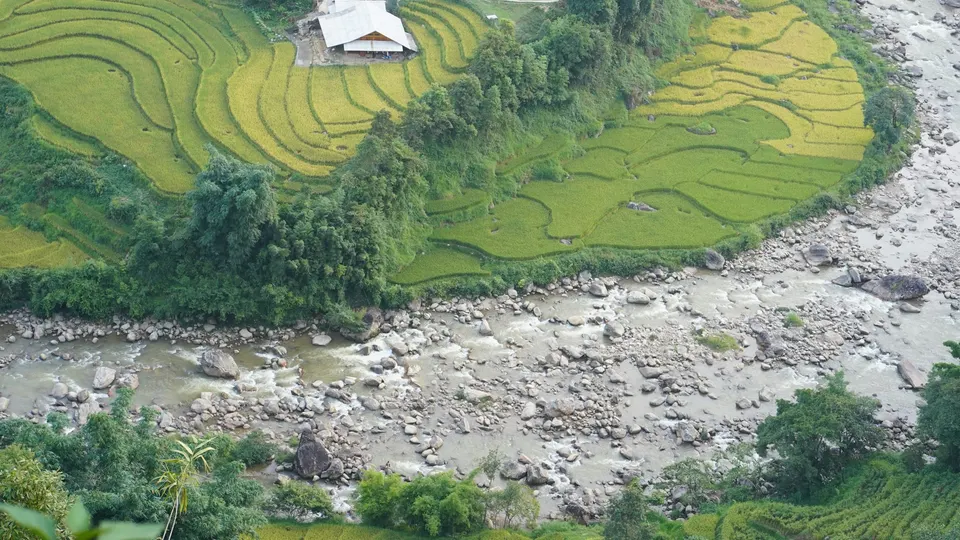
Each group has its own language, dress, house style and festival calendar, and they often share a valley rather than an entire village. In Ta Van commune in the Muong Hoa valley, for example, a 2012 tourism-board report counted roughly 45% Hmong, 35% Giay and 20% Dao. The Giay of Ta Van live in wooden stilt houses with three rooms (altar and guest room in the middle, bedroom on one side, kitchen on the other) and keep a spring rite called Roong Pooc (Roóng Poọc). The Red Dao are known for their red headdresses and for herbal baths, a tradition now offered to visitors in Ta Phin.
So “Sa Pa hill tribes” is not one people. If you learn only one thing, learn which group your host family belongs to.
How the terraces work
Rice needs standing water, and the mountains around Sa Pa offer slopes rather than plains. Terracing solves both problems: each narrow, level step holds water, and water channelled from mountain streams can run from one step to the next. Vietnam (Việt Nam) News describes the Sa Pa terraces as cultivated by Hmong, Dao and Tay communities, with water flowing in from mountain streams; elsewhere in the North different groups built their own, such as the Ha Nhi (Hà Nhì) at Y Ty (Y Tý) and the La Chi (La Chí), Dao and Nung (Nùng) at Hoang Su Phi (Hoàng Su Phì). In the Mu Cang Chai (Mù Cang Chải) terraces, ICCROM records bamboo pipes drawing water off the mountain and rituals meant to regulate the rain, a reminder that the terraces are a social system as much as an engineering one.
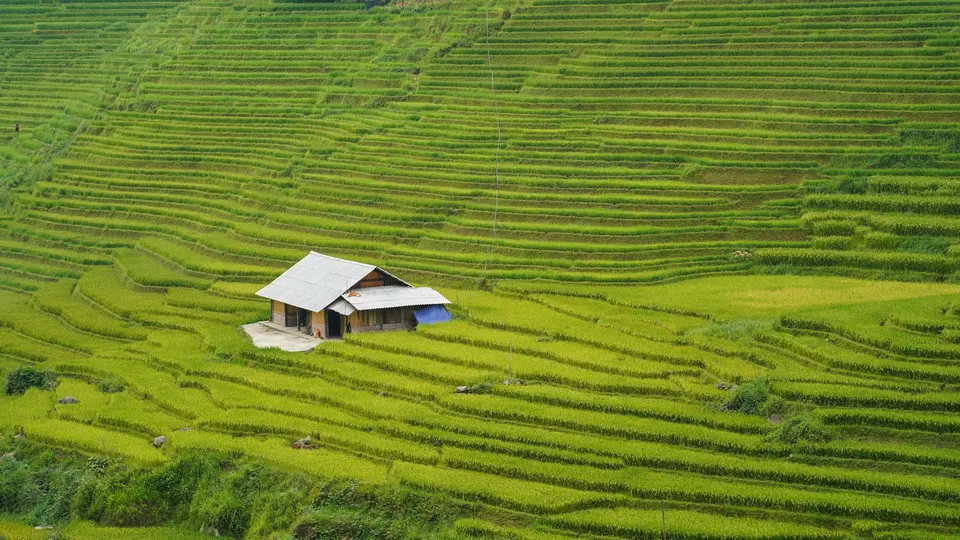
The best-known terraces are in the Muong Hoa valley below town, and around Ta Phin. The valley sits at about 1,000 m and is fed by the Muong Hoa stream, roughly 15 km long (Vietnam National Authority of Tourism). No reliable source gives a construction date for the Sa Pa terraces; they are best understood as the work of many generations, extended and repaired every year.
Mu Cang Chai: the other famous terraces
If you want terraces above all else, Mu Cang Chai is the other name you will hear. It lies in the west of today’s Lao Cai province, in what was Yen Bai (Yên Bái) province until 2025. Its terraces in La Pan Tan (La Pán Tẩn), Che Cu Nha (Chế Cu Nha) and De Xu Phinh (Dế Xu Phình) were made a national relic site in 2007 and later raised to a special national relic; the population there is overwhelmingly Hmong. The Prime Minister’s decision is dated 31 December 2019. Sources give very different figures for the protected area, so treat any single hectare number with caution. Mu Cang Chai is a separate trip from Sa Pa, not a day out.
When to go: Sa Pa month by month
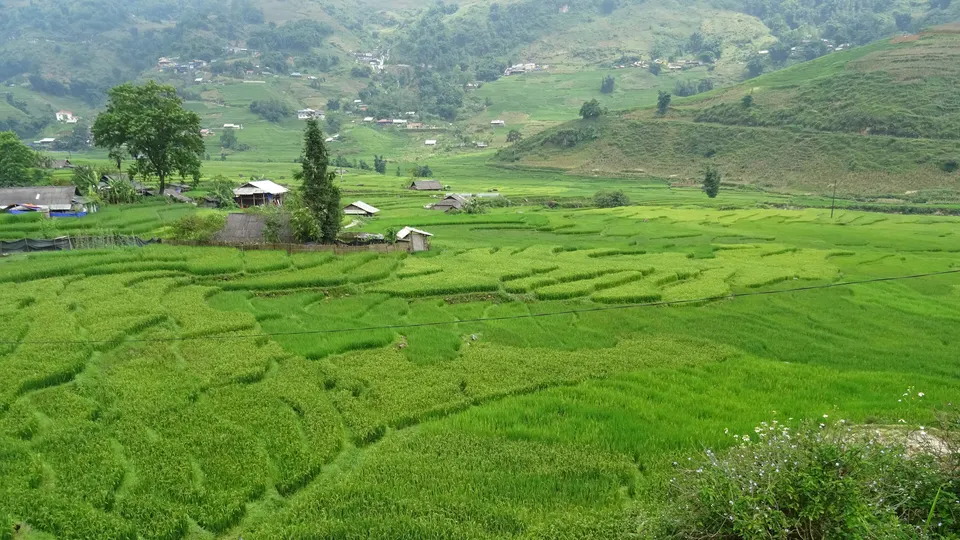
Go roughly from September to November for golden rice and clear skies, or from late April to May for flooded terraces. The national tourism board names September to November as the best time and calls March to May mild, with flowers. Every season has something, as long as you know what the fields and the weather will be doing, because the terraces follow the farming year.
| Months (roughly) | In the terraces | Weather and conditions | Good for |
|---|---|---|---|
| December–February | Bare or fallow after the harvest | Cold, fog and frost; the peaks can fall below freezing; snow is rare | Quiet, misty walks, if you pack for near-freezing nights |
| February–April | Fields being prepared | Peach and plum blossom from February; mild from March; rhododendrons on Fansipan from March to May | Comfortable trekking |
| Late April–May, sometimes June | Water-filling season: flooded terraces and planting | Mild, turning wetter | Fields that mirror the sky; busy farm work |
| June–early August | Young green rice | Rain and storm season, with flash floods and landslides | Escaping the lowland heat; short walks only |
| September–November | Rice ripens to gold, then the harvest | Clearer skies and cooler days; seas of cloud below Fansipan from September | The classic visit, and the busiest |
The table is built from the national tourism board, VnExpress’s Sa Pa guide (updated April 2026), Viet Nam News and the Fansipan operator’s 2026 guide. Exact timing shifts with altitude and the year’s weather, so “September” in one valley may be October in another.
- Late April to May, sometimes June: water-filling season (mua nuoc do (mùa nước đổ)). Farmers flood the terraces to prepare them for planting, and for a few weeks the fields mirror the sky. This is a busy working time in the fields, so give farmers room on narrow paths.
- June to early August: green rice, and storms. The rainy months turn the valley green, but VnExpress advises avoiding the rain and storm season from June to early August because of flash floods and landslides. Storms can come later too: on 8 September 2024 landslides set off by Typhoon Yagi killed six people and Sa Pa suspended all sightseeing and tourism, VnExpress International reported.
- September to November: golden rice and harvest. Sa Pa’s rice ripens earlier than the terraces of Mu Cang Chai or Hoang Su Phi, VnExpress noted in September 2025, and some fields near town are harvested late so the view lasts longer.
- December to February: bare fields and cold. After harvest the terraces rest. On 7 January 2026 the summit of Fansipan fell to about −3 °C, with ice on trees and railings, while Sa Pa town was about 5 °C in dense fog, Bao Lao Cai (Báo Lào Cai) reported. Snow is rare and makes the news: on 31 January 2018 it spread from the summit to Sa Pa town itself, where the temperature fell to about 1.2 °C. Do not plan a trip around it; our guide to Sa Pa in December and January covers the cold months, from this winter’s forecast to what to pack.
If Sa Pa is one stop on a longer route, our guide to the best time to visit Vietnam by region shows how these seasons fit with the central coast and the South, and Vietnam weather by month shows what the rest of the country is like in the month you travel.
The carved stones of Muong Hoa
Among the terraces of the Muong Hoa valley lie large boulders covered in carvings, known in Vietnamese as bai da co (bãi đá cổ) (the ancient stone field). The site was recognised as a national historical and cultural relic in October 1994 and holds around 200 carved rocks. Vietnam put it on its UNESCO World Heritage Tentative List in 1997, noting carvings of human figures, stilt houses, terraced fields and geometric signs, and possible traces of a script nobody has deciphered (UNESCO).
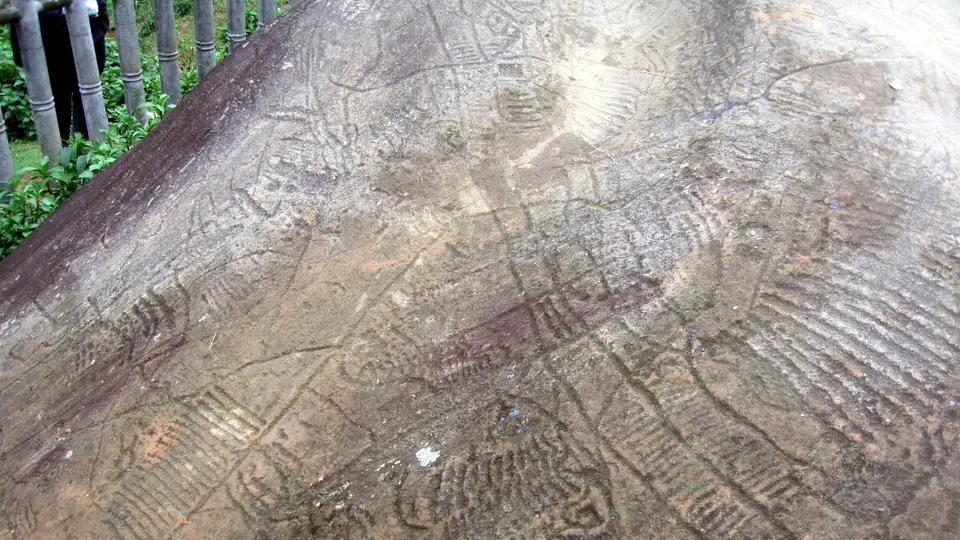
Who made them is genuinely unresolved. The UNESCO entry estimates the carvings are at least about 2,000 years old and reports that some scholars credit early Viet (Việt) peoples while others think several groups carved them at different times. When a guide tells you a confident story, it is one interpretation, not a settled fact. The stones sit in fields that are still farmed, so stay on paths.
From French hill station to tourism town
Sa Pa’s name is usually traced to the Hmong Sa Pa (Sa Pả), and the French called it “Chapa”. According to Saigoneer’s history, Sa Pa first appeared on maps in 1903, and by around 1917 the French had founded a tourism centre there with its first hotel, followed by villas for colonists escaping the lowland heat, much as they did on the Lam Vien (Lâm Viên) plateau at Da Lat in Central Vietnam. The Stone Church in the town centre survives from that era; Vietnam Pictorial dates it to 1926–1935, while VnExpress puts the start of construction in 1895, so dates vary by source. Much of the colonial town was destroyed in the war of the early 1950s.
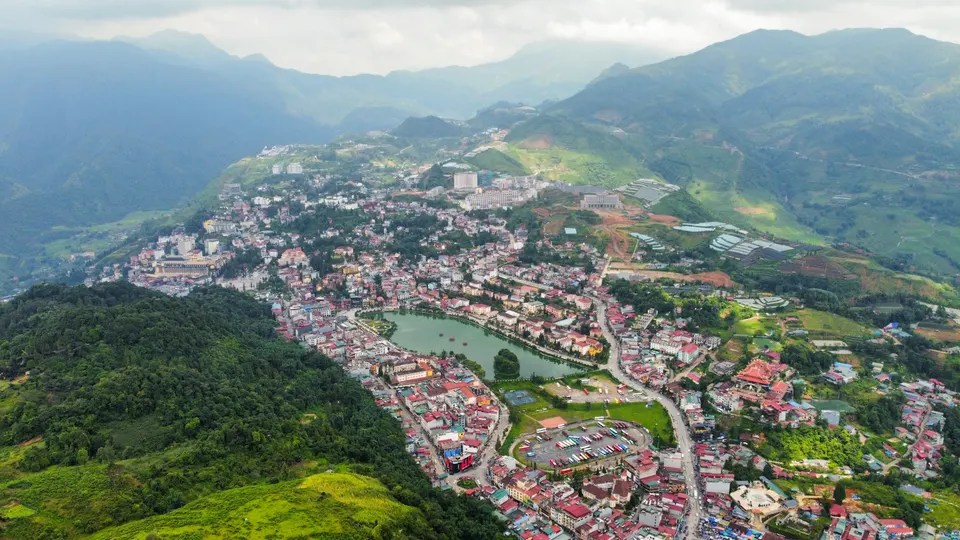
The modern boom came later and fast. Kinh Vietnamese moved up from the 1980s to farm and then to work in tourism. In February 2016 a cable car opened from the Muong Hoa valley towards the summit of Fansipan, about 6.3 km long with a rise of 1,410 m, cutting a climb that usually took two days to a ride of 15–20 minutes.
A note on names after July 2025. In Vietnam’s 2025 reorganisation, Lao Cai and Yen Bai merged into a province that kept the name Lao Cai, effective 1 July 2025 (Resolution 202/2025/QH15). Districts were abolished, and the six wards of Sa Pa town became a single Sa Pa ward. In the villages, the new Ta Van commune combines the former Hoang Lien (Hoàng Liên), Muong Hoa and Ta Van communes, and Ta Phin commune combines Ta Phin and Trung Chai (Trung Chải). The provincial administrative centre is now in Yen Bai ward, not Lao Cai city. Older maps still say “Sa Pa town” or “Sa Pa district”.
Tradition vs today
Tourism has changed Sa Pa’s villages in ways a visitor sees immediately. In Ta Van, community-based tourism grew from three or four homestay households in 2001 to dozens a decade later, with guest rooms, bathrooms and a performance group, and the tourism board credits it with reducing poverty (Vietnam National Authority of Tourism). In Ta Phin, a cooperative of Red Dao households now offers homestays in houses kept in traditional style, herbal baths and embroidery with Red Dao women. Festivals are increasingly scaled up for visitors.
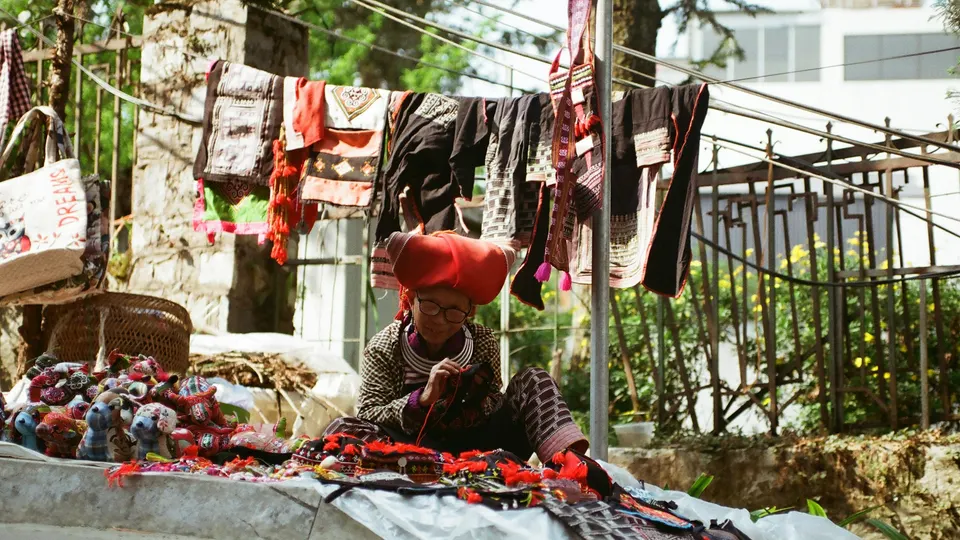
Much remains the same: many Hmong and Dao residents still wear traditional dress in daily life, and a single costume can take months to make by hand. But do not assume that everyone you meet farms, or that a woman in indigo is “traditional” and a man on a phone is not. Many households now combine rice with guiding, homestays and craft sales. ICCROM’s warning about Mu Cang Chai applies here too: uncontrolled tourism can wear down the terraces themselves and turn rituals into performances cut off from their meaning.
How to visit villages respectfully
- Stay in a homestay, and trek with a local guide. A homestay adds to a family’s farm income, and the national tourism board recommends locally owned operators that follow sustainable practices. Our guide to Sapa trekking routes and whether you need a guide compares the walks from Cat Cat to Ban Ho and says which you can do alone. Ask your guide which community they belong to and what they want you to know about it.
- Do not buy from, or give money to, child vendors. Sa Pa’s authorities have asked visitors this directly, by loudspeaker in town, saying that children are made to sell by adults and that it is illegal to use children to earn money on the street. In 2023 officials counted about 90 children and 40 adults peddling or begging in the town centre on weekends, and asked tourists not to give money, buy from or use the services of peddlers and beggars (Vietnam News). Sympathy is understandable; buying is what keeps the practice going. Buy crafts from adults, cooperatives or shops instead.
- Ask before you photograph people, especially children, elders and anyone at prayer or a ceremony, and accept a no. Homes, altars and fields are private spaces even when the door is open.
- Stay on paths through the terraces. Every terrace is someone’s field; stepping on the edges or into flooded paddies can damage the crop and the water channels.
- Dress for the mountains and the village. Bring warm, waterproof layers for any season, and cover up when you are a guest in someone’s home.
Fansipan: cable car or climb?
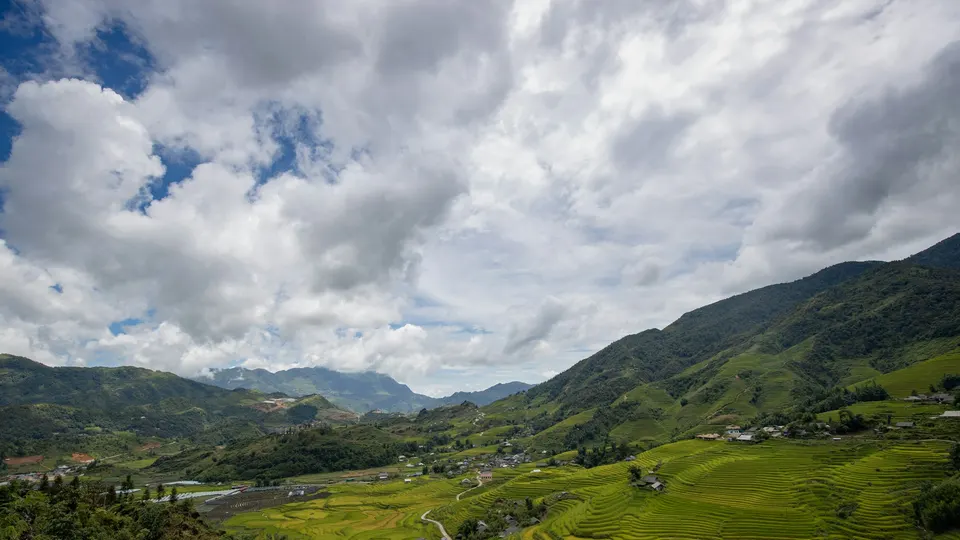
Fansipan is the peak above town, and most visitors reach its summit by cable car rather than on foot. The summit marker says 3,143 m, a figure from a French survey of 1909; in 2019 Vietnam’s mapping department measured 3,147.3 m by satellite (VietnamPlus). Either way, it is the highest point in Vietnam.

By cable car. An optional train runs about 2 km from the town centre to the cable car station. The cable car, about 6.3 km long, climbs 1,410 m in 15–20 minutes, and from the top station you walk about 600 stone steps or take a short ride to the summit marker. In 2026 the operator, Sun World, lists the round-trip cable car at 850,000 dong for adults and 550,000 dong for children from 1 m to 1.4 m tall, for visitors from outside Lao Cai province; the train and the last ride up cost extra. Allow half a day, go on the clearest morning you have, and take a warm jacket: the operator says the summit is usually 7–10 °C colder than Sa Pa.
On foot. The usual climb starts at Tram Ton (Trạm Tôn), above 1,900 m, and takes two days and one night, more than 20 km there and back, Bao Lao Cai reported in April 2026. Entering the forest of Hoang Lien National Park requires a permit and a guide or porter, and rangers, forest guards and police check the trails, the same paper reported in October 2025, so book a guided trek through an agency rather than going alone.
Our Fansipan cable car and hiking guide has the dated ticket prices, opening hours, the weather on the summit and a side-by-side choice between riding and climbing.
Getting there and a two- or three-day plan
Sa Pa is usually reached from Hanoi by night train to Lao Cai and then by road up the mountain, or by bus or limousine van straight up the expressway; our guide to getting from Hanoi to Sa Pa compares the options, the October 2026 train times and the Lao Cai transfer. Give it at least two nights, and ideally three, and keep the Fansipan day flexible so you can use the clearest morning.
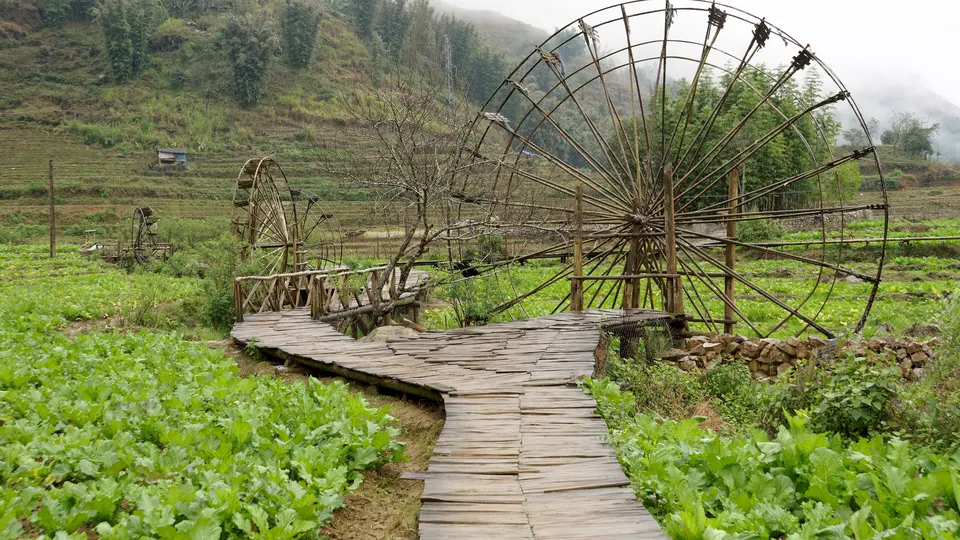
| Day | Plan | Notes |
|---|---|---|
| Day 1: arrive and look around | Morning in town after the night train or an early bus; afternoon walk down to Cat Cat, about 2 km from the centre, and back past the Stone Church | Cat Cat entry was 50,000 dong per person in VnExpress’s April 2026 guide |
| Day 2: the valley | Walk from Lao Chai (Lao Chải) to Ta Van, about 5–6 km and 2–3 hours on mostly flat paths; sleep in a Ta Van homestay | Ta Van is about 12 km from town; VnExpress put a local guide at 200,000–300,000 dong per person in October 2025 |
| Day 3: the peak | Fansipan by cable car on the clearest morning, back in town by early afternoon; if cloud hides the summit, go to Ta Phin for the Red Dao villages and a herbal bath instead | Half a day for the cable car; Ta Phin is about 12 km from town |
With only two nights, skip the homestay: walk the valley one day and give the clearer morning to Fansipan. The distances and the guide price come from VnExpress’s Sa Pa reports of September and October 2025; the walk itself is described in our trekking guide above.
Where you sleep shapes the trip as much as how long you stay:
| Base | Distance from town | Price (press, 2025) | Suits | Trade-off |
|---|---|---|---|---|
| Sa Pa town | – | Hotels and homestays from about 300,000 to 3 million dong a night | Short stays, Fansipan, restaurants and street life | Noisier at the centre; the terraces are a ride or walk away |
| Ta Van homestay | About 12 km, roughly 30 minutes by motorbike | A few hundred thousand dong a room; some have shared rooms | The Lao Chai to Ta Van walk and an evening in a Hmong, Giay or Dao village | Away from shops and restaurants; you need transport back to town |
| Ta Phin | About 12 km | Red Dao cooperative homestays (no current price found) | Red Dao culture, herbal baths and embroidery | A separate valley from the Muong Hoa walks |
Prices and distances are from VnExpress’s September and October 2025 reports; Ta Phin’s cooperative homestays from the tourism board’s 2024 report. For breakfast in town before you set out, try con sui (cốn sủi), Lao Cai’s dry rice noodles in a thick sauce with char siu pork and crisp fried strands; the place card below names a verified shop.
Start or end the trip in Hanoi, and see our North Vietnam hub for how the mountains fit into the wider region. If you have more time in the north-west, compare Sa Pa with the karst passes of Ha Giang (since July 2025 part of Tuyen Quang (Tuyên Quang) province) or the gentler valley of Mai Chau. If you are weighing Sa Pa against the country’s other French-era hill station, our Da Lat vs Sa Pa comparison sets the two side by side on seasons, travel time and what you do.
Where to eat: a verified breakfast stop in town
Local favourite
Quán Ông Há
Sa Pa · Sa Pa ward, town centre
Điện Biên Phủ Street
A breakfast shop for cốn sủi (also called phở khan), Lao Cai's dry rice noodles served in a thick sauce instead of broth, with char siu pork, egg, crisp fried strands and herbs. VnExpress named it for a cốn sủi breakfast in September 2025, at about 40,000 dong a portion, and Viet Nam News also recommends Quán Ông Há on Điện Biên Phủ Street.
Order: Cốn sủi, with lime, peanuts and herbs added to taste.
Sources give different house numbers on Điện Biên Phủ Street (468 in VnExpress's April 2026 guide, 591 in Viet Nam News), so the number is left out; look for the Ông Há sign on the street.
Recommended by: VnExpress (2025), Việt Nam News · checked November 2026
Addresses and details can change; check before you go. We do not accept payment for listings.
Frequently asked questions
Is Sa Pa still worth visiting in November?
Yes. The national tourism board names September to November as the best time for Sa Pa, for golden rice terraces and clear skies. In 2026 Sa Pa ward also holds a cultural week of ethnic performances and craft stalls on 21-24 November at San Quan square, Viet Nam News and VietnamPlus reported.
Do I need a guide to walk to the villages around Sa Pa?
Not for Cat Cat, a ticketed village about 2 km from town whose entry was 50,000 dong in VnExpress's April 2026 guide. For the Lao Chai to Ta Van walk in the Muong Hoa valley, VnExpress put a local guide at 200,000-300,000 dong per person in October 2025, and climbing Fansipan on foot needs a permit and a guide.
Will I see snow in Sa Pa in winter?
Probably not. On 7 January 2026 the summit of Fansipan fell to about -3 °C with ice on trees while Sa Pa town was about 5 °C in fog, Bao Lao Cai reported; snow reaching the town itself, as on 31 January 2018, is rare.
Which should I choose for rice terraces, Sa Pa or Mu Cang Chai?
Sa Pa if you also want villages, homestays and Fansipan; Mu Cang Chai, now in the west of Lao Cai province, if terraces are all you want, as a separate trip rather than a day out. Sa Pa's rice ripens earlier than Mu Cang Chai's, VnExpress noted in September 2025.
Is Sa Pa still in Lao Cai province after the 2025 merger?
Yes. On 1 July 2025 Lao Cai and Yen Bai merged into a new province that kept the name Lao Cai. Sa Pa town became a single Sa Pa ward, and nearby villages such as Ta Van and Ta Phin are now in communes of the same names.
Key sources
- Sa Pa · Vietnam National Authority of Tourism (vietnam.travel)
- Sapa for sustainable travellers · Vietnam National Authority of Tourism (vietnam.travel)
- Resolution 202/2025/QH15 on the reorganization of provincial-level administrative divisions · LuatVietnam (text of the National Assembly resolution)
- The Area of Old Carved Stone in Sapa · UNESCO World Heritage Centre (Tentative List)
- Two tourist attractions in Sa Pa have been nominated as Viet Nam record · Vietnam National Authority of Tourism, January 2013
- Developing community-based tourism with Giay ethnic people in Ta Van Village · Vietnam National Authority of Tourism, November 2012
- Tourist cooperation needed to eliminate begging, hawkers in Sa Pa · Việt Nam News, 15 June 2023
- Fansipan peak found to be 4m higher than old measurement · VietnamPlus (Vietnam News Agency), 26 June 2019
All 33 sources and further reading
- Toàn văn Nghị quyết số 1673/NQ-UBTVQH15 sắp xếp các ĐVHC cấp xã của tỉnh Lào Cai năm 2025 · Government of Viet Nam (xaydungchinhsach.chinhphu.vn)
- General information about Lao Cai province · Lào Cai Department of Foreign Affairs
- Sa Pa: a symphony of nature and culture in Vietnam's northwest · Vietnam Pictorial (VNA), 18 September 2024
- Water-filling season turns northwestern rice fields into a masterpiece · Việt Nam News, 22 May 2026
- Vietnam inaugurates world's longest 3-rope cable car system · Tuổi Trẻ News, February 2016
- Snow blankets Vietnam's Sa Pa (photos) · Tuổi Trẻ News, 1 February 2018
- [Photos] On the cusp of a tourism boom, a pristine Sapa of the 1920s · Saigoneer
- Sa Pa community tourism makes a difference · Vietnam National Authority of Tourism (from VOV World), March 2024
- Sa Pa requests tourists refrain from purchasing goods from child street vendors · Tuổi Trẻ News, 9 January 2021
- Yen Bai receives certificate recognising the Mu Cang Chai terraced fields as a special national site · VTV
- Mu Cang Chai terraced fields recognized as special national relic · Government of Viet Nam (baochinhphu.vn), 9 January 2020
- Rice terraces in Mu Cang Chai, Vietnam: implementation of community-based tourism · ICCROM
- “Bỏ túi” cẩm nang du lịch Fansipan từ A đến Z chi tiết nhất 2026 · Sun World (operator), 3 August 2026
- Longest non-stop three-rope cable car in the world opens in Vietnam · Guinness World Records, 9 February 2016
- Chinh phục đỉnh Fansipan bằng đường bộ: Văn minh và trách nhiệm · Báo Lào Cai, 26 October 2025
- 300 du khách xuyên đêm chinh phục đỉnh Fansipan · Báo Lào Cai, 15 April 2026
- Nhiệt độ xuống -3 độ C, đỉnh Fansipan xuất hiện băng tuyết · Báo Lào Cai, 7 January 2026
- Kinh nghiệm du lịch Sa Pa 2026 từ A-Z · VnExpress (updated 16 April 2026)
- 48 giờ ngắm mùa vàng ở Sa Pa · VnExpress, 5 September 2025
- Tả Van và Sa Pa: Trải nghiệm du lịch độc đáo tại thung lũng Mường Hoa · VnExpress, 12 October 2025
- Sa Pa suspends tourism activities amid deadly landslides triggered by Typhoon Yagi · VnExpress International, 8 September 2024
- Sa Pa to host cultural week to attract year-end visitors · Việt Nam News, 4 November 2026
- Tổ chức Tuần Văn hóa 'Sa Pa tinh hoa hội tụ' thu hút du khách dịp cuối năm · VietnamPlus (Vietnam News Agency), 1 November 2026
- Con sui brings heat in the chill of Sa Pa · Việt Nam News
- Sa Pa · Wikipedia (see its cited sources)
Keep exploring
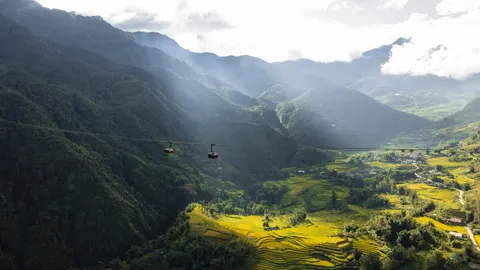 North Vietnam · Travel Fansipan Cable Car or Hike? 2026 Prices and Best Time Fansipan cable car or hike? As of November 2026: 850,000 dong return, open 07:30-17:00, clear-morning tips, summit cold and the two-day guided climb.
 North Vietnam · Travel Hanoi to Sapa: Train, Sleeper Bus or Van – Which to Book? Hanoi to Sapa as of November 2026: night train to Lao Cai, sleeper bus, limousine van or car compared by time and fare, plus the transfer, road works and Tet.
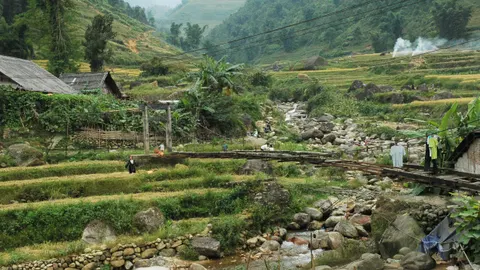 North Vietnam · Travel Sapa Trekking: Do You Need a Guide, and Which Route? Do you need a guide to trek in Sapa? What the rules say, which walks you can do alone, a route table from Cat Cat to Ban Ho, fees, seasons and safety.
 North · Central · South · Travel Da Lat vs Sa Pa (Sapa): Which Should You Visit? Da Lat vs Sa Pa: compare the two hill stations by season, cost, getting there and trip length, with November 2026 transport updates and 3-day plans.
 North Vietnam · Travel Hanoi: How Many Days, What to See and When to Go Hanoi travel guide for 2026: how many days and where to stay, Noi Bai airport, walking-street hours, the new low-emission zone, Train Street and where to eat.
 North Vietnam · Travel Ha Giang (Hà Giang) Loop: What to See and How to Ride Safely What to see on the Ha Giang Loop, from Ma Pi Leng and Lung Cu to Dong Van's old quarter, and how to ride it safely under the 2026 tour and licence rules.