North Vietnam · Travel
Mai Chau (Mai Châu) from Hanoi: Bus, Homestay, 2-Day Plan
Mai Chau from Hanoi: getting there by bus, car or motorbike, what a Ban Lac stilt-house homestay costs, a one- or two-day plan and when the rice turns gold.
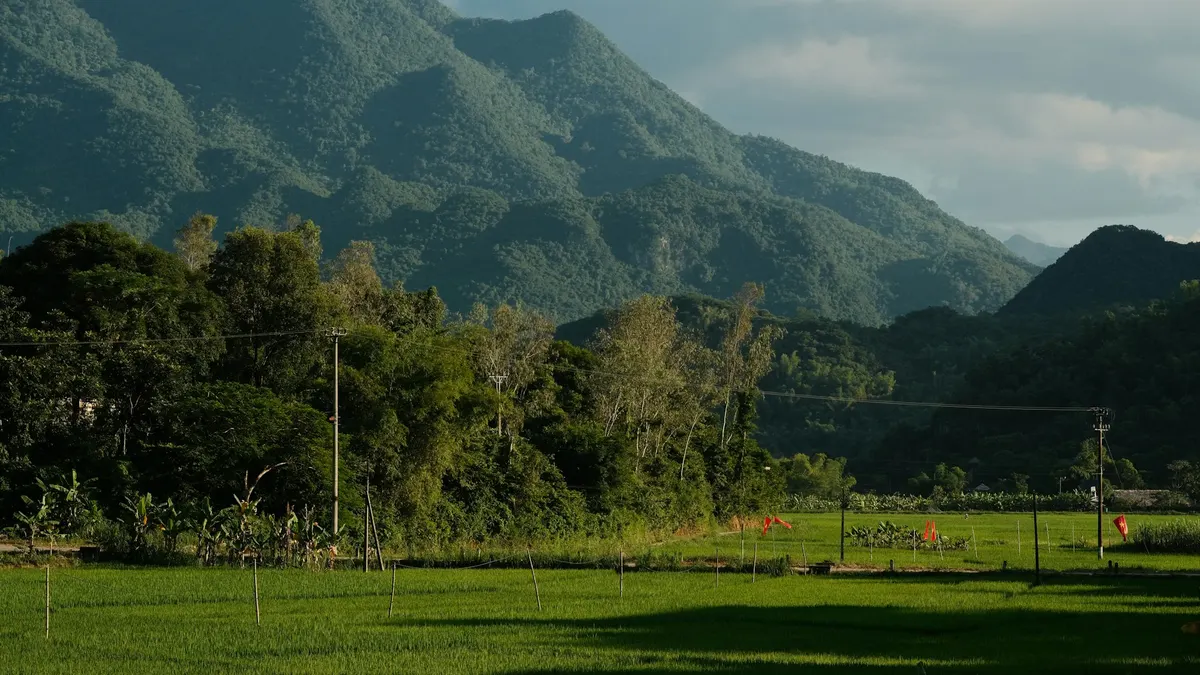
Mai Chau (Mai Châu) is a Thai rice valley about 140 km southwest of Hanoi, roughly three hours by road, and the usual way to see it is one or two nights in a stilt-house homestay in a village such as Ban Lac (Bản Lác). As of November 2026 it lies in Phu Tho (Phú Thọ) province, which absorbed the former Hoa Binh (Hòa Bình) province on 1 July 2025 (Resolution 202/2025/QH15). Buses from Hanoi stop about 5 km from the villages, and VnExpress put a private homestay room at 300,000–500,000 dong a night in March 2024; a day trip is possible but rushed.
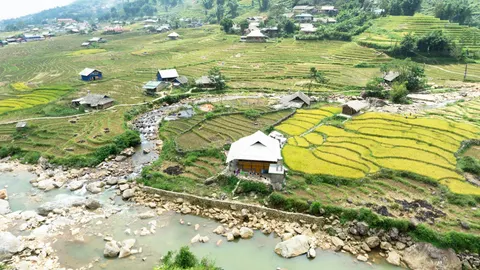
For many travellers Mai Chau is the first place they sleep in an ethnic-minority village, and it makes a good introduction to upland life because it is gentle. The valley floor is low and easy to walk, the villages sit right among the paddies, and the people who host you, mostly White Thai (Thái) (Thai Trang (Thái Trắng)), have been receiving outsiders for longer than almost anyone else in the northern hills. This page explains what you are looking at: why the houses stand on stilts, how a farming village became a homestay village, and what has changed along the way.
Mai Chau at a glance
| Where | Valley southwest of Hanoi; former Hoa Binh province, part of Phu Tho since 1 July 2025 |
| Main villages for visitors | Ban Lac (now in Mai Ha (Mai Hạ) commune) and Poom Coong (now in Mai Chau commune) |
| People | Mostly White Thai on the valley floor; Hmong (Hmông) communities higher up around Hang Kia and Pa Co (Pà Cò) |
| Known for | Stilt-house homestays, brocade weaving, xoe (xòe) dance, walks among rice fields |
| Local food | Grilled stream fish, com lam (rice cooked in bamboo), ruou can (jar wine) |
| Best time | September–November for golden rice; March–May also pleasant; heavier rain May–September |
| How long | One or two nights in a homestay; a day trip is possible but rushed |
| Getting there | About 140 km and roughly three hours by road from Hanoi via Hoa Binh; buses stop at Tong Dau (Tòng Đậu) junction, about 5 km from the villages |
Who lives in the valley
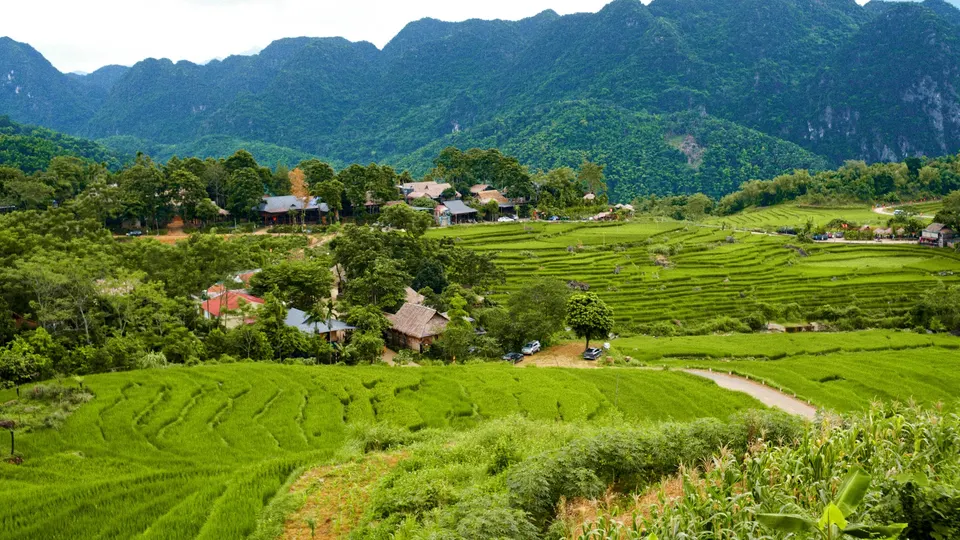
Mai Chau is a Thai place. Thai people made up over 60% of the former district’s population, according to the national tourism authority’s rural portal (VNAT rural tourism portal), and the valley’s majority are White Thai. Thai communities are found across the northwest; the White Thai are one branch, which is why you will see the name used for Mai Chau specifically. Ban Lac (Lac (Lác) village) is described in Vietnamese reporting as more than 700 years old and home to White Thai families.
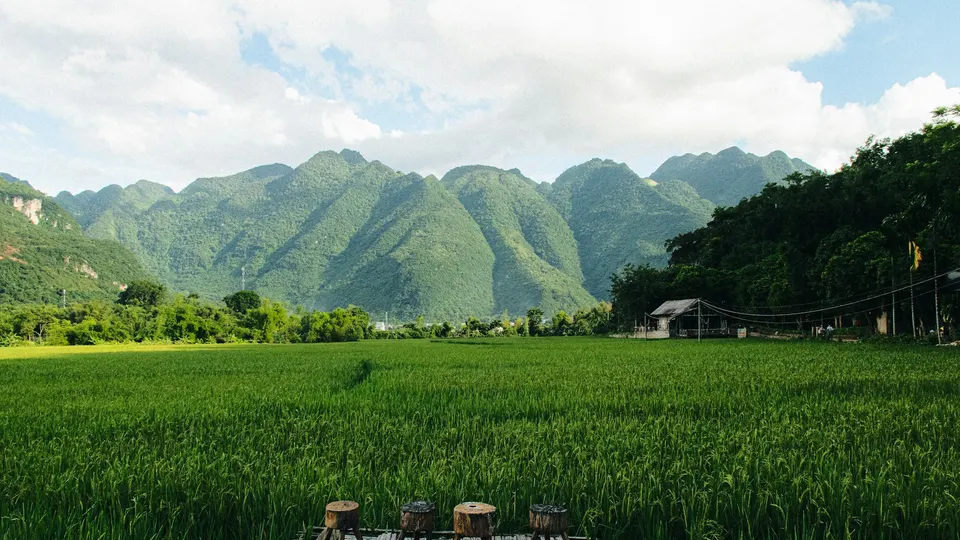
The valley is not the whole picture, though. Higher up, around Hang Kia and Pa Co, live Hmong communities, and the Sunday market at Pa Co sells produce and brocade from Hmong, Thai and Muong (Mường) sellers. The pattern is common across the northern mountains: Thai villages on the valley floors with their irrigated rice, other groups on the slopes. If you go on to Sa Pa or Ha Giang, you will meet mostly those upland groups instead.
A note on names. Under the July 2025 reorganisation the old Mai Chau township was merged with neighbouring communes into Mai Chau commune, while Chieng Chau (Chiềng Châu) commune, where Ban Lac lies, became part of Mai Ha commune. Older guidebooks and signs still say “Mai Châu district, Hòa Bình”. You will also see Poom Coong spelt Pom Coong (Pom Coọng); both refer to the same village.
What a Thai stilt house is, and why it is built that way
The house type you will sleep in is the nha san (nhà sàn), a timber house raised on posts. In Mai Chau the national tourism authority describes the floor as about 1.5 metres above the ground, with bamboo floors and roofs thatched with leaves (Vietnam National Authority of Tourism).
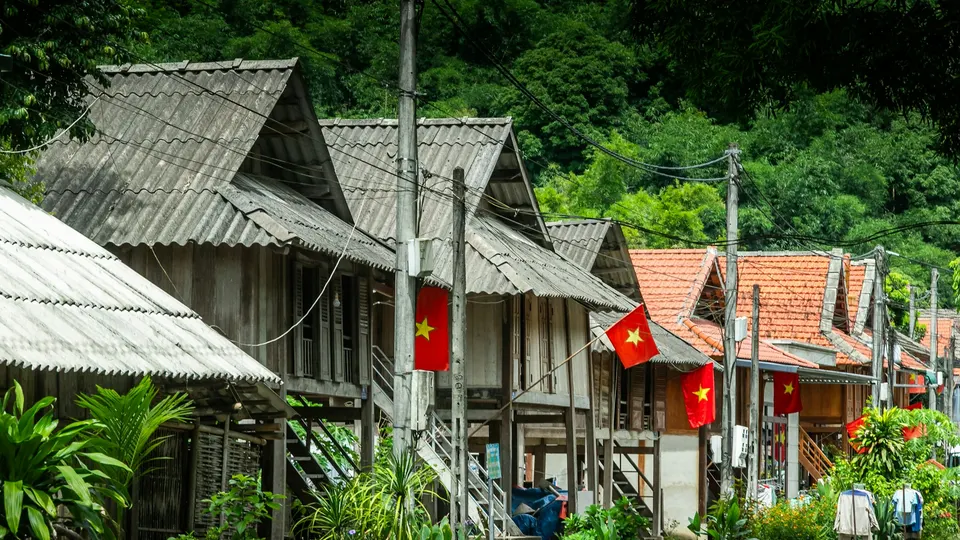
The reasons are practical. Thai communities elsewhere in the northwest explain that a high floor keeps the house dry and away from wild animals; one Thai elder in Lai Chau (Lai Châu) recalled that her ancestors’ ground-level houses were “low and damp”. In the Mai Chau hills, National Geographic Traveller reports, the stilts are remembered as a way of keeping tigers out of the house at night. Traditional Thai houses were built of wood without nails, with beams and posts lashed with bamboo and rattan strips.
The house is also the centre of family life. Thai births, weddings, ancestor worship and housewarmings all take place in it, which is why a folklorist quoted by VOV says that “to talk about Thai culture is to talk about the stilt house”. In Thai villages, stairs often have an odd number of steps, usually seven or nine.
Tradition vs today: the space underneath. The ground floor under the house traditionally held livestock and farm tools. In Mai Chau’s homestay villages it is increasingly a souvenir shop or an open-sided room, and Thai villages elsewhere have walled it in to make rooms. When you see a loom, a shop counter or a dining table where pigs and buffalo once lived, you are looking at how tourism has rearranged the house, not erased it.
Homestay etiquette: how to behave in a stilt house
A homestay usually means a mattress on the wooden floor of a large shared room, with simple shared bathrooms. The family lives in the same house, so a few habits go a long way:
- Shoes off at the top of the stairs, and treat the house as a home: ask before photographing people or the family altar.
- Leave the altar alone. VietNamNet’s guide to customs in upland ethnic-minority villages advises guests not to put hats or bags on the altar, touch the offerings or sit with their back to it, and not to sleep with their feet pointing towards it.
- Mind the hearth and the doorway. The same guide asks visitors not to step on or move the stones around the cooking fire, not to sit on the threshold and not to lean on the main pillar. In Thai houses the main hearth faces the ancestral altar and is where elders receive honoured guests, so let your hosts show you where to sit.
- Small things. The guide notes that some Thai households avoid white mosquito nets indoors and that whistling inside the house is frowned on in many upland homes.
- Book ahead for weekends. VnExpress advises booking at least a week ahead, because places fill up at weekends.
These customs are general guidance for upland villages rather than a written Mai Chau rulebook, and families who have hosted guests for decades are forgiving. Following them is still the easiest way to show respect.
Where to stay: homestay room, shared floor or lodge
Most visitors sleep in Ban Lac or Poom Coong. The prices below are the ones VnExpress reported in its March 2024 guide, the most recent dated figures we could verify, so treat them as a guide and confirm when you book.
| Option | What you get | Reported price (March 2024) | Who it suits |
|---|---|---|---|
| Private homestay room | A room with its own bathroom in a Ban Lac guesthouse | 300,000–500,000 dong a night | Couples and anyone who wants privacy but still eats with the family |
| Shared stilt-house floor | Mattresses on the floor of a communal house for 10–20 people, shared bathrooms | About 1–1.2 million dong for the whole house | Groups and travellers who want the classic homestay night |
| Lodge or resort | Bungalows or rooms around the valley and by the Hoa Binh reservoir | About 1–3 million dong a night | Families and travellers who want hotel comfort |
| Homestay dinner | A shared tray of grilled chicken and pork, stir-fries, com lam and greens | 100,000–200,000 dong a person; about 1 million dong for a full tray for 7–8 | Everyone; usually arranged with the room |
Demand peaks at weekends and holidays: VCCI, reporting from the national news agency VNA in February 2026, said Ban Lac homestays were almost fully booked over Tet (Lunar New Year).
How Ban Lac became a homestay village
Ban Lac’s story explains much of Mai Chau today. Provincial reporting says the village began receiving visitors, including foreign diplomatic delegations, as early as the 1960s. Overnight stays came later: according to a 2009 report, it was only in 1993 that Mai Chau’s district authorities formally asked the provincial leadership to let tourists sleep in the village, after which foreign travellers on the road to Dien Bien Phu (Điện Biên Phủ) began staying, and villagers date the real boom to 1997. Sources differ on the details, but they agree that the homestay model took shape in the 1990s, started by villagers themselves.
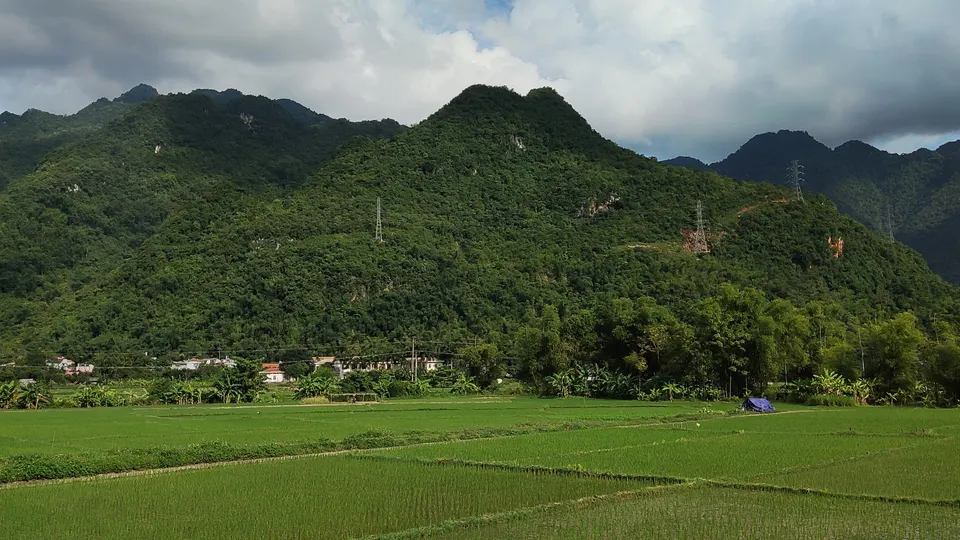
The village head describes Ban Lac as “one of Vietnam’s first community-tourism villages”. That is a local claim rather than an official ranking, but the dates above make it plausible. Ban Lac was also recognised under the ASEAN Homestay Standard for 2016–2018.
What changed. Before tourism, families lived mainly from rice, brocade weaving and hunting. By 2009 about three-quarters of Ban Lac’s residents worked in tourism or related services, and a village troupe was already staging hour-long shows of old songs, dances and gongs for guests. By early 2026 Ban Lac alone had 80 households in the tourism business, and as of mid-2025 the former district counted 158 community homestays, mostly in Ban Lac, Poom Coong, Hang Kia and Pa Co.
Visitor numbers are large for a valley of villages. In the first half of 2025 the former district received 471,640 visitors, 187,530 of them from abroad, and earned more than 565 billion dong from tourism, according to a November 2025 report in the business paper Bao Dau Tu (Báo Đầu tư).
The same 2025 report names the cost: cultural “mixing”, including shows that perform other ethnic groups’ dances, has blurred Mai Chau’s Thai identity, and local efforts now focus on keeping the village’s character and avoiding commercialisation. There is a gain too. In one Mai Chau village an elderly dance leader told National Geographic Traveller that the bamboo dance had almost been lost and that tourism brought it back. Both things are true at once, and that tension is what you are walking into.
Brocade and the loom under the house
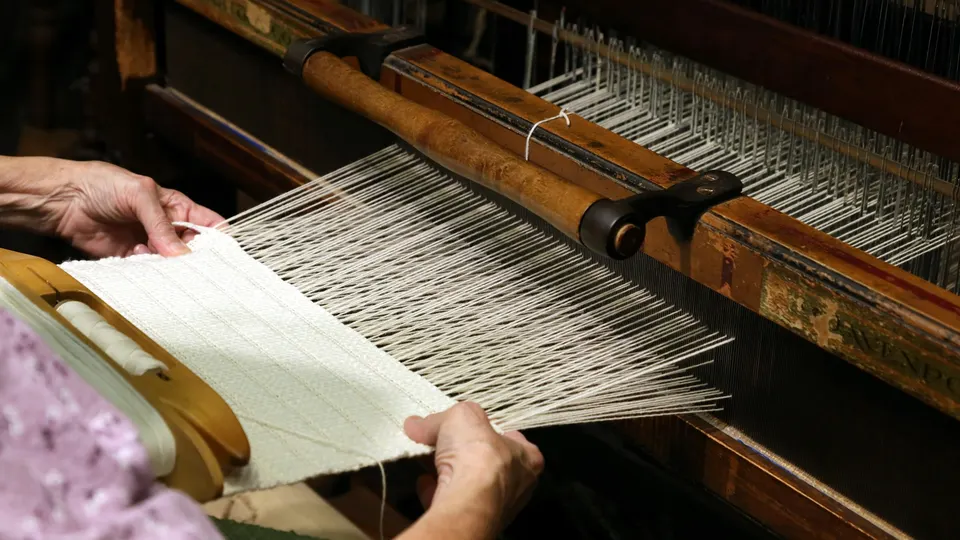
Weaving is the craft you will see most. Lac has long combined mulberry growing, silkworm raising and brocade weaving, for daily use and for sale (VNAT), and the national tourism site describes women working at looms beneath their houses. Brocade weaving in the area runs on more than 300 looms. Not everything on sale is woven in the village, so if it matters to you, buy where you can see the loom, or ask who made the piece. Gentle bargaining is expected.
Xoe, the circle dance
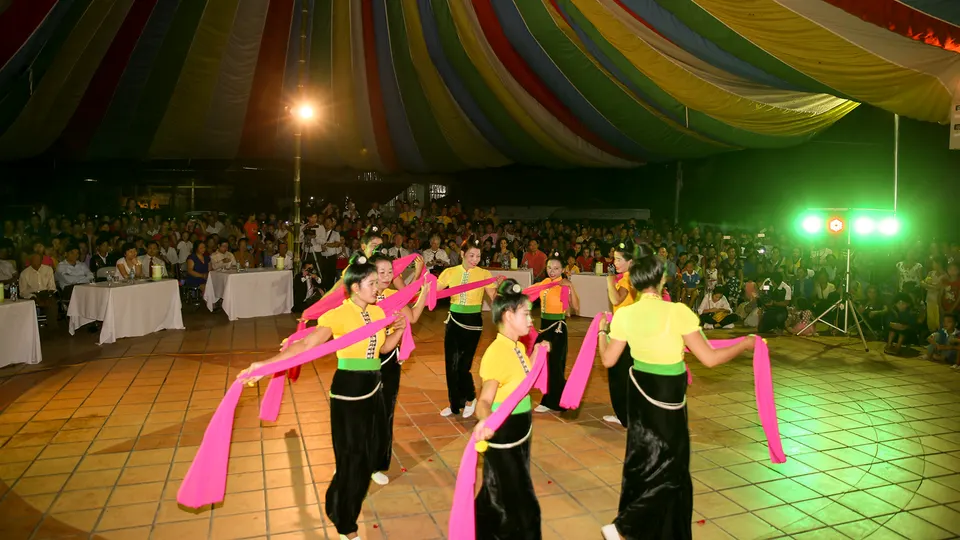
In the evening many homestays put on a programme of songs and dances. The one to recognise is xoe, the Thai dance in which, in its most popular form, dancers join hands in a circle. UNESCO added the “Art of Xoe dance of the Tai people in Viet Nam” to its Representative List of intangible heritage in 2021 and calls it a symbol of hospitality and an identity marker for the Thai (UNESCO). It is danced at weddings, village festivals and community gatherings, not only for guests. The nomination centred on four other northwestern provinces, not Hoa Binh, but xoe is part of Thai life in Mai Chau too, and shows here often end with guests joining a bamboo-pole dance, mua sap (múa sạp). If you are pulled into the circle, join in: that is the point of it.
What to eat and drink
Homestay dinners are the main meal of a visit, cooked by the family and shared (Vietnam National Authority of Tourism).
- Ca suoi nuong (Cá suối nướng) (grilled stream fish) is a White Thai speciality of Mai Chau, seasoned with mac khen (mắc khén), a wild pepper, and eaten with com lam and a cham cheo (chẩm chéo) chilli dip.
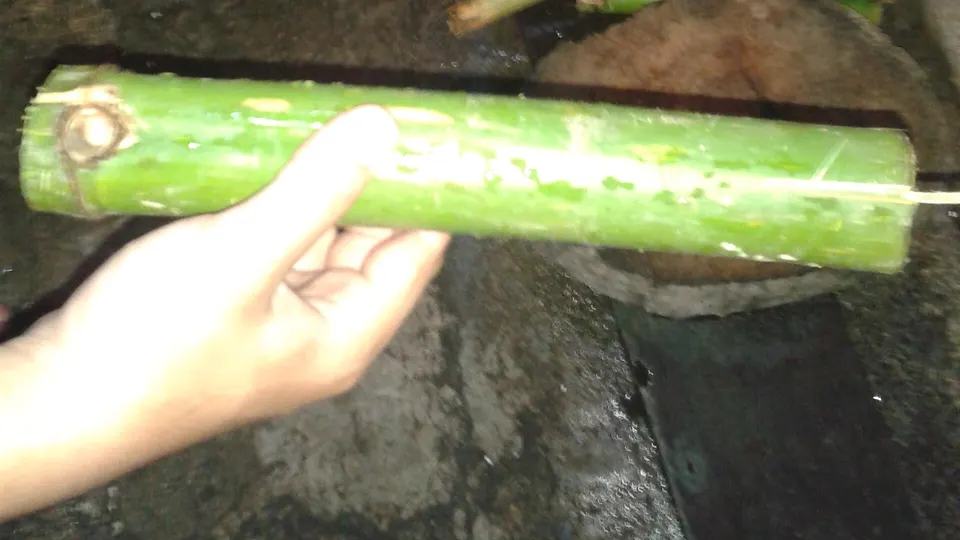
- Com (Cơm) lam is sticky rice cooked in a bamboo tube over the fire, then peeled out and dipped in crushed peanuts or salt. It is shared across the uplands; the neighbouring Muong also claim it as their own, so do not think of it as only Thai.
- Ruou can is rice wine fermented in an earthenware jar and drunk communally through long bamboo straws at festivals and gatherings. In Mai Chau it is made from sticky rice with forest leaves and ginger. It is a social drink, so pace yourself.
Other dishes you may meet include bitter bamboo shoots and grilled pork. Compared with the clear broths of Hanoi, this is grilled, smoky, hand-to-mouth mountain food.
Rice seasons: when to go
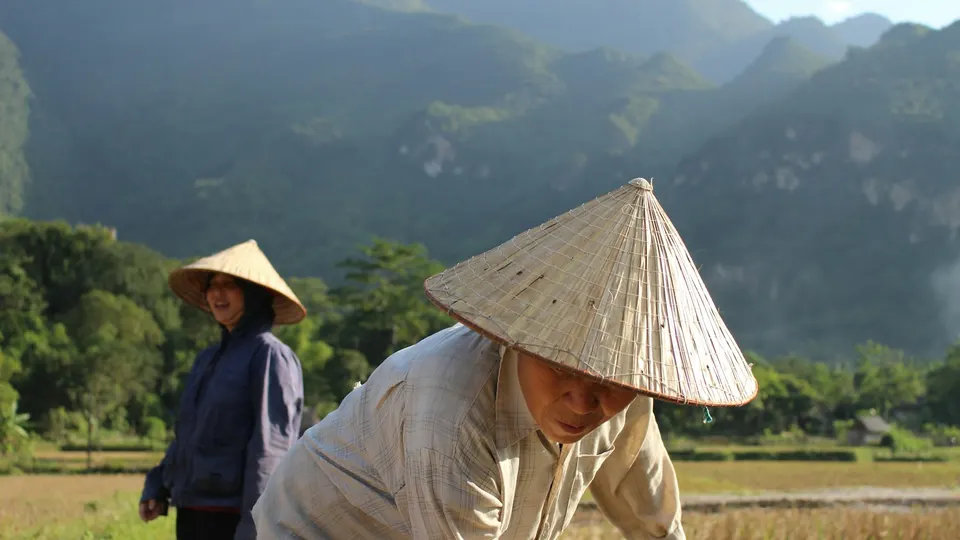
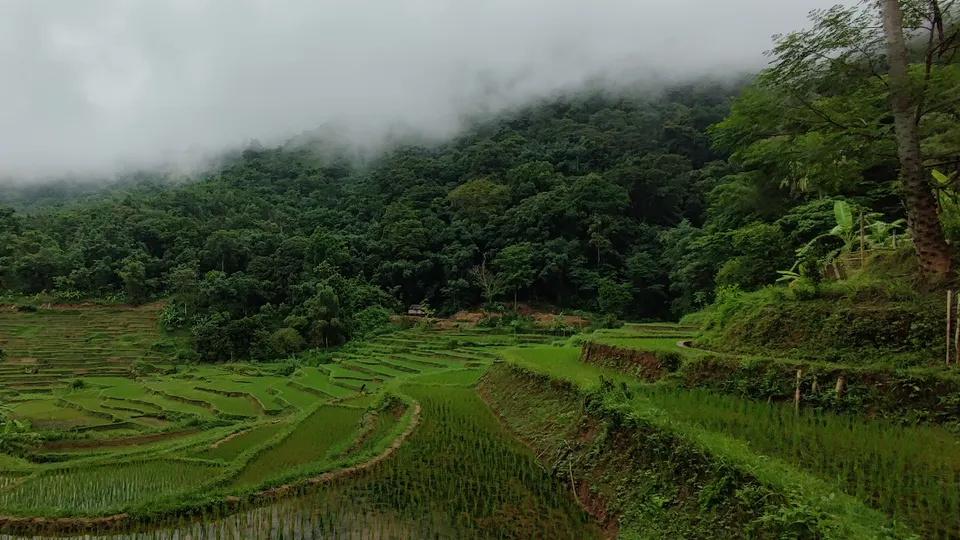
Mai Chau’s look changes with the rice. VnExpress describes the earlier crop ripening yellow in May and June, the fields flooding for planting around July, and the main harvest from late October. For how this fits the weather elsewhere in the country, see our guide to the best time to visit Vietnam. The national tourism authority recommends September to November, when the paddies turn golden and days are cool and clear, with March to May also pleasant; rain is heavier from May to September. Mist in the higher Hang Kia–Pa Co area is most reliable from November to April, usually early in the morning. Mornings and evenings are cool in the hills all year, so bring a layer.
Mai Chau or Pu Luong?
Travellers often weigh Mai Chau against Pu Luong (Pù Luông), a nature reserve set up in 1999 across the provincial border in Thanh Hoa (Thanh Hóa), known for terraced rice fields and old forest; its name comes from the Thai language. Pu Luong is the wilder of the two, while Mai Chau is a broader valley with homestay villages that have been hosting guests for three decades. The national tourism site suggests trekking in Pu Luong as a day out from Mai Chau (VNAT).
How to get to Mai Chau from Hanoi
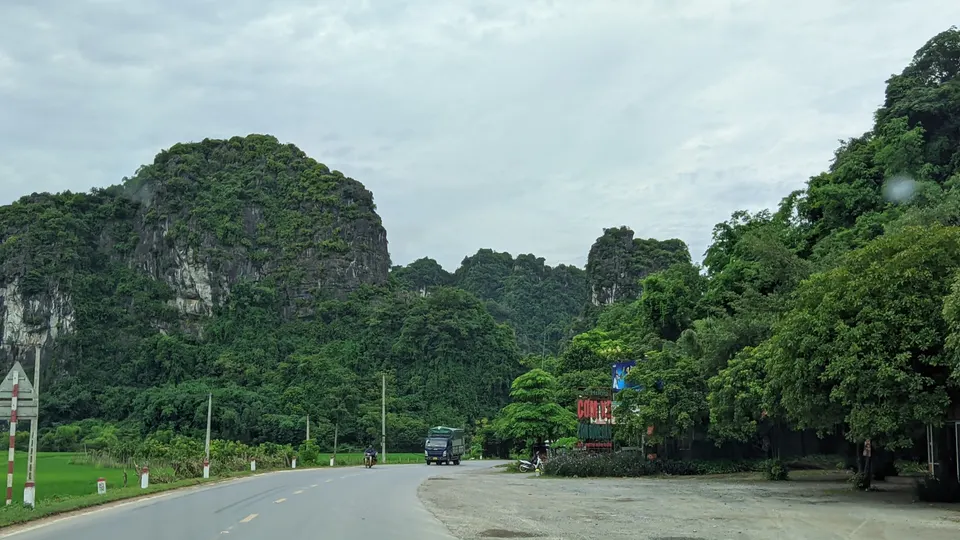
Mai Chau is about 140 km from central Hanoi, and the national tourism authority puts the trip at about three hours by car or bus via the town of Hoa Binh. The trip is by road: by public bus, by a booked car or van, or riding yourself.
| Option | How it works | Good to know |
|---|---|---|
| Public bus | Coaches from Hanoi’s Yen Nghia (Yên Nghĩa) and My Dinh (Mỹ Đình) bus stations; get off at Tong Dau junction and take a motorbike taxi about 5 km into the valley | VnExpress gave fares of about 80,000–140,000 dong in its 2022 handbook, and return buses from about 5:30 a.m. to 3 p.m., most in the morning (VnExpress) |
| Car, van or limousine | Booked privately, through a tour or through your homestay or hotel | Door to door; the easiest choice for families and late arrivals |
| Motorbike | VnExpress describes a route of about 140 km from Hanoi through Xuan Mai, Hoa Binh and Cao Phong, then over the Thung Khe pass into the valley | It calls the route suitable for less experienced riders |
Fares and timetables change, so treat the 2022 figures as a guide and confirm with the bus station, an operator or your homestay. Whichever way you travel, go in daylight. The 25 km Hoa Lac–Hoa Binh road, the main link from Hanoi towards the northwest, has only one lane each way, carries heavy trucks and sees risky overtaking, Tuoi Tre reported in April 2026; it is due to be widened into an expressway. The last climb into the valley crosses the Thung Khe pass, which the national tourism site singles out for its views in the morning. For buses, vans and trains across the country, see getting around Vietnam.
A one- or two-day plan for Mai Chau
The national tourism authority suggests “a night or two” in the valley, and that is the right length: long enough for an evening and an early morning in the village without the rush of a return day trip. Mai Chau also works as a gentle first step into the mountains, very different from the karst rivers of Ninh Binh or the high passes of Ha Giang, and much less built-up than Sa Pa.
- Day 1 morning. Leave Hanoi early, so you cross the Thung Khe pass in morning light, and check into a stilt-house homestay in Ban Lac or Poom Coong by late morning.
- Day 1 afternoon. Rent a bicycle or walk the paths between the clusters of stilt houses and the fields. Stop at a loom; Hoa Ban+ in Lac village is a social enterprise that trains White Thai women in weaving, if you want to know who made what you buy.
- Day 1 evening. Family dinner (grilled stream fish, com lam, ruou can) and the village song-and-dance programme.
- Day 2 morning. Walk the hamlets and rice fields early; the national tourism site calls mornings ideal for peaceful walks. On a Sunday, go up to the Pa Co market instead; from November to April the mist around Hang Kia and Pa Co is usually best between about 5 and 9 a.m., according to VnExpress.
- Day 2 afternoon. Head back to Hanoi, or stay a second night and spend the day kayaking on the Hoa Binh reservoir or trekking in Pu Luong, both suggested by the national tourism site. If you rely on the public bus back, leave in the morning, when most buses run.
If you only have one day, our comparison of day trips from Hanoi shows closer options, and our one-week North Vietnam itinerary shows where a night in the hills fits. For the bigger picture of seasons, food and the 2025 provincial map, start at our North Vietnam hub, and see our Vietnam travel section for planning across the regions.
Frequently asked questions
How much does a homestay in Mai Chau cost?
VnExpress reported in March 2024 that a private room with its own bathroom in a Ban Lac guesthouse cost about 300,000–500,000 dong a night, and a whole communal stilt house for 10–20 people about 1–1.2 million dong. A family dinner was 100,000–200,000 dong a person, so confirm current prices when you book.
Do I need to book a Mai Chau homestay in advance?
For weekends and holidays, yes. VnExpress advises booking at least a week ahead because places fill up at weekends, and VCCI, reporting from the national news agency VNA, said Ban Lac homestays were almost fully booked over Tet (Lunar New Year) 2026.
Is Mai Chau worth it compared with Sa Pa?
They suit different trips. Mai Chau is a quiet, low valley of Thai stilt-house homestays and rice fields, an easy short trip from Hanoi; Sa Pa, a former French hill station, is the bigger and busier hub for trekking in the far north.
Which should I choose, Mai Chau or Pu Luong?
Choose Pu Luong for wilder scenery: it is a separate nature reserve, set up in 1999 in Thanh Hoa province and known for terraced fields and old forest. Choose Mai Chau for an easier trip and a broader valley with longer-established homestay villages.
Do Thai families still live in the stilt houses in Mai Chau?
Yes. In Ban Lac and Poom Coong families still live in stilt houses and host guests in them. What has changed is the use of the space underneath, once for livestock and tools and now often a shop, workshop or extra room.
Key sources
- Mai Chau · Vietnam National Authority of Tourism (vietnam.travel)
- 7 essential things to do in Mai Chau · Vietnam National Authority of Tourism (vietnam.travel)
- Lac Village (Mai Chau) · Vietnam National Authority of Tourism
- Lac Village - an attractive destination in Viet Nam tourism map · Vietnam National Authority of Tourism, Dec 2012
- Hoa Binh province: Thai community tourism in Mai Chau attractive to holidaymakers · Vietnam National Authority of Tourism (rural tourism portal)
- Resolution 202/2025/QH15 on the reorganization of provincial-level administrative divisions · LuatVietnam (text of the National Assembly resolution)
- Art of Xòe dance of the Tai people in Viet Nam · UNESCO Intangible Cultural Heritage
- Cẩm nang du lịch Mai Châu (Mai Châu travel handbook) · VnExpress, 2022, updated 2026
All 22 sources and further reading
- Resolution 1676/NQ-UBTVQH15 on the reorganization of commune-level administrative divisions of Phu Tho province in 2025 · LuatVietnam (text of the National Assembly Standing Committee resolution)
- Thú vị bản Lác (Interesting Lác village) · Sài Gòn Giải Phóng, 3 July 2009
- Phú Thọ: Du lịch cộng đồng vùng cao bứt phá chào năm mới (Highland community tourism takes off) · VCCI (from VNA/VietnamPlus), 5 Feb 2026
- Bản sắc làm nên thương hiệu du lịch cộng đồng Mai Châu (Identity makes Mai Châu's community-tourism brand) · Tin nhanh chứng khoán (Báo Đầu tư), 6 Nov 2025
- Việt Nam's xòe Thái folk dance gains UNESCO recognition · Việt Nam News
- Thai stilt house culture · VietNamNet (from VOV5), 18 Sept 2018
- Traditional stilt houses in Hum hamlet · Sơn La Newspaper, 8 Sept 2023
- Đặc sản Hòa Bình (Hòa Bình specialities) · Vietnam Airlines travel guide
- Pu Luong Nature Reserve, Thanh Hoa · Nature and Biodiversity Conservation Agency (Ministry of Agriculture and Environment)
- Hiện trạng tuyến đường kết nối Hà Nội đi Tây Bắc… (The state of the road linking Hanoi to the northwest) · Tuổi Trẻ, 4 April 2026
- Những điều cấm kỵ khi đến các bản làng dân tộc (Taboos to know when visiting ethnic-minority villages) · VietNamNet, 4 Nov 2016
- Ý nghĩa của bếp lửa nhà sàn trong đời sống người Thái Tây Bắc (The hearth in the Thai stilt house) · Báo Văn Hóa, 11 May 2020
- 48 giờ ở Mai Châu (48 hours in Mai Châu) · VnExpress, 29 March 2024
- Looking for adventure? Try this hill-tribe trek in Vietnam · National Geographic Traveller (UK), Aug 2025
Keep exploring
 North Vietnam · Travel Hanoi: How Many Days, What to See and When to Go Hanoi travel guide for 2026: how many days and where to stay, Noi Bai airport, walking-street hours, the new low-emission zone, Train Street and where to eat.
 North Vietnam · Travel Which Day Trip from Hanoi? Ninh Binh vs Ha Long vs Bat Trang Which day trip from Hanoi? Ninh Binh, Ha Long Bay, Bat Trang, Duong Lam and the Perfume Pagoda compared by road time, effort and season, as of November 2026.
 North Vietnam · Travel Sa Pa (Sapa): When to Go, How Many Days and What to See Sa Pa (Sapa) trip planner: when to see golden or flooded rice terraces, how many days to stay, which Hmong and Dao villages to visit, and Fansipan in brief.
 North Vietnam · Travel Ninh Binh (Ninh Bình): How Many Days, Boats and Tickets Ninh Binh: how many days you need, Trang An or Tam Coc boats, 2026 ticket prices, when the rice turns gold, the Hoa Lu capital, what to eat and a 2-day plan.