North Vietnam · Travel
Fansipan Cable Car or Hike? 2026 Prices and Best Time
Fansipan cable car or hike? As of November 2026: 850,000 dong return, open 07:30-17:00, clear-morning tips, summit cold and the two-day guided climb.
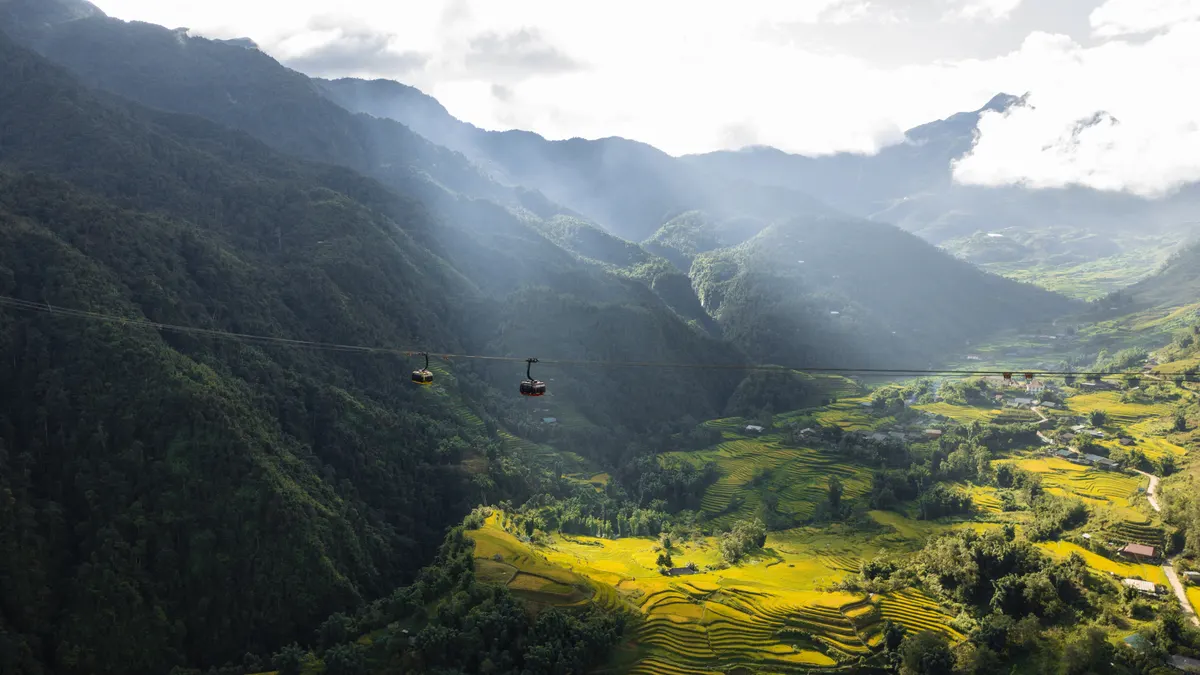
Take the Fansipan cable car on the clearest morning of your stay, unless you are a fit hiker with two days and are happy to pay for a guide. As of November 2026, Sun World lists the round-trip cable car at 850,000 dong per adult from outside Lao Cai province and opening hours of 07:30 to 17:00, while the climb on foot needs a permit and a licensed guide or porter.
Most people reach the top of Fansipan, Phan Xi Pang (Phan Xi Păng) in Vietnamese and the country’s highest mountain, by cable car: a short train from Sa Pa town, a 15–20 minute ride over the Muong Hoa (Mường Hoa) valley, then about 600 steps or a small funicular to the summit marker. Go on a clear morning, budget around 1 million dong per adult with the extras, and take a warm jacket; if you want to earn the view, the alternative is a two-day guided climb from Tram Ton (Trạm Tôn).
This page sets out how the Sun World Fansipan Legend system works, the 2026 ticket prices with their dates, how long a visit takes, what the weather does to the view, and what the hike involves, then helps you choose and plan. For the town itself, the rice terraces and the communities around it, start with our Sa Pa guide.
Fansipan at a glance
Prices are the operator’s 2026 figures unless noted; they change, so check before you go.
| What it is | Vietnam’s highest peak, in Hoang Lien (Hoàng Liên) National Park above Sa Pa, with a temple complex near the top |
| Height | 3,143 m on the summit marker (French survey, 1909); 3,147.3 m in a 2019 satellite survey |
| Where | Sa Pa ward, Lao Cai province; the cable car station is about 5 km from the town centre |
| Getting up | Optional train from town, then cable car (about 6.3 km, 15–20 minutes), then about 600 steps or a funicular |
| Ticket (2026) | Cable car return: adult 850,000 dong, child 1–1.4 m 550,000 dong, under 1 m free; train 200,000 dong return; funicular about 150,000 dong |
| How long | 3–4 hours at the top; half a day from Sa Pa |
| Best time | Clear mornings; September–November and March–May |
| Hiking instead | Usually 2 days from Tram Ton with a licensed guide and a permit |
Why two heights? The 3,143 m figure dates from a French survey in 1909 and is the one on the marker, in guidebooks and on official tourism pages. In 2019 Vietnam’s Department of Survey, Mapping and Geographic Information measured 3,147.3 m with satellite positioning (VietnamPlus). Either way, it is the highest point in Vietnam.
Where it is now. Since 1 July 2025 Sa Pa has been part of a larger Lao Cai province that absorbed the former Yen Bai (Yên Bái) province and kept the Lao Cai name, under Resolution 202/2025/QH15. Hoang Lien National Park itself covers about 28,500 hectares across Lao Cai and Lai Chau provinces, according to Lao Cai’s foreign affairs department.
How does the Fansipan cable car system work?
The trip up is three linked rides run by Sun World Fansipan Legend, part of Sun Group, and you can start at any of them.

- The Muong Hoa mountain train (optional). A train runs about 2 km from Sun Plaza in the centre of Sa Pa down to the cable car station, through two tunnels and over four viaducts. It opened on 31 March 2018; Bao Phap Luat put the ride at about 4 minutes and VnExpress at 6–7. You can skip it and take a taxi to the station instead, about 5 km and 10–15 minutes, Sun World’s 2026 guide says.
- The cable car. From Hoang Lien station in the valley to Fansipan station near the top. Opened on 2 February 2016, it is 6,292.5 m long and climbs 1,410 m, two Guinness World Records for a non-stop three-rope cable car (Guinness World Records). Each cabin takes 35 people and the system can carry 2,000 an hour, the government’s newspaper reported at the opening; the ride takes 15–20 minutes, against the two days the climb usually took on foot.
- The last stretch: steps or funicular. From the top station you either walk up about 600 stone steps past the temples, or ride the summit funicular, which Sun Group describes as about 604 m long, then walk the final 50–70 steps to the marker.
What has changed since the early guides. Many older blog posts describe only the cable car, with a walk to the top. Today the train and the funicular are separate, optional tickets, so decide in advance whether you want them.
How much are Fansipan tickets in 2026?
The cable car ticket is the only one you need; the train and the funicular are extras. These are the operator’s 2026 prices for visitors from outside Lao Cai province (Sun World):

| Ticket | Adult (over 1.4 m) | Child 1 m to under 1.4 m | Source and date |
|---|---|---|---|
| Cable car, round trip | 850,000 dong | 550,000 dong | Sun World guide, 3 Aug 2026 (under 1 m free) |
| Muong Hoa train, Sa Pa town to cable car station, round trip | 200,000 dong | – | Sun World train page, 20 Mar 2026 |
| Summit funicular | About 150,000 dong per person, varies by season | – | Sun Group’s Sun Paradise Land, 10 Mar 2026 |
| Summit-area sightseeing fee | 10,000 dong (age 16 and over) | 5,000 dong (under 16) | Provincial resolution, collected by the operator from 1 Jan 2025 |
Why the prices you see online differ. Ticket prices are set by height, not age, and they have risen over the years. Sun World’s own 2018 cable car page still shows 750,000 dong, VnExpress’s Sa Pa guide, updated in April 2026, still lists 715,000 dong for the cable car and 99,000 dong for the train, and blogs quote 800,000. Trust a figure only if it is dated, and check the operator’s site for your date.
Locals, combos and the fee. The operator sells cheaper tickets to residents of Lao Cai province, and combo tickets that add the train, the funicular or a buffet lunch; their prices change often, so we do not list them. The summit sightseeing fee was set by Lao Cai’s provincial council in Resolution 05/2024/NQ-HDND, Bao Lao Cai (Báo Lào Cai) reported in July 2024; it is collected by the operator, so ask whether it is already in your ticket.
How long does Fansipan take, and what is at the top?
Allow half a day from Sa Pa town. Sun World’s guide suggests reaching the cable car station 20–30 minutes before you want to ride and spending about 3–4 hours at the summit and among the temples.

Hours. As of November 2026, the operator’s official page lists 07:30 to 17:00 and warns that hours may change. A Sun Group guide from May 2026 says weekday cable cars start at 08:00 and weekend cars at 07:30, so if you want the first ride on a weekday, check the evening before.
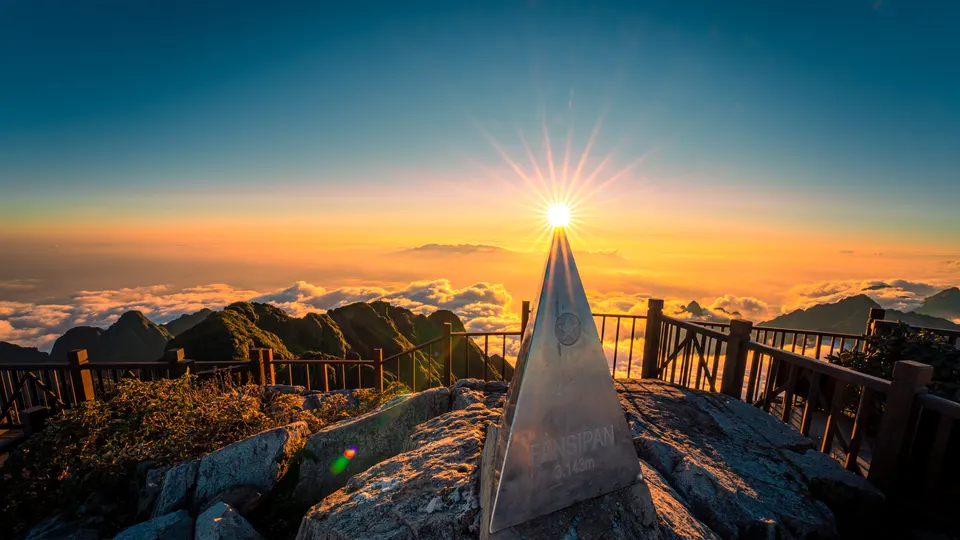
What you see. The national tourism authority describes wandering the pagoda complex before climbing “the last few steps to the summit”. VnExpress lists the Kim Son Bao Thang (Kim Sơn Bảo Thắng) complex, an 11-storey pagoda, a bronze statue of Quan The Am, the bodhisattva of compassion, and what it calls Vietnam’s largest bronze Amitabha Buddha. The summit marker itself is a small steel pyramid on a rock, often with a queue for photos.
A rough timeline from Sa Pa town:
| Step | Time (source) |
|---|---|
| Train from town, or taxi to the station | About 4–7 minutes by train (Bao Phap Luat, VnExpress); 10–15 minutes by taxi (Sun World) |
| Queue and cable car ride | 15–20 minutes riding (Sun World); queues vary |
| Steps or funicular to the marker | About 600 steps, or the funicular plus 50–70 steps |
| Temples, marker, views | About 3–4 hours in all (Sun World) |
Fansipan weather: when is the view clear, and how cold is it?
The view is the main reason to pay, and on many days the summit is in cloud. Go in the morning, in the clearer seasons, and dress for winter whatever the month.
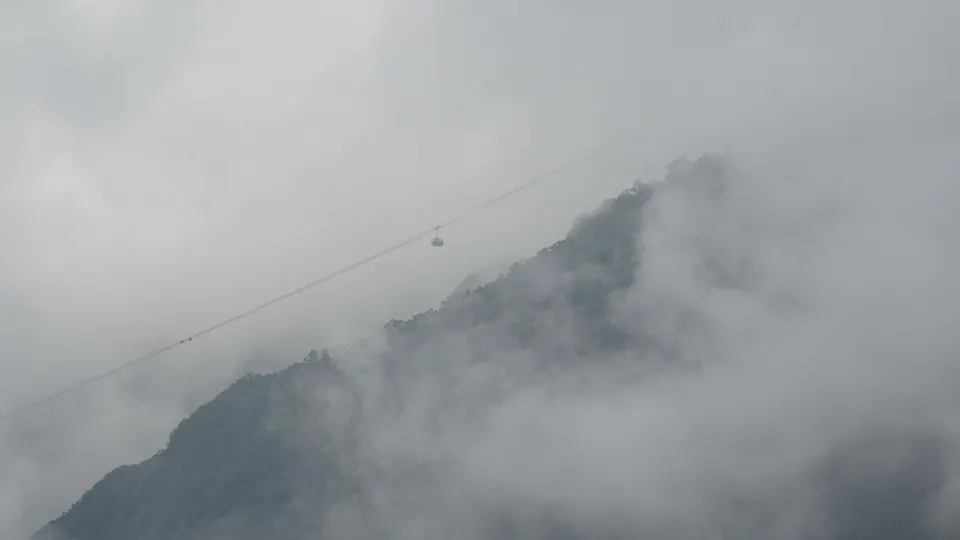
Time of day. Sun Group’s guides name about 07:30 to 10:00 as the best time to catch a sea of clouds below the summit, with less stable visibility from mid-afternoon.
Season. Vietnam’s national tourism authority calls September to November the best time for Sa Pa, with clear skies and golden terraces, and March to May mild. Sun World’s guide adds that seas of cloud are most common from September to April, rhododendrons flower from March to May, and December to February brings fog, frost and fast-changing weather. VnExpress advises avoiding the rain and storm season from June to early August.
Cold. The summit is usually 7–10 °C colder than the centre of Sa Pa, the operator says, and it can fall below freezing in winter. On 7 January 2026 the summit was about −3 °C with ice forming on trees and railings, while Sa Pa was about 5 °C in dense fog (Bao Lao Cai). VnExpress warns that the summit can turn cold and misty suddenly.
Snow is possible, not reliable. The first snow of the 2025–26 winter fell on the summit on 18 December 2025 and lasted about five minutes, VTC News reported; in February 2021 snow lay 60 cm deep. VTC adds that snow has become rarer, more irregular and thinner in recent years, so do not plan a trip around it; our guide to Sapa in winter explains what the cold months are like in town and on the trails. For the month you travel, see our Vietnam weather by month guide, and for the cold season, our guides to Vietnam in December and Vietnam in January.
Can you hike Fansipan instead of taking the cable car?
Yes, but not alone. To climb through Hoang Lien National Park you need a permit and a licensed guide or porter; rangers, forest protection teams and commune police patrol the trails, people who break the rules can be held liable, and groups caught dodging tickets are penalised (Bao Lao Cai). Older English blog posts that describe solo climbs predate this enforcement.
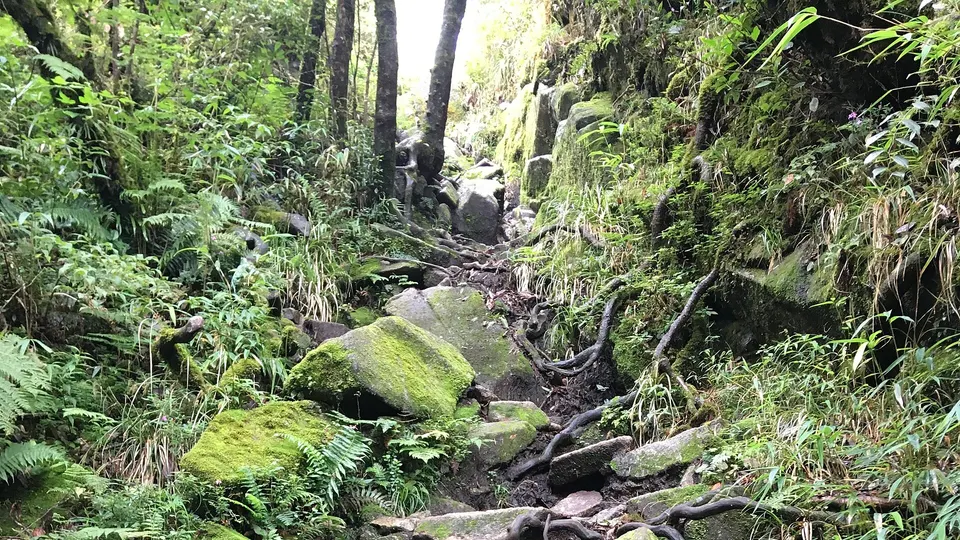
The main route: Tram Ton. The best-documented route starts at Tram Ton, at a little over 1,900 m, and treks usually take two days and one night to the 3,143 m summit and back, more than 20 km in all, Bao Lao Cai reported in April 2026. VnExpress described the classic shape of the climb: a lunch stop at a rest station at about 2,200 m, a night in a wooden cabin at about 2,800 m with no electricity or phone signal, and a pre-dawn start to reach the summit at sunrise. The trail climbs, drops and climbs again rather than rising steadily.
Other routes. The park also promotes a route from Sin Chai (Sín Chải), a hamlet in Ta Van commune, with rest stops and signposts. It is the route on which two German hikers got lost overnight in September 2025, Viet Nam News reported; they were found about 3 km from the 2,200 m rest stop, and the authorities again urged visitors not to climb without proper guidance.
Who climbs. Between 16 December 2025 and 26 October 2026, 6,108 people took the Fansipan climbing route, about three quarters of them foreign visitors, Bao Lao Cai reported on 30 October 2026. Bao Lao Cai advises booking a tour with a travel agency and a guide rather than climbing on your own, and registering for a permit as the rules require.
Rules on the mountain. The park asks climbers to leave no trace and carry out all their rubbish, fruit peel included, and warns of a high fire risk in the dry winter months. For village walks below the forest, which you can do without a guide, see our Sapa trekking guide.
Cable car or hike: which suits you?
Most visitors should take the cable car on the clearest morning they have. The climb is for fit walkers who have two days, want the mountain itself rather than the view from the temples, and are happy to pay for a guide.

| Cable car | Guided hike from Tram Ton | |
|---|---|---|
| Time | Half a day from Sa Pa | Usually 2 days and 1 night |
| Fitness | About 600 steps, or the funicular | Steep, rough, more than 20 km round trip |
| Cost | 850,000 dong cable car plus optional train and funicular (2026) | Guide, porters, permit and camp; agency price, ask what is included |
| Rules | Ticket only | Permit and licensed guide or porter required |
| Weather risk | Cloud can hide the view; easy to re-plan for another day | Rain makes the trail slippery; a guide may cancel |
| Best for | Families, older travellers, short trips, anyone in a hurry | Hikers who want the summit on foot and a night on the mountain |
| What you get at the top | The same summit, temples and views | The same, plus sunrise from the mountain if the weather holds |
A middle way. Some treks finish with the cable car down rather than walking back; if that is your plan, ask the agency whether the ride down is in the price, since the cable car is sold as a return ticket.
A step-by-step plan for the cable car day
This plan assumes two or three nights in Sa Pa, which our guide to getting from Hanoi to Sa Pa recommends because the journey takes most of a day or a night each way.

- Keep Fansipan flexible. Do not fix it for the morning after you arrive; pick the clearest day of your stay.
- Check the sky and the operator the evening before. Look at the forecast for the summit, not just the town, and at Sun World’s site or hotline for opening hours and any maintenance notice.
- Decide on the extras. Train from town or a taxi to the station; funicular or the 600 steps. Buy the cable car ticket from the operator or a well-known agent.
- Start early. Be at the station 20–30 minutes before the first cars, which run from 07:30 on weekends and from 07:30 or 08:00 on weekdays depending on the source.
- Go straight to the summit marker while the clouds are low and the queue is short, then walk down through the temples.
- Head down by early afternoon. Visibility tends to drop later in the day, and you will have time for a walk in Sa Pa or the valley afterwards.
If the cloud never lifts, spend the day on a valley walk instead; our Sa Pa guide and trekking guide suggest routes.
Common mistakes on Fansipan
Most disappointments come from going on the wrong day or dressing for the town rather than the summit.
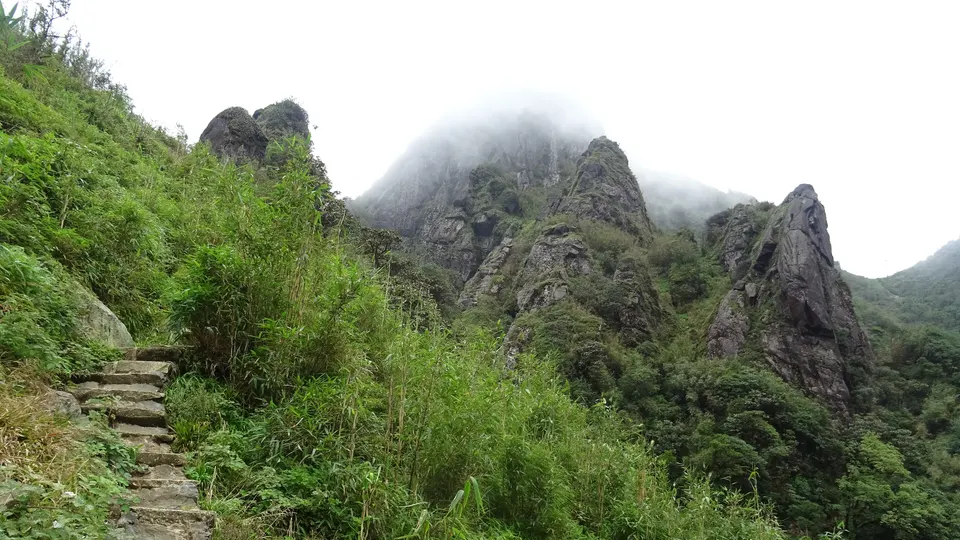
- Booking it for a fixed day and hoping. Cloud is common; keep a spare day and go on the clearest morning.
- Not checking for maintenance. The cable car and the Muong Hoa train were both suspended from 21 to 27 September 2026 for periodic maintenance (Nguoi Quan Sat); check before you travel to Sa Pa for it.
- Trusting an undated price. Prices online range from 715,000 to 850,000 dong for the same ticket; the operator’s dated price is the one to use.
- Dressing for Sa Pa town. The summit is usually 7–10 °C colder and can be below freezing in winter.
- Underestimating the steps. About 600 steps at over 3,000 m are hard work in the cold; take the funicular if you are unsure, and take your time.
- Planning to climb alone. The trails need a permit and a licensed guide or porter; going alone risks getting lost and being penalised.
- Arriving mid-afternoon. Visibility is less stable later in the day, and the last cars down leave in the late afternoon.
Before you go: a checklist
Run through this the day before; prices, hours and the weather on the summit change.
- Hours and notices: check the operator’s page for opening hours and maintenance closures; as of November 2026 it lists 07:30–17:00 and says hours may change (Sun World).
- Weather: look at the summit forecast and the morning sky; go on the clearest day you have.
- Tickets: cable car 850,000 dong per adult in 2026, plus the train and funicular if you want them; ask whether the summit fee is included.
- Clothes: a warm jacket in every season, gloves and a hat in winter, a rain jacket, and shoes with grip for wet stone steps.
- Money: take some cash for drinks and food at the top; our guide to money and tipping in Vietnam covers cards and cash.
- Hiking: book a guided trek through an agency that arranges the permit, and confirm the route, the camp and the plan if it rains.
- More of the region: for a gentler hill-station break, compare Da Lat and Sa Pa; for other mountain and valley trips, start at our North Vietnam hub.
Frequently asked questions
What time does the Fansipan cable car open?
As of November 2026, Sun World's official Fansipan page lists 07:30 to 17:00 and warns that hours may change; a Sun Group guide from May 2026 says weekday cars start at 08:00 and weekend cars at 07:30. The Fansipan cable car and the Muong Hoa train also close for periodic maintenance, as they did from 21 to 27 September 2026, so check the operator's site the evening before.
Is the Fansipan cable car worth it on a cloudy day?
Only if you are happy with the ride and the temples in mist. On many days the Fansipan summit is in cloud, and the view over the valleys is the main reason to pay; if you have a spare day in Sa Pa, check the morning sky and go on the clearest one.
Do I need a guide to climb Fansipan?
Yes. Hoang Lien National Park requires a permit and a licensed guide or porter to enter the forest, Bao Lao Cai reported in October 2025, and groups caught dodging tickets are penalised. Older blog posts that describe solo climbs of Fansipan predate this enforcement.
Which should I choose, the Fansipan cable car or the hike?
Choose the cable car if you have half a day and want the view: in 2026 the round trip costs 850,000 dong per adult from outside Lao Cai province. Choose the guided hike from Tram Ton if you are fit, have two days and want the summit on foot, usually with a night at a mountain camp at about 2,800 m.
How high is Fansipan, 3,143 m or 3,147 m?
Both figures appear. The 3,143 m on the Fansipan summit marker dates from a French survey in 1909; a satellite survey by Vietnam's mapping department in 2019 measured 3,147.3 m.
Key sources
- “Bỏ túi” cẩm nang du lịch Fansipan từ A đến Z chi tiết nhất 2026 · Sun World (operator), 3 August 2026
- Sun World Fansipan Legend (official site) · Sun World, checked 20 November 2026
- Chinh phục đỉnh Fansipan bằng đường bộ: Văn minh và trách nhiệm · Báo Lào Cai, 26 October 2025
- Nhiệt độ xuống -3 độ C, đỉnh Fansipan xuất hiện băng tuyết · Báo Lào Cai, 7 January 2026
- Longest non-stop three-rope cable car in the world opens in Vietnam · Guinness World Records, 9 February 2016
- World's longest three-rope cable car operates in Lao Cai · Government of Viet Nam online newspaper (Báo Chính phủ), February 2016
- Fansipan peak found to be 4m higher than old measurement · VietnamPlus (Vietnam News Agency), 26 June 2019
- Chỉ 3 ngày nữa, tuyến cáp treo lên đỉnh núi cao nhất Việt Nam dừng hoạt động · Người Quan Sát, 18 September 2026
All 23 sources and further reading
- Discover the most modern mountain railway in Vietnam · Sun World (operator), 20 March 2026
- 300 du khách xuyên đêm chinh phục đỉnh Fansipan · Báo Lào Cai, 15 April 2026
- Kinh nghiệm du lịch Sa Pa 2026 từ A-Z · VnExpress (updated 16 April 2026)
- 21 giờ leo nóc nhà Đông Dương · VnExpress, 8 February 2020
- Tuyết Sa Pa dần biến mất trong vòng xoáy biến đổi khí hậu · VTC News, 5 January 2026
- Fansipan thu hút đông đảo du khách chinh phục bằng đường bộ · Báo Lào Cai, 30 October 2026
- Sẽ thu phí khách tham quan khu vực đỉnh Fansipan và thác Cát Cát · Báo Lào Cai, 9 July 2024
- Two German tourists found safe after getting lost in Hoàng Liên National Park · Việt Nam News, September 2025
- Promotion of Fansipan peak conquering tourism route · Lao Cai Department of Foreign Affairs, 20 August 2025
- Sa Pa · Vietnam National Authority of Tourism (vietnam.travel)
- Từ 31/3/2018, Sa Pa có tuyến tàu hỏa leo núi hiện đại bậc nhất Việt Nam · Báo Pháp luật Việt Nam, March 2018
- Giá vé cáp treo Fansipan 2026 mới nhất · Sun Paradise Land (Sun Group), 10 March 2026
- Tàu hỏa leo núi trên đỉnh Fansipan · Sun Paradise Land (Sun Group), 11 September 2026
- Giờ mở cửa cáp treo Fansipan mới nhất · Sun Paradise Land (Sun Group), 8 May 2026
- Resolution 202/2025/QH15 on the reorganization of provincial-level administrative divisions · National Assembly of Vietnam, 12 June 2025 (LuatVietnam English)
Keep exploring
 North Vietnam · Travel Sa Pa (Sapa): When to Go, How Many Days and What to See Sa Pa (Sapa) trip planner: when to see golden or flooded rice terraces, how many days to stay, which Hmong and Dao villages to visit, and Fansipan in brief.
 North Vietnam · Travel Sapa Trekking: Do You Need a Guide, and Which Route? Do you need a guide to trek in Sapa? What the rules say, which walks you can do alone, a route table from Cat Cat to Ban Ho, fees, seasons and safety.
 North Vietnam · Travel Hanoi to Sapa: Train, Sleeper Bus or Van – Which to Book? Hanoi to Sapa as of November 2026: night train to Lao Cai, sleeper bus, limousine van or car compared by time and fare, plus the transfer, road works and Tet.
 North · Central · South · Travel Da Lat vs Sa Pa (Sapa): Which Should You Visit? Da Lat vs Sa Pa: compare the two hill stations by season, cost, getting there and trip length, with November 2026 transport updates and 3-day plans.