South Vietnam · Travel
War Remnants Museum Saigon: What to Expect and How Long
War Remnants Museum in Saigon: the official route floor by floor, 2–3 hours, whether to bring children, 60,000 dong tickets since October 2026, a half-day plan.
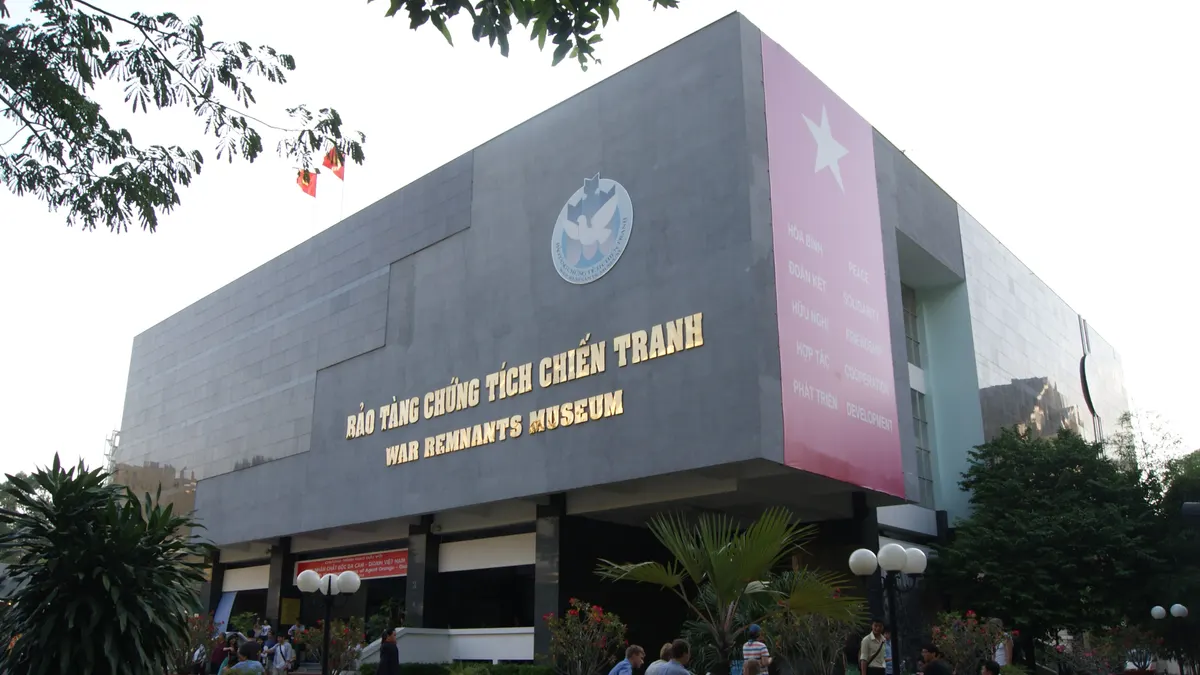
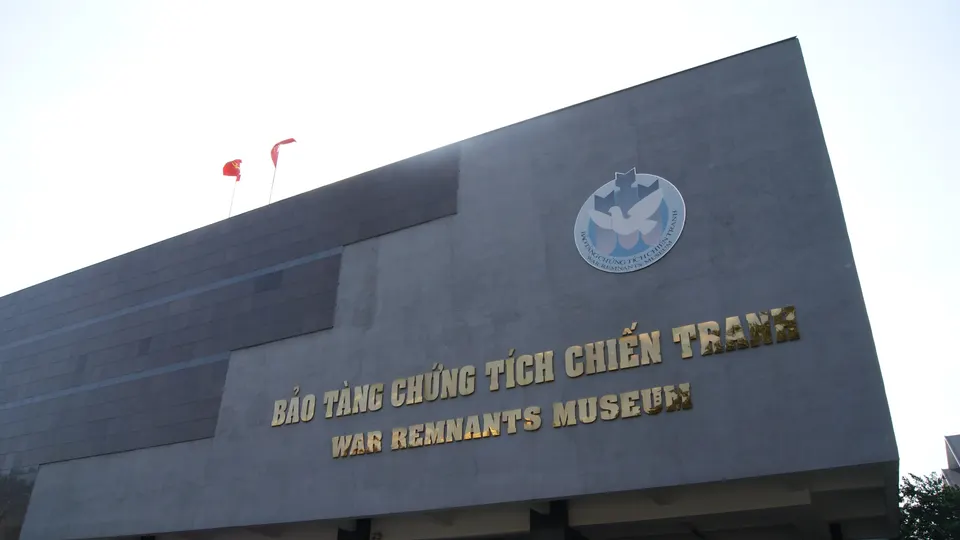
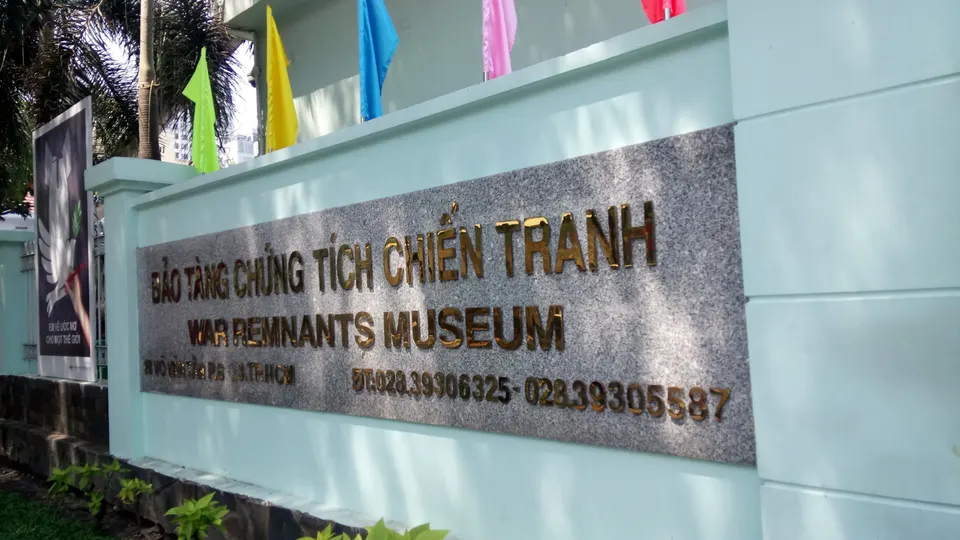
The War Remnants Museum, Bao tang Chung tich Chien tranh (Bảo tàng Chứng tích Chiến tranh), is Saigon’s museum of the American war seen from the Vietnamese side: US aircraft and tanks in the yard, a recreated prison with tiger cages, and three floors of photographs, documents and objects, including what the war left behind, above all Agent Orange. Plan on 2–3 hours, expect some rooms to be hard to look at, and think twice before taking young children into the War Crimes and Agent Orange galleries. The museum is open every day from 7:30 to 17:30, and since 1 October 2026 a standard ticket costs 60,000 dong (War Remnants Museum).
This page covers only the visit itself: the museum’s own route, how long each part takes, children, tickets, a half-day plan and how to behave. For the rest of the city, see our Ho Chi Minh City guide and the South Vietnam hub.
War Remnants Museum at a glance
Hours, prices and the route are from the museum’s own site, checked on 12 November 2026.
| What it is | Museum of the wars in Vietnam and their consequences, run by the city; over 20,000 documents, objects, photos and films in its collection |
| Address | 28 Vo Van Tan Street, Xuan Hoa ward (before July 2025: Vo Thi Sau ward, District 3); parking at the side gate on Le Quy Don Street |
| Opening hours | Daily incl. holidays, 7:30–17:30; ticket counter 7:30–17:00 |
| Ticket | 60,000 dong from 1 Oct 2026; 30,000 dong for discount groups; free for children, pupils and students |
| Online tickets | QR tickets on the museum’s ticket site since 10 Feb 2026; free tickets for students are also registered there |
| Time needed | 2–3 hours; up to 4 if you read everything |
| Hardest rooms | War Crimes and Agent Orange Effects (first floor); Agent Orange photo collection (top floor) |
| With children | Yard, ground floor and the children’s room on the top floor; preview the rest |
| Combine with | Independence Palace, then Notre-Dame (outside only) and the Central Post Office |
What will you see? The museum’s route, floor by floor
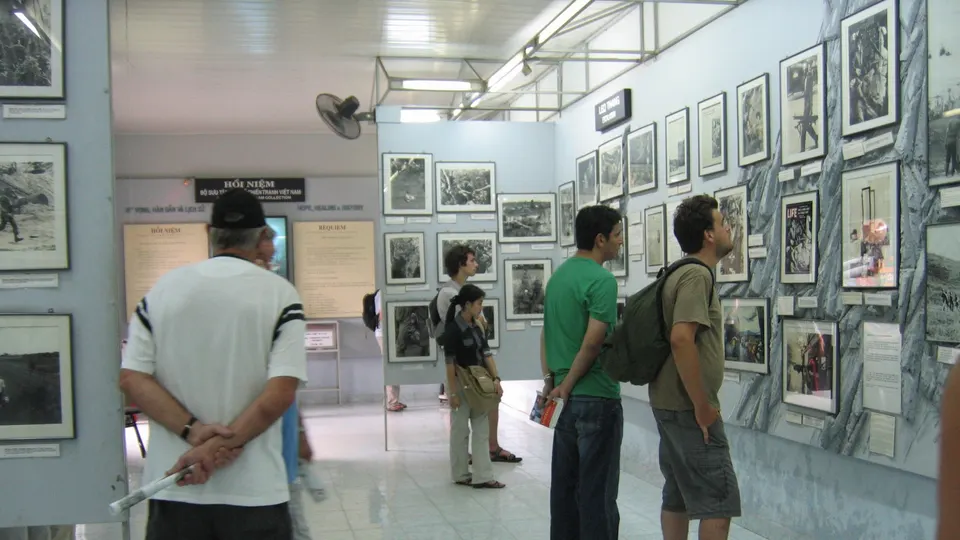
The museum publishes a numbered visitor route, dated April 2026, and it starts at the top: you climb to the second floor (lau 2, the third level), work down through the first floor to the ground floor, then visit the prison building along the side of the yard and finish among the aircraft and tanks outside. The permanent displays and their sizes below are the museum’s own descriptions (War Remnants Museum).
| Stop | Where | Exhibition | What is in it |
|---|---|---|---|
| 1 | Top floor | Historical Truths | 66 photos, 20 documents and 153 objects on how the US war in Vietnam was waged |
| 2 | Top floor | Requiem | 275 photos by 134 photographers of 11 nationalities who were killed covering the wars in Indochina, compiled by the photojournalists Tim Page and Horst Faas with help from the Vietnam News Agency |
| 3 | Top floor | Agent Orange during the Vietnam War | 42 photos by the Japanese photographer Goro Nakamura |
| 4 | Top floor | Vietnam – War and Peace | 123 photos by the Japanese photographer Ishikawa Bunyo |
| 5 | Top floor | White Doves | Children’s education room |
| 6 | First floor | War Crimes | 125 photos, 22 documents, 243 objects on the crimes and consequences of the war for Vietnam and its people |
| 7 | First floor | Agent Orange Effects | 100 photos, 10 documents, 20 objects on the effects of the chemicals and on victims’ lives today |
| 8 | First floor | Conference room | Not part of the visit |
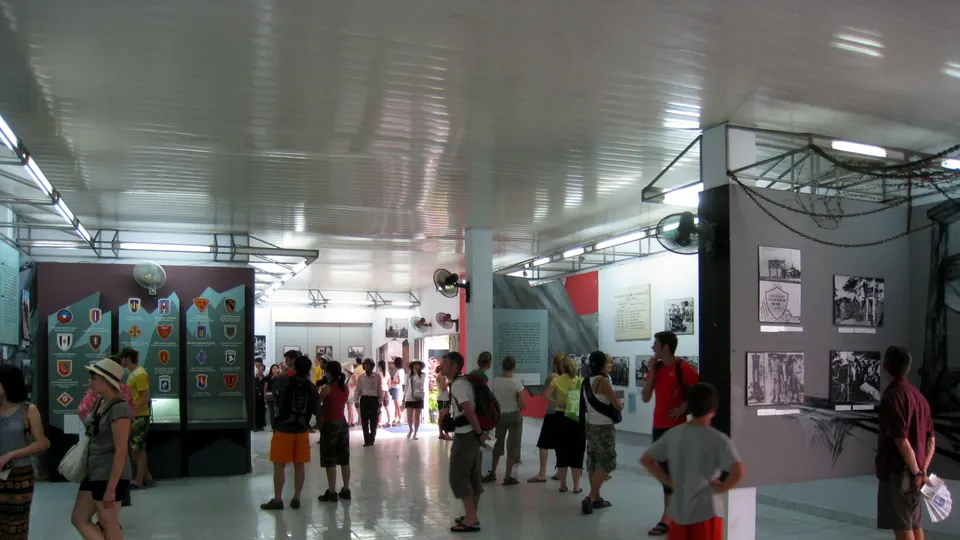
| 9 | Ground floor | The World Supports Vietnam (1954–1975) | 100 photos, 145 documents and objects on the worldwide protest movement, including in the US |
| 10 | Ground floor | Temporary exhibitions | Changing themed shows |
| 11 | Side building | Imprisonment System (1954–1975) | 40 photos, 21 objects, a guillotine and recreated tiger cages |
| 12 | Yard | Open-air exhibition | US aircraft, helicopters, tanks and artillery |
Why top-down? The upper floors set out the war and its record, the first floor its cost, and the ground floor the world’s reaction, so in effect the route ends on worldwide solidarity rather than in the Agent Orange rooms. The order is not compulsory, but following it means the two hardest rooms come in the middle, when you still have energy. The titles are the museum’s own; they describe the war as one of “aggression” and its prisons as built by the US and the Saigon government, which is the official Vietnamese view of the period.
How long should you spend at the museum?
Most visitors need two to three hours. A tour operator that checked the museum in October 2026, Jungle Boss, suggests 2–3 hours for the yard and the main galleries; the travel app Nomado says 2–3 hours at minimum and up to 4 if you read every exhibit. The galleries are mostly photographs with translated captions, so your pace depends on how much you read.
| Part | Our suggested time | Why |
|---|---|---|
| Top floor (stops 1–4) | 60–75 min | Requiem alone is 275 photographs; Historical Truths is dense with documents |
| First floor (stops 6–7) | 30–45 min | Two large, crowded rooms; many visitors need a pause after them |
| Ground floor (stop 9 and any temporary show) | 15–25 min | Posters, letters and photos of the worldwide protest movement |
| Prison building (stop 11) | 15 min | Small; the tiger-cage reconstruction is the main sight |
| Yard (stop 12) | 15–20 min | Aircraft, helicopters, tanks; good with children |
| Cafe or quiet break | 15–30 min | The museum has a cafe on site |
Our split of the 2–3 hours, based on the size of each display as the museum describes it.
Crowds change the sum. In April 2025, ahead of the 50th anniversary of 30 April 1975, the museum averaged 5,000 visitors a day and peaked at 9,000, mostly foreigners, and the Agent Orange, Historical Truths and War Crimes rooms were constantly crowded (VnExpress International). Estimates of annual visitors vary widely, from about half a million (Bao Van hoa, 2026) to about 3 million (a museum expert quoted by Tuoi Tre News, 2025, who called it one of the most visited museums in Vietnam). Both Jungle Boss and Nomado advise arriving at 7:30, before the tour groups.
Is it suitable for children, and how graphic is it?
Parts of it are fine for children, and parts are very graphic. The War Crimes room and the two Agent Orange displays show atrocities, severe injuries and children born with deformities; Rusty Compass, a long-running Vietnam guide, calls the museum “graphic and confronting” and notes explicit exhibits and pictures, including foetuses affected by defoliants (Rusty Compass). The museum does not give an age limit.
What works with children:
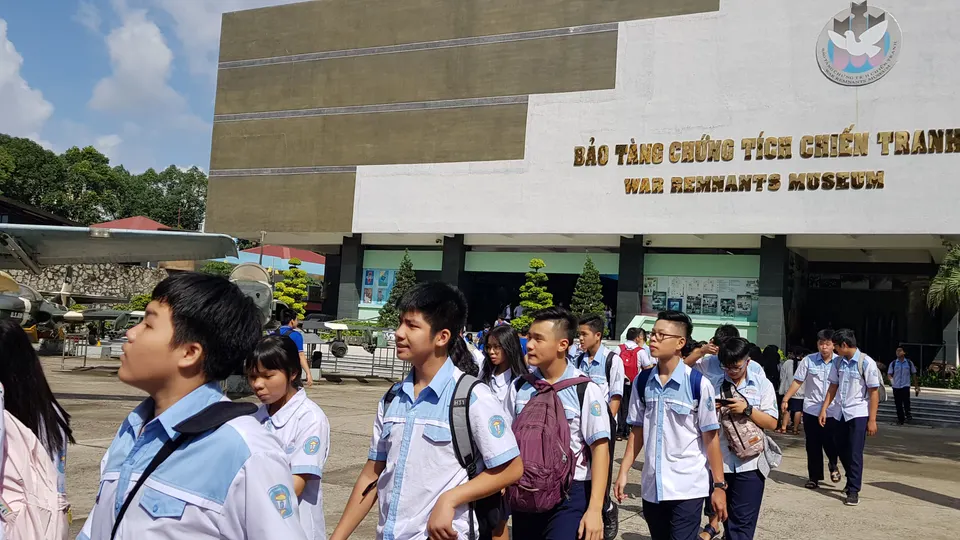
- The yard. The aircraft, helicopters and tanks interest most children; Nomado describes them as engaging for older children and teenagers.
- The ground floor. The worldwide protest movement is told through posters, letters and photos, without the injuries shown upstairs.
- White Doves (stop 5). The museum’s own children’s education room, on the top floor.
What to preview first: the War Crimes and Agent Orange Effects rooms on the first floor and the Nakamura Agent Orange photos on the top floor. Nomado says these are not appropriate for most children under 12. A practical approach is for one adult to go ahead while the other stays with the children in the yard or the cafe, then swap. The museum’s rules ask adults to supervise children at all times; children enter free, with the ticket collected at the counter.
For adults, too, the emotional weight is real. In April 2025 VnExpress International met a Canadian teacher who left the prison display in tears. Plan something gentle afterwards rather than going straight to a shopping street.
What is outside: aircraft, tanks and the prison display
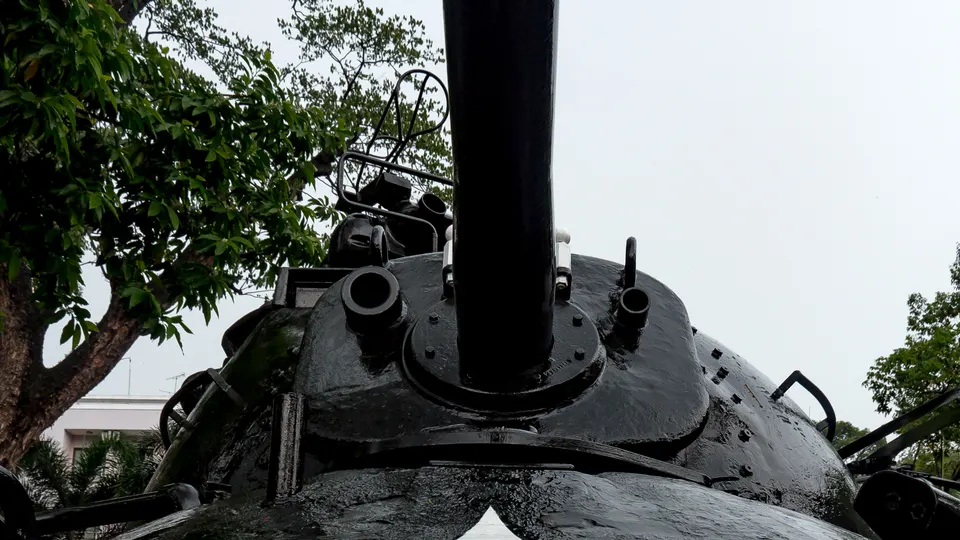
The route ends outside, but you walk through the yard from the ticket counter on Vo Van Tan Street, so many visitors look at it first. The open-air display (stop 12) holds US aircraft, helicopters, tanks and artillery; the museum plans to add augmented-reality information to these outdoor exhibits, Nhan Dan reported in August 2026, along with a renewal of the Requiem, Vietnam – War and Peace and Agent Orange photo displays, with no dates announced (Nhan Dan).
The prison building (stop 11), along one side of the yard, presents what the museum calls a system of more than 200 prisons run by the US and the Saigon government, with the Con Dao island prison as its best-known example. It shows a guillotine that, according to the museum, the French colonial authorities used widely and the Saigon government later took around the country, and a recreation of the “tiger cages” of Con Dao. These are reconstructions; the original cells are on the island itself, which our Con Dao guide covers for travellers who want to visit them. The museum’s own guide to the space describes these methods in strong terms; expect the same tone in the captions.
Tickets, hours and getting in (2026)
Ticket prices changed on 1 October 2026, when a Ho Chi Minh City fee resolution raised the War Remnants Museum from 40,000 to 60,000 dong per visit and made pupils and students free; the same fee applies to Vietnamese and foreign visitors (Tuoi Tre). The city’s People’s Council had approved it on 27 August 2026, Bao Tin tuc reported. Many guides still quote 40,000 dong.
As listed by the museum on 12 November 2026:
- Standard ticket: 60,000 dong, at the counter or online.
- Half price, 30,000 dong: seniors, people with severe disabilities, people with merit to the revolution and other groups under Vietnam’s cultural-benefit rules, ethnic-minority residents of the poorest communes, and People’s and Meritorious Artisans.
- Free: pupils and students and people from poor or near-poor households register a free ticket on the museum’s ticket site before they come; children and people with very severe disabilities, accompanied by family, collect a free ticket at the counter. Show a document that proves eligibility. The museum does not say whether foreign student cards qualify, so bring yours and ask.
- Hours: 7:30–17:30 every day, including public holidays; the ticket counter closes at 17:00.
- Online: since 10 February 2026 you can buy on the museum’s ticket site, receive a QR code by email and scan it at the gate, skipping the counter queue (Tuoi Tre News).
- Getting in: buy tickets at the main gate, 28 Vo Van Tan Street; motorbikes and cars park at the side gate on Le Quy Don Street. Large bags go in the lockers.
- On site: a cafe, a souvenir shop and an audio guide in several languages.
A half-day plan with Independence Palace and the old centre
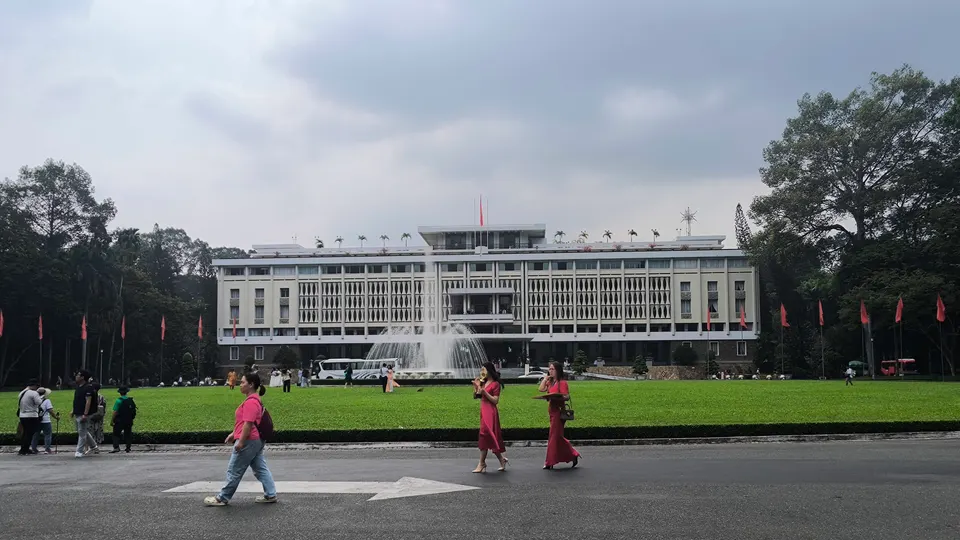
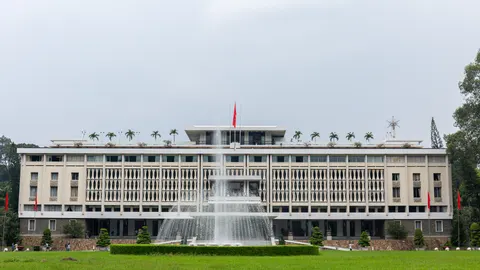
The museum sits in the old centre, and Independence Palace, Dinh Doc Lap (Dinh Độc Lập), also called Reunification Palace, is a short walk away. Both tell the end of the war, from different sides of 30 April 1975, which makes them a natural pair. The palace opens daily from 7:00 to 18:00; an adult ticket has cost 80,000 dong since 1 January 2025 (Independence Palace).
A morning that works
- 7:30 – War Remnants Museum. Be at the gate when it opens and follow the route from the top floor down. Allow about 2.5 hours.
- About 10:00 – coffee. Take a break at the museum cafe or nearby before the next site.
- About 10:30 – Independence Palace. The former presidential palace of South Vietnam, with its preserved rooms; our Ho Chi Minh City guide explains its role on 30 April 1975.
- Lunch. Our Saigon food guide has verified places in the old centre.
- Afternoon – Notre-Dame and the Central Post Office. Saigon’s red-brick cathedral, Nha tho Duc Ba (Nhà thờ Đức Bà), is still under restoration: Dan Tri reported in March 2026 that visitors can look and take photos only from outside, and that the work will not finish in 2027. The working French-era post office stands beside it.
If you prefer to see the palace first, it opens half an hour earlier; just reach the museum’s counter before 17:00. For three full days in the city, our Saigon 3-day itinerary builds this half day into day 1, and our guide to where to stay in Saigon compares the central areas within reach of the museum. Many travellers pair the museum with the Cu Chi Tunnels, a trip out of the city that our day trips from Saigon page compares with the Mekong and other options.
Why the museum tells the war this way: its history and names
The museum opened on 4 September 1975, four months after the war ended, as the “Exhibition House of US–Puppet Crimes”, using the term Vietnam’s government then used for the Saigon administration. It became the “Exhibition House of Crimes of Wars of Aggression” in 1990 and the War Remnants Museum in 1995, a change Nhan Dan describes as a shift towards evidence and away from direct accusation (Nhan Dan). Bao Van hoa dates the final name to 4 July 1995.
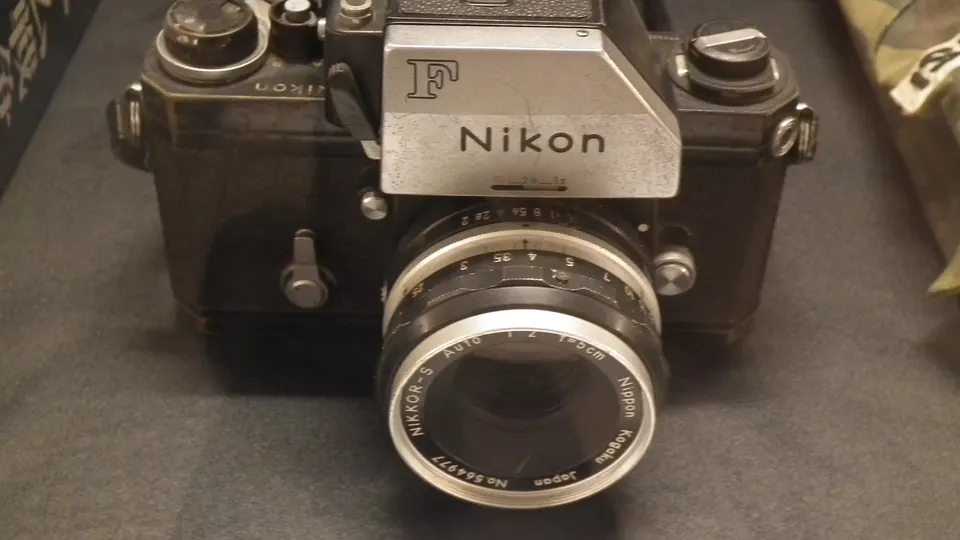
Today the museum describes itself as a museum for peace: it says it is part of Vietnam’s national museum system and the only Vietnamese member of the international network of museums for peace, and that its collection of more than 20,000 items came partly from former political prisoners, veterans and photographers in Vietnam and abroad. The Japanese photographers Ishikawa Bunyo and Goro Nakamura each have a permanent collection here.
How to read it: the museum presents the war from the Vietnamese state’s side, and it says so in its titles. Rusty Compass, which has reviewed it for many years, calls it a powerful, essential visit and also selective: in its view the museum tells the war “from the victor’s perspective”, shows little reconciliation with South Vietnamese who fought on the other side and leaves out the later wars with Cambodia and China. One way to use it: see it alongside Independence Palace, and read the captions as the official Vietnamese account rather than the whole story.
How to visit respectfully
For many visitors, Vietnamese and foreign, this is family history, and some rooms are very quiet. Its rules board sets out what it expects:
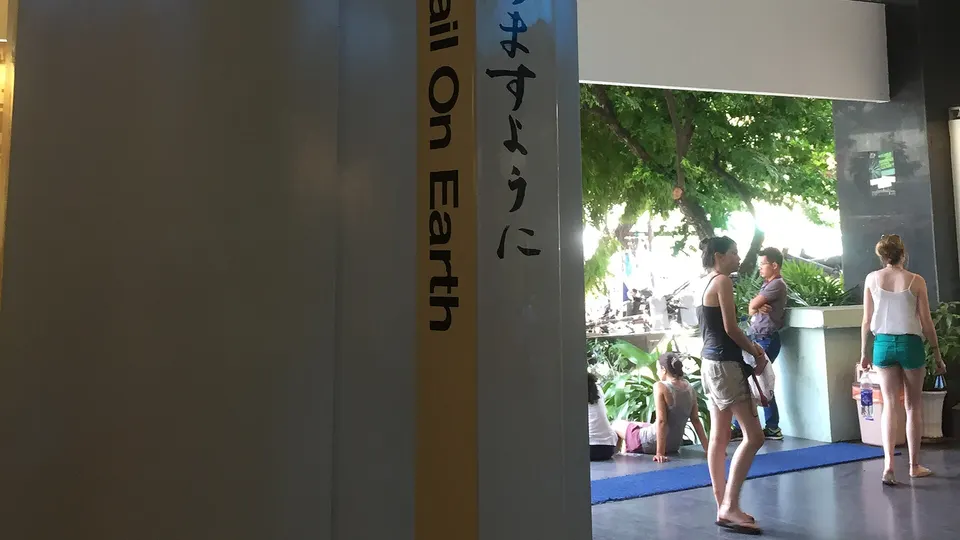
- Dress appropriately for a historical site.
- Keep it quiet: no running or shouting in the galleries.
- Hands off: do not touch or climb on exhibits, including the aircraft and tanks, or lean on display cases.
- Photos: no flash, tripods or selfie sticks; professional filming and group visits must be registered in advance.
- No food, drink or smoking in the exhibition areas, and no pets except service animals.
- Store large bags in the lockers, and follow staff instructions and signs.
Beyond the rules: skip the posed selfie in front of the atrocity photographs, keep conversations low in the Agent Orange rooms, and let people who stop in front of a picture have their moment.
Common mistakes
Most disappointments come from old information or the wrong order.
- Budgeting with the old price. It has been 60,000 dong since 1 October 2026, not 40,000.
- Planning around a lunch closure. Older guides list a break at midday; the museum now lists 7:30–17:30 without one.
- Arriving at 16:30. The counter closes at 17:00 and the galleries at 17:30, which leaves less than an hour for a three-hour museum.
- Starting with the ground floor and running out of time. The route starts at the top; do the upper floors while you are fresh.
- Taking young children straight into the first floor. Preview the War Crimes and Agent Orange rooms first.
- Expecting a neutral history museum. It is an evidence-and-peace museum with a clear point of view; read it as such.
- Going on 30 April without expecting crowds. Around the anniversary queues start in the early morning, as Dai bieu Nhan dan reported in April 2025.
- Booking the next sight back-to-back. Leave a gap; most people need it.
Frequently asked questions
How long do you need at the War Remnants Museum?
Two to three hours covers the yard, the prison display and the main galleries at a normal pace. Allow up to four hours if you want to read every caption, and add time for a quiet coffee afterwards.
Is the War Remnants Museum suitable for children?
The yard of aircraft and tanks and the ground-floor gallery work for most children, and the top floor has a children's education room. The War Crimes and Agent Orange rooms show graphic injuries and deformities, so preview them yourself or skip them with younger children.
How much is the War Remnants Museum ticket in 2026?
From 1 October 2026 the standard ticket is 60,000 dong, up from 40,000 dong. Seniors and some other groups pay 30,000 dong, and children, pupils and students enter free.
Is the War Remnants Museum closed at lunchtime?
No. The museum's own site lists 7:30 to 17:30 every day, including holidays, with the ticket counter open until 17:00. Some older guides still mention a lunch break.
Can you take photos inside the War Remnants Museum?
Yes, for personal use, but the museum's rules ban flash, tripods and selfie sticks, and professional filming must be registered in advance.
Key sources
- Tham quan – giá vé, giờ mở cửa, sơ đồ tham quan, nội quy (Visit: tickets, hours, route map, rules) · War Remnants Museum (Bảo tàng Chứng tích Chiến tranh), official site, checked 12 November 2026
- Trưng bày thường xuyên (Permanent exhibitions) · War Remnants Museum, official site, checked 12 November 2026
- TP.HCM miễn vé tham quan bảo tàng cho học sinh, sinh viên từ 1-10 · Tuổi Trẻ, 30 September 2026
- Bảo tàng vì hòa bình · Nhân Dân, 7 September 2025
- [Ảnh] Bảo tàng Chứng tích chiến tranh thu hút du khách dịp cuối tuần · Nhân Dân, 1 August 2026
- HCMC war museum getting double the usual number of foreign visitors ahead of Reunification Day · VnExpress International, 23 April 2025
- Liên hệ – giờ mở cửa và giá vé (Independence Palace: hours and tickets) · Independence Palace (Dinh Độc Lập), official site, updated 4 February 2026
- War Remnants Museum (review) · Rusty Compass, 7 April 2024
All 20 sources and further reading
- Chế độ lao tù trong chiến tranh xâm lược Việt Nam (Imprisonment system exhibition) · War Remnants Museum, official site, checked 12 November 2026
- Lộ trình tham quan / Museum route (map, April 2026) · War Remnants Museum, official site
- TP Hồ Chí Minh thông qua mức phí tham quan mới tại nhiều bảo tàng, di tích · Báo Tin tức (VNA), 27 August 2026
- TP.HCM sẽ miễn phí tham quan bảo tàng cho học sinh, sinh viên · Thanh Niên, 27 August 2026
- Bảo tàng Chứng tích Chiến tranh vận hành hệ thống bán vé trực tuyến · SGGP, 10 February 2026
- Ho Chi Minh City's first museum launches online ticketing · Tuổi Trẻ News, 12 February 2026
- Bảo tàng Chứng tích chiến tranh mang thông điệp hòa bình · Báo Văn hóa, 4 July 2026
- Bảo tàng Chứng tích Chiến tranh thu hút du khách dịp 30.4 · Đại biểu Nhân dân, 28 April 2025
- Museums in Ho Chi Minh City set to welcome 4 million visitors in 2025 · Tuổi Trẻ News, 28 November 2025
- Nhà thờ Đức Bà Sài Gòn sau gần một thập kỷ trùng tu · Dân Trí, 21 March 2026
- War Remnants Museum Tickets and Visiting Hours (checked October 2026) · Jungle Boss Tours (tour operator)
- War Remnants Museum: An Honest Guide to Saigon's Most Sobering Attraction · Nomado (travel app)
Keep exploring
 South Vietnam · Travel Ho Chi Minh City (Saigon): How Many Days and What to See Ho Chi Minh City (Saigon) explained: the 2025 merger and new wards, how many days to stay, Metro Line 1, Long Thanh airport, palace and museum tickets.
 South Vietnam · Travel Saigon in 3 Days: A Day-by-Day Plan for First Visits Saigon (Ho Chi Minh City) in 3 days: palace and war museum, Cho Lon and Vinh Khanh, then metro or a day trip. With 2026 tickets, ward names and what is closed.
 South Vietnam · Travel Cu Chi Tunnels (Củ Chi): Ben Duoc or Ben Dinh, and Tickets Ben Duoc or Ben Dinh? What the Cu Chi tunnels were, from 1946 to 1975, their relic and UNESCO status, and how to visit from Ho Chi Minh City by road or river.
 South Vietnam · Travel Con Dao (Côn Đảo): Is It Worth It? Prisons, Turtles, 3 Days Plan a respectful Con Dao trip: prison relics, night visits to Hang Duong cemetery, turtle season rules, a 2–3 day plan, where to stay and what runs when.