All three regions · Culture
Ao Dai (Áo Dài): History, Regional Styles, How to Wear One
Ao dai, Vietnam's long tunic over trousers: its debated history, how Hanoi, Hue and Saigon styles differ, when it is worn, and how visitors can wear one.
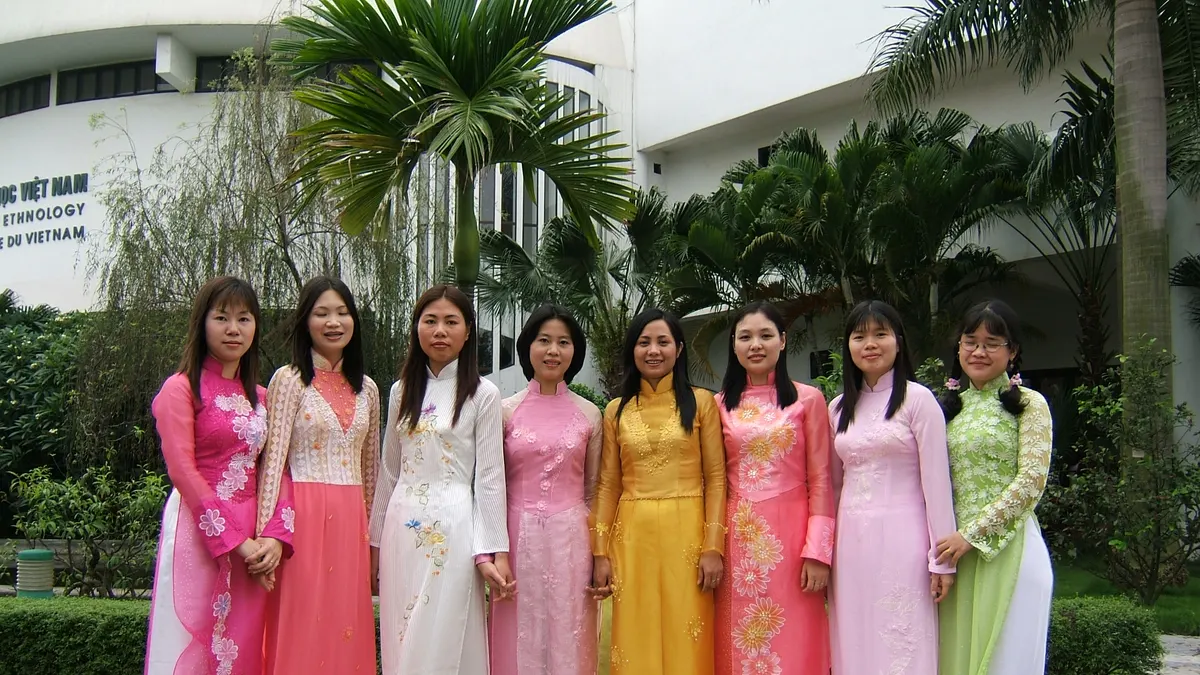
The ao dai is Vietnam’s national dress, still worn for Tet, weddings, school and festivals, and visitors are welcome to rent, buy or have one made. As of November 2026 it is not on UNESCO’s intangible heritage list: the nomination dossier is still being prepared, and on 14 November 2026 Hanoi’s culture department said the city is working towards a listing in the 2027–2030 period, Tien Phong reported.
The ao dai (áo dài), literally “long shirt”, is Vietnam’s national dress: a long tunic, fitted through the body and split at the sides from the waist down, worn over loose trousers. It took its basic shape in the 18th and 19th centuries, gained its fitted modern cut in the 1930s, and still changes with each generation. This page explains where it came from, which dates are debated, how it differs between the North, Hue and the South, and how a visitor can wear one well; it sits alongside the festivals and customs in our guide to Vietnamese culture by region.
No city is more closely tied to it than Hue, the former imperial capital, where the five-panel ao dai of the Nguyen court is still sewn and the city calls itself the “capital of the ao dai”; our Hue city guide covers the rest of the old capital. Dates and status below come from Vietnamese national press, Hue’s own newspaper and official portals, with the date of each report.
| Region or era | Typical form | Where you see it today |
|---|---|---|
| North, before the 19th century | Ao tu than (four-panel tunic) with a skirt; cross-collared robes (ao giao linh) | Museum displays; inspiration for some modern Tet designs |
| Nguyen lords’ South (Dang Trong), 18th century | Narrow-sleeved shirts replacing skirts and wrap robes; the root of the ao dai | Historical reconstructions, Hue Ao Dai Week |
| Nguyen dynasty, 19th century | Ao ngu than (five-panel), looser and shorter, side slits | Hue ceremonies and Tet; revived by young people |
| Hanoi, 1930s | Le Mur: fitted, floor-length, puffed sleeves, heart-shaped collar | Museum collections, period photographs |
| Saigon, late 1950s–1960s | Boat neck, raglan sleeves, front and back joined and buttoned | The basis of most ao dai sold today |
| Hue today | Five-panel and modern ao dai; purple and white popular with schoolgirls | Schools, civil servants’ first-Monday dress, Ao Dai Week in July |
| Ho Chi Minh City today | Designer and modernised (cach tan) ao dai | Ao Dai Festival every March, the Ao Dai Museum |
What is an ao dai, and why does it matter?
An ao dai is a garment of two parts: a long tunic with a high collar, buttoned from the neck down one side, and wide trousers, usually white or in a matching colour. The side slits let the two long flaps move as the wearer walks or rides a bicycle, which is a large part of its look.
A national symbol, made by hand. For most Vietnamese the ao dai is the dress for occasions that matter: the first day of Tet, a wedding, a graduation, a school ceremony. A traditional ao dai is made to measure, and many people still go to a tailor to try it on and have it adjusted rather than buying online, Nhan Dan reported before Tet 2026.
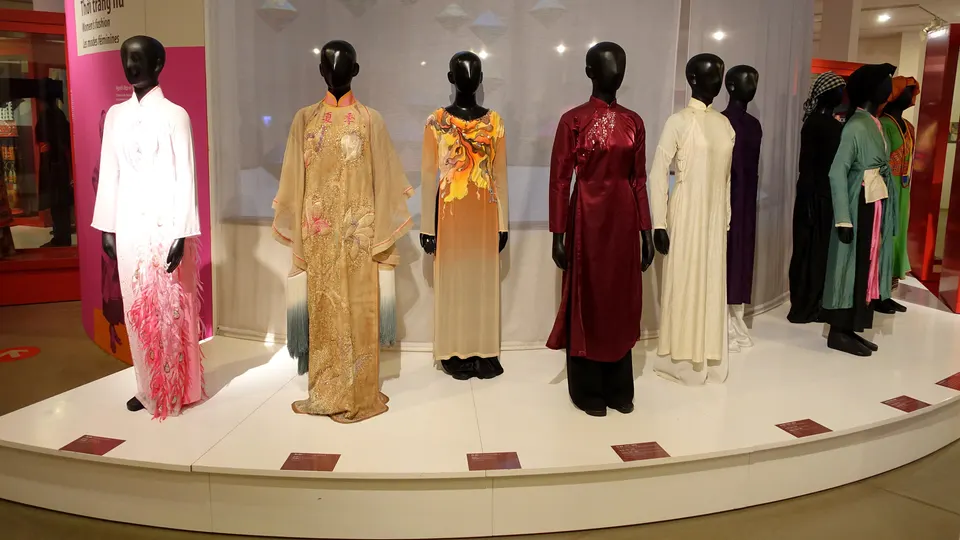
Not one dress, but a family. The word covers a long line of tunics, from the loose five-panel robe of the 19th century to the tight, sequined designs of today’s runways. Vietnamese writers often distinguish the ao dai truyen thong (traditional) from the ao dai cach tan (modernised), and where the line falls is a lively argument (see below). The Vietnamese Women’s Museum in Hanoi shows this evolution in a permanent display, which is the easiest place to see the different cuts side by side on a trip to Hanoi.
Where did the ao dai come from?
From the South of the 18th century, according to the most common account: the Nguyen lords, who ruled Dang Trong (the southern realm) while the Trinh lords ruled the North in the name of the Le kings, changed how their subjects dressed so that southerners would look different from northerners.
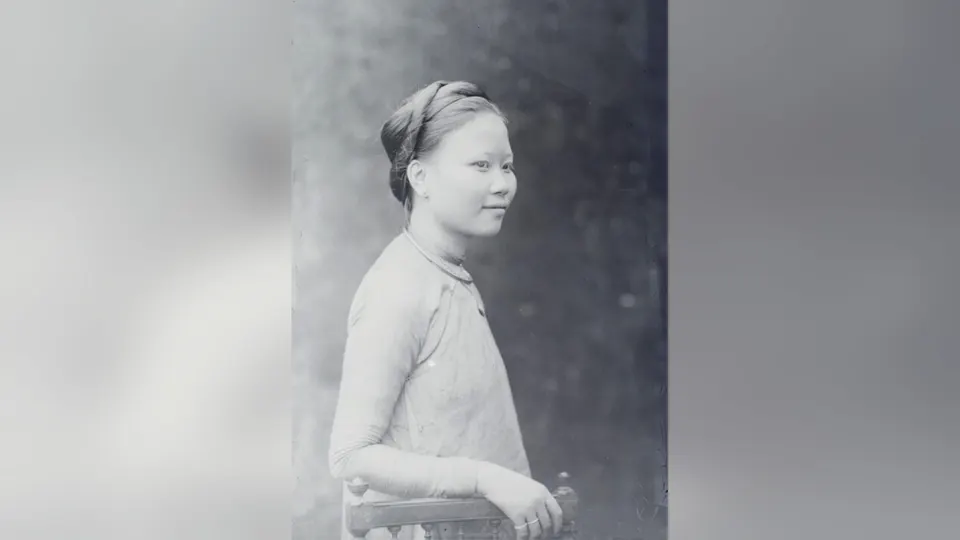
Before the ao dai. In the northern countryside women wore the ao tu than, a four-panel tunic worn with a skirt. The designer Si Hoang dates it to the 11th century and explains its four panels by the narrow cloth that village looms produced (VnExpress, 2020). The oldest image of an ao dai ancestor usually cited is the ao giao linh, a cross-collared robe, from around 1744 (VietnamPlus). Some designers still borrow from the ao tu than for Tet collections.
The southern reform, and the 1744 question. Hue’s tradition credits Lord Nguyen Phuc Khoat, known as Vo Vuong (1714–1765), with the change, and Bao Van Hoa dates his dress reform to 1744. The best-known contemporary account is more modest: the 18th-century scholar Le Quy Don recorded that women in the South were told to wear shirts with narrow sleeves like men’s, replacing skirts and wrap robes, as Hue’s own newspaper explains in a piece built on the court chronicles (Hue Today). So the reform itself is well attested; the precise year and how far it looked like an ao dai are less certain.
Minh Mang makes it national. After the Nguyen dynasty unified the country, Emperor Minh Mang extended the southern dress to the North. The court chronicle Dai Nam Thuc Luc records a decision in 1828, Minh Mang’s ninth year, after northern mandarins reported that people wanted to dress like those south of the Gianh river; other Vietnamese accounts give 1837, or the whole period 1826–1837. The result was the ao ngu than, a five-panel tunic with two back flaps, two front flaps and a hidden fifth flap underneath, shorter and looser than today’s ao dai and slit at the sides (VietnamPlus). In popular explanation, the four outer panels stand for the wearer’s parents, the fifth for the wearer, and the five buttons for the five Confucian virtues.
How did the modern fitted ao dai appear?
In 1930s Hanoi. The modern ao dai, the ao dai tan thoi, is dated to 1934 and credited to the painter Nguyen Cat Tuong (1912–1946), who signed his designs “Le Mur”, French for “the wall”, which is what tuong means (VnExpress).
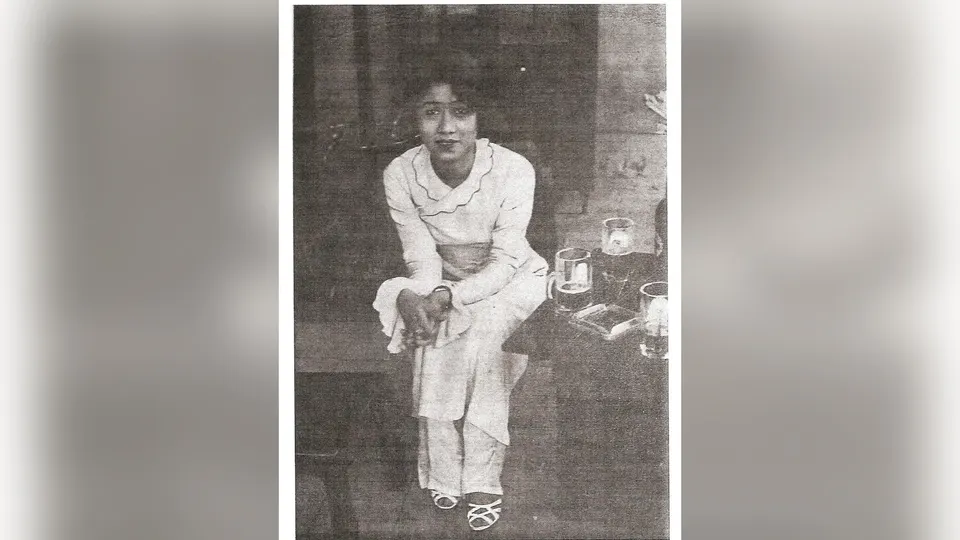
Le Mur’s experiment. Cat Tuong cut the tunic close to the body and to floor length, and borrowed from Western fashion: puffed sleeves, a heart-shaped collar and other details. Many people found it too Western, VietnamPlus notes, and the most foreign touches did not last.
Le Pho’s correction, told two ways. The painter Le Pho is the second name in every account, but the stories differ. VietnamPlus says he removed the Western elements and went back to a more traditional cut; the Vietnamese Women’s Museum’s display credits him with a design of two soft flaps fitted to the body that shaped the modern ao dai. Either way, a fitted ao dai without the Western flourishes is what stayed in fashion into the 1950s, VietnamPlus notes.
Saigon’s changes. The next steps came from the South. In 1958 the director Thai Thuc Nha introduced the boat neck (ao co thuyen), suited to the hot southern climate, and the raglan sleeve appeared, VnExpress reports; VietnamPlus attributes the raglan to a Saigon tailor known as Dung of Dakao and places it in the 1960s. The raglan, with the front and back panels joined and buttoned, gave a more comfortable fit, and most ao dai are still cut this way. After decades in which it had become mainly a dress for work and special occasions, the ao dai returned to fashion from around 1989–1990, when designers such as Si Hoang painted on silk and Minh Hanh used ethnic-minority brocade. Everyday southern dress was a different garment altogether: the short, buttoned blouse explained in our ao ba ba guide.
How does the ao dai differ between Hanoi, Hue and Saigon?
Less in the basic garment, which is national, than in which version people keep, which colours they favour and how they use it. Treat the differences as tendencies, not rules: every city sells every style.
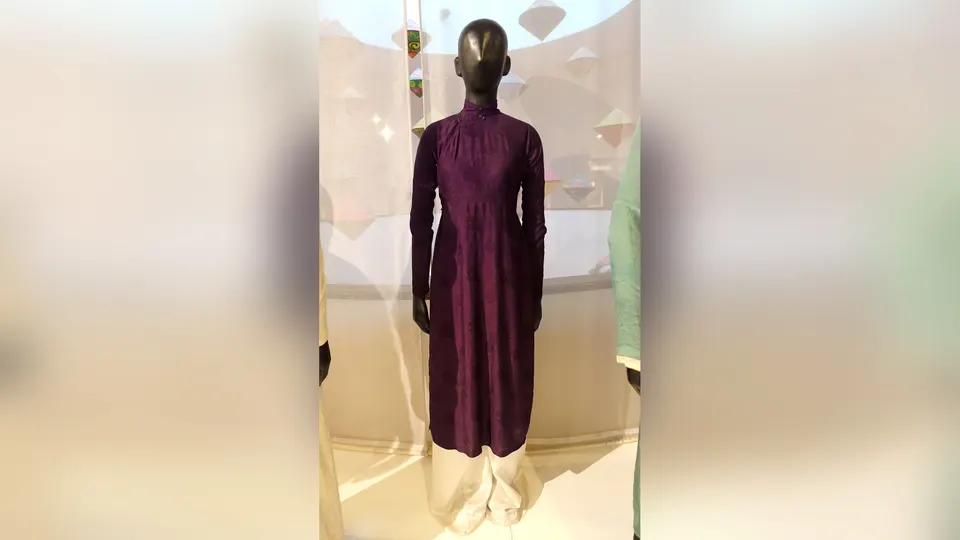
Hanoi and the North. The North’s own historical dress is the ao tu than, now mostly seen at festivals and folk performances. The fitted modern ao dai was born in Hanoi in the 1930s; the Hanoi ao dai of the 1950s shown at the Women’s Museum is plain purple silk with a high collar. VietNamNet names Ha Dong silk, woven in villages such as Van Phuc on Hanoi’s south-western edge, among the materials that make an ao dai authentically Vietnamese.
Hanoi also holds its own ao dai festival. The Hanoi Ao Dai Tourism Festival 2026 runs from 21 to 23 November, opening at the Hanoi Museum on Pham Hung street, with a parade of about 1,300 people around Hoan Kiem Lake on the morning of 22 November and an attempt at a record for the most men wearing ao dai, with 500 taking part, Tien Phong reported on 14 November 2026.
Hue and the Centre. Hue is where the five-panel ao ngu than never quite disappeared, and where the city has made the ao dai part of public life. Since 2022 state employees may wear it as their uniform on the first Monday of each month, many tailors work along Mai Thuc Loan street and can finish a quick order in about three hours, and the Hue Festival includes an ao dai day (VietNamNet). Purple is the colour visitors associate with Hue: many students choose a purple ao dai, and white or pale purple is popular with young women, Bao Van Hoa reports. We found no reliable source for how purple became Hue’s colour. In Hue the ao dai is both ceremonial and everyday dress, the city’s culture director told Nhan Dan in 2026; for the city’s other traditions, see our guides to Hue’s court and chamber music and to the soft Hue accent.
Saigon and the South. The South gave the modern ao dai its boat neck and raglan sleeve, and today Ho Chi Minh City is where designers push it furthest: the city’s Ao Dai Festival fills Nguyen Hue walking street every March, and the private Ao Dai Museum, founded in 2014 by the designer Si Hoang, keeps about 500 designs, some from the 17th and 18th centuries, in the former District 9 on the city’s eastern edge (Viet Nam News, February 2024).
When do Vietnamese wear the ao dai today?
On days that matter, and in some places every week. The ao dai is no longer daily wear for most women, but it is the default for ceremonies, school and many uniformed jobs.
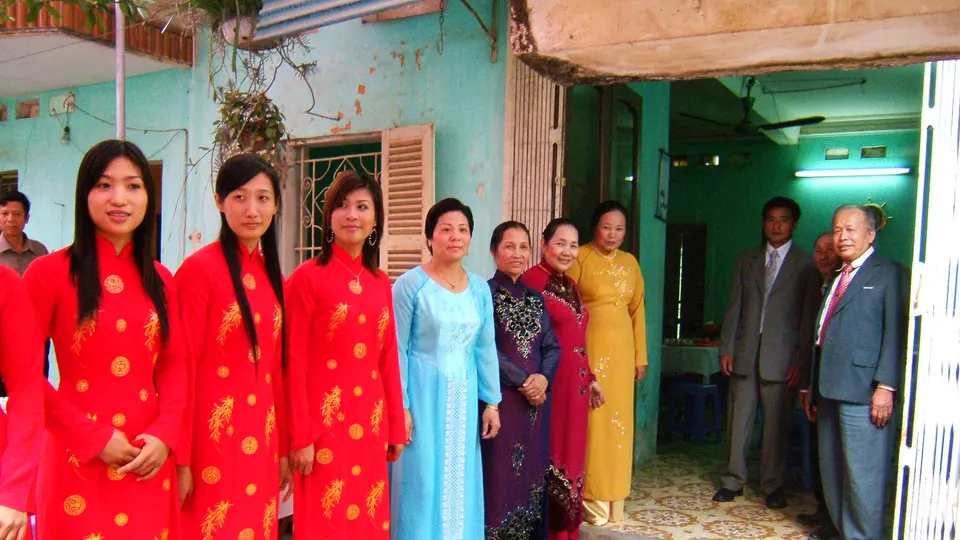
- Tet. For many households the ao dai is the shared outfit of the first day of the new year, for visiting the pagoda or taking family photos, and in Hanoi groups of young people put one on from early in the twelfth lunar month to take Tet photos at historic sites (Nhan Dan, February 2026). Red is the lucky Tet colour. Our guide to Tet across the three regions explains the rest of the festival.
- Engagements and weddings. The wedding party wears elaborate ao dai for the traditional ceremony, and guests wear simpler designs to the reception; the couple may wear red, according to Vietnam’s national tourism site.
- Schools. Many secondary schools make the white ao dai the girls’ uniform, but the rules are set by each school: some require it on Mondays or set days, others all week, which some students find hot and impractical, as one wrote to VnExpress in 2023. In Hue many schoolgirls wear purple.
- Work. Since the mid-20th century the ao dai has been above all a dress for professional settings and special occasions, vietnam.travel notes, and some employers make it a uniform. Vietnam Airlines dressed its cabin crew in ao dai from the early 1990s, made pink ao dai the only uniform in 1994, switched to red in 2000 and since 2015 has used a modernised ao dai in turquoise and gold (Tuoi Tre News).
Tradition and today. Not everyone thinks the ao dai belongs everywhere. At a 2023 discussion in Ho Chi Minh City, the historian Tran Dinh Son argued that the traditional ao dai follows clear patterns and is out of place in offices except at ceremonies, while a teacher said modernised designs are fine as fashion but should not be called ao dai, Tuoi Tre reported. Before Tet 2026 the argument was about Chinese-looking designs with frog buttons and tassels sold as ao dai, which several designers criticised while others defended them as creative borrowing (VietNamNet).
Do men wear the ao dai?
Yes, and more of them each year. Under the Nguyen dynasty men also wore long tunics, and an 1838 court order even set which silks and colours each rank could wear, Hue Today explains. In the 20th century the men’s version became far rarer than the women’s.
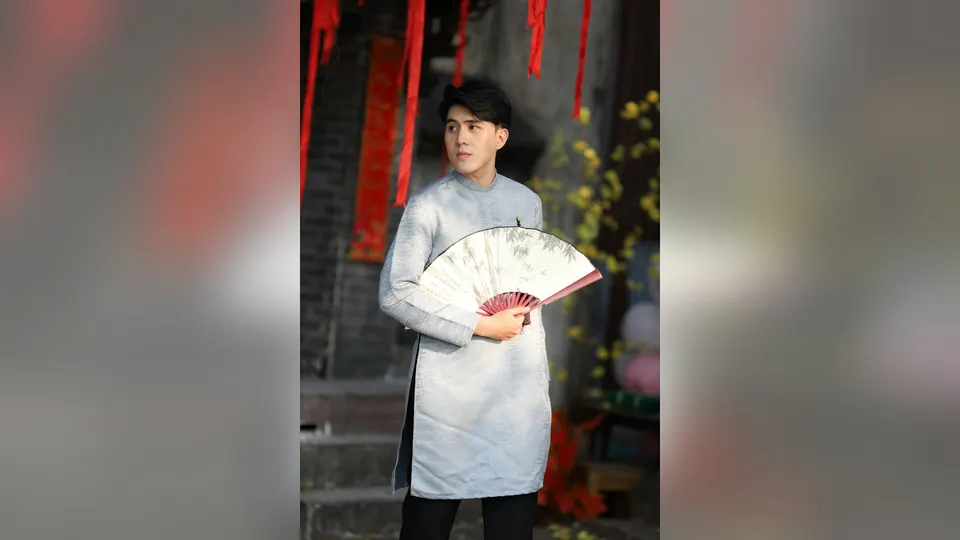
The comeback. Young people are now behind a revival of older styles: groups in Hanoi and Ho Chi Minh City post Tet photos in the five-panel ao ngu than and organise events about traditional dress (Sai Gon Giai Phong, 2021). Hue’s education department began trying out men’s ao dai at important events of the sector after women’s ao dai had been adopted in upper secondary schools (Nhan Dan, 2023). Before Tet 2026, shops reported growing interest in men’s ao dai, matching couples’ outfits and whole-family sets (Nhan Dan).
Is the ao dai protected heritage?
In part. Vietnam has listed one regional tradition, and a UNESCO bid for the ao dai as a whole is still being prepared.
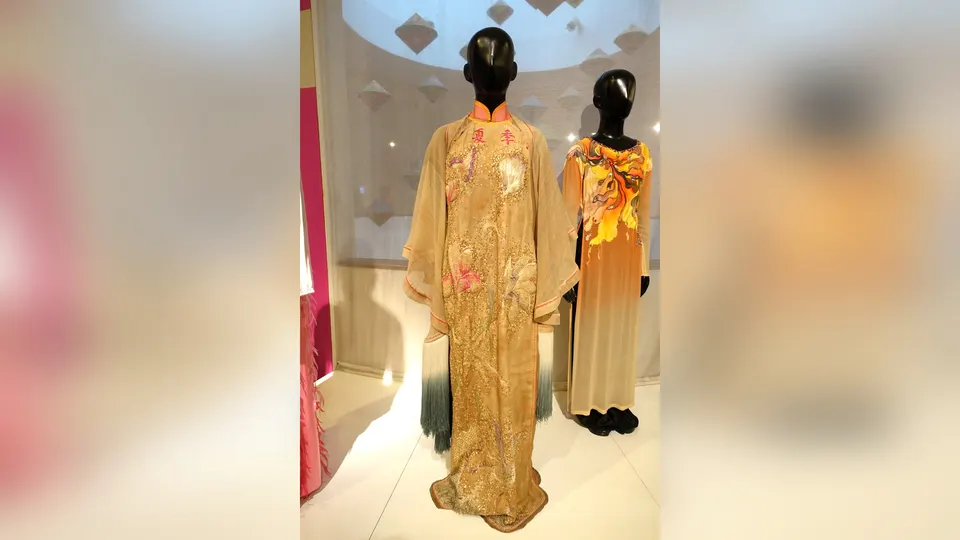
Hue’s listing (2024). On 9 August 2024 the Ministry of Culture, Sports and Tourism added “knowledge of making and wearing the Hue ao dai” (tri thuc may, mac ao dai Hue) to the national list of intangible cultural heritage, by Decision 2320/QD-BVHTTDL, Bao Van Hoa reported. Hue had already approved its “Hue, capital of the ao dai” project in March 2023, and says it held the country’s first ao dai festival, at the Hue Festival of 2002.
Hue Ao Dai Week. The city now holds an ao dai week each summer, timed to the death anniversary of Lord Nguyen Phuc Khoat on the 20th day of the fifth lunar month. In 2026 it ran from 3 to 10 July, with an ao dai night on the Perfume River in front of Quoc Hoc high school, offerings on 4 July honouring Lord Nguyen Phuc Khoat and Emperor Minh Mang, a parade in the Imperial City and in the old village of Phuoc Tich (Viet Nam News, June 2026). The lunar date moves, so check the programme for your year.
The UNESCO bid. On 26 July 2026 Deputy Prime Minister Pham Thi Thanh Tra asked the Viet Nam Ao Dai Heritage Club and the Ministry of Culture to speed up a nomination dossier to UNESCO’s intangible heritage list; no date for submission was given (Vietnam Government News). Until a dossier is submitted and examined, the ao dai is not a UNESCO-listed tradition, whatever souvenir shops may say.
The dossier is being prepared by the Vietnam Ao Dai Culture Association, set up by a Ministry of Home Affairs decision of 9 June 2025. In February 2026 the association said it was finalising the nomination and proposing 9 September as an annual Vietnam Ao Dai Culture Day, Bao Van Hoa reported; on 7 August 2026 VTV still described the dossier as being completed, with no submission date. On 14 November 2026 Hanoi’s Department of Culture, Sports and Tourism said the city is researching a scientific dossier on the ao dai, aiming for UNESCO’s representative list in the 2027–2030 period (Tien Phong).
Should you buy, rent or have one made?
It depends on what you want it for. Rent for one photo day, buy ready-made for a quick souvenir, and have one tailored if you want it to fit.
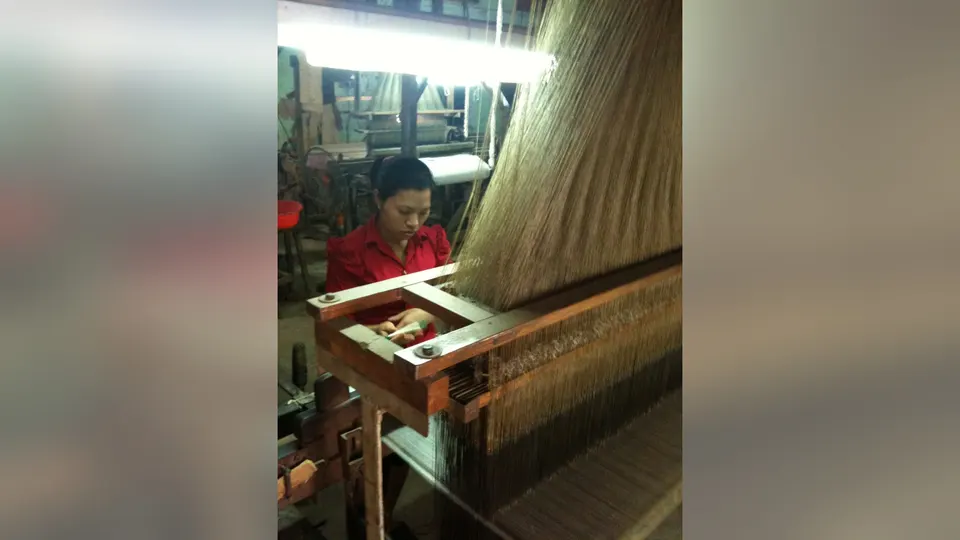
- Rent. Hue now has many shops that make and rent out ao dai (Nhan Dan, 2026), and rental is common in the old towns where people pose for photos. Renting suits a day at the Hue citadel or in Hoi An’s old town.
- Try one on free. During Ho Chi Minh City’s Ao Dai Festival, which ran for the 12th time through March 2026, the Export Showroom at 92–96 Nguyen Hue offered free ao dai try-ons and photos (Sai Gon Giai Phong).
- Buy ready-made. Shops in Hanoi’s Old Quarter and Hoi An’s old town sell ready-made ao dai, and Van Phuc silk village, about 20 minutes from central Hanoi, sells silk and can tailor one (vietnam.travel). A ready-made ao dai rarely fits closely; that is the trade-off.
- Have one made. An ao dai is one of the quickest things to tailor: Hue’s tailors on Mai Thuc Loan street finish quick orders in about three hours, and in Hoi An a same-day ao dai is common. Our guide to Hoi An tailors covers fittings, timing and dated prices, and our Hoi An guide the rest of the town. Ask for one fitting: check the waist and where the side slits start.
How to wear an ao dai respectfully, and take photos
Wearing an ao dai as a visitor is welcomed, not frowned on: Vietnam’s national tourism site says anyone can wear one as a sign of respect, at a fine dinner, an important meeting or a celebration (vietnam.travel).

- Wear it as designed: always over trousers, never as a dress on its own.
- Mind the colour. At a wedding, choose any colour but red, which the couple may wear. Red is the lucky colour for Tet; black is the colour most often worn to funerals.
- Dress for the place. A traditional ao dai, with long sleeves and a high collar, suits a pagoda or temple visit, which is one of the occasions the national tourism site suggests. Take your hat off indoors.
- Photographing people. Schoolgirls in white or purple ao dai are a favourite image, but they are children on their way to class: ask, or photograph from a respectful distance without singling anyone out. Ask before photographing anyone at a ceremony or a pagoda.
- Plan around festival days. Hue’s Ao Dai Week in early summer and Ho Chi Minh City’s Ao Dai Festival in March fill the streets with ao dai. Around International Women’s Day in 2020, Hue even waived monument entry for women in traditional ao dai (Bao Van Hoa); check whether a similar offer runs in your year, and see our Tet 2027 travel guide if your trip falls at new year.
Frequently asked questions
When is the next ao dai festival in Vietnam?
The Hanoi Ao Dai Tourism Festival runs from 21 to 23 November 2026, with a parade around Hoan Kiem Lake on 22 November. Ho Chi Minh City holds its Ao Dai Festival through March (the 12th edition ran 1–31 March 2026), and Hue Ao Dai Week falls in early summer (3–10 July in 2026).
Where can I see old ao dai in Vietnam?
The Vietnamese Women's Museum in Hanoi has a permanent display of ao dai from different eras. In Ho Chi Minh City, the private Ao Dai Museum founded by designer Si Hoang keeps about 500 designs, some from the 17th and 18th centuries.
Can I try on an ao dai for free in Ho Chi Minh City?
During the Ho Chi Minh City Ao Dai Festival in March 2026, the Export Showroom at 92–96 Nguyen Hue offered free ao dai try-ons and photos. Check whether the offer runs again during the March festival in your year.
Why are Hue ao dai purple?
Purple, along with white and pale purple, is a colour many Hue schoolgirls and young women choose, and it has become a symbol of the city. We found no reliable source for the origin of the association, so treat stories about royal purple as legend.
What is the difference between ao dai and ao tu than?
The ao tu than is the older four-panel tunic of the northern countryside, worn with a skirt. The ao dai descends from the five-panel ao ngu than of the Nguyen era and is a closed, fitted tunic worn over trousers.
Key sources
- Costume in the old days · Hue Today (Báo Thừa Thiên Huế), 4 November 2017
- Áo dài qua hơn 100 năm (the ao dai over more than 100 years) · VnExpress, 29 June 2020
- Hue-based ao dai fashion recognised as national heritage · VietNamNet, 15 August 2024
- Vietnam Airlines recreates iconic uniforms for nostalgic anniversary flights · Tuổi Trẻ News, 23 May 2025
- Tết phải mặc áo dài (Tet calls for an ao dai) · Nhân Dân, 2 February 2026
- Ao dai seeks recognition as Intangible Cultural Heritage of Humanity · Vietnam Government News (baochinhphu.vn), 27 July 2026
- Điểm hẹn Lễ hội Áo dài TPHCM 2026 (Ho Chi Minh City Ao Dai Festival 2026) · Sài Gòn Giải Phóng, 3 March 2026
- All about ao dai: Vietnam's national dress · Vietnam National Authority of Tourism (vietnam.travel)
All 25 sources and further reading
- Sẵn sàng thiết lập kỷ lục tại Lễ hội Áo dài Du lịch Hà Nội 2026 (ready to set a record at the Hanoi Ao Dai Tourism Festival 2026) · Tiền Phong, 14 November 2026
- Hiệp hội Văn hóa Áo dài Việt Nam: Lan tỏa bản sắc – kết nối giá trị (Vietnam Ao Dai Culture Association: spreading identity, connecting values) · Báo Văn Hóa, 5 February 2026
- Đề cử UNESCO ghi danh áo dài là Di sản văn hóa phi vật thể (nominating the ao dai for UNESCO intangible heritage) · VTV, 7 August 2026
- Khai mạc Tuần lễ Áo dài Huế 2026 (Hue Ao Dai Week 2026 opens) · Sài Gòn Giải Phóng, 4 July 2026
- Tri thức may, mặc áo dài Huế trở thành Di sản văn hóa phi vật thể quốc gia (Hue ao dai knowledge becomes national intangible heritage) · Báo Văn Hóa, 12 August 2024
- Áo ngũ thân trên đất Cố đô (the five-panel ao dai in the old capital) · Nhân Dân, 4 February 2023
- Áo dài Huế và giá trị kết nối (the Hue ao dai and its power to connect) · Nhân Dân, 2026
- Heritage and creativity shine at Hue Ao Dai Week · Việt Nam News, 10 June 2026
- Huế sets its sights on reviving the áo dài · Việt Nam News, 7 April 2019
- Ao Dai – a cultural symbol associated with Vietnamese women · VietnamPlus (VNA), 10 July 2020
- Miễn vé tham quan di sản Huế cho phụ nữ mặc áo dài truyền thống (free entry to Hue heritage for women in traditional ao dai) · Báo Văn Hóa, 5 March 2020
- Áo Dài Museum celebrates 10th anniversary · Việt Nam News, 26 February 2024
- Áo xưa trở lại (old styles return) · Sài Gòn Giải Phóng, 10 March 2021
- 'Cách tân kiểu gì cũng được nhưng khi đó đừng gọi là áo dài' (modernise as you like, but don't call it an ao dai) · Tuổi Trẻ, 23 April 2023
- Cultural fusion or fashion confusion: Tet ao dai under fire · VietNamNet, 2 February 2026
- 'Ác mộng' nữ sinh phải mặc áo dài cả tuần (reader's letter on all-week school ao dai) · VnExpress, 2 August 2023
- Iconic Ao Dai in different periods displayed at Vietnamese Women's Museum in Hanoi · Hanoi Times
Keep exploring
 Central Vietnam · Travel Hue (Huế): How Many Days, What to See, 2026 Tickets How many days Hue needs, which Citadel sights and royal tombs to pick, 2026 ticket prices, the flood months to avoid and where to eat in the old royal capital.
 Central Vietnam · Travel Hoi An Tailors: How Many Days a Suit Takes and What It Costs Hoi An tailors as of November 2026: how many days a suit takes, how many fittings to plan, dated suit prices, and how to choose a shop and agree the terms.
 North · Central · South · Culture Tet (Tết) 2027 by Region: North, Central, South Compared How Tet differs in North, Central and South Vietnam: peach vs mai, banh chung vs banh tet, fruit trays, pickles, first visitors, plus the Tet 2027 dates.
 Central Vietnam · Culture Hue Court Music (Nhã Nhạc) and Ca Hue: Where to Hear Them Where to hear Hue court music (nha nhac) and ca Hue: Imperial City venues, Perfume River boats, how the two differ, UNESCO status and how to pick a show.