South Vietnam · Culture
Ao Ba Ba (Áo Bà Ba): The Southern Blouse vs the Ao Dai
Ao ba ba, the Mekong Delta's hip-length blouse: how it differs from the ao dai and ao tu than, its debated origins, black lanh My A silk, and where to see one.

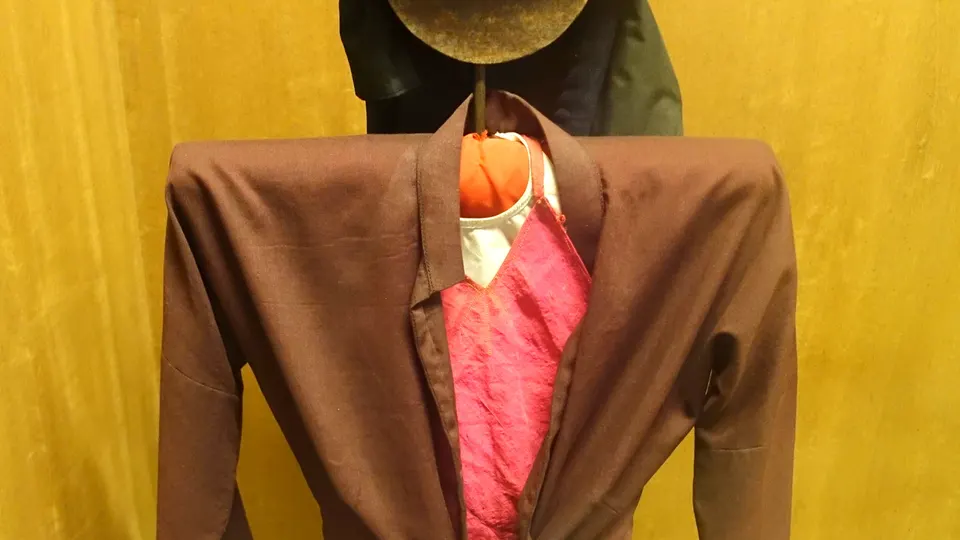
The ao ba ba (áo bà ba) is the short blouse of the Mekong Delta: hip-length, long-sleeved, slit at the sides and buttoned down the front, worn over loose trousers. Where the ao dai (áo dài) is a long tunic for ceremonies, the ao ba ba was made for heat, boats and fields, and it became the garment people picture when they think of the South’s river country. Researchers describe it as collarless or with a simple round neck, with a back cut from one piece, two front panels joined by buttons and two large pockets low on the front (Tap chi Van hoa).
This guide explains how the ao ba ba differs from the ao dai and from the North’s four-panel dress, what is known and debated about its origin, the black silk and checked scarf that go with it, and where visitors can see and buy one. For the long tunic itself, read our ao dai guide; for the region it comes from, our Mekong Delta guide.
What exactly is an ao ba ba?
The ao ba ba is a two-piece outfit: the blouse and a pair of straight, loose trousers, traditionally in the same dark colour. Older versions were cut loose, with sleeves cut in one piece with the body and round, heart-shaped or betel-leaf necklines; modern tailors add raglan sleeves and darts at the waist and bust for a closer fit, SGGP reported in 2023. Designers interviewed by VietnamPlus in 2026 named the buttoned front and the side slits as the features they keep, whatever else they change.
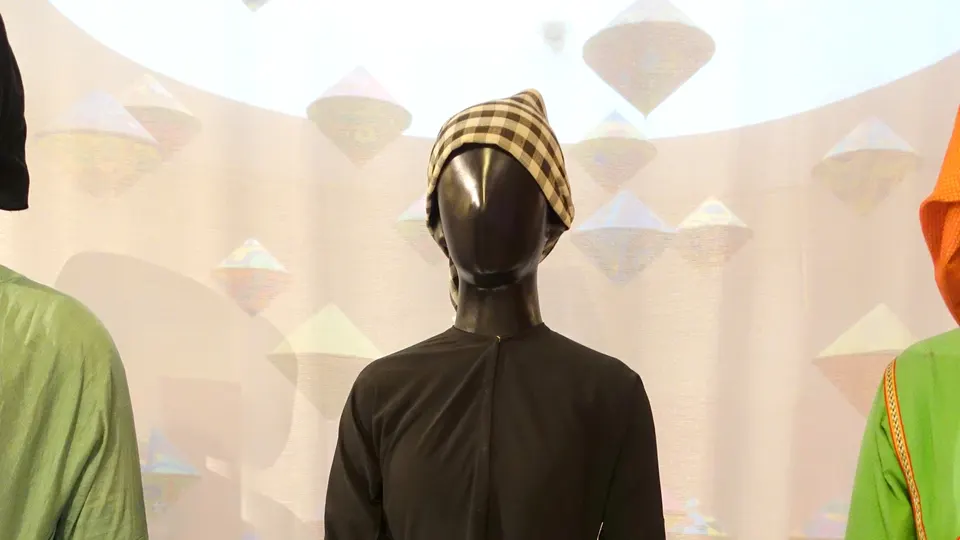
Who wears it. It was everyday and working dress for women in the southern countryside and markets, and men in the South wore it too: VietNamNet wrote in 2025 that both men and women wear it at Tet, at pagodas and at ancestral rites. In the North, a similar short buttoned top is called the ao canh (áo cánh), VOH notes; the two are relatives, not the same garment, and Trinh Bach’s 2020 study on the history of Vietnamese dress lists both among the short, narrow-sleeved tops that survive today.
How is it different from the ao dai and the ao tu than?
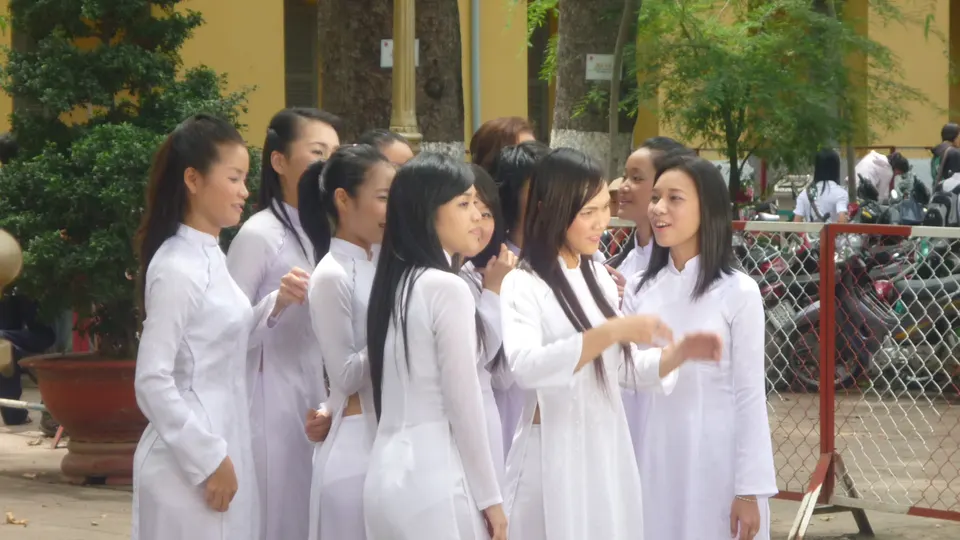
The ao ba ba is easiest to understand next to the two garments it is most often confused with: the ao dai, defined as a long-sleeved tunic with front and back panels reaching towards the ankles, worn over trousers (VietnamPlus), and the ao tu than (áo tứ thân), the four-panel dress of Northern rural women.
| Ao ba ba (South) | Ao dai (national formal dress) | Ao tu than (North) | |
|---|---|---|---|
| Length | Ends at the hips | Front and back panels fall towards the ankles | Four loose panels |
| Opening | Buttoned down the centre front | Not open down the centre; cut varies by style | No buttons; the two front panels are tied in front |
| Neck | Collarless or a simple round neck | Varies by era and style (see our ao dai guide) | Open, showing the yem (yếm) bodice beneath |
| Worn with | Loose straight trousers | Trousers | A yem bodice beneath |
| Traditional colours | Black, brown, grey | Many colours | Brown or black |
| Occasions | Work, markets, daily life; now also festivals | Tet, weddings, school uniform, formal events | Rural and market women in the North until the mid-20th century |
| History | Popular from the late 19th to early 20th century | Modern form launched in 1934 by Nguyen Cat Tuong | Older form; the Nguyen lords urged a switch to the buttoned five-panel gown in their southern lands |
The modern ao dai dates from 1934, when the painter Nguyen Cat Tuong launched a new design, VnExpress reported; Vietnam’s tourism authority traces its story back to the five-panel gown of 1744. The Hanoi Museum describes the ao tu than as four loose panels with the two front ones tied together, worn over a yem by market and working women of Hanoi. Seen side by side, the ao ba ba is the most practical of the three: short enough to work in, open enough to cool down, and quick to make from any cloth.
Where did the ao ba ba come from? A debated origin
Nobody has settled when the ao ba ba appeared or how it got its name; VOH wrote in 2019 that there is still no exact information on when it was born. Four positions appear in Vietnamese writing:
- From Penang. The writer Son Nam held that the garment came from the island of Penang in today’s Malaysia, not from Java, and linked its name to the Peranakan “Baba” community (Tap chi Dan toc hoc). The same 2012 article notes that many Vietnamese researchers see the southern outfit as modelled on the Baba kebaya; it also dates the Nyonya kebaya to the late 1920s, which sits uneasily with a 19th-century ao ba ba.
- Reformed by Truong Vinh Ky. A popular story says the 19th-century scholar Truong Vinh Ky adapted the Penang shirt, and the broadcaster VOH repeats it. Chau Thuy An’s 2025 study argues that he may at most have helped standardise and popularise a form that already existed.
- A local evolution. The writer Nham Hung saw it as growing gradually out of the long dress and trousers of early settlers, adapted to heat and work in the delta.
- Older southern roots. Citing the historian Tran Quang Duc, Chau Thuy An notes that a short, collarless top opening at the front was already worn in Dang Trong, the southern realm of the Nguyen lords, by the late 18th century, before any Penang link.
What most sources agree on is the period of its spread: the late 19th and early 20th centuries, when it became the common dress of the southern countryside. The Can Tho city portal sums up the same competing theories, adding minor ones that link it to Cham or Chinese clothes. Treat any single, confident origin story with caution, including the claim, found online, that the ao ba ba was the basis of the ao dai.
Black silk and the checked scarf: lanh My A and khan ran
Early ao ba ba were made of tough, quick-drying local cloths, with silk kept for festivals and wealthier families, according to Chau Thuy An. The most prized silk was lanh My A (lãnh Mỹ A), a glossy black satin woven in Tan Chau in An Giang province. It is dyed with the fruit of the mac nua (mặc nưa) tree: about 90 kg of fruit and around 100 dye baths over roughly 45 days for one 21 m roll, according to a VOV World report of October 2024 (VOV World).
Tan Chau was the delta’s largest silk centre in the 1940s, and An Giang province recognised it as a traditional craft village in 2006, the same report says. Mac nua fruit is scarce and few traditional looms remain, SGGP reported in 2015. We found no national heritage listing for the craft, despite claims online. Our guide to lanh My A silk explains the dyeing step by step and how to tell the real fabric from imitations.
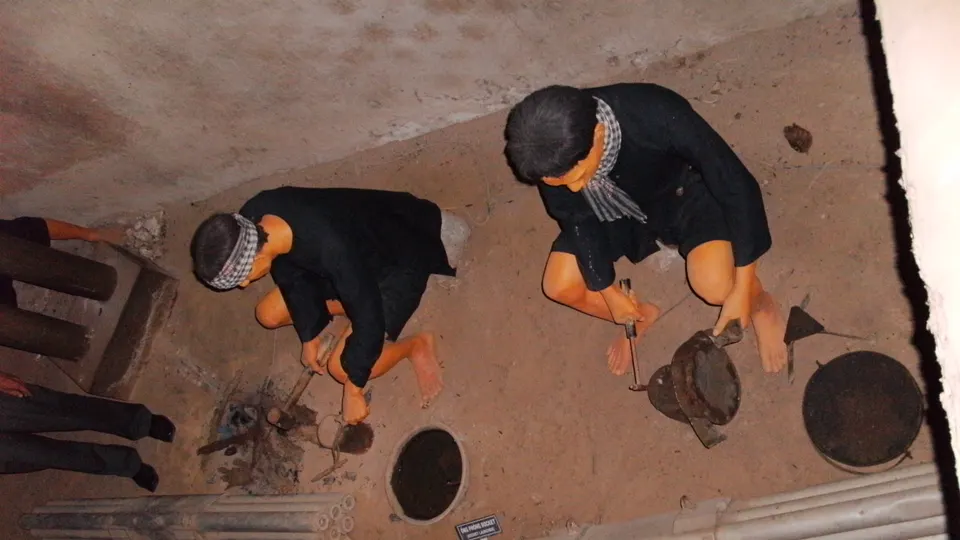
The khan ran. The khan ran (khăn rằn) is a checked scarf, traditionally woven in black and white, worn around the neck or head with the ao ba ba and a conical hat; boat women often wear it around the neck, according to the writer Nham Hung, quoted in Dai Doan Ket. Its exact origin is not established in the sources we found.
From work clothes to festival dress: the ao ba ba today
The garment has moved from the fields to the festival stage. Brighter colours have replaced the old black, brown and grey, SGGP and VOH note, and designers make versions in modern fabrics. In 2023 Hau Giang (since July 2025 part of Can Tho city) held its first ao ba ba festival, from 29 September to 1 October (Nhan Dan), and Can Tho’s parade of about 5,000 women in ao ba ba and ao dai on the Hau River set a Vietnam record that October, Phap Luat TP.HCM reported.
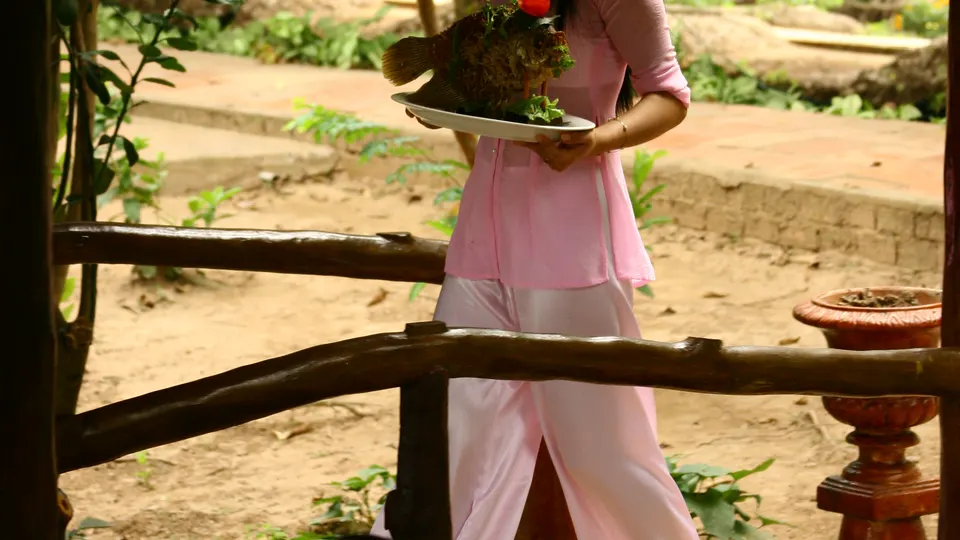
Tradition vs today. In the past the ao ba ba was what you wore because it was practical; now it is often worn on purpose, as a statement of southern identity at Tet, festivals and tourist sites. VietNamNet quoted the designer Mi Trang in 2025 as saying that many people still confuse it with other garments.
Seeing, buying and wearing one as a visitor
The best place to learn about the ao ba ba in Ho Chi Minh City is the Southern Women’s Museum, at 200–202 Vo Thi Sau, Xuan Hoa ward (former District 3), open from 08:00 to 17:00 according to its website. On 9 October 2026 it opened a themed exhibition, “Chiếc áo bà ba – Đượm tình phương Nam” (“The ao ba ba – the warmth of the South”), in three parts covering its origins, the two wars and contemporary life, with pieces from collectors (VietnamPlus). We found no closing date, so check before you go. Our Ho Chi Minh City guide helps you fit it into a day.

In the delta. You will see ao ba ba at markets, on boats and at festivals, especially around Can Tho; our Can Tho guide and Cai Rang floating market guide cover the area. For lanh My A silk, Tan Chau lies upriver of Chau Doc; our Chau Doc guide covers the area.
Wearing one. Ao ba ba are sold ready-made in markets and made to measure by tailors across the South, and wearing one as a visitor is common and welcome in ordinary settings. A few points of common sense: choose one that fits, wear it with matching trousers rather than as a top over shorts, and if you visit a pagoda in it, the usual temple dress rules still apply. For the rest of the region’s culture, see the culture hub and the South Vietnam hub.
Frequently asked questions
What is the difference between the ao ba ba and the ao dai?
Length and occasion. The ao ba ba is a short blouse ending at the hips, with side slits and buttons down the front, made for heat and work. The ao dai is a long tunic whose front and back panels fall towards the ankles over trousers, worn for formal occasions.
Why is it called ao ba ba?
Nobody knows for certain. The best-known explanation, from the writer Son Nam, links the name to the 'Baba' (Peranakan) community of Penang in Malaysia; other explanations connect it to a person called 'Ba Ba' or a respectful term for women. Researchers still disagree.
Can tourists wear an ao ba ba?
Yes. It is ordinary clothing, sold in markets and shops across the Mekong Delta, and visitors often wear one for photos or at festivals. Choose a simple, well-fitting one and avoid wearing it as a costume joke.
Is the ao ba ba only for women?
No. Men in the South have also worn ao ba ba, and VietNamNet reported in 2025 that both men and women wear it at Tet, at pagodas and at ancestral rites.
Key sources
- Áo bà ba xưa và nay (The ao ba ba, past and present) · Châu Thúy An, Tạp chí Văn hóa no. 55, 2025 (via VJOL)
- Lịch sử chiếc áo Kebaya của người Baba ở Malaysia · Phan Thị Hồng Xuân & Nguyễn Thị Phương Thảo, Tạp chí Dân tộc học 3/2012 (via VJOL)
- Charming ao ba ba – traditional southern Vietnamese silk tunic · Cần Thơ city portal (Báo Cần Thơ), 23 May 2019
- Ao Dai – a cultural symbol associated with Vietnamese women · VietnamPlus, 10 July 2020
- Luxuriously handmade Lanh My A silk of Tan Chau · VOV World (Voice of Vietnam), 10 October 2024
- Khai mạc Festival Áo bà ba - Hậu Giang năm 2023 · Nhân Dân, 29 September 2023
- Khai mạc trưng bày chuyên đề 'Chiếc áo bà ba – Đượm tình phương Nam' · VietnamPlus (TTXVN), 9 October 2026
- Numerous groups of visitors flock to Southern Women's Museum · SGGP English, 5 March 2026
All 21 sources and further reading
- Nguồn gốc áo dài Việt Nam · Trịnh Bách, Tạp chí Nghiên cứu & Phát triển 7(161), 2020 (via VJOL)
- Áo bà ba – thời trang duyên dáng của con gái miền Tây sông nước · VOH, 29 October 2019
- Thương áo bà ba · Sài Gòn Giải Phóng, 22 October 2023
- Áo dài qua hơn 100 năm · VnExpress, 29 June 2020
- All about ao dai · Vietnam National Authority of Tourism (vietnam.travel)
- Phụ nữ Hà Nội trong trang phục truyền thống đầu thế kỉ 20 · Hanoi Museum
- Làng nghề lụa Tân Châu · VnExpress, 22 August 2014
- The legendary Lanh My A silk of Tan Chau village · VietnamPlus, 26 July 2019
- Đi tìm vẻ đẹp của chiếc khăn rằn · Báo Lào Cai (from Đại Đoàn Kết), 22 October 2024
- Lễ hội trang phục áo bà ba, áo dài ở Cần Thơ nhận Kỷ lục Việt Nam · Pháp Luật TP.HCM, October 2023
- The return of áo bà ba, a timeless symbol of Vietnamese culture · VietNamNet, 27 January 2025
- Áo bà ba từ ký ức phương Nam đến những sáng tạo mới · VOV, 9 October 2026
- Southern Women's Museum (official website) · Bảo tàng Phụ nữ Nam Bộ, checked 16 November 2026
Keep exploring
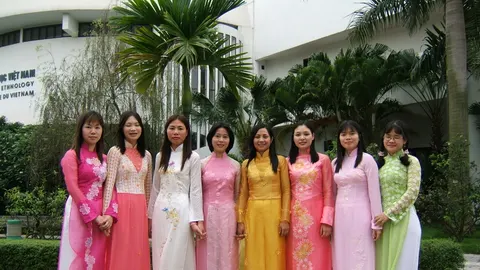 North · Central · South · Culture Ao Dai (Áo Dài): History, Regional Styles, How to Wear One Ao dai, Vietnam's long tunic over trousers: its debated history, how Hanoi, Hue and Saigon styles differ, when it is worn, and how visitors can wear one.
 South Vietnam · Travel Mekong Delta: Which Area to Visit and Where to Base Which part of the Mekong Delta to visit and where to base: Can Tho, Ben Tre or Chau Doc, Cai Rang market hours, seasons, where to eat, new province names.
 South Vietnam · Travel Can Tho (Cần Thơ): Where to Stay and What to Do in 1–2 Days Can Tho in 1-2 days: stay by Ninh Kieu wharf, take the 5 am boat to Cai Rang (100,000 dong shared, Aug 2026), see Binh Thuy house, eat banh xeo and hu tieu.
 South Vietnam · Travel Chau Doc (Châu Đốc): What to See in 2 Days, and When to Go Plan Chau Doc by the Cambodian border: Sam Mountain and its UNESCO-listed Ba Chua Xu festival, Cham villages, Tra Su forest, bun ca, flood season.