South Vietnam · Travel
Chau Doc (Châu Đốc): What to See in 2 Days, and When to Go
Plan Chau Doc by the Cambodian border: Sam Mountain and its UNESCO-listed Ba Chua Xu festival, Cham villages, Tra Su forest, bun ca, flood season.
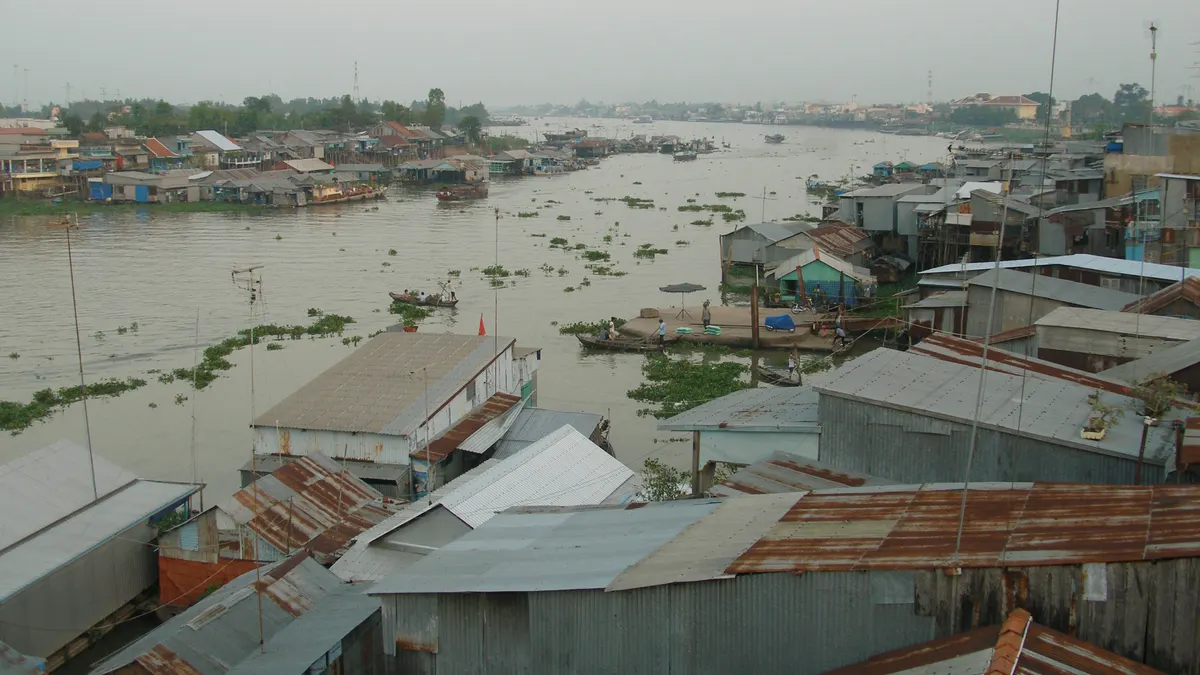
Chau Doc (Châu Đốc) is worth two days if you want the Mekong Delta’s border and pilgrim culture: Sam Mountain, the Cham villages across the river and the Tra Su (Trà Sư) forest. As of November 2026 you still reach it on the old road, National Route 91, because the new Chau Doc–Can Tho expressway has not opened yet. This is where the Mekong Delta meets the border: the town sits on the Hau (Hậu) River, the Vietnamese name for the Bassac branch of the Mekong, right by the Cambodian border, with Sam Mountain rising out of the rice plain behind it. Kinh Vietnamese, Khmer, Cham (Chăm) Muslims and Hoa (ethnic Chinese) have long lived side by side here, and you can see it in one walk: a goddess temple, a Mahayana pagoda, a mosque across the river and a market that smells of fermented fish.
This guide is for travellers who have seen the lower delta, or who want something other than orchards and floating markets. Our Mekong Delta guide gives the overview and covers Can Tho (Cần Thơ) and Ben Tre (Bến Tre); this page goes deeper into Chau Doc, its pilgrim mountain and the Tra Su forest nearby. For the wider region, start from our South Vietnam hub.
Chau Doc at a glance
| Region | Upper Mekong Delta, southern Vietnam, on the Hau (Bassac) River at the Cambodian border |
| Admin unit | An Giang province (since 1 July 2025 including the former Kien Giang (Kiên Giang); capital Rach Gia). Town centre: Chau Doc ward; Sam Mountain: Vinh Te (Vĩnh Tế) ward |
| Known for | Sam Mountain and the Ba Chua Xu (Bà Chúa Xứ) temple (UNESCO-listed festival, 2024); Cham Muslim villages and mosques; floating fish-farm houses; Tra Su cajuput forest; mam (mắm) (fermented fish) |
| How long | Two days, three with Tra Su at a slow pace |
| Best time | Flood season, roughly September to November, for Tra Su and the flooded fields; avoid the festival days (22nd–27th of the fourth lunar month) unless you come for them |
| Getting there | By road from Ho Chi Minh City, about 210 km (roughly five hours); the new Chau Doc–Can Tho expressway is not yet open (November 2026); river boats to and from Cambodia |
| Local dishes | Bun ca Chau Doc (turmeric fish noodle soup), mam and lau mam (lẩu mắm), palm-sugar cakes (bánh bò thốt nốt), flood-season ca linh (cá linh) and bong dien dien (bông điên điển) |
Where is Chau Doc now, after the 2025 merger?
Chau Doc is still in An Giang, but An Giang is a different province from the one on older maps. On 1 July 2025 Vietnam cut its provinces from 63 to 34, and An Giang absorbed Kien Giang on the Gulf of Thailand, including the island of Phu Quoc. The enlarged province’s political and administrative centre is Rach Gia, the former capital of Kien Giang, not Long Xuyen (Vietnam Government Portal).
The district level was abolished at the same time, so the city of Chau Doc no longer exists as a unit. Recent reports place shops in the town centre in Chau Doc ward and Sam Mountain, with the Ba Chua Xu temple, in Vinh Te ward; Tra Su forest is now in An Cu (An Cư) commune. For a visitor this matters mainly for addresses and maps: signs, bus companies and most people still say “Chau Doc” for the whole area, and many older addresses read “Núi Sam ward, Châu Đốc city”.
Why do four communities share one border town?
Geography and history explain it. Chau Doc grew up at a junction of waterways, where the Chau Doc River meets the Hau and the Vinh Te Canal sets off westward along the border, on the frontier where the Vietnamese and Khmer worlds met. The Cham were established on the river islands by the mid-18th century (the first Mubarak mosque dates from 1750), and the Nguyen (Nguyễn) court consolidated the border in the early 19th century, when the mandarin Nguyen Van Thoai (Nguyễn Văn Thoại), better known as Thoai Ngoc Hau (Thoại Ngọc Hầu), in the words of Vietnam (Việt Nam) News, “expanded and protected the southwestern border”.
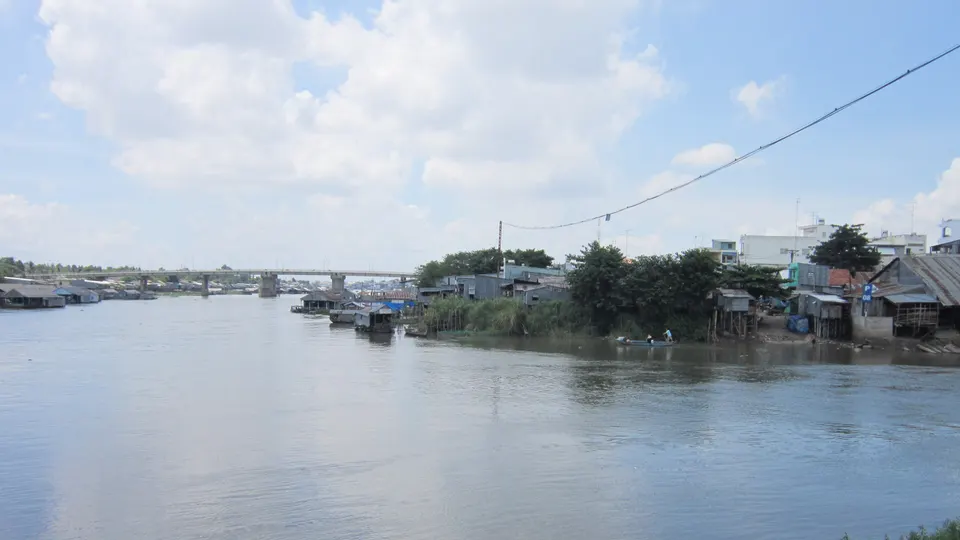
The key project was the Vinh Te Canal, dug by human labour from 1819 to 1824 under Thoai Ngoc Hau’s direction. It runs about 97 km from Chau Doc to the Giang Thanh (Giang Thành) River at Ha Tien (Hà Tiên), along today’s border. Emperor Minh Mang (Minh Mạng) named it after Thoai Ngoc Hau’s wife, Chau Thi Te (Châu Thị Tế), who organised supplies and care for the labourers; the provincial portal notes it was the first time a woman’s name was given to a river, a mountain and a village (An Giang provincial portal). Nhan Dan (Nhân Dân), marking its bicentenary in 2024, describes the canal as built for irrigation, transport and trade as well as border defence. Thoai Ngoc Hau’s tomb, at the foot of Sam Mountain, has been a national historical relic since 1997, according to VnExpress, and is worth a short stop.
So what for the visitor: Chau Doc’s mix is not a show put on for tourists. It comes from a frontier shared by several peoples, which is why a single festival on Sam Mountain draws all four communities, as UNESCO notes, and why a temple, a pagoda and a mosque lie within a short boat ride of each other. The delta’s largest Khmer communities live further south-east, around the Khmer pagodas of Soc Trang and Tra Vinh.
What draws pilgrims to Sam Mountain and the Ba Chua Xu temple?
Sam Mountain (Nui Sam), about 5 km from the town centre, is less a mountain than a forested hill with roughly 200 religious sites on its slopes, the national tourism authority says. At its foot stands the Ba Chua Xu temple (Mieu Ba Chua Xu), dedicated to the “Lady of the Realm”, a Mother Earth goddess believed to grant protection, prosperity, health and peace. UNESCO inscribed her festival on the Representative List of the Intangible Cultural Heritage of Humanity in December 2024 and stresses that it is observed by the Kinh, Khmer, Cham and Hoa communities, each contributing a part of the rites (UNESCO).
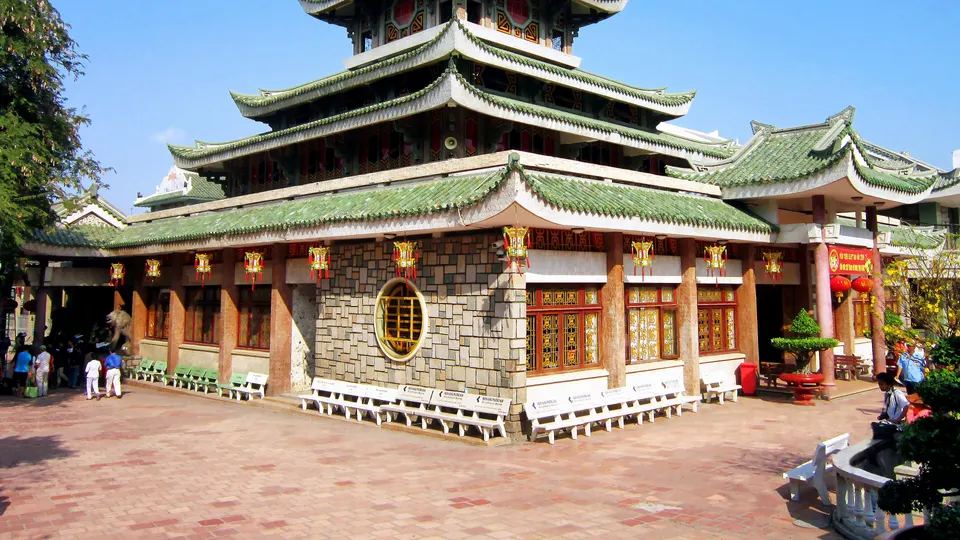
The temple was built in the 19th century, starting as a simple bamboo shrine (VOV), and was redesigned in its present form in 1972; it has been a national monument since 1980 and draws millions of pilgrims a year, according to Vietnam News. Inside sits a sandstone statue about 1.48 m tall. What the statue is, is debated. Local legend, retold by VOV, says villagers found it on the mountain and could not move it until nine young women carried it down. Researchers read it differently: Tien Phong (Tiền Phong) reports that the French archaeologist Louis Malleret described it in 1941 as a seated Vishnu-type deity of around the late sixth century, while the writer Son Nam (Sơn Nam) and the researcher Tran Van Dung (Trần Văn Dũng) saw a male figure whose head was added later. For worshippers none of this changes who the Lady is.
The festival runs from the 22nd to the 27th day of the fourth lunar month (Vietnam News gives the 23rd to 27th), usually in May or June; our guide to the Ba Chua Xu festival has the rite-by-rite schedule and the 2027 dates. Its high points are a palanquin procession that carries the goddess’s statue down from the mountain, the bathing rite in which her robes and jewellery are changed, and the Tuc yet (Túc yết) ceremony from midnight on the 25th. In 2026 it opened on 6 June. Tradition vs today: the rites are those of a village cult, but the scale is now national. Vinh Te ward counted more than 4.5 million visitors by mid-July 2026, Tap chi Cong Thuong (Tạp chí Công Thương) reported. Expect crowds and incense smoke, and plan your accommodation early.
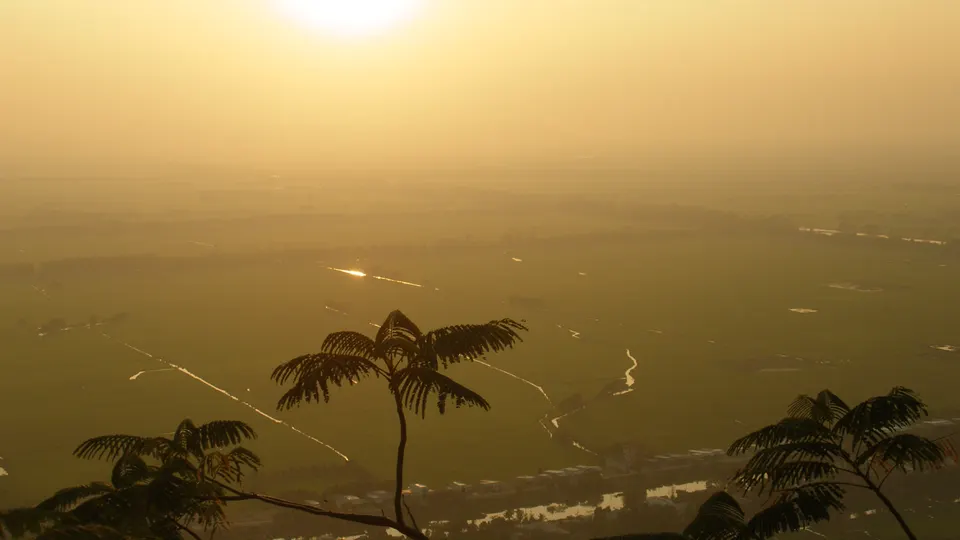
Around the temple, the Tay An (Tây An) pagoda, whose architecture the national tourism site singles out, the Hang pagoda (Chua Hang (Chùa Hang), Phuoc Dien) on the slope and Thoai Ngoc Hau’s tomb are all national relics, Tap chi Cong Thuong lists. A cable car and a paved road of about 2 km lead to the summit, where the view takes in Chau Doc and the Vinh Te Canal. VnExpress suggests going up in the late afternoon for the sunset.
How do you visit the Cham villages across the river?
Across the Hau River from Chau Doc, on two islands, lie the Cham Muslim villages of Chau Giang (Châu Giang) and Chau Phong (Châu Phong), a short boat or ferry ride from town. The Cham here are Sunni Muslims, unlike the Hindu and Bani Cham of the central coast; our guide to Champa heritage explains how the two traditions differ. Estimates of An Giang’s Cham Muslim population range from more than 13,000 (Vietnam News, 2025) to more than 17,000 (VnExpress, 2019).
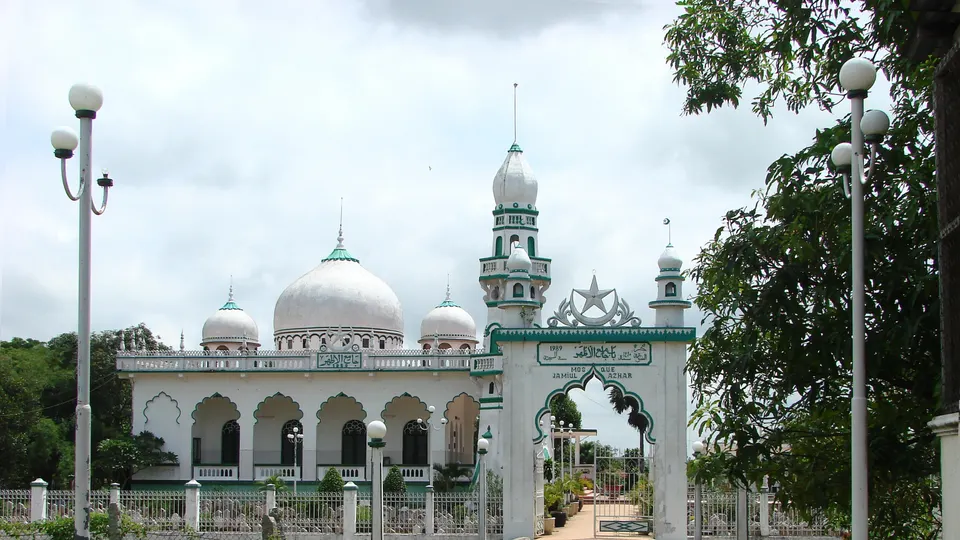
The best-known mosque is Mubarak in Chau Phong: first built in 1750, renovated five times and listed as a national architectural and religious site in 1989 (Vietnam News). Jamiul Azhar, with its white domes, is another. Around them stand Cham stilt houses and family looms. Brocade weaving in Chau Phong dates to the early 19th century and was recognised as national intangible heritage in 2023; Vietnam News reported in September 2026 that the trade, once practised by almost every household, is now kept alive by a small community tourism cooperative founded in 2024.
How to behave: these are working villages and places of prayer, where believers pray five times a day. Dress modestly with shoulders and knees covered, remove your shoes before entering, avoid prayer times and ask before photographing people. Buying a piece of cloth from a family loom supports the craft directly.
What are Chau Doc’s floating fish-farm houses?
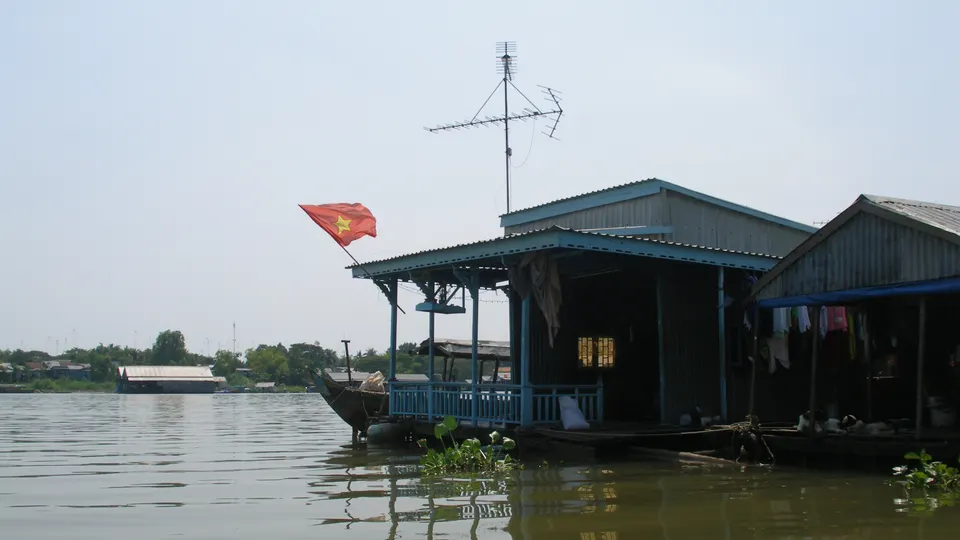
On the Hau River near the town centre, whole neighbourhoods float. These houses on rafts double as fish farms: families live above and raise catfish and other fish in cages below, the national tourism site explains, and the community has existed for about half a century.
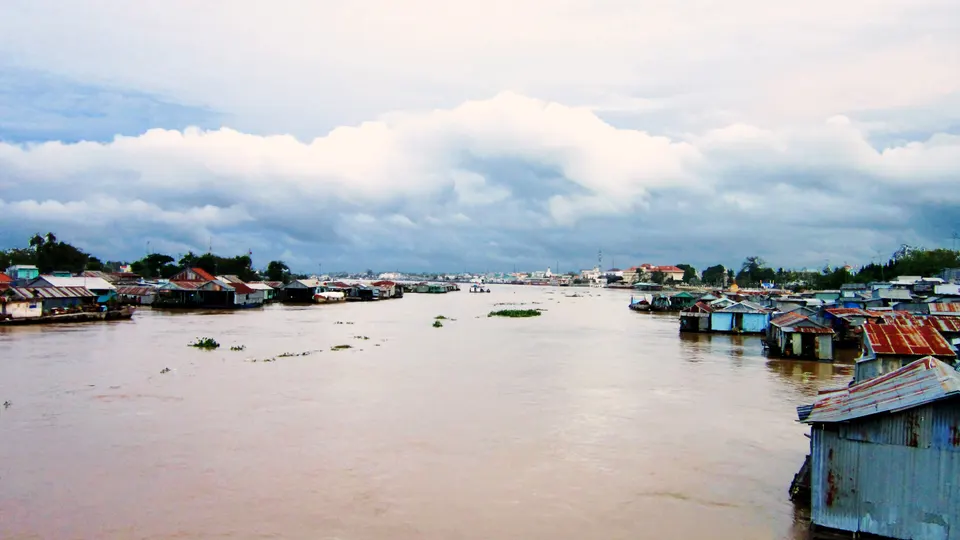
Tradition vs today: what you see now is partly planned. VnExpress described in 2023 and 2024 a rebuilt raft village of about 161 fish cages stretching over 1 km near the river confluence, painted in bands of colour and toured by boat. You can combine the rafts and a crossing to the Cham villages in one boat trip; agree on route and duration with the boatman before you set off.
Is Tra Su forest worth the trip, and when?
Yes, if you come in the right season. Tra Su is a cajuput (melaleuca, tram (tràm)) swamp forest in the Bay Nui (“Seven Mountains”) area, about 20–30 km from Chau Doc depending on the source and route. It is a special-use forest and landscape protection area of about 1,050 ha, with some 70 bird species, including two on Vietnam’s Red Book, the Indian pond heron and the oriental darter, (SGGP). Figures differ: VietnamPlus gives over 845 ha, and the 2021 management plan reported by Bao Quoc te (Báo Quốc tế) counts about 707 ha of forest land within the 1,050 ha protected area.
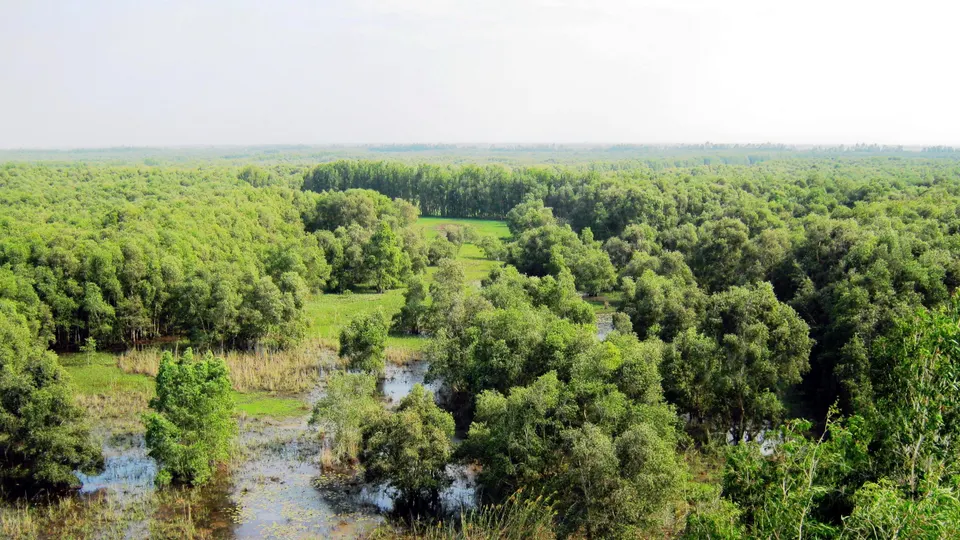
The usual visit starts by motorboat along the main channel, then switches to a small rowing boat (xuong (xuồng)) through narrow channels under the trees, with a long bamboo footbridge and a viewing tower. Go in the flood months, roughly September to November, when the water is high and the channels are carpeted with green floating weed (beo (bèo)); VietnamPlus recommends early morning or late afternoon for birds. VnExpress adds that a restaurant inside the area serves grilled snakehead and flood-season ca linh hotpot.
Not ancient wilderness: VietnamPlus explains that the forest grew up from the 1980s on low-lying acid-sulphate soil, and it is now one of An Giang’s main ecotourism sites, with hundreds of thousands of visitors a year. It is under pressure: SGGP reported in December 2025 that rangers face poaching of birds, illegal fishing, litter and a constant fire risk in the dry season. Stay on the boats and paths and take your rubbish back.
What should you eat in Chau Doc?
Start with bun ca Chau Doc, the town’s breakfast noodle soup. Snakehead fish (ca loc (cá lóc)) is boiled with lemongrass and turmeric, flaked and stir-fried in turmeric until golden, and served over fresh rice noodles in a clear broth seasoned with mam (fermented fish or shrimp paste). The distinctive aroma comes from ngai bun (ngải bún), a rhizome that Thanh Nien (Thanh Niên) likens to turmeric. It comes with shaved water spinach, banana blossom, bean sprouts and, in the flood season, yellow bong dien dien (sesbania flowers).
Tradition vs today. VnExpress notes that the old version was made with ca linh and dried shrimp; today snakehead is the norm, and Tuoi Tre (Tuổi Trẻ) adds that many shops now add roast pork, Vietnamese sausage or boiled duck eggs. Recipes vary from stall to stall, and Thanh Nien notes that the Rach Gia version has a lighter broth and simpler greens.
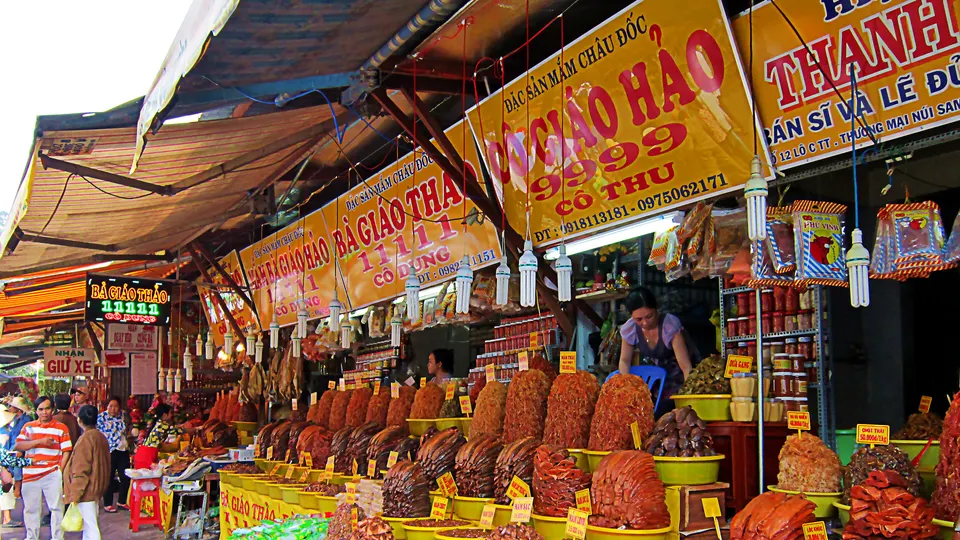
Then there is mam. VnExpress calls the Chau Doc market the “kingdom of mam”, and its stalls stack fermented snakehead, ca linh, ca tren (cá trèn), ca sac (cá sặc) and mam thai (mắm thái), Nhan Dan reports that Chau Doc mam (Châu Đốc mắm) and mam thai both carry collective trademarks as local specialities. From about November, as the small fish leave the flooded fields for the rivers, fishers sell their catch to processors, who ferment it for weeks or months (Nhan Dan). Eat it as lau mam, a hotpot built on fermented ca chot (cá chốt) or ca sac and eaten with noodles and greens, or take a jar home.
From the Bay Nui hills come thot not (thốt nốt) (palmyra palm) products. Nhan Dan reported in March 2026 that about 60,000 palms are tapped in the area, mainly from February to May, and that palm-sugar making is listed as national intangible heritage. Look for duong thot not (đường thốt nốt) (palm sugar, an easy gift) and bánh bò thốt nốt, a sponge cake of palm sugar, palm-fruit flour, rice flour and coconut milk. For more on the region’s food, see our food hub.
We found no MICHELIN Guide listing in Chau Doc, and the press articles we checked name bun ca (bún cá) stalls without confirmed street addresses, so this guide has no place cards yet. VnExpress’s 2023 itinerary points to the bun ca stalls around Phan Dinh Phung (Phan Đình Phùng) Street for breakfast. In April 2022 An Giang held its first mam festival in Chau Doc, with more than 60 kinds of mam from across the South, and a Vietnamese records body recognised the town as having the most makers of Southern-style mam in the country, Znews reported. Our guide to mam explains the kinds, the dishes and how to carry a jar home.
How do you spend two days in Chau Doc?
Two days cover the essentials without rushing; a third lets you add the Bay Nui hills beyond Tra Su. With extra time, nearby Tan Chau is the home of lanh My A, the black silk once prized for the southern blouse explained in our ao ba ba guide.
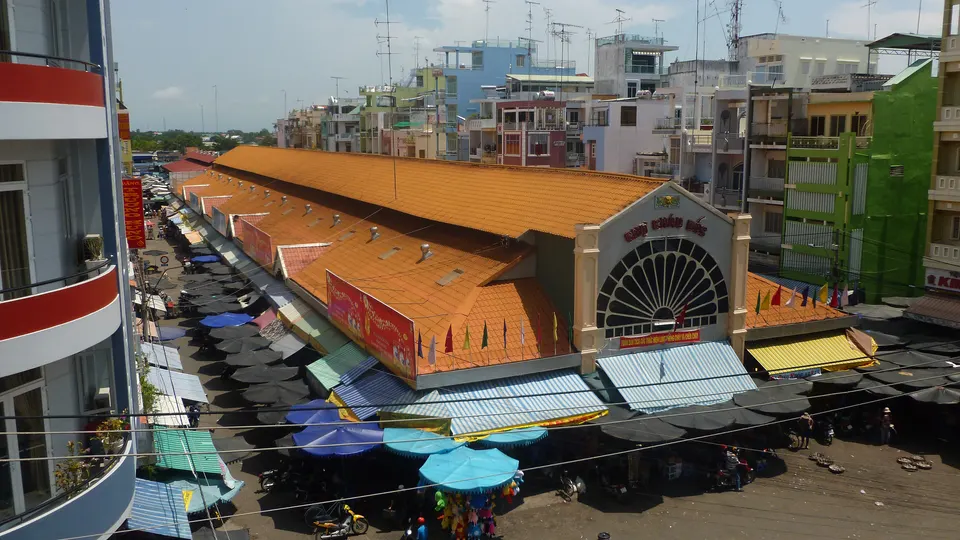
- Day 1, morning: bun ca for breakfast near the market, then the mam stalls and the riverfront. Take a boat to the floating fish-farm houses and across to a Cham village and mosque.
- Day 1, afternoon: Sam Mountain: the Ba Chua Xu temple, the Tay An pagoda and Thoai Ngoc Hau’s tomb, then up to the summit by cable car or road for sunset over the plain and the Vinh Te Canal.
- Day 2, early: drive to Tra Su to be on the water in the cooler morning light, when the birds are most active.
- Day 2, afternoon: look for palmyra palms and palm-sugar stalls on the roads of the Bay Nui area, then return to Chau Doc for lau mam in the evening.
If your dates are flexible, decide first whether you want the festival. During the 22nd to 27th of the fourth lunar month, Sam Mountain is a pilgrimage, not a sightseeing stop; outside it, the temple is calmer and easier to appreciate. To fit Chau Doc into a longer trip through the delta, see our Mekong Delta route plan.
Getting there and choosing a season
By road, VnExpress puts Chau Doc about 210 km from Ho Chi Minh City; buses leave from Mien Tay (Miền Tây) bus station, and the national tourism site puts the trip at about five hours; our guide to Saigon to Chau Doc by bus, car or boat compares the options and current fares. VnExpress noted in 2024 that the delta had few expressways, so average speeds were low; that is changing. The road from Ho Chi Minh City is now expressway as far as Can Tho, where the last section opened in late December 2023, but the new Chau Doc–Can Tho–Soc Trang expressway is not open to traffic yet. Its An Giang section was ceremonially opened “to technical traffic” on 19 December 2025, Viet Nam News reported, yet construction carried on through 2026: in early October 2026 that section was about 83% built, and An Giang aimed to open the first 48 km, from Chau Doc to the provincial road 943 interchange, before Tet (the Lunar New Year) in February 2027, CafeLand reported on 7 October. As of 11 November 2026 the 188 km route as a whole was due to be largely finished in 2026 and fully in use only in 2027, with a sand shortage threatening the Can Tho end, VietnamPlus reported. Until then, expect National Route 91 for the last leg. From Can Tho, the delta’s main city, it puts the trip at about three hours, so Chau Doc fits well after a night there. For that leg, our Can Tho to Chau Doc guide compares the coach, the local bus via Long Xuyen and a car with driver, and tracks the new expressway. By river, boats along the Mekong link Chau Doc with Cambodia; check current schedules and border formalities before you rely on them.
Seasons. The upper delta has two faces. In the flood season (mua nuoc noi (mùa nước nổi), “season of floating water”), the Mekong spreads over the fields: Vietnam News dates its arrival to around mid-July, with ca linh fish coming down from Cambodia’s Tonle Sap (Tonlé Sap) between July and November and peaking in September and October. This is when Tra Su is at its best, and most sources recommend September to November for Chau Doc. The dry season, roughly December to April, is easier for road travel and climbing Sam Mountain but leaves Tra Su less lush.
| If you want… | Come in | What you get | Trade-off |
|---|---|---|---|
| Tra Su at its best and flood-season food | Flood season, roughly September to November | Full channels under green floating weed, ca linh and bong dien dien in bun ca and hotpots | Water levels vary from year to year; ask locally |
| Easy roads and a calm Sam Mountain | Dry season, roughly December to April | Comfortable climbing, sunset from the summit, quieter temple | Tra Su is less lush |
| The Ba Chua Xu festival | 22nd–27th of the fourth lunar month (May or June; 6 June in 2026) | Palanquin procession, bathing rite and night ceremonies | Huge crowds; book a room early |
Tradition vs today: the great floods that shaped delta life have weakened. VnExpress reported in November 2025 that there has been no major flood since 2012, that the peak at Tan Chau (Tân Châu) in 2015 was the lowest on record, and that experts link the change to upstream dams and to dikes in the delta (VnExpress). Years still vary: VietnamPlus reported that in 2026 the water arrived early and rose higher than the year before. Ask locally how high the water is before you plan a flood-season trip around it.
Frequently asked questions
When is the Ba Chua Xu festival at Sam Mountain?
Every year from the 22nd to the 27th day of the fourth lunar month, usually in May or June; in 2026 it opened on 6 June. The main rites fall on the night of the 25th to the 26th, and the town is at its most crowded then.
How do I visit Tra Su forest from Chau Doc?
Tra Su lies about 20–30 km from Chau Doc, so go by car or motorbike, then take a motorboat along the main channel and a small rowing boat through the narrow channels, with a bamboo footbridge and a viewing tower inside. Go in the flood months, roughly September to November, and early in the morning or late in the afternoon for birds.
What should I eat in Chau Doc?
Start the day with bun ca Chau Doc, a turmeric-yellow snakehead fish noodle soup; VnExpress points to the stalls around Phan Dinh Phung Street. In the evening try lau mam, a fermented-fish hotpot, and take home a jar of mam or some palm sugar from the Chau Doc market.
Is the Chau Doc–Can Tho expressway open yet?
Not as of November 2026, so the trip from Ho Chi Minh City (about 210 km, roughly five hours by bus from Mien Tay station) still ends on National Route 91. Its An Giang section had a ceremonial technical-traffic opening on 19 December 2025, but An Giang now aims to open the first 48 km from Chau Doc only before Tet 2027, and the full 188 km route is due in 2027.
Can visitors enter the Cham mosques near Chau Doc?
Many visitors do, especially at the Mubarak and Jamiul Azhar mosques across the river. Dress modestly, take off your shoes, avoid prayer times and ask before photographing people.
Key sources
- Dự án cao tốc Châu Đốc-Cần Thơ-Sóc Trăng vẫn thiếu nguồn vật liệu thi công · VietnamPlus (VNA), 11 November 2026
- Festival of Bà Chúa Xứ Goddess at Sam Mountain · UNESCO Intangible Cultural Heritage (inscribed 2024, 19.COM)
- An Giang Province embraces spiritual tourism · Việt Nam News, 16 February 2025
- Names and administrative centers of 34 provinces and centrally-run cities specified · Vietnam Government Portal, 15 April 2025
- Contributions of Madame Châu Thị Tế to the excavation of the Vĩnh Tế Canal · An Giang provincial portal
- Thầm lặng giữ 'lá phổi xanh' Trà Sư · Sài Gòn Giải Phóng, 20 December 2025
- Nghề mắm ở An Giang · Nhân Dân, 11 October 2023
- Lũ miền Tây mất dần sức sống · VnExpress, 11 November 2025
All 34 sources and further reading
- Miền Tây sắp có thêm một đoạn cao tốc mới đưa vào khai thác trước Tết · CafeLand, 7 October 2026
- Hơn 60 loại mắm hội tụ ở miền Tây · Znews, 21 April 2022
- Châu Đốc–Cần Thơ–Sóc Trăng expressway opens to technical traffic · Việt Nam News, 19 December 2025
- Thủ tướng yêu cầu thông xe toàn tuyến cao tốc Châu Đốc - Cần Thơ - Sóc Trăng vào ngày 30/6/2026 · Tạp chí Công Thương, 29 December 2025
- Cao tốc Mỹ Thuận - Cần Thơ đã thông xe hai chiều, người dân đi lại ra sao? · Tuổi Trẻ, 30 December 2023
- Southern festival wins UNESCO recognition · Việt Nam News, 5 December 2024
- Thousands of visitors flock to Southern Việt Nam's largest spiritual festival · Việt Nam News, 6 June 2026
- UNESCO recognition ceremony for Bà Chúa Xứ Goddess Festival · VOV
- Bí ẩn tượng Bà Chúa Xứ: Tượng đàn ông hay đàn bà? · Tiền Phong, 24 June 2013
- Phường Vĩnh Tế (An Giang): Phát huy lợi thế đô thị di sản, mở rộng hội nhập quốc tế · Tạp chí Công Thương, 15 September 2026
- Phát hành bộ tem bưu chính Kỷ niệm 200 năm hoàn thành kênh Vĩnh Tế · Nhân Dân, June 2024
- Chau Doc · Vietnam National Authority of Tourism (vietnam.travel)
- Cẩm nang du lịch Châu Đốc · VnExpress, 26 April 2024
- 48 giờ ở Châu Đốc · VnExpress, 20 October 2023
- Cẩm nang du lịch An Giang · VnExpress, 2 March 2022, updated 5 January 2026
- Châu Phong's Chăm weavers keep a heritage alive · Việt Nam News (O Vietnam), 8 September 2026
- Inside the realms of Cham ethnics in An Giang · VnExpress International, 21 October 2019
- An Giang phê duyệt phương án quản lý khu bảo vệ cảnh quan rừng tràm Trà Sư · Báo Quốc tế, 2 December 2021
- Khám phá rừng tràm Trà Sư – bản giao hưởng xanh giữa miền Tây mùa nước nổi · VietnamPlus (VNA), 28 June 2026
- Mùa mật ngọt thốt nốt · Nhân Dân, 22 March 2026
- Hương vị quê hương: Về An Giang ăn bún cá · Thanh Niên, 10 February 2026
- Tháng giêng ăn bún cá Châu Đốc, ghiền như dính bùa dính ngải · Tuổi Trẻ, 9 February 2020
- Đậm đà bún cá Châu Đốc · VnExpress, 15 May 2013
- Linh fish: the unforgettable gift of nature · Việt Nam News, 22 September 2026
- Khai thác 'lộc trời', biến giá trị của mùa nước nổi thành sản phẩm du lịch · VietnamPlus (VNA), 28 August 2026
- Châu Đốc · Wikipedia (background; see its cited sources)
Keep exploring
 South Vietnam · Travel Mekong Delta: Which Area to Visit and Where to Base Which part of the Mekong Delta to visit and where to base: Can Tho, Ben Tre or Chau Doc, Cai Rang market hours, seasons, where to eat, new province names.
 Central Vietnam · Culture Champa Heritage: Which Cham Towers to See, and When Which Cham towers are ruins and which still hold rites, when Kate falls (main rites 10 Oct 2026), My Son's 2026 fee, the Cham museum and respectful visits.
 South Vietnam · Travel Phu Quoc (Phú Quốc) Travel Guide: Which Area to Stay In Phu Quoc travel guide: which area to stay in (Duong Dong, Ong Lang, Long Beach, Bai Sao), flights and ferries, getting around, visa rules and local food.
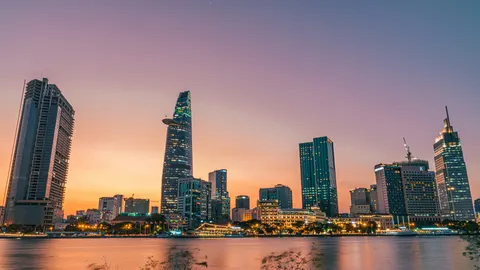 South Vietnam · Travel Ho Chi Minh City (Saigon): How Many Days and What to See Ho Chi Minh City (Saigon) explained: the 2025 merger and new wards, how many days to stay, Metro Line 1, Long Thanh airport, palace and museum tickets.
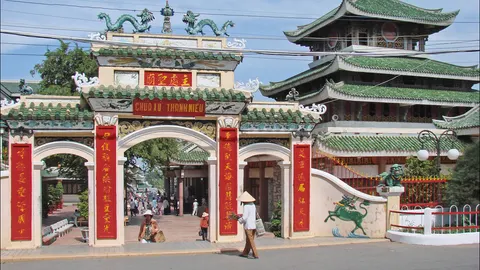 South Vietnam · Culture Ba Chua Xu (Bà Chúa Xứ) at Nui Sam: 2027 Dates, How to Visit Ba Chua Xu temple at Nui Sam, Chau Doc: 2027 festival dates (27 May to 1 June), the UNESCO-listed rites night by night, when crowds peak and how to visit.