South Vietnam · Food
Chau Doc Mam (Mắm): Which Fermented Fish to Try and Buy
Mam, the Mekong Delta's fermented fish, in 2026: which kind to buy in Chau Doc for which dish, the makers to look for and how to fly home with a jar.
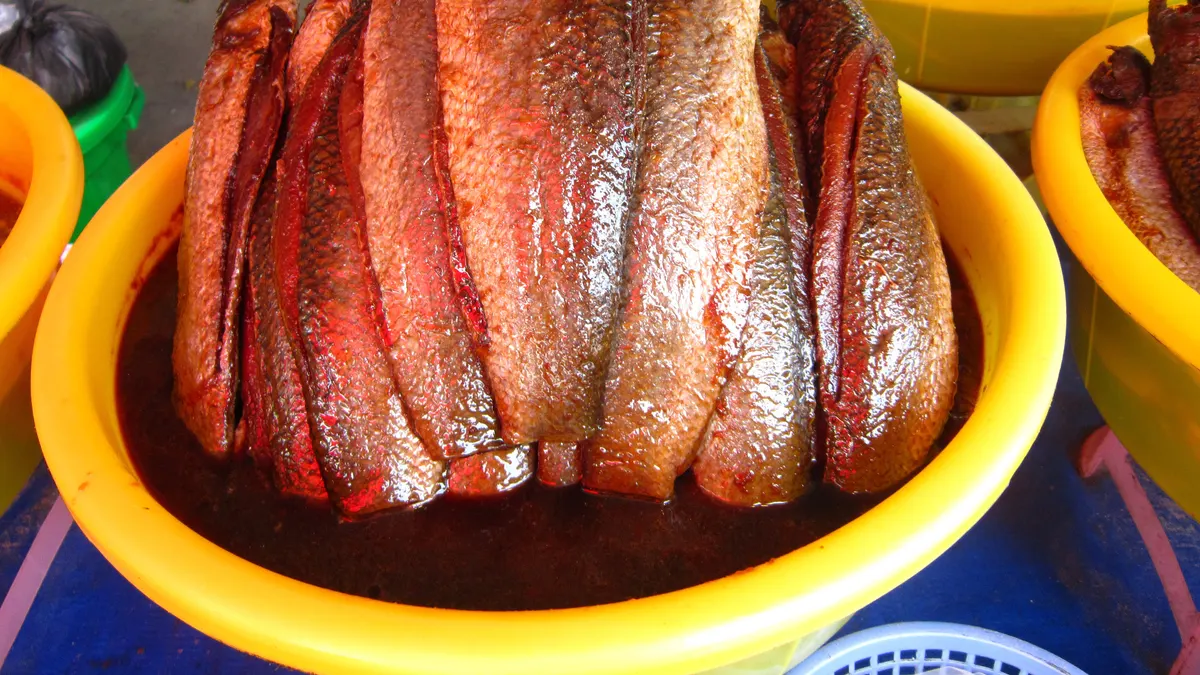
If you want to try mam, the Mekong Delta’s fermented freshwater fish, start with a cooked dish such as lau mam (fermented fish hotpot) or bun nuoc leo (a Soc Trang noodle soup), then taste before you buy at Chau Doc market, where stalls sell dozens of kinds. For a first jar to take home, mam thai or mam ca linh are the easiest choices; the table below matches each kind to a dish. As of November 2026, Vietnam Airlines lets each passenger carry up to 3 litres or 3 kg of mam in sealed, taped plastic bottles inside a taped foam box, though not on its ATR72 flights.
Mam (mắm) is the Mekong Delta’s pantry: freshwater fish, salted and fermented for months until the flesh turns soft and deep red, then eaten with rice and greens, steamed with pork and egg, or dissolved into hotpot and noodle broth. Visitors meet it as a smell first, at the market stalls of Chau Doc (Châu Đốc) near the Cambodian border. This guide explains what it is, how it is made, which kind goes into which dish and how to buy it.
It is not the same thing as fish sauce. Our guide to fish sauce regions covers nuoc mam (nước mắm), the liquid, and our guide to dipping sauces by region covers the shrimp and anchovy pastes of the North and Centre. This page is about the delta’s freshwater fish mam.
Mekong mam at a glance
The names below are the ones you will see on market labels. Each is a different fish, or a different way of finishing it, and each has its classic use. The table is built from the sources named in the sections below.
| Mam | Fish | What it is like | Classic use |
|---|---|---|---|
| Mam ca linh (mắm cá linh) | Ca linh, a small flood-season fish | Small, soft fish | Hotpot (lau mam); braised mam (mam kho) |
| Mam ca sac (mắm cá sặc) | Snakeskin gourami | Small, flat fish | Hotpot; braised mam; noodle broth |
| Mam ca loc (mắm cá lóc) | Snakehead | Large, firm pieces; called the “queen” of mam by makers | Steamed with pork and egg (mam chung) |
| Mam ca chot (mắm cá chốt) | Small catfish | Small fish | Steamed; eaten with green banana and herbs; hotpot |
| Mam ca tren (mắm cá trèn) | Sheatfish | Small fish | Sold whole at Chau Doc stalls |
| Mam thai (mắm thái) | Snakehead mam, shredded | Mixed with shredded green papaya | Eaten with rice noodles and boiled pork |
| Mam bo hoc (mắm bò hóc) | Snakehead, catfish and shrimp, Khmer method | The Khmer prahok, fermented at least six months | Seasoning for Khmer dishes and bun nuoc leo |
What is mam, and how is it different from fish sauce?
In the Mekong Delta, mam means the fish itself after fermentation: whole fish or pieces packed in jars with salt and toasted rice powder, which stay solid. Fish sauce is the liquid. Both come from salted, fermented fish, but they are different products with different uses.
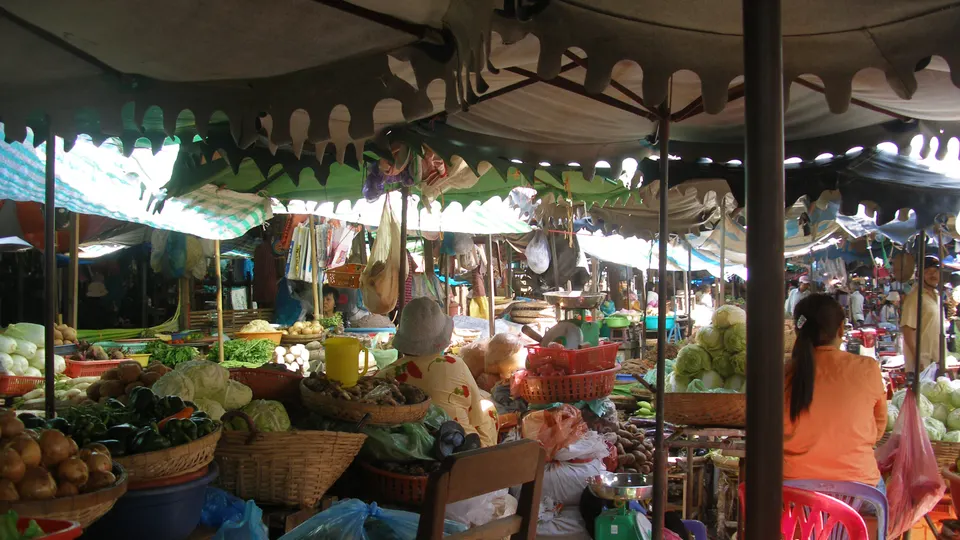
The difference in practice. Bao Phap Luat’s account of Chau Doc’s makers describes the fish salted in large jars, coated in toasted rice powder and topped up with fish sauce, so that the fish stays whole in the jar (Bao Phap Luat). What you buy is a piece of fish or a spoonful of paste, which you eat as a dish or cook into one. Fish sauce, by contrast, is a seasoning poured from a bottle.
Not the same as the dips. In the North and the Centre, “mam” on a menu usually means mam tom (mắm tôm), fermented shrimp paste, or mam nem (mắm nêm), fermented anchovy, both used as dips. The delta’s mam is made from freshwater fish and is eaten as a dish in its own right, often cooked. For a map of the whole region, start from our Mekong Delta guide.
Why is Chau Doc called the “kingdom of mam”?
Chau Doc, the border town in An Giang, lives off the annual floods: the small fish they bring are the raw material of its mam. Since 1 July 2025 Chau Doc has been part of the enlarged An Giang province, which absorbed Kien Giang; the market area is now Chau Doc ward and Sam Mountain is Vinh Te ward.
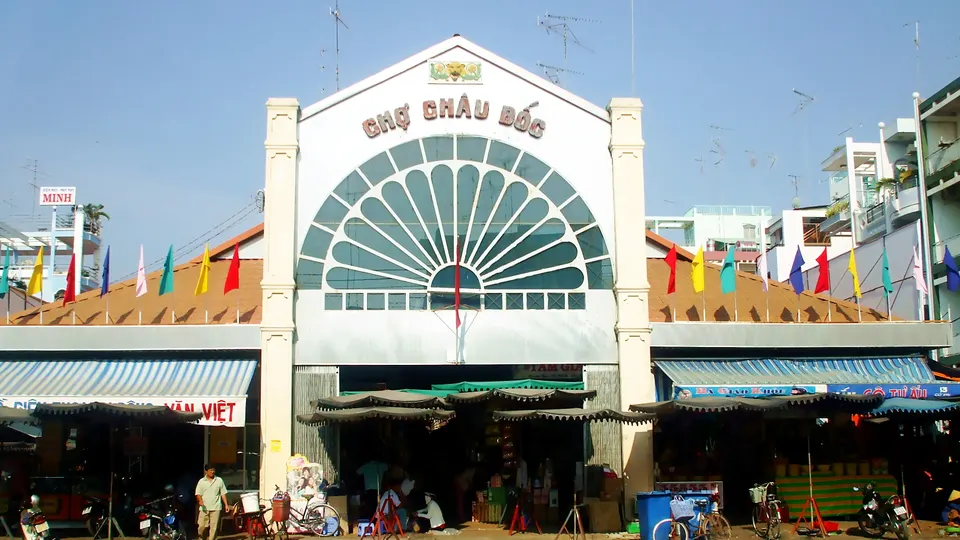
A town of makers. Nhan Dan reported in October 2023 that hundreds of people in the former Nui Sam and Chau Phu A wards, where the workshops are concentrated, make a living from mam, and that the trade gives seasonal work to thousands (Nhan Dan). It also reported that “đặc sản mắm Châu Đốc” and “đặc sản mắm thái Châu Đốc” (Chau Doc mam and Chau Doc mam thai) are protected as collective trademarks, and that the province proposed listing the craft as national intangible heritage; we found no record that the listing has been granted. Locals told Bao Phap Luat and Nguoi Quan Sat that mam-making in the town goes back more than a century.
The flood-season link. The floods (mua nuoc noi (mùa nước nổi)) arrive roughly from September to December, VnExpress’s Chau Doc handbook says, though the timing varies by year. From about November, as the small fish (ca linh, ca sac, ca chot, ca tren) leave the flooded fields, fishers sell their catch to the processors, Nhan Dan reports. Weaker floods in recent years have reduced the catch: SGGP wrote in 2021 that early-season ca linh had become hard to find.
In September 2025 Viet Nam News reported that young ca linh sold for 20,000–30,000 dong (about US$0.75–1.10) a kilo in upstream An Giang and up to 150,000 dong (about US$5.70) in Chau Doc, after floods that a local said came earlier and higher than the year before. For 2026, Nhan Dan reported in late July that An Giang planned to let floodwater onto about 41,986 hectares of fields from mid-August to the end of November, and that ca linh and ca chot return with the water. By the end of August 2026 young ca linh, cleaned, sold for more than 100,000 dong a kilo at Phu Huu on the Cambodian border and 200,000–250,000 dong in town markets in the province, VietnamPlus reported on 28 August. On 15 November 2026 Nhan Dan still showed fields under floodwater around Sam Mountain in Vinh Te ward, so a mid-November visit still catches the season.
A record and a festival. In April 2022 An Giang held its first mam festival in Chau Doc with more than 60 kinds of mam from across the South, and a Vietnamese records body recognised the town as having the most makers of Southern-style mam in the country, Znews reported.
How is mam made?
The basic method is the same across the delta, but every maker has a recipe, and the details change with the fish. Sources describe four steps.
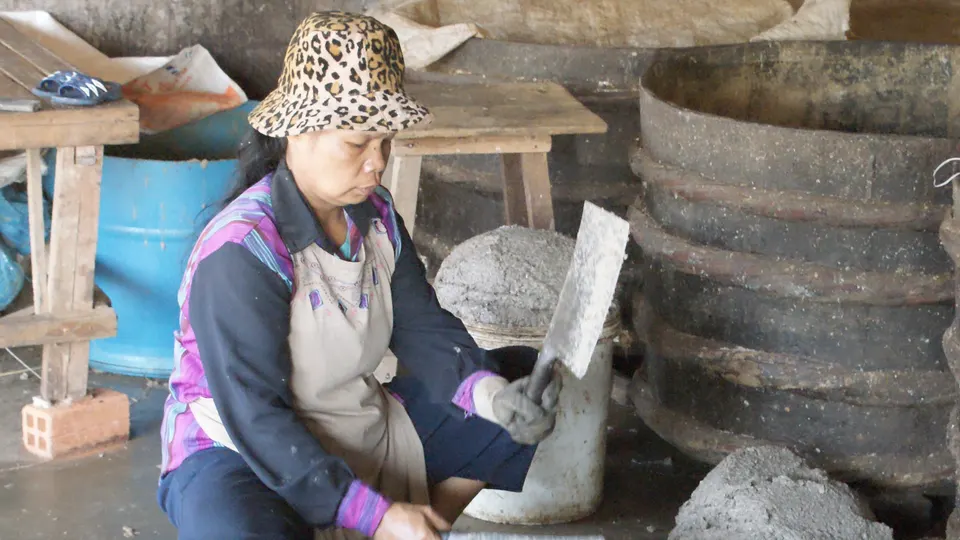
- Clean and salt. The fish are cleaned, drained and salted with coarse salt in large jars for about a month (Bao Phap Luat).
- Coat with thinh. The fish are rinsed and coated in thinh (thính), rice and other grains toasted and ground, then packed in layers under a weight and topped with fish sauce. The rice powder feeds the fermentation and, with sugar, gives the colour, VOV reports (VOV).
- Wait. After a few months the liquid turns red and clear. Sources give different times, from two or three months to four to six for freshwater fish, depending on the fish and the maker.
- Finish with palm sugar. In Chau Doc the mam is finally mixed with caramelised palm sugar (duong thot not (đường thốt nốt)) from the Seven Mountains area and rested a few days, Bao Phap Luat says. This gives Chau Doc mam its sweetness.
Sweet or salty? A maker quoted on the Can Tho city portal sums up the regional difference: Chau Doc mam is sweet, Ca Mau mam is salty. It is one maker’s view, but you will taste it at the market.
What is the Khmer connection: prahok, bun nuoc leo and bun mam?
The delta is shared by Vietnamese (Kinh), Khmer and Chinese communities, and fermented fish is part of all their kitchens. The clearest Khmer link is in Soc Trang, which since 1 July 2025 has been part of Can Tho city.
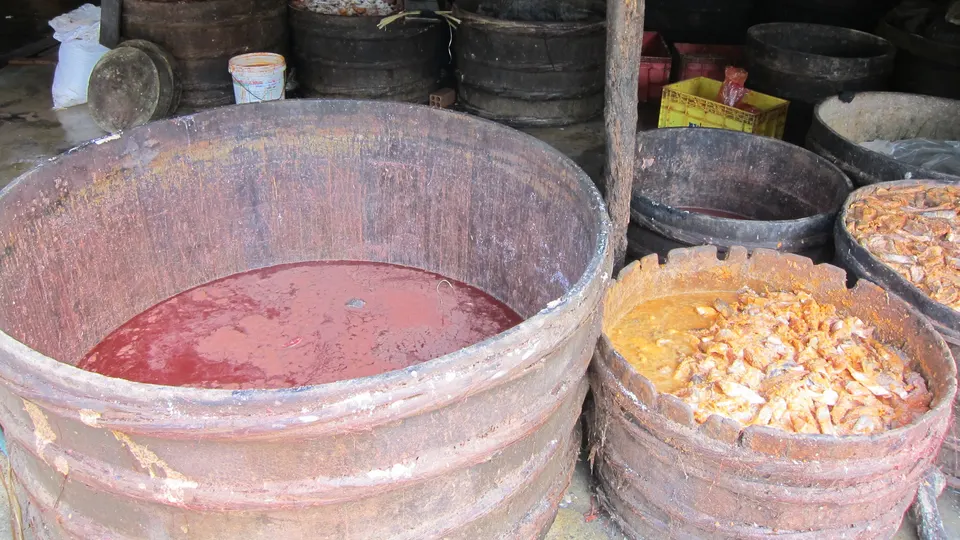
Mam bo hoc is prahok. Viet Nam News and VietnamPlus both identify mam bo hoc (mắm bò hóc), used by Khmer cooks in the delta, with the Cambodian prahok, made from fish such as snakehead and fermented for at least six months. In Khmer cooking it is both a dish and a basic seasoning, a 2021 study in Tap chi Cong Thuong notes.
Bun nuoc leo began as a Khmer dish. Soc Trang’s best-known noodle soup started as a Khmer noodle dish and now blends Kinh, Chinese and Khmer cooking, VietnamPlus reports (VietnamPlus). Its broth uses mam ca sac or ca loc, often with mam bo hoc in Khmer kitchens, cooked with lemongrass and ngai bun (ngải bún), a rhizome that softens the fishiness, and sweetened with coconut water.
Bun mam’s origin is debated. Viet Nam News wrote in 2019 that bun mam “originated in Cambodia”; the independent guide Vietnam Coracle says it is thought to have started in Soc Trang, with many people speculating about a Cambodian origin. None of the sources we read says that Chau Doc’s own mam comes from prahok, so we do not say it either.
Which mam dishes should you try?
Most visitors meet mam in a cooked dish rather than straight from the jar. These are the dishes the sources describe, with the mam each uses.
| Dish | Mam used | How it is served |
|---|---|---|
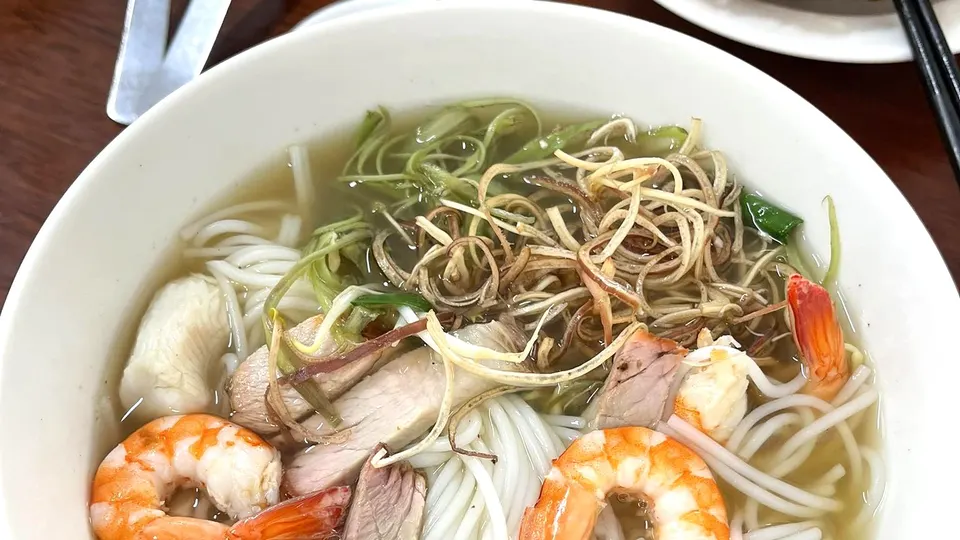
| Lau mam (lẩu mắm), mam hotpot | Mostly mam ca linh, ca sac or ca chot, simmered with bone stock and coconut water and strained | With a large plate of greens and flowers (water lily stems, sesbania flowers, banana blossom, water spinach) and fish, shrimp, eel or roast pork in the pot |
| Mam kho, braised mam | Mam ca linh and ca sac, dissolved and strained | Braised with pork or fish, eggplant and bitter melon; eaten with rice and raw greens |
| Mam chung, steamed mam | Mam ca loc, chopped | Steamed with minced pork and egg, topped with duck-egg yolk; eaten hot with rice, green banana and winged beans |
| Mam thai | Shredded snakehead mam with green papaya | With rice noodles and boiled pork belly |
| Bun nuoc leo | Mam ca sac or ca loc, often mam bo hoc | Noodle soup with snakehead, small shrimp and roast pork |
| Bun mam | Fermented fish (mam) | Darker noodle soup with seafood, roast pork and eggplant |
Lau mam is the dish most visitors try first. The Can Tho city portal describes it built on mam ca linh or ca sac (Can Tho City); VnExpress names ca chot and ca sac. In U Minh, in the far south of Ca Mau, the hotpot is made with mam ca sac boi and eaten with wild greens, VietNamNet reports, and Tuoi Tre News describes it as a dish for long evenings with friends.
How do you eat mam?
Mam is strong and salty, and locals eat it in small amounts with a lot of rice, greens and herbs. If you are new to it, start with a cooked dish.
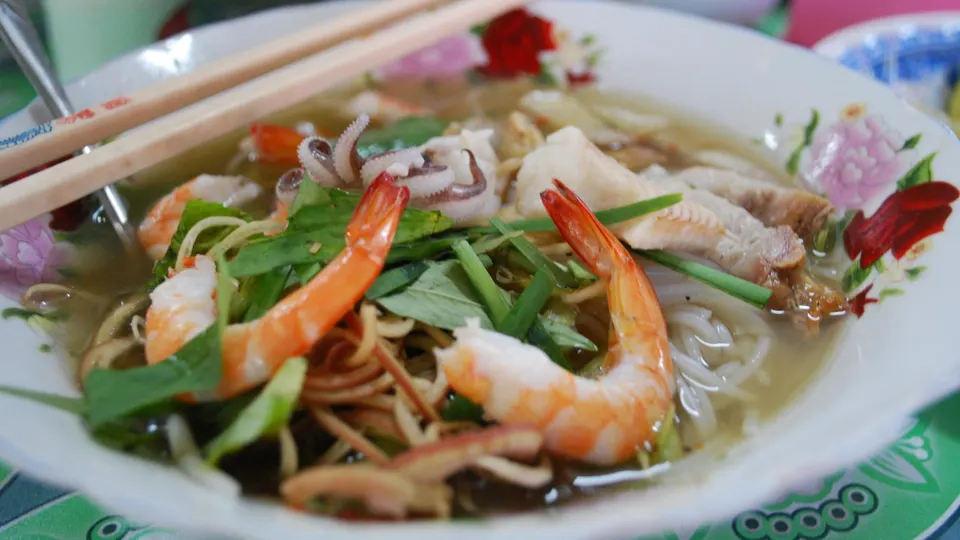
- Start cooked. Lau mam, bun nuoc leo or mam chung make an easier introduction than mam straight from the jar.
- Eat it with greens. Mam dishes usually come with a basket of raw or blanched greens and flowers, from water lily stems to banana blossom. Our guide to Vietnamese herbs explains the ones you will see.
- Balance it. Steamed mam is eaten with green banana, winged beans and cucumber; mam ca chot with green banana and boiled pork, according to the Can Tho city portal (VnExpress describes the steamed dish in detail).
- Taste before you buy. At the market, ask to try a small piece before choosing.
Where can you buy mam, and can you fly home with it?
Chau Doc market is the obvious place to buy, and the Sam Mountain area nearby has long-established makers; the cards below give three. If you are visiting, our Chau Doc guide covers the town and Sam Mountain, and our Mekong Delta route plan shows how to fit Chau Doc into two to four days.
The market is still the place to go: in July 2026 Bao An Giang, the provincial newspaper, pointed visitors to the mam market in Chau Doc ward and to the stalls around the Ba Chua Xu temple on Sam Mountain, in Vinh Te ward.
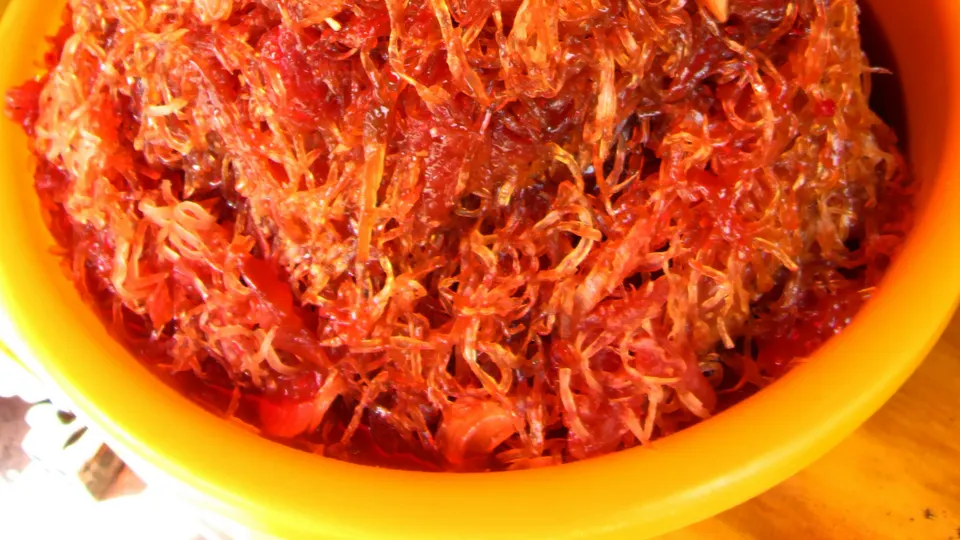
Which mam should you buy? Match the jar to what you will cook. This is a buying guide drawn from the dishes and uses described in the sources on this page, not a ranking of makers.
| If you want… | Buy | How you will use it | Good to know |
|---|---|---|---|
| A first taste with no cooking | Mam thai | With rice noodles, boiled pork and herbs | Sweet from palm sugar; the easiest mam for newcomers |
| Lau mam (hotpot) at home | Mam ca linh or mam ca sac | Dissolve, strain, simmer with stock and coconut water | Flood-season fish; the classic hotpot base |
| Steamed mam with pork and egg (mam chung) | Mam ca loc | Chop and steam with minced pork and egg | Large, firm pieces; makers call it the “queen” of mam |
| Bun nuoc leo or a Khmer-style broth | Mam ca sac or ca loc; mam bo hoc in Khmer kitchens | Simmer into the broth with lemongrass | Mam bo hoc is the Khmer prahok, much stronger |
| A gift to fly home | A sealed, labelled jar from an established maker | Keep cool once opened; use within about a month | Pack to your airline’s rules (see below) |
Bao An Giang, the provincial newspaper, described the market in July 2026 as “mountains” of mam ca loc, ca linh, ca sac and ca tren glazed with palm sugar, with stallholders happy to let visitors taste, and named Ba Giao Khoe and Co Tu Au among the long-standing makers; both are on the cards below.
Buying. Stalls display their prices, and you can buy small amounts to taste. Studies of the delta’s fermented-fish trade point to uneven quality and products with no clear origin or food-safety record, Tap chi Cong Thuong reported in 2020, so buy labelled products from established makers. Once a jar is open, keep it cool, take portions with clean, dry chopsticks and use it within about a month, VnExpress advised.
Flying with mam. Vietnam Airlines’ baggage page, checked in November 2026, allows each passenger up to 3 litres or 3 kg of mam, fish sauce or other strong-smelling liquid, in sealed plastic bottles taped shut and filled to no more than 95%, packed in a foam box sealed with tape and preferably checked in; strong-smelling items are not accepted on its ATR72 flights (Vietnam Airlines). Other airlines set their own rules, and your home country may restrict food imports, so check both before you buy.
For more Southern food, see our guide to the South’s noodle soup hu tieu, the South Vietnam hub and the food hub.
Where to buy mam in Chau Doc
Local favourite
Châu Đốc Market (mắm section) · Chợ Châu Đốc
Chau Doc, An Giang · Chau Doc ward (former Chau Phu A ward, Chau Doc city)
Bạch Đằng Street
The delta's main retail hub for freshwater mam. Tuoi Tre describes a market with a whole zone for fermented fish, and Nguoi Quan Sat reports stalls displaying more than 20 kinds each; An Giang's provincial newspaper still sends visitors to the 'mam market in Chau Doc ward' in 2026.
Order: Ask to taste mam ca linh, mam ca sac, mam ca loc and mam thai before you buy; prices are posted at the stalls.
Recommended by: Người Quan Sát (2024), Tuổi Trẻ News (2022), Báo An Giang (2026) · checked November 2026
Local favourite
Bà Giáo Khỏe · Mắm Bà Giáo Khỏe
Chau Doc, An Giang · Chau Doc ward (former Chau Phu B ward)
131 Hoàng Diệu Street (the business listed by the province as Bà Giáo Khỏe '7777777')
The mam brand that national press names most often in Chau Doc: Tuoi Tre lists its market stall and SGGP describes its workshop, whose main product is mam ca linh. The An Giang science department lists it among holders of the province's certification mark, with mam ca linh, ca sac, ca tren, ca chot, ca loc and mam thai.
Order: Mam ca linh or mam ca sac for a hotpot at home; mam thai to eat with noodles and pork.
Several businesses use the Bà Giáo Khỏe name with different number suffixes ('55555', 'Năm số 5', '7777777'). This card means the address listed by the province; we do not say which shop is the original.
Recommended by: An Giang Department of Science and Technology (2025), Tuổi Trẻ News (2022), SGGP (2021), Báo An Giang (2026) · checked November 2026
Local favourite
Cô Tư Ấu · Mắm Cô Tư Ấu
Chau Doc area, An Giang · Vinh Te ward (former Nui Sam ward), near the Ba Chua Xu temple
On the Núi Sam ring road (đường Vòng Núi Sam)
A long-established mam maker in the Sam Mountain pilgrimage area, named by Bao Phap Luat among Chau Doc's known brands, listed by the An Giang science department among holders of the province's certification mark, and named again by Bao An Giang in July 2026.
Order: Mam thai and mam ca loc.
Recommended by: An Giang Department of Science and Technology (2025), Báo Pháp Luật Việt Nam (2018), Báo An Giang (2026) · checked November 2026
Addresses and details can change; check before you go. We do not accept payment for listings.
Frequently asked questions
Which mam should I try first if I have never eaten it?
Start with a cooked dish: lau mam, the Mekong fermented fish hotpot made mostly with mam ca linh or mam ca sac, or mam chung, mam ca loc steamed with minced pork and egg. Mam thai, shredded snakehead mam with green papaya, is eaten uncooked with rice noodles and boiled pork once you are used to the taste.
What is the difference between bun mam and bun nuoc leo?
Both are Mekong noodle soups built on mam. Bun nuoc leo, linked to the Khmer of Soc Trang, has a clearer, sweeter broth with lemongrass and coconut water and thinner noodles; bun mam has a darker, stronger broth with seafood and roast pork.
Is it still ca linh season in Chau Doc in November?
Yes, usually: the Mekong floods reach Chau Doc and upstream An Giang roughly from September to December, and from about November the small ca linh, ca sac and ca chot leave the flooded fields for the mam makers, Nhan Dan reports. On 15 November 2026 Nhan Dan still showed flooded fields around Sam Mountain in Chau Doc's Vinh Te ward.
Which mam should I buy in Chau Doc to take home?
Mam thai, shredded snakehead mam with papaya, is the easiest to eat straight with noodles and pork; mam ca linh or mam ca sac is the one to buy for lau mam hotpot. Choose a sealed, labelled jar from an established maker such as Ba Giao Khoe or Co Tu Au, both named by Bao An Giang in July 2026.
Do I need to put mam in checked baggage on Vietnam Airlines?
Vietnam Airlines recommends carrying mam in checked baggage, up to 3 litres or 3 kg per passenger in sealed, taped plastic bottles filled to no more than 95% and packed in a taped foam box. Strong-smelling items are not accepted on its ATR72 flights, and other airlines set their own rules.
Key sources
- Vương quốc mắm miền Tây · Báo Pháp Luật Việt Nam, 30 December 2018
- Nghề mắm ở An Giang · Nhân Dân, 11 October 2023
- Mắm – ẩm thực hồn cốt chân quê của người dân miền Tây · VOV, 27 January 2020
- Mắm Ẩn: an original gastronomy of the flooded land of Thới Lai · Can Tho City portal
- Lẩu mắm: Southern fermented fish hotpot · Can Tho City portal, 17 January 2023
- Bún nước lèo – món đặc sản nhất định phải thử khi có dịp đến Sóc Trăng · VietnamPlus (TTXVN), 10 December 2023
- Mắm cá lóc chưng thịt trứng · VnExpress, 8 March 2023
- Hành lý hạn chế: thực phẩm và đồ uống · Vietnam Airlines, checked 6 November 2026
All 27 sources and further reading
- An Giang Province farmers net flood-season linh bounty · Việt Nam News, 16 September 2025
- Mùa nước nổi An Giang: sản vật tự nhiên góp phần phát triển sinh kế bền vững (An Giang's flood season and its catch) · VietnamPlus (TTXVN), 28 August 2026
- Một góc khác của mùa nước nổi (another side of the flood season) · Nhân Dân, 15 November 2026
- Ghé “vương quốc mắm” Châu Đốc (visiting Chau Doc's kingdom of mam) · Báo An Giang, 26 July 2026
- Đón phù sa vào đồng, tạo sinh kế “thuận thiên” · Nhân Dân, 29 July 2026
- Mắm xưa và nay · VnExpress, 19 November 2002
- Cẩm nang du lịch Châu Đốc · VnExpress, 26 April 2024
- Hơn 60 loại mắm hội tụ ở miền Tây · Znews, 21 April 2022
- Tin dầu như sét đánh ngang qua cá linh · SGGP, 27 October 2021
- Getting lost in food paradise at Chau Doc market in Mekong Delta · Tuổi Trẻ News, 3 September 2022
- Bún nước lèo, the pride of Sóc Trăng province · Việt Nam News, 30 March 2021
- Bảo tồn và phát huy giá trị văn hóa ẩm thực Khmer Nam Bộ trong phát triển du lịch tại đồng bằng sông Cửu Long · Tạp chí Công Thương, 8 April 2021
- Oodles of noodles in the Mekong Delta · Việt Nam News, 1 February 2019
- Bún mắm: the Mekong in a bowl · Vietnam Coracle
- Mắm kho rau sống miền Tây không phải tự nhiên mà ngon · Tuổi Trẻ, 6 June 2019
- Vietnam's Mekong wild greens shine in Ca Mau's iconic hotpot · VietNamNet, 15 January 2026
- Fermented fish hotpot: a communal taste of Vietnam's Mekong Delta · Tuổi Trẻ News, 6 June 2021
- Thực trạng và giải pháp phát triển sản phẩm cá lên men vùng Đồng bằng sông Cửu Long · Tạp chí Công Thương, 26 June 2020
- Nghị quyết về việc sắp xếp đơn vị hành chính cấp tỉnh (Nghị quyết 202/2025/QH15) · Đại biểu Nhân dân, 12 June 2025
Keep exploring
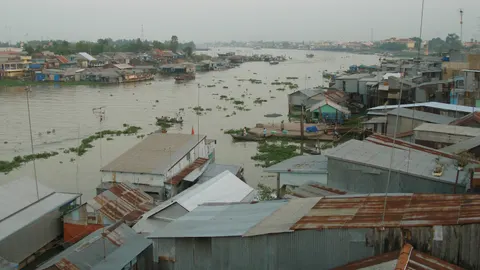 South Vietnam · Travel Chau Doc (Châu Đốc): What to See in 2 Days, and When to Go Plan Chau Doc by the Cambodian border: Sam Mountain and its UNESCO-listed Ba Chua Xu festival, Cham villages, Tra Su forest, bun ca, flood season.
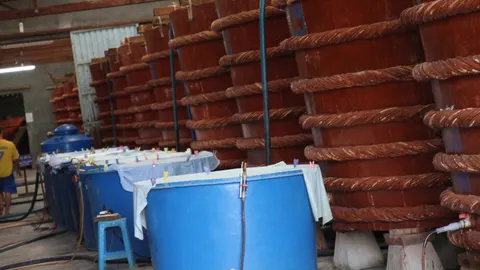 North · Central · South · Food Phu Quoc vs Phan Thiet vs Cat Hai Fish Sauce: Which to Buy Phu Quoc, Phan Thiet or Cat Hai fish sauce? How the three differ in fish, barrels and protected names, what °N on a label means and which bottle to buy.
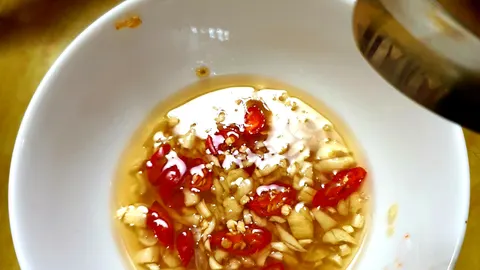 North · Central · South · Food Nuoc Cham (Nước Chấm) by Region: Which Dip Goes With What Which dipping sauce goes with bun cha, cha ca, banh xeo, goi cuon and com tam, how Hanoi, Da Nang and Saigon mix nuoc cham, and how to adjust your bowl.
 South Vietnam · Travel Mekong Delta in 2, 3 or 4 Days: Routes from Saigon Mekong Delta routes from Saigon for 2, 3 or 4 days: Can Tho and Cai Rang at dawn, Chau Doc and Tra Su in flood season, Soc Trang's pagodas, 2026 roads.