All three regions · Culture
Which Vietnamese Phrases to Use in Hanoi, Hue and Saigon
Which Vietnamese phrases to use in Hanoi, Hue and Saigon: greetings and family words, da or vang, prices, ordering, and words that change, like lon or heo.
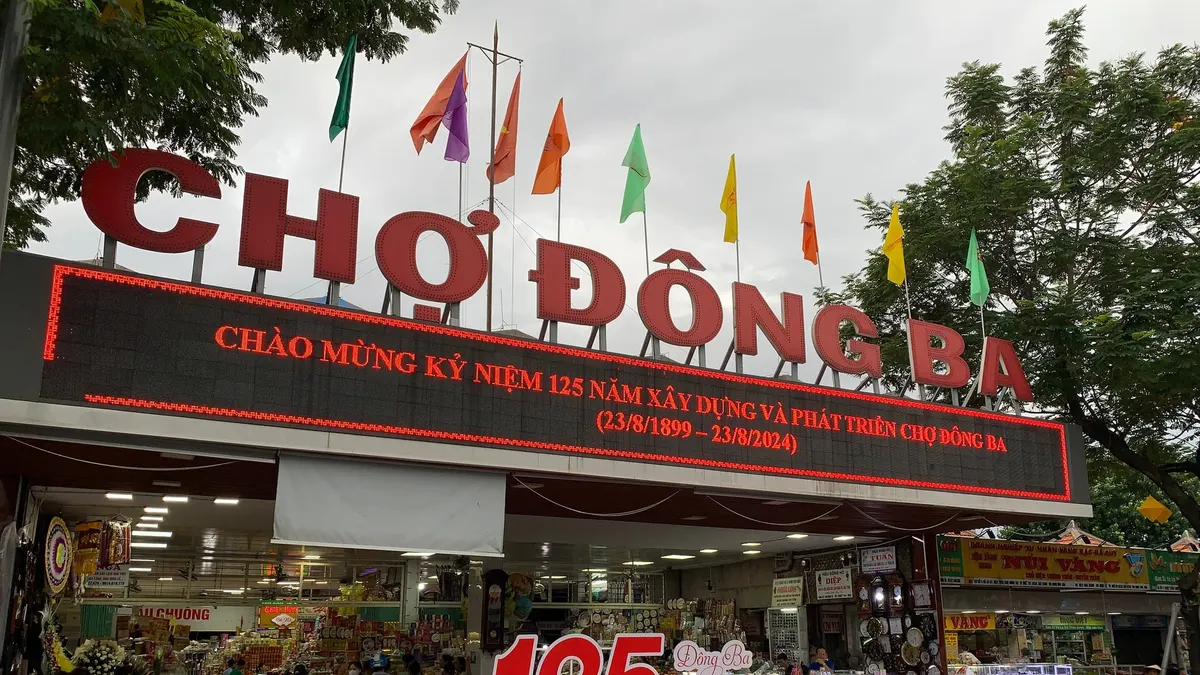
Wherever you are in Vietnam, greet people with chao plus a family word for the person (anh, chi, em, co, chu), say cam on (cảm ơn) for thank you and xin loi (xin lỗi) for sorry: those work from Hanoi to the Mekong Delta. What changes by region is the polite “yes” (vang in the North, da in the South), the words for everyday things such as pork (lon (lợn) in Hanoi, heo in Saigon), and, in Hue (Huế), a set of local question words such as mo (where) and rang (how). A study in Tap chi Ngon ngu (Tạp chí Ngôn ngữ), Vietnam’s national linguistics journal, published online in March 2026, lists heo, bap (corn) and li (glass) among Southern words that now coexist with their Northern equivalents, so both forms are widely understood.
This page is a practical phrasebook with the regional variants built in: how to greet and address people, how to say yes, thank you and sorry, how prices are spoken, how to order, and which everyday words change between North, Centre and South.
It deliberately leaves out pronunciation. For the tones, consonants and the reasons the three regions sound different, read our guide to Vietnamese accents by region. Here the focus is what to say, and what you will hear back.
Vietnamese phrases by region at a glance
Which form to use where. If you learn only six things, learn these; the last column gives the safe choice when you are not sure.
| Situation | North (Hanoi) | Centre (Hue) | South (Saigon) | When to use |
|---|---|---|---|---|
| Greeting someone older | Chao anh a / Chao chi a | Chao anh a / Chao chi a | Chao anh a / Chao chi a | Everywhere; xin chao is correct but formal |
| Polite “yes” | vang | da | da | Vang in the North, da elsewhere; both polite anywhere |
| How much? | Bao nhieu tien a? | May tien rua? | Bao nhieu tien a? | The standard question works everywhere; add a |
| Too expensive | Dat qua | — | Mac qua | Either is understood nationwide |
| Pork on a menu | lon | — | heo | Expect both; neither is wrong |
| Where? | dau? | mo? | dau? | Mo mostly from older speakers in Hue |
The longer table puts the most useful everyday words side by side. A dash means our sources document no separate Central form; in Hue you will usually hear the Northern or Southern word, or the standard one.
| English | North (Hanoi) | Centre (Hue) | South (Saigon) |
|---|---|---|---|
| Hello (to an older man) | Chao (Chào) anh a (ạ) | Chao anh a | Chao anh a |
| Polite “yes” | vang (vâng) | da (dạ) | da |
| No / not | khong (không) | khong | khong, often said “hong (hông)” |
| I (everyday) | toi (tôi), minh (mình) | — | tui |
| I / you among close friends (informal) | tao / may (mày) | tau / mi | — |
| Mother / parents | me (mẹ) / bo me (bố mẹ) | ma (mạ) | ma / ba ma |
| Aunt, polite “you” to a woman of your parents’ age | co (cô) | o | co |
| Grandmother, elderly woman | ba (bà) | me | ba |
| Where? | dau (đâu)? | mo (mô)? | dau? |
| What? | gi (gì)? | chi? | gi? |
| How? Why? | sao? | rang (răng)? | sao? |
| Like that, so | the (thế) | rua (rứa) | — |
| This / that | nay (này) / ay (ấy) | ni / no (nớ) | — |
| How much? | bao nhieu tien (nhiêu tiền)? | may tien (mấy tiền)? | bao nhieu tien? |
| Expensive | dat (đắt) | — | mac (mắc) |
| Bowl | bat (bát) | doi (đọi) | chen (chén); to (tô) for a large bowl |
| Glass | coc (cốc) | — | li (also spelt ly) |
| Pork, pig | lon (lợn) | — | heo |
| Corn | ngo (ngô) | — | bap (bắp) |
| Pineapple | dua (dứa) | — | thom (thơm) |
| Cucumber | dua chuot (dưa chuột) | — | dua leo (dưa leo) |
| Bitter melon | muop dang (mướp đắng) | — | kho qua (khổ qua) |
| Cassava | san (sắn) | — | khoai mi (mì) |
| Coriander | mui (mùi) | — | ngo |
| Sesame | vung (vừng) | vung | me |
| Fruit (classifier) | qua (quả) | — | trai (trái) |
| Broken | hong | — | hu (hư) |
| Late | cham (gio) | — | tre (gio) |
| To pick someone up | don (đón) | — | ruoc (rước) |
| Brake | phanh | — | thang (thắng) |
| Hat | mu (mũ) | — | non (nón) |
| Traffic jam | tac duong (tắc đường) | — | ket xe (kẹt xe) |
Sources for each row are given in the sections below. Two cautions apply to the whole table. First, these are tendencies, not borders: Hanoians generally understand heo and Saigonese lon, and a Vietnam National University linguist has described the gap between Northern and Southern vocabulary as narrowing. Second, Hue and the North-Central provinces have far more local words than a table can hold; the section on Central Vietnam below lists the ones you are most likely to need.
How do you say hello, and why does “you” depend on age?
The word you will use most is not “hello” but the word for the person in front of you. Vietnamese has no neutral “you”: as a 2011 Tuoi Tre (Tuổi Trẻ) News lesson for learners puts it, people use family titles as pronouns, chosen by the other person’s age and sex.
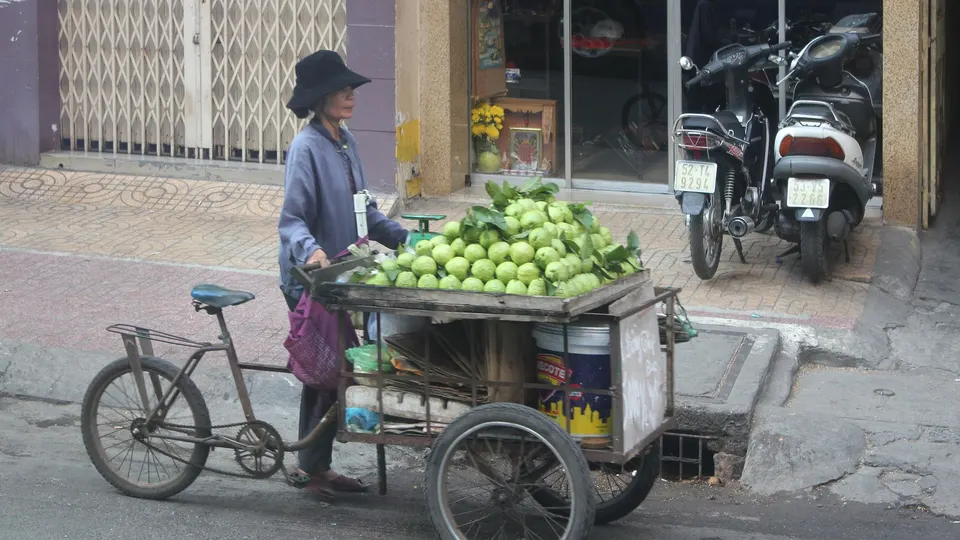
The family words you need. Tuoi Tre’s lesson gives ong (ông) for a man of your grandparents’ age, ba (bà) for a woman of that age, anh for a man of about your age, chi (chị) for a woman of about your age and em for anyone younger than you. Vietnam Airlines’ guide to greetings adds co (cô) for a woman of your parents’ age and chu (chú) for a man of that age, and gives “Em chao anh a (Em chào anh ạ)” as the model greeting for an older man: em (“I”, the younger one), chao, anh (“you”, the older man) and the respectful particle a.
Xin chao or chao? Xin chao (xin chào) is the phrasebook “hello”, and Vietnam Airlines calls it the safest choice for beginners in both formal and casual settings. Michigan State University’s Vietnamese course book describes it as the formal way to say hello and chao as informal and much more common, normally in the pattern speaker + chao + listener: “Em chao chi (Em chào chị)!”, “Con chào bố mẹ!” (Michigan State University). The same book notes that chao alone can also mean goodbye, while xin chao cannot. Vietnam Airlines warns that “Hi” and “Hello” are not appropriate when greeting older people.
Greetings that are really questions. A 2012 study in the journal Ngon ngu & Doi song (Language and Life) notes that Vietnamese greetings often take the form of a question, such as “Bác đã ăn cơm chưa?” (“Have you eaten yet?”) or “Di dau day (Đi đâu đấy)?” (“Where are you off to?”). They open a conversation rather than ask for information, and the study notes that “Have you eaten?” is not asked at just any hour.
Regional forms of address. The family words above are national. A few regional ones are worth recognising:
| Meaning | North | Hue | South |
|---|---|---|---|
| Mother | me | ma | ma |
| Father and mother | bo me | — | ba ma |
| Aunt; a middle-aged woman | co | o | co |
| Grandmother; an elderly woman | ba | me | ba |
| I (everyday) | toi, minh | — | tui |
The Hue forms come from a 2024 Hue University study of market conversations, where buyers addressed sellers as o and used me (mệ) for older women. Southern ba ma (ba má) for bo me appears in both the Vietnam National University bulletin and a 2025 study in Tap chi Ngon ngu. A VnExpress writer from the Mekong Delta urges Southerners not to be shy of saying tui instead of toi. Mark Alves’s 2012 study of Central Vietnamese lists mi and tau as the informal Central “you” and “I”, equivalent to may and tao elsewhere: words for close friends, never for strangers.
Yes, no, thank you and sorry: the polite words by region
Thank you, cam on, and sorry, xin loi, are the same everywhere. The words that change are the small ones around them: the polite “yes” and the particles at the end of a sentence.
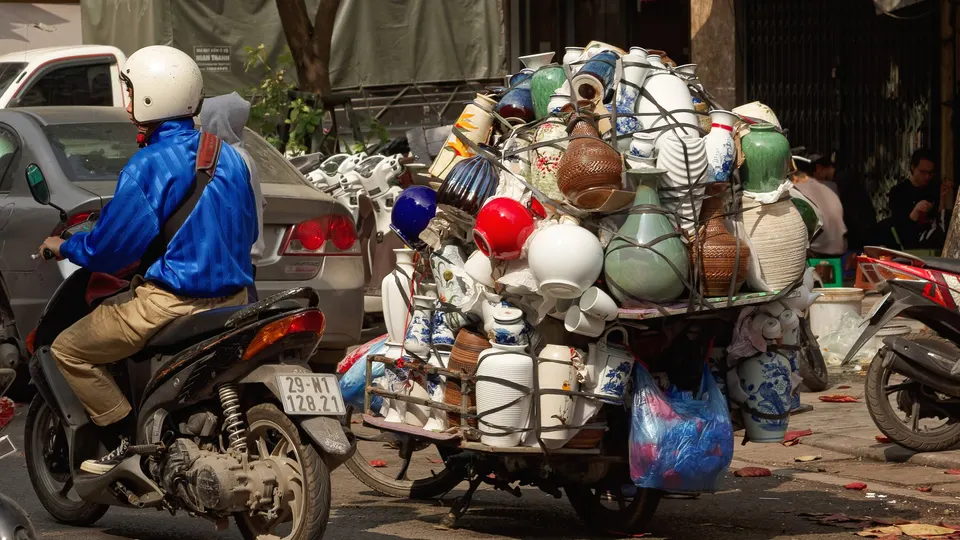
Da or vang? Both mean a respectful “yes”. Northern speakers tend to say vang (vâng): Vietnam National University’s Pham Van Tinh (Phạm Văn Tình) lists the pair vang da (vâng dạ) among compounds where the North keeps the first word. A January 2025 SGGP article on Southern speech says that in the South few people use vang and most say da (dạ), and that da also answers when someone calls your name and opens a polite request, as in “Da thua (Dạ thưa)…” (SGGP). Da and thua (thưa) are also part of Hue’s reputation for courteous speech, as a 2014 VnExpress column recalls.
Da does not always mean yes. The SGGP writer points out that listeners say da simply to show they are following the conversation, and that in those cases it does not mean agreement. Do not take a stream of da as a deal agreed.
The particles that set the tone. Michigan State University’s course book explains three you will hear constantly:
- a (ạ) at the end of a sentence makes it respectful, used when speaking to someone older or of higher status: “Chao thay a (Chào thầy ạ)!”, “Cảm ơn chị ạ.”
- nha (Southern) and nha (nhá) (Northern) make a sentence friendlier and less formal: “Chào các bạn nha!”
- nhe (nhé), normally Northern, which the book says raises the formality slightly, as when a teacher says goodbye to a pupil: “Cô chào con nhé.”
A February 2026 VnExpress column by a Mekong Delta writer adds the region’s nghen, which “makes a sentence soft”, and the Southern habit of saying hong (hông) for khong (no, not) “to make it lighter”.
Simple questions. The same course book shows two patterns that cover most travel needs: add “duoc khong (được không)?” to ask if something is possible (“Chúng ta dừng ở đây được không?”, “Can we stop here?”), and add “phai khong (phải không)?” to check a fact (“Bạn sống ở Hà Nội phải không?”, “You live in Hanoi, don’t you?”). For yes and no, it lists vang as formal and respectful, duoc (được) as neutral and u (ừ) as informal; add a after all of them except u.
How do you ask prices and say numbers in Vietnamese?
Prices are where most visitors first need to understand spoken Vietnamese, and the conventions are the same across the country, with a few regional words.
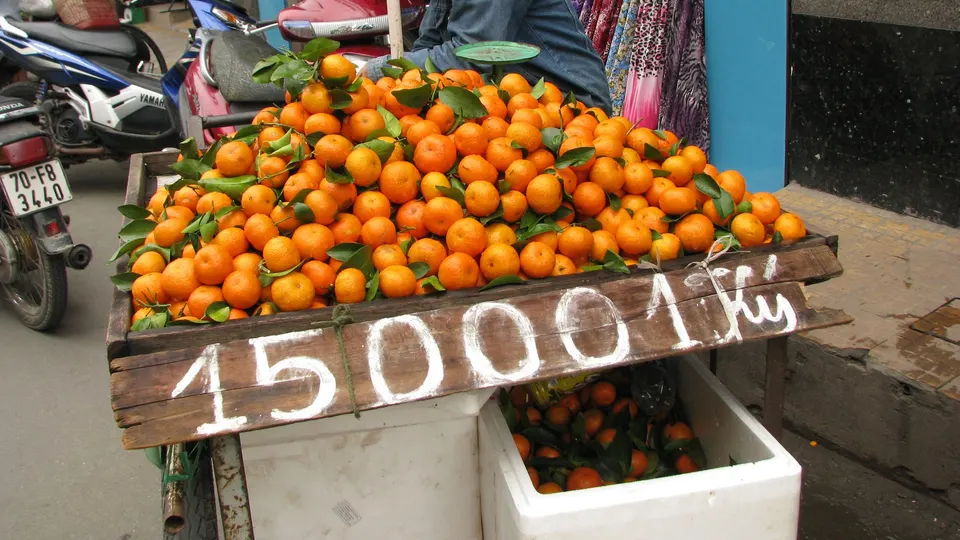
Asking. “Bao nhieu tien (Bao nhiêu tiền)?” (“How much?”) is the standard question in Michigan State University’s shopping lessons. In Hue’s markets the 2024 Hue University study recorded buyers asking “May tien rua (Mấy tiền rứa)?” or, about clothes, “Ban rang rua (Bán răng rứa)?” (“How are you selling it?”), with ki for a kilo. A 2014 VnExpress column quotes the clipped “Cái này bao tiền?” (Northern) and “Cái kia giá nhiêu?” (Southern) as examples of curt shopping talk, so add a family word and a: “Cái này bao nhiêu tiền ạ?”
Expensive. Northern dat (đắt) and Southern mac (mắc) both mean expensive; the Vietnam National University bulletin gives dat/mac as a standard North–South pair. “Dat qua (Đắt quá)!” or “Mac qua (Mắc quá)!” means “too expensive”.
How prices are spoken. Michigan State University’s course book explains the shortcuts you will hear at every stall (Michigan State University):
- People drop the word dong (đồng): 10,000 dong (đồng) is just “muoi ngan (mười ngàn)”.
- Tens and hundreds of thousands are shortened with chuc (chuc (chục), ten) and tram (tram (trăm), hundred): 30,000 is “ba chuc”, 400,000 “bon tram (bốn trăm)” and 700,000 “bay tram (bảy trăm)”.
- Ruoi (rưỡi) means “and a half”: 2,500 is “hai ngan ruoi (hai ngàn rưỡi)”, 150,000 “mot tram ruoi (một trăm rưỡi)”.
- Vietnamese writes a dot as the thousands separator and a comma for decimals, so a sign reading 10.000 means ten thousand.
Nghin or ngan? Both words mean thousand. The Michigan State course book lists both and uses ngan (ngàn) in its price examples, and the Hue market study recorded sellers saying “muoi ngan”. You will hear nghin (nghìn) often in the North, but no source we checked maps the two words cleanly to regions, so use either.
How do you order food and drink?
Ordering uses the same polite frame everywhere: a family word for the server, what you want, and a or a softener at the end. “Cho em một bát phở” (“A bowl of pho for me”, from a younger customer) works in Hanoi; in Saigon the bowl is more likely to be a chen or, for a big noodle bowl, a to.

Useful words. Michigan State University’s food unit gives cay (spicy), ngot (ngot (ngọt), sweet), man (man (mặn), salty), chay (vegetarian) and nhat or lat (nhat (nhạt) or lat (lạt), bland), plus the utensils and their pairs: bat or chen for bowl, to for a large bowl (Southern), coc or li for a glass, thia (thìa) or muong (muỗng) for spoon, dua for chopsticks. Put khong (“no, not”) or it (“a little, less”) in front: “khong cay (không cay)” (not spicy), “it ngot (ít ngọt)” (less sweet).
| You want | Say |
|---|---|
| Not spicy, please | Khong cay nhe (nhé) / Khong cay nha |
| Less sweet | It ngot thoi (Ít ngọt thôi) |
| No ice | Khong da (Không đá) |
| Vegetarian food | Do (Đồ) chay |
| One more | Them mot (Thêm một) … nua (nữa) |
| Can I pay? | Cho em thanh toan a (toán ạ) / Cho em tra tien a (trả tiền ạ) |
| Thank you, that was delicious | Cam on, ngon lam (lắm) |
Ice. Da is ice, as in Saigon’s ca phe sua da (cà phê sữa đá), which Tuoi Tre News translates as “milky iced coffee”; “khong da” asks for none. Our guide to Vietnamese coffee orders puts these words together into a full coffee order.
Paying. Michigan State University gives thanh toan (thanh toán) and tra tien (trả tiền) for paying, and its shop dialogue ends with the seller asking “Chị thanh toán bằng thẻ hay bằng tiền mặt ạ?” (“Card or cash?”).
Where you eat matters as much as what you say: our guide to where to eat in Hanoi’s Old Quarter lists the dishes and streets, and pho by region explains why the bowl itself changes between Hanoi and Saigon.
Which food and everyday words change between North and South?
The pairs that surprise visitors most are the ordinary ones: pork, corn, pineapple. They come from the way the language spread south over centuries, and from the South’s own history and neighbours.
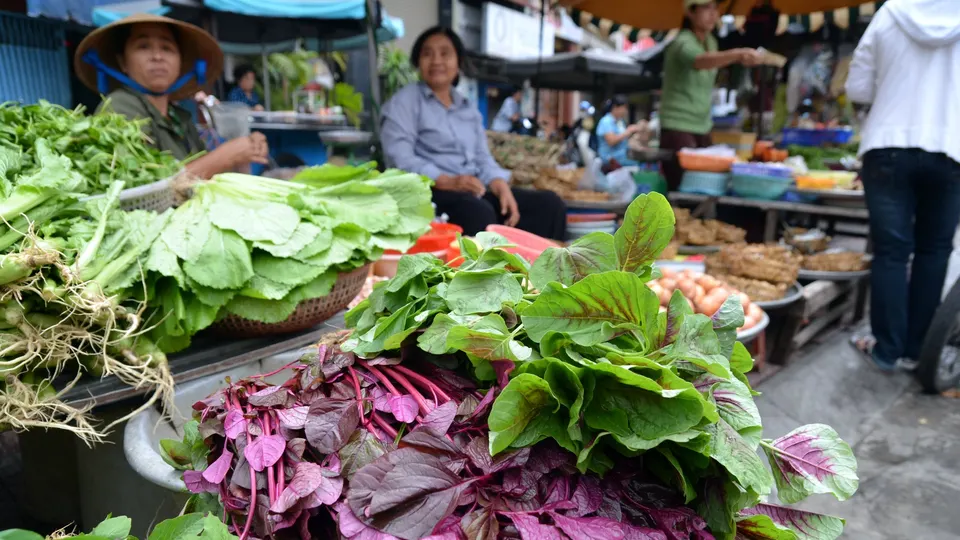
The common pairs. A study of Southern words entering the national vocabulary, in issue 11 (2025) of Tap chi Ngon ngu and published online in March 2026, lists Southern heo for Northern lon (pig, pork), bap for ngo (corn), trai thom (trái thơm) for dua (pineapple), khoai mi for san (cassava), dua leo for dua chuot (cucumber), kho qua for muop dang (bitter melon), goi (gỏi) for nom (salad) and li for coc (glass) (Tap chi Ngon ngu). The study describes these as words that now coexist with their Northern variants, rather than replacing them. Pham Van Tinh’s bulletin article adds bat/chen (bowl), qua/trai (fruit), mui/ngo (coriander), san/mi (cassava), dat/mac (expensive), hong/hu (broken) and cham/tre gio (late), and a 2013 study of plant names gives vung in the North, vung in the Centre and me in the South for sesame.
Why corn has two names. A 2022 study by Ly Tung Hieu (Lý Tùng Hiếu) of Van Hien University traces the split to how maize arrived: Vietnamese in the old North (Tonkin) called it lua ngo (lúa ngô) and ngo, after its foreign origin, while Vietnamese in the South (Cochinchina) named it bap or be (bẹ) after its shape.
Words moving both ways. Pham Van Tinh notes that Southern words such as may lanh (may lanh (máy lạnh), air conditioner), li xi (li xi (lì xì), lucky money) and nuoc tuong (nuoc tuong (nước tương), soy sauce) have entered everyday Vietnamese nationwide, and that some people even use the other region’s word by habit, as Northerners do with the Southern “bún bò giò heo”. The 2025 journal study makes the same point: many Southern words now sit alongside their Northern equivalents. In practice, a menu in Ho Chi Minh City may say heo and one in Hanoi lon, and both will be understood.
Central Vietnam: mo, te, rang, rua and other Hue words
Central Vietnam, from Nghe An (Nghệ An) and Ha Tinh (Hà Tĩnh) down to Hue, is where visitors most often lose the thread. The difference is not only accent but a set of small everyday words that do not exist in Northern or Southern speech.

The core words. Mark Alves’s 2012 study of Central Vietnamese grammar words sets them against standard Vietnamese:
| Central | Standard | Meaning |
|---|---|---|
| mo | dau | where, which |
| chi | gi | what |
| rang | sao | how |
| rua | the | like that, so |
| ni | nay | this |
| no | ay | that |
| te (tê) | kia | over there |
| te | kia (kìa) | over there (further) |
| hi (hỉ) | nhi (nhỉ), ha (hả) | question tag (“isn’t it?”) |
| he (hè) | nao (nào) | urging (“let’s”) |
Alves notes that the Vinh and Hue varieties are usually both counted as Central Vietnamese, and that these lexical and sound differences can significantly impair how well other Vietnamese understand Central speakers, something he describes as anecdotally attested among Vietnamese themselves.
In the market. The July 2024 Hue University study recorded the words in use: “Ki may ri (Ki mấy ri)?” (how much a kilo?), “O ơi cái áo sơ mi o bán răng rứa?” (Auntie, how are you selling this shirt?) and the seller’s “Bán rứa là đúng giá rồi” (at that price it’s a fair price). It found the strongest local forms among older and middle-aged sellers and warned that, without preparation, foreigners easily misunderstand Hue speakers (Hue University). Younger people and anyone working with tourists will usually switch to more standard Vietnamese.
What to do. Learn mo, chi, rang and rua before a trip to Hue, listen for o as a polite “you” to a middle-aged woman, and if a sentence escapes you, ask “Dạ, chi rứa ạ?” or simply ask the speaker to repeat it more slowly (“Nói chậm lại được không ạ?”).
How do you ask directions and get around?
The direction words are the same nationwide; what changes is a handful of transport words, and how people politely open the question.
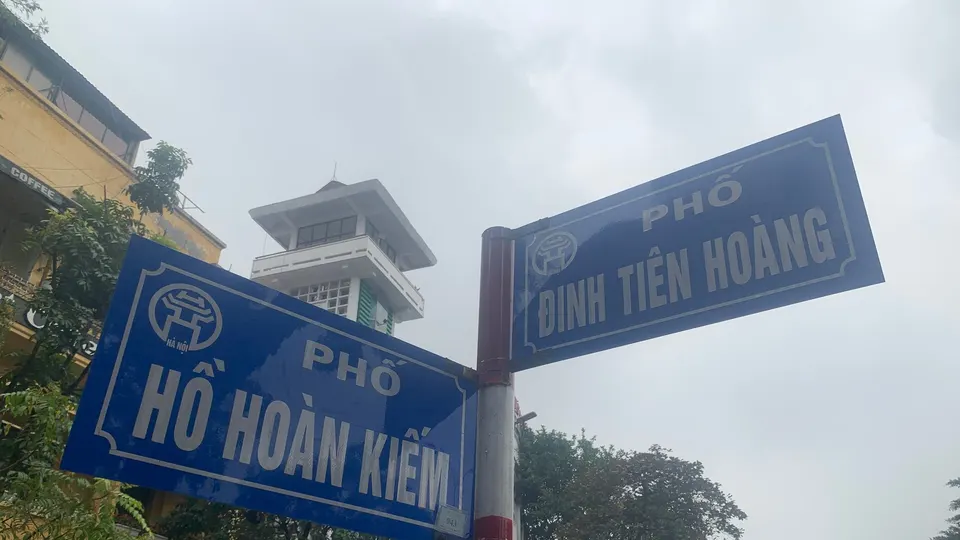
Opening the question. Michigan State University’s travel unit models the polite form: “Xin lỗi, anh cho tôi hỏi gần đây có hiệu thuốc nào không ạ?” (“Excuse me, could I ask if there is a pharmacy near here?”). Swap anh for chi, co or chu to fit the person.
Direction words. From the same unit: di thang (di thang (đi thẳng), go straight), re or queo (re (rẽ) or queo (quẹo), turn), trai and phai (trai, phai (phải): left, right), nga tu (nga tu (ngã tư), crossroads), nga ba (nga ba (ngã ba), T-junction), quay dau (quay dau, U-turn), den giao thong (den giao thong (đèn giao thông), traffic lights) and dung xe (dung xe (dừng xe), stop the vehicle). “Rẽ trái ở ngã tư” means “turn left at the crossroads”.
Transport words that change. The Vietnam National University bulletin gives Northern don (đón) and Southern ruoc (rước) for picking someone up, and phanh/thang (phanh/thắng) for brake (VNU Bulletin). A study of Southern words in national Vietnamese, published by ngonngu.net, gives Southern ket (kẹt) for being stuck or jammed, so a traffic jam is often ket xe in Saigon and tac duong (tắc đường) in Hanoi, and Southern non (nón) for Northern mu (mu, hat). For buses, trains, ride-hailing and the routes themselves, see our guide to getting around Vietnam.
What do you say at Tet?
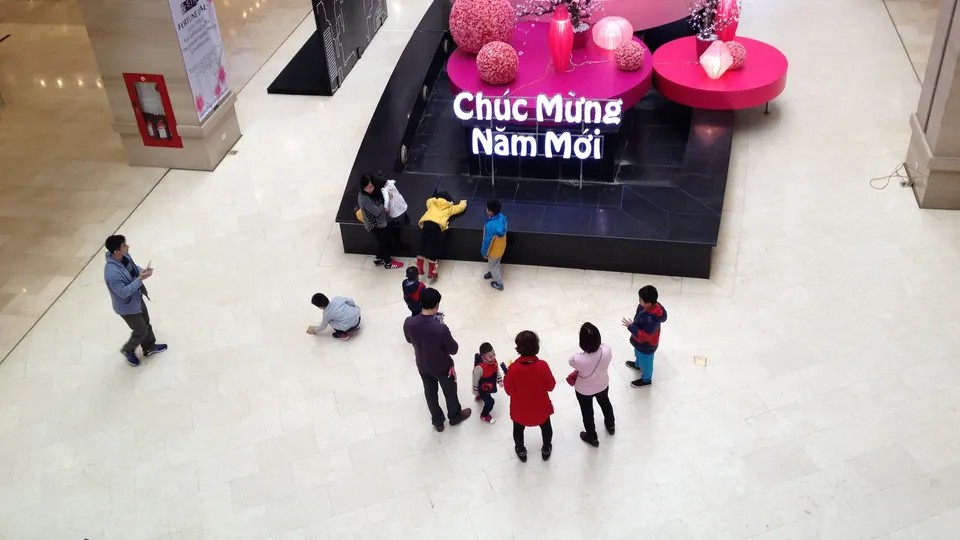
The New Year greeting is the same in every region: “Chúc mừng năm mới!” (“Happy New Year!”), which Vietnam Airlines lists among the basic greetings (Vietnam Airlines).
Around Tet you will also hear li xi (lì xì) for the lucky money given in red envelopes. Pham Van Tinh cites li xi as a Southern word that has spread nationwide, and a study of Southern words on ngonngu.net pairs it with mung tuoi (mừng tuổi), the other common name for the gift; our guide to Tet across the three regions explains alongside the regional food and flowers. When greeting older relatives or hosts, the same rules apply as at any other time: the right family word first, and a at the end, as in “Cháu chúc ông bà năm mới ạ.” If you know the Chinese New Year and wonder how Tet differs, from the zodiac’s cat to the kitchen gods’ carp, see Tet vs Chinese New Year.
Common mistakes with regional Vietnamese
Most misunderstandings come from a few predictable places. These are the ones documented in our sources.
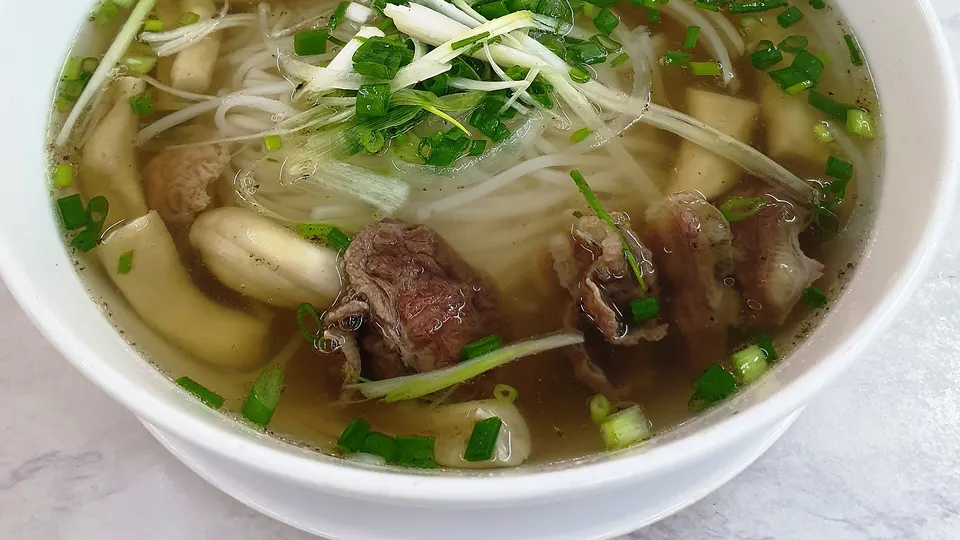
- Greeting everyone with xin chao. It is correct but formal. Use chao plus the family word, and never “Hi” or “Hello” to an older person.
- Using ban (bạn) for everyone. Ban (“friend”) is the course-book “you” between classmates. With a stallholder, driver or host, choose anh, chi (chị), co or chu (chú) by age, as Vietnamese speakers do.
- Reading da as agreement. In Southern speech da often just means “I’m listening”, as SGGP notes.
- Ordering a man. The same word can name different fruits: the 2025 Tap chi Ngon ngu study gives Southern man as the fruit the North calls roi, and the 2013 plant-name study lists man among words whose meaning differs between regions.
- Asking for a fork or a plate. Dia (Dĩa) can mean either, depending on the region; Michigan State’s vocabulary lists dia or dia for plate and dia or nia (nĩa) for fork. The accents guide linked at the top of this page explains the swap; pointing helps.
- Copying mi and tau. The Central “you” and “I” in Alves’s study are informal, used among close friends. Visitors should stick to anh, chi and toi.
- Clipping the price question. “Bao tien (Bao tiền)?” or “Gia nhieu (Giá nhiêu)?” can sound curt; “Cái này bao nhiêu tiền ạ?” costs two extra syllables.
Before you go: a short checklist
You do not need a regional accent to be understood anywhere in Vietnam. A handful of polite habits and a few regional words carry you a long way.

- Learn the family words first: anh, chi, em, co, chu, ong (ông), ba. Pick by apparent age and use them in every greeting and request.
- Greet with chao + family word, and add a when the person is older: “Chao chi a (Chào chị ạ).”
- Say yes the local way: vang in Hanoi and the North, da in Saigon and the South; either is polite anywhere.
- Learn the price shortcuts: ngan or nghin, chuc, tram, ruoi; and dat (North) or mac (South) for “too expensive”.
- Expect two names for common foods: lon/heo, ngo/bap, dua/thom, bat/chen. Both will be understood.
- Before Hue or the North-Central coast, learn mo, chi, rang, rua, ni and te, and ask people to speak slowly if needed.
- When in doubt, ask for it in writing. Written Vietnamese is the same nationwide, so a word you cannot catch is usually easy to read.
For the city guides, see Hanoi, and for more on customs, language and festivals, browse our Vietnamese culture guides.
Frequently asked questions
Is it rude to say xin chao in Vietnam?
No, but it is the formal form. Michigan State University's Vietnamese course book calls xin chao formal and chao much more common; in daily life people say chao plus a family word, such as 'Chao anh' or 'Em chào cô ạ'.
Should I say da or vang for yes in Vietnam?
Both are polite. Vang is the usual Northern choice, while a January 2025 SGGP article notes that few people in the South use vang and most say da. Da can also simply mean 'I'm listening', so do not take it as agreement.
Will people in Hanoi understand Southern words like heo or bap?
Generally yes. A study in the linguistics journal Tap chi Ngon ngu, published online in March 2026, lists heo, bap and li among Southern words that now coexist with their Northern equivalents, so menus in either city may use both.
What do mo, te, rang and rua mean in Hue?
Mo means where (standard dau), te means over there, rang means how (standard sao) and rua means like that (standard the). Hue market sellers combine them in questions such as 'Ban rang rua?' ('How are you selling it?').
How do I politely ask a stranger for help in Vietnamese?
Start with the right family word and a soft opener: 'Xin lỗi, anh cho tôi hỏi...' ('Excuse me, may I ask...') to a man, or 'chi' to a woman. Add the particle a at the end of a sentence when speaking to someone older.
Key sources
- Basic Vietnamese, Unit 1: Culture notes (greetings, ạ, nha/nhá/nhé, pronouns) · Tung Hoang, Michigan State University Libraries, 2023
- Basic Vietnamese, Unit 13: Culture notes (money and prices) · Tung Hoang, Michigan State University Libraries, 2023
- Basic Vietnamese, Unit 12: Vocabulary (food and utensils) · Tung Hoang, Michigan State University Libraries, 2023
- Hay sao tiếng 'dạ' người Nam bộ (The lovely Southern 'dạ') · Báo Sài Gòn Giải Phóng (SGGP), 27 January 2025
- Đặc điểm ngữ nghĩa của từ ngữ phương ngữ Nam Bộ khi thâm nhập vào tiếng Việt toàn dân (Southern dialect words in the national vocabulary) · Đàm Thị Thúy, Lê Thanh Hương, Lê Thị Lâm & Dương Thị Dung, Tạp chí Ngôn ngữ (Journal of Linguistics) no. 11, 2025
- Phương ngữ Huế trong một số tình huống giao tiếp mua bán hiện nay (The Huế dialect in buying and selling today) · Đặng Diễm Đông, Hue University Journal of Science: Social Sciences and Humanities 133(6C), 2024
- Tiếng Nam, tiếng Bắc: Đang xích lại gần nhau (Southern and Northern Vietnamese are drawing closer) · Phạm Văn Tình, Bản tin Đại học Quốc gia Hà Nội (Vietnam National University, Hanoi bulletin) no. 247, 2011
- Hello in Vietnamese (travel guide) · Vietnam Airlines
All 18 sources and further reading
- Basic Vietnamese, Unit 14: Vocabulary and conversations (directions and transport) · Tung Hoang, Michigan State University Libraries, 2023
- Notes on grammatical vocabulary in Central Vietnamese · Mark J. Alves, Journal of the Southeast Asian Linguistics Society 5, 2012 (ANU Open Research)
- Rặt giọng miền Tây (Pure Mekong Delta speech) · VnExpress, 20 February 2026
- Đâu rồi tiếng dạ, thưa? (Where have 'dạ' and 'thưa' gone?) · VnExpress, 18 October 2014
- Learning Vietnamese: What's your name? (P1) · Tuổi Trẻ News, 30 December 2011
- Từ ngữ chỉ thực vật trong các phương ngữ tiếng Việt (Plant names in Vietnamese dialects) · Đặng Ngọc Lệ & Lê Hồng Nhiên, Ngôn ngữ & Đời sống no. 4 (210), 2013
- Nguồn gốc và ý nghĩa của các khái niệm chỉ lúa ngô, ngô, bắp, bẹ… (Origin of the words for maize) · Lý Tùng Hiếu, Journal of Science Van Hien University 8(2), 2022
- Sự thâm nhập của từ địa phương miền Nam vào tiếng Việt toàn dân giai đoạn 1945–1975 · Nguyễn Tài Thái & Phạm Văn Hảo, ngonngu.net (2007)
- Vai trò của lời chào hỏi trong văn hoá giao tiếp của người Việt (The role of greetings in Vietnamese communication) · Mai Thị Hảo Yến & Lê Thị Hương, Ngôn ngữ & Đời sống no. 10 (204), 2012
- Ca phe sua da, a classic drink of Saigon · Tuổi Trẻ News, 20 November 2017
Keep exploring
 North · Central · South · Culture Vietnamese Accents Compared: 6 vs 5 Tones, Which to Learn Vietnamese accents compared sound by sound: Hanoi's six tones vs Saigon's five, Hue's local words, the hardest accent, and a table for which accent to learn.
 North · Central · South · Culture Tet (Tết) 2027 by Region: North, Central, South Compared How Tet differs in North, Central and South Vietnam: peach vs mai, banh chung vs banh tet, fruit trays, pickles, first visitors, plus the Tet 2027 dates.
 Central Vietnam · Travel Hue (Huế): How Many Days, What to See, 2026 Tickets How many days Hue needs, which Citadel sights and royal tombs to pick, 2026 ticket prices, the flood months to avoid and where to eat in the old royal capital.
 South Vietnam · Travel Ho Chi Minh City (Saigon): How Many Days and What to See Ho Chi Minh City (Saigon) explained: the 2025 merger and new wards, how many days to stay, Metro Line 1, Long Thanh airport, palace and museum tickets.