Central Vietnam · Food
Hue (Huế) Royal Cuisine: What to Eat and Where to Try It
Hue royal cuisine explained: what Nguyen court cooking was, how banh beo, banh nam and banh bot loc differ, and when 2026 palace banquets ran in Hue.
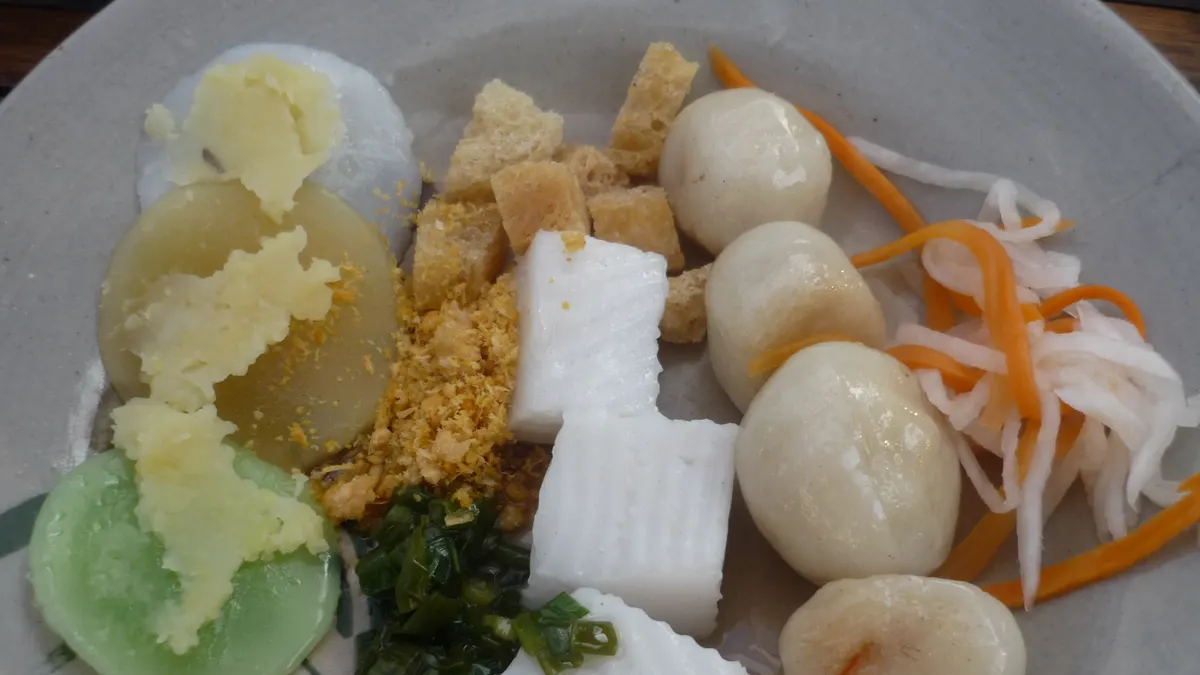
Hue (Huế) royal cuisine (ẩm thực cung đình Huế) was the cooking of the Nguyen (Nguyễn) court, which ruled Vietnam from Hue between 1802 and 1945; today you taste it mainly through the city’s small steamed cakes and through palace banquets staged for visitors. As of November 2026, those banquets run only on set dates: the latest reported, Da yen Hoang cung (Dạ yến Hoàng cung), was held on two festival nights in April and May 2026. No Hue restaurant is in the MICHELIN Guide’s 2026 Vietnam selection, announced on 4 June 2026, which covers three other cities.
Court cooking was less a fixed menu than a system: palace kitchens with their own staff, ingredients sent from the provinces, rules on how food was prepared and presented, and separate standards for the king’s daily meals, banquets and ritual offerings. Hue historian Phan Thuan An (Phan Thuận An) concludes that court food “was organised and carried out methodically and systematically”, and that hundreds of its dishes are still passed down in Hue cooking today (Nghien cuu va Phat trien).
What most visitors actually eat is the folk side of that legacy: Hue’s small savoury cakes, banh beo (bánh bèo), banh nam (bánh nậm), banh bot loc (bánh bột lọc) and banh it (bánh ít), served in many little portions. This guide explains what the court kitchens did, how that habit of care shaped everyday food in Hue, now a centrally governed city (since 1 January 2025), how the cakes differ, and how to tell a living tradition from a banquet staged for visitors.
What was Nguyen royal cuisine?
At the centre was the Thuong Thien (Thượng Thiện), the palace kitchen in charge of the king’s daily meals, which dates from 1826. It worked alongside the Phung Thien (Phụng Thiện), which cooked for the palace women, and the Ty Ly Thien (Tỵ Lý Thiện), which prepared food for feasts and banquets (Bao tang Lich su Quoc gia). The king’s meal had its own word, ngu thien (ngự thiện), and his kitchen utensils were ngu dung (ngự dụng).
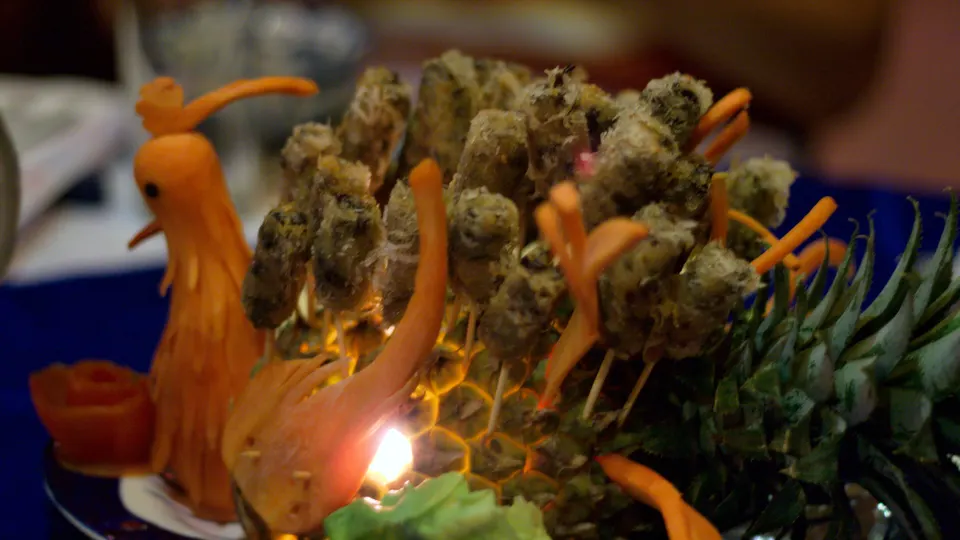
- What the court ate. Animal bones excavated at the Thuong Thien site, studied by the National Museum of Vietnamese History, include buffalo, cattle, goats, deer and pigs, but also elephant, rhinoceros, crocodile and sea turtle. Many had been broken open for their marrow. The menus of palace feasts were set out in the dynasty’s official compendium of regulations, the Khâm định Đại Nam hội điển sự lệ.
- Where it came from. Provinces sent their specialities to the capital: fins and turtles from Gia Dinh (Gia Định) in the south, mangoes from Phu Yen (Phú Yên), watermelons from Quang Binh (Quảng Bình). Food was supervised from growing to cooking, and dishes were tested for poison before reaching the emperor, according to VietNamNet.
- How much. A researcher quoted by VietNamNet in 2015 said a king’s meal could have more than 50 dishes, although the king ate very little, and an old chronicle records 12 dishes at breakfast. Treat these as accounts of the most formal meals, not a daily average.
- Three kinds of court food. A Hue food expert interviewed in 2024 distinguishes the everyday meals of the king and his family, banquet food, and food for ritual offerings. Rules issued under Emperor Tu Duc (Tự Đức) in 1849 ranked banquet dishes in classes and fixed how trays were laid out; for the ancestral offering at Tet (Tết), only banh chung (bánh chưng) was chosen. Our guide to Tet in the three regions explains why that square rice cake still matters.
One thing the records do not give is recipes. Phan Thuan An notes that the official Nguyen histories say nothing about how court dishes were cooked, so what survives came through families, cooks and later studies.
How did the court shape everyday Hue food?
Hue cooks and food writers usually describe the city’s cuisine as two parallel streams, court and folk (cung đình và dân dã), as a 2011 Tuoi Tre (Tuổi Trẻ) report on a Hue food seminar put it, with a third, vegetarian stream discussed below. The court’s influence on the folk stream shows mostly in how food is served: many small portions rather than one large dish, careful balance between them, and attention to how they look. Tuoi Tre News summed up Hue food as “small, carefully balanced and expertly presented dishes” that “were once only served for the royal family” (Tuoi Tre News).
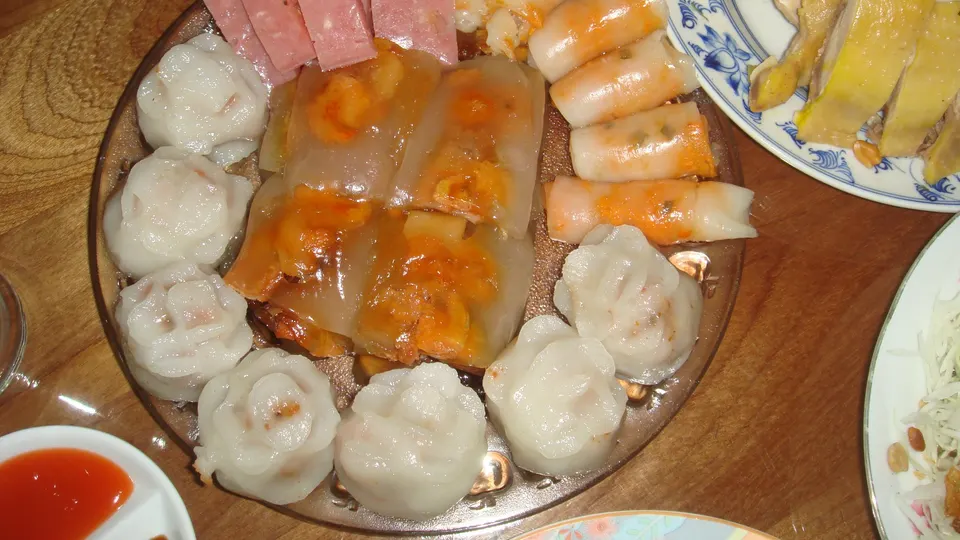
Locals say that in Hue you “eat with your eyes” (an bang mat (ăn bằng mắt)), a phrase Dai bieu Nhan dan (Đại biểu Nhân dân) quotes when describing the city’s food. The knowledge travelled through households as much as kitchens. After 1945 descendants of the royal family kept recipes for some court dishes, and in 1915 Truong Thi Bich (Trương Thị Bích) wrote down about 100 Hue dishes and household skills for the family of Prince Tung Thien Vuong (Tùng Thiện Vương) in Thực phổ bách thiên. A Hue culinary expert put the overlap simply in 2024: a humble dish cooked from the finest ingredients with special technique can reach the standard of the court.
You will often read that Hue accounts for about 1,700 of Vietnam’s 3,000 or so dishes. The figure is widely repeated, but versions disagree (a 2018 Bao Van Hoa (Báo Văn Hóa) report spoke of more than 65% of over 2,700 dishes) and none cites a count you can check, so treat it as a way of saying “a great many”, not a statistic. The same habit of strong, layered flavour shows in Hue’s best-known noodle soup, bun bo Hue, which is far spicier than visitors expecting “royal” food might guess.
Banh beo, banh nam, banh bot loc and banh it compared
Hue’s small cakes share a family resemblance: a soft rice or tapioca dough, a little shrimp, a sweet-salty fish sauce, and a serving size meant for several at once. They differ in the dough, the wrapping and how you eat them. VnExpress, for example, describes four ways Hue sells banh bot loc alone, from leaf-wrapped to bare, fried and vegetarian (VnExpress).
| Banh beo | Banh nam | Banh bot loc | Banh it (in banh ram it) | |
|---|---|---|---|---|
| Dough | Rice-flour batter | Thin layer of rice-flour batter | Tapioca starch (bot nang (bột năng)), chewy and translucent | Glutinous rice dough |
| Filling or topping | Topped with shrimp floss (tom chay (tôm chấy)), scallion oil and crisp pork fat | Minced shrimp and pork fried with shallots | Shrimp and a piece of pork fat; vegetarian versions use tofu, carrot and wood ear | River shrimp, on a fried, crisp sticky-rice base |
| Wrapping and cooking | Steamed in small saucers (chen (chén)), no leaf | Folded flat and rectangular in a dong or banana leaf, steamed | Leaf-wrapped (goi (gói)) and steamed, or bare (tran (trần)) | Steamed, then set on the fried ram |
| How it is served | Many saucers on a tray, eaten from the saucer | In its leaf, opened at the table | Peeled from the leaf; bare ones heaped on a plate | By the plate |
| Sauce | Sweet fish sauce with chilli, poured over | Diluted fish sauce, spooned over | Strong, undiluted fish sauce with chilli (goi); sweet fish sauce with fried shallots (tran) | Varies by shop |
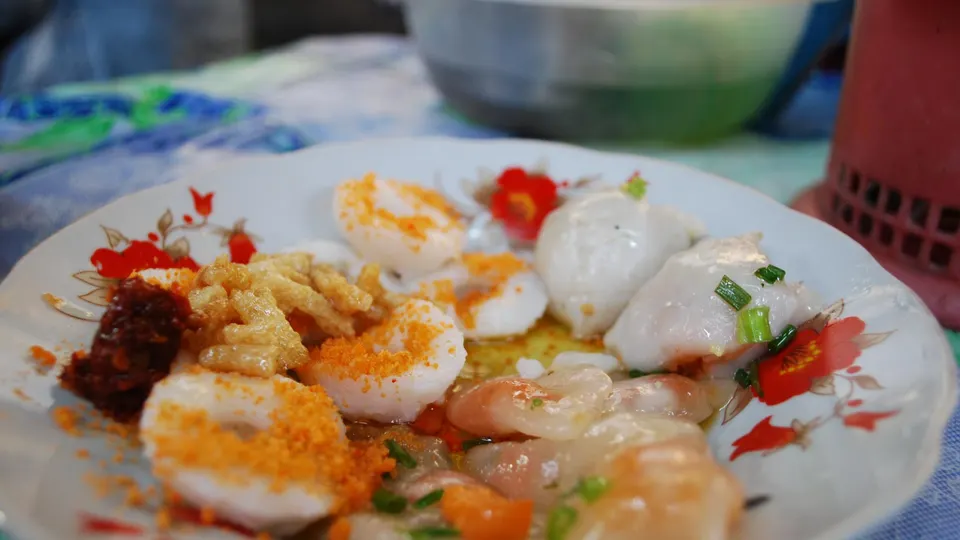
A few distinctions matter more than they look. Rice versus tapioca decides the texture: banh beo and banh nam are soft and smooth, banh bot loc is springy and see-through, so the pink shrimp shows. Leaf or no leaf decides how you handle them: a leaf-wrapped cake is opened at the table, while banh beo is steamed and eaten in its own little dish. Even the name banh beo, “water fern cake”, is explained differently: one VnExpress writer links it to the shape of a fern leaf, another says nobody can explain the name or say when the cake first appeared.
Royal or folk? Here sources disagree. Vietnam’s national tourism authority says banh nam “owes its origins to the imperial court”, while VietnamPlus describes it as a daily food of ordinary people and VnExpress treats banh beo as a humble everyday cake. The fairest reading is that these are folk cakes, refined and served in a court-influenced way, and that a royal origin for any one of them is a claim, not an established fact. The trio is not unique to Hue either: versions are sold in Hoi An too, as the photo above shows.
Why is vegetarian food so prominent in Hue?
Hue is one of Vietnam’s Buddhist centres, and vegetarian cooking (do chay (đồ chay)) forms a stream of its own. According to VnExpress, the royal family ate vegetarian from the time of Lord Nguyen Phuc Chu (Nguyễn Phúc Chu), one of the Nguyen lords who preceded the dynasty; many families still eat vegetarian on four days of each lunar month (the 30th, 1st, 14th and 15th), and some all year round, which is called chay truong (trường) (VnExpress).
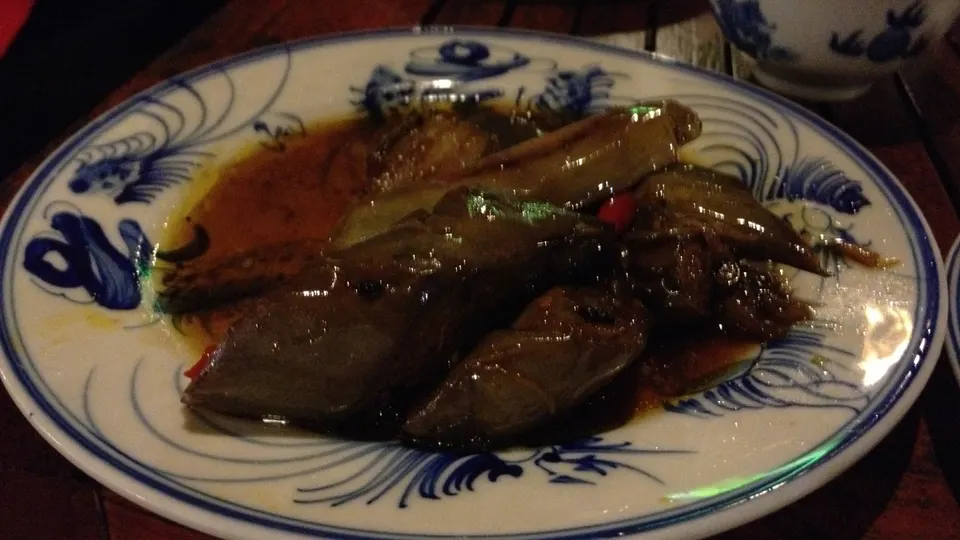
The common pattern is part-time vegetarianism; strict lifelong vegetarians are the exception. Hue cooks are known for vegetarian dishes that imitate meat, such as spring rolls made with ground mung beans, glass noodles and wood ear mushrooms instead of pork, egg or shrimp, and Tuoi Tre News names Tu Hieu (Từ Hiếu), Tu Dam (Từ Đàm) and Hong An (Hồng Ân) pagodas for their vegetarian cooking. For the cakes, this means vegetarian versions are normal rather than a tourist adaptation: banh loc chay (bánh lọc chay), filled with tofu, carrot and wood ear and served with soy sauce and chilli, sits alongside the shrimp version. For eating meat-free beyond the cakes, and in other cities, see our guide to vegetarian Vietnamese food by region.
Royal banquets today: tradition or reinvention?
The monarchy ended in 1945, and what visitors can book today is a reconstruction. The best known is a dinner in the Imperial City (Dai Noi (Đại Nội)). In 2026 VnEconomy described Dạ yến Hoàng cung (“Royal Palace Night Banquet”), held at Duyet Thi Duong (Duyệt Thị Đường), the court theatre, on the nights of 29 April and 1 May 2026 for up to 130 guests a night at 1.7 million VND a ticket, with court music and a seasonal menu that included nem công chả phượng, literally “peacock nem and phoenix cha (chả)” (VnEconomy). VnEconomy’s April 2026 preview named the organiser as the Hue Monuments Conservation Centre; as of November 2026 we found no later dates announced.
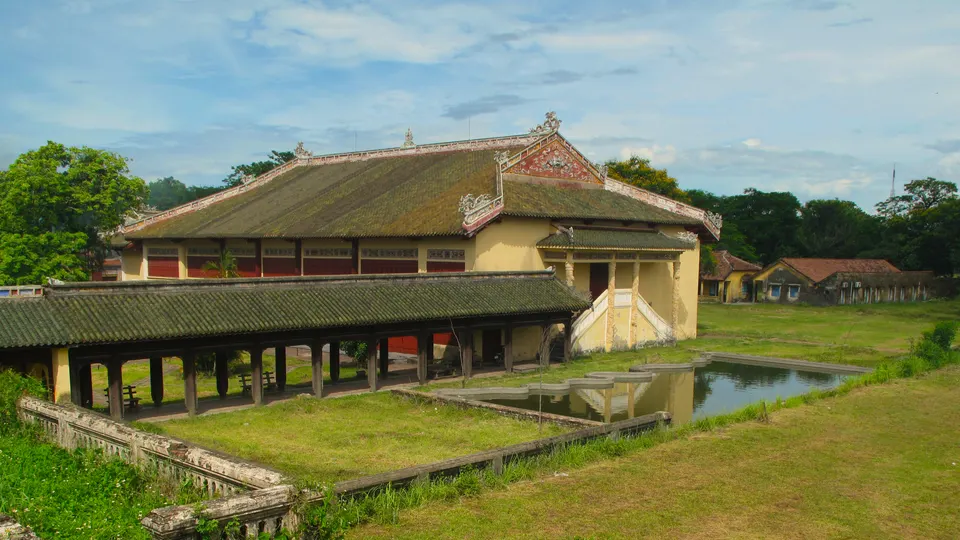
An older model is Dem Hoang (Đêm Hoàng) cung (“Royal Night”), a recurring programme of the Hue Festival held at Cung Truong Sanh (Cung Trường Sanh) in the Imperial City. The format has also been scaled up for tourism: in March 2015 about 1,000 cruise passengers ate a banquet of nine Hue dishes in the palace grounds, with nha nhac court music and games, modelled on the festival programme, Tuoi Tre News reported.
The same 2026 festival also ran a palace food area at Phu Noi Vu (Phủ Nội Vụ) from 24 April to 2 May, with ticketed Hue buffet nights for 500 guests and set menus on the other nights, according to Dai bieu Nhan dan (2 May 2026). The table compares that with the everyday ways to eat Hue food.
| Option | When | Cost (dated source) | Effort | Who it suits |
|---|---|---|---|---|
| Palace banquet (Da yen Hoang cung) | Set festival nights only; latest 29 Apr and 1 May 2026 | 1.7 million VND a ticket (VnEconomy, Apr 2026) | Book ahead; 130 places a night | Visitors who want the full court setting with music |
| Festival food area in the Imperial City | 24 Apr to 2 May 2026, evenings | Buffet nights ticketed, price not published (Dai bieu Nhan dan, May 2026) | Festival dates only | Groups trying many Hue dishes in one evening |
| Mixed cake tray at a cake shop | Any day | About 100,000 VND for a four-cake tray at one shop (Viet Nam News, Aug 2025) | Walk in | Anyone comparing banh beo, banh nam and banh bot loc |
| Dong Ba Market food stalls | Daily; more stalls from about 3 pm | About 10,000 to 20,000 VND a dish (VnExpress, 2020) | Walk in | Budget travellers combining food with a market visit |
How close are they to the real thing? Even specialists disagree on which court menu to recreate, because Nguyen banquet menus changed from reign to reign. At a 2011 seminar reported by Tuoi Tre, researchers argued for documenting dishes before the last cooks who knew them were gone, and artisan Ton Nu Thi Ha (Tôn Nữ Thị Hà) warned that businesses selling “royal rice” mixed the genuine and the fake. Some of the people keeping court cooking alive run their own restaurants: Bao Van Hoa described Ton Nu Thi Ha, a member of the royal clan who learned court techniques as a child from the wives of Nguyen mandarins, cooking for international visitors at Tinh Gia Vien (Tịnh Gia Viên) on Le Thanh Ton (Lê Thánh Tôn) street. Enjoy a royal dinner as a well-researched performance with good food, not as a meal the emperors would recognise course for course.
How do you eat Hue’s small cakes?
Most of the ritual is in the sauce and the order. VietnamPlus describes the standard way with banh beo: pour a little fish sauce over each saucer and eat the cake with a small spoon, saucer by saucer from the tray (VietnamPlus).
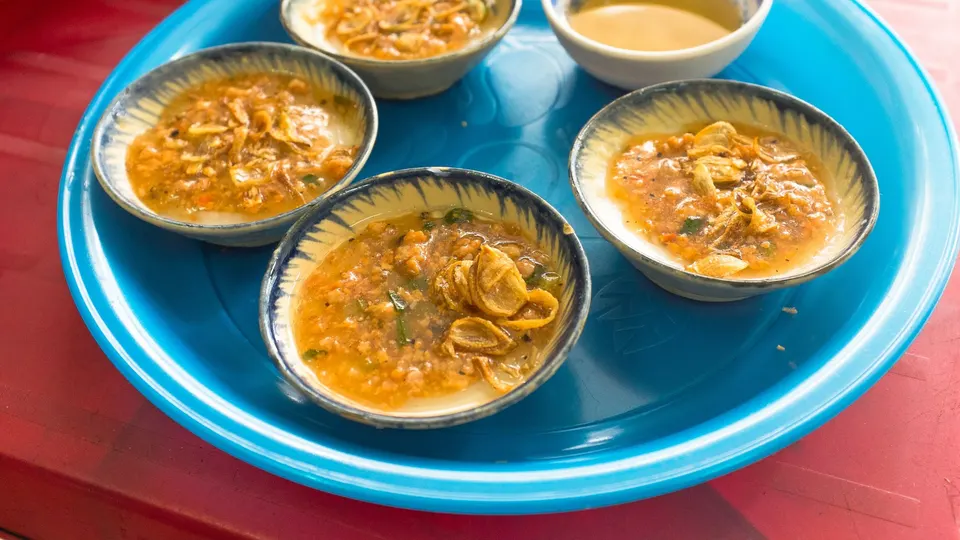
- Order a mix. Some Hue shops serve a tray with several kinds of cake together, such as banh beo, banh nam and banh bot loc, which is the easiest way to compare them.
- Banh beo: eat it in the saucer. Spoon a little of the sweet fish sauce over the cake and its shrimp topping, then scoop it out with a small spoon. A VnExpress writer advises eating it in the mould and slowly.
- Banh nam: open, sauce, eat. Unfold the leaf, spoon over diluted fish sauce and eat it with a spoon or chopsticks. It is best freshly steamed.
- Banh bot loc: peel, then dip. Peel off the leaf to reveal the clear dumpling and dip it into the undiluted fish sauce with chilli. Bare banh bot loc tran (bánh bột lọc trần) comes already dressed with sweet fish sauce and fried shallots.
- Eat them hot. Hue cooks serve banh beo, banh nam and banh bot loc hot from the steamer.
- Watch the chilli. The sauces usually contain fresh chilli; taste before adding more.
If you are continuing south, compare this tray-of-small-things style with mi Quang, Quang Nam’s noodle dish, which puts everything in one bowl with a little rich broth.
Where to try them in Hue
In Hue the cakes are sold by street vendors, long-running family shops and also restaurants for tourists, as VietnamPlus notes. VnExpress International (2021) pointed readers to the restaurants along Pham Hong Thai (Phạm Hồng Thái) street for banh beo and banh ram it, and to shops along Vo Thi Sau (Võ Thị Sáu), Le Thanh Ton, Pham Hong Thai, Truong Dinh (Trường Định) and Nguyen Hue (Nguyễn Huệ) streets, or vendors near Truong Tien (Trường Tiền) Bridge, for banh loc (bánh lọc). Vietnam (Việt Nam) News named several shops for banh ram it and mixed cake trays in 2025, including one on Nguyen Binh Khiem (Nguyễn Bỉnh Khiêm) street (Vietnam News).
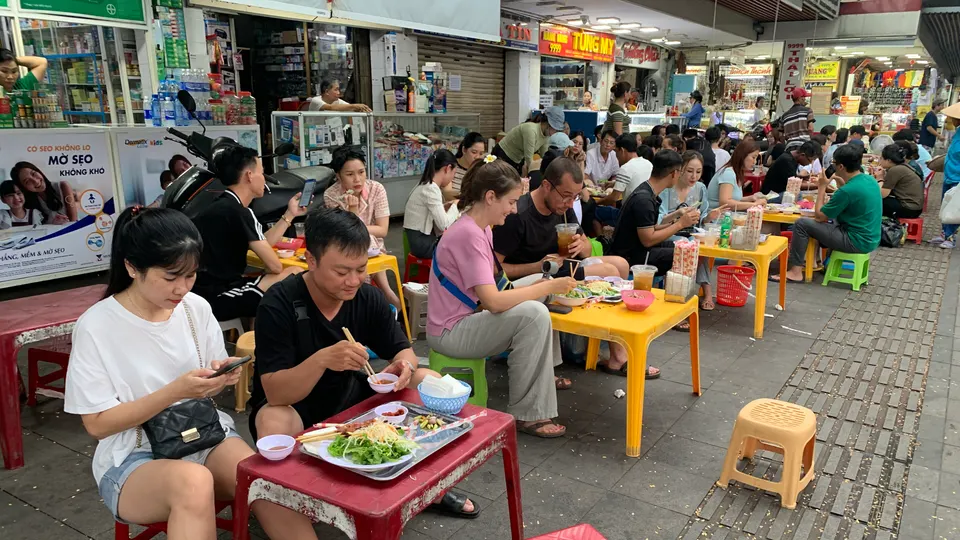
Dong Ba (Đông Ba) Market on Tran Hung Dao (Trần Hưng Đạo) Street, by the Perfume River, is the simplest place to start: VnExpress found stalls selling banh beo and banh loc there and noted that more food stalls open from mid-afternoon. The place card below has the details. For Hue’s other dishes by area and time of day, see our guide to where to eat in Hue. Another everyday Hue dish, rice with tiny river clams, has its own guide: com hen. For dessert, Hue’s sweet soups (che (chè)), often shared as a tray of small bowls, are compared with Hanoi’s and Saigon’s in our guide to che by region.
For more of the region, start at our Central Vietnam hub, or browse the food section for regional dishes from all three parts of the country.
Where to try Huế cakes
Local favourite
Đông Ba Market food stalls · Chợ Đông Ba
Huế · North bank of the Perfume River, near Trường Tiền Bridge
2 Trần Hưng Đạo Street
Huế's central market, moved to this site in 1899, where VietnamPlus (2026) points readers for bánh nậm and VnExpress (2020) found stalls selling bánh bèo and bánh lọc. Useful for trying the cakes as part of a market visit.
Order: Bánh bèo, bánh lọc and bánh nậm from the food stalls; more stalls open in the afternoon.
Recommended by: VietnamPlus (2026), VnExpress (2020), Vietnam National Authority of Tourism, Vietnam Airlines travel guide · checked November 2026
Addresses and details can change; check before you go. We do not accept payment for listings.
Frequently asked questions
Can you still eat a royal banquet in Hue?
Only on set dates, and as a staged experience. As of November 2026, the latest Da yen Hoang cung palace dinner reported in the Vietnamese press was held at Duyet Thi Duong in Hue's Imperial City on 29 April and 1 May 2026, for up to 130 guests a night at 1.7 million VND a ticket. It recreates a Nguyen banquet with court music; it is not a continuous court tradition.
Is there a MICHELIN restaurant in Hue?
No. The MICHELIN Guide's 2026 Vietnam selection, announced on 4 June 2026, covers Hanoi, Ho Chi Minh City and Da Nang only, so no restaurant in Hue is listed; Hue-style cooking appears only through listed restaurants in Da Nang and Ho Chi Minh City.
Which Hue cake should I try first: banh beo, banh nam or banh bot loc?
Order a mixed tray if the shop has one. If you pick one, banh beo is the soft rice cake eaten from a small saucer, banh nam is a flat rice parcel opened from its leaf, and banh bot loc is the chewy, see-through tapioca dumpling with shrimp inside.
Do I need to book to eat Hue cakes at Dong Ba Market?
No. Dong Ba Market's food stalls sell banh beo and banh loc without booking, and VnExpress noted in 2020 that more food stalls open from about 3 pm.
Are banh beo and banh nam vegetarian?
Usually not: the classic versions use shrimp, and banh nam and banh bot loc also contain pork. Vegetarian versions exist, for example banh loc chay filled with tofu, carrot and wood ear mushroom and served with soy sauce.
Key sources
- Vài nét về quy cách ẩm thực cung đình triều Nguyễn (Some features of royal cuisine under the Nguyễn dynasty) · Phan Thuận An, Tạp chí Nghiên cứu và Phát triển 2(128), 2016
- From the discovery of bones and teeth of animals at Thượng Thiện Sở: some considerations about the dishes of the king and the royal family of the Nguyễn · National Museum of Vietnamese History (Nguyễn Ngọc Chát), 30 Aug 2008
- A Taste of Royal Feast · Tuổi Trẻ News, 12 Sep 2012
- Bánh bèo Huế - chén bánh nhỏ mang đậm hương vị cố đô · VietnamPlus
- 4 biến tấu của bánh bột lọc · VnExpress, 6 May 2020
- 'Thành phố ăn chay' · VnExpress, 7 May 2012
- Imperial Huế's 'bánh ram ít' impresses both local and foreign customers · Việt Nam News, 19 Aug 2025
- Du khách mê mẩn với 'Dạ yến Hoàng cung' giữa lòng Đại Nội Huế · VnEconomy, 1 May 2026
All 35 sources and further reading
- No như ăn… chè Huế · Znews (from Phụ Nữ), 13 Jun 2022
- Hue cuisine 'conquers' travelers · Vietnam National Authority of Tourism (from VietNamNet), 30 Mar 2015
- Fit for a King · VietNamNet, 2 Aug 2015
- Chuyên gia ẩm thực: Một món ăn dân dã cũng có thể trở thành mỹ vị cung đình · Du lịch Việt Nam (vntravel.org.vn), 4 Jun 2024
- Văn hóa ẩm thực - hấp lực cho du lịch Huế · Đại biểu Nhân dân, 4 Dec 2024
- Tìm thực đơn ẩm thực Huế · Tuổi Trẻ, 2 May 2011
- Đưa ẩm thực thành sản phẩm du lịch đặc sắc của Huế · Báo Văn Hóa, 29 Apr 2018
- Nữ nghệ nhân quảng bá ẩm thực cung đình Huế · Báo Văn Hóa, 31 Jan 2019
- Huế được vinh danh điểm đến ẩm thực truyền thống độc đáo nhất châu Á · VietnamPlus, 25 Jul 2026
- Hue's Best to Eat – From the Palace to the Street · Vietnam National Authority of Tourism (vietnam.travel)
- Bánh nậm Huế - hương vị mộc mạc trong lớp lá xanh · VietnamPlus, 7 Jul 2026
- Đậm đà bánh bèo xứ Huế · VnExpress, 4 Oct 2012
- Hương vị bánh Huế · VnExpress, 26 Oct 2013
- 4 món đặc sản ở Huế · VnExpress, 5 Feb 2020
- Khám phá chợ Đông Ba · VnExpress, 27 Jul 2020
- 24 hours to explore Hue cuisine · VnExpress International, 27 Jun 2021
- 5 món bánh nổi tiếng xứ Huế · Znews, 20 Jul 2022
- Delicious Cakes of Hue · Vietnam National Authority of Tourism (from Vietnam Pictorial), 2010
- Vietnam's imperial capital's stunning vegetarian feasts · Tuổi Trẻ News, 14 Jun 2014
- 1,000 foreign tourists treated to royal pleasures in Vietnam's Hue palace · Tuổi Trẻ News, 13 Mar 2015
- Hue treats visitors to royal banquet · VietnamPlus, 5 Jan 2017
- Thành phố Huế chính thức trực thuộc Trung ương từ 1/1/2025 · VnEconomy, 30 Nov 2024
- Dong Ba Market · Vietnam National Authority of Tourism
- 11 MICHELIN Stars Awarded in the 2026 MICHELIN Guide Hanoi | Ho Chi Minh City | Da Nang · MICHELIN Guide, 4 Jun 2026
- Huế “thắp sáng” di sản, mở rộng không gian kinh tế đêm · VnEconomy, 22 Apr 2026
- Ẩm thực Huế thu hút du khách · Đại biểu Nhân dân, 2 May 2026
- Chợ Đông Ba · Vietnam Airlines travel guide
Keep exploring
 Central Vietnam · Travel Hue (Huế): How Many Days, What to See, 2026 Tickets How many days Hue needs, which Citadel sights and royal tombs to pick, 2026 ticket prices, the flood months to avoid and where to eat in the old royal capital.
 Central Vietnam · Food Bun Bo Hue (Bún Bò Huế): Dac Biet, How to Order and Cook Bun bo Hue explained: what a dac biet bowl holds, how Hue cooks make the lemongrass and shrimp paste broth, what hot dieu mau does, and Hue vs Saigon bowls.
 Central Vietnam · Food Mi Quang (Mì Quảng): What to Order and Where in Da Nang Mi Quang explained: which version to order, how to eat it, 2026 prices, three MICHELIN-listed Da Nang shops and how it differs from cao lau and pho.