All three regions · Food
Banh Nuong vs Banh Deo: Which Vietnamese Mooncake to Buy
Banh nuong vs banh deo, Vietnam's baked and sticky mooncakes: crust, thap cam filling, 2026 prices, safety checks and when to buy before Mid-Autumn 2027.
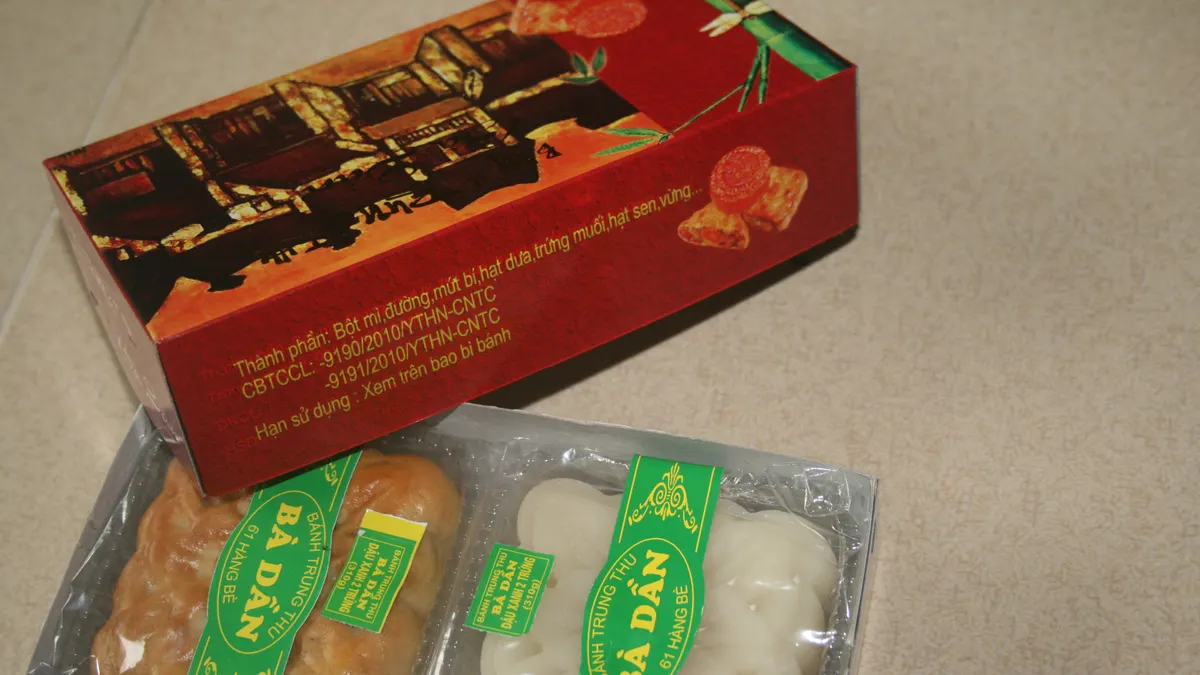
Banh nuong (bánh nướng) is the baked Vietnamese mooncake, with a glossy brown wheat-flour crust; banh deo (bánh dẻo) is the white, soft “sticky” mooncake made from toasted glutinous rice flour and never baked. A family tray for the Mid-Autumn Festival usually holds both, often with the same filling, and in September 2026 a 150 g cake of either kind with mixed or salted-egg filling cost 65,000 to 80,000 dong in Hanoi shops (VietnamPlus).
Both cakes belong to Tet Trung Thu, the Mid-Autumn Festival, Vietnam’s children’s festival on the full moon of the eighth lunar month. This guide compares the two side by side, explains the classic mixed filling, shows what changes from Hanoi to Saigon and the Mekong Delta, and ends with when and how to buy, keep and eat them. For more regional dishes, start at our Vietnamese food guides.
Banh nuong vs banh deo at a glance
| Banh nuong (baked mooncake) | Banh deo (sticky mooncake) | |
|---|---|---|
| Crust | Wheat flour bound with aged sugar syrup, oil and egg yolk | Toasted glutinous rice flour mixed with sugar dissolved in hot water, a little oil and pomelo-flower water |
| Cooking | Pressed in a mould, brushed with egg, baked | Pressed in a mould, not baked |
| Look and texture | Shiny golden to deep brown; the crust softens a day or two after baking | Pure white, soft and chewy |
| Scent | Baked crust, lime leaf and liquor in the filling | Pomelo flower |
| Usual fillings | Thap cam (mixed), mung bean, lotus seed, roast chicken; salted egg yolk | The same range; mung bean and lotus seed are common |
| Keeping | Keeps longer and travels better, one reason it became the main gift cake | Best fresh; follow the label |
| Price in Hanoi, Sep 2026 | 65,000–80,000 dong for 150 g, mixed or salted egg | 60,000–75,000 dong |
| Place on the tray | Today’s standard gift | Once the centrepiece of the traditional tray |
Reading the table. The two cakes differ in the crust and the cooking, not in what is inside. If you like a firm, roasted pastry, pick banh nuong; if you prefer something soft, fragrant and less rich, try banh deo. Buying one of each, as families do, is the easiest way to compare.
What is banh nuong, and how is it made?
Banh nuong means “baked cake”. Its crust is made from wheat flour bound with a dark sugar syrup. In the traditional method, red sugar is cooked with pineapple or lemon, malt and nuoc tro tau (nước tro tàu), an alkaline water once made from the ash of rice straw after the harvest, then sealed and left for two to three months to gain colour (Nhan Dan). After baking the cake turns a rich brown and becomes soft after about a day.
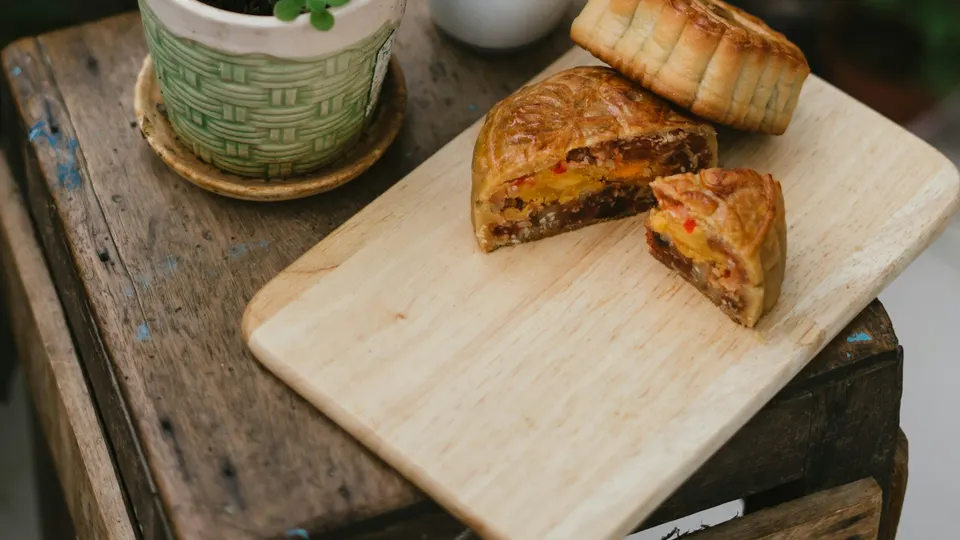
How the cake is built. In a recipe published by VietNamNet, a Hanoi chef weighs the crust at one third of the cake and the filling at two thirds, wraps the filling, presses the ball into a carved mould, brushes the top with an egg wash and bakes it. Home recipes bake the cakes for about 10 minutes at 180–200°C, brush them with egg yolk, then bake again for 8 to 10 minutes. The chef recommends resting the cakes for one to two days so that crust and filling settle together, which is why a cake bought a day after baking is often better than one straight from the oven.
Shapes. Most cakes are round or square. Vietcetera explains the pairing through the old idea of a round sky and a square earth, the same logic behind the round and square rice cakes of Tet (see our banh chung vs banh tet guide). Carp, piglets, rabbits and other animal shapes are old forms too, Vietcetera notes.
What is banh deo, and why is it so soft?
Banh deo means “soft, pliable cake”. Its dough is made from finely ground, toasted glutinous rice flour mixed with sugar dissolved in hot water, a little cooking oil and some pomelo-flower water, then pressed into a mould and turned out without any baking (Vietcetera). The scent comes from pomelo blossoms picked in the third lunar month and steamed; the vapour that condenses on the pot lid is collected as flower water, which Nhan Dan calls a distinctly Vietnamese aroma.
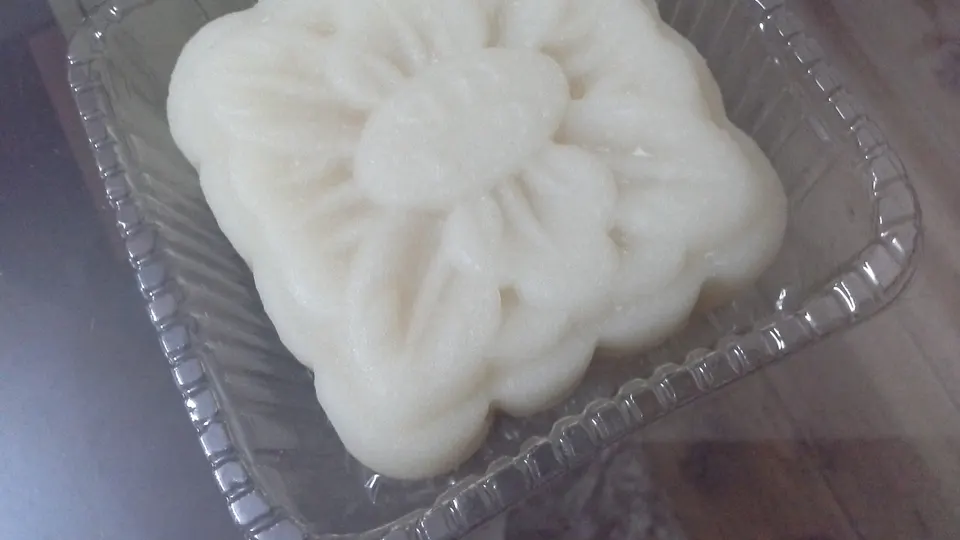
The older cake. Banh deo was the heart of the old Mid-Autumn tray. Vietcetera quotes the writer Vu Bang (Vũ Bằng), whose memoir of the Hanoi year says the biggest banh deo had to sit in the middle of the tray. It was simple to make at home. Baked cakes took over later because they keep longer, travel well and suit gift-giving.
What it tastes like. The crust is soft and chewy rather than crisp, and white rather than brown. Fillings are usually the same as for banh nuong; mung bean with salted egg and lotus seed are common choices.
What is in thap cam, the classic mixed filling?
Thap cam (thập cẩm) means “mixed”, and Vietnam’s tourism authority says the classic version can hold up to ten ingredients. Nhan Dan lists candied pork fat, melon seeds, lime leaf, Chinese sausage or dried chicken, winter-melon jam, lotus-seed jam and roasted sesame, bound with Mai Que Lo (Mai Quế Lộ) liquor and malt syrup. The Hanoi chef’s version in VietNamNet adds cashews, peanuts, sunflower and pumpkin seeds, sweet ham, kumquat jam, candied orange peel and lemon zest (VietNamNet).
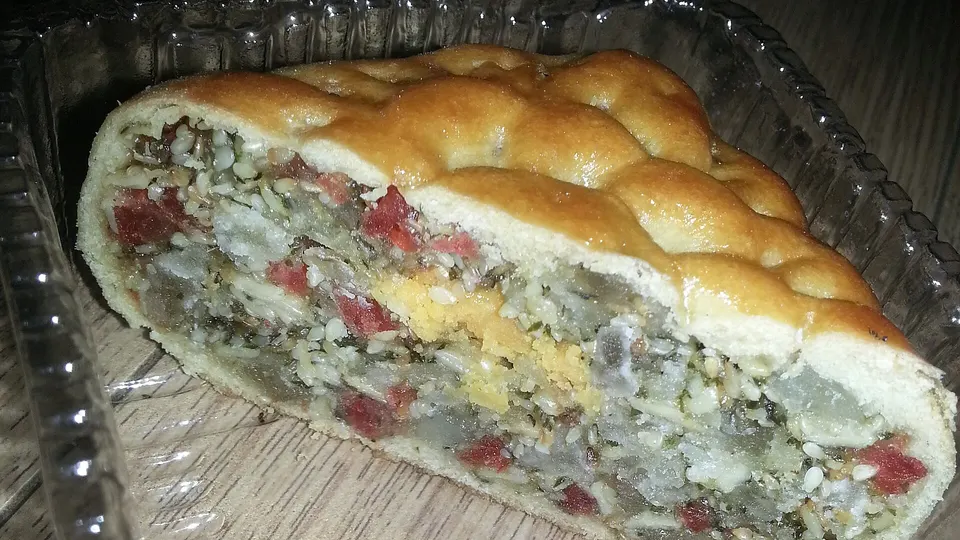
Why it tastes the way it does. The candied fat keeps the filling moist, the seeds give crunch, the jams add sweetness and the lime leaf and liquor cut through the richness. The result is sweet and savoury at once.
The other classics. Mung bean (dau xanh (đậu xanh)) and lotus seed (hat sen (hạt sen)) are the smooth, sweet fillings; roast chicken (ga quay (gà quay)) is the savoury alternative. Most can come with a salted egg yolk. Vietnam’s tourism authority notes that the yolk was once rare and seen as lucky, and that some cakes now hold two.
Hanoi, Hue or Saigon: do mooncakes differ by region?
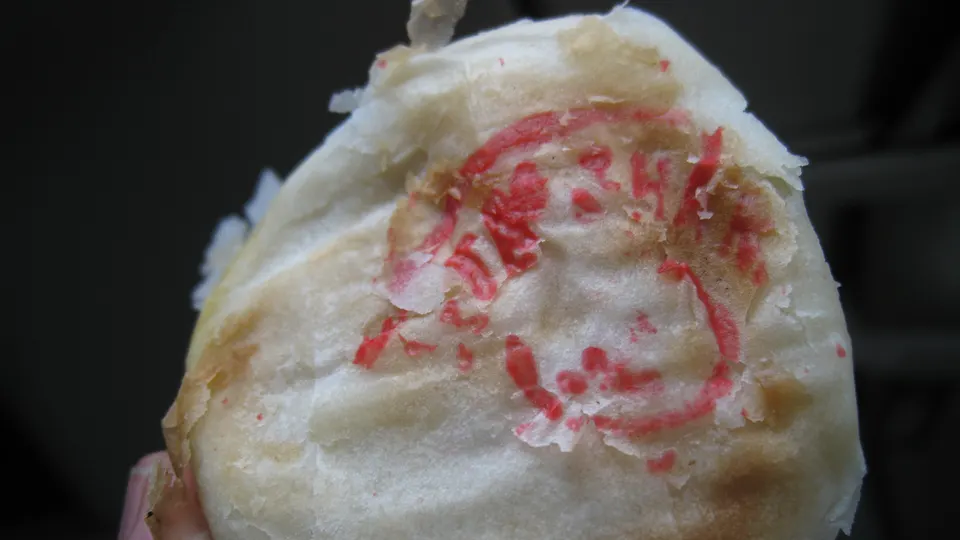
The same two cakes are made everywhere, and the press we read describes differences between bakeries and communities more than a fixed rule for North, Centre and South. The clearest regional story is in the Mekong Delta, where banh pia (bánh pía), a flaky pastry with mung bean, lard and salted egg, descends from the mooncakes of the Teochew Chinese and first appeared in Vung Thom in Soc Trang (VietnamPlus).
| Region | Examples from Vietnamese press | What you will notice |
|---|---|---|
| North | Hanoi family bakeries such as Bao Phuong (since 1954); Xuan Dinh village on Hanoi’s edge, where mooncake households fell from about 70 to 30 by 2014; Quang Hung in Nam Dinh, about 4,000 cakes a day before the festival; Dong Phuong in Hai Phong, with luxury fillings and cakes up to 3 kg | Classic thap cam: char siu, candied winter melon, sugared lard, sesame and lemon leaf in Nam Dinh |
| Centre | Phuc Hung in Hue, which still uses wooden moulds | Traditional moulds and fillings: mung bean, taro, lotus seed, sausage, roast chicken |
| South | Long-running Saigon-area bakeries such as Dong Khanh and Nhu Lan; Vinh Xuong in Vinh Long, whose signature is a ham and roast chicken cake; banh pia from Soc Trang | Pandan mung bean, taro with almond, roast chicken and seafood fillings; the Teochew-style banh pia |
Reading the table. Luxury fillings are not a Southern speciality: VnExpress International found bird’s nest and fish-fin fillings in Hai Phong as well as in Saigon. What does vary is the background: the South adds the Teochew pastry of the Mekong Delta to the baked and sticky pair. Since July 2025 Soc Trang has been part of Can Tho city and Nam Dinh part of Ninh Binh province. For the cities themselves, see our guides to Hanoi, Hue and Ho Chi Minh City. For how both cakes compare with Cantonese, Suzhou and snow skin mooncakes, see Vietnamese vs Chinese mooncakes.
Tradition vs today: new fillings, gift boxes and food-safety warnings
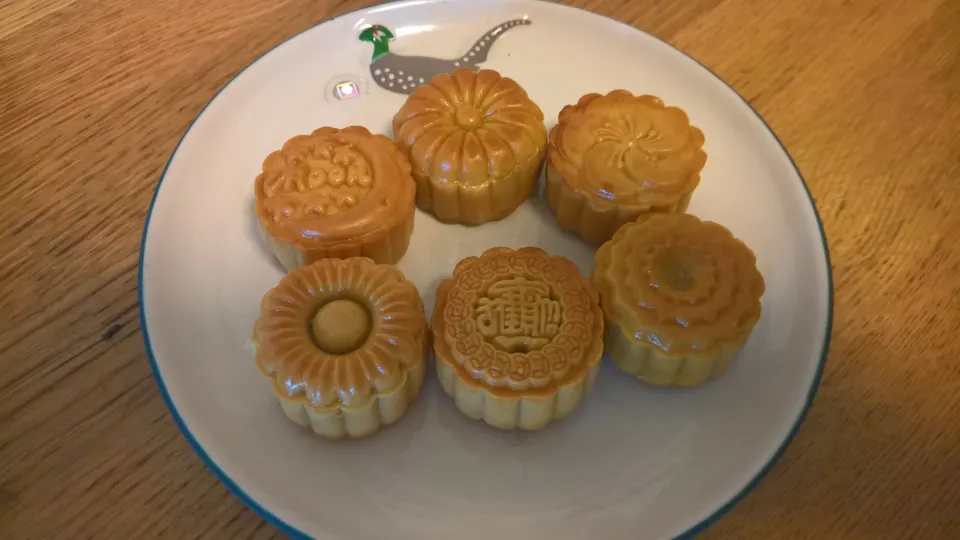
Traditional mooncakes weighed 200 to 350 g and came in a handful of fillings, Vietcetera notes; from the 1990s large brands and hotels began selling them in premium gift boxes, and the baked cake became the standard present. Since then the range has exploded: matcha, milk tea, crab and xoi xeo (xôi xéo), sticky rice with mung bean, in Vietcetera’s 2025 list, and oolong tea, lava cheese, tiramisu and Musang King durian among the 2026 launches reported by VnBusiness.
Trends at the queue. Old and new now sit side by side. In October 2025 Dai bieu Nhan dan (Đại biểu Nhân dân) found Hanoians queuing for hours both at traditional shops and for the year’s trends: cakes filled with com (cốm), the season’s young green rice flakes (not to be confused with the Mekong Delta’s com dep, the Khmer flattened rice), and banh deo with lotus seed and salted egg. Bakers also make low-sugar and vegetarian cakes.
Gift boxes and prices. Boxes are where prices climb. In September 2026 VietnamPlus listed hotel collections in Hanoi from about 800,000 dong to nearly 7 million dong a box, with the Sofitel Legend Metropole’s anniversary boxes at 3.5 to 10.99 million dong, and Kinh Do’s mass-market Trang Vang boxes at 600,000 dong to 1.35 million. The same report found sales slow and many shoppers buying single cakes rather than boxes.
Food-safety warnings. Every season brings official warnings. For Mid-Autumn 2026 the Ministry of Health’s Food Safety Department sent dispatch No. 1692 to the provinces, ordering inspections of mooncake makers, recalls of unsafe products and the publication of offenders’ names, and telling consumers to choose fully labelled cakes of clear origin (Dai bieu Nhan dan). On 19 September 2026 CafeF, reporting Tien Phong, found roadside stalls listing unbranded cakes at 25,000 to 30,000 dong, against 100,000 to 260,000 dong for a 210 g two-yolk cake in shops, and quoted Ho Chi Minh City’s food safety authority warning against cakes of unknown origin: rich in sugar, protein and fat, mooncakes spoil easily.
When are mooncakes sold before Mid-Autumn?
Mooncakes are a seasonal product. A Hanoi supermarket chain told VietnamPlus in 2026 that cakes appear from the first day of the seventh lunar month, and VnBusiness reported queues at Bao Phuong from early in that month; in Ho Chi Minh City the Phuong Diem Thuan bakery opened its 2026 season in July, two weeks earlier than the year before. Street stalls in Hanoi went up in early September 2026 on streets such as Ba Trieu, Pho Hue and Cau Giay.
| 2026 (past) | 2027 | |
|---|---|---|
| 1st day of the 7th lunar month (cakes reach the shops) | Thursday 13 August | Monday 2 August |
| Busiest buying | The last week before the festival | The last week before the festival (about 8 to 14 September) |
| Mid-Autumn (15th day of the 8th month) | Friday 25 September | Wednesday 15 September |
Dates are from the Hong Kong Observatory’s lunar calendar tables (Hong Kong Observatory); the Vietnamese calendar can differ by a day in rare years. The last days are the most crowded: in September 2024 Mekong ASEAN found hundreds of people queuing at Bao Phuong three days before the festival. Buying a week or two early is easier.
How to buy, store and eat mooncakes
Buy from a fixed shop or a stall with a clear address, where cakes are covered or in a display case. Check that the packaging is intact and that the label gives the producer’s name and address, ingredients, weight, production date, expiry date and storage instructions; Vietnam’s Food Safety Department says never to choose cakes with blurred, incomplete or altered labels (Nhan Dan).
Storing them.
- Cool and dry. Keep boxes away from heat, damp and direct sun.
- Fresh cakes in the fridge. Cakes made without preservatives, the kind sold by family bakeries, should be refrigerated and eaten within a short time, following the maker’s instructions.
- Cut cakes do not wait. Eat a cake soon after opening it, and do not leave cut pieces out for long.
- Throw it away if it smells rancid or sour, leaks oil, looks slimy, shows mould or the filling has changed colour.
Eating and giving them.
- Share one cake. A cake of 150 g or more is rich in sugar and fat, so families cut it into wedges and share it; one of each kind is a good way to compare.
- Try a traditional bakery and a modern one. Queue at a family shop for thap cam, and pick up one trendy filling elsewhere to taste the difference.
- Give a box. Mooncakes are the standard Mid-Autumn gift to relatives, friends and business contacts; boxes often mix baked and sticky, round and square cakes, as Vietcetera notes.
- Mind the cheap stalls. Unbranded cakes at a fraction of shop prices are exactly what the 2026 warnings targeted.
For other sweets Vietnamese eat through the year, see our guide to che by region.
Where to buy traditional mooncakes
Local favourite
Bảo Phương · Bánh trung thu Bảo Phương
Hanoi · Thụy Khuê street, near West Lake (former Tây Hồ district)
183 Thụy Khuê Street
A family mooncake bakery opened in 1954 by Phạm Vi Bảo and run by his descendants (Mekong ASEAN, 2024). Báo Văn Hóa (2025) calls it a shop that has served Hanoi families for more than 60 years, and VietnamPlus (2026) and Đại biểu Nhân dân (2025) report queues of an hour or more before the festival.
Order: A baked thập cẩm cake with lạp xường (Chinese sausage) or a mung-bean and melon-seed cake, plus a bánh dẻo to compare. In September 2026 a single cake cost about 90,000 dong (VietnamPlus).
Two branches stand close together on Thụy Khuê street; this card is the address given by VnExpress International. In 2024 the shop took cash only to keep the queue moving (Mekong ASEAN). Seasonal: it sells mooncakes in the weeks before Mid-Autumn.
Recommended by: VnExpress International (2023), VietnamPlus (VNA) (2026), Báo Văn Hóa (2025), Mekong ASEAN (2024) · checked November 2026
Local favourite
Như Lan · Bánh trung thu Như Lan
Ho Chi Minh City · Hàm Nghi street, central Saigon (former District 1)
50 and 64-66-68 Hàm Nghi Street
A long-running Saigon bakery that VnExpress International (2023) says has sold traditional mooncakes for more than 50 years; Báo Văn Hóa (2025) lists it among the city's heritage mooncake shops, with golden crusts and fillings from thập cẩm and mung bean to roast chicken and seafood.
Order: A baked thập cẩm gà quay (mixed filling with roast chicken) or a bánh dẻo hạt sen (sticky cake with lotus seed).
Better known the rest of the year for bread and pork rolls; mooncakes are seasonal.
Recommended by: VnExpress International (2023), Báo Văn Hóa (2025) · checked November 2026
Addresses and details can change; check before you go. We do not accept payment for listings.
Frequently asked questions
What is the difference between banh nuong and banh deo?
Banh nuong is the baked Vietnamese mooncake, with a glossy brown wheat-flour crust; banh deo is the white, soft sticky-rice mooncake that is pressed in a mould and never baked. They usually come with the same fillings, such as thap cam or mung bean with salted egg.
When can I buy mooncakes in Vietnam in 2027?
Shops usually start selling from the first day of the seventh lunar month, about 2 August 2027, and the busiest weeks are the last two before Mid-Autumn on Wednesday 15 September 2027. Traditional bakeries such as Bao Phuong in Hanoi draw long queues in the final days.
How much does a mooncake cost in Hanoi?
In September 2026 VietnamPlus found most 150 g banh nuong and banh deo with mixed or salted-egg filling at 65,000 to 80,000 dong each, and single cakes at Bao Phuong on Thuy Khue street at about 90,000 dong. Hotel gift boxes ran from several hundred thousand to over 10 million dong.
How long do Vietnamese mooncakes keep?
There is no single answer: follow the expiry date and storage note on the label. Vietnam's Food Safety Department says fresh cakes made without preservatives should be kept in the fridge and eaten within a short time, and any cake that smells rancid, leaks oil or shows mould should be thrown away.
Where can I buy traditional mooncakes in Hanoi?
Bao Phuong at 183 Thuy Khue street, a family bakery founded in 1954, is the best-known traditional shop and sells both banh nuong and banh deo. Expect queues in the last week before the festival.
Key sources
- Thị trường bánh Trung Thu Hà Nội ghi nhận sức mua chậm dù giá bán tăng nhẹ · VietnamPlus (VNA), 17 September 2026
- Bánh Trung thu · Nhân Dân, 10 September 2022
- Để chiếc bánh Trung thu kể cho bạn nghe về một ngày lễ cổ truyền · Vietcetera (Khánh Vy), 3 October 2025
- Nghệ nhân hướng dẫn làm bánh nướng chuẩn vị đất Hà thành · VietNamNet, 22 September 2017
- Ngọt thơm hương vị bánh Pía truyền thống của người dân Sóc Trăng · VietnamPlus (VNA), 31 August 2021
- Siết kiểm soát an toàn thực phẩm, công khai tên cơ sở vi phạm dịp Tết Trung thu 2026 · Đại biểu Nhân dân, 27 August 2026
- Gregorian-Lunar Calendar Conversion Table, 2027 · Hong Kong Observatory
- Cách chọn bánh trung thu bảo đảm an toàn thực phẩm · Nhân Dân, 18 September 2025
All 19 sources and further reading
- Gregorian-Lunar Calendar Conversion Table, 2026 · Hong Kong Observatory
- Moon cakes add flavour to Mid-Autumn Festival celebrations · Vietnam National Authority of Tourism (vietnamtourism.vn), 3 September 2014
- Tất cả về bánh trung thu của Việt Nam · Vietnam National Authority of Tourism (vietnam.travel)
- 12 long-lasting mooncake shops: a culinary tour from north to south · VnExpress International, 28 September 2023
- Giữ hồn xưa trong từng vị bánh · Báo Văn Hóa, 25 September 2025
- Thị trường bánh Trung thu 2026: Truyền thống giữ phong độ, 'trend' cũng hút khách · VnBusiness, 24 September 2026
- Bánh Trung thu 'chạy hàng', khách chờ 5-6 tiếng mới mua được · Đại biểu Nhân dân, 4 October 2025
- Bánh Trung thu đại hạ giá kiểu 'lạ hoắc' · CafeF (from Tiền Phong), 19 September 2026
- Tiệm bánh trung thu truyền thống nườm nượp người xếp hàng tại Hà Nội · Mekong ASEAN, 13 September 2024
- Cách làm bánh nướng cho mùa Trung thu sum vầy nhanh tại nhà · VietNamNet, 29 September 2025
- Names and administrative centers of 34 provinces and centrally-run cities specified · Vietnam Government Portal, 15 April 2025
Keep exploring
 North · Central · South · Culture Mid-Autumn 2027 in Vietnam (Tet Trung Thu): Where to Go Tet Trung Thu, Vietnam's Mid-Autumn Festival, by region: Hang Ma lanterns in Hanoi, Hoi An and Hue, Saigon's Cholon lantern street, and the 2027 date.
 North · Central · South · Food Banh Chung vs Banh Tet: The Difference and Which to Buy Banh chung vs banh tet: the difference in shape, leaf, filling and region, how to cut and keep them, and when to buy one before Tet on 6 February 2027.
 North · Central · South · Food Che (Chè) by Region: Which to Try in Hanoi, Hue and Saigon Vietnamese che compared: Hanoi's gentle bean and lotus che, Hue's trays of 20 small bowls, Saigon's coconut milk and ice, why they differ and how to order.