All three regions · Travel
Can Tourists Ride a Motorbike in Vietnam? Safety and Fines
Can tourists ride a motorbike in Vietnam? IDP rules, helmet and zero-alcohol fines as of November 2026, safer ride options and how to cross the street.
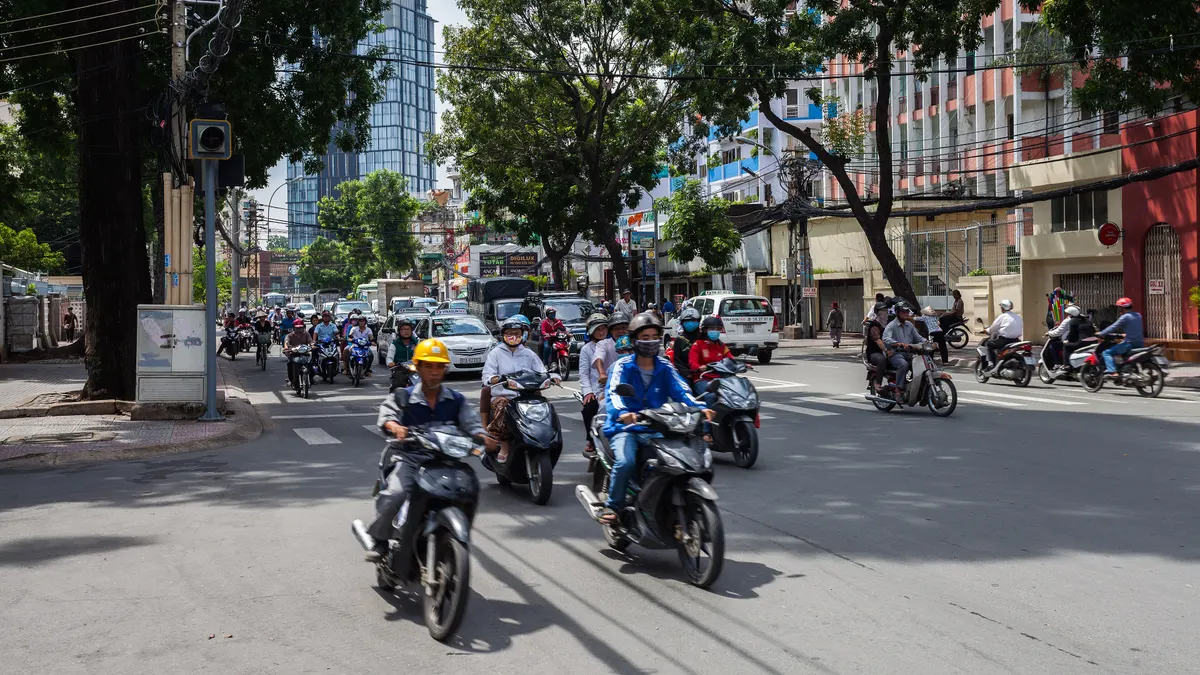
Most tourists cannot legally ride a motorbike in Vietnam: as of November 2026 you need an international driving permit issued under the 1968 Vienna Convention plus a home licence that covers motorbikes, as the UK government’s travel advice (updated 12 November 2026) confirms. Without both, walk, take app-booked cars and motorbike taxis, or ride pillion behind a professional. Vietnamese traffic looks chaotic but follows its own flow, and the rules behind it got much stricter in 2025: zero alcohol, higher fines and police checks that include foreigners. Roads are still dangerous: in the first nine months of 2026 the traffic police counted 11,564 crashes and 7,198 deaths, 9% fewer deaths than a year earlier, according to figures published on 2 October 2026 (VietnamPlus).
This page is the safety part of our Vietnam travel planning hub. Our guide to getting around Vietnam compares planes, trains, buses and ride-hailing; here we cover how to cross the street, how to ride safely as a passenger, whether you can legally rent a motorbike, the rules and fines that apply to you, children, accidents and insurance, and what changes between city streets and mountain passes. Laws and fines come from Vietnamese government portals and the national press, with their dates.
Traffic safety in Vietnam at a glance
| Situation | Safest choice | Rule that applies | Watch out |
|---|---|---|---|
| Crossing a city street | Marked crossing or green light, steady pace | Drivers must slow or stop for pedestrians on a green light (Law 36/2024) | Not every rider obeys the rules (GOV.UK) |
| Short city trips | Car or motorbike taxi booked in an app | Passengers must wear a fastened helmet: VND400,000–600,000 fine | Check driver and plate match the app |
| Ha Giang Loop and mountain roads | Easy rider from a licensed travel company, or a car tour | Since April 2026: contract naming driver, bike, route and rest stops | Fog, rain, bends; stop riding after dark |
| Riding a motorbike yourself | Only with a 1968-Convention IDP plus home motorbike licence | No licence: VND2–4 million (up to 125 cc), VND6–8 million (above) | Bike can be impounded; insurance may not pay |
| Any drink at all | Do not drive or ride | Zero alcohol since 1 January 2025 | Motorbike fines up to VND8–10 million plus suspension |
| Children in a private car | Back seat with a suitable restraint | Under 10 and under 1.35 m: not in the driver’s row, since 2026 | Taxis, buses and coaches are exempt |
| After a crash | Stay, call the police, contact your embassy | You may owe compensation even for minor injuries (GOV.UK) | Possible travel ban during an investigation |
How do you cross the street in Hanoi or Saigon?
Cross the way local people do: choose your moment, then walk at a steady pace in a straight line and keep going, so riders can read your path and steer around you. Running, zigzagging or stepping back is what confuses drivers, the Vietnamese media site Vietcetera advises, and freezing in the middle is more dangerous than walking on (Vietcetera).
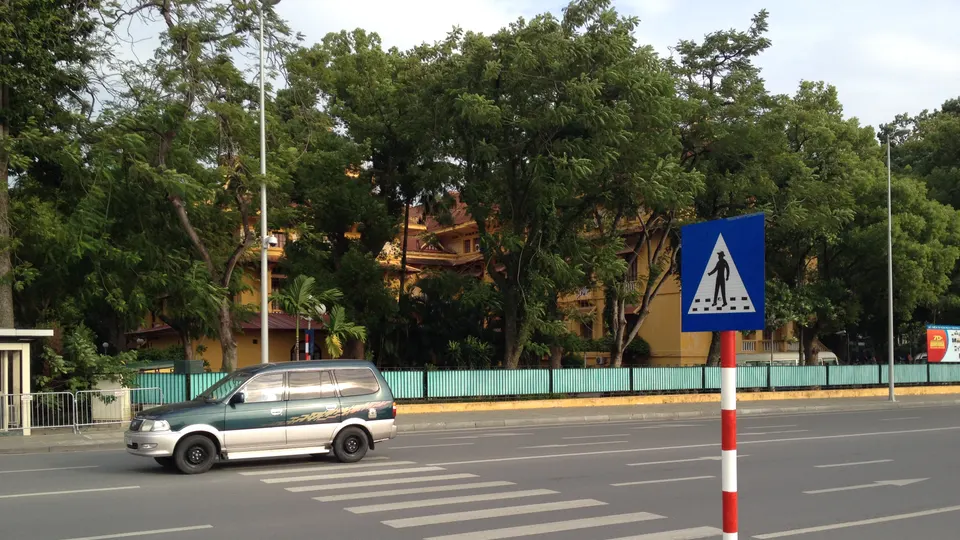
Step by step.
- Use a crossing, a light or an overpass where there is one. Under the 2024 Law on Road Traffic Order and Safety, drivers must slow down or stop on a green light to let pedestrians and wheelchair users cross.
- Look both ways, and then again. GOV.UK warns that compliance with road laws is poor and tells pedestrians to watch for motorbikes approaching as they walk. Riding the wrong way and riding on the pavement are now fined VND4 to 6 million, but do not assume every rider obeys.
- Raise an arm to make yourself visible, and wear something bright at night.
- Walk, do not run, in a straight line. Keep the same pace even when a bike comes close; riders adjust to where you will be in a second’s time.
- Cross with local people if you are unsure: stay beside or behind them and move when they move.
A horn is not always an order to get out of the way: not every honk is a warning, Vietcetera notes, so keep your pace rather than jumping back.
Riding as a passenger: motorbike taxis and easy riders
A motorbike taxi, xe om (xe ôm), literally “hug vehicle”, is a common way to make short city trips, and you can book one in the same apps as a car. The law treats you like any other road user: a passenger without a properly fastened helmet faces the same VND400,000 to 600,000 fine as the rider, and GOV.UK reminds visitors that riding without a helmet is illegal for drivers and passengers alike.
Before you get on.
- Book in an app such as Grab where you can: GOV.UK points out that the app lets you check the vehicle and driver match the booking. You will need mobile data, which our SIM and eSIM guide covers. Our guide to using Grab in Vietnam walks through booking, helmets and the scams to avoid.
- Put the helmet on and fasten the strap. An unfastened helmet counts as no helmet.
- One passenger only. A motorbike may carry the rider and one passenger; carrying two passengers is fined VND400,000 to 600,000. Exceptions include a child under 12.
- Prefer a car with heavy luggage, in heavy rain or late at night.
Easy riders on mountain loops. On the Ha Giang Loop, visitors can ride pillion behind a local driver, an “easy rider”, for several days. After a young British tourist died on such a tour in early April 2026, the province set rules: licensed operators must supply maintained bikes, helmets and protective gear, and may only carry tourists under a contract naming the driver, vehicle, route, rest stops and who handles emergencies. Our comparison of easy rider, self-ride and car tours on the Ha Giang Loop lists the questions to ask before you book.
Can you legally rent and ride a motorbike in Vietnam?
Only if you hold the right documents, and many visitors do not. Vietnam is party to the 1968 Vienna Convention on road traffic, not the 1949 Geneva Convention, so countries that signed only the 1949 Convention cannot issue an international driving permit (IDP) that is valid for driving in Vietnam, Viet Nam News explained in May 2026 (Viet Nam News). A 1968-Convention permit must be carried together with your national licence, endorsed for the class of vehicle you ride, Tuoi Tre News reported.
Decision checklist: can I ride?
- Do I hold a motorbike licence at home? A car-only licence does not let you ride a motorbike in Vietnam, Viet Nam News stresses. If no, do not ride.
- Is my international permit a 1968-Convention one that covers motorbikes? Check the permit itself. If it was issued under the 1949 Convention only, it is not valid in Vietnam. The UK government, for example, tells British travellers they need the 1968 permit and their UK licence for a car or a motorbike.
- Is my licence from an ASEAN country? Vietnam joined the ASEAN agreement on recognising domestic licences on 22 January 1997, so ASEAN licences are accepted, again only for the vehicle class they list.
- Am I a resident? Only foreigners with a temporary residence card can convert a home licence or take the Vietnamese test; visitors on tourist or business visas cannot get a Vietnamese licence.
- Am I an experienced rider? GOV.UK’s advice is blunt: do not hire a motorbike if you are not an experienced rider.
If any answer rules you out, take an easy rider or a car. Engine size matters for the fine: riding without a valid licence costs VND2 to 4 million on a motorbike up to 125 cc (or an electric one up to 11 kW) and VND6 to 8 million above that. Rental shops are not the police. Viet Nam News describes rental advice as complacent and dismissive of the rules, while police in Khanh Hoa province fined a Canadian rider without a valid permit in May 2026 and impounded his motorbike, and fined the owner who had lent it to him, Tuoi Tre News reported. GOV.UK also warns never to leave your passport as a deposit for a rented vehicle.
Which way should you get around? Options compared.
| Option | Effort for you | Legal risk | Main safety risk | Who it suits |
|---|---|---|---|---|
| Walking | Low; learn the crossing technique | None for visitors | Crossing busy streets | Old quarters and short distances |
| Motorbike taxi booked in an app (Grab bike) | Low; app records driver and plate | Passenger helmet fine VND400,000–600,000 if unfastened | Riding in heavy traffic | Solo travellers with light bags, short city trips |
| Car booked in an app or with a driver | Lowest | None for passengers; child-seat rule applies to private cars | Lower; you sit inside a vehicle | Families, luggage, rain, late nights |
| Easy rider on a mountain loop | Low; you ride pillion | Book only licensed operators (Ha Giang rules since April 2026) | Mountain bends, fog, rain | Ha Giang Loop visitors without a valid licence |
| Riding yourself with a valid 1968 IDP | High; navigation, traffic, police checks | Normal Decree 168 fines apply | Highest; you are in control | Experienced riders only |
| Riding yourself without a valid licence | High | VND2–8 million fine, bike impounded | Highest, and insurance may not pay | Nobody |
Which rules and fines apply to you?
Two documents set the rules in 2026: the Law on Road Traffic Order and Safety (No. 36/2024/QH15), passed on 27 June 2024 and in force since 1 January 2025, and Decree 168/2024, which set the fines from the same date. As of November 2026 Decree 168 is still the fines decree, amended by Decree 238/2026 from 15 August 2026; the changes reported by VOV, CafeF and Tuoi Tre News concern teenage riders, child restraints and private cars carrying paying passengers. The fines below are for motorbike riders, as listed by the Nghe An provincial public services portal and the legal database LuatVietnam (Nghe An portal). They apply to foreigners as much as to Vietnamese riders.

| Rule | Who | Fine on a motorbike (Decree 168/2024, from 1 Jan 2025) | Source |
|---|---|---|---|
| Helmet not worn or strap not fastened | Rider and passenger | VND400,000–600,000 | Nghe An portal; LuatVietnam |
| Any alcohol (up to 50 mg/100 ml blood or 0.25 mg/l breath) | Rider | VND2–3 million, 4 licence points | LuatVietnam |
| Alcohol 50–80 mg/100 ml or 0.25–0.4 mg/l | Rider | VND6–8 million, 10 licence points | LuatVietnam |
| Alcohol above 80 mg/100 ml or 0.4 mg/l | Rider | VND8–10 million and 22–24 months’ licence suspension | LuatVietnam; VnEconomy (Mar 2026) |
| Using a phone while riding | Rider | VND800,000–1 million, 4 licence points | LuatVietnam |
| Running a red light; riding on the pavement; wrong way | Rider | VND4–6 million | Nghe An portal; Viet Nam News |
| More than 20 km/h over the speed limit | Rider | VND6–8 million | LuatVietnam |
| Two passengers / three or more | Rider | VND400,000–600,000 / VND600,000–800,000 | Nghe An portal |
| No valid licence, up to 125 cc / above 125 cc | Rider | VND2–4 million / VND6–8 million | Bao Hai Duong |
| Not carrying the compulsory third-party insurance certificate | Rider | VND200,000–300,000 | Bao Hai Duong |
Zero means zero. Article 9 of the 2024 law bans driving or riding with any alcohol in the blood or breath. The rule carried over a ban already in the 2019 Law on Prevention of Alcohol and Beer Harms and was passed in a separate vote, 357 of 448 deputies in favour, Dan Chu & Phap Luat reported. Car drivers face far higher fines, up to VND20 million at the middle alcohol tier, according to the government portal. GOV.UK warns that anyone found with any alcohol in their system may be fined and could face imprisonment.
Then and now. Helmets became compulsory on all roads on 15 December 2007, and helmet use jumped from under 40% to almost 100% almost overnight, the road-safety charity AIP Foundation reported. The 2025 fines were a second jump: running a red light on a motorbike went from VND1 million to VND6 million at the top of the range, Viet Nam News noted. Vietnamese licences now also carry 12 points that are deducted for offences, a system that mostly matters to residents.
Travelling with children: cars and motorbikes
Children are where the newest rules sit. Since 1 January 2026, children under 10 who are shorter than 1.35 m may not sit in the same row as the driver, except in vehicles with only one row of seats, and the driver must use a suitable child restraint. From 15 August 2026 drivers who break the rule receive an official warning under Decree 238/2026, and the requirement does not apply to commercial passenger transport (Tuoi Tre News).
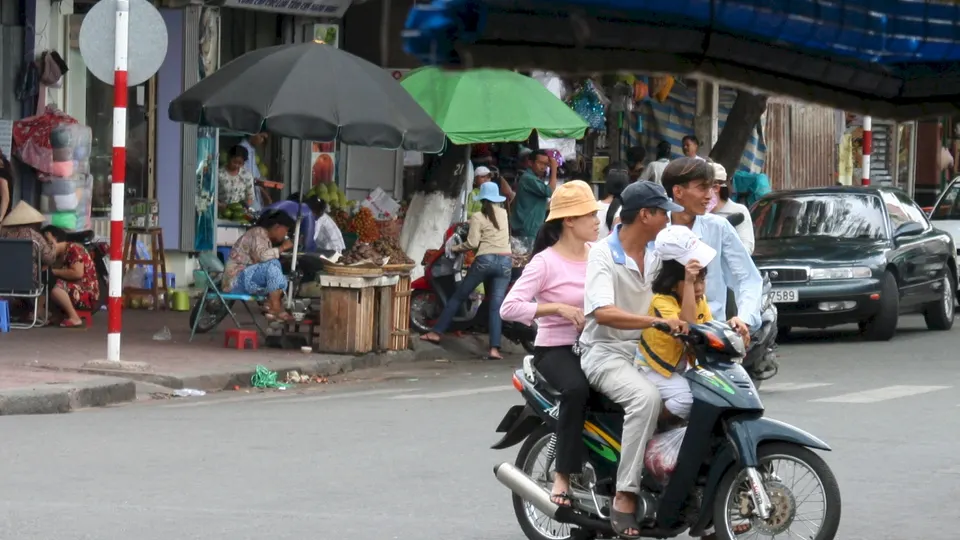
What this means for families. Taxis, buses and coaches are exempt from the child-seat equipment rule, PLO reported, so do not expect a taxi to have one. If a child seat matters to you, ask when you book a private car with a driver, or bring a travel seat. Keep children in the back row either way.
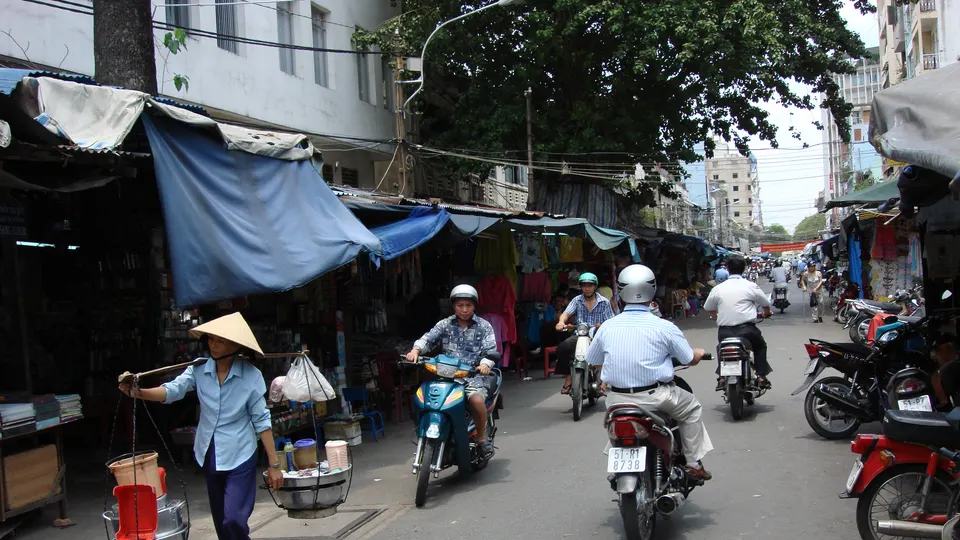
On a motorbike. The photo above shows what was once common: a whole family on one bike, without helmets. Today a motorbike may carry the rider and one passenger, and a child under 12 is one of the exceptions that allow a second passenger, but every passenger must wear a fastened helmet. For visiting families, a car is the simpler choice.
Accidents, police and insurance: what happens if something goes wrong?
A road accident in Vietnam can turn into a legal case. If you are involved in one, you could face criminal charges and may have to pay compensation to injured people even if their injuries are minor, and you may be banned from leaving the country while the police investigate, the UK government warns (GOV.UK). It advises cooperating fully with the police and informing your embassy or consulate.
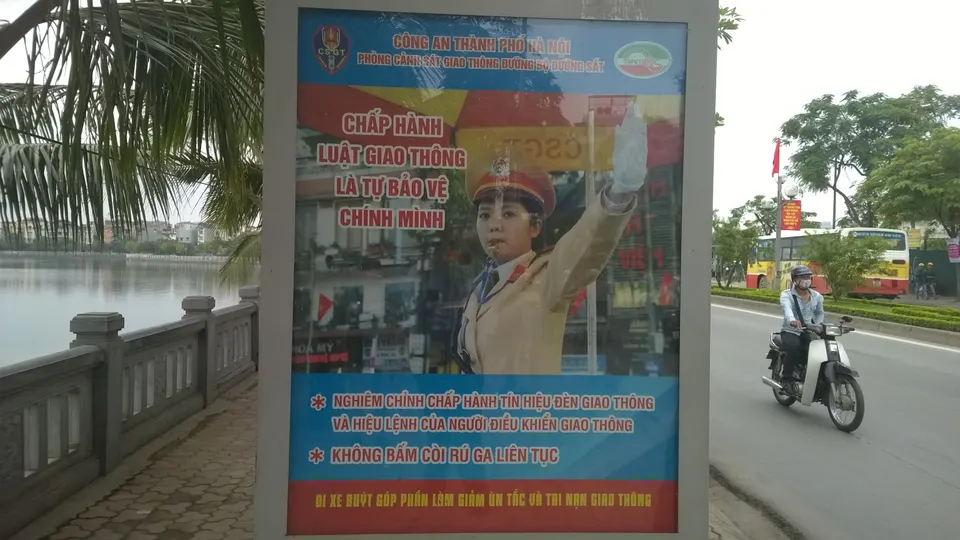
Insurance has two layers. It is illegal to drive without third-party insurance, GOV.UK says, and riders must carry the certificate of compulsory civil liability insurance. Your own travel and medical insurance is the second layer. “Being legal on the road ensures your travel and medical insurance will cover you,” Viet Nam News writes, and that cover is void if you ride while intoxicated. GOV.UK adds that you should make sure your policy covers what you plan to do, including riding a motorbike.
Police checks. Traffic police stop riders for documents as well as for offences, and the checks include foreigners: the Khanh Hoa patrols in May 2026 checked foreign riders for international permits in Nha Trang. There, the police told a Canadian rider that vehicles are subject to seizure when drivers do not hold valid licences.
City streets vs mountain roads: what changes by region
The risk changes with the road. In Hanoi and Ho Chi Minh City the everyday risks for visitors are crossing the street and short rides in heavy traffic. Outside the cities roads open up, and on mountain passes in the North and Centre bends, gradients, fog, rain and darkness add to the risk.

| Where | Main risks | What to do |
|---|---|---|
| Hanoi, Saigon and other cities | Crossing busy streets, heavy traffic | Walk steadily; use app-booked rides with a fastened helmet |
| Beach towns such as Nha Trang | Visitors renting without a valid permit | Police checked foreign riders’ permits in May 2026; rent only if legal |
| Ha Giang Loop (Tuyen Quang province) | Mountain bends, fog and rain, unlicensed tours | Licensed easy rider or car; ride only in daylight |
| Hai Van Pass (Da Nang–Hue) | Bends, speeding, weaving riders | Ride only if licensed; police check riders at busy times |
| Long-distance roads | Night buses and fatigue | Travel by day where you can |
Ha Giang Loop. The loop runs through the former Ha Giang province, since July 2025 part of Tuyen Quang province. Tuyen Quang’s culture and tourism department set the April 2026 rules for motorbike tours after a 19-year-old British tourist died on an easy-rider tour, and banned unlicensed businesses from advertising or selling tours (Tuoi Tre News). Vietnam’s national tourism site advises riders on the loop to take curves with caution, ride in daylight and stop after dark, and notes that obstacles and roadworks can appear at any time. Fog and rain depend on the month: see the best time for the Ha Giang Loop, and our Ha Giang destination guide for the route itself.
Hai Van Pass. The old road over the Hai Van Pass between Da Nang and Hue is a popular ride. Over the Tet holiday in 2023 police there dealt with 73 motorbike violations, including riding without a licence or helmet, high speed and weaving between lanes, and impounded 16 motorbikes, Nhan Dan reported. Police have run checks there at busy times.
Long-distance roads. GOV.UK warns that bus and coach crashes are more likely at night, when drivers may be tired, and that mudslides and landslides can block roads during floods. Daytime travel is the safer pattern on mountain routes.
Before you go: a traffic safety checklist
The practical steps come down to documents, equipment and timing. Sort them out before you arrive and most of the risks above stay theoretical.
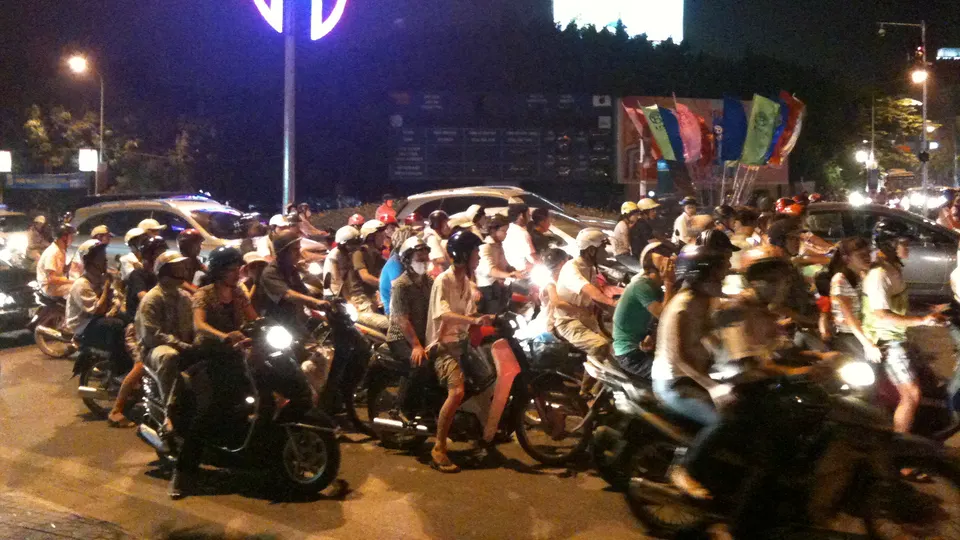
- Decide now whether you will ride. No motorbike licence at home, or no 1968-Convention permit covering motorbikes? Then plan on easy riders, cars and app-booked rides from the start.
- Read your travel insurance for motorbike riding and pillion travel, and the licence condition.
- Install a ride-hailing app and link a card before you land; our money guide explains how to pay.
- Wear a helmet every time, fastened, as rider or passenger.
- Drink or ride, never both. Vietnam allows no alcohol at all for drivers and riders.
- Never leave your passport as a rental deposit.
- Book tours only from licensed companies, with a contract naming driver, bike and route on the Ha Giang Loop.
- Ride and travel in daylight on mountain roads, and check the weather before a pass.
- On foot, cross steadily and keep walking once you have started.
- After any crash, stay at the scene, cooperate with the police and contact your embassy.
Frequently asked questions
Do I need an international driving permit to ride a motorbike in Vietnam?
Yes. As of November 2026 Vietnam accepts only an international driving permit issued under the 1968 Vienna Convention, carried together with a home licence that covers motorbikes; ASEAN licences are accepted for the class they list. Visitors on tourist or business visas cannot get a Vietnamese licence.
Can I have one beer and still ride a motorbike in Vietnam?
No. Since 1 January 2025 the Law on Road Traffic Order and Safety bans driving or riding with any alcohol in the blood or breath. On a motorbike the fines start at VND2 to 3 million and reach VND8 to 10 million plus a licence suspension of up to 24 months.
Is the Ha Giang Loop safe to do on a motorbike?
It is the riskiest common motorbike trip for visitors, with mountain bends, fog and rain. Since April 2026 Tuyen Quang province only allows licensed operators to sell Ha Giang Loop motorbike tours, under a contract naming the driver, bike, route and rest stops, and riding only in daylight is the safer pattern.
Do I need a child car seat in Vietnam in 2026?
Since 1 January 2026 children under 10 and shorter than 1.35 m may not sit in the driver's row and need a suitable restraint in private cars; drivers have received warnings for breaches since 15 August 2026. Taxis, buses and coaches are exempt from the equipment rule.
Which should I book in Hanoi or Saigon: a Grab bike or a Grab car?
A motorbike taxi is the common choice for short city trips, a car the safer one with luggage, in heavy rain or late at night. Book through an app such as Grab so the driver and plate are recorded, check they match before you get on, and wear the helmet the driver gives you, fastened.
Key sources
- Vietnam travel advice: safety and security (updated 12 November 2026) · GOV.UK (Foreign, Commonwealth & Development Office)
- Mức phạt người điều khiển xe máy vi phạm quy tắc giao thông đường bộ từ 1/1/2025 · Cổng dịch vụ công tỉnh Nghệ An, 11 January 2025
- 6 điểm mới của Luật Trật tự, an toàn giao thông đường bộ 2024 · Sở Tư pháp TP Cần Thơ, 5 February 2025
- 9 tháng năm 2026, toàn quốc xảy ra 11.564 vụ tai nạn giao thông · VietnamPlus, 2 October 2026
- Using the roads in Việt Nam as a foreigner · Việt Nam News, May 2026
- In Vietnam, drivers to be warned for failing to use safety seats for kids from mid-August · Tuoi Tre News, 30 June 2026
- Vietnam tightens safety rules on Ha Giang Loop motorbike tours · Tuoi Tre News, 16 April 2026
- Vietnam Survival Guide: Road Crossing 101 · Vietcetera, 22 November 2024
All 23 sources and further reading
- Tờ rơi Luật Trật tự, an toàn giao thông đường bộ (Luật số 36/2024/QH15) · UBND Quận 3, TP Hồ Chí Minh, February 2025
- Stricter traffic fines for road violations come into force · Vietnam Government Portal, 1 January 2025
- Chính thức thông qua quy định cấm tuyệt đối nồng độ cồn khi lái xe · Dân chủ & Pháp luật, 27 June 2024
- Nghị định 168 đối với xe máy: 10 mức phạt mọi tài xế cần biết · LuatVietnam, 7 January 2025
- Người đi xe máy có thể bị phạt tới 8 triệu đồng nếu không mang theo loại giấy tờ này · Báo Hải Dương
- Stricter fines for traffic violations introduced in 2025 · Việt Nam News, 30 December 2024
- Evolution of traffic fines in Vietnam · VnEconomy, 30 March 2026
- Hàng loạt quy định mới về trật tự, an toàn giao thông chính thức có hiệu lực từ ngày 1-7 · Pháp Luật TP.HCM (PLO), 2025
- Is converting foreign driver's licenses required in Vietnam? · Tuoi Tre News, 14 March 2024
- Foreigners caught riding motorbikes without international driving permits in Vietnam's Khanh Hoa · Tuoi Tre News, 14 May 2026
- Hà Giang Loop: a four-day road trip · Vietnam National Authority of Tourism (vietnam.travel)
- Xử phạt 73 trường hợp đi xe máy vi phạm giao thông trên đèo Hải Vân · Nhân Dân, 3 February 2023
- Mở rộng phạm vi xử phạt người từ 16 đến dưới 18 tuổi điều khiển xe mô tô · VOV, 17 October 2026
- Quy định mới về xử phạt vi phạm giao thông áp dụng từ ngày 15/8 · CafeF, 30 July 2026
- Hats off to Vietnam's helmet law · AIP Foundation, 12 September 2014
Keep exploring
 North · Central · South · Travel Getting Around Vietnam in 2026: Plane, Train, Bus or Grab How to get around Vietnam in 2026: plane vs train vs sleeper bus by route, Grab vs Green SM (Xanh SM), Long Thanh airport and motorbike licence rules.
 North Vietnam · Travel Ha Giang Loop: Easy Rider, Self-Ride or Car? Which to Book Easy rider, self-ride or car on the Ha Giang Loop? As of November 2026: the April safety rules, tour prices, licence checks and Lung Cu road closures.
 North · Central · South · Travel Money in Vietnam: Cash, Card or QR, and Whom to Tip Money in Vietnam as of November 2026: cash, card or QR, which visitors can scan VietQR, ATM limits and fees, legal money exchange and whom to tip.
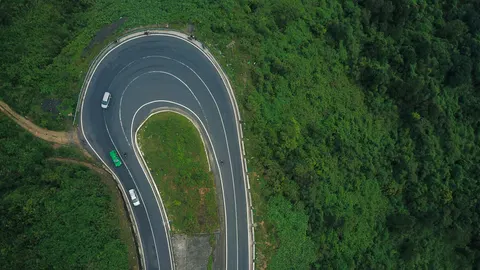 Central Vietnam · Travel Hai Van Pass (Hải Vân): Road, Tunnel or Train, Hue–Da Nang How to cross the Hai Van Pass between Hue and Da Nang by motorbike, car, tunnel or train, why the ridge divides Vietnam, and what to know about Hai Van Quan.