North Vietnam · Food
Bun Rieu, Canh Bun or Bun Moc: Which Soup to Order?
Bun rieu, canh bun or bun moc? How the sour crab soup differs from thick-noodle canh bun and the clear pork-ball bowl, 2026 prices and where to try them.
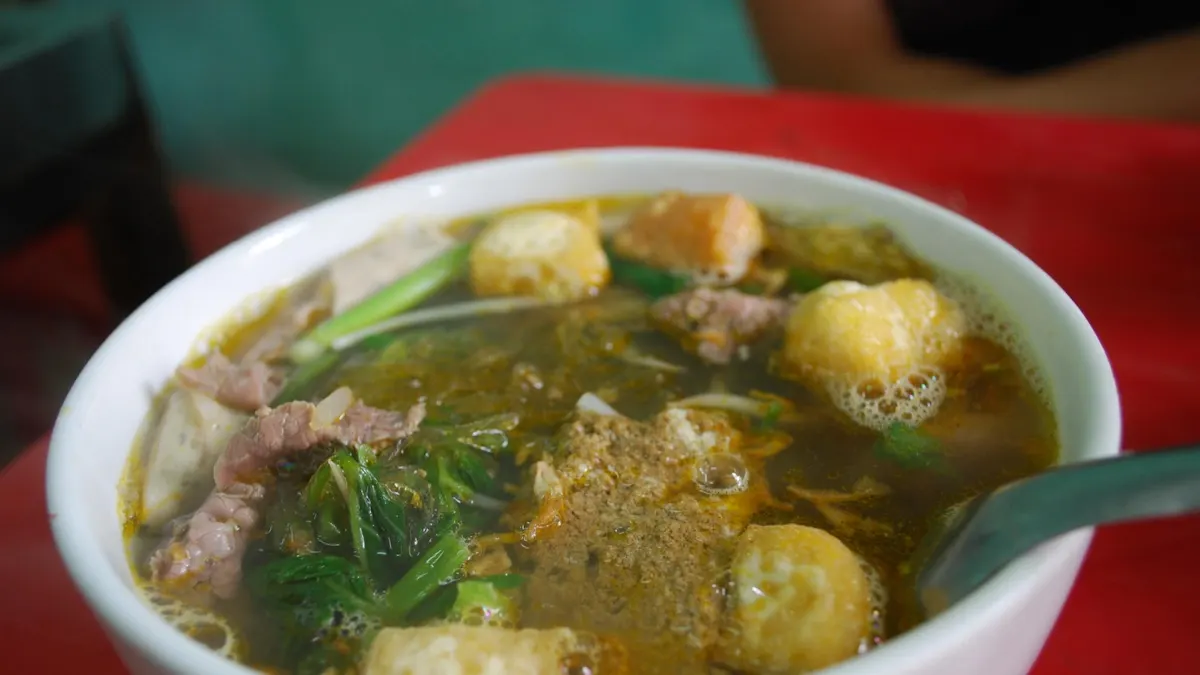
Order bun rieu if you want a tart, tomato-red soup built on pounded field crab, and bun moc if you want a mild, clear pork broth with pork-paste balls and no crab. Both are cheap everyday food: in April 2026 Hanoi’s city food-safety portal quoted 50,000 dong for a basic bun rieu at a Dong Xuan market stall, about 80,000 dong with every topping. As of November 2026, MICHELIN’s listings for Luk Lak in Hanoi and Bun Rieu Yen in Ho Chi Minh City still show both as Bib Gourmands in the 2026 guide.
Bun rieu cua (bún riêu cua) is the bowl that turns Hanoi’s breakfast stalls tomato-red: rice vermicelli in a sour broth made from tiny field crabs, with soft clumps of crab curd floating on top. It shares the pavement with bun moc (bún mọc), a clear, gentle pork-ball soup that could hardly be more different. This guide explains how each is made, how the crab soup changes as you travel south, and how to order and eat both. For the wider morning table, see Vietnamese breakfast by region, and for how bun, pho and the other noodles differ, see Vietnamese noodles explained.
What is bun rieu cua?
The name tells you the parts. Bun is round rice vermicelli; rieu is the crab curd; cua is crab, and in this dish it means cua dong (cua đồng), the small freshwater crabs that live in rice paddies and ponds. A trade magazine article on Hanoi’s crab soup is blunt about it: the crab “must be field crab, living in wet rice fields or ponds” (Tap chi Cong Thuong).
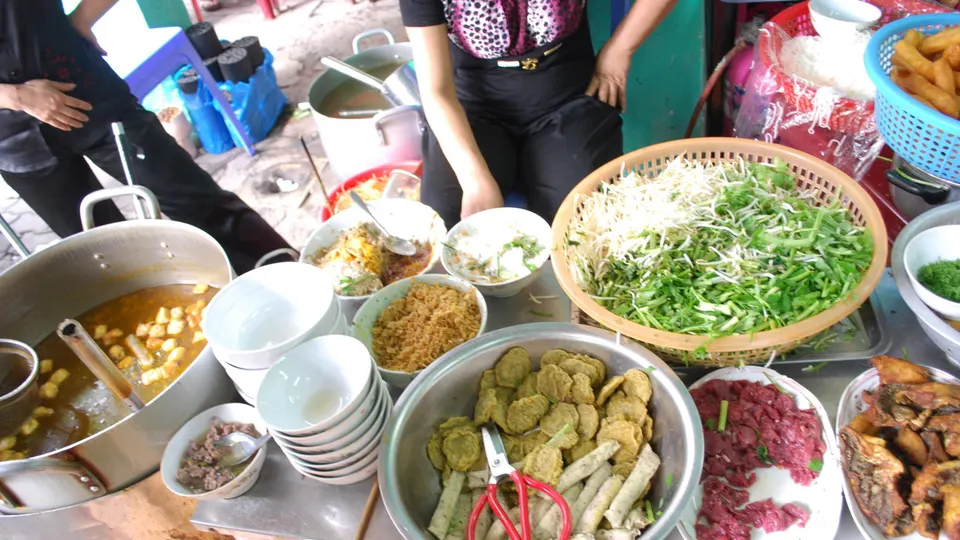
What makes it different from almost every other Vietnamese noodle soup is that the broth is not built on long-simmered bones. Its body comes from the crab itself, sharpened with tomato and a sour element, and its sweetness, VnExpress explains, comes from the umami of tomato, dried shrimp and shrimp paste rather than bone stock. The result is light, tart and savoury rather than rich, and in Hanoi it is mostly a morning and midday dish.
How is the crab rieu made?
The technique is the dish. Live field crabs are cleaned, the top shells lifted off and the roe set aside; the bodies are then pounded in a mortar with a little salt until sticky, mixed with water, squeezed and strained, often several times, so that the shell stays behind and only a cloudy crab liquid goes into the pot. VnExpress International calls repeated pounding and filtering “the secret to getting a lot of crab meat” (VnExpress).
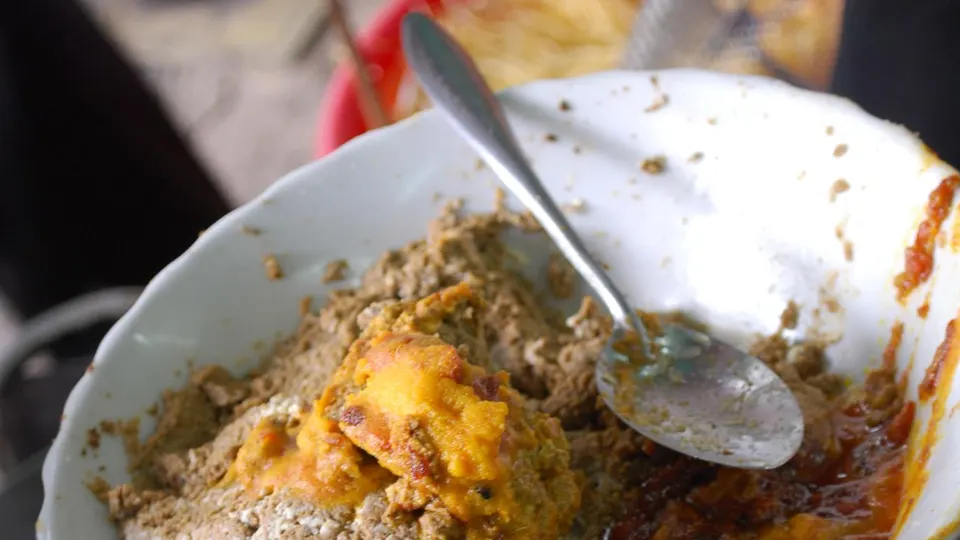
The liquid is heated slowly and stirred so it does not catch. As it nears the boil, the crab protein rises and sets into a soft, crumbly raft; that raft is the rieu. An old VnExpress recipe for Hanoi bun rieu insists on pounding by hand, saying the finer the crab is pounded, the more crab “cream” forms on the broth, and that machine-ground crab tastes flatter and turns gritty. The roe is fried separately in fat with shallots until golden and spooned over the bowl at the end.
The sour note is where Hanoi cooks differ most:
- Giam bong (giấm bỗng): a vinegar fermented from the lees of rice wine, the classic choice. VOV says the broth “must contain wine vinegar” for its characteristic sourness, and one Hanoi cook told VietNamNet she ferments hers for seven days.
- Me (mẻ) and doc (dọc) fruit: the 2001 VnExpress recipe sours the pot with me, a fermented cooked-rice paste, and grilled doc, a sour forest fruit.
- Tomato: always present, usually added twice: some fried first for colour and flavour, the rest added near the end in wedges.
Bun rieu vs bun moc vs Southern bun rieu at a glance
| Hanoi bun rieu cua | Southern bun rieu | Hanoi bun moc | |
|---|---|---|---|
| Broth | Field crab pounded and strained; light, sour, savoury | Field crab with tomato, dried shrimp and shrimp paste; no bone stock needed | Pork bones (sometimes chicken bones) simmered and skimmed until clear and lightly sweet |
| Colour | Tomato-tinted, with golden fried roe on top | Bright red-orange from tomato fried in annatto oil | Clear |
| Sour element | Giam bong (rice-wine vinegar), or me and doc fruit; tomato | Tomato; tamarind sauce on some tables | None in the classic bowl; some shops add tomato |
| The “ball” | Soft, loose crab curd (rieu) | Firm steamed crab cake mixed with pork, egg and dried shrimp | Moc: pork paste with shiitake, wood ear and shallot |
| Typical toppings today | Fried tofu, blanched beef, snails, pork sausage, fried roe | Pork blood, pork sausage, trotters, fried tofu, crab cake, snails, ribs | Ribs, chicken, bamboo shoots, pork sausage, doc mung (elephant-ear stems), offal |
| On the side | Shredded lettuce, herbs, split water spinach, banana blossom | Water spinach, banana blossom, bean sprouts, sawtooth herb | Coriander, spring onion, pepper |
| Table condiments | Vinegar, chilli, mam tom | Lime, chilli, mam tom | Pepper; vinegar on the table at some shops |
The bun rieu family: what each sign means and how to order
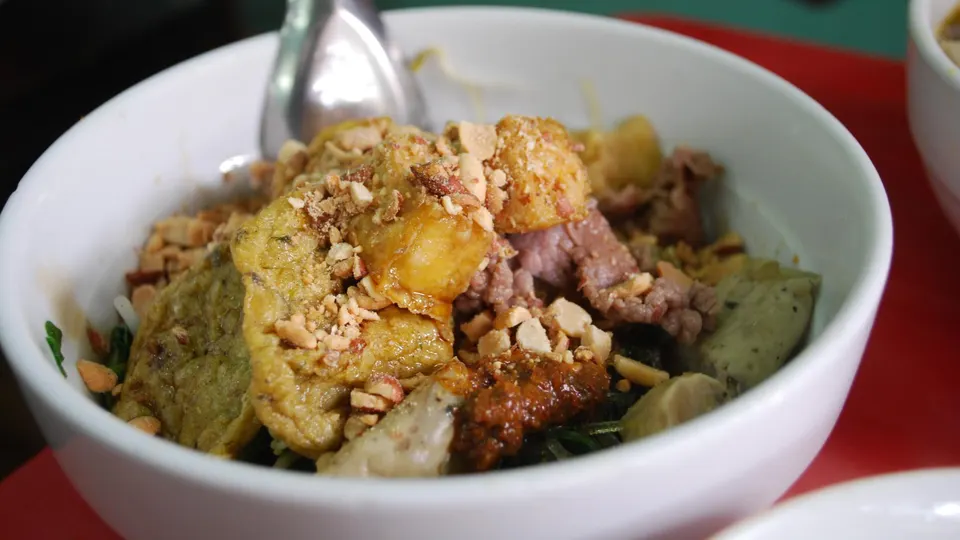
Bun rieu started as a plain bowl. Tuoi Tre’s March 2026 look back at old Hanoi describes it as light and simple: crab curd, a few tomato wedges and a little fat, with no beef, tofu, snails or balut (fertilised duck egg), and it notes that full-topping bowls have been around for more than 20 years (Tuoi Tre). Today the same crab broth carries a long list of extras, so the words on the sign and the toppings on display tell you what you are about to get.
| On the sign or menu | What you get | Where you meet it | How to order |
|---|---|---|---|
| Bun rieu cua | The base bowl: field-crab curd, fried roe, tomato and a sour note | Everywhere; the plain bowl is the old Hanoi style | Ask for bun rieu cua, then add toppings by name or by pointing |
| Bun rieu oc (bún riêu ốc) | The crab broth with boiled river snails | Hanoi above all; many Saigon shops add snails too | Ask for “oc”; snails are cooked in the pot |
| With bo or bap bo | Blanched lean beef, or beef shank, bap bo (bắp bò); sometimes tendon | Hanoi shops such as Huyen Thu (Huyền Thu) | Ask for “bo” or “bap” as an extra |
| Bun rieu top mo (bún riêu tóp mỡ) | Crisp fried pork fat scattered over the bowl, often with beef, tofu and pork sausage | Hanoi pavement stalls | Point at the crackling; it is rich, so try a half helping |
| Saigon-style bun rieu | Red annatto broth, firm crab cake, fried tofu, pork leg, snails and pork blood, huyet (huyết) | Ho Chi Minh City and the South | Ask for “khong huyet” if you would rather skip the blood |
| Shrimp-and-pork rieu | Rieu made from shrimp, pork and egg, or dried shrimp pounded with pork, instead of field crab | Some Saigon shops, including Bun Rieu Yen | Ask “rieu cua?” if real crab matters to you |
| Canh bun (canh bún) | Thick round noodles and water spinach in the bowl; clear crab broth in the North, red in the South | Both cities; Saigon shops often sell it beside bun rieu | Ask for canh bun; the sign is often the only clue |
| Lau rieu cua (lẩu riêu cua) | The crab and tomato broth served as a hotpot, with toppings cooked at the table | Hanoi restaurants | Order by the pot, for two or more |
The snail bowl has a small history of its own. Tuoi Tre traces it to a vendor at Nghia Tan (Nghĩa Tân) market in Hanoi who sold both bun oc (snail noodles) and bun rieu, until customers started asking for the two together. The crackling bowl is a pavement favourite: VietNamNet’s 2024 round-up of Hanoi crab soup shops names a stall known for its top mo, and the Hanoi Times calls lau rieu cua, the shared hotpot, the more lavish relative. In the North, canh bun is clear and lightly sweet, often with rau rut (water mimosa); in Saigon it turns red with tomato and annatto, and VnExpress notes that it can look almost identical to bun rieu.
Bun rieu is not only Northern. VnExpress International notes that Central Vietnam adds a long, thin Hue-style pork roll to the bowl, and the South piles on the most toppings of all, as the next section explains.
How is Southern bun rieu different?
Order bun rieu in Ho Chi Minh City and the bowl is redder and fuller. The broth is still field crab, but half the tomatoes are fried in annatto oil, which gives the soup its bright red-orange colour, and the crab meat is mixed with minced pork, pork fat, dried shrimp and egg and steamed into a firm crab cake (cha cua) topped with roe. VnExpress’s Southern recipe adds pork blood, pork sausage, trotters, fried tofu, ribs and apple snails, and serves it with water spinach, banana blossom, bean sprouts and sawtooth herb; its 2023 “Saigon flavour” recipe is built the same way, with fried tofu, blood and pork leg, and lime squeezed in at the end.
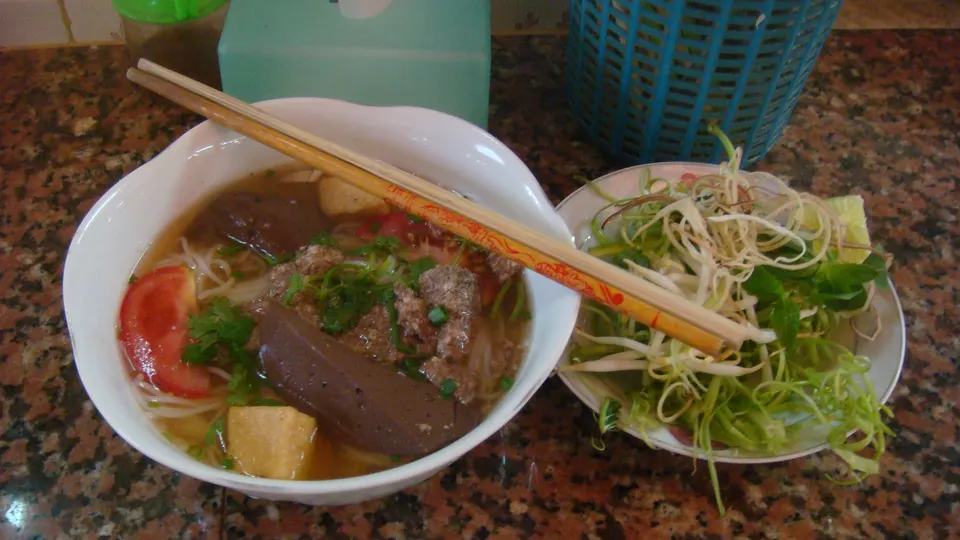
The difference shows most in the crab itself. A writer in a Znews essay puts it plainly: in Hanoi the crab curd is soft and does not hold together, while in Saigon it is shaped into a large, dense lump with pork and egg that reminded him of pork sausage with a little crab. Not every Southern bowl uses field crab. Saigon’s only MICHELIN Bib Gourmand for bun rieu, Bun Rieu Yen, makes its rieu from shrimp, pork and egg, and is best known for its crisp fried tofu (Tuoi Tre News). Others go the opposite way: Tuoi Tre’s June 2026 profile of a Saigon shop run by a family of field-crab wholesalers describes rieu made only from fresh field crab, with no pork or dried shrimp, served with blood, snails and tofu. For the city’s other noodle soups, see hu tieu, our Saigon eating guide by area and the Ho Chi Minh City guide.
Canh bun vs bun rieu: what is the difference?
Canh bun (canh bún) is the crab soup’s thick-noodle cousin, and the noodles and greens give it away: fat, round noodles close to the ones used for bun bo Hue, with boiled water spinach in the bowl. In the old Hanoi version the difference goes further. As VnExpress explained in May 2025, the traditional Hanoi canh bun broth gets no rice-wine vinegar and is ladled on only until the noodles are moist, almost like a mixed noodle dish, whereas bun rieu is soured and served brimming with broth (VnExpress).
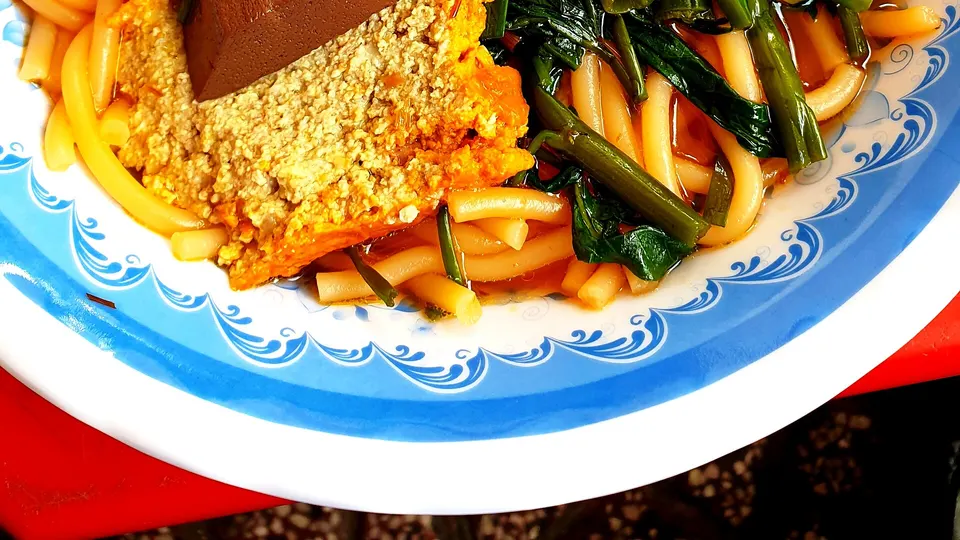
| Hanoi bun rieu cua | Hanoi canh bun | Southern canh bun | |
|---|---|---|---|
| Noodles | Thin rice vermicelli | Thick round noodles, kept warm so they stay whole | Thick round noodles |
| Broth | Field crab, soured with rice-wine vinegar and tomato | Field crab only, clear and lightly sweet, no rice-wine vinegar | Red-orange crab and tomato broth with annatto oil |
| How much broth | A full bowl | Just enough to moisten the noodles | A full bowl |
| Greens in the bowl | Served on the side (lettuce, herbs, split water spinach) | Boiled water spinach and water mimosa (rau rut) | Boiled water spinach; no water mimosa |
| Toppings | Crab curd, tomato; today often tofu, beef, snails | Crab curd and pork roll (cha), chives | Crab curd, crab cake, tofu, pork blood |
| How common | Everywhere in Hanoi | Only a handful of Hanoi shops still sell it | Easy to find in Ho Chi Minh City |
The table follows two VnExpress reports: the May 2025 piece on Hanoi crab dishes and a March 2020 comparison of canh bun in the two cities. The Hanoi bowl’s signature green is water mimosa (rau rut, called rau nhut in the South), a crunchy water plant that Southern canh bun leaves out. In the South the difference shrinks: the 2020 report says that without the “canh bun” sign many diners would mistake it for bun rieu, since both have red broth, crab and tomato rieu, cha, tofu and blood, and canh bun only adds the boiled water spinach.
The name has a long pedigree. The writer Vu Bang praised canh bun in Mieng ngon Ha Noi in the 1950s, describing the same thick noodles cooked with field crab and greens that “cool” the bowl and bring out the crab’s sweetness. VnExpress adds that it was also called bun dua or bun rau and was sold from shoulder-pole baskets in the lean subsidy years; by 2025 only a few Hanoi shops still served it, on streets such as Hoe Nhai, Thanh Ha and Nguyen Sieu. In Ho Chi Minh City many of the longest-running canh bun sellers are of Northern origin and have sold it since the 1970s, and Bun Rieu Yen, the MICHELIN Bib Gourmand listed below, serves canh bun alongside its bun rieu.
Which to order? Choose bun rieu for a sour, soupy bowl; choose canh bun for chewier noodles and plenty of greens, and in Hanoi for the gentler, unsoured crab broth.
What is bun moc, and how is it different?
Bun moc (bún mọc) is rice vermicelli in a clear pork broth with moc: balls of raw pork paste, gio song (giò sống), mixed with chopped shiitake, wood ear mushroom and dried shallot. An ninh Thu do, a Hanoi daily, says the dish takes its name from these balls, and that every shop’s moc tastes different: some large and fragrant with shiitake, others finely ground and peppery.
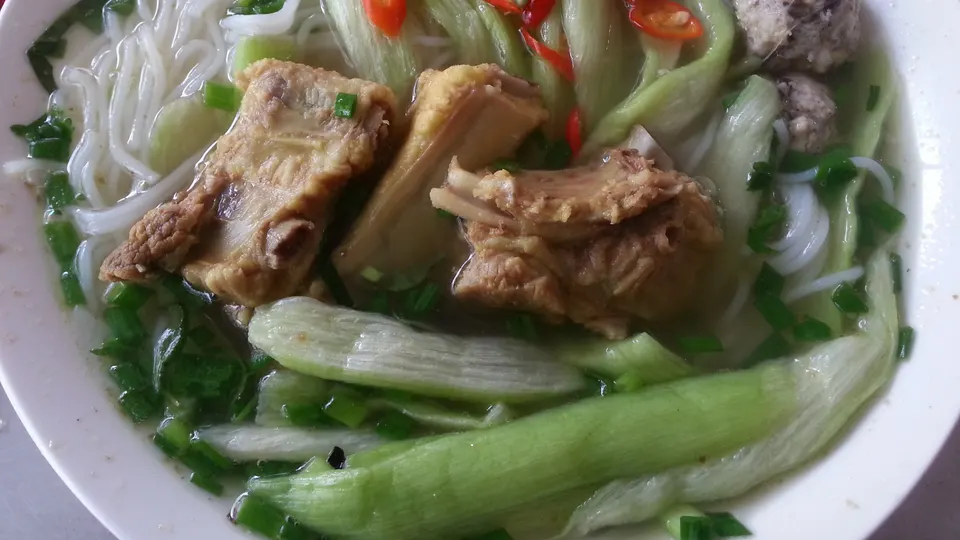
The broth is the opposite of bun rieu’s. Pork bones are blanched, rinsed and simmered for about an hour, with the scum skimmed off so the stock stays clear; shiitake goes in for the last 15 minutes (VnExpress). The result is clean and lightly sweet, with no crab, no tomato and no sour note in the classic Hanoi bowl. Common additions are pork ribs (bun moc suon), chicken, bamboo shoots, pork sausage, offal and doc mung (dọc mùng), the spongy stems of the giant elephant-ear plant, which soak up the broth. VietNamNet’s 2025 round-up of Hanoi shops lists stalls beside Cau Dong market and on Hang Luoc, Hang Ngang and Kham Thien streets (VietNamNet).
Which to choose? If you want something tart, bright and a little funky from crab and vinegar, order bun rieu. If you want something mild and comforting, bun moc is the gentler bowl; VietNamNet recommends it especially in winter.
Where do bun rieu and bun moc come from?
Both are Northern street dishes, but their histories are only lightly documented. Bun rieu is built on crabs from the rice paddies, and VOV links it to Vietnam’s wet-rice culture. According to VnExpress, the writer Vu Bang described canh bun, the thick-noodle crab soup, in his 1950s book on Hanoi’s delicacies, Mieng ngon Ha Noi (‘Hanoi delicacies’). Znews notes that canh bun spread south with Northern migrants, and in the South these crab soups took on annatto oil and many more toppings.
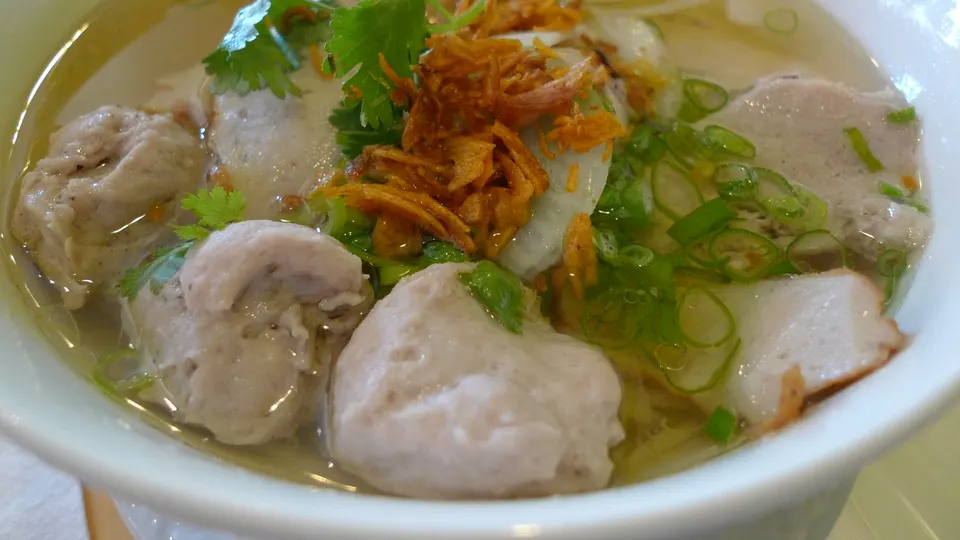
The origin of bun moc is debated. VietNamNet traces it to Moc village in Nhan Chinh, now part of Hanoi’s Thanh Xuan area, and An ninh Thu do says most people agree; but the same paper quotes the Hanoi writer Nguyen Ngoc Tien suggesting the name comes from the craft of pork-paste making instead, and the writer Do Phan dating the dish in Hanoi to only about half a century before 2018 (An ninh Thu do). Treat any single origin story with caution.
How do you eat bun rieu?
Start by tasting the broth on its own. Stalls expect you to adjust the bowl yourself, and the extras sit on the table: a jar of vinegar, chilli, and often mam tom (mắm tôm), the purple fermented shrimp paste. Tap chi Cong Thuong notes that cooks often put a little mam tom into the pot already, so add more only if you like it.
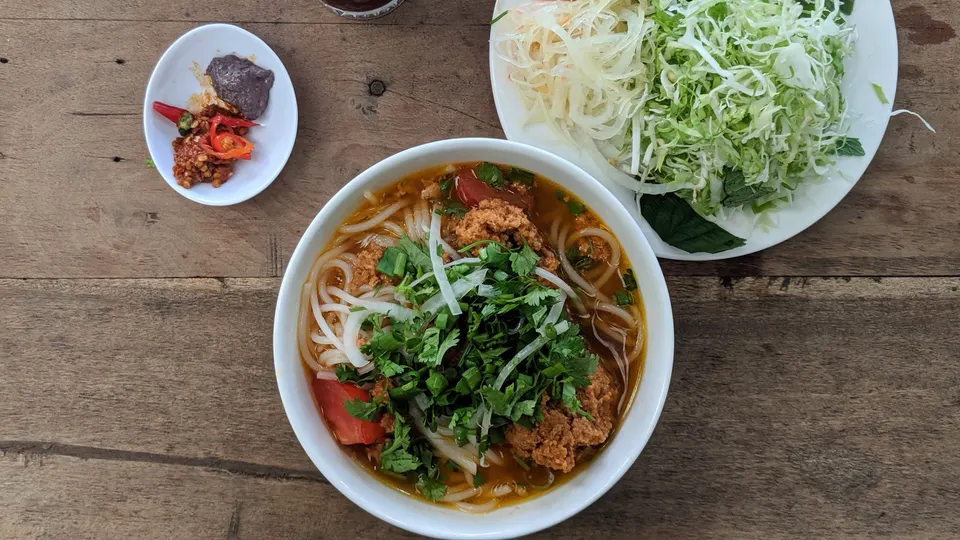
The greens matter as much as the broth. In Hanoi the usual plate holds shredded lettuce, split water-spinach stems, banana blossom, perilla and kinh gioi (Vietnamese balm), which you push into the hot soup a little at a time; in the South, bean sprouts and sawtooth herb join them. Our guide to Vietnamese herbs explains what each one tastes like, and the nuoc cham guide explains how mam tom is used elsewhere. In Saigon the advice is the same: MICHELIN’s inspectors suggest eating Bun Rieu Yen’s bowl like a local but adding only a small amount of the pungent shrimp paste at first (MICHELIN Guide).
Timing helps too. Bun rieu stalls start early: VOV describes one Hanoi cook starting at 4am to sell from 7am, though a few stalls trade in the evening. MICHELIN notes that field crabs are at their best around the April harvest. Like pho and bun cha, bun rieu is a dish of small specialist shops, so look for a sign that names it.
What does a bowl cost? Prices depend mostly on the toppings. In April 2026 Hanoi’s city food-safety portal listed a basic bowl at 50,000 dong at a stall in the Dong Xuan market food lane, about 80,000 dong for a full bowl and roughly 10,000 dong for each extra such as balut, beef or snails; another Hanoi shop it profiled charged 30,000 to 55,000 dong a bowl. In Saigon, Tuoi Tre’s June 2026 profile of the field-crab shop Tien Cua priced a bowl of bun rieu oc at 35,000 dong. Treat these as a guide: prices at street stalls change often.
What should you do to order bun rieu and bun moc well?
Both soups are cheap, fast street food, and most of the choices are made at the counter and the table. A short checklist:
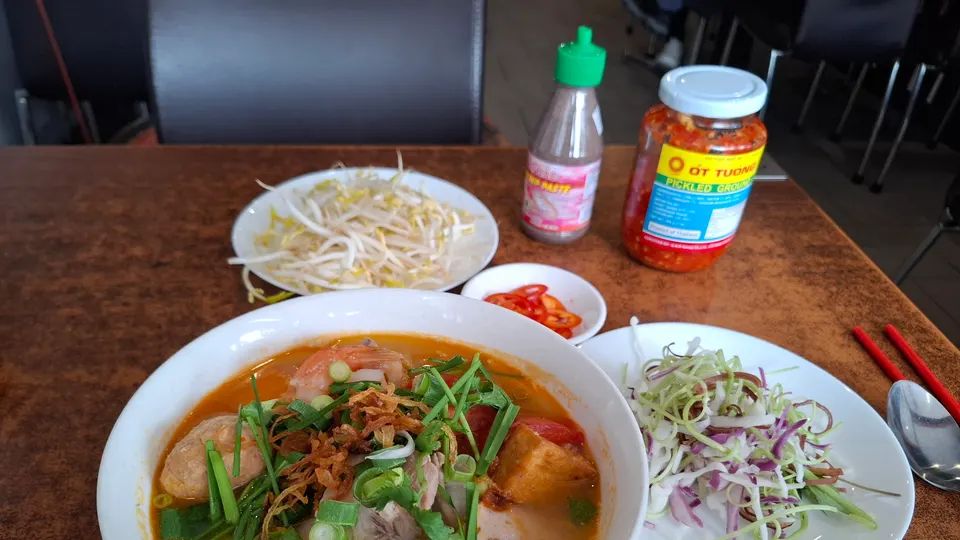
- Read the sign. “Bun rieu cua” means crab soup; “bun rieu oc” adds snails; “bun moc” is the clear pork-ball soup; “canh bun” is the thick-noodle cousin with water spinach. The family table above decodes the rest.
- Ask for a bowl. In Hanoi a bowl is a bat (bát), in Saigon a to (tô): “mot bat bun rieu cua” in the North, “mot to bun rieu” in the South.
- Choose your toppings. Point to the extras on display (tofu, beef, snails, sausage) or ask for a full bowl with everything; a plain crab bowl is the traditional baseline.
- Taste before seasoning. Add vinegar, chilli and mam tom gradually. Bun moc needs little more than pepper.
- Use the greens. Add lettuce, water spinach and banana blossom a little at a time so they wilt in the heat.
- Check the crab. Field crabs are getting scarcer and dearer, and in July 2026 CafeF reported that many shops now make their rieu mostly from egg and minced pork. Real crab rieu is an uneven golden brown, loose and slightly pitted; egg-heavy rieu is evenly yellow, firm and smooth like pork roll.
- Be choosy about snails. Tuoi Tre’s readers’ forum reported in October 2026 that much of the snail meat on sale is the invasive golden apple snail, which is safe only when thoroughly cooked; if a stall looks careless, order the bowl without snails.
- Go early. For Hanoi bun rieu, breakfast to late morning is the safest time; check the places below and our Hanoi Old Quarter eating guide, and use the Hanoi guide and the food hub to plan the rest of your eating.
Where to try bun rieu
Local favourite
Bún Riêu Huyền Thu · Bún riêu cua Huyền Thu
Hanoi · Quang Trung Street, central Hanoi (former Hoàn Kiếm district)
2F Quang Trung Street
A crab soup shop that Ms Huyền had run for 25 years when VOV visited. VietNamNet (2024) names it for large snails and well-blanched beef; Tạp chí Công Thương notes that the broth is made from crab alone, with no tofu stirred in, and Báo Văn Hóa lists stuffed field snails, lean beef, beef shank and tendon as toppings. A good place to taste the Hanoi broth with today's toppings.
Order: Bún riêu cua with snails (ốc) or beef shank (bắp bò); add vinegar or mắm tôm only after tasting.
Recommended by: VietNamNet (2024), VOV5 (Voice of Vietnam), Tạp chí Công Thương (2020), Báo Văn Hóa (from Dân Việt) (2019) · checked November 2026
MICHELIN Guide pick
Luk Lak
Hanoi · Hoàn Kiếm ward
4A Lê Thánh Tông Street
A three-floor Vietnamese restaurant near Hoàn Kiếm Lake, opened in 2018 and a Bib Gourmand in the MICHELIN Guide Vietnam 2026. MICHELIN's August 2026 guide to Hanoi noodle soups picks it for bún riêu: a tangy tomato broth with crab, crab roe, fermented rice paste, fried tofu and pork crackling, served with water spinach stems.
Order: Bún riêu, if you prefer a sit-down restaurant to a street stall.
This is a full-menu restaurant, not a specialist bún riêu shop.
Listed in: MICHELIN Guide Vietnam 2026, MICHELIN Guide (2026) · checked November 2026
MICHELIN Guide pick
Bún Riêu Yến · Bún riêu Yến
Ho Chi Minh City · Tân Sơn Hòa ward (former Tân Bình district), beside the Nhiêu Lộc canal
1346 Trường Sa Street
The only bún riêu Bib Gourmand in the MICHELIN Guide Vietnam 2026, a family-run canal-side corner shop. MICHELIN describes a mildly spicy, naturally sweet tomato broth with whelks and minced pork; Tuổi Trẻ News notes that its riêu is made of shrimp, pork and egg rather than field crab, and that the fried tofu is the signature.
Order: Bún riêu (it also serves canh bún and bánh đa); dip the fried tofu in a little mắm tôm.
Listed in: MICHELIN Guide Vietnam 2026, Tuổi Trẻ News (2026) · checked November 2026
Addresses and details can change; check before you go. We do not accept payment for listings.
Frequently asked questions
How much does a bowl of bun rieu cost in Hanoi?
In April 2026 Hanoi's city food-safety portal quoted 50,000 dong for a basic bun rieu at a Dong Xuan market stall and about 80,000 dong with every topping, while another Hanoi shop charged 30,000 to 55,000 dong. In Saigon, Tuoi Tre priced a bun rieu oc at the shop Tien Cua at 35,000 dong in June 2026.
Can I eat bun rieu with a shellfish allergy?
Usually not. The broth is built on pounded field crab, recipes add dried shrimp and shrimp paste, and some Saigon shops, such as Bun Rieu Yen, make the rieu from shrimp and pork. Bun moc, built on pork bones and pork paste, is the safer bowl, but ask about each shop's toppings.
What is the difference between canh bun and bun rieu?
Canh bun uses thick round noodles and puts boiled water spinach in the bowl. In Hanoi its crab broth is not soured with rice-wine vinegar and is only spooned over the noodles, while bun rieu is sour and served full of broth. In Saigon the two look almost the same, and canh bun is told apart mainly by the water spinach.
Are the snails in bun rieu safe to eat?
They are safe when thoroughly cooked, but in an October 2026 Tuoi Tre readers' forum many readers said most snail meat on the market is the invasive golden apple snail, which can carry parasites if undercooked. If a stall looks careless, order bun rieu cua without snails.
What time should I go for bun rieu in Hanoi?
Go between breakfast and lunchtime: most Hanoi bun rieu stalls sell from early morning until around midday, and a few trade in the evening. MICHELIN notes that freshwater crabs are at their best around the April harvest.
Key sources
- 6 món ngon từ cua đồng (6 dishes made from field crab) · VnExpress, 13 May 2025
- Bún riêu 80k “gây bão” chợ Đồng Xuân: Bát đầy ú ụ, chua thanh vị sấu ngâm có đáng thử? · Cổng thông tin An toàn thực phẩm Hà Nội (Bích Ngọc), 14 April 2026
- Bún riêu Hà Nội xưa: Riêu cua, cà chua và chút mỡ · Tuổi Trẻ (Hoàng Lê), 6 March 2026
- How to make crab noodle soup bun rieu · VnExpress International (Bui Thuy), 14 December 2023
- Thanh ngọt những quán hàng bún mọc tấp nập thực khách ở Hà thành · An ninh Thủ đô (Vân Quế), 9 December 2018
- Top 5 bun moc restaurants in Hanoi worth a try in winter · VietNamNet (Thao Trinh), 4 January 2025
- What's inside Michelin Guide's only Bib Gourmand 'bun rieu' in Ho Chi Minh City? · Tuổi Trẻ News (Hoang Lam, Dong Nguyen), 11 June 2026
- Bún Riêu Yến · MICHELIN Guide Vietnam 2026
All 28 sources and further reading
- Canh bún hai miền (Canh bun in the North and the South) · VnExpress, 7 March 2020
- Vì sao gọi là bún riêu? (Why is it called bun rieu?) · CafeF, 29 July 2026
- Bún Ziu Gánh - quán bún riêu "quý tộc" độc nhất vô nhị trong ngõ nhỏ Hà Nội · Cổng thông tin An toàn thực phẩm Hà Nội, 14 April 2026
- Bún riêu ốc Tiến Cua với bí quyết tạo mảng riêu cua ngon - chắc - đẹp · Tuổi Trẻ (Hoàng Lê), 29 June 2026
- 48 năm bún riêu nấu củi, ngày bán trăm tô, bún nhiều gấp đôi nơi khác · Tuổi Trẻ (Hoàng Lê), 23 May 2025
- 'Ăn bún riêu mà nhớ đến ốc bươu vàng là cảm giác bớt ngon' · Tuổi Trẻ (Khắc Tâm, Hoài Thương), 29 October 2026
- Cách nấu bún riêu vị Sài Gòn · VnExpress (Mộc Anh), 13 July 2023
- Bún riêu tóp mỡ phố cổ: quán 1 mét vuông trăm khách chen chúc · VietNamNet, 25 February 2022
- Những quán bún riêu cua lâu đời, ngon nức tiếng ở Hà Nội · Báo Văn Hóa (Thanh Nguyễn, from Dân Việt), 5 March 2019
- Authentic Hanoi Old Quarter bun rieu: irresistible charm · Hanoi Times (Jenna Duong), 21 October 2024
- Bún riêu cua Hà Nội · VnExpress, 28 June 2001
- Cách làm bún riêu cua Nam Bộ · VnExpress (Bùi Thủy), 5 October 2023
- Canh bún hai miền · VnExpress (Tâm Linh), 7 March 2020
- Bún mọc dọc mùng phong cách Hà Nội · VnExpress (Đinh Hương), 28 November 2014
- Hà Nội có bún riêu cua · Tạp chí Công Thương (Ministry of Industry and Trade magazine), 8 October 2020
- Top 5 Vietnamese crab-noodle soup restaurants in Hanoi · VietNamNet (Linh Trang), 26 May 2024
- Crab paste vermicelli soup satisfies the palate · VOV5 (Voice of Vietnam)
- Canh bún ấm áp kỷ niệm · Znews (Hayden, from Cuối tuần New York nhớ quê hương, NXB Kim Đồng), 19 December 2023
- Luk Lak · MICHELIN Guide Vietnam 2026
- Where to Eat the Best Pho, Bun Cha, and Noodle Soups in Hanoi · MICHELIN Guide (Liam Smith), 7 August 2026
Keep exploring
 North · Central · South · Food Pho vs Bun vs Hu Tieu: Which Vietnamese Noodles to Order Vietnamese noodles: pho, bun, hu tieu and mi differ by the noodle itself. A master table, how each is made, heritage status, MICHELIN 2026 picks, what to order.
 North · Central · South · Food Hanoi Breakfast Food: What to Eat and When, North to South Hanoi breakfast food: pho, banh cuon, xoi, bun rieu, chao and banh mi, an hour-by-hour guide to when stalls open and sell out, plus Hue and Saigon breakfasts.
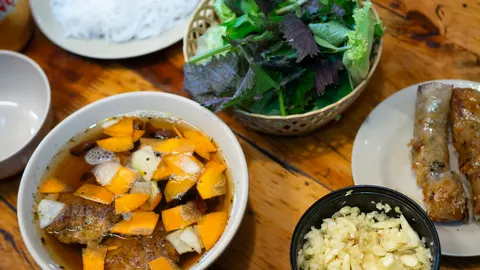 North Vietnam · Food Bun Cha (Bún Chả) in Hanoi: How to Eat It, What It Costs What bun cha is, why Hanoi eats it at lunch over charcoal smoke, how to eat it the local way, and how it differs from southern bun thit nuong.
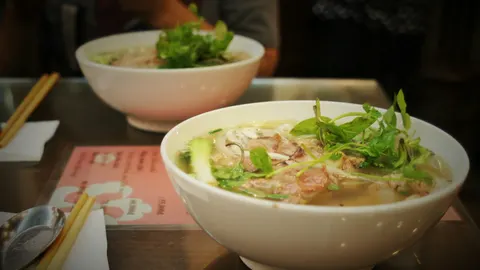 North · Central · South · Food Hanoi vs Saigon Pho (Phở): Differences and How to Order Hanoi vs Saigon pho: a clear, spare Northern broth or a sweeter Southern bowl with herbs and sauces, plus Central styles, 2026 prices and MICHELIN picks.