All three regions · Food
Pho vs Bun vs Hu Tieu: Which Vietnamese Noodles to Order
Vietnamese noodles: pho, bun, hu tieu and mi differ by the noodle itself. A master table, how each is made, heritage status, MICHELIN 2026 picks, what to order.
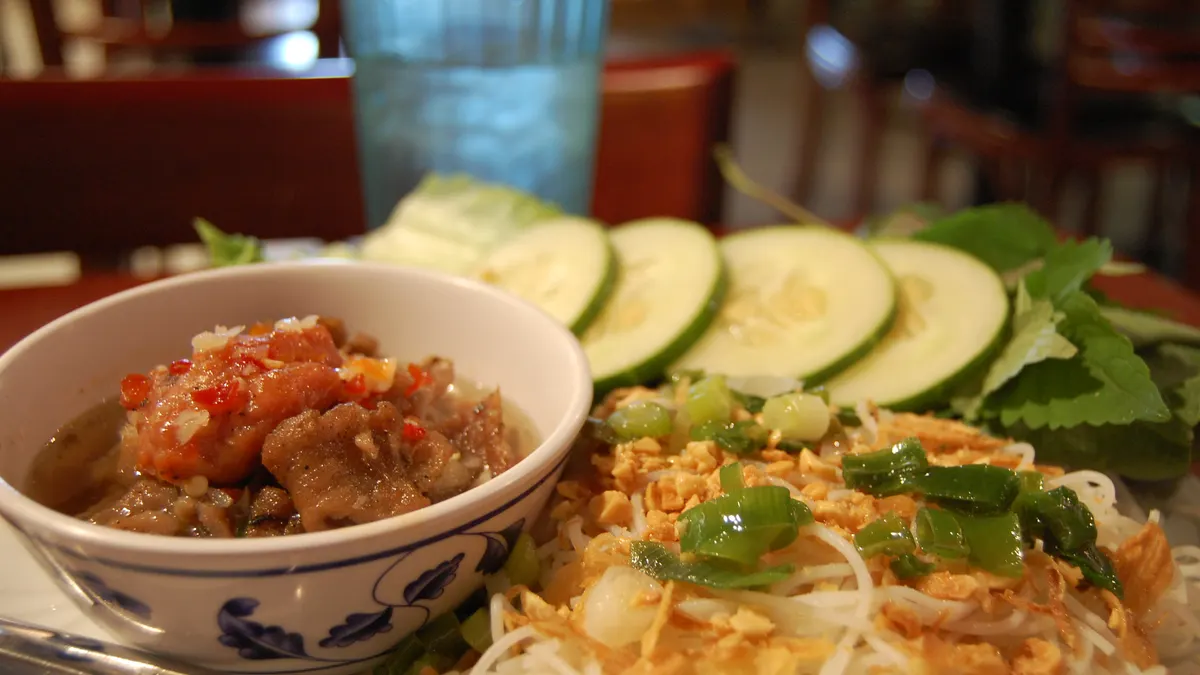
Pho, bun, hu tieu and mi are not four soups but four noodles. Pho (phở) is a flat rice noodle cut from a thin sheet, bun (bún) is a round, soft rice vermicelli, hu tieu (hủ tiếu) is a clear, chewy rice noodle of the South, and mi (mì) is a wheat noodle, usually yellow with egg. The broth, the toppings and the region change from dish to dish, but the first word on the sign tells you what will be in the bowl (Vietnam Tourism). As of November 2026, the MICHELIN Guide Vietnam 2026 lists noodle shops built on these noodles, including Bun Rieu Yen (Bún Riêu Yến), its only Bib Gourmand for bun rieu, and Bun Bo Hue Co Nhu (Bún Bò Huế Cô Như) in Saigon.
That one word carries a lot. Bun is the noodle in a spicy Hue soup, a Hanoi dipping lunch and a sour crab soup alike, while pho is both a noodle and the name of one famous dish. This guide sorts out the noodles first, then points you to the right dish page, and sits alongside the rest of our Vietnamese food guides. Beyond the big four come mien (miến), clear glass noodles; banh canh (bánh canh), thick and slippery; banh da do (bánh đa đỏ), Hai Phong’s brown noodle; and two noodles of the Centre, mi Quang (mì Quảng) and cao lau (cao lầu). Noodles also run through the fourth MICHELIN Guide Vietnam, announced in Hanoi on 4 June 2026 with 193 establishments; Tuoi Tre News’s report on it names pho, bun bo, banh canh, bun cha, bun rieu and mi Quang.
Vietnamese noodles at a glance
| Noodle | Made from | Texture | Typical dishes | Region | How to order |
|---|---|---|---|---|---|
| Pho | Rice batter spread into a thin sheet, then sliced | Flat, soft, slippery ribbons | Beef or chicken pho; pho cuon (rolls), pho xao (stir-fried) | Began in the North, now everywhere | “Pho bo” (beef) or “pho ga” (chicken) + cut |
| Bun | Fermented rice batter pressed through a mould into boiling water | Round, soft; thin or thick | Bun cha, bun bo Hue, bun rieu, bun thit nuong | Everywhere; each region has its own bun dishes | Name the whole dish: “bun cha”, “bun bo” |
| Hu tieu | Rice (some versions tapioca) | Clear, chewy, springy | Hu tieu Nam Vang, My Tho, Sa Dec | South: Saigon and the Mekong Delta | “Hu tieu”, “mi” or “hu tieu mi” + nuoc or kho |
| Mi | Wheat flour, often with egg | Yellow, springy | Mi van than (wonton), hu tieu mi | Everywhere; sold beside hu tieu in the South | “Mi” + nuoc or kho |
| Mien | Starch: canna (dong); some blends mung bean-based | Clear, thin, slightly chewy | Mien ga (chicken), mien luon (eel) | Everywhere; mien luon in Hanoi | “Mien ga”, “mien luon” |
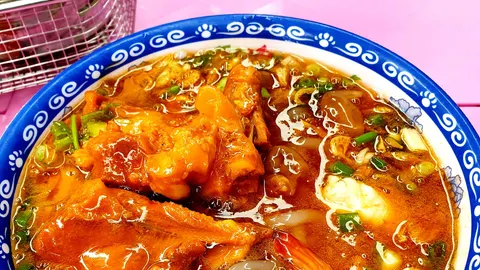
| Banh canh | Rice flour; tapioca or a mix in the South; some wheat in Binh Dinh | Thick, slippery, chewy | Banh canh cua (crab), cha ca (fish cake), Hue snakehead | Centre and South | “Banh canh” + topping |
| Banh da do | Rice, coloured brown with caramel and gac fruit | Flat, flexible, chewy | Banh da cua (crab soup) | Hai Phong and the North | “Banh da cua” |
| Mi Quang | Rice batter in thin sheets, sliced | Wide, flat, soft | Mi Quang with pork and shrimp, chicken, fish | Da Nang and the former Quang Nam | “Mi Quang” + topping |
| Cao lau | Rice soaked in ash-water, kneaded, rolled, steamed, cut | Thick, firm, chewy | Cao lau with xa xiu pork | Hoi An only | “Cao lau” |
These are the usual patterns, not laws: shops cross over, and many will put any noodle they stock into any broth if you ask.
Pho: flat rice noodles cut from a sheet
Pho noodles, banh pho, are made from rice and are flat and rectangular rather than round. In Nam Dinh (since July 2025 part of Ninh Binh province), where pho is usually said to have begun, noodle makers spread a thin layer of rice batter, lift the cooked sheet off with a bamboo tube, grease the board and slice the sheet into strands. Village makers told Phap Luat TP.HCM that hand-made strands hold together better than machine-made ones.
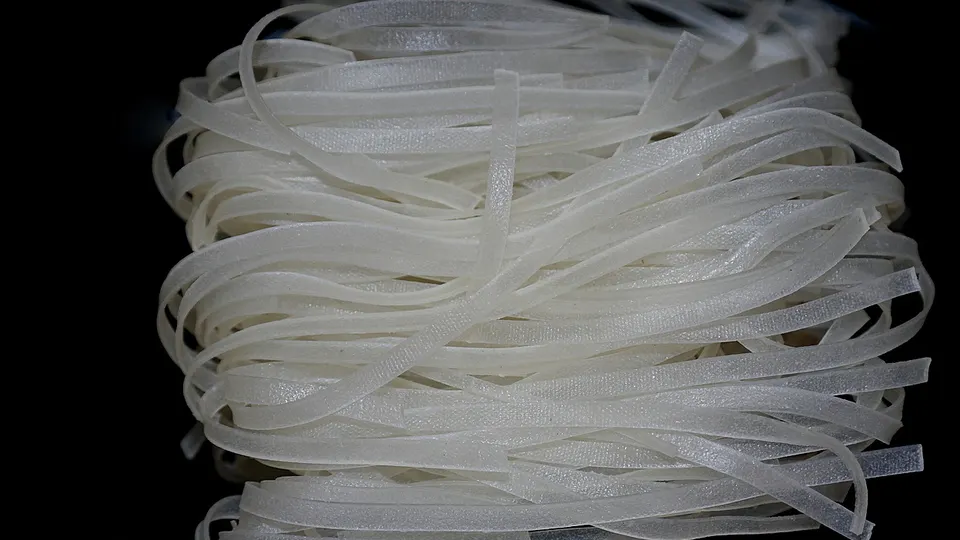
The noodle came before the soup. In Van Cu village, now in Nam Dong commune, Ninh Binh, elders say their forebears cut up rice cakes that could not be sun-dried in the rain and cooked them in bone broth, Dai Bieu Nhan Dan reported in 2026. Nam Dinh noodles are still described as small and soft, made from aged rice ground in a stone mill. Hanoi pho and Nam Dinh pho were both added to the national intangible cultural heritage list on 9 August 2024 (VietnamPlus).
Pho is the one word on this list that is also a dish name. Order “pho” and you get a noodle soup, usually beef. For how the Hanoi and Saigon bowls differ, see pho by region, and for the choice between beef and chicken, pho bo vs pho ga. In Hanoi the same noodles also appear rolled around beef as pho cuon and stir-fried as pho xao; our guide to Hanoi pho styles explains both.
Bun: round rice vermicelli from fermented batter
Bun are thin, round, snow-white rice noodles with a soft bite. They are made differently from pho. In Phu Do, a noodle village in Hanoi’s former Nam Tu Liem district that by village tradition has made bun for about 400 years, the rice is washed, soaked and ground, and the batter is left to ferment. Once it is ready, the batter is pressed dry to squeeze out the sour water, worked into a paste, then pressed into strands that are cooked and lifted from the pot.
In Phu Do much of that work is now done by machines, but the idea is the same everywhere. Van Cu village in Hue, not to be confused with the pho village of the same name in the North, has made bun for more than 400 years and uses only salt as an additive. Its craft was added to the national intangible heritage list by a Ministry of Culture, Sports and Tourism decision of 10 December 2024 (Dai Bieu Nhan Dan). Villagers told Tuoi Tre they insist on Khang Dan rice from their own fields, and their springy noodles are, as VnExpress puts it, made just for bun bo Hue.
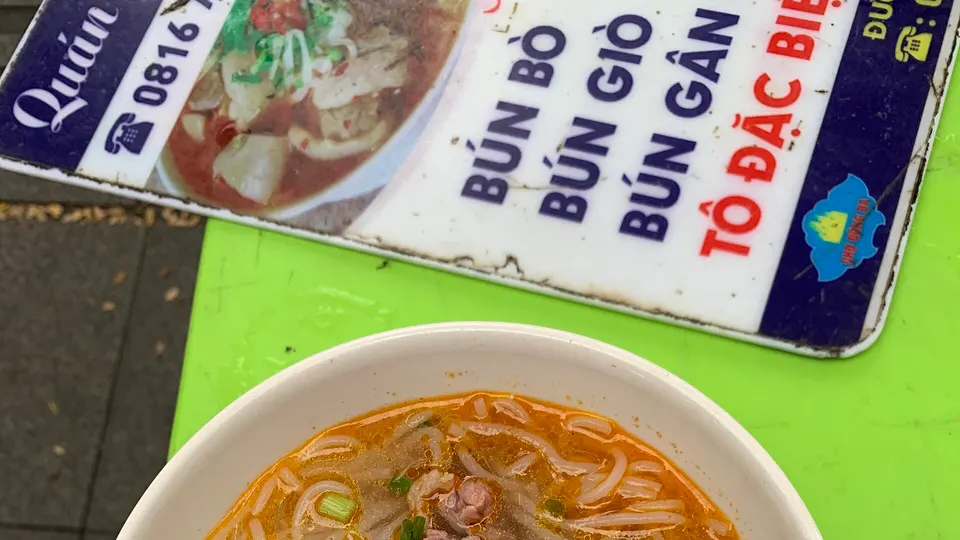
Unlike pho, the word bun on its own is not a dish. It is the base for many:
- Bun cha, Hanoi’s grilled pork dish, eaten by dipping bun into a bowl of pork and dressing.
- Bun bo Hue, a spicy beef and pork hock soup on thick bun, scented with lemongrass and mam ruoc (fermented shrimp paste) and coloured with chilli oil.
- Bun rieu, a slightly sour soup of field crab and tomato poured over fine bun.
So when a sign says “bun”, read the next word: that is the dish.
Hu tieu: the South’s clear, chewy noodle
Hu tieu is the noodle soup of Saigon and the Mekong Delta, and its noodle is the opposite of soft bun. The strands are clear rice noodles, described by Tuoi Tre as chewy, translucent and slightly springy. Tuoi Tre links the dish to Teochew and Fujianese settlers who reached My Tho in the late 17th century, and notes that hu tieu Nam Vang is made with rice flour instead of wheat (Tuoi Tre).
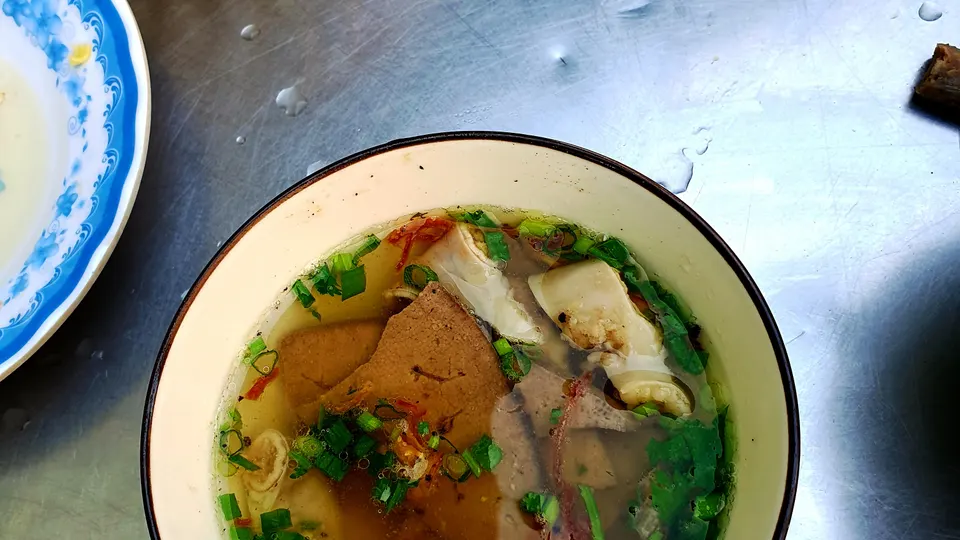
The noodle changes from town to town. My Tho noodles are made from locally grown rice; Sa Dec noodles are thin and square-edged; and Saigon also has hu tieu bot loc, with thick strands of tapioca starch (bot loc). The Nam Vang bowl, named after Phnom Penh, descends from the Cambodian soup kuy teav, which Saigoneer describes as made with chewy rice noodles. Southern shops will also swap in wheat noodles or mix both, which is called hu tieu mi. For the regional bowls and how to order them, see our hu tieu guide.
Mi: wheat and egg noodles
Mi is the one wheat noodle among the everyday four. It is usually mixed with egg yolk, which turns it yellow, and is sold dried or cooked fresh into hot soups. The classic is mi van than, a wonton noodle soup with yellow noodles, dumplings and greens.
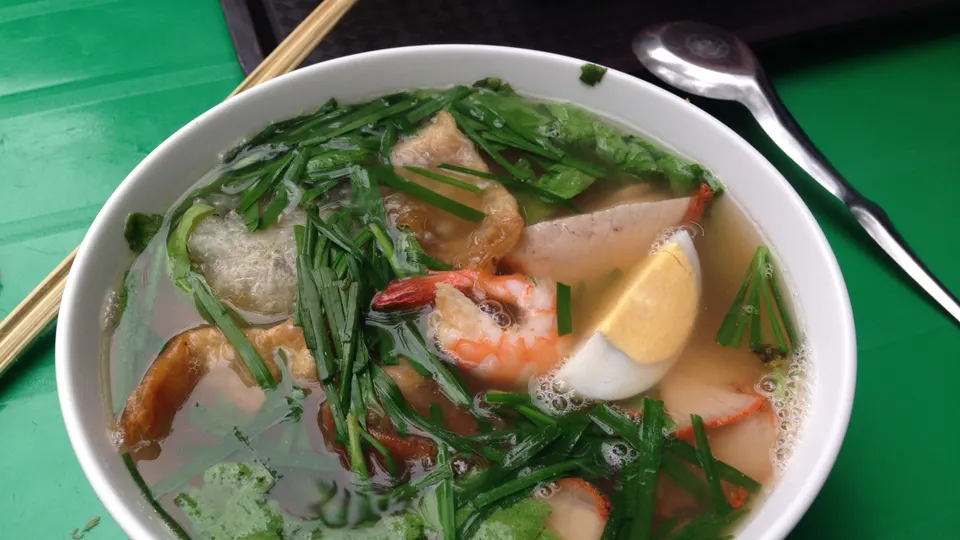
You will meet mi most often at the same stalls as hu tieu, especially in the South, where the menu may list hu tieu, mi and hu tieu mi side by side: the choice is simply which noodle goes into the same broth. If you avoid gluten, mi is the noodle to skip.
Mien, banh canh and banh da: the other noodles
Mien are clear glass noodles, thin and slightly chewy, made from starch rather than rice flour. Mien dong comes from the starch of the canna tuber (dong rieng): the tubers are ground, the starch settles in tanks, thin sheets are steamed for a couple of minutes, dried in the sun on bamboo poles and cut (VnExpress). Some brands are based on mung bean starch instead. Look for mien ga, glass noodles in chicken broth, and mien luon, glass noodles with crisp-fried eel, served in a soup or dry.
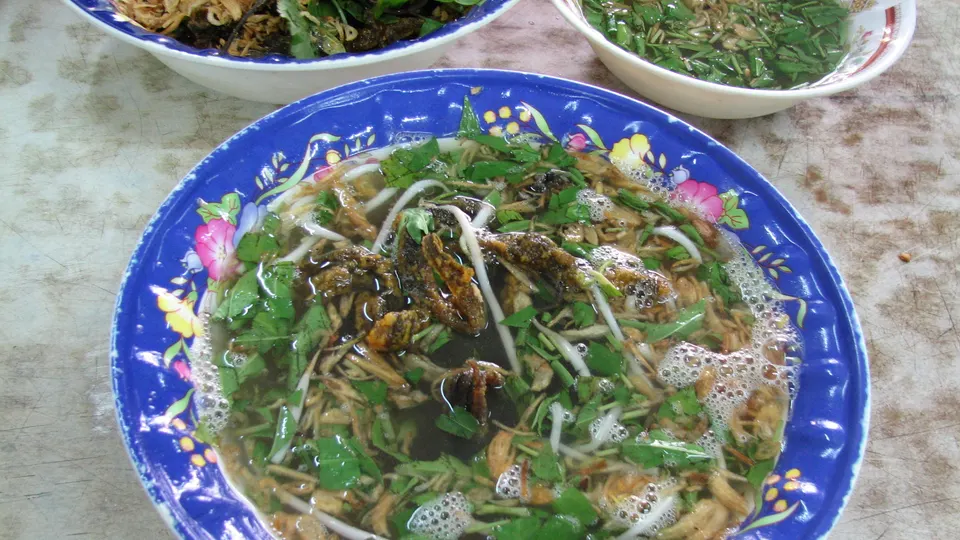
Banh canh is the thick one: noodles made mostly from rice flour, with tapioca or a rice-tapioca mix common in the South, which makes them thicker and softer, and a little wheat flour added by some cooks in Binh Dinh. The soup ranges from Saigon’s crab version to fish-cake bowls on the central coast, as our guide to banh canh by region explains.
Banh da do is the North’s oddity. These flat, flexible, chewy noodles come from Hai Phong and get their brown-red colour from caramel and gac fruit powder. They are best known in banh da cua, a crab soup.
The Centre’s own noodles: mi Quang and cao lau
Central Vietnam has two noodles that belong to particular places. Mi Quang, from the former Quang Nam province (since July 2025 part of Da Nang city), is made from finely ground rice flour spread in thin layers and sliced into wide, flat noodles. It comes with only a ladle of broth, so it is mixed rather than sipped, and it was added to the national heritage list in 2024 alongside pho. Our mi Quang guide covers the toppings.
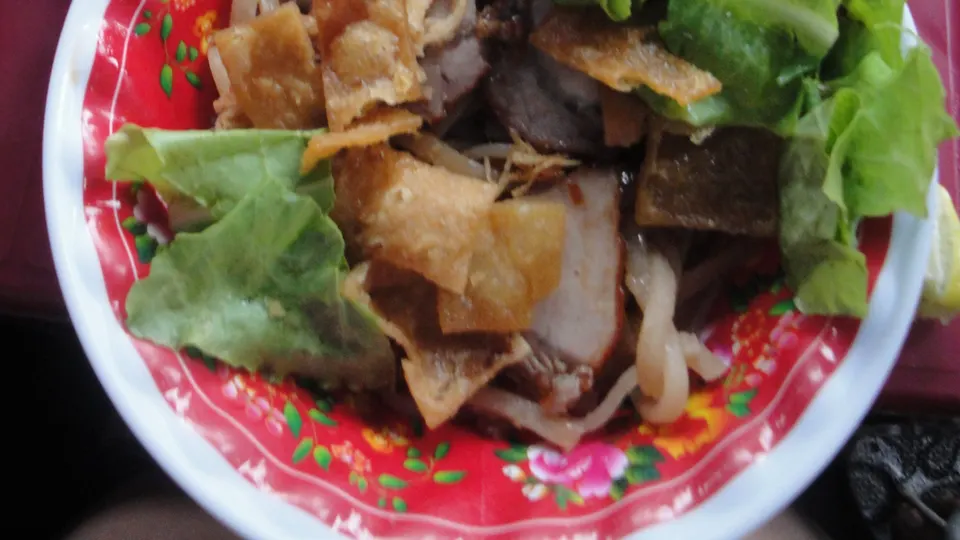
Cao lau is Hoi An’s alone. Traditionally the rice is soaked in lye made from the ash of trees on the Cham Islands, mixed with water from the town’s Ba Le well, kneaded, rolled thin, steamed and cut into thick strands that are tender yet chewy (Danang Fantasticity). Vietnamese cooks rarely serve noodles al dente, and cao lau is the exception. How much of the well-and-ash story still holds today is examined in our cao lau guide.
Which noodle dish to order if you like…
Start from what you enjoy and let the noodle follow:
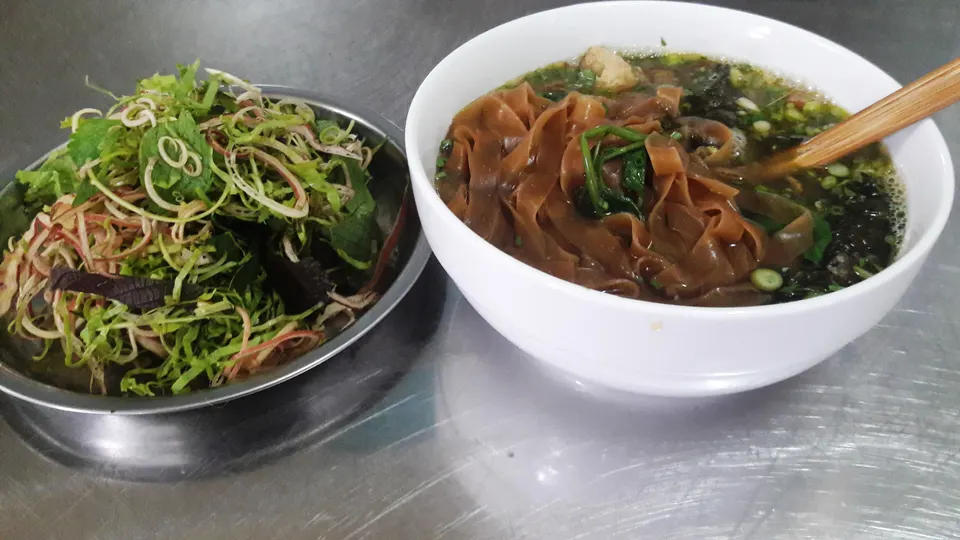
- A clear, spiced beef broth: beef pho.
- Something lighter and gentler: chicken pho, or mien ga with glass noodles.
- Spicy and fragrant: bun bo Hue, with thick bun and lemongrass.
- Sour and fresh: bun rieu, crab and tomato on fine bun.
- Grilled meat and lots of herbs, no hot soup: bun cha in Hanoi, which Vietnam Tourism calls a humble dipping noodle (Vietnam Tourism), or the South’s one-bowl bun thit nuong; our bun cha vs bun thit nuong guide compares them.
- A chewy noodle in a light pork broth: hu tieu, or hu tieu mi if you want both textures.
- Springy egg noodles and dumplings: mi van than.
- Thick, slippery noodles in a heavy broth: banh canh cua.
- A bowl you mix rather than sip: mi Quang.
- Firm, chewy noodles with very little sauce: cao lau in Hoi An.
- Crab with a chewy, flat noodle: banh da cua in Hai Phong.
How to order noodles in Vietnam
Many noodle shops specialise in one dish, so the sign above the door is often the menu. Read the first word for the noodle and the rest for the dish, then add the topping.
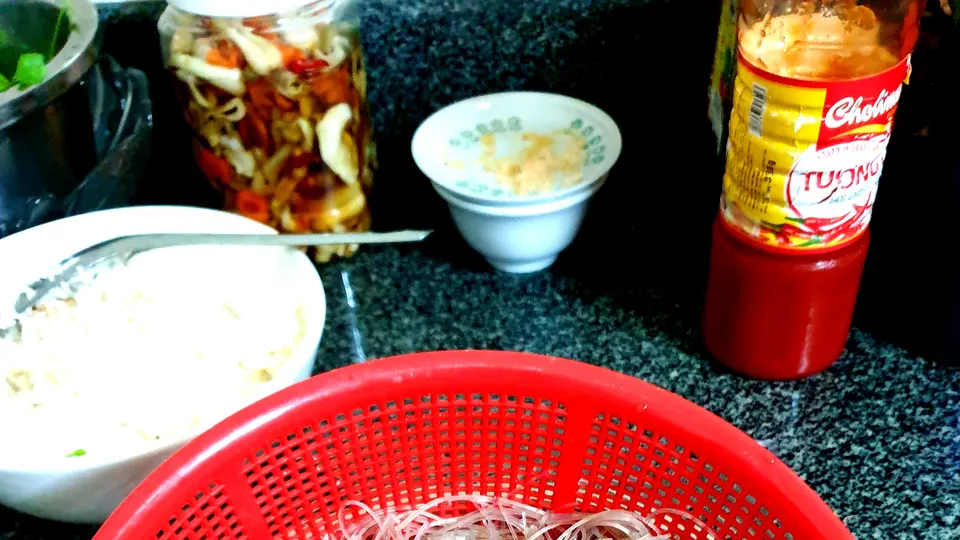
- Name the noodle, then the topping. “Pho bo” is beef pho and “pho ga” chicken pho; in Hue, “bun bo” is simply bun bo Hue.
- Nuoc or kho. At hu tieu and mi stalls, nuoc means in broth and kho means dry: noodles tossed with sauce and toppings, usually with a small bowl of broth to sip alongside.
- Pick the noodle at Southern stalls. Say hu tieu for rice noodles, mi for egg noodles, or hu tieu mi for both.
- Season at the table. Most noodle soups are adjusted with lime, chilli and herbs; taste first, then add.
- Ask if you avoid wheat. Pho, bun and hu tieu noodles are rice and most mien are starch, but mi is wheat, some banh canh and branded mien contain wheat flour, and sauces vary.
Where to taste the noodles
MICHELIN Guide pick
Bún Riêu Yến · Bún riêu Yến
Ho Chi Minh City · Tân Sơn Hòa ward (former Tân Bình district), beside the Nhiêu Lộc canal
1346 Trường Sa Street
The only bún riêu Bib Gourmand in the MICHELIN Guide Vietnam 2026, a family-run canal-side corner shop. MICHELIN describes a mildly spicy, naturally sweet tomato broth with whelks and minced pork; Tuổi Trẻ News notes that its riêu is made of shrimp, pork and egg rather than field crab, and that the fried tofu is the signature.
Order: Bún riêu (it also serves canh bún and bánh đa); dip the fried tofu in a little mắm tôm.
Listed in: MICHELIN Guide Vietnam 2026, Tuổi Trẻ News (2026) · checked November 2026
MICHELIN Guide pick
Bún Bò Huế Cô Như · Bún bò Huế Cô Như
Ho Chi Minh City · Bàn Cờ ward (former District 3)
274/29 Võ Văn Tân Street, in a narrow alley
Listed in the MICHELIN Guide Vietnam 2026: a family-run shop down an alley, with a sweet, deep broth of beef and bones flavoured with lemongrass. A good place to taste the sweeter Saigon side of the dish.
Order: Bún bò thập cẩm (mixed), which has all four beef and pork toppings; add chilli sauce to taste.
Listed in: MICHELIN Guide Vietnam 2026 · checked November 2026
Addresses and details can change; check before you go. We do not accept payment for listings.
Frequently asked questions
Is pho the same noodle as bun?
No. Both are rice noodles, but pho noodles are flat ribbons cut from a sheet, while bun are round strands pressed from fermented batter. Pho also names one dish, the beef or chicken soup, whereas bun is the noodle in dozens of different dishes such as bun cha and bun bo Hue.
Is hu tieu just Southern pho?
No. Hu tieu uses clear, chewy rice noodles in a pork-bone broth from Saigon and the Mekong Delta, often eaten dry with broth on the side, while pho uses softer flat rice noodles in a beef or chicken broth that began in the North.
Do I need to avoid any Vietnamese noodles if I eat gluten-free?
Yes: mi is a wheat noodle, some banh canh cooks in Binh Dinh add wheat flour and some branded mien blends contain it. Pho, bun and hu tieu noodles are made from rice, but ask about the broth and sauces too.
Which Vietnamese noodles are on the national heritage list?
Hanoi pho, Nam Dinh pho and mi Quang were recognised as national intangible cultural heritage on 9 August 2024, and the bun-making craft of Van Cu village in Hue was added by a Ministry of Culture decision of 10 December 2024.
Which Vietnamese noodle dish should I order if I don't want soup?
Order bun cha in Hanoi, where you dip noodles into a bowl of grilled pork and dressing, mi Quang in Da Nang, which has only a little broth, or cao lau in Hoi An. Many Southern shops also serve hu tieu or mi kho, dry, with a bowl of broth on the side.
Key sources
- A foodie guide to Vietnam's noodles · Vietnam Tourism (Vietnam National Authority of Tourism)
- Beyond pho: 5 awesome Vietnamese noodles · Vietnam Tourism (Vietnam National Authority of Tourism)
- Năm Di sản Văn hóa Phi Vật thể Quốc gia trong lĩnh vực ẩm thực · VietnamPlus (VNA), 13 September 2024
- Nghề làm bún Vân Cù (Huế) - Di sản văn hóa phi vật thể quốc gia · Đại biểu Nhân dân, 19 February 2025
- Giống gạo đặc biệt ở làng bún 400 tuổi được công nhận là di sản văn hóa quốc gia · Tuổi Trẻ, 19 February 2025
- Vang danh hủ tiếu đất phương Nam · Tuổi Trẻ, 1 February 2014
- Vùng quê miến dong vào vụ Tết · VnExpress, 6 February 2021
- Cao Lau Hoi An – A traditional noodle specialty of Hoi An · Danang Fantasticity (Da Nang Tourism Promotion Center), 24 September 2025
All 22 sources and further reading
- Quang noodles · Danang Fantasticity (Da Nang Tourism Promotion Center), 8 December 2019
- Làng phở Vân Cù và hành trình gìn giữ nghề truyền thống · Đại biểu Nhân dân, 27 March 2026
- Người Nam Định kể chuyện Phở Việt · Pháp Luật TP.HCM
- Bún Phú Đô - Một nét tinh hoa ẩm thực Hà Nội · Tạp chí Công Thương, 14 October 2004
- Quintessence of Hanoi's cuisine: home of rice vermicelli · Hanoi Times
- The spice of Hue: origins of bun bo · VnExpress International, 2 August 2025
- Bún riêu cua Hà Nội · VnExpress, 28 June 2001
- 14 loại hủ tiếu quen thuộc của người Sài Gòn · VietNamNet, 8 April 2015
- From kuy teav to hu tieu: a street food history · Saigoneer, 4 October 2024
- Quà Tết từ miến đậu xanh · VnExpress, 3 February 2018
- Bún Riêu Yến · MICHELIN Guide Vietnam 2026
- Bún Bò Huế Cô Như · MICHELIN Guide Vietnam 2026
- 4th Michelin Guide Vietnam features 193 establishments, still overlooks banh mi · Tuổi Trẻ News, 5 June 2026
- Tứ xứ bánh canh · VnExpress, 6 July 2004
Keep exploring
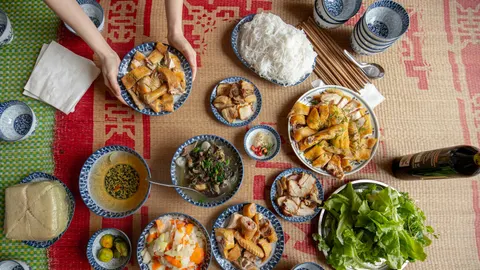 North · Central · South Vietnamese Food by Region: North vs Central vs South Northern Vietnamese food is mild and balanced, central food hot and salty, southern food sweeter with coconut and herbs. Why it differs, and where to start.
 North · Central · South · Food Hanoi vs Saigon Pho (Phở): Differences and How to Order Hanoi vs Saigon pho: a clear, spare Northern broth or a sweeter Southern bowl with herbs and sauces, plus Central styles, 2026 prices and MICHELIN picks.
 South Vietnam · Food Hu Tieu (Hủ Tiếu): Which Style to Order and Where in Saigon Which hu tieu to order in Saigon: Nam Vang, My Tho or Sa Dec, dry or in broth, how it differs from pho, what a bowl costs in 2026 and where to eat it.
 North · Central · South · Food Banh Canh (Bánh Canh) by Region: Which Bowl to Order Where Banh canh by region: which bowl to order where, from Trang Bang pork and Hue's Nam Pho to Saigon crab and coastal fish cake, plus two MICHELIN 2026 shops.